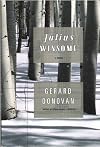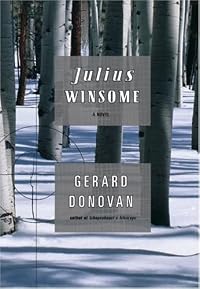
Julius Winsome: A Novel
by Gerard Donovan
On This Page
Description
Living alone with his dog in the remote cabin in the woods, Julius Winsome is not unlike the barren winter lands that he inhabits: remote, vacant, inscrutable. But when his dog Hobbes is killed by hunters, their carelessness -- or is it cruelty? -- sets Julius's precarious mindset on end.Tags
Recommendations


















Member Recommendations
Member Reviews
This book lingers, making one long, love, hate and despair. It is written in such a subdued, sparse and yet poetic way, that at times the pain and sadness becomes visceral.
The story seems straightforward: Julius is a loner in his early fifties, living on his own in a cabin in remote Maine. His mom died in childbirth, his dad stuffed the cabin with books (also from Julius’ granddad) teaching his son the value of books (in particular Shakespeare’s coining of new English words, which provides the novel with some quirky lingo). Other key lessons of life that were passed on from his dad and granddad concern the use of guns and engagement in wars (His granddad was in ww1, taking a sniper gun with him; his dad was part of the airborne show more operations of market garden during ww2 in Holland, Nijmegen). The gun (an Enfield with telescope), Shakespeare’s slang and a dog become pivotal in the dark story unfolding.
The story revolves around love, solitude, loss and anger. One day Julius hears a shot ringing the air. This happens quite often around his remote cabin, which is situated in woody hunting grounds. This time however, it is his dog that was executed at close range. The dog, a bull terrier, is the last remnant of Julius’ only love in life (a woman who came wandering out of the woods one day, and flitted around for the duration of a year or so before settling in with a Police officer in the nearby town). His grief and anger trigger some scary action (clinical execution of a string of hunters, who could have been the perpetrators of the dog shooting, or not…). Meanwhile the winter is setting in and Julius reminiscences about life, love and death relating the stories of his grandfather, father and dog (Hobbes, one learns quite a lot about the loving and protective character of these dogs – a sharp contrast to the aggressive nature for which they are generally known. Most impressive is the anecdote on how Hobbes saves a chick from a bird of prey, a feat of exceptional cunning, dearth and anticipation).
Cruel as his violent responses may be, Julius grows on you. There is also something elusive transpiring from Julius’ story – something that may teach us about (imposed) isolation, the deeper layers of loss and violent responses, such as we witnessed or experienced during covid19 times. show less
The story seems straightforward: Julius is a loner in his early fifties, living on his own in a cabin in remote Maine. His mom died in childbirth, his dad stuffed the cabin with books (also from Julius’ granddad) teaching his son the value of books (in particular Shakespeare’s coining of new English words, which provides the novel with some quirky lingo). Other key lessons of life that were passed on from his dad and granddad concern the use of guns and engagement in wars (His granddad was in ww1, taking a sniper gun with him; his dad was part of the airborne show more operations of market garden during ww2 in Holland, Nijmegen). The gun (an Enfield with telescope), Shakespeare’s slang and a dog become pivotal in the dark story unfolding.
The story revolves around love, solitude, loss and anger. One day Julius hears a shot ringing the air. This happens quite often around his remote cabin, which is situated in woody hunting grounds. This time however, it is his dog that was executed at close range. The dog, a bull terrier, is the last remnant of Julius’ only love in life (a woman who came wandering out of the woods one day, and flitted around for the duration of a year or so before settling in with a Police officer in the nearby town). His grief and anger trigger some scary action (clinical execution of a string of hunters, who could have been the perpetrators of the dog shooting, or not…). Meanwhile the winter is setting in and Julius reminiscences about life, love and death relating the stories of his grandfather, father and dog (Hobbes, one learns quite a lot about the loving and protective character of these dogs – a sharp contrast to the aggressive nature for which they are generally known. Most impressive is the anecdote on how Hobbes saves a chick from a bird of prey, a feat of exceptional cunning, dearth and anticipation).
Cruel as his violent responses may be, Julius grows on you. There is also something elusive transpiring from Julius’ story – something that may teach us about (imposed) isolation, the deeper layers of loss and violent responses, such as we witnessed or experienced during covid19 times. show less
Julius Winsome es un ser solitario que ha permanecido toda su vida en el bosque, en una cabaña llena de libros. Excepto por esporádicos trabajos de jardinería y la compra de víveres, apenas sale de los límites de su territorio. Su única compañía toda su vida ha sido su padre, que murió hace unos años, y que le enseñó el placer y el poder de la palabra escrita, cómo disfrutar de un buen libro al amor de la lumbre en los días fríos del invierno. Durante los últimos cuatro años, su verdadero y único amigo ha sido su perro Hobbes, regalo de un amor fugaz. Pero un disparo suena en la noche. Han disparado a Hobbes...
Pensad por un momento en la vida que lleva este hombre, cuya única compañía es la de su perro, el único show more ser que le ha mostrado un amor y una lealtad incondicionales. Esto es esencial para entender la personalidad de Julius, o al menos intentarlo.
'El inventor de palabras' (a Tusquets parece que no le convencía el título original, 'Julius Winsome') es una novela hermosa en muchas ocasiones, pero también atroz en otras. Donovan no ha querido dibujarnos a Julius como el típico pobre hombre solitario digno de lástima, porque algunos de los actos que lleva a cabo también te hacen odiarlo. Julius es una personaje complejo y raro.
Lo que más me ha gustado de la novela han sido los recuerdos que Julius tiene de su padre, de cómo le enseñó a amar la letra escrita, de sus hitorias sobre la guerra, de cómo califica su biblioteca en libros fríos y calientes. 'El inventor de palabras' no llega al nivel de 'El telescopio de Schopenhauer', una de las mejores novelas de los últimos años, pero se lee bien y con interés. show less
Pensad por un momento en la vida que lleva este hombre, cuya única compañía es la de su perro, el único show more ser que le ha mostrado un amor y una lealtad incondicionales. Esto es esencial para entender la personalidad de Julius, o al menos intentarlo.
'El inventor de palabras' (a Tusquets parece que no le convencía el título original, 'Julius Winsome') es una novela hermosa en muchas ocasiones, pero también atroz en otras. Donovan no ha querido dibujarnos a Julius como el típico pobre hombre solitario digno de lástima, porque algunos de los actos que lleva a cabo también te hacen odiarlo. Julius es una personaje complejo y raro.
Lo que más me ha gustado de la novela han sido los recuerdos que Julius tiene de su padre, de cómo le enseñó a amar la letra escrita, de sus hitorias sobre la guerra, de cómo califica su biblioteca en libros fríos y calientes. 'El inventor de palabras' no llega al nivel de 'El telescopio de Schopenhauer', una de las mejores novelas de los últimos años, pero se lee bien y con interés. show less
This book really haunted me. It is spare and contains so much loneliness and rage that actually boils over into cool acceptance. While wholly wrong events take place, I couldn't help but feel they were also terribly right.
A man lives alone in a cabin lined with books in the Maine woods. His grandfather has passed away as has his father. He is a man of few words, as was his grandfather, as was his father. Nourished only by literature, a woman walks out of the woods, becomes his companion and after a while, once it is time for her to go, encourages him to get a dog. Hobbes. A hunter shoots Hobbes at point blank range and Julius Winsome cannot let the loss of his perfect love go unavenged.
A man lives alone in a cabin lined with books in the Maine woods. His grandfather has passed away as has his father. He is a man of few words, as was his grandfather, as was his father. Nourished only by literature, a woman walks out of the woods, becomes his companion and after a while, once it is time for her to go, encourages him to get a dog. Hobbes. A hunter shoots Hobbes at point blank range and Julius Winsome cannot let the loss of his perfect love go unavenged.
A definite page-turner, this is the story of a man who lives a reclusive but contented life in a cabin in the woods in Maine. One afternoon his dog is deliberately shot at close range, and his grief and anger for the senseless killing of his faithful companion pushes him over the edge into an erratic and violent quest for justice.
This protagonist (Julius Winsome) is quite limited in his depth of emotion, or at least in his ability to understand his emotions, so there is a certain starkness that prevails throughout the narrative. Written in the first person, his interactions with other characters is limited, so coupled with his own social and emotional limitations this perhaps restricts the connection that the reader could make with the show more story and with him as a character. I felt like an interested observer to the narrative, but wasn't fully pulled into it by my heart strings.
That said, there was a good amount of suspense that kept me turning the pages long after I should have gone to bed, although I felt that Donovan perhaps could have built the suspense up a little more at the beginning before launching into the main stream of events.
3.5 stars - an enjoyable, read on a plane for a few hours type of quick read. show less
This protagonist (Julius Winsome) is quite limited in his depth of emotion, or at least in his ability to understand his emotions, so there is a certain starkness that prevails throughout the narrative. Written in the first person, his interactions with other characters is limited, so coupled with his own social and emotional limitations this perhaps restricts the connection that the reader could make with the show more story and with him as a character. I felt like an interested observer to the narrative, but wasn't fully pulled into it by my heart strings.
That said, there was a good amount of suspense that kept me turning the pages long after I should have gone to bed, although I felt that Donovan perhaps could have built the suspense up a little more at the beginning before launching into the main stream of events.
3.5 stars - an enjoyable, read on a plane for a few hours type of quick read. show less
A wonderful novel, with not a wasted word. Every sentence leads you into the mind of an ordinary man who is tipped over the edge by a final loss he cannot bear. It is difficult not to sympathise with him, which would be okay if it weren't for his extreme reactions to his loss. The sympathy is made possible by the eponymous narrator being dissociated from the other living human characters in the story, to the point where they are almost one dimensional.
I haven't read a better book in months, perhaps years.
I haven't read a better book in months, perhaps years.
Donovan, Gerald
Julius Winsome
Fiction
Julius Winsome, surrounded by 3,282 books, is living an idyllic life in a cabin in the woods of Maine. But they've left something out of the guidebooks: the constant sound of gunshots and the killers and victims that they represent. Julius has been under a constant barrage of reminders of mortality his whole life, both historically (both his grandfather and father were soldiers) and daily. When he finds his dog murdered it is as if this is the last death he can tolerate. Something is unleashed in Julius and sets off a need to somehow restore balance to his world. There are times when having sympathy for Julius gets to be a bit much, but that is when another crumb of truth is thrown on the path and you show more can't help but follow. This is a tight, intense, and eye-opening experience instinctively muted at times and made bearable by Julius's affinity for nature and deep respect for all forms of life.
Recommended February 2007 show less
Julius Winsome
Fiction
Julius Winsome, surrounded by 3,282 books, is living an idyllic life in a cabin in the woods of Maine. But they've left something out of the guidebooks: the constant sound of gunshots and the killers and victims that they represent. Julius has been under a constant barrage of reminders of mortality his whole life, both historically (both his grandfather and father were soldiers) and daily. When he finds his dog murdered it is as if this is the last death he can tolerate. Something is unleashed in Julius and sets off a need to somehow restore balance to his world. There are times when having sympathy for Julius gets to be a bit much, but that is when another crumb of truth is thrown on the path and you show more can't help but follow. This is a tight, intense, and eye-opening experience instinctively muted at times and made bearable by Julius's affinity for nature and deep respect for all forms of life.
Recommended February 2007 show less
Julius Winsome vit seul avec son chien, Hobbes, au fin fond du Maine le plus sauvage. Eduqué dans le refus de la violence et l'amour des mots, ce doux quinquagénaire ne chasse pas, contrairement aux hommes virils de la région. Il se contente de chérir les milliers de livres qui tapissent son chalet. La vision de Hobbes ensanglanté et mourant le changera en tueur fou... La folie, la violence, la frontière entre civilisation et barbarie au cœur d'une très belle fiction, tout ensemble poétique et allégorique.
Members
- Recently Added By
Author Information

13 Works 756 Members
Awards and Honors
Series
Belongs to Publisher Series
Andanzas (711)
Common Knowledge
- Canonical title*
- Julius Winsome
- Original publication date
- 2006 (Engels) (Engels); 2009 (Nederlands, vertaling) (Nederlands, vertaling)
- People/Characters*
- Julius Winsome; Hobbes
- Important places*
- Maine, Verenigde Staten
- Epigraph*
- Zij die het langst leven en zij die het vroegst sterven, verliezen hetzelfde. Het heden is het enige waarvan ze afstand kunnen doen, want dat is al wat de mens bezit.
MARCUS AURELIUS - Dedication*
- Voor Doug Swanson en Christina Nalty
- First words*
- Ik denk dat ik het schot hoorde.
- Last words*
- (Click to show. Warning: May contain spoilers.)... en was de blokhut niet meer te zien.
- Blurbers*
- McCann, Colum
*Some information comes from Common Knowledge in other languages. Click "Edit" for more information.
Classifications
Statistics
- Members
- 390
- Popularity
- 79,714
- Reviews
- 19
- Rating
- (3.86)
- Languages
- 8 — Czech, Dutch, English, French, German, Italian, Norwegian (Bokmål), Spanish
- Media
- Paper, Audiobook, Ebook
- ISBNs
- 22
- ASINs
- 5