On This Page
Description
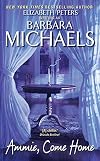
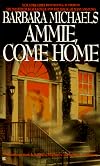
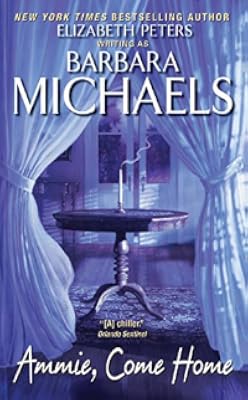
It begins as a lark -- a harmless diversion initiated by Washington, D.C., hostess Ruth Bennett as a means of entertaining her visiting niece, Sara. But the séance conducted in Ruth's elegant Georgetown home calls something back; something unwelcome ... and palpably evil. Suddenly Sara is speaking in a voice not her own, transformed into a miserable, whimpering creature so unlike her normal, sensible self. No tricks or talismans will dispel the malevolence that now plagues the inhabitants show more of this haunted place -- until a dark history of treachery, lust, and violence is exposed. But the cost might well be the sanity and the lives of the living. show lessTags
Recommendations
















Member Reviews
3.5 stars
Ruth lives in an old house in Georgetown (Washington, DC) that’s been in her family for generations. Her (adult) niece, Sara, is staying with her. When they have a séance, though, something odd happens, particularly to Sara. There is some history to this house (and to their family) that neither Ruth nor Sara knew about. Their mutual partners, Pat and Bruce, try to help them figure out what is going on and how to get rid of whatever entity has been awakened by the séance.
This was published in the 1960s, so any research they did was done the “old-fashioned” way. I didn’t like Pat at all (no idea what Ruth saw in him), nor really any of the characters, nor many of their interactions (particularly man-woman interactions show more and dialogue), and maybe much of that can be attributed to the times (well, the characters’ interactions, anyway… not necessarily their personalities). I did find myself more interested as the book continued on. It turns out this is a trilogy (maybe just based on the location?) – I was originally thinking I might not continue, but on reading the synopsis of the next one, I just might. show less
Ruth lives in an old house in Georgetown (Washington, DC) that’s been in her family for generations. Her (adult) niece, Sara, is staying with her. When they have a séance, though, something odd happens, particularly to Sara. There is some history to this house (and to their family) that neither Ruth nor Sara knew about. Their mutual partners, Pat and Bruce, try to help them figure out what is going on and how to get rid of whatever entity has been awakened by the séance.
This was published in the 1960s, so any research they did was done the “old-fashioned” way. I didn’t like Pat at all (no idea what Ruth saw in him), nor really any of the characters, nor many of their interactions (particularly man-woman interactions show more and dialogue), and maybe much of that can be attributed to the times (well, the characters’ interactions, anyway… not necessarily their personalities). I did find myself more interested as the book continued on. It turns out this is a trilogy (maybe just based on the location?) – I was originally thinking I might not continue, but on reading the synopsis of the next one, I just might. show less
Quick and disposable genre fiction (in this case, it's "supernatural suspense") but Michaels is able to design a lean and efficient plot that runs like sleek clockwork. There are zero literary pretensions, but she's a great deal of fun: her dialogue tartly convincing and her plot twists are both surprising and chilling. Her characters are also jolly: I especially adored the cynical, skeptical, helplessly love-struck Bruce, who displays unexpected depths beneath his facade of antagonistic intellectualism.
Where to start?
I've been hearing my mom rave about how much she loved this book for ever, which in the way of such things between mothers and daughter sometimes, had the perverse effect of making me disinclined to read it. This is spite of my enjoyment of ghost stories and Barbara Michaels' other work. (N.B. I love my mom, just stupid vestiges of teenage stubbornness I suppose.)
When I first cracked it open I got up to chapter 3 and nothing much had happened; a bad dream, a bit of foreshadowing. This was somehow worse; I knew it was going to get creepy, it was going to happen any page now... But all the (necessary) setup made it easy to put the book down until the next day.
I was right; everything starts hitting the fan soon into show more chapter 4 - and that's where the trouble started for me, because this is a buddy read, and I should be pacing myself, reading small sections to savour and discuss with friends, and I can't put the book down, I have to find out what happens next!! Hot tea was brewed in vain, only to go cold and neglected; by chapter 6 I was firmly of two minds about this book - it was creeptastically gripping and unbelievably condescending and dated in its tone.
As others have noted, Patrick was ...unlikeable. Add to this his behaviour in at least one scene and way too much vagueness pertaining to Ruth's past and I was... unimpressed with our protagonists. Bruce was mostly a pompous git, and Sara was rather vanilla. So while I as still enjoying the story it could go either way for me at this point. I pried myself off the book at the end of chapter 7 and swore I'd not go near it again for at least 24 hours.
I think I made it the 24 hours and I'd like to say I was able to only read a bit more the next day, but that would be crap - I grudgingly went through my to-do list and then sat down with this book and wild horses were not going to part me from it until I finished. I had to know how it ended.
Oh, Barbara Michaels, you crafty, crafty lady. I see what you did there. You never did explain Ruth's past clearly, but you did explain Patrick's behaviour ever so neatly; I didn't have much justification beyond his name for disliking him after that. I especially liked how you sneaked a bit of sophisticated theology in too when you thought nobody would notice. Clever, and it added a tiny bit of heft to the story without beating the reader over the head. Nice.
There's no way anyone who has ever read any ghost story couldn't divine at least some of the ending, but I'll admit my sub-conscious predictions fell short: it was more complex than I had foreseen, which of course made it all the better. As to what finally felled the evil, well, that showed a complexity of theological belief that I don't see much in my spooky reads and I respect Michaels all the more because of it.
All in all an excellent ghost story and one I wouldn't want to read - or re-read - after dark; I'm fairly certain it would scare the bejeezus out of me.
I jest, but the worst part of the book is probably the part where I have to call mom and say: you were right! ;-) show less
I've been hearing my mom rave about how much she loved this book for ever, which in the way of such things between mothers and daughter sometimes, had the perverse effect of making me disinclined to read it. This is spite of my enjoyment of ghost stories and Barbara Michaels' other work. (N.B. I love my mom, just stupid vestiges of teenage stubbornness I suppose.)
When I first cracked it open I got up to chapter 3 and nothing much had happened; a bad dream, a bit of foreshadowing. This was somehow worse; I knew it was going to get creepy, it was going to happen any page now... But all the (necessary) setup made it easy to put the book down until the next day.
I was right; everything starts hitting the fan soon into show more chapter 4 - and that's where the trouble started for me, because this is a buddy read, and I should be pacing myself, reading small sections to savour and discuss with friends, and I can't put the book down, I have to find out what happens next!! Hot tea was brewed in vain, only to go cold and neglected; by chapter 6 I was firmly of two minds about this book - it was creeptastically gripping and unbelievably condescending and dated in its tone.
As others have noted, Patrick was ...unlikeable. Add to this his behaviour in at least one scene and way too much vagueness pertaining to Ruth's past and I was... unimpressed with our protagonists. Bruce was mostly a pompous git, and Sara was rather vanilla. So while I as still enjoying the story it could go either way for me at this point. I pried myself off the book at the end of chapter 7 and swore I'd not go near it again for at least 24 hours.
I think I made it the 24 hours and I'd like to say I was able to only read a bit more the next day, but that would be crap - I grudgingly went through my to-do list and then sat down with this book and wild horses were not going to part me from it until I finished. I had to know how it ended.
Oh, Barbara Michaels, you crafty, crafty lady. I see what you did there. You never did explain Ruth's past clearly, but you did explain Patrick's behaviour ever so neatly; I didn't have much justification beyond his name for disliking him after that. I especially liked how you sneaked a bit of sophisticated theology in too when you thought nobody would notice. Clever, and it added a tiny bit of heft to the story without beating the reader over the head. Nice.
There's no way anyone who has ever read any ghost story couldn't divine at least some of the ending, but I'll admit my sub-conscious predictions fell short: it was more complex than I had foreseen, which of course made it all the better. As to what finally felled the evil, well, that showed a complexity of theological belief that I don't see much in my spooky reads and I respect Michaels all the more because of it.
All in all an excellent ghost story and one I wouldn't want to read - or re-read - after dark; I'm fairly certain it would scare the bejeezus out of me.
I jest, but the worst part of the book is probably the part where I have to call mom and say: you were right! ;-) show less
Barbara Michaels' books are a guilty pleasure of mine. I love to read them when it is October, or raining in fall and spring. There is just something cozy about them that you can read under a blanket with a cup of tea. I own most of her books written as Michaels, and all are well worn and well-loved paperbacks.
I did not have Ammie Come Home, so I borrowed it from the library. The copy I received was a dull gray, library bound without a cover picture. It was so old looking and the pages so soft. I think these tactile qualities helped transport me back to the time when this book was first published, in 1968.
You could really tell that this book was written and published in the 60s. There were references to hippies, protests, show more stereotypical gender roles, miniskirts, and smoking. I think it was all the casual smoking that really struck me; Ruth is portrayed as a distinguished, demure woman in her 50s or so, and she was always lighting up. A cigarette here, a cigarette before bed, I am not sure why this seemed so odd to me but it did. I don’t think I have really read anything lately where the main character smokes. It just was out of character to me; I feel now smoking is used as a device to show a character is flawed, rebellious, or quirky, and Ruth was none of those things. Despite all this, I thought the fact that the book was from the perspective of a slightly older woman, and had an element of romance for her too, was pretty forward thinking.
Like all good ghost stories, this one starts with a séance. I have an irrational fear of séances and Ouija boards, thanks to the Exorcist. Ammie Come Home was no different in that regard – a séance served as a doorway for the supernatural. And this story was pretty “spooktacular”. There were a few parts where I got the creepy crawlies from reading it even. There were all sorts of ghostly activity – apparitions, possession (which the book called shadowing), a creepy bodiless voice, and things falling over. Selling the house was out of the question. So what to do? Solve the mystery of course! I love books that are collegiate, with lots of references to classes, people studying classic subjects minutely and specifically, and the characters in this book were college professors and students, and when presented with a mystery, started researching heavily in libraries and books.
This book is the first in the Georgetown Series – I have actually read the second and third and really liked them. It was nice to see the origins of Pat and Ruth, who make appearances in the other books. I find these books perfect for the blustery weather of fall, when I can get cuddly on the couch and be really lazy. And you will have to read to find out about Ammie. show less
I did not have Ammie Come Home, so I borrowed it from the library. The copy I received was a dull gray, library bound without a cover picture. It was so old looking and the pages so soft. I think these tactile qualities helped transport me back to the time when this book was first published, in 1968.
You could really tell that this book was written and published in the 60s. There were references to hippies, protests, show more stereotypical gender roles, miniskirts, and smoking. I think it was all the casual smoking that really struck me; Ruth is portrayed as a distinguished, demure woman in her 50s or so, and she was always lighting up. A cigarette here, a cigarette before bed, I am not sure why this seemed so odd to me but it did. I don’t think I have really read anything lately where the main character smokes. It just was out of character to me; I feel now smoking is used as a device to show a character is flawed, rebellious, or quirky, and Ruth was none of those things. Despite all this, I thought the fact that the book was from the perspective of a slightly older woman, and had an element of romance for her too, was pretty forward thinking.
Like all good ghost stories, this one starts with a séance. I have an irrational fear of séances and Ouija boards, thanks to the Exorcist. Ammie Come Home was no different in that regard – a séance served as a doorway for the supernatural. And this story was pretty “spooktacular”. There were a few parts where I got the creepy crawlies from reading it even. There were all sorts of ghostly activity – apparitions, possession (which the book called shadowing), a creepy bodiless voice, and things falling over. Selling the house was out of the question. So what to do? Solve the mystery of course! I love books that are collegiate, with lots of references to classes, people studying classic subjects minutely and specifically, and the characters in this book were college professors and students, and when presented with a mystery, started researching heavily in libraries and books.
This book is the first in the Georgetown Series – I have actually read the second and third and really liked them. It was nice to see the origins of Pat and Ruth, who make appearances in the other books. I find these books perfect for the blustery weather of fall, when I can get cuddly on the couch and be really lazy. And you will have to read to find out about Ammie. show less
Barbara Michaels' books are a guilty pleasure of mine. I love to read them when it is October, or raining in fall and spring. There is just something cozy about them that you can read under a blanket with a cup of tea. I own most of her books written as Michaels, and all are well worn and well-loved paperbacks.
I did not have Ammie Come Home, so I borrowed it from the library. The copy I received was a dull gray, library bound without a cover picture. It was so old looking and the pages so soft. I think these tactile qualities helped transport me back to the time when this book was first published, in 1968.
You could really tell that this book was written and published in the 60s. There were references to hippies, protests, stereotypical show more gender roles, miniskirts, and smoking. I think it was all the casual smoking that really struck me; Ruth is portrayed as a distinguished, demure woman in her 50s or so, and she was always lighting up. A cigarette here, a cigarette before bed, I am not sure why this seemed so odd to me but it did. I don’t think I have really read anything lately where the main character smokes. It just was out of character to me; I feel now smoking is used as a device to show a character is flawed, rebellious, or quirky, and Ruth was none of those things. Despite all this, I thought the fact that the book was from the perspective of a slightly older woman, and had an element of romance for her too, was pretty forward thinking.
Like all good ghost stories, this one starts with a séance. I have an irrational fear of séances and Ouija boards, thanks to the Exorcist. Ammie Come Home was no different in that regard – a séance served as a doorway for the supernatural. And this story was pretty “spooktacular”. There were a few parts where I got the creepy crawlies from reading it even. There were all sorts of ghostly activity – apparitions, possession (which the book called shadowing), a creepy bodiless voice, and things falling over. Selling the house was out of the question. So what to do? Solve the mystery of course! I love books that are collegiate, with lots of references to classes, people studying classic subjects minutely and specifically, and the characters in this book were college professors and students, and when presented with a mystery, started researching heavily in libraries and books.
This book is the first in the Georgetown Series – I have actually read the second and third and really liked them. It was nice to see the origins of Pat and Ruth, who make appearances in the other books. I find these books perfect for the blustery weather of fall, when I can get cuddly on the couch and be really lazy. And you will have to read to find out about Ammie. show less
I did not have Ammie Come Home, so I borrowed it from the library. The copy I received was a dull gray, library bound without a cover picture. It was so old looking and the pages so soft. I think these tactile qualities helped transport me back to the time when this book was first published, in 1968.
You could really tell that this book was written and published in the 60s. There were references to hippies, protests, stereotypical show more gender roles, miniskirts, and smoking. I think it was all the casual smoking that really struck me; Ruth is portrayed as a distinguished, demure woman in her 50s or so, and she was always lighting up. A cigarette here, a cigarette before bed, I am not sure why this seemed so odd to me but it did. I don’t think I have really read anything lately where the main character smokes. It just was out of character to me; I feel now smoking is used as a device to show a character is flawed, rebellious, or quirky, and Ruth was none of those things. Despite all this, I thought the fact that the book was from the perspective of a slightly older woman, and had an element of romance for her too, was pretty forward thinking.
Like all good ghost stories, this one starts with a séance. I have an irrational fear of séances and Ouija boards, thanks to the Exorcist. Ammie Come Home was no different in that regard – a séance served as a doorway for the supernatural. And this story was pretty “spooktacular”. There were a few parts where I got the creepy crawlies from reading it even. There were all sorts of ghostly activity – apparitions, possession (which the book called shadowing), a creepy bodiless voice, and things falling over. Selling the house was out of the question. So what to do? Solve the mystery of course! I love books that are collegiate, with lots of references to classes, people studying classic subjects minutely and specifically, and the characters in this book were college professors and students, and when presented with a mystery, started researching heavily in libraries and books.
This book is the first in the Georgetown Series – I have actually read the second and third and really liked them. It was nice to see the origins of Pat and Ruth, who make appearances in the other books. I find these books perfect for the blustery weather of fall, when I can get cuddly on the couch and be really lazy. And you will have to read to find out about Ammie. show less
This haunting book is nearly perfectly written. Foreshadowing, likeable characters, real romance, detective work (pre-Google research!), and the ghost story kept my attention. The Kindle version kept seducing me into reading "just one more chapter because it is only 11 minutes" until I suddenly had to scramble to get ready for work. But the book was finished, so all was well in my world.
And yes, I ordered the next two books in the trilogy.
And yes, I ordered the next two books in the trilogy.
Ammie Come Home by Barbara Michaels is a 2005 Harper publication. (originally published in 1968)
I pulled this book from my personal paperback collection, looking for a ‘Halloween’ read.
I’ve been reading through my ‘Barbara Michaels’ books for several years now, but usually, due to the nature of her books, it’s normally around Halloween when I pluck one down from my shelf.
This is one of Michaels’ earlier efforts and is the first installment in the ‘Georgetown’ series.
The cast consists of four people:
Ruth- the favorite aunt
Sara- her niece
Bruce- Sara’s boyfriend/fiancé
Pat- a professor and a possible love interest for Ruth
After a ‘parlor game’ type séance, Sara shows the telltale signs of possession. This sets show more the foursome off on an intense investigation to discover who is behind the possession, who is haunting Ruth’s house, and why. Their research uncovers a sordid historical mystery… But how will they quiet the spirits?
This novel was originally published in 1968- and as such, it does show its age. However, despite the mild datedness and the use of many standard horror novel staples, this story is still quite effective. The story has all the great elements that create a good spooky tale of suspense. The mystery and amateur sleuthing are interesting, and the passages that describe the powerful entity haunting the characters and the house is atmospheric, and at times a little intense.
I read some of Michael’s novels back when I was a teenager- although by that time the Gothic horror/mystery/romance novel was no longer a hot trend- but since horror novels were my thing back then, I was fan- and Barbara Mertz did continue to write under this pseudonym well into the nineties.
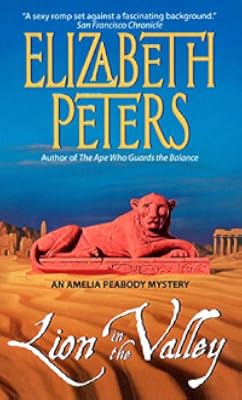
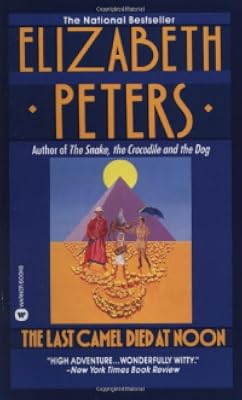
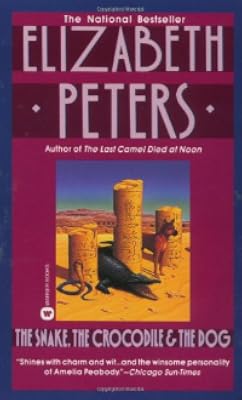
For those who are not familiar- Barbara Mertz also wrote under the name ‘Elizabeth Peters’ – the author of the popular ‘Amelia Peabody’ mystery series.
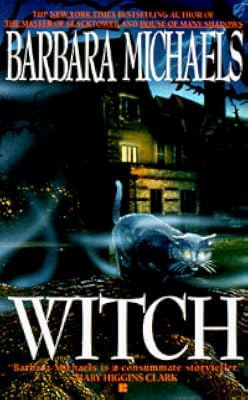
Her work as ‘Barbara Michaels’ is often classified as ‘Gothic’, which was super popular in the sixties and seventies. In my opinion, some of her books could fall into the horror genre- such as this one and ‘Witch’- while others are milder and might even be labeled as romantic suspense. However, in my opinion, Michaels’ work was edgier and a bit more sinister than other popular authors who fell under the ‘Gothic’ label at the time, and her style was quite unique by comparison.
I must admit that the Michaels’ books I read over the past several years have been a mixed bag, though, with one or two of her last releases being barely recognizable. This one, however, was a good one and brought back memories of the books I devoured in my early teens and turned out to be my favorite ‘Halloween’ read this year.
4 stars show less
I pulled this book from my personal paperback collection, looking for a ‘Halloween’ read.
I’ve been reading through my ‘Barbara Michaels’ books for several years now, but usually, due to the nature of her books, it’s normally around Halloween when I pluck one down from my shelf.
This is one of Michaels’ earlier efforts and is the first installment in the ‘Georgetown’ series.
The cast consists of four people:
Ruth- the favorite aunt
Sara- her niece
Bruce- Sara’s boyfriend/fiancé
Pat- a professor and a possible love interest for Ruth
After a ‘parlor game’ type séance, Sara shows the telltale signs of possession. This sets show more the foursome off on an intense investigation to discover who is behind the possession, who is haunting Ruth’s house, and why. Their research uncovers a sordid historical mystery… But how will they quiet the spirits?
This novel was originally published in 1968- and as such, it does show its age. However, despite the mild datedness and the use of many standard horror novel staples, this story is still quite effective. The story has all the great elements that create a good spooky tale of suspense. The mystery and amateur sleuthing are interesting, and the passages that describe the powerful entity haunting the characters and the house is atmospheric, and at times a little intense.
I read some of Michael’s novels back when I was a teenager- although by that time the Gothic horror/mystery/romance novel was no longer a hot trend- but since horror novels were my thing back then, I was fan- and Barbara Mertz did continue to write under this pseudonym well into the nineties.
For those who are not familiar- Barbara Mertz also wrote under the name ‘Elizabeth Peters’ – the author of the popular ‘Amelia Peabody’ mystery series.
Her work as ‘Barbara Michaels’ is often classified as ‘Gothic’, which was super popular in the sixties and seventies. In my opinion, some of her books could fall into the horror genre- such as this one and ‘Witch’- while others are milder and might even be labeled as romantic suspense. However, in my opinion, Michaels’ work was edgier and a bit more sinister than other popular authors who fell under the ‘Gothic’ label at the time, and her style was quite unique by comparison.
I must admit that the Michaels’ books I read over the past several years have been a mixed bag, though, with one or two of her last releases being barely recognizable. This one, however, was a good one and brought back memories of the books I devoured in my early teens and turned out to be my favorite ‘Halloween’ read this year.
4 stars show less
Members
- Recently Added By
Lists

Scary Stories for the Season
160 works; 94 members

Books With Complete Sentence Titles
374 works; 15 members

Best Sellers / Popular 1968
237 works; 5 members
Author Information

99+ Works 72,934 Members
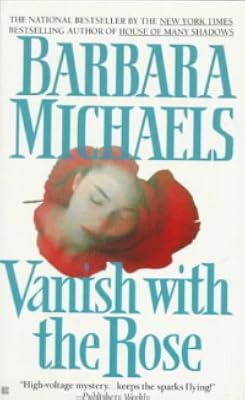
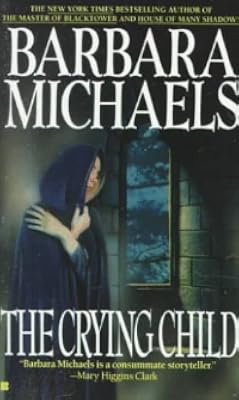
Barbara Mertz was born on September 29, 1927 in Astoria, Illinois. She received a bachelor's degree in 1947, a master's degree in 1950 and doctorate in Egyptology in 1952 from the University of Chicago. She wrote a few books using her real name including Temples, Tombs and Hieroglyphs (1964), Red Land, Black Land (1966), and Two Thousand Years in show more Rome (1968). She also wrote under the pen names Barbara Michaels and Elizabeth Peters. She made her fiction debut, The Master of Blacktower, under the name Barbara Michaels in 1966. She wrote over two dozen novels using this pen name including Sons of the Wolf, Someone in the House, Vanish with the Rose, Dancing Floor, and Other Worlds. Her debut novel under the pen name Elizabeth Peters was The Jackal's Head in 1968. She also wrote the Amelia Peabody series and Vicky Bliss Mystery series using this name. She died on August 8, 2013 at the age of 85. (Bowker Author Biography) show less
Some Editions
Awards and Honors
Distinctions
Series

Work Relationships
Is contained in
Has the adaptation
Common Knowledge
- Canonical title
- Ammie, Come Home
- Original title
- Ammie, Come Home
- Alternate titles
- Der Mond über Georgetown
- Original publication date
- 1968
- People/Characters
- Ruth Bennett; Patrick MacDougal; Sara; Bruce; Amanda Campbell; Douglass Campbell (show all 7); Anthony Doyle
- Important places
- Georgetown, Washington, D.C., USA
- Related movies
- The House That Would Not Die (1970 | IMDb)
- First words
- By five o'clock it was almost dark, which was not surprising since the month was November; but Ruth kept glancing uneasily toward the windows at the far end of the room. It was a warm, handsome room, furnished in a style of a... (show all) past century, with furniture whose present value would have astonished the original owners. Only the big overstuffed sofas, which faced one another before the fireplace, were relatively modern. Their ivory brocade upholstery fitted the blue-and-white color scheme, which had been based upon the delicate Wedgwood plaques set in the mantel. A cheerful fire burned on the hearth, sending sparks dancing from the crystal glasses on the coffee table and turning the sherry in the cut-glass decanter the color of melted copper. Since her niece had come to stay with her, Ruth had set out glasses and wine every evening. It was a pleasant ritual, which they both enjoyed when it was followed by nothing more elegant than hamburgers. But tonight Sara was late. -Chapter 1
- Last words
- (Click to show. Warning: May contain spoilers.)"Because now, finally, Ammie has come home."
- Canonical DDC/MDS
- 813.54
- Canonical LCC
- PZ4.M577
Classifications
- Genres
- Fiction and Literature, Romance, Horror, Mystery
- DDC/MDS
- 813.54 — Literature & rhetoric American literature in English American fiction in English 1900-1999 1945-1999
- LCC
- PZ4 .M577 — Language and Literature Fiction and juvenile belles lettres Fiction and juvenile belles lettres Fiction in English
- BISAC
Statistics
- Members
- 636
- Popularity
- 45,704
- Reviews
- 20
- Rating
- (3.85)
- Languages
- 5 — Dutch, English, French, German, Spanish
- Media
- Paper, Ebook
- ISBNs
- 19
- ASINs
- 10