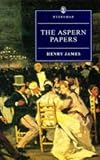
The Aspern Papers
by Henry James
On This Page
Description
The Aspern Papers is a novella set in Venice. A young man travels to the city and takes lodgings with an old woman—the former lover of the dead American poet Aspern. The man believes the old woman still has some letters from Aspern and he ingratiates himself with her niece in an attempt to find them. Suspense builds around the motives and actions of James' masterfully drawn characters..
Tags
Recommendations














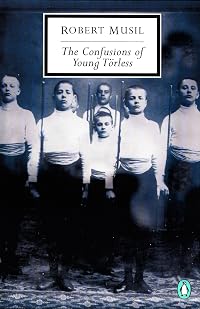

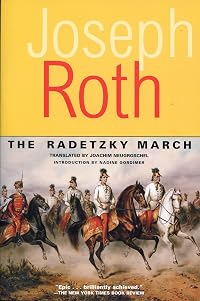

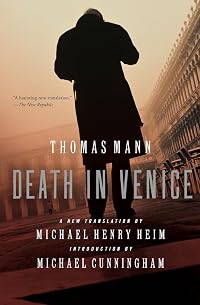


Member Recommendations

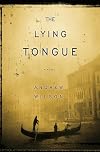
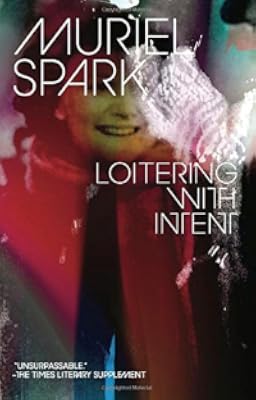
alalba The stories of both novels are located in Venice, in both the main character tricks his way into the house of a famous writer to get information about his life.
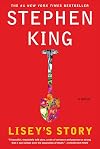
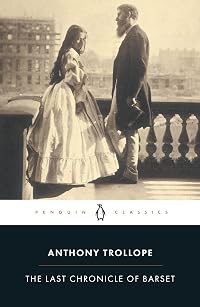
konallis Similar premise - a woman being harassed into sharing the papers of her late writer husband - that develops in a very different direction.

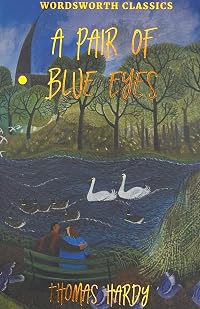
JuliaMaria Zwei Novellen, in denen Briefe und Moral eine wichtige Rolle spielen.
Member Reviews
The Aspern Papers is a novella written by Henry James, originally published in The Atlantic Monthly in 1888. It is the story or rather the quest of an American editor - he is also the unnamed narrator of the story - to obtain a collection of letters by the American Romantic poet Jeffrey Aspern.
He believes that Juliana Bordereau, an elderly and ill lady who lives in Venice in a dilapidated old palazzo, with her spinster niece Miss Tina, in “obscurity” and “almost on nothing”, is in possession of these unpublished and priceless “literary remains”. In order to get access to them the narrator becomes a lodger of theirs, under a false name. He does not have a plan of how to acquire the papers but it did not make him too show more miserable, “for the whole situation had the charm of its oddity.” Meanwhile, what better place is to spend summer than in Venice?
“See how it glows with the advancing summer, how the sky and the sea and the rosy air and the marble of the palaces all shimmer and melt together.”
This is a fascinating small story; even if you are not a James fan, you would definitely enjoy. Henry James describes skilfully the decaying atmosphere of the damp and gloomy palace. What is more impressive though, is the way he says the story. The narrator presents the events without intense or personal colouration, as they were related not to him, but to a third person. He offers no opinion, no explanation of his unscrupulous behaviour. His desire for these papers is so powerful, his determination to obtain them so strong, that he fails to recognise or rather he chooses to ignore the impact of his behaviour towards the lonely and miserable Miss Tina.
The brilliance in this story is exactly that. Henry James leaves the readers to draw their own conclusions about the narrator’s behaviour. At the end of the story we are still left with unanswered questions. Can morality confront a man’s personal ambition and intellectual curiosity? Ambition is a complex process, can make people liars and cheats, can cause an inability to connect with others emotionally. Is that what happened to the narrator? Are there any limits of morality that he could not transgress in order to obtain the precious papers?
Looking at the picture that it hangs above his writing table, he admits
“I can scarcely bear my loss.” show less
He believes that Juliana Bordereau, an elderly and ill lady who lives in Venice in a dilapidated old palazzo, with her spinster niece Miss Tina, in “obscurity” and “almost on nothing”, is in possession of these unpublished and priceless “literary remains”. In order to get access to them the narrator becomes a lodger of theirs, under a false name. He does not have a plan of how to acquire the papers but it did not make him too show more miserable, “for the whole situation had the charm of its oddity.” Meanwhile, what better place is to spend summer than in Venice?
“See how it glows with the advancing summer, how the sky and the sea and the rosy air and the marble of the palaces all shimmer and melt together.”
This is a fascinating small story; even if you are not a James fan, you would definitely enjoy. Henry James describes skilfully the decaying atmosphere of the damp and gloomy palace. What is more impressive though, is the way he says the story. The narrator presents the events without intense or personal colouration, as they were related not to him, but to a third person. He offers no opinion, no explanation of his unscrupulous behaviour. His desire for these papers is so powerful, his determination to obtain them so strong, that he fails to recognise or rather he chooses to ignore the impact of his behaviour towards the lonely and miserable Miss Tina.
The brilliance in this story is exactly that. Henry James leaves the readers to draw their own conclusions about the narrator’s behaviour. At the end of the story we are still left with unanswered questions. Can morality confront a man’s personal ambition and intellectual curiosity? Ambition is a complex process, can make people liars and cheats, can cause an inability to connect with others emotionally. Is that what happened to the narrator? Are there any limits of morality that he could not transgress in order to obtain the precious papers?
Looking at the picture that it hangs above his writing table, he admits
“I can scarcely bear my loss.” show less
I just re-read Henry James' novella the "Aspern Papers," again a second time after thirty years. It was first recommended to me in about 1985 by Jean van Heijenoort, Leon Trotsky's secretary and, after the murder, his archivist, as the best depiction of an archivist's passion for finding the papers of a "great man." Even the first time around I certainly appreciated the fine description of a collector's monomania. I've seen archivists turn themselves inside out to ingratiate themselves with the "keeper of the flame" in hopes of scoring the spoils, and at time resorting to flattery, lies, deceptions, phoney friendship, and non-existent jobs. Looking at a small miniature painting of Aspern, the narrator thinks that it is not very well show more painted, but talking with the old lady, Juliana,the owner of the painting, he praises it highly, and then learns that it was painted by her father. The narrator's relief that he avoided a misstep by avoiding the truth is almost palpable. I've seen this kind of hypocrisy in action many times. Re-reading the story at leisure, I realize that the story is about much more, all about the treacherous moral ground that a biographer or really any historian treads, invading private lives and exposing them to the world. Who has the moral right to do such a thing? James was writing just as emerging technology enabled newspaper photographers to print photos without the permission of the subjects and expose unsuspecting people to the uncaring scrutiny of the masses. James himself was secretive about his private life and his many intense friendships with women as well as men as he roamed Europe. He knew the terrain. The act of publishing is a violation of privacy as Juliana, the owner of the letters accuses the narrator:"Ah you publishing scoundrel!" The narrator is willing to lie, cheat and steal to see the content of the great poet Aspern's private love letters. The narrator knows to keep his own privacy: his real name is not revealed and not even the fictitious name he uses to gain entrance to Juliana's Venetian Palazzo. So he is definitely immoral. But there is more. From start to finish, the unnamed biographer makes snide gratuitous comments denigrating women, particularly Juliana's niece Miss Tina: "It was impossible to allow too much for her simplicity." It's up to the reader to decide what actually causes his defeat. There is an ironic, self-aware soap opera technique at work in the novella, with a cliff hanger or shocker at the end of each chapter, a relic I suppose of the way the book was serialized in its initial publication over several months in "The Atlantic." Chapter two ends in a parody of the serial style: "My emotion keeping me silent she spoke first, and the remark she made was exactly the most unexpected." Chapter ends. This understated self-aware humor is a sheer delight. He wrote under the spell of Florence and Venice, the initial impetus being an ancient English resident in Florence with letters of Byron and Shelley. He shifted the scene from Florence to Venice with all that eerie Venetian light and crumbling grandeur. And he shifted the subject from a fine English poet to a non-existent American, knowing well there never was an American poet in 1820 of the same stature as Byron. Ironic wishful thinking here.
There is clear foreshadowing, this is not a spoiler it's early in the story, that the papers turn to ashes...but the tension is in why and how....I love it...but then I'm an archivist. Then in a case of life imitating art, some years after writing the story one of his close friends, Constance Fenimore Woolson, the great niece of Fenimore Cooper, committed suicide, jumping out of the window of her Venetian apartment. Earlier James and Fenimore had shared the same cook and shared meals every night in Florence for weeks. It's known that she had wanted a closer relationship, rather like Miss Tina and the narrator. After her suicide, James ingratiated himself with her family by spending weeks sorting her papers. And her letters from James disappeared along with most of hers to him. Anita Feferman wrote a fine biography of my friend Jean van Heijenoort entitled "Politics, Logic and Love," but she published it after Jean's death. Privacy in legal terms is supposed to end at death. Editing his stories and his own papers, James ensured his privacy and his fame way into the future. show less
There is clear foreshadowing, this is not a spoiler it's early in the story, that the papers turn to ashes...but the tension is in why and how....I love it...but then I'm an archivist. Then in a case of life imitating art, some years after writing the story one of his close friends, Constance Fenimore Woolson, the great niece of Fenimore Cooper, committed suicide, jumping out of the window of her Venetian apartment. Earlier James and Fenimore had shared the same cook and shared meals every night in Florence for weeks. It's known that she had wanted a closer relationship, rather like Miss Tina and the narrator. After her suicide, James ingratiated himself with her family by spending weeks sorting her papers. And her letters from James disappeared along with most of hers to him. Anita Feferman wrote a fine biography of my friend Jean van Heijenoort entitled "Politics, Logic and Love," but she published it after Jean's death. Privacy in legal terms is supposed to end at death. Editing his stories and his own papers, James ensured his privacy and his fame way into the future. show less
Miss Juliana Bordereau lives with her niece Miss Tina in a run-down Venetian palazzo; it is here that a literary researcher--nameless throughout this novella--manages to track the pair down and inveigle them into letting him stay as a lodger. His ulterior motive is to gain access to any papers rumoured to exist pertaining to the late American poet Jeffrey Aspern, all for eventual publication.
Nine chapters detail the narrator's underhand machinations, first to pull to wool over the eyes of the elder Miss Bordereau and secondly to gain the confidence of Miss Tina. James conjures up a kind of apologue or moral fable from what initially appears to be a factual first-person account but which increasingly makes us suspect the researcher is an show more unreliable narrator.
Despite the shortness of the tale the reader is party to a slow build-up which, eventually, leads to not one but two climaxes. Like a Greek tragedy a short prologue precedes our introduction to the narrator's chief interests, the two spinsters. There follows a series of choreographed episodes where he tries to insinuate himself with Juliana, to little apparent avail, until first one, then another unexpected event takes place, leaving the narrator a sadder and, one hopes, a wiser man. He doesn't much evoke our sympathy except when his prevarication results in no-one getting what they want; mostly he sails pretty close to the wind, displaying not just a ruthless but a reckless streak.
The two biddies are no more sympathetic, Juliana surmising his intentions early on and playing an equally duplicitous game, while Tina -- isolated for most of her life and so relatively innocent in the wiles of the world -- is vulnerable to the narrator's manipulative approach and therefore liable to rash action when she feels rejected. The motive for all this intrigue is made explicit from the start: Juliana had an affair with Jeffrey Aspern in her youth and is assumed to still have correspondence and papers from that period but refused point blank to discuss it with the narrator's colleague, hence the subterfuge. The narrator claims an interest in restoring the palazzo's neglected garden, a parallel with his own attempt to cultivate a friendship with the two women. To continue the gardening metaphor, Juliana seems to want to, as it were, espalier the narrator by testing the narrator's financial resources and arranging for Tina to spend time with him, all in the hopes of Tina being comfortably set up after her aunt's decease.
Henry James is known to have based the kernel of his plot on a real story. A certain Claire Clairmont died in Florence in 1879 at the age of eighty, less than a decade before this novella appeared. Clairmont's fame largely rests on her being the half-sister of the author of Frankenstein and sometime lover of Lord Byron, though she herself led an interesting life on her own account, travelling around Europe and Russia. Allegra, her daughter by Byron, died in Venice of typhus in 1822 at the tender age of five; many years later Claire moved to Florence in 1870 where with a niece, Paulina, she remained till her death, reputedly in possession of much Shelley memorabilia and apparently very embittered with both Shelley and Byron. Henry James will certainly have known about various attempts to get her to part with her keepsakes and manuscripts.
It's no real surprise that things end badly, with virtually no-one coming out of this episode well. All this plays out against a Venetian backdrop, the author's descriptions emphasising the city's shabbiness overlain by a superficial brightness as typified by the Piazza San Marco; all in all, this Venice is a perfect metaphor for the narrator's supposed high-minded quest for literary insights concealing lowdown subterfuge. Miss Bordereau gets to the dark heart of the narrator's guile with her furious exclamation, "Ah, you publishing scoundrel!"
The plot of Donna Leon's Venetian mystery The Jewels of Paradise was also predicated on sought-after lost papers, but she was only one of many authors to assiciate dark deeds with the Queen of the Adriatic. Henry James himself characterised Venice as a place with "endless strange secrets"; famous for its bocche dei leoni, letterboxes in which accusations of crime were posted, Venice would naturally have appealed to James as a setting for a novella of intrigue, lies and death. In an example of life copying art, the author's own correspondence was carefully guarded by his surviving relatives, anxious to preserve James' reputation by avoiding any hint of his sexual leanings.
Did I enjoy The Aspern Papers? Perhaps "enjoy" isn't the right word: I certainly admire it for its sustained suspense, its tight focus on a handful of protagonists and its claustrophobic atmosphere. But I found it hard to empathise with any of the characters (as I suspect was the intention) despite -- or maybe because of -- their very human failings; and in that respect the air of regret, of lost opportunities, of decay and of bitterness that concludes the book was the only possible outcome.
https://wp.me/p2oNj1-2EA show less
Nine chapters detail the narrator's underhand machinations, first to pull to wool over the eyes of the elder Miss Bordereau and secondly to gain the confidence of Miss Tina. James conjures up a kind of apologue or moral fable from what initially appears to be a factual first-person account but which increasingly makes us suspect the researcher is an show more unreliable narrator.
Despite the shortness of the tale the reader is party to a slow build-up which, eventually, leads to not one but two climaxes. Like a Greek tragedy a short prologue precedes our introduction to the narrator's chief interests, the two spinsters. There follows a series of choreographed episodes where he tries to insinuate himself with Juliana, to little apparent avail, until first one, then another unexpected event takes place, leaving the narrator a sadder and, one hopes, a wiser man. He doesn't much evoke our sympathy except when his prevarication results in no-one getting what they want; mostly he sails pretty close to the wind, displaying not just a ruthless but a reckless streak.
The two biddies are no more sympathetic, Juliana surmising his intentions early on and playing an equally duplicitous game, while Tina -- isolated for most of her life and so relatively innocent in the wiles of the world -- is vulnerable to the narrator's manipulative approach and therefore liable to rash action when she feels rejected. The motive for all this intrigue is made explicit from the start: Juliana had an affair with Jeffrey Aspern in her youth and is assumed to still have correspondence and papers from that period but refused point blank to discuss it with the narrator's colleague, hence the subterfuge. The narrator claims an interest in restoring the palazzo's neglected garden, a parallel with his own attempt to cultivate a friendship with the two women. To continue the gardening metaphor, Juliana seems to want to, as it were, espalier the narrator by testing the narrator's financial resources and arranging for Tina to spend time with him, all in the hopes of Tina being comfortably set up after her aunt's decease.
Henry James is known to have based the kernel of his plot on a real story. A certain Claire Clairmont died in Florence in 1879 at the age of eighty, less than a decade before this novella appeared. Clairmont's fame largely rests on her being the half-sister of the author of Frankenstein and sometime lover of Lord Byron, though she herself led an interesting life on her own account, travelling around Europe and Russia. Allegra, her daughter by Byron, died in Venice of typhus in 1822 at the tender age of five; many years later Claire moved to Florence in 1870 where with a niece, Paulina, she remained till her death, reputedly in possession of much Shelley memorabilia and apparently very embittered with both Shelley and Byron. Henry James will certainly have known about various attempts to get her to part with her keepsakes and manuscripts.
It's no real surprise that things end badly, with virtually no-one coming out of this episode well. All this plays out against a Venetian backdrop, the author's descriptions emphasising the city's shabbiness overlain by a superficial brightness as typified by the Piazza San Marco; all in all, this Venice is a perfect metaphor for the narrator's supposed high-minded quest for literary insights concealing lowdown subterfuge. Miss Bordereau gets to the dark heart of the narrator's guile with her furious exclamation, "Ah, you publishing scoundrel!"
The plot of Donna Leon's Venetian mystery The Jewels of Paradise was also predicated on sought-after lost papers, but she was only one of many authors to assiciate dark deeds with the Queen of the Adriatic. Henry James himself characterised Venice as a place with "endless strange secrets"; famous for its bocche dei leoni, letterboxes in which accusations of crime were posted, Venice would naturally have appealed to James as a setting for a novella of intrigue, lies and death. In an example of life copying art, the author's own correspondence was carefully guarded by his surviving relatives, anxious to preserve James' reputation by avoiding any hint of his sexual leanings.
Did I enjoy The Aspern Papers? Perhaps "enjoy" isn't the right word: I certainly admire it for its sustained suspense, its tight focus on a handful of protagonists and its claustrophobic atmosphere. But I found it hard to empathise with any of the characters (as I suspect was the intention) despite -- or maybe because of -- their very human failings; and in that respect the air of regret, of lost opportunities, of decay and of bitterness that concludes the book was the only possible outcome.
https://wp.me/p2oNj1-2EA show less
In the section of his Moral Discourses entitled How a person can preserve their proper character in any situation the Stoic philosopher Epictetus says “You are the one who knows yourself – which is to say, you know how much you are worth in your own estimation, and therefore at what price you will sell yourself; because people sell themselves at different rates. Taking account of the value of externals, you see, comes at some cost to the value of one’s own character.”
I cite this quote since, in my reading of this Henry James novella, we are asked to ponder just this question as we follow the narrator’s quest for papers and letters penned by the late, great poet Jeffrey Aspern.
The first few chapters are like a work of fiction show more written in slow motion. But then through a series of revelations the story picks up serious momentum having the pace and timing of a detective novel, all the while suffused in the signature elegance of the author’s language, as in this scene where the narrator takes middle age Miss Tina for a ride on a warm summer evening, “We floated long and far, and though my friend gave no high-pitched voice to her glee I was sure of her full surrender. She was more than pleased, she was transported; the whole thing was an immense liberation. The gondola moved with slow strokes, to give her time to enjoy it, and she listened to the splash of the oars, which grew louder and more musically liquid as we passed into the narrow canals, as if it were a revelation of Venice.”
For me, the real philosophic and psychological juice of this fine tale comes in the closing chapter. I wouldn’t want to disclose any of the luscious details so as to spoil a reader’s fresh experience. Highly recommended. show less
Henry James' The Aspern Papers (1888) is a tightly constructed and satisfying novella that explores the ethical implications of biographical research through a pointed character study. In the book, our protagonist is a literary critic and historian who specializes in the life and work of Jeffrey Aspern, a prominent American poet. He learns that Aspern's lover, Juliana, is living in a dilapidated mansion in Venice with her spinster niece. Juliana is now an old woman, but the narrator is sure that she has some precious letters and other material relating to the great Aspern.
[full review here: http://spacebeer.blogspot.com/2009/12/aspern-papers-by-henry-james-1888.html ]
[full review here: http://spacebeer.blogspot.com/2009/12/aspern-papers-by-henry-james-1888.html ]
I love late James, but there's also a lot to be said for this sweet spot in the middle period. The sentences unfurl in a slightly less complicated way, the ideas are more evident, the characters less opaque, their thoughts less interminable. The Aspern Papers is my ideal beach read: I can lie back and enjoy the plot and paragraphs, I don't have to parse the language, and at the end I still feel like I've done my brain some good and become a better person. Also a very Venetian book; I hope to read it in Venice one day.
Unfortunately, it's hard to take seriously the idea that a literary critic would get this excited about the personal papers of a nineteenth century American poet. Why bother, really? What could you possibly learn? I just show more pretended it was actually about Gerard Manley Hopkins. show less
Unfortunately, it's hard to take seriously the idea that a literary critic would get this excited about the personal papers of a nineteenth century American poet. Why bother, really? What could you possibly learn? I just show more pretended it was actually about Gerard Manley Hopkins. show less
In the section of his Moral Discourses entitled ‘How a person can preserve their proper character in any situation’ the Stoic philosopher Epictetus says “You are the one who knows yourself – which is to say, you know how much you are worth in your own estimation, and therefore at what price you will sell yourself; because people sell themselves at different rates. . . . Taking account of the value of externals, you see, comes at some cost to the value of one’s own character.” I cite this quote since, in my reading of this Henry James novella, we are asked to ponder just this question as we follow the narrator’s quest for papers and letters penned by the late, great poet Jeffrey Aspern.
The first few chapters are like a work show more of fiction written in slow motion but then through a series of revelations the story picks up serious momentum having the pace and timing of a detective novel, all the while suffused in the signature elegance of the author’s language, as in this scene where the narrator takes middle age Miss Tina for a ride on a warm summer evening, “We floated long and far, and though my friend gave no high-pitched voice to her glee I was sure of her full surrender. She was more than pleased, she was transported; the whole thing was an immense liberation. The gondola moved with slow strokes, to give her time to enjoy it, and she listened to the splash of the oars, which grew louder and more musically liquid as we passed into the narrow canals, as if it were a revelation of Venice.”
For me, the real philosophic and psychological juice of this fine tale comes in the closing chapter. I wouldn’t want to disclose any of the luscious details so as to spoil a reader’s fresh experience. Highly recommended. show less
Members
- Recently Added By
Lists

Read the book and saw the movie
1,170 works; 195 members

Books I want to read
25 works; 3 members

Art of Reading
188 works; 5 members

1964 College Preparatory Reading List
202 works; 8 members

Mustich's 1000 Books to Read Before You Die: A Life Changing List
1,001 works; 18 members

Las mejores obras literarias releídas en 2022 (R. D.)
19 works; 1 member
Author Information

1,061+ Works 87,953 Members
Some Editions
Awards and Honors
Distinctions
Notable Lists
Series
Belongs to Publisher Series
Work Relationships
Is contained in
Daisy Miller | Washington Square | Portrait of a Lady | The Bostonians | The Aspern Papers by Henry James
Has as a commentary on the text
Common Knowledge
- Canonical title
- The Aspern Papers
- Original title
- The Aspern Papers
- Original publication date
- 1888
- Important places
- Venice, Veneto, Italy
- Related movies
- Great Performances: The Aspern Papers (1989 | IMDb); The Aspern Papers (2018 | IMDb); The Aspern Papers (2010 | IMDb); Aspern (1982 | IMDb); The Lost Moment (1947 | IMDb)
- First words
- I had taken Mrs. Prest into my confidence; in truth without her I should have made but little advance, for the fruitful idea in the whole business dropped from her friendly lips.
- Last words
- (Click to show. Warning: May contain spoilers.)I wrote to her that I had sold the picture, but I admitted to Mrs. Prest, at the time (I met her in London, in the autumn), that it hangs above my writing table. When I look at it my chagrin at the loss of the letters becomes almost intolerable.
- Original language
- Inglese
Classifications
Statistics
- Members
- 959
- Popularity
- 27,490
- Reviews
- 37
- Rating
- (3.80)
- Languages
- 14 — Catalan, Danish, Dutch, English, Estonian, French, German, Galician, Italian, Portuguese, Croatian, Spanish, Swedish, Turkish
- Media
- Paper, Audiobook, Ebook
- ISBNs
- 150
- UPCs
- 1
- ASINs
- 30