On This Page
Description
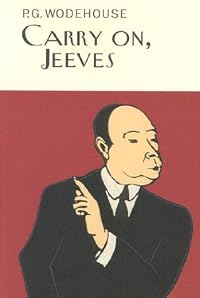
Classic Literature. Fiction. Another excellent instalment in the ‘Jeeves and Wooste’r canon. Stories included here begin with Jeeves' arrival to look after Bertie Wooster, and many take place in the big world of New York City. Expect the usual blend of chaos and hilarity. LISTINGS: Jeeves Takes Charge, Jeeves and the Unbidden Guest, The Artistic Career of Corky, The Aunt and the Sluggard, Clustering Round Young Bingo, Jeeves and the Hard-boiled Egg, The Rummy Affair of Old Biffy.Tags
Recommendations














Member Reviews
One of the funniest Wodehouse books I've read. Bertie's self-deprecation is charming, and Jeeves must be one of the smartest men on earth. This book is a series of short stories about Jeeves rescuing Bertie's friends, and it was getting formulaic. But Wodehouse cleverly changed the perspective in the last chapter to tell it from Jeeves' perspective. How he orchestrated Bertie's change of mind makes you wonder what else has he done.
This was my introduction to Jeeves, and I love him! I want a rich uncle and an uber-competent butler to keep him in line and doling out a generous allowance.
I’ve been dipping into a lot of late 19th-early 20th century literature and I know that Bertie is a caricature, but find myself wondering how many of the ideal rich there were? Surely there are actually more of them now. We live in a wealthier age and a more populous planet, so in sheer quantity there must be more of them. Are they hiding behind fake jobs? Are the ‘flipping houses,’ or ‘working on their start-up,’? They could be writing their first novel, always a good line. I don’t think I have met very many of them in real life. I know several people who mare idle, show more and a few who are rich, but I can’t think of anyone who would qualify as a member of the ‘idle-rich.’
I don’t think I would make a good dependent nephew of a rich uncle, or be a good sugar baby in general. I hate to ask for anything, so constantly scheming for the handout would destroy my morale. I’d rather be Jeeves, who can laugh at his idle, hapless employer while socking away various hijinks-related windfalls until I could retire to Thailand and live like a debauched monarch in exile. show less
I’ve been dipping into a lot of late 19th-early 20th century literature and I know that Bertie is a caricature, but find myself wondering how many of the ideal rich there were? Surely there are actually more of them now. We live in a wealthier age and a more populous planet, so in sheer quantity there must be more of them. Are they hiding behind fake jobs? Are the ‘flipping houses,’ or ‘working on their start-up,’? They could be writing their first novel, always a good line. I don’t think I have met very many of them in real life. I know several people who mare idle, show more and a few who are rich, but I can’t think of anyone who would qualify as a member of the ‘idle-rich.’
I don’t think I would make a good dependent nephew of a rich uncle, or be a good sugar baby in general. I hate to ask for anything, so constantly scheming for the handout would destroy my morale. I’d rather be Jeeves, who can laugh at his idle, hapless employer while socking away various hijinks-related windfalls until I could retire to Thailand and live like a debauched monarch in exile. show less
This review is written with a GPL 4.0 license and the rights contained therein shall supersede all TOS by any and all websites in regards to copying and sharing without proper authorization and permissions. Crossposted at WordPress, Blogspot & Librarything by Bookstooge’s Exalted Permission
Title: Carry On, Jeeves
Series: The Jeeves Omnibus #2.3
Author: P.G. Wodehouse
Rating: 4 of 5 Stars
Genre: Humor
Pages: 260
Format: Digital Edition
Synopsis:
A collection of short stories which starts with the introduction of Jeeves and Bertie Wooster and ends with a story from Jeeves' point of view.
At least half of the stories also revolved around various family (immediate and extended) members of Jeeves, usually in an ancillary way.
My Thoughts:
I have show more given up trying to understand any reason or logical thinking in the way these books are put together in these Omnibus editions. This is the book where Jeeves and Bertie meet because Bertie's last gentleman's gentleman was a kleptomaniac. I believe that Wodehouse wrote this 3rd but with the advantage of hindsight, wouldn't you order this first in an omnibus instead of as the sixth book? It makes me want to punch somebody (and no Miiiiiiiiister Newton, you got yours the other day. I pick on Mr Newton because he loves these books so much! Just say Bertie, Martini and Engagement to him and he's rolling on the laughing so hard he's in danger of suffocating.)
The return to a short story form worked well. Little snippets of Bertie and his bumbling friends is probably a good way to ease people into the world that Wodehouse portrays. Myself, I read this one Saturday while lying on the couch. I was chortling away and after the second time of asking “What's so funny?”, Mrs B just let me be. She's pretty much on Miiiiiister Newton's side when it comes to the humor in these books. I on the other hand am entertained greatly.
The thing with Jeeves and Bertie is either you like these kind of stories or you don't. Heck, read 2 of the short stories within one book and you'll know by the end if Wodehouse is an author for you or not.
On a side note, I just finished up watching “The Blandings” on Prime the other day. It is a tv series based on a series by Wodehouse in this same vein. Once I'm done with Bertie and Jeeves, I plan on adding all 12+ books to my tbr. So buckle up folks, you've got at least 2 more years of Wodehouse offerings coming your way
* evil laughter *
★★★★☆ show less
Title: Carry On, Jeeves
Series: The Jeeves Omnibus #2.3
Author: P.G. Wodehouse
Rating: 4 of 5 Stars
Genre: Humor
Pages: 260
Format: Digital Edition
Synopsis:
A collection of short stories which starts with the introduction of Jeeves and Bertie Wooster and ends with a story from Jeeves' point of view.
At least half of the stories also revolved around various family (immediate and extended) members of Jeeves, usually in an ancillary way.
My Thoughts:
I have show more given up trying to understand any reason or logical thinking in the way these books are put together in these Omnibus editions. This is the book where Jeeves and Bertie meet because Bertie's last gentleman's gentleman was a kleptomaniac. I believe that Wodehouse wrote this 3rd but with the advantage of hindsight, wouldn't you order this first in an omnibus instead of as the sixth book? It makes me want to punch somebody (and no Miiiiiiiiister Newton, you got yours the other day. I pick on Mr Newton because he loves these books so much! Just say Bertie, Martini and Engagement to him and he's rolling on the laughing so hard he's in danger of suffocating.)
The return to a short story form worked well. Little snippets of Bertie and his bumbling friends is probably a good way to ease people into the world that Wodehouse portrays. Myself, I read this one Saturday while lying on the couch. I was chortling away and after the second time of asking “What's so funny?”, Mrs B just let me be. She's pretty much on Miiiiiister Newton's side when it comes to the humor in these books. I on the other hand am entertained greatly.
The thing with Jeeves and Bertie is either you like these kind of stories or you don't. Heck, read 2 of the short stories within one book and you'll know by the end if Wodehouse is an author for you or not.
On a side note, I just finished up watching “The Blandings” on Prime the other day. It is a tv series based on a series by Wodehouse in this same vein. Once I'm done with Bertie and Jeeves, I plan on adding all 12+ books to my tbr. So buckle up folks, you've got at least 2 more years of Wodehouse offerings coming your way
* evil laughter *
★★★★☆ show less
I'd give this five stars but you have to leave some space for brilliance, don't you know.
I had a Wodehouse orgy a few years ago, read a lot of his stuff on the bus (poor location - your laughing in public will have other commuters proceed to stare at you as if somehow you were contagious) and then stopped. Well, I DON'T KNOW WHY. I love him. What a riot this book was. This is basically Bertie being his usual obnoxious self with Jeeves coming up with wonderful ideas to get him out of tricky situations. It's hilarious throughout. In one of the stories, a woman pays a young man to live the good life in New York provided she can live vicariously through his letters - oh how I would have loved for that to happen to me!
Wodehouse's world is a show more microcosm in which eccentricity is the default, and keep in mind that these characters are barely caricatures.
Pure indulgence. I regret nothing, this is a treat. show less
I had a Wodehouse orgy a few years ago, read a lot of his stuff on the bus (poor location - your laughing in public will have other commuters proceed to stare at you as if somehow you were contagious) and then stopped. Well, I DON'T KNOW WHY. I love him. What a riot this book was. This is basically Bertie being his usual obnoxious self with Jeeves coming up with wonderful ideas to get him out of tricky situations. It's hilarious throughout. In one of the stories, a woman pays a young man to live the good life in New York provided she can live vicariously through his letters - oh how I would have loved for that to happen to me!
Wodehouse's world is a show more microcosm in which eccentricity is the default, and keep in mind that these characters are barely caricatures.
Pure indulgence. I regret nothing, this is a treat. show less
I first read this selection of short stories recounting early episodes in the relationship between Jeeves and Bertie Wooster nearly forty years ago, and picked it up again having chanced upon a copy in a drawer in my office. I think it epitomises for me the general shortcomings of the short story as a literary format, compared with longer works.
The stories are all enjoyable and diverting enough, but they just seemed rather ephemeral. Of course, that is an accusation that might be levelled at all of Wodehouse’s works, free as they are from any social message or attempt to examine the world through any politically focused lens.
I find that short stories generally require more effort on the reader’s part than they are ultimately worth. show more In these instances, as soon as one has got to grips with the setting and the characters, the story is over and the reader is left, like Oliver Twist, asking for more. The beauty of Wodehouse’s novels featuring Jeeves and Bertie is the sheer complexity of their plots, always beautifully interlaced yet always watertight. The short story allows no scope for such plotting, and I found myself constantly thinking, ‘If only …’. Indeed, the principal response is to feel that one has been sold a bit of a dummy.
They are, of course, beautifully written, and are peppered throughout with the same beautiful and hilarious imagery that Wodehouse always brought to any of his fiction, but I found that the wealth of style was not sufficient to redeem the lack of substance.
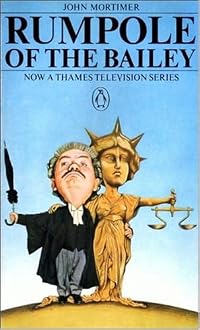
[One point that does occur to me, perhaps by nature of the exception that proves the rule, is the case of John Mortimer’s Rumpole stories, where contrary to my general prejudice, it is the longer format that seems weaker. Rumpole’s anecdotal delivery is far better suited to the self-contained short story approach, and on the few occasions where Sir John Mortimer reverted to the novel as medium for a Rumpole story, it seemed rather forced.] show less
The stories are all enjoyable and diverting enough, but they just seemed rather ephemeral. Of course, that is an accusation that might be levelled at all of Wodehouse’s works, free as they are from any social message or attempt to examine the world through any politically focused lens.
I find that short stories generally require more effort on the reader’s part than they are ultimately worth. show more In these instances, as soon as one has got to grips with the setting and the characters, the story is over and the reader is left, like Oliver Twist, asking for more. The beauty of Wodehouse’s novels featuring Jeeves and Bertie is the sheer complexity of their plots, always beautifully interlaced yet always watertight. The short story allows no scope for such plotting, and I found myself constantly thinking, ‘If only …’. Indeed, the principal response is to feel that one has been sold a bit of a dummy.
They are, of course, beautifully written, and are peppered throughout with the same beautiful and hilarious imagery that Wodehouse always brought to any of his fiction, but I found that the wealth of style was not sufficient to redeem the lack of substance.
[One point that does occur to me, perhaps by nature of the exception that proves the rule, is the case of John Mortimer’s Rumpole stories, where contrary to my general prejudice, it is the longer format that seems weaker. Rumpole’s anecdotal delivery is far better suited to the self-contained short story approach, and on the few occasions where Sir John Mortimer reverted to the novel as medium for a Rumpole story, it seemed rather forced.] show less
One might think that eventually the tales of Jeeves and Bertie Wooster would become rather tiresome. After all, they hew so closely to formula. Bertie and/or one of his equally dense aristo pals gets into trouble with a woman and/or a crotchety (inheritance-controlling) aunt. Bertie and/or his pals bumble along, making the problem worse, until Jeeves uses his massive intellect to come up with a solution most ingenious. Bo-ring, right?
Not so, not so. P.G. Wodehouse could apparently wring laughter out of this situation no matter how familiar it became. Carry On, Jeeves is just as diverting as the first Jeeves collection I read, and the second, and the third...
Also! The final story in this collection, entitled "Bertie Changes His Mind," is show more actually told not by Bertie...but by Jeeves himself! Yes, we hear the man himself for a change, as Jeeves very tactfully and resourcefully relates an incident in which he rather enjoys watching Bertie get out of his (shallow) depth. He calls Bertie "mentally negligible" but says "in an employer brains are not desirable" and assures us that "I am fond of Mr. Wooster." Oh, so are we, old man, so are we. What? show less
Not so, not so. P.G. Wodehouse could apparently wring laughter out of this situation no matter how familiar it became. Carry On, Jeeves is just as diverting as the first Jeeves collection I read, and the second, and the third...
Also! The final story in this collection, entitled "Bertie Changes His Mind," is show more actually told not by Bertie...but by Jeeves himself! Yes, we hear the man himself for a change, as Jeeves very tactfully and resourcefully relates an incident in which he rather enjoys watching Bertie get out of his (shallow) depth. He calls Bertie "mentally negligible" but says "in an employer brains are not desirable" and assures us that "I am fond of Mr. Wooster." Oh, so are we, old man, so are we. What? show less
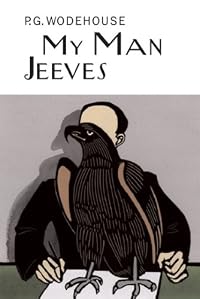
After hearing Wodehouse's name in the wind for probably decades, I read this author of classic humor for the first time with My Man Jeeves, featuring Bertie Wooster and his iconic valet Jeeves, along with stories about an early Wooster prototype, Reggie Pepper. Not at all a bad intro to the author for me.
Then I heard tell that revised versions of those Jeeves stories are in this later collection, Carry On, Jeeves.
Well. Maybe it's because I'm still getting started with this author, but aside from a bit of story retitling and one Pepper episode rewritten as a Wooster one, I didn't notice any other revisions of the few tales I'd already read.
Enjoyed the reading anyway, though. And I liked that a joke that was particularly not to my taste show more in the formerly Pepper story is left out of the Wooster rewrite.
The author's way with language is upbeat and quirkily clever, like sketches of word caricatures. Jeeves and Wooster's tiffs are so delightfully quaint and comic, and I catch on to most of the old-fashioned English slang through context. Now, the few newer stories here I hadn't read before add a little more mild "language" (nothing that would get bleeped off of regular network television), and one of the tales has a reference to deaf people that I wouldn't have used.
But in general, as I passed the time with the hijinks in these pages, it occurred to me how rarely I've had chances as an adult to indulge in comedy reading purely for entertainment. Comedy that's comfortable for me—"PG" but not juvenile.
I often recharge my battery with classic sitcoms. I guess my reading life could use more of that type of relaxration and recharging too. Don't mind if I do partake of some more of the Wooster and Jeeves series. show less
Then I heard tell that revised versions of those Jeeves stories are in this later collection, Carry On, Jeeves.
Well. Maybe it's because I'm still getting started with this author, but aside from a bit of story retitling and one Pepper episode rewritten as a Wooster one, I didn't notice any other revisions of the few tales I'd already read.
Enjoyed the reading anyway, though. And I liked that a joke that was particularly not to my taste show more in the formerly Pepper story is left out of the Wooster rewrite.
The author's way with language is upbeat and quirkily clever, like sketches of word caricatures. Jeeves and Wooster's tiffs are so delightfully quaint and comic, and I catch on to most of the old-fashioned English slang through context. Now, the few newer stories here I hadn't read before add a little more mild "language" (nothing that would get bleeped off of regular network television), and one of the tales has a reference to deaf people that I wouldn't have used.
But in general, as I passed the time with the hijinks in these pages, it occurred to me how rarely I've had chances as an adult to indulge in comedy reading purely for entertainment. Comedy that's comfortable for me—"PG" but not juvenile.
I often recharge my battery with classic sitcoms. I guess my reading life could use more of that type of relaxration and recharging too. Don't mind if I do partake of some more of the Wooster and Jeeves series. show less
Members
- Recently Added By
Lists

20th Century Literature
1,161 works; 55 members

Recommend the 20 best books you've read in the last five years
2,167 works; 601 members

TED 2013 Summer Reading List
190 works; 13 members

Literature About Social Class
134 works; 19 members

Classic British Humor
41 works; 8 members

Top Five Books of 2018
802 works; 264 members

Favorite Short Fiction
228 works; 99 members

1920s
141 works; 6 members

Amanda's Guaranteed Books
110 works; 5 members

Books Read in 2023
5,547 works; 144 members

SHOULD Read Books!
354 works; 9 members

Funny Books
33 works; 2 members

Read This Next
120 works; 3 members

Books Read in 2015
3,298 works; 129 members

Books Read in 2011
684 works; 20 members

Books Read in 2018
4,360 works; 110 members
Author Information

655+ Works 110,473 Members
P. G. Wodehouse was born in Guildford, United Kingdom on October 15, 1881. After completing school, he spent two years as a banker at the Hong Kong and Shanghai Bank in London and then took a job as a sports reporter and columnist for the Globe newspaper. His first novel, The Pothunters, was published in 1902. He wrote over 100 novels and short show more story collections during his lifetime including A Perfect Uncle, Love Among the Chickens, The Swoop, P. Smith in the City, Meet Mr. Milliner, Doctor Sally, Quick Service, The Old Reliable, Uneasy Money, A Damsel in Distress, Jill the Reckless, The Adventures of Sally, A Pelican at Blandings, The Girl in Blue, and Aunts Aren't Gentlemen. His most famous characters, Bertie Wooster and his manservant, Jeeves, appeared in books such as Much Obliged, Jeeves. He also wrote lyrics for musical comedies and worked as screenwriter in Hollywood in the 1930s. In 1939, he bought a villa in Le Touquet on the coast of France. He remained there when World War II started in 1939. The following year, the Germans appropriated the villa, confiscated property, and arrested him. He was detained in various German camps for almost one year before being released in 1941. He went to Berlin and spoke of his experience in five radio talks to be broadcast to America and England. The talks themselves were completely innocuous, but he was charged with treason in England. He was cleared, but settled permanently in the United States. He became a citizen in 1955. He was made a Knight Commander of the Order of the British Empire in 1975. He died from a heart attack after a long illness on February 14, 1975 at the age of 93. (Bowker Author Biography) show less
Some Editions
Awards and Honors
Series

Belongs to Publisher Series
Work Relationships
Is contained in
Contains
Has the adaptation
Is abridged in
Common Knowledge
- Canonical title
- Carry On, Jeeves
- Original title
- Carry on, Jeeves
- Original publication date
- 1925
- People/Characters
- Reginald Jeeves; Bingo Little; Bertram Wilberforce Wooster (Bertie); Dahlia Travers; Florence Craye
- Important places
- New York, New York, USA
- Dedication
- To Bernard Le Strange
- First words
- Now, touching this business of old Jeeves--my man, you know--how do we stand?
- Quotations
- "In my younger days, at the outset of my career, sir, I was at one time page-boy in a school for young ladies."
"No, really? I never knew that before. I say, Jeeves - er - did the - er - dear little souls giggle much in yo... (show all)ur day?"
"Practically without cessation, sir."
"I only saw the kid once, and then only for a moment, but - but it was an ugly sort of kid, wasn't it, if I remember rightly?"
"As ugly as that?"
I looked again, and honesty compelled me to be frank.
"I don't see how... (show all) it could have been, old chap."
It was one of those still evenings you get in the summer, when you can hear a snail clear its throat a mile away. - Last words
- (Click to show. Warning: May contain spoilers.)"Very good, sir," I replied.
- Blurbers
- Adams, Douglas
Classifications
Statistics
- Members
- 3,902
- Popularity
- 4,019
- Reviews
- 84
- Rating
- (4.12)
- Languages
- 15 — Czech, Danish, Dutch, English, Estonian, Finnish, French, German, Hungarian, Italian, Russian, Slovenian, Spanish, Swedish, Ukrainian
- Media
- Paper, Audiobook, Ebook
- ISBNs
- 94
- UPCs
- 3
- ASINs
- 63