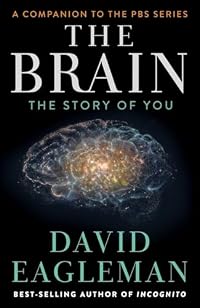
The Brain: The Story of You
by David Eagleman
On This Page
Description
"Locked in the silence and darkness of your skull, your brain fashions the rich narratives of your reality and your identity. Join renowned neuroscientist David Eagleman for a journey into the questions at the mysterious heart of our existence. What is reality? Who are "you"? How do you make decisions? Why does your brain need other people? How is technology poised to change what it means to be human? In the course of his investigations, Eagleman guides us through the world of extreme show more sports, criminal justice, facial expressions, genocide, brain surgery, gut feelings, robotics, and the search for immortality. Strap in for a whistle-stop tour into the inner cosmos. In the infinitely dense tangle of billions of brain cells and their trillions of connections, something emerges that you might not have expected to see in there: you. This is the story of how your life shapes your brain, and how your brain shapes your life. (A companion to the six-part PBS series. Color illustrations throughout.)"-- show lessTags
Recommendations
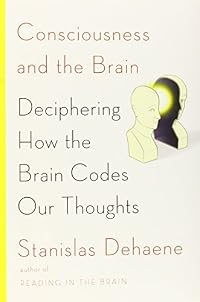
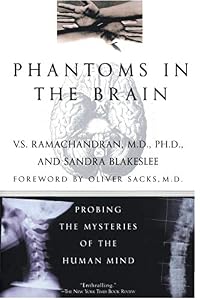
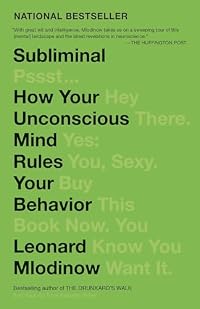
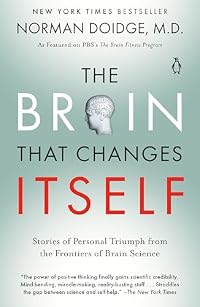



Member Reviews
Comfortably readable, filled with fascinating anecdotes, details and facts, and totally absorbing, David Eagleman’s The Brain offers the reader’s brain much to ponder, while explaining much about how differently we each will ponder it. I’ve wondered sometimes why my brother and I remember the same events and conversations so differently—now I have more idea; I’ve wondered how someone could change so suddenly from understanding everything to understanding little—now it makes sense; and I’ve wondered how some people I know can be so indecisive—I’ll excuse them easier now. Which, I guess, means reading the Brain hasn’t just informed me, but it’s also given me a deeper empathy and a wider worldview.
In my own worldview, show more I remain convinced there’s more to me than my present or my changing consciousness. But I’m fascinated by the discoveries described in this book—by John Robinson’s experience of change with Aspergers, by experimental treatment for cocaine users, by the way we might inadvertently reduce our empathy, and the implications for and of genocide. Scary stuff.
Some of the examples in this book seemed less convincing than others, some of the images were hard to discern in a paperback copy, and some of the arguments seemed geared toward the physical world being all that truly exists, when I'm sure it's not. But I love this book, and recommend it highly. A really cool read.
Disclosure: I got it on a deal. show less
In my own worldview, show more I remain convinced there’s more to me than my present or my changing consciousness. But I’m fascinated by the discoveries described in this book—by John Robinson’s experience of change with Aspergers, by experimental treatment for cocaine users, by the way we might inadvertently reduce our empathy, and the implications for and of genocide. Scary stuff.
Some of the examples in this book seemed less convincing than others, some of the images were hard to discern in a paperback copy, and some of the arguments seemed geared toward the physical world being all that truly exists, when I'm sure it's not. But I love this book, and recommend it highly. A really cool read.
Disclosure: I got it on a deal. show less
Here's a clear and very accessible tour of the brain. What makes it interesting is the angle taken by the author -showing all along that the human brain 'constructs' reality around us, so we can navigate our surrounding world.
First, comparing our biological receptors (our senses and how they work) to that of other animals leads him to expand on a striking idea which I personally find fascinating: so-called sensory substitution. Indeed, our brain doesn't care about which sensory pathway data are coming in to it; it will just process them regardless after an adjusting period. In other words, it's possible to see using your tongue, or hear through your torso! Already, experiments are being made to manufacture devices using such radical show more discoveries and help the blind and deaf (e.g. BrainPort, VEST...). This was thrilling.
Then, pushing a bit further, David Eagleman discusses social neuroscience; showing how our wiring to be social is a double-edged sword. This makes for interesting ethical questioning (e.g. about the famous 'trolley dilemma', and, beyond, the question of free will...) although not going in depth.
Finally, he concludes by tackling the problem of consciousness by bringing up the concept of 'emergence'. It's interesting because it challenges our ideas of the brain as either a computer-like model, or, a tool made up of highly specialised units; but, sadly, here too he doesn't go much in depth.
All in all it's a very good read for the curious. It's short and entertaining. The author is engaging enough, and the little extra vignettes focusing on specific topics (e.g. adolescent brains, proprioception, autism...) renders it all the more captivating. My only regret is that it's too short, and doesn't go enough in details. If you already have a strong interest in the human brain, then I don't think you will learn much -although it clearly is a engrossing read. Nevertheless, I was interested enough to pick Incognito: The Secret Lives of the Brain, another of David Eagleman's book on the same topic. Will it be more detailed? We'll see... show less
First, comparing our biological receptors (our senses and how they work) to that of other animals leads him to expand on a striking idea which I personally find fascinating: so-called sensory substitution. Indeed, our brain doesn't care about which sensory pathway data are coming in to it; it will just process them regardless after an adjusting period. In other words, it's possible to see using your tongue, or hear through your torso! Already, experiments are being made to manufacture devices using such radical show more discoveries and help the blind and deaf (e.g. BrainPort, VEST...). This was thrilling.
Then, pushing a bit further, David Eagleman discusses social neuroscience; showing how our wiring to be social is a double-edged sword. This makes for interesting ethical questioning (e.g. about the famous 'trolley dilemma', and, beyond, the question of free will...) although not going in depth.
Finally, he concludes by tackling the problem of consciousness by bringing up the concept of 'emergence'. It's interesting because it challenges our ideas of the brain as either a computer-like model, or, a tool made up of highly specialised units; but, sadly, here too he doesn't go much in depth.
All in all it's a very good read for the curious. It's short and entertaining. The author is engaging enough, and the little extra vignettes focusing on specific topics (e.g. adolescent brains, proprioception, autism...) renders it all the more captivating. My only regret is that it's too short, and doesn't go enough in details. If you already have a strong interest in the human brain, then I don't think you will learn much -although it clearly is a engrossing read. Nevertheless, I was interested enough to pick Incognito: The Secret Lives of the Brain, another of David Eagleman's book on the same topic. Will it be more detailed? We'll see... show less
I think that Eagleman does an okay job of reviewing the relevant literature on the brain and shaping it into a narrative depicting the amazing things that the brain is capable of. On a basic level, I think it's important to understand how incredible our brains are, and all that they enable us to do. However, I think that I really disagree with the direction that Eagleman proposes we go in the future. For one, I don't think that it's true that the brain is capable of so flexibly interpreting new information as he suggests, which is a severe limitation on our ability to interact with new sensory inputs as he suggests. Even the new technology he discusses of wearing a vest as a form of audition is based upon existing somatosensation. It's show more not that the brain has to learn to interpret a new sensory modality entirely - it just has to decode meaning from a new form of touch sensation. This is still amazing! But it does not enable us to plug an electric field sensor into our brains and suddenly have this as a new sense, or to control a vacuum from across the room as if it were an additional limb. This then presents to me as a massive disconnect that limits the potential to pursue these technologies.
On a more basic level, I disagree with the notion that these should be goals of ours at all. Eagleman also discusses the potential of uploading our brains to a computer, or of living indefinitely. I think that these are both common sci-fi objectives that have an allure, but in my opinion it's spitting in the face of the humanity that you marvel at to demonstrate all of these amazing capacities of the brain and turn around to suggest that these are most valuable in enabling some form of technological enhancement. I think that it's important to have a vision for how neuroscience informs technology of the future, but this should be grounded in our humanity first and foremost. show less
On a more basic level, I disagree with the notion that these should be goals of ours at all. Eagleman also discusses the potential of uploading our brains to a computer, or of living indefinitely. I think that these are both common sci-fi objectives that have an allure, but in my opinion it's spitting in the face of the humanity that you marvel at to demonstrate all of these amazing capacities of the brain and turn around to suggest that these are most valuable in enabling some form of technological enhancement. I think that it's important to have a vision for how neuroscience informs technology of the future, but this should be grounded in our humanity first and foremost. show less
This book is the companion to the PBS series of same title. I did not see the series so cannot compare the two but assume it is a compilation of the episodes. Outside of maybe the Universe there is probably not a more complex or far reaching topic as the brain. Being the human computer as us and therefore central to everything we experience or at least think we experience in life. The book was at times somewhat difficult to follow or maybe just not that interesting. There were a number of topics however that were absolutely fascinating and thought provoking. One such topic being how difficult a time we have had attempting to duplicate its make up and operation with our computer technology. Another topic the book closes with delves into show more projecting our brains into scanable or download form so we may in essence live on or time travel vast distance into the cosmos. It is mind boggling enough to imagine what will be in store centuries from now and what the future for us humans will be as we evolve and hopefully survive. show less
This really was a fascinating journey through the human brain, what it means to be human, and what it means to be sentient. I loved the way the author considered what we have and what we might be able to achieve, and what that might mean for us. Such a huge amount of information, well considered and clearly set out. It was also great to hear how enthusiastic the author was about the subject in his reading of it.
Listened to on Audible
Listened to on Audible
This book is mostly about how what’s inside your head makes sense of what isn’t, about the relationships between brain and world. For instance:
* You never experience the outside world directly, but are seeing your brain’s simplified and stylised portrayal of it—map rather than territory, a cartoonised version of reality. We’re never quite seeing the present moment either, there’s always a lag (which the brain edits out to give the impression that we really are “in the moment”).
* Colours, sounds, tastes and so on are not features of the world itself, but of your brain’s simplification of it—map rather than territory again.
* There’s nothing special about what are, to us human beings, the five show more familiar senses; we see, hear and so on only the tiny fraction of what is out there that’s most useful. Most useful to us, that is; other species see the fraction most useful to them, or use different senses entirely.
* Central to all this, and to your experience of being “you” as well, is memory. This is not even remotely like a film camera passively recording and storing; your brain edits, heavily and continually, reconstructs and even fabricates outright.
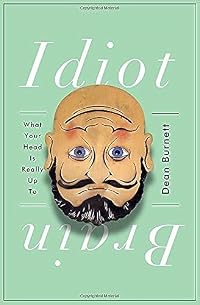
Neuroscience is a fashionable subject at the moment, and Eagleman’s The Brain follows the fashionable line: the human brain as the most complex object in the known universe, the pinnacle of…(you get the idea). As an antidote to all that I’d recommend Idiot Brain by Dean Burnett, which takes a refreshingly irreverent (and arguably more realistic) approach.
To anyone with enough curiosity to have read and thought about all this stuff already, Eagleman’s book doesn’t really add anything new. It is very well written though, in plain language, and would make a decent introduction. show less
* You never experience the outside world directly, but are seeing your brain’s simplified and stylised portrayal of it—map rather than territory, a cartoonised version of reality. We’re never quite seeing the present moment either, there’s always a lag (which the brain edits out to give the impression that we really are “in the moment”).
* Colours, sounds, tastes and so on are not features of the world itself, but of your brain’s simplification of it—map rather than territory again.
* There’s nothing special about what are, to us human beings, the five show more familiar senses; we see, hear and so on only the tiny fraction of what is out there that’s most useful. Most useful to us, that is; other species see the fraction most useful to them, or use different senses entirely.
* Central to all this, and to your experience of being “you” as well, is memory. This is not even remotely like a film camera passively recording and storing; your brain edits, heavily and continually, reconstructs and even fabricates outright.
Neuroscience is a fashionable subject at the moment, and Eagleman’s The Brain follows the fashionable line: the human brain as the most complex object in the known universe, the pinnacle of…(you get the idea). As an antidote to all that I’d recommend Idiot Brain by Dean Burnett, which takes a refreshingly irreverent (and arguably more realistic) approach.
To anyone with enough curiosity to have read and thought about all this stuff already, Eagleman’s book doesn’t really add anything new. It is very well written though, in plain language, and would make a decent introduction. show less
Like a bumblebee flitting from flower to flower, Eagleman jumps from topic to topic spending sufficient time to generate an interest but insufficient time to really satisfy it. This is clearly a book accompanying a TV series without any incremental information to make this book a truly satisfying read in itself.
The last chapter was the saving grace to what otherwise would have been just a superficial grazing of the surface of the interesting topic of the brain.
The last chapter was the saving grace to what otherwise would have been just a superficial grazing of the surface of the interesting topic of the brain.
Members
- Recently Added By
Lists

Mind Expanding Books by hackerkid
581 works; 8 members
Author Information

17+ Works 5,278 Members
David Eagleman received undergraduate degrees in British and American literature from Rice University in 1993. He received a PhD in neuroscience at Baylor College of Medicine in 1998, followed by a postdoctoral fellowship at the Salk Institute. He is currently a neuroscientist at Baylor College of Medicine, where he directs the Laboratory for show more Perception and Action and the Initiative on Neuroscience and Law. He has written several nonfiction books including Wednesday Is Indigo Blue: Discovering the Brain of Synesthesia, Incognito: The Secret Lives of the Unconscious Brain, Live-Wired: The Dynamically Reorganizing Brain, and Cognitive Neuroscience. He has also written a work of fiction entitled Sum: Tales from the Afterlives. His articles have appeared in numerous publications including Science, Nature, the New York Times, Discover Magazine, Slate, Wired, and New Scientist. (Bowker Author Biography) show less
Work Relationships
Common Knowledge
- Canonical title*
- Il tuo cervello, la tua storia
- Original title
- The Brain: The Story of You
- Original publication date
- 2015-11-05
- First words
- Because brain science is a fast-moving field, it's rare to step back to view the lay of the land, to work out what our studies mean for our lives, to discuss in a plain and simple way what it means to be a biological creature... (show all). This book sets out to do that.
Because brain science is a fast-moving field, it's rare to step back to view the lay of the land, to work out what our studies mean for our lives, to discuss in a plain and simple way what it means to be a biological creature... (show all). This book sets out to do that. - Last words
- (Click to show. Warning: May contain spoilers.)Who we become is up to us.
- Blurbers
- Eno, Brian; Fry, Stephen; Wax, Ruby
*Some information comes from Common Knowledge in other languages. Click "Edit" for more information.
Classifications
Statistics
- Members
- 808
- Popularity
- 34,066
- Reviews
- 29
- Rating
- (3.82)
- Languages
- 9 — Chinese, Danish, English, German, Italian, Polish, Portuguese, Spanish, Turkish
- Media
- Paper, Audiobook, Ebook
- ISBNs
- 32
- UPCs
- 1
- ASINs
- 12