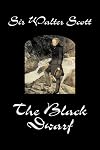
The Black Dwarf
by Sir Walter Scott
Tales of My Landlord (Book 1.1), Waverley Novels, publication (1816), Waverley Novels (1706)
On This Page
Description
Find Out What Scott Really WroteGoing back to the original manuscripts, a team of scholars has uncovered what Scott originally wrote and intended his public to read before errors, misreadings and expurgations crept in during production.The Edinburgh Edition offers you:A clean, corrected textTextual historiesExplanatory notesVerbal changes from the first-edition textFull glossariesTitle DescriptionSet in south-west Scotland in the immediate aftermath of the 1707 Union, The Black Dwarf was show more intended to be a story about the first, abortive, Jacobite uprising of 1708. Instead it developed into a gothic tale of the supernatural. This new edition brings out the virtues in the story, long overlaid by Scott's embellishments in later editions. show lessTags
Recommendations





















Member Reviews
The fourth book in the series of "Waverley novels" by Sir Walter Scott (although this book was published under the general name of "Tales of My Landlord" and didn't claim to be by "the author of Waverley").
After three fine books, this one is a dud. The writing seems forced, the plot development seems awkward and all in all, unsatisfactory. Scott later acknowledged that a review by a "friendly critic" while part written, led him to cut the book short. Intended to be two volumes like the previous books, this one is much shorter - 150 pages versus 500-plus in the earlier books. Scott says the feedback was that the character of the solitary dwarf was the problem - more likely to disgust than interest the reader. My view is that the dwarf show more was just as potentially interesting as the Gypsy Queen of Guy Mannering, or the mendicant of The Antiquary - but Scott failed to be generous in his characterisation of the dwarf, in the way of his earlier quirky heroes. show less
After three fine books, this one is a dud. The writing seems forced, the plot development seems awkward and all in all, unsatisfactory. Scott later acknowledged that a review by a "friendly critic" while part written, led him to cut the book short. Intended to be two volumes like the previous books, this one is much shorter - 150 pages versus 500-plus in the earlier books. Scott says the feedback was that the character of the solitary dwarf was the problem - more likely to disgust than interest the reader. My view is that the dwarf show more was just as potentially interesting as the Gypsy Queen of Guy Mannering, or the mendicant of The Antiquary - but Scott failed to be generous in his characterisation of the dwarf, in the way of his earlier quirky heroes. show less
Sir Walter Scott released an anonymous review of his novel, The Black Dwarf, in which he was very critical, especially with the ending. (I wasn't able to find a copy of the review, so I haven't read it, but it is described in the Wikipedia entry for the novel.) I had some problems with the way the story wrapped up, but it was the beginning that gave me the most trouble. It took me awhile to get used to Scott's writing. There are a few reasons for this, which have more to do with my reading than the writing.
1. It’s 19th Century literature and it always takes me awhile to get used to classics after a period of reading modern works.
2. Some of the characters have Scottish accents, which I had to handle by reading out loud and ignoring show more some unfamiliar words. Here’s an example:
“Hout awa, man,” answered the farmer, “ye'll hae heard o' Canny Elshie the Black Dwarf, or I am muckle mistaen – A' the warld tells tales about him, but it's but daft nonsense after a' – I dinna believe a word o't frae beginning to end.”
3. I was expecting the dwarf to appear earlier than he did. Instead he was discussed in conversations before he showed up.
Two things kept me reading. First of all, my daughter, who loves 19th Century literature, said this was her favorite Sir Walter Scott novel. Secondly, one of the reviews I read said another reader had trouble getting into the story, but like it once he did. I’m glad I kept going.
The plot is about a dwarf who was betrayed by the few people he trusted. Because he feels people have let him down, he decides to escape to the forest to become a hermit. The villagers who live near this man believe him to be a demon with supernatural powers, but the animals in the forest treat him as they would treat any other human. He finds solace in the animals and just wants the people to leave him alone. Of course, that doesn’t happen. Throughout the story Scott contrasts compassionate people with others who are manipulative and selfish in ways that bring home the points he was trying to make.
I thought Scott hit the readers a little too hard at times and I also didn't like the way the story wrapped up a bit too perfectly. But I loved the idea of a man who decided to escape from humanity and find peace through a natural, solitary life.
Steve Lindahl - author of Motherless Soul and White Horse Regressions show less
1. It’s 19th Century literature and it always takes me awhile to get used to classics after a period of reading modern works.
2. Some of the characters have Scottish accents, which I had to handle by reading out loud and ignoring show more some unfamiliar words. Here’s an example:
“Hout awa, man,” answered the farmer, “ye'll hae heard o' Canny Elshie the Black Dwarf, or I am muckle mistaen – A' the warld tells tales about him, but it's but daft nonsense after a' – I dinna believe a word o't frae beginning to end.”
3. I was expecting the dwarf to appear earlier than he did. Instead he was discussed in conversations before he showed up.
Two things kept me reading. First of all, my daughter, who loves 19th Century literature, said this was her favorite Sir Walter Scott novel. Secondly, one of the reviews I read said another reader had trouble getting into the story, but like it once he did. I’m glad I kept going.
The plot is about a dwarf who was betrayed by the few people he trusted. Because he feels people have let him down, he decides to escape to the forest to become a hermit. The villagers who live near this man believe him to be a demon with supernatural powers, but the animals in the forest treat him as they would treat any other human. He finds solace in the animals and just wants the people to leave him alone. Of course, that doesn’t happen. Throughout the story Scott contrasts compassionate people with others who are manipulative and selfish in ways that bring home the points he was trying to make.
I thought Scott hit the readers a little too hard at times and I also didn't like the way the story wrapped up a bit too perfectly. But I loved the idea of a man who decided to escape from humanity and find peace through a natural, solitary life.
Steve Lindahl - author of Motherless Soul and White Horse Regressions show less
Not all that great a novel, but I read it (and found it interesting) because of a reference to it by Lucasta Miller in The Brontë Myth — one of the characters in Scott's novel is named Earnscliff, which Miller suggests could have been the inspiration of Emily Brontë's naming of the Earnshaw family and of Heathcliff.
In some respects – not a whole lot, but some – we can see some themes from Wuthering Heights in The Black Dwarf. I've yet to read Charlotte's juvenile novella The Green Dwarf, but I have a suspicion that The Black Dwarf may have been an influence on The Green Dwarf considering the general influence of Sir Walter Scott on the Brontës.
In some respects – not a whole lot, but some – we can see some themes from Wuthering Heights in The Black Dwarf. I've yet to read Charlotte's juvenile novella The Green Dwarf, but I have a suspicion that The Black Dwarf may have been an influence on The Green Dwarf considering the general influence of Sir Walter Scott on the Brontës.
Balda 3
Nov 26, 2025Spanish
NBB-3
May 12, 2021Catalan
Ratings
Members
- Recently Added By
Author Information

All Editions
Series

Tales of My Landlord
7 works (Book 1.1)

Waverley Novels, publication
31 works (1816)

Waverley Novels
31 works (1706)
Belongs to Publisher Series
Work Relationships
Is contained in
The Black Dwarf / A Legend of Montrose / Count Robert of Paris / The Surgeon's Daughter by Sir Walter Scott
The Black Dwarf / A Legend of Montrose / The Bride of Lammermoor / Count Robert of Paris by Sir Walter Scott
Has the adaptation
Common Knowledge
- Canonical title
- The Black Dwarf
- Original title
- The Black Dwarf
- Original publication date
- 1816
- People/Characters
- Sir Edward Mauley (Elshie); Elshie (Sir Edward Mauley); Hobbie Elliot; Old Annapple; Lilias Elliot; Jean Elliot (show all 17); Annot Elliot; Grace Armstrong; Patrick Earnscliff; Richard Vere; Isabel Vere; Sir Frederick Langley; Lucy Ilderton; Willie Graeme; Hubert Ratcliffe; Ralph Mareschal; Dr. Hobbler
- Important places
- Scotland, UK (lowlands); Westerburnflat; Ellieslaw Castle
Classifications
Statistics
- Members
- 187
- Popularity
- 175,779
- Reviews
- 5
- Rating
- (3.33)
- Languages
- 7 — Catalan, English, French, German, Hungarian, Portuguese, Spanish
- Media
- Paper, Ebook
- ISBNs
- 72
- ASINs
- 12