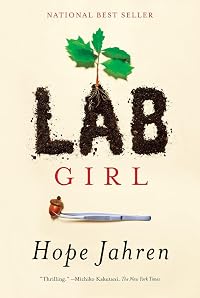
Lab Girl
by Hope Jahren
On This Page
Description
An illuminating debut memoir of a woman in science; a moving portrait of a longtime friendship; and a stunningly fresh look at plants that will forever change how you see the natural worldAcclaimed scientist Hope Jahren has built three laboratories in which she’s studied trees, flowers, seeds, and soil. Her first book is a revelatory treatise on plant life—but it is also so much more.
Lab Girl is a book about work, love, and the mountains that can be moved when those two things come show more together. It is told through Jahren’s remarkable stories: about her childhood in rural Minnesota with an uncompromising mother and a father who encouraged hours of play in his classroom’s labs; about how she found a sanctuary in science, and learned to perform lab work done “with both the heart and the hands”; and about the inevitable disappointments, but also the triumphs and exhilarating discoveries, of scientific work.
Yet at the core of this book is the story of a relationship Jahren forged with a brilliant, wounded man named Bill, who becomes her lab partner and best friend. Their sometimes rogue adventures in science take them from the Midwest across the United States and back again, over the Atlantic to the ever-light skies of the North Pole and to tropical Hawaii, where she and her lab currently make their home.
Jahren’s probing look at plants, her astonishing tenacity of spirit, and her acute insights on nature enliven every page of this extraordinary book. Lab Girl opens your eyes to the beautiful, sophisticated mechanisms within every leaf, blade of grass, and flower petal. Here is an eloquent demonstration of what can happen when you find the stamina, passion, and sense of sacrifice needed to make a life out of what you truly love, as you discover along the way the person you were meant to be.
Music for the Audio Edition:
Composed by Katelyn Sweeney Ching
Margaret Kocher, Cellist
Katelyn Sweeney Ching, Pianist
Mark Robinson, Audio Engineer
Copyright 2016. show less
Tags
Recommendations
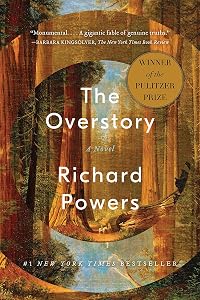
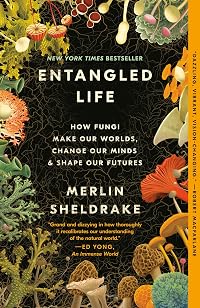
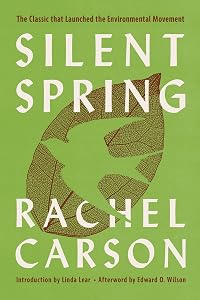
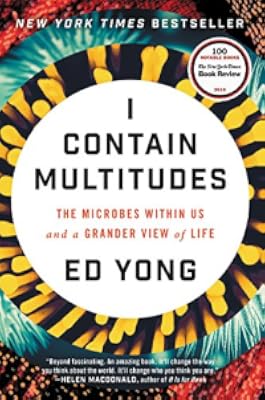
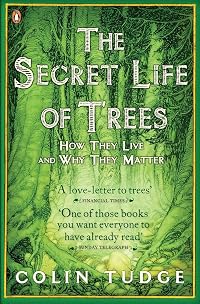
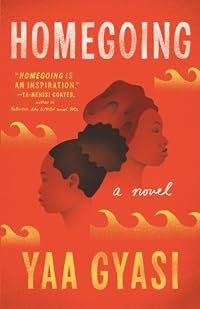

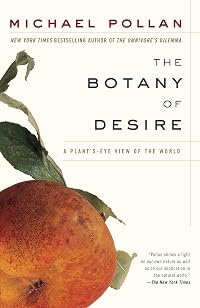
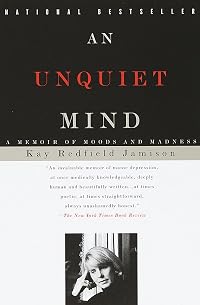
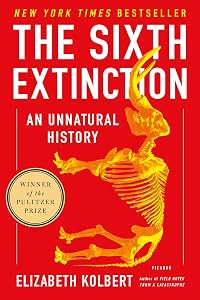

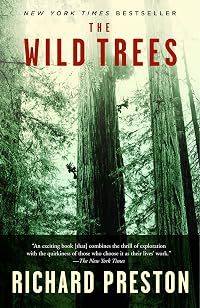

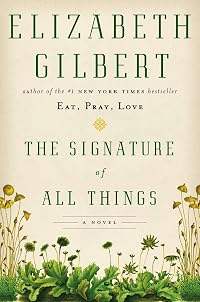
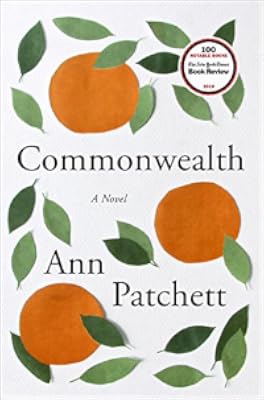
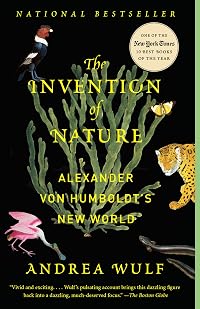
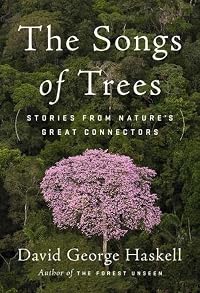
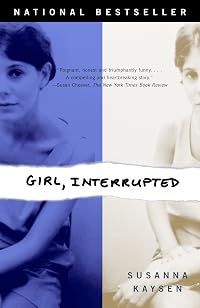
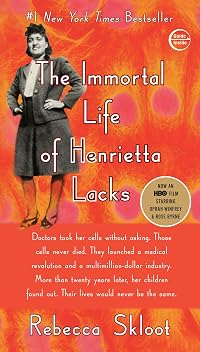







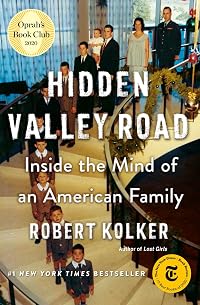
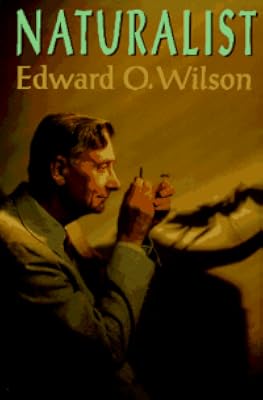

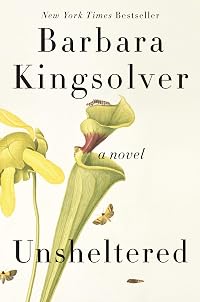
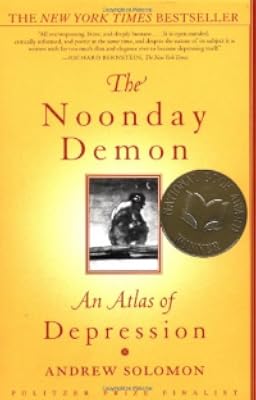
Member Recommendations
harmen Mentioned in the endnote
Member Reviews
My rating for this book is a reflection not so much of my enjoyment of it as my acknowledgement of its importance. Hope Jahren is a successful female research scientist working within a STEM field that's still overwhelmingly male-dominated, a woman with mental illness who has been able to forge an academic career—voices like hers are too rarely heard in academia in general and STEM fields in particular. Jahren focuses less on the highs of her career (she's won multiple Fulbrights, for instance, but I'm not sure that she even mentions that in the book) than she does on the lows and even more so the monotonous middle: the antisocial hours spent doing repetitive prep work in the lab, the constant scrabble to secure funding, the gauntlet show more of aggressions (micro and macro) faced by women in academia.
However, for all Jahren's ability to be very upfront about her experiences (she clearly prides herself on her bluntness), Lab Girl is the kind of memoir that suffers from the author's lack of self-awareness. Although I'm not in a STEM field, I am a woman in academia, and so I'm quite familiar with other women (almost always white women) like Jahren: women for whom sexism is odious inasmuch as it affects them, but who care not one jot about systemic sexism or how it affects other women. Almost the only women to feature in the book are Jahren and her mother (who is treated with a hostility which I find inexplicable, given that nothing in the behaviour attributed to her seems particularly egregious or all that different from that ascribed to Jahren's beloved father), and I was almost surprised to end a book not having encountered a paragraph in which Jahren explains why she's Not Like the Other Girls.
More overtly jarring were Jahren's descriptions of her interactions with students and the means by which she "trains in" new graduate students. If these were the anecdotes she thought made her look like a competent instructor, I'm hoping her grad students have insurance which lets them access a good therapist—or failing that, that they have access to a steady supply of palatable beer. Don't haze your students! Don't pass on fucked-up measures of academic "worth" to students just because academia is messed up and most graduate advisors don't know pedagogical theory from a hole in the wall!
Listening to this as an audiobook was also a mistake. Jahren's talents are undoubtedly many, but acting out even her own words is not one she possesses. The vocal quivering and gulping she employed were distracting and maudlin; it was like listening to an audiobook from the Victorian period.
Listening to the audiobook version also made the section set in Ireland extra obnoxious to me (an Irishwoman), and retroactively made me question the trustworthiness of great swathes of the book. The most egregious example of this is when Jahren describes getting lost in Limerick City, and attributes this to the fact that all of the street signs are in Irish. (Now, I've heard Americans mangle Irish over the years, but never so comprehensively as Hope Jahren. I honestly asked myself if she'd just spoken in Klingon, had to go look up the text of the book on Google Books, and then shrieked at the realisation that she was trying to say "Sráid Eibhlín.) Here's the thing: street signs in Ireland are bilingual, with the English-language text generally appearing in larger font, and the Irish-language version smaller and in italics. There's no way that Jahren was lost and distractedly trying to figure out where "Sráid Eibhlín" was; she had to have known all along that she was on Ellen Street. This might seem like nitpicking, but such an obvious twisting of the truth—whether in service of a little bit of drama or getting an extra bit of comedy out of the Weird Irish—felt like the literary version of the bad scientific practice of p-hacking. show less
However, for all Jahren's ability to be very upfront about her experiences (she clearly prides herself on her bluntness), Lab Girl is the kind of memoir that suffers from the author's lack of self-awareness. Although I'm not in a STEM field, I am a woman in academia, and so I'm quite familiar with other women (almost always white women) like Jahren: women for whom sexism is odious inasmuch as it affects them, but who care not one jot about systemic sexism or how it affects other women. Almost the only women to feature in the book are Jahren and her mother (who is treated with a hostility which I find inexplicable, given that nothing in the behaviour attributed to her seems particularly egregious or all that different from that ascribed to Jahren's beloved father), and I was almost surprised to end a book not having encountered a paragraph in which Jahren explains why she's Not Like the Other Girls.
More overtly jarring were Jahren's descriptions of her interactions with students and the means by which she "trains in" new graduate students. If these were the anecdotes she thought made her look like a competent instructor, I'm hoping her grad students have insurance which lets them access a good therapist—or failing that, that they have access to a steady supply of palatable beer. Don't haze your students! Don't pass on fucked-up measures of academic "worth" to students just because academia is messed up and most graduate advisors don't know pedagogical theory from a hole in the wall!
Listening to this as an audiobook was also a mistake. Jahren's talents are undoubtedly many, but acting out even her own words is not one she possesses. The vocal quivering and gulping she employed were distracting and maudlin; it was like listening to an audiobook from the Victorian period.
Listening to the audiobook version also made the section set in Ireland extra obnoxious to me (an Irishwoman), and retroactively made me question the trustworthiness of great swathes of the book. The most egregious example of this is when Jahren describes getting lost in Limerick City, and attributes this to the fact that all of the street signs are in Irish. (Now, I've heard Americans mangle Irish over the years, but never so comprehensively as Hope Jahren. I honestly asked myself if she'd just spoken in Klingon, had to go look up the text of the book on Google Books, and then shrieked at the realisation that she was trying to say "Sráid Eibhlín.) Here's the thing: street signs in Ireland are bilingual, with the English-language text generally appearing in larger font, and the Irish-language version smaller and in italics. There's no way that Jahren was lost and distractedly trying to figure out where "Sráid Eibhlín" was; she had to have known all along that she was on Ellen Street. This might seem like nitpicking, but such an obvious twisting of the truth—whether in service of a little bit of drama or getting an extra bit of comedy out of the Weird Irish—felt like the literary version of the bad scientific practice of p-hacking. show less
Part memoir, part scientific study involving geobiology, trees, grasses, mosses, flowers, plants and soil, Lab Girl is a scientific love story. The author clearly loves what she does for a living, whether it's teaching or building an entire lab from the ground up, or sharing her work with her platonic soul mate and co-scientist, Bill. The author's unflagging passion for her work is palpable. As she states toward the end of the book, "I will never stop being ravenously hungry for science no matter how well it feeds me."
Jahren's immersion in her work is interspersed with her personal history - from her childhood in Minnesota, to her her studies which take her to seemingly disparate places including California, Alaska, Georgia, Norway, show more Ireland and Hawaii, along with one very precarious cross-country road trip. Though only mentioned a few times, Jahren's experience with bipolar disorder is also part of her story.
Along with her experiences as a wife and first time parent, Lab Girl traverses both the head and heart of scientific exploration - the exhilaration, the meticulous hand's-on "dirty work", the inevitable pit falls, and the unequivocal love for the natural world and all its endless mysteries. Articulate, astute and enlightening, Lab Girl is a marvel. show less
Jahren's immersion in her work is interspersed with her personal history - from her childhood in Minnesota, to her her studies which take her to seemingly disparate places including California, Alaska, Georgia, Norway, show more Ireland and Hawaii, along with one very precarious cross-country road trip. Though only mentioned a few times, Jahren's experience with bipolar disorder is also part of her story.
Along with her experiences as a wife and first time parent, Lab Girl traverses both the head and heart of scientific exploration - the exhilaration, the meticulous hand's-on "dirty work", the inevitable pit falls, and the unequivocal love for the natural world and all its endless mysteries. Articulate, astute and enlightening, Lab Girl is a marvel. show less
Hope Jahren is a geobiologist, which, in her case, seems to involve doing a lot of studies on plants, and a lot of mass spectrometer experiments designed to figure out things about plants and their environments using isotope ratios.
In Lab Girl, she talks about various aspects of her life and her career: growing up in a family who seldom spoke to each other; the painstaking care with which she goes about doing science and the careless neglect that seems to have characterized much of her personal life; the struggles of scientists to get funding and her particular difficulties as a woman in science; her struggles with bipolar disorder; her somewhat strange but very deep connection with her lab assistant/bff; her love of plants; and the show more ways in which she has grown in her life.
She intersperses all of these personal musings with short, sometimes rather poetic descriptions of how plants grow and survive and reproduce. These chapters generally reflect in a metaphorical fashion on things in her own life, but she never pushes that so far it starts to feel artificial or cute. And they're kind of fascinating. I know they got me thinking in slightly new ways about the trees I pass every day on my way to work, almost without seeing them.
The writing is good, but a little odd, in a hard-to-describe way. It somehow feels simultaneously intimate and distancing, but maybe that's appropriate, because it very much reflects the sense you get of the author and her self-image. She does come across as a bit of a weird person (and her aforementioned research partner/best buddy even more so), but in an interesting way. Sometimes she made me laugh -- she and the people she surrounds herself with seem to be masters of expressing affection via humorous shit-talking -- and sometimes she made me roll my eyes at her a little -- seriously, lady, you should not need to experience a bad accident to know you should wear a seat belt! -- but she's definitely not boring. Even if she does capture very well the un-glamous tedium that is such a large part of scientific research and so seldom acknowledged. show less
In Lab Girl, she talks about various aspects of her life and her career: growing up in a family who seldom spoke to each other; the painstaking care with which she goes about doing science and the careless neglect that seems to have characterized much of her personal life; the struggles of scientists to get funding and her particular difficulties as a woman in science; her struggles with bipolar disorder; her somewhat strange but very deep connection with her lab assistant/bff; her love of plants; and the show more ways in which she has grown in her life.
She intersperses all of these personal musings with short, sometimes rather poetic descriptions of how plants grow and survive and reproduce. These chapters generally reflect in a metaphorical fashion on things in her own life, but she never pushes that so far it starts to feel artificial or cute. And they're kind of fascinating. I know they got me thinking in slightly new ways about the trees I pass every day on my way to work, almost without seeing them.
The writing is good, but a little odd, in a hard-to-describe way. It somehow feels simultaneously intimate and distancing, but maybe that's appropriate, because it very much reflects the sense you get of the author and her self-image. She does come across as a bit of a weird person (and her aforementioned research partner/best buddy even more so), but in an interesting way. Sometimes she made me laugh -- she and the people she surrounds herself with seem to be masters of expressing affection via humorous shit-talking -- and sometimes she made me roll my eyes at her a little -- seriously, lady, you should not need to experience a bad accident to know you should wear a seat belt! -- but she's definitely not boring. Even if she does capture very well the un-glamous tedium that is such a large part of scientific research and so seldom acknowledged. show less
This is a book about studying plants, but also and mostly a book about being a non-neurotypical woman finding her way in a still-often-hostile world while loving science beyond measure. She’s deeply, deeply weird in a way I recognize, with a knack for turning a phrase and some nice subtle uses of plant development to contrast with her own life story.
I listened to this one with the eBook open nearby for highlighting. The narration is pretty slow and Jahren's voice is very soothing, so I had to speed it up to almost 1.5x. I found this one because I'm in a houseplant phase (I've recently added several to my collection) and I wanted something similar to Soil. Camille Dungy is a poet and professor, Hope Jahren is a geobiologist and professor -- both are good with words.
I have three, all in my Grandma's yard (which is no longer my Grandma's yard) where I spent weekdays while my mom was working. A magnolia that I periodically convince myself has been cut down or moved (it's still there), a pecan tree that show more dropped nuts some years and didn't in others (it is no longer there), and a row of camellias that I used to hide under (also no longer there). Jahren's childhood tree lived for 80+ years, Grandma's magnolia has been standing for 40+ years. Like the author, I like thinking about the lives of trees, what they've seen, what they know (makes me think of Wishtree). That magnolia watched my Grandma smoke many secret cigarettes out her backdoor.
I liked learning about Hope Jahren's journey from kid in the lab with her dad to scientist with her own lab(s) with her best friend Bill. I LOVED the chapters about the lives of trees, vines, cactus, and other plants. Jahren sprinkles in literary quotes — one chapter about her time working in a hospital pharmacy in college references David Copperfield repeatedly (I've never read any Dickens though...).
This book covers Jahren's career, friendship, pregnancy, mental health, and lots of plants — perfect for readers of Finding the Mother Tree, Braiding Sweetgrass, Forest Euphoria, and The Light Eaters. show less
"Like most people, I have a particular tree that I remember from my childhood."
I have three, all in my Grandma's yard (which is no longer my Grandma's yard) where I spent weekdays while my mom was working. A magnolia that I periodically convince myself has been cut down or moved (it's still there), a pecan tree that show more dropped nuts some years and didn't in others (it is no longer there), and a row of camellias that I used to hide under (also no longer there). Jahren's childhood tree lived for 80+ years, Grandma's magnolia has been standing for 40+ years. Like the author, I like thinking about the lives of trees, what they've seen, what they know (makes me think of Wishtree). That magnolia watched my Grandma smoke many secret cigarettes out her backdoor.
I liked learning about Hope Jahren's journey from kid in the lab with her dad to scientist with her own lab(s) with her best friend Bill. I LOVED the chapters about the lives of trees, vines, cactus, and other plants. Jahren sprinkles in literary quotes — one chapter about her time working in a hospital pharmacy in college references David Copperfield repeatedly (I've never read any Dickens though...).
This book covers Jahren's career, friendship, pregnancy, mental health, and lots of plants — perfect for readers of Finding the Mother Tree, Braiding Sweetgrass, Forest Euphoria, and The Light Eaters. show less
“My laboratory is like a church because it is where I figure out what I believe.”
“Being able to derive happiness from discovery is a recipe for a beautiful life.”
Hope Jahren is a scientist. Her specialty is paleobiology. She also has a strong passion and dedication to trees.
In this terrific memoir, Jahren describes her early life in Minnesota and her growing fascination with nature and the art of discovery. She then discusses her rise through the scientific ranks, with all the various successes and pitfalls, that crop up, along the way. She is currently a professor of geobiology at the University of Hawaii.
Jahren takes the reader through her personal life, dealing with a bipolar disorder and starting a family. She also show more happens to be a very good writer and she offsets the drier, scientific analysis, with clarity and dazzling prose.
Narrative nonfiction has really been shining, these past few years and I can gladly add Lab Girl, to the mix. show less
“Being able to derive happiness from discovery is a recipe for a beautiful life.”
Hope Jahren is a scientist. Her specialty is paleobiology. She also has a strong passion and dedication to trees.
In this terrific memoir, Jahren describes her early life in Minnesota and her growing fascination with nature and the art of discovery. She then discusses her rise through the scientific ranks, with all the various successes and pitfalls, that crop up, along the way. She is currently a professor of geobiology at the University of Hawaii.
Jahren takes the reader through her personal life, dealing with a bipolar disorder and starting a family. She also show more happens to be a very good writer and she offsets the drier, scientific analysis, with clarity and dazzling prose.
Narrative nonfiction has really been shining, these past few years and I can gladly add Lab Girl, to the mix. show less
Lab Girl was a mixed bag for me. It's a memoir of a scientist who studies paleobotany. The science info about trees and plants and the trials and tribulations of being a scientist were fascinating - 5 star writing.
On the other hand, the details of her personal life and the general vibe of her personality were really annoying. The first half of the book I just kept thinking "why in the world is she living like this?" Crazy all-nighters working, eating awful food, not showering, weird relationship with a coworker, etc. Then she reveals that she's bipolar and finally gets on medication, so some of that evens out. But still, I think I would not like her personality in person. She has a strange sense of humor. Normally I'm careful to not show more judge a female writer in this way, because I think women are usually held to a higher standard of what is acceptable in their personality than men are. In this instance, though, Jahren makes her personality such a big part of the book that it was impossible for me not to comment on.
I also was really thrown by the title of this book. With "girl" in the title, I was expecting a memoir by someone young and new to the career. Maybe some humor and levity. But Hope Jahren is anything but a "girl". She's an adult woman with lots of awards and recognition in her field. I think using the word "girl" detracts from her accomplishments and sets the reader up for a different book than they are going to get. Maybe that's just me since using the world girl to describe grown women is a real pet peeve of mine.
As I said, a mixed bag for me. I think enough of it was fascinating that I would still recommend it. I just am afraid that I will remember the annoying parts most. show less
On the other hand, the details of her personal life and the general vibe of her personality were really annoying. The first half of the book I just kept thinking "why in the world is she living like this?" Crazy all-nighters working, eating awful food, not showering, weird relationship with a coworker, etc. Then she reveals that she's bipolar and finally gets on medication, so some of that evens out. But still, I think I would not like her personality in person. She has a strange sense of humor. Normally I'm careful to not show more judge a female writer in this way, because I think women are usually held to a higher standard of what is acceptable in their personality than men are. In this instance, though, Jahren makes her personality such a big part of the book that it was impossible for me not to comment on.
I also was really thrown by the title of this book. With "girl" in the title, I was expecting a memoir by someone young and new to the career. Maybe some humor and levity. But Hope Jahren is anything but a "girl". She's an adult woman with lots of awards and recognition in her field. I think using the word "girl" detracts from her accomplishments and sets the reader up for a different book than they are going to get. Maybe that's just me since using the world girl to describe grown women is a real pet peeve of mine.
As I said, a mixed bag for me. I think enough of it was fascinating that I would still recommend it. I just am afraid that I will remember the annoying parts most. show less
Members
- Recently Added By
Published Reviews
ThingScore 100
With “Lab Girl,” Jahren has taken the form of the memoir and done something remarkable with it. She’s made the experience of reading the book mimic her own lived experience in a way that few writers are capable of.
She swerves from observations about plant life (“A cactus doesn’t live in the desert because it likes the desert; it lives there because the desert hasn’t killed it show more yet”) to a report from the interior of her tortured brain (“Full-blown mania lets you see the other side of death”) to adventures on the road with Bill (“ ‘Do you really think this is illegal?’ I asked Bill over the CB radio.”) — and somehow, it all works, because the structure and the language follow the story. show less
She swerves from observations about plant life (“A cactus doesn’t live in the desert because it likes the desert; it lives there because the desert hasn’t killed it show more yet”) to a report from the interior of her tortured brain (“Full-blown mania lets you see the other side of death”) to adventures on the road with Bill (“ ‘Do you really think this is illegal?’ I asked Bill over the CB radio.”) — and somehow, it all works, because the structure and the language follow the story. show less
added by smasler
Lists

Best Biographies, Autobiographies and Memoirs
465 works; 160 members

Recommended Nature Writing
346 works; 180 members

Best Autobiographies and Memoirs
370 works; 67 members

Top Five Books of 2018
802 works; 265 members

Books recommended by Barack Obama
295 works; 28 members
Top Five Books of 2017
757 works; 231 members

Non-Fiction Worth Reading
1,015 works; 261 members

Top Five Books of 2019
387 works; 111 members

Top Five Books of 2015
811 works; 241 members

Top Five Books of 2016
795 works; 229 members

Top Five Books of 2020
982 works; 350 members

Phi Beta Kappa reading list
260 works; 8 members

Science
13 works; 1 member

Barack Obama's Summer Reading List 2019
10 works; 2 members

Books Read in 2024
4,623 works; 126 members

Best Biographies of Notable Women
279 works; 101 members
Club Read's Recommended Nonfiction Written by Women
618 works; 30 members

Books Read in 2017
4,249 works; 129 members

The r/AskScience Reading List
159 works; 3 members

Five star books
1,767 works; 110 members

Netgalley Reads
460 works; 3 members

To Read
617 works; 7 members

Penguin Random House
458 works; 4 members

Ry's Uncover Challenge Window Shopping
14 works; 1 member
Author Information

4 Works 3,853 Members
Some Editions
Awards and Honors
Awards
Distinctions
The Guardian Book of the Day (2016-04-29)
The Guardian Book of the Day (2016-04-24)
Work Relationships
Has as a student's study guide
Common Knowledge
- Canonical title
- Lab Girl
- Original publication date
- 2016-04-05
- People/Characters
- Hope Jahren; Bill Hagopian; Clint Conrad
- Important places
- University of Minnesota; Berkeley, California, USA; University of California, Berkeley; Georgia Institute of Technology, Atlanta; Johns Hopkins University Medical Center; University of Hawai'i (show all 8); Norway; Ireland
- Epigraph
- The more I handled things and learned their names and uses, the more joyous and confident grew my sense of kinship with the rest of the world. -Helen Keller
- Dedication
- Everything that I write is dedicated to my mother.
- First words
- People love the ocean.
There is nothing in the world more perfect than a slide rule. - Quotations
- ...silent togetherness is what Scandinavian families do naturally, and it may be what they do best.
In my own small experience, sexism has been something very simple: the cumulative weight of constantly being told that you can't possibly be what you are.
A cactus doesn’t live in the desert because it likes the desert; it lives there because the desert hasn’t killed it yet.
I have learned that raising a child is essentially one long, slow agony of letting go. - Last words
- (Click to show. Warning: May contain spoilers.)When you're a scientist, it means that you're doing it right.
- Blurbers
- Verghese, Abraham; LeBlanc, Adrian Nicole; Patchett, Ann; Strayed, Cheryl
- Original language
- English
Classifications
- Genres
- Biography & Memoir, Science & Nature, General Nonfiction, Nonfiction
- DDC/MDS
- 570.92 — Natural sciences & mathematics Biology Life Science: Biology, Cells & Genetics History, geographic treatment, biography Biologists
- LCC
- QH31 .J344 .A3 — Science Natural history – Biology Natural history (General) General
- BISAC
Statistics
- Members
- 3,194
- Popularity
- 5,418
- Reviews
- 175
- Rating
- (4.05)
- Languages
- 10 — Czech, English, Estonian, French, German, Korean, Polish, Portuguese, Spanish, Swedish
- Media
- Paper, Audiobook, Ebook
- ISBNs
- 33
- ASINs
- 12