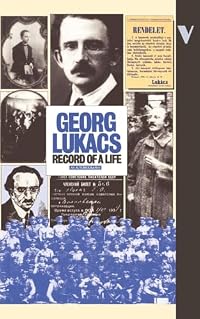
Record of a Life: An Autobiographical Sketch
by Georg Lukacs
36 Members (4.50)
On This Page
Description
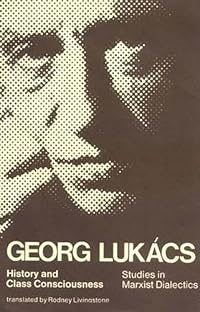
This revealing autobiography of the Hungarian Marxist philosopher Georg Lukács is centered on a series of interviews that he gave in 1969 and 1971, shortly before his death on 4 June 1971. Stimulated by the sympathetic yet incisive questioning of the interviewer, the Hungarian essayist István Eörsi, Lukács discusses at length the course of his life, his years of political struggle, and his formation and role as a Marxist intellectual. From a highly evocative account of his childhood and show more school years, Lukács proceeds to discuss his political awakening; the debates within the socialist movement over the First World War form the prelude to an assessment of Tactics and Ethics, written in 1919; from there the discussion turns to Lukács's early major contribution to Marxist philosophy, History and Class Consciousness. After considering at length the years of emigration in Vienna and the Soviet Union, Lukács finally recalls his return to Hungary after the Second World War, and his new position as a revolutionary left critic of actually existing socialism. "By socialist democracy," he wrote in 1970, "I understand democracy in ordinary life, as it appears in the Workers' Soviets of 1871, 1905 and 1917, as it once existed in the socialist countries, and in which form it must be re-animated." This Record of a Life, which includes an introduction by István Eörsi, furnishes a compelling tribute to a remarkable man. show lessTags
Recommendations












Member Reviews
Members
- Recently Added By
Author Information

329+ Works 4,562 Members
George Steiner calls Lukacs "the one major critical talent to have emerged from the gray servitude of the Marxist world." This well-known writer on European literature combines a Marxist-Hegelian concern for the historical process with great artistic sensitivity. Lukacs joined the Hungarian Communist party in 1918, serving in its first government show more until the defeat of Bela Kun. He spent many years in exile, first in Berlin and then, from 1933 to 1945, in Moscow, writing and studying. He later became a professor of aesthetics in Budapest, but after the 1956 revolution he was stripped of influence because of his too-friendly attitude to non-Marxist literatures. Steiner has written: "A Communist by conviction, a dialectical materialist by virtue of his critical method, he has nevertheless kept his eyes resolutely on the past. Despite pressure from his Russian hosts, Lukacs gave only perfunctory notice to the much-heralded achievements of Soviet Realism. Instead, he dwelt on the great lineage of eighteenth and nineteenth century European poetry and fiction. The critical perspective is rigorously Marxist, but the choice of themes is central European and conservative." Lukacs has concentrated mainly on criticism of Russian, French, and German authors and often writes in German. Robert J. Clements has reported that Hungarian young people regard him as somewhat passe. (Bowker Author Biography) show less
Classifications
- Genres
- Biography & Memoir, Philosophy, Nonfiction, History, Literature Studies and Criticism
- DDC/MDS
- 199.439 — Philosophy and Psychology Modern western philosophy Philosophy in other geographic areas Europe Central Europe Hungary
- LCC
- B4815 .L84 .A38 — Philosophy, Psychology and Religion Philosophy (General) By period Modern By region or country
- BISAC
Statistics
- Members
- 36
- Popularity
- 796,371
- Rating
- (4.50)
- Languages
- English, Hungarian
- Media
- Paper
- ISBNs
- 3