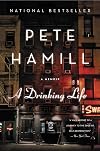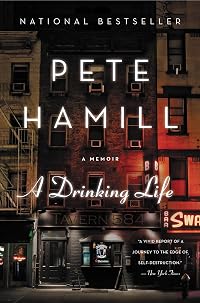
A Drinking Life: A Memoir
by Pete Hamill
On This Page
Description
A journalist and author of Loving Women recreates the hard-drinking Brooklyn-Irish lifestyle that informed every aspect of his childhood and early career and that eventually destroyed his marriage.Tags
Recommendations





Member Reviews
Pete Hamill has been one of my favorite authors and writers for a long time. This book covers ground and was published entirely before he entered my awareness. The story of his boyhood in Brooklyn, in The Neighborhood grabbed me, and didn't let me go until sometime in the mid 1970's when Pete Hamill heard his father singing on a hillside in Ireland (aka the last page of the memoir.). Hamill is still around and writing, so there's no spoilers there. I think the decades that make up the gap from end of this book to current day must, most certainly, be filled with fabulous tales.
I've loved Hamill's writing since I read Snow in August when it first came out in 1997. I gave it to my mother to read and he won my heart with her response. My show more mother grew up in Brooklyn, and though her neighborhood there was not Hamill's, she wept reading the story. "He knows," she said. "He knows." Some of his other books have also found a place on the bookshelf of my heart. When he writes of New York City, you are there, even in his memoir. I will say there were certain elements that fascinated me: that he dreamed of being a cartoonist; that in his quest to find himself, he got lost in his own neighborhood; that he found a way out to follow his art, only to lose it to circumstance, and stumble into what would become his career, and his gift to readers. I read of his time in Mexico City when my offspring was there, enjoying a visit with friends, and experiencing the opposite end of the spectrum from Hamill's experiences (thank goodness.) It was also fascinated to find the well known names, particularly in the last bit of the book, sprinkled into his life, some quite significantly.
Fascinating writing. Fascinating story. Not your usual "how I got sober" story, but one that truly investigated the life he led, how he got to the point that made him rethink, and very briefly, past that point. It's clear that Mr Hamill knows is craft as a writer and reporter. I raise my ginger ale to you, sir. show less
I've loved Hamill's writing since I read Snow in August when it first came out in 1997. I gave it to my mother to read and he won my heart with her response. My show more mother grew up in Brooklyn, and though her neighborhood there was not Hamill's, she wept reading the story. "He knows," she said. "He knows." Some of his other books have also found a place on the bookshelf of my heart. When he writes of New York City, you are there, even in his memoir. I will say there were certain elements that fascinated me: that he dreamed of being a cartoonist; that in his quest to find himself, he got lost in his own neighborhood; that he found a way out to follow his art, only to lose it to circumstance, and stumble into what would become his career, and his gift to readers. I read of his time in Mexico City when my offspring was there, enjoying a visit with friends, and experiencing the opposite end of the spectrum from Hamill's experiences (thank goodness.) It was also fascinated to find the well known names, particularly in the last bit of the book, sprinkled into his life, some quite significantly.
Fascinating writing. Fascinating story. Not your usual "how I got sober" story, but one that truly investigated the life he led, how he got to the point that made him rethink, and very briefly, past that point. It's clear that Mr Hamill knows is craft as a writer and reporter. I raise my ginger ale to you, sir. show less
A deeply evocative story of growing up in Brooklyn among what was even there called 'shanty Irish', poor before, during and after World War II, amidst the culture and relief of alcohol. The atmosphere is almost tangible - I could see the streets and tenements and brownstones of my parents' era - or a little after - and I could see the people, families battered by necessity, children growing up with dreams too easily lost. Hamill paints his own struggle and escape without sentimentality, and with a tender appreciation of family in spite of, and perhaps because of, the silences, the difficulty of articulating a real connection between people in pain.
And all along he draws a portrait of how drink comes to define social interactions, dull show more anxiety, anger and grief, and finally get between a man and what he truly wants and is. Not a typical recovery drama, it is more one man's slow recognition of who he is and how he can become the man, father, husband, artist he wants to be. show less
And all along he draws a portrait of how drink comes to define social interactions, dull show more anxiety, anger and grief, and finally get between a man and what he truly wants and is. Not a typical recovery drama, it is more one man's slow recognition of who he is and how he can become the man, father, husband, artist he wants to be. show less
A Drinking Life is an odyssey. It is an autobiographical examination of alcoholism where the drinking escalates slowly, sip by sip, drink by drink. For me, it dragged on in places. Hamill spends two thirds of the book setting the stage for his lead performance as an alcoholic. Starting with Hamill's early childhood in the early 1940s he recounts his formative years living with his Irish parents in Brooklyn, New York. His father's own battle with the bottle is omnipresent, a constant in Hamill's life. That lays the groundwork for the excuses Hamill will make and his ultimate drinking downfall. Bars and beer are in the background as Hamill describes other obsessions in his life: comics as a child, newspapers, art and fighting as a teen, show more sex throughout the ages, and later as an adult, traveling, politics and writing. Alcohol is the one constant through it all. show less
Even though this is almost 30 years old, I was fascinated by it. His descriptions of growing up in Brooklyn, the immigrant's family struggle, NYC and newspaper journalism in the 1960's, the temptation to "not rise above acceptable mediocrity" really hit home for me. I grew up in that area 20 years after he did, but not much had changed. Not a story for everyone (I was not able to relate to his excessive drinking) but read it just for the prose, and his historical inside perspective.
I picked this book up out of desperation for something, anything to read…and I must admit that the title clinched the deal. “A Drinking Life” – I couldn’t resist. Drama, angst, highs, lows…it’s all right there in the title.
What I wasn’t expecting was a book that depicts a time, place and way of life that has always fascinated me. One of the reasons I love “A Tree Grows in Brooklyn” is the vivid and at the same time, faded sepia description of a New York, and an America that I never knew. I’ve been to New York twice, have seen touristy parts and not so touristy parts, have been at turns delighted and appalled by its residents…and of course, in that short period of time, barely scratched the surface of this city show more that almost defies description. Because, of course, there are so many facets to it. New York depends on the area, the time, the circumstances. One person’s New York may be a polar opposite of the next person’s.
Pete Hamill, in the first half of his memoir, describes the New York of Brooklyn from 1939 to 1950. In this New York, he and his Irish Catholic family struggle to better their situation. They live hand to mouth, in sometimes squalid apartments – too small for a family that keeps growing. And yet – when Hamill spends pages describing the more positive aspects of his childhood – I feel a yearning to be there. To see the far quieter and yet more greatly populated streets. I hope to hear the sounds of stickball, and radios playing jazz and swing into a summer night. I want to feel the safety and connection of a neighborhood that knows each and every member…one that shares the joy of the end of a war that they together shared the dread of.
He describes D day in a New York that had been blacked out for months fearing air raids. “…without warning, the entire skyline of New York erupted into glorious light: dazzling, glittering, throbbing in triumph. And the crowds on the rooftops roared. They were roaring on roofs all over Brooklyn, on streets, on bridges, the whole city roaring for light. There it was, gigantic and brilliant, the way they said it used to be: the skyline of New York. Back again. On D day, at the command of Mayor LaGuardia. And it wasn’t just the skyline. Over on the left was the Statue of Liberty, glowing green from dozens of light beams, a bright red torch held high over her head. The skyline and the statue: in all those years of the war, in all those years of my life, I had never seen either of them at night. I stood there in the roar, transfixed.”
He also describes his love of books, and words, and comics and the magic that happens when one is drawn into the new world of a story. When you discover a world, an existence, a universe previously unknown.
“But when we lived on Thirteenth Street, the content of the comics was driving deep into me. They filled me with secret and lurid narratives, a notion of the hero, a sense of the existence of evil. They showed me the uses of the mask, insisting that heroism was possible only when you fashioned an elaborate disguise. Most important was the lesson of the magic potion. The comics taught me, and millions of other kids, that even the weakest human being could take a drink and be magically transformed into someone smarter, bigger, braver. All you needed was the right drink.”
And there it is, of course. The underlying thread of the book…drinking. From the earliest age, alcohol is everywhere in Hamill’s life. In his neighborhood, in his home, even in his history – drinking is an accompaniment to all events, large and small.
When he reads Dr. Jekyll and Mr. Hyde, the passage that stands out is one where Jekyll drinks the potion and is transformed in a hideous way…”I read that passage and thought of my father.” Hamill is deeply influenced by his father…hating what drinking does to him at the same time he is learning that drinking is what men do.
As the book continues, some of the detail of Hamill’s life is lost, certainly because (as he is first to point out) much of it was lost to him as well due to alcohol, but I also got the sense that this part of the book was rushed. It almost felt like Hamill was looking at how much had written about his early life and realizing that he’d better move things along if was ever to finish.
Still – there are passages like these that sucked me right back in. “In the summer of 1950, all of us from the Neighborhood hung out in a place on Coney Island called the Oceantide. Built on the boardwalk at Bay 22, it was a block long complex with a swimming pool, lockers, a long packed bar, and a small fenced-off area where the young men danced with the young women to a bubbling Wurlitzer jukebox. Down the block was a shop called Mary’s, which sold the most fabulous hero sandwiches in New York, great thick concoctions of ham and cheese and tomatoes laced with mustard or mayonnaise, along with cases of ice cold sodas.”
My mouth waters just thinking about it…I want to be there!
Finally, towards the end, Hamill comes to the realization that he’s spent his whole life trying to either be exactly like or nothing like all of the influences in his life. Nothing like his father, and yet just like his father. Exactly like the comic book artists and heroes. Exactly like and nothing like his friends from the Neighborhood. Not only his life, but his writing is an imitation or rejection of that of others.
Which is summed up in the mantra he uses to quit drinking. “I will live my life, I will not perform it.” There is much time and experience and emotions that he has lost – but in the end, he is able to find the strength to cut the losses.
“And I loved my life, with all its hurts and injuries and failures, and the things I now saw clearly, and the things I only remembered through the golden blur of drink.” show less
What I wasn’t expecting was a book that depicts a time, place and way of life that has always fascinated me. One of the reasons I love “A Tree Grows in Brooklyn” is the vivid and at the same time, faded sepia description of a New York, and an America that I never knew. I’ve been to New York twice, have seen touristy parts and not so touristy parts, have been at turns delighted and appalled by its residents…and of course, in that short period of time, barely scratched the surface of this city show more that almost defies description. Because, of course, there are so many facets to it. New York depends on the area, the time, the circumstances. One person’s New York may be a polar opposite of the next person’s.
Pete Hamill, in the first half of his memoir, describes the New York of Brooklyn from 1939 to 1950. In this New York, he and his Irish Catholic family struggle to better their situation. They live hand to mouth, in sometimes squalid apartments – too small for a family that keeps growing. And yet – when Hamill spends pages describing the more positive aspects of his childhood – I feel a yearning to be there. To see the far quieter and yet more greatly populated streets. I hope to hear the sounds of stickball, and radios playing jazz and swing into a summer night. I want to feel the safety and connection of a neighborhood that knows each and every member…one that shares the joy of the end of a war that they together shared the dread of.
He describes D day in a New York that had been blacked out for months fearing air raids. “…without warning, the entire skyline of New York erupted into glorious light: dazzling, glittering, throbbing in triumph. And the crowds on the rooftops roared. They were roaring on roofs all over Brooklyn, on streets, on bridges, the whole city roaring for light. There it was, gigantic and brilliant, the way they said it used to be: the skyline of New York. Back again. On D day, at the command of Mayor LaGuardia. And it wasn’t just the skyline. Over on the left was the Statue of Liberty, glowing green from dozens of light beams, a bright red torch held high over her head. The skyline and the statue: in all those years of the war, in all those years of my life, I had never seen either of them at night. I stood there in the roar, transfixed.”
He also describes his love of books, and words, and comics and the magic that happens when one is drawn into the new world of a story. When you discover a world, an existence, a universe previously unknown.
“But when we lived on Thirteenth Street, the content of the comics was driving deep into me. They filled me with secret and lurid narratives, a notion of the hero, a sense of the existence of evil. They showed me the uses of the mask, insisting that heroism was possible only when you fashioned an elaborate disguise. Most important was the lesson of the magic potion. The comics taught me, and millions of other kids, that even the weakest human being could take a drink and be magically transformed into someone smarter, bigger, braver. All you needed was the right drink.”
And there it is, of course. The underlying thread of the book…drinking. From the earliest age, alcohol is everywhere in Hamill’s life. In his neighborhood, in his home, even in his history – drinking is an accompaniment to all events, large and small.
When he reads Dr. Jekyll and Mr. Hyde, the passage that stands out is one where Jekyll drinks the potion and is transformed in a hideous way…”I read that passage and thought of my father.” Hamill is deeply influenced by his father…hating what drinking does to him at the same time he is learning that drinking is what men do.
As the book continues, some of the detail of Hamill’s life is lost, certainly because (as he is first to point out) much of it was lost to him as well due to alcohol, but I also got the sense that this part of the book was rushed. It almost felt like Hamill was looking at how much had written about his early life and realizing that he’d better move things along if was ever to finish.
Still – there are passages like these that sucked me right back in. “In the summer of 1950, all of us from the Neighborhood hung out in a place on Coney Island called the Oceantide. Built on the boardwalk at Bay 22, it was a block long complex with a swimming pool, lockers, a long packed bar, and a small fenced-off area where the young men danced with the young women to a bubbling Wurlitzer jukebox. Down the block was a shop called Mary’s, which sold the most fabulous hero sandwiches in New York, great thick concoctions of ham and cheese and tomatoes laced with mustard or mayonnaise, along with cases of ice cold sodas.”
My mouth waters just thinking about it…I want to be there!
Finally, towards the end, Hamill comes to the realization that he’s spent his whole life trying to either be exactly like or nothing like all of the influences in his life. Nothing like his father, and yet just like his father. Exactly like the comic book artists and heroes. Exactly like and nothing like his friends from the Neighborhood. Not only his life, but his writing is an imitation or rejection of that of others.
Which is summed up in the mantra he uses to quit drinking. “I will live my life, I will not perform it.” There is much time and experience and emotions that he has lost – but in the end, he is able to find the strength to cut the losses.
“And I loved my life, with all its hurts and injuries and failures, and the things I now saw clearly, and the things I only remembered through the golden blur of drink.” show less
A drinking Life is a well-written book told in a very engaging way. Hamill takes the reader fro his youth, where he saw his dad have hardships from drinking through his history of drinking.
What I most liked about this book was the journey through the history of the last half of the 1900s through someone who lived through it. Hamill does a great job of describing our society and a typical New Yorker's reaction to the events such as WWII and the Korean War.
In reflecting on the book, I believe that Hamill struck the right cord and tone to entertain the reader with his drinking exploits without reveling in it.
What I most liked about this book was the journey through the history of the last half of the 1900s through someone who lived through it. Hamill does a great job of describing our society and a typical New Yorker's reaction to the events such as WWII and the Korean War.
In reflecting on the book, I believe that Hamill struck the right cord and tone to entertain the reader with his drinking exploits without reveling in it.
A moving memoir of a life that came close to being destroyed by drinking, not the drinking of merely an anguished individual but of a class and a race, the working Irish of New York. Hard work and occasional heartbreak made bearable by the camaraderie of the bars and parties.
Members
- Recently Added By
Lists

Hachette Book Group
152 works; 6 members

Mustich's 1000 Books to Read Before You Die: A Life Changing List
1,001 works; 19 members
Author Information

42+ Works 6,860 Members
Awards and Honors
Distinctions
Notable Lists
Common Knowledge
- Important places
- Brooklyn, New York, New York, USA
Classifications
Statistics
- Members
- 672
- Popularity
- 42,845
- Reviews
- 13
- Rating
- (3.66)
- Languages
- English
- Media
- Paper, Audiobook, Ebook
- ISBNs
- 10
- UPCs
- 1
- ASINs
- 6