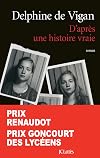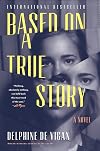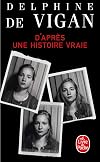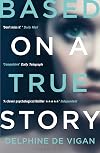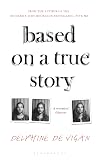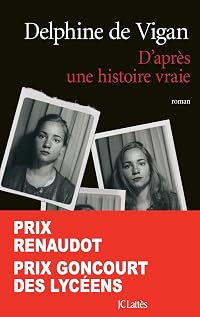
Based on a True Story
by Delphine de Vigan
On This Page
Description
This sophisticated psychological thriller skillfully blurs the line between fact and fiction, reality and artifice. Delphine de Vigan has crafted a terrifying, insidious, meta-fictional thriller; a haunting vision of seduction and betrayal; a book which in its hungering for truth implicates the reader, too--even as it holds us in its thrall.Tags
Recommendations



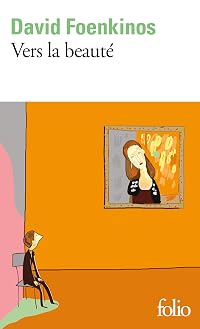
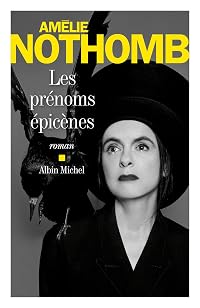
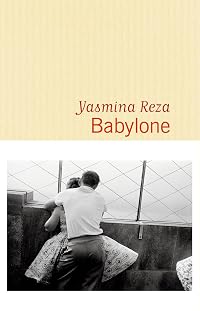

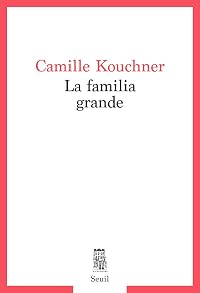





Member Recommendations
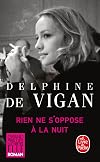
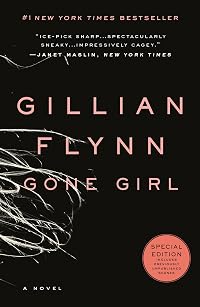
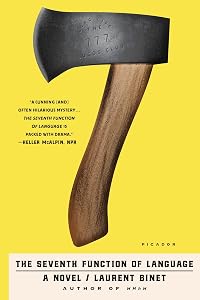
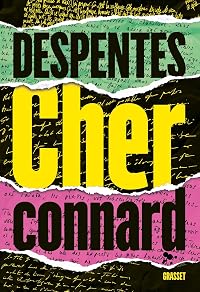
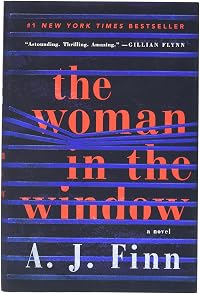
JuliaMaria autobiografische Romane
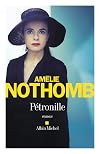
JuliaMaria Jeweils erfolgreiche Schriftsstellerin - offensichtlich die Autorin selbst - als Hauptperson, die sich ein Gegenüber, eine Freundin sucht ... mit überraschendem Ende in beiden Fällen
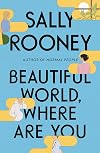
JuliaMaria Es geht jeweils um eine mit ihrem letzten Buch sehr erfolgreichen Schriftstellerin und wie sie danach wieder ins Leben zurückkommen.
Member Reviews
(Reprinted from the Chicago Center for Literature and Photography [cclapcenter.com]. I am the original author of this essay, as well as the owner of CCLaP; it is not being reprinted illegally.)
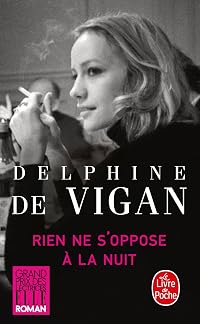
In a way it's easy to describe to American audiences the plot of celebrated French author Delphine de Vigan's new book, Based On A True Story; it's essentially an intellectual version of the old B-pic thriller Single White Female, in which a public artist meets and gets along with one of her fans, the fan turns obsessive, and the fan eventually attempts to take over the artist's life, moving into her house and gaining access to her email and eventually even showing up to public events dressed and acting like her. But this gets a lot more show more complicated and metafictional when it comes to de Vigan's book; for the artist being stalked is her herself, the whole thing written as a true memoir even though it clearly is not, the project inspired by the fact that the last novel de Vigan published, 2011's Rien ne s'oppose à la nuit (Nothing Holds Back the Night), was a semi-autobiographical novel about coping with her real-life mother's bipolar disorder, which made her a mainstream celebrity in France but also garnered her passionate hatred among certain circles for "exploiting" the real-life mental illness of another person for her own personal gain.
What True Story is, then, is a meditation on where exactly the slippery line lays between real-life events and made-up details when it comes to the act of a novelist writing a fictional novel, the same subject famously explored in John Irving's The World According to Garp; but instead of doing this the usual dry academic way of writers her type, here she presents it as a supermarket pulp, clearly taking a cue off Paul Auster by weaving herself into this story of fandom gone wrong, even while cleverly presenting the details in a way so that it might turn out that the mysterious "L." is in fact a figment of de Vigan's stressed, overly exhausted, nearly burnt-out imagination. (None of de Vigan's friends ever meet L; she always rents pre-furnished apartments so to leave no trace of herself after leaving; the fake emails she sends out to de Vigan's friends are always in de Vigan's name; the details she tells de Vigan about her personal life turn out to have all been culled from the books in de Vigan's library, etc.)
It's a very clever and thought-provoking book, not just an astute examination of the creative process but also a commentary on the times we currently live in, when reality TV and edgy documentaries are all the rage, and more and more of those reality-fans are complaining about "why should they care" about a "bunch of stuff that never happened" when it comes to contemporary fiction. De Vigan clearly has some complicated issues regarding the public reaction to her last book, and also clearly struggled with the question of what to write next, of how one could ever return to fiction after having suffered such a maelstrom of public reaction from a book based mostly on real-life events. This is one of the smartest and most entertaining ways she could've addressed these issues, and should satisfy even her harshest critics that she can still write compelling and dramatic stories even when not relying on the crutch of real life, even while proving that there's still a vital and necessary place in our society for stories about a "bunch of stuff that never happened," that fiction at its best is as moving and teaches as much about the world as any snotty serialized documentary. It comes strongly recommended today for these reasons, and will likely also be making CCLaP's "best of the year" list come this December.
Out of 10: 9.6 show less
In a way it's easy to describe to American audiences the plot of celebrated French author Delphine de Vigan's new book, Based On A True Story; it's essentially an intellectual version of the old B-pic thriller Single White Female, in which a public artist meets and gets along with one of her fans, the fan turns obsessive, and the fan eventually attempts to take over the artist's life, moving into her house and gaining access to her email and eventually even showing up to public events dressed and acting like her. But this gets a lot more show more complicated and metafictional when it comes to de Vigan's book; for the artist being stalked is her herself, the whole thing written as a true memoir even though it clearly is not, the project inspired by the fact that the last novel de Vigan published, 2011's Rien ne s'oppose à la nuit (Nothing Holds Back the Night), was a semi-autobiographical novel about coping with her real-life mother's bipolar disorder, which made her a mainstream celebrity in France but also garnered her passionate hatred among certain circles for "exploiting" the real-life mental illness of another person for her own personal gain.
What True Story is, then, is a meditation on where exactly the slippery line lays between real-life events and made-up details when it comes to the act of a novelist writing a fictional novel, the same subject famously explored in John Irving's The World According to Garp; but instead of doing this the usual dry academic way of writers her type, here she presents it as a supermarket pulp, clearly taking a cue off Paul Auster by weaving herself into this story of fandom gone wrong, even while cleverly presenting the details in a way so that it might turn out that the mysterious "L." is in fact a figment of de Vigan's stressed, overly exhausted, nearly burnt-out imagination. (None of de Vigan's friends ever meet L; she always rents pre-furnished apartments so to leave no trace of herself after leaving; the fake emails she sends out to de Vigan's friends are always in de Vigan's name; the details she tells de Vigan about her personal life turn out to have all been culled from the books in de Vigan's library, etc.)
It's a very clever and thought-provoking book, not just an astute examination of the creative process but also a commentary on the times we currently live in, when reality TV and edgy documentaries are all the rage, and more and more of those reality-fans are complaining about "why should they care" about a "bunch of stuff that never happened" when it comes to contemporary fiction. De Vigan clearly has some complicated issues regarding the public reaction to her last book, and also clearly struggled with the question of what to write next, of how one could ever return to fiction after having suffered such a maelstrom of public reaction from a book based mostly on real-life events. This is one of the smartest and most entertaining ways she could've addressed these issues, and should satisfy even her harshest critics that she can still write compelling and dramatic stories even when not relying on the crutch of real life, even while proving that there's still a vital and necessary place in our society for stories about a "bunch of stuff that never happened," that fiction at its best is as moving and teaches as much about the world as any snotty serialized documentary. It comes strongly recommended today for these reasons, and will likely also be making CCLaP's "best of the year" list come this December.
Out of 10: 9.6 show less
Well, this was a mindfuck. Admittedly, it was slow to get going and the first third of the book left me feeling "meh" and I did consider giving up on it. I am glad I persevered because the creepiness factor ramped right up and it finished strong.
The book poses a few questions about what is real and what is fiction, leaving the reader an opportunity to come to a range of conclusions about it, but it was really well done. It wasn't irritating in the way some books are where all the loose ends aren't tied up or the author pulls a "haha, this was all a dream and none of it happened" twist, leave the reader feeling conned.
I enjoyed trying to work out how much of the story was true or made up, and the real motivations of L. and whether she show more was even real or not. show less
The book poses a few questions about what is real and what is fiction, leaving the reader an opportunity to come to a range of conclusions about it, but it was really well done. It wasn't irritating in the way some books are where all the loose ends aren't tied up or the author pulls a "haha, this was all a dream and none of it happened" twist, leave the reader feeling conned.
I enjoyed trying to work out how much of the story was true or made up, and the real motivations of L. and whether she show more was even real or not. show less
Not a very strong four, but still.
de Vigan's previous book was an autobiographical novel (autofiction or whatever you want to call it) about her mother's death. So her next novel is a novel about an author named Delphine de Vigan who's previous book was an autobiographical novel (autofiction or whatever you want to call it) about her mother's death, and who now finds herself with not only the sort of fame that only a tell-all novel that people take as TRUTH will give you, but also a massive writer's block, Knausgård-style hate mail from her extended family, and a new friend. A new friend, identified only as "L" (or "elle", obviously) who insinuates herself into Delphine's life, gradually takes over her life more and more, and starts show more suggesting to her - more and more forcefully - that this whole "fiction" thing is dead, that people now only want TRUE stories, and that she has to write another TRUE story.
And if the Misery and Stark comparisons weren't ripe for the picking already, de Vigan makes sure to include epigrams from both novels.
And Based On A True Story is fun; de Vigan's style is as slick and personal as it was in her previous books, the whole thing just zips along with one foot in an essay about autofiction and the other in Stephen King's collected works. It's just... You know that feeling when authors of Real Literary Fiction decide to slum it in genre fiction for a book or two, only for it to be obvious that it's not as easy or as original as they think? The twists are a little too obvious, while the stakes don't feel as high as in a truly great horror novel. And it's a bit of a pity, especially since the defense of fiction that she seems to want to mount is one I agree with - but setting it up against autobiography in this way (see also: BEE's Lunar Park) almost puts a responsibility on the novel to actually BE that great, to show every tell-all sobstory "Here's something you can't do!" And while it's a good novel, I'm not sure she quite pulls that off.
But still, neat, and a novel full of question marks that doesn't offer a too neat wrap-up. Good clean entertainment you can't trust. show less
de Vigan's previous book was an autobiographical novel (autofiction or whatever you want to call it) about her mother's death. So her next novel is a novel about an author named Delphine de Vigan who's previous book was an autobiographical novel (autofiction or whatever you want to call it) about her mother's death, and who now finds herself with not only the sort of fame that only a tell-all novel that people take as TRUTH will give you, but also a massive writer's block, Knausgård-style hate mail from her extended family, and a new friend. A new friend, identified only as "L" (or "elle", obviously) who insinuates herself into Delphine's life, gradually takes over her life more and more, and starts show more suggesting to her - more and more forcefully - that this whole "fiction" thing is dead, that people now only want TRUE stories, and that she has to write another TRUE story.
And if the Misery and Stark comparisons weren't ripe for the picking already, de Vigan makes sure to include epigrams from both novels.
And Based On A True Story is fun; de Vigan's style is as slick and personal as it was in her previous books, the whole thing just zips along with one foot in an essay about autofiction and the other in Stephen King's collected works. It's just... You know that feeling when authors of Real Literary Fiction decide to slum it in genre fiction for a book or two, only for it to be obvious that it's not as easy or as original as they think? The twists are a little too obvious, while the stakes don't feel as high as in a truly great horror novel. And it's a bit of a pity, especially since the defense of fiction that she seems to want to mount is one I agree with - but setting it up against autobiography in this way (see also: BEE's Lunar Park) almost puts a responsibility on the novel to actually BE that great, to show every tell-all sobstory "Here's something you can't do!" And while it's a good novel, I'm not sure she quite pulls that off.
But still, neat, and a novel full of question marks that doesn't offer a too neat wrap-up. Good clean entertainment you can't trust. show less
This is one of those cases where the novel and reader just weren't compatible. I thought that the story had definite promise and the premise was very intriguing. However, it was a very slow buildup and I quickly lost attention. By the time the story got good, I realized that I wasn't very invested in it and didn't really care too much about the outcome. I will say that I quite enjoyed the writing style of the author; it flowed very nicely and you can tell the author took the time to carefully choose her words. I think that this novel would be best suited for someone looking for a slow, deep character-based book rather than something thrilling.
I received this novel as an advanced copy from NetGalley in exchange for an honest review.
I received this novel as an advanced copy from NetGalley in exchange for an honest review.
This story follows Delphine (who seems to be based rather strongly on the author) and her increasingly toxic friendship with fan turned friend L. I loved the blurring between fiction and reality in this one (how much is actually based on a true story?) but there were sections I found less interesting. For example, there is a lot of talk about the writing process and although I do dabble in the art, I just felt like there was maybe a bit much of it. I mean, I completely get why it's there (I mean, it is a book about an author!) but I wasn't as invested in those parts. While I'm not upset that I read this one I am not particularly interested in seeking out more similar books.
A longer review is forthcoming but I have to say I was disappointed. I’ve never read any books by de Vigan and I expected to love this, based on the blurbs and the synopsis and the rave reviews on Goodreads. It’s a metafictional novel that’s a slow burn; voice-driven and atmospheric. These are all stuff I would expect to enjoy and interest me. My problem is the language and style. To me, a first-person novel that deals with a character’s interiority, because it relies utterly on the narrator’s voice, needs a unique sensibility and language that enables the reader to see things differently. The prose in this book is curiously generic and pedestrian. It’s a book that is totally about writers and writing, and it’s strange show more that the language is so uninspired. This was translated from French by George Miller. I don’t know French, so I can’t tell if this is just the author’s style or a weakness in the translation. It felt clunky, too-literal.
(My full review is here: http://www.popmatters.com/review/based-on-a-true-story-by-delphine-de-vigan/)
Would appreciate it if anyone who read the book can respond to a question I have in the spoiler tag:
At any point, does L. relay a story to Delphine about her mother’s suicide? I can’t recall and flipping through I can’t find anything. L. only talks of her husband’s suicide, right? Isn’t this a glaring clue that L. is, in fact, Delphine when Delphine starts transcribing the audio material? Also, looking through descriptions of de Vigan’s “autobiographical novel” Nothing Holds Back the Night, it’s de Vigan who found her mother’s body after her suicide, I think? And with the narrator in this book named Delphine, and de Vigan’s mother’s name in Night given as Lucile, it suggests that L. is a “past self” haunting Delphine. Or a ghost of her mother; not a literal ghost, but the sense of a return of something or someone from Delphine’s past. Also, the last page of madness suggests it’s Delphine reenacting a split self, as a result of trauma due to her family history.
Or on the whole I think L. stands for many things: like a Greek chorus of the voices of literary critics, reviewers, and readers; in other parts, like a combination of all the fiction that Delphine has consumed (all the stuff that she has read and internalised and that has influenced her work, which is a statement about the nature of creativity and writing); and perhaps a ruptured sense of self, Delphine’s imaginary friend all grown up, a version of the self she wants to be and is afraid of. This is in addition to the obvious fact that L. has disappeared without leaving a single trace and being seen/noticed by anyone in Delphine’s life, despite having lived with her for a time and spending all their time together.
All this is interesting to think about; I only wish the reading experience wasn’t so enervating, the language and style lacking any form of enchantment or beauty.
(My full review is here: http://www.popmatters.com/review/based-on-a-true-story-by-delphine-de-vigan/)
Would appreciate it if anyone who read the book can respond to a question I have in the spoiler tag:
At any point, does L. relay a story to Delphine about her mother’s suicide? I can’t recall and flipping through I can’t find anything. L. only talks of her husband’s suicide, right? Isn’t this a glaring clue that L. is, in fact, Delphine when Delphine starts transcribing the audio material? Also, looking through descriptions of de Vigan’s “autobiographical novel” Nothing Holds Back the Night, it’s de Vigan who found her mother’s body after her suicide, I think? And with the narrator in this book named Delphine, and de Vigan’s mother’s name in Night given as Lucile, it suggests that L. is a “past self” haunting Delphine. Or a ghost of her mother; not a literal ghost, but the sense of a return of something or someone from Delphine’s past. Also, the last page of madness suggests it’s Delphine reenacting a split self, as a result of trauma due to her family history.
Or on the whole I think L. stands for many things: like a Greek chorus of the voices of literary critics, reviewers, and readers; in other parts, like a combination of all the fiction that Delphine has consumed (all the stuff that she has read and internalised and that has influenced her work, which is a statement about the nature of creativity and writing); and perhaps a ruptured sense of self, Delphine’s imaginary friend all grown up, a version of the self she wants to be and is afraid of. This is in addition to the obvious fact that L. has disappeared without leaving a single trace and being seen/noticed by anyone in Delphine’s life, despite having lived with her for a time and spending all their time together.
All this is interesting to think about; I only wish the reading experience wasn’t so enervating, the language and style lacking any form of enchantment or beauty.
Un livre qui se lit facilement, agréablement, flirtant avec l'autobiographie, avec la folie, des sentiments présentés avec une finesse que j'aime beaucoup, sans doute parce que je me retrouve dans la plupart, un suspens qui monte doucement mais sûrement, un dénouement qu'on attend depuis le début, mais sans que ça soit pesant, je dirais même que le rythme est plutôt juste bien trouvé pour que la mayonnaise prenne. J'ai dévoré.
Entre [b:Misery|10614|Misery|Stephen King|https://images.gr-assets.com/books/1270545451s/10614.jpg|3230869], [b:Fight Club|5759|Fight Club|Chuck Palahniuk|https://images.gr-assets.com/books/1357128997s/5759.jpg|68729] et [b:Single White Female|1180497|Single White Female|John show more Lutz|https://images.gr-assets.com/books/1181685984s/1180497.jpg|1168381]
Refaire sa vie, qu'est-ce que ça voulait dire, s'agissait-il seulement de ça: faire, défaire, refaire? Comme si nous n'avions qu'un seul fil à tricoter.show less
Members
- Recently Added By
Lists

Review 4
37 works; 3 members

Netgalley Reads
468 works; 3 members
Author Information

23+ Works 3,187 Members
Some Editions
Awards and Honors
Distinctions
Common Knowledge
- Canonical title
- Based on a True Story
- Original title
- D'après une histoire vraie
- Original publication date
- 2015; 2016 (deutsche Ausgabe) (deutsche Ausgabe)
- Important places
- Paris, France; Courseilles, France
- First words
- Einige Monate nach dem Erscheinen meines jüngsten Romans hörte ich auf zu schreiben.
A few months after my last novel came out, I stopped writing. For almost three years, I didn't write a single line. Hackneyed phrases sometimes have to be taken literally: I didn't write a formal letter, a thank-you note, a h... (show all)oliday postcard or a shopping list. Nothing that required any sort of effort or necessitated any concern about form. Not one line, not one word. The sight of a pad, notebook or index card made me feel nauseous. -Chapter 1 - Last words
- (Click to show. Warning: May contain spoilers.)Ich habe Angst, und ich weiß nicht, ob diese Angst existiert, ob sie einen Namen hat.
(Click to show. Warning: May contain spoilers.)I'm scared and I don't know if this fear is real, if it has a name. - Original language
- French
- Canonical DDC/MDS
- 843.92
- Canonical LCC
- PQ2722.I43
Classifications
Statistics
- Members
- 445
- Popularity
- 68,802
- Reviews
- 20
- Rating
- (3.74)
- Languages
- 11 — Catalan, Czech, Danish, Dutch, English, French, German, Italian, Portuguese, Spanish, Swedish
- Media
- Paper, Audiobook, Ebook
- ISBNs
- 45
- ASINs
- 11