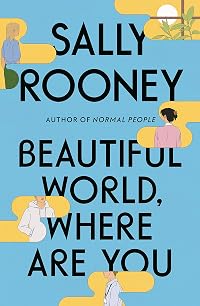
Beautiful World, Where Are You
by Sally Rooney
On This Page
Description
AN INSTANT #1 NEW YORK TIMES BESTSELLERBeautiful World, Where Are You is a new novel by Sally Rooney, the bestselling author of Normal People and Conversations with Friends.
Alice, a novelist, meets Felix, who works in a warehouse, and asks him if he'd like to travel to Rome with her. In Dublin, her best friend, Eileen, is getting over a break-up, and slips back into flirting with Simon, a man she has known since childhood.
Alice, Felix, Eileen, and Simon are still young—but life is show more catching up with them. They desire each other, they delude each other, they get together, they break apart. They have sex, they worry about sex, they worry about their friendships and the world they live in. Are they standing in the last lighted room before the darkness, bearing witness to something? Will they find a way to believe in a beautiful world?
. show less
Tags
Recommendations





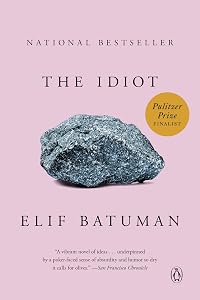
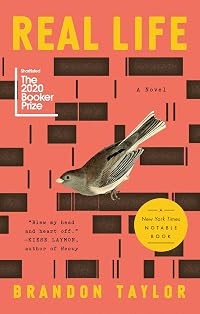
Member Recommendations

by JuliaMaria
JuliaMaria Es geht jeweils um eine mit ihrem letzten Buch sehr erfolgreichen Schriftstellerin und wie sie danach wieder ins Leben zurückkommen.
Member Reviews
his just proved to me i'm still obsessed with reading about people doing nothing in particular, and no matter how mundane, if the characters make up for it, then i'm here for it. i think it says so much about the author that they don't need to rely on all these crazy plot points etc. to make you connect to the characters. 5/5 slay.
I'm going to venture a risky statement: what Elisabeth Strout is to (baby)boomers, Sally Rooney is to millennials. Just like in Normal People, the protagonists in this novel are young women and men who are very insecure about themselves, and therefore have difficulty reaching a "healthy" connection with others, and thus with life itself. Alice, Eileen, Felix and Simon constantly revolve around each other in this story, in endless conversations and emails, and a lot of introspection, occasionally interrupted by a sex scene (but even there, what is said is much more important than the action).
Because of the struggles, self-doubt, loneliness and powerlessness, this seems like a very dark, somewhat frustrating novel. But Rooney actually show more gives it a happy ending, and in several passages there is a musing about the beauty that lies behind the dark world. That repeatedly reminded me of K.O. Knausgard, that other contemporary writer who combines merciless self-reflection with lyrical wonder about the everyday. Our Irish writer is also apparently very intrigued by Christianity, because the two women's e-mail correspondence touches on it several times.
Honestly, what Rooney brings is not really my thing, as I am from a completely different generation. But the way she portrays her four protagonists and lets them interact with each other is truly formidable. I can imagine that many younger people will recognize themselves in the hesitant characters. And isn't that the Unique Selling Proposition of good literature: to let new generations, from different circumstances, struggle and come to terms with the complexity of life? show less
Because of the struggles, self-doubt, loneliness and powerlessness, this seems like a very dark, somewhat frustrating novel. But Rooney actually show more gives it a happy ending, and in several passages there is a musing about the beauty that lies behind the dark world. That repeatedly reminded me of K.O. Knausgard, that other contemporary writer who combines merciless self-reflection with lyrical wonder about the everyday. Our Irish writer is also apparently very intrigued by Christianity, because the two women's e-mail correspondence touches on it several times.
Honestly, what Rooney brings is not really my thing, as I am from a completely different generation. But the way she portrays her four protagonists and lets them interact with each other is truly formidable. I can imagine that many younger people will recognize themselves in the hesitant characters. And isn't that the Unique Selling Proposition of good literature: to let new generations, from different circumstances, struggle and come to terms with the complexity of life? show less
This is not a novel that will be universally admired, even by those who loved the Normal People Netflix series. Those who love it are a perfect circle Venn Diagram with those who also cherished JD Salinger's Franny and Zooey: it's a testimony to the necessity and the futility of love. It's very white and packed with privilege, and even Felix, the seemingly rough working class Tinder-swipe guy, turns out to be a keenly sensitive philosopher. The focus is on Alice and Eileen, two college friends who struggle to stay connected while growing apart. Alice is a successful novelist who resents her own celebrity and financial gains. Eileen feels dead when a three year relationship ends and falls back on childhood friend Simon, who always seems show more to rescue her but never seeks anything for himself. Their scene in church, where Simon finds peace and consolation while Eileen struggles to justify Simon's quiet faith, is the best in the book. The depth of the fraught relationships between all four, and Alice and Eileen's meditations on what matters, which is captured mostly in letters with an occasional outburst of face-to-face confrontations, is almost stream-of-consciousness and the reader ponders (though she SHOULDN'T) what's Rooney and what's the characters. There are too many gorgeous passages to pull a few quotes from and share - the entire book is quotable and to be venerated. show less
Sally Rooney finally wrote the book I fell in love with. IMO, it is far and away her best work, I quite liked Conversations With Friends and I had a love hate thing going on with Normal People, but through it all I loved her writing and knew eventually it would come together for me, and here we are.
In part I imagine this book is more approachable for me because the characters are around 30 rather than around 20. I am far from either of those ages, but the 30 something stuff still feels familiar in a way the 20 something stuff does not. But though that is a factor, I don't think its so much a question of the maturity of the characters as it is the maturity of the writer. There is an assurance here, and a real understanding of how people show more talk to one another. The earlier books are filled with dialogue that rings false. When two 20-year olds at an elite university are talking the endless melodrama and regular resort to obscure literary quotes seem on brand, but grown ups do not talk like that. In prior Sally Rooney books they did. Here the conversation feels natural and right for the characters. There is a series of emails between the two main female characters, Alice and Eileen in which they discuss politics, religion, literature and philosophy in ways smart people might have those discussions. In earlier books someone complained of having cramps and in response someone quoted Lao Tzu or the Brothers Karamazov. Everything seemed like a non-sequitur.
There is among three of the four main characters a pervasive sense of melancholy. They are adults, they did the right things, two of them have achieved a degree of objective success (doing the work they want to do and getting money and recognition for that) two of them are very attractive to boot. All are miserable. A good deal of the misery is self-imposed, caused by their rejection of anything good because of their fear that losing a good thing will hurt more than never having a good thing. Quite a bit of the misery is also due to a fear of looking stupid or foolish or getting rejected which leads several characters, but most especially Alice, to be prickly and aggressive so people do not see her pain and vulnerability. That all feels real to me. It is frustrating, and you want to shake the lot of them, but it feels authentic, and Rooney is a wonderful reporter.
Through a lot of the book I was thinking that what I was responding too was the fact that the pall of melancholy had replaced the melodrama in the last two books, and melancholy feels better to me. That opinion, that we had gotten past the melodrama, turned out to be wrong as can be. Just when you are thinking we are going to stick with quiet melancholy, the melodrama returns! The denouement for the three characters who have been friends for many years feels like it could have been snipped from Who's Afraid of Virginia Woolf or maybe The Boys in the Band (the real one or the far less interesting Ryan Murphy version.) Which is to say it was insanely melodramatic, but also wonderfully melodramatic -- the platonic ideal of melodrama. It was great, and it ended with a quiet resolution, a moment when everyone just got worn out and moved forward, and were better for it.
We are talking about Sally Rooney, and I know it pisses people off that her work is so white girl normcore, so I guess something must be said about that. This story is filled with shiny, angsty, highly-educated white people who talk about being socialists and are NOT in any way socialists. That is not an issue for me -- many readers like all of their fiction to look like a Benetton ad, and that is not a goal for me. Though I am thrilled to see characters from groups not often seen in popular literature represented more and more, some stories are just about shiny highly-educated white people, and those can be great stories too. (End of public service announcement.)
Rooney tackles many themes in this book, and opens up space to think about and talk about things that are obvious but to which we have become so inured we barely notice them. Some examples: the ways in which celebrity has become our substitute for religion; the ways in which celebrities have become a substitute for friends, with people commenting on their personal lives as if they had the information and the relationship required to form and merit an opinion; and, power dynamics and relationship rules in the age of feminism, sexual and gender creativity, and consent. The last is perhaps the most damaging for the books characters. We can all agree (I hope) that inclusion, communication and express consent are necessary and good. That said, as in life, the consent elements in the book's sex scenes were uncomfortable and very not sexy. Relatedly the dancing around the inner pull of typical gender roles versus the intellectual rejection of same can cause a lot of disconnect. If I want a man to take care of me what does that say about me as a feminist, and if a man wants that role and also fully respects his partner how does he proceed. There is also an intriguing side story about sexuality (view spoiler) All of these things, the changing sexual mores, definitions of commitment, gender roles, consent make it really hard to have a bonded happily-ever-after relationship, and that is something that many people long for. Toss into that the fact that we have basically brought about the end of the world sooner rather than later, and the concept of future, of the writing novels, marriage and children, really even of romance, seems almost absurd. Its a lot. And yet these four people lurch, often against their will, toward connection and future, and they are compelling as all get out as they do. show less
In part I imagine this book is more approachable for me because the characters are around 30 rather than around 20. I am far from either of those ages, but the 30 something stuff still feels familiar in a way the 20 something stuff does not. But though that is a factor, I don't think its so much a question of the maturity of the characters as it is the maturity of the writer. There is an assurance here, and a real understanding of how people show more talk to one another. The earlier books are filled with dialogue that rings false. When two 20-year olds at an elite university are talking the endless melodrama and regular resort to obscure literary quotes seem on brand, but grown ups do not talk like that. In prior Sally Rooney books they did. Here the conversation feels natural and right for the characters. There is a series of emails between the two main female characters, Alice and Eileen in which they discuss politics, religion, literature and philosophy in ways smart people might have those discussions. In earlier books someone complained of having cramps and in response someone quoted Lao Tzu or the Brothers Karamazov. Everything seemed like a non-sequitur.
There is among three of the four main characters a pervasive sense of melancholy. They are adults, they did the right things, two of them have achieved a degree of objective success (doing the work they want to do and getting money and recognition for that) two of them are very attractive to boot. All are miserable. A good deal of the misery is self-imposed, caused by their rejection of anything good because of their fear that losing a good thing will hurt more than never having a good thing. Quite a bit of the misery is also due to a fear of looking stupid or foolish or getting rejected which leads several characters, but most especially Alice, to be prickly and aggressive so people do not see her pain and vulnerability. That all feels real to me. It is frustrating, and you want to shake the lot of them, but it feels authentic, and Rooney is a wonderful reporter.
Through a lot of the book I was thinking that what I was responding too was the fact that the pall of melancholy had replaced the melodrama in the last two books, and melancholy feels better to me. That opinion, that we had gotten past the melodrama, turned out to be wrong as can be. Just when you are thinking we are going to stick with quiet melancholy, the melodrama returns! The denouement for the three characters who have been friends for many years feels like it could have been snipped from Who's Afraid of Virginia Woolf or maybe The Boys in the Band (the real one or the far less interesting Ryan Murphy version.) Which is to say it was insanely melodramatic, but also wonderfully melodramatic -- the platonic ideal of melodrama. It was great, and it ended with a quiet resolution, a moment when everyone just got worn out and moved forward, and were better for it.
We are talking about Sally Rooney, and I know it pisses people off that her work is so white girl normcore, so I guess something must be said about that. This story is filled with shiny, angsty, highly-educated white people who talk about being socialists and are NOT in any way socialists. That is not an issue for me -- many readers like all of their fiction to look like a Benetton ad, and that is not a goal for me. Though I am thrilled to see characters from groups not often seen in popular literature represented more and more, some stories are just about shiny highly-educated white people, and those can be great stories too. (End of public service announcement.)
Rooney tackles many themes in this book, and opens up space to think about and talk about things that are obvious but to which we have become so inured we barely notice them. Some examples: the ways in which celebrity has become our substitute for religion; the ways in which celebrities have become a substitute for friends, with people commenting on their personal lives as if they had the information and the relationship required to form and merit an opinion; and, power dynamics and relationship rules in the age of feminism, sexual and gender creativity, and consent. The last is perhaps the most damaging for the books characters. We can all agree (I hope) that inclusion, communication and express consent are necessary and good. That said, as in life, the consent elements in the book's sex scenes were uncomfortable and very not sexy. Relatedly the dancing around the inner pull of typical gender roles versus the intellectual rejection of same can cause a lot of disconnect. If I want a man to take care of me what does that say about me as a feminist, and if a man wants that role and also fully respects his partner how does he proceed. There is also an intriguing side story about sexuality (view spoiler) All of these things, the changing sexual mores, definitions of commitment, gender roles, consent make it really hard to have a bonded happily-ever-after relationship, and that is something that many people long for. Toss into that the fact that we have basically brought about the end of the world sooner rather than later, and the concept of future, of the writing novels, marriage and children, really even of romance, seems almost absurd. Its a lot. And yet these four people lurch, often against their will, toward connection and future, and they are compelling as all get out as they do. show less
No one needs another Sally Rooney review, but this is for me to try to sort out my thoughts about this book, really. Which are what? That it's trying to make an argument about what the novel form is for, in the world's current sociopolitical state. Is that the main point of it? To develop that, it sketches out a view of what our current state is and what the essence of humanity is, and how these interact. It furthermore fumbles around in the dark trying to figure out what ultimate reality lies behind it all, behind all this. Romantically, it seems to find its answer, or the source of the answer, in Love.
Nothing too ambitious then. The theorizing mostly takes place in the emails between Alice and Eileen, the praxis in the narrative show more chapters. The state of the world, of course, is bad. Exploitation of people and resources by the elite have advanced and accelerated to the point where civilizational collapse can be seen approaching. Alice's work, paid extravagantly to write novels, is contrasted with Felix's work, paid poorly to have his body beaten up in an Amazon-like warehouse. The forces that now dominate and have made work life what it currently is leave people unhappy:
In this state, what point is the novel? Rooney sees the disaster like anyone else, and she also enjoys and is extraordinarily good at writing novels, which have made her very well off. The argument against her work, and against the novel generally now, when we appear to stand perilously near the rotting edge of human civilization, is:
Rooney offers two answers to herself that I can see (is this novel Rooney talking with herself? Sure). Firstly, it's that this is what we are. Whatever the state of the world, peoples' essential beings remain what they always have been and always will be. And this essentialness, more permanent and long-lasting than any civilization, is a fitting subject for novels.
So there you are. That's why Rooney writes these novels about sex and friendship, and despite having the character Alice say that she thinks she won't write another novel, I have no doubt that Rooney will continue writing these novels. We've gotten the college age stories, and now the turning thirty story, and so will come the midlife stories.
Secondly, and more sparingly and perhaps hesitatingly suggested, as if Rooney is trying to figure out how to talk about this, is that these fictional stories about sex and relationships and friendships make us more loving people. By doing this, they bring us closer to the reality behind everything:
So that's what I get out of Beautiful World, Where Are You. Despite the bad state of the world, these novels have a use and a point, and the Marxist Rooney will keep writing them. And I'll surely keep reading them, because she can write, she can particularly write dialogue, and I'm a bit fascinated by her. Now for a last beautiful quote:
(I'd give this a 4.5, but rounding up to 5) show less
Nothing too ambitious then. The theorizing mostly takes place in the emails between Alice and Eileen, the praxis in the narrative show more chapters. The state of the world, of course, is bad. Exploitation of people and resources by the elite have advanced and accelerated to the point where civilizational collapse can be seen approaching. Alice's work, paid extravagantly to write novels, is contrasted with Felix's work, paid poorly to have his body beaten up in an Amazon-like warehouse. The forces that now dominate and have made work life what it currently is leave people unhappy:
It is hard in these circumstances not to feel that modern living compares poorly with the old ways of life, which have come to represent something more substantial, more connected to the essence of the human condition. This nostalgic impulse is of course extremely powerful, and has recently been harnessed to great effect by reactionary and fascist political movements, but I'm not convinced that this means the impulse itself is intrinsically fascistic. I think it makes sense that people are looking back wistfully to a time before the natural world started dying, before our shared cultural forms degraded into mass marketing and before our cities and towns became anonymous employment hubs.
In this state, what point is the novel? Rooney sees the disaster like anyone else, and she also enjoys and is extraordinarily good at writing novels, which have made her very well off. The argument against her work, and against the novel generally now, when we appear to stand perilously near the rotting edge of human civilization, is:
The problem with the contemporary Euro-American novel is that it relies for its structural integrity on suppressing the lived realities of most human beings on earth... Who can care, in short, what happens to the novel's protagonists, when it's happening in the context of the increasingly fast, increasingly brutal exploitation of a majority of the human species?
Rooney offers two answers to herself that I can see (is this novel Rooney talking with herself? Sure). Firstly, it's that this is what we are. Whatever the state of the world, peoples' essential beings remain what they always have been and always will be. And this essentialness, more permanent and long-lasting than any civilization, is a fitting subject for novels.
[Eileen]: Alice, do you think the problem of the contemporary novel is simply the problem of contemporary life? I agree it seems vulgar, decadent, even epistemically violent, to invest energy in the trivialities of sex and friendship when human civilisation is facing collapse. But at the same time, that is what I do every day.
Maybe we're just born to love and worry about the people we know, and to go on loving and worrying even when there are more important things we should be doing. And if that means the human species is going to die out, isn't it in a way a nice reason to die out, the nicest reason you can imagine? Because when we should have been reorganising the distribution of the world's resources and transitioning collectively to a sustainable economic model, we were worrying about sex and friendship instead. Because we loved each other too much and found each other too interesting. And I love that about humanity, and in fact it's the very reason I root for us to survive - because we are so stupid about each other.
[Alice]: So of course in the midst of everything, the state of the world being what it is, humanity on the cusp of extinction, here I am writing another email about sex and friendship. What else is there to live for? Love always, Alice.
[Eileen]: What if the meaning of life on earth is not eternal progress toward some unspecified goal - the engineering and production of more and more powerful technologies, the development of more and more complex and abstruse cultural forms? What if these things just rise and recede naturally, like tides, while the meaning of life remains the same always - just to live and be with other people?
So there you are. That's why Rooney writes these novels about sex and friendship, and despite having the character Alice say that she thinks she won't write another novel, I have no doubt that Rooney will continue writing these novels. We've gotten the college age stories, and now the turning thirty story, and so will come the midlife stories.
Secondly, and more sparingly and perhaps hesitatingly suggested, as if Rooney is trying to figure out how to talk about this, is that these fictional stories about sex and relationships and friendships make us more loving people. By doing this, they bring us closer to the reality behind everything:
[I]n his life and death, Jesus emphasised the necessity of loving others without regard to our own self-interest. In a way, when we love fictional characters, knowing that they can never love us in return, is that not a method of practising in miniature the kind of personally disinterested love to which Jesus calls us?
...
When one person kills or harms another person, then there is 'something' - isn't there? Not simply atoms flying around in various configurations through empty space. I don't know how to explain myself, really.
So that's what I get out of Beautiful World, Where Are You. Despite the bad state of the world, these novels have a use and a point, and the Marxist Rooney will keep writing them. And I'll surely keep reading them, because she can write, she can particularly write dialogue, and I'm a bit fascinated by her. Now for a last beautiful quote:
The women unspeaking, their eyes closed tight, their arms wrapped around one another, for a second, two seconds, three... were they in this moment unaware, or something more than unaware - were they somehow invulnerable to, untouched by, vulgarity and ugliness, glancing for a moment into something deeper, something concealed beneath the surface of life, not unreality but a hidden reality: the presence at all times, in all places, of a beautiful world?
(I'd give this a 4.5, but rounding up to 5) show less
Sally Rooney’s writing is still crystal clear and she can still handle herself around a sex scene. She’s still good at integrating communication technology into her dialogue, fitting swipes and clicks seamlessly into the rest of the action. What made me love this even better than Normal People is the way it zooms out from personal relationships to engage subtly but unmistakably with political questions. The characters’ lives and the choices they make feel countercultural in a way I really liked.
A beautiful failure
I liked this book a lot more than Rooney's previous two, even though it is objectively the least well-written. The first adjective that came to mind after I read Conversations with Friends was "bloodless", and I felt the same about Normal People. But this book is not bloodless, and the characters are not as tightly controlled by the author as in the previous two, and for that reason I like it. It's a bit chaotic, not very well written, it's messy, combative, in dire need of a better editor - its blood is up, and for that I appreciate it.
First, the problems: The tone and style-switching may have been planned, but it doesn't read that way. Most of the book takes place in omniscient third person narration, with little show more attempt to narrate the inner lives of the characters - however that abruptly breaks from time to time, as in the chapter where Eileen's family reflect on their respective pasts (really a catalogue of sense memories). There's nothing wrong with this per se, but it doesn't read as though the switch has been planned for a particular literary purpose, other than possibly to make a philosophical point. The switches from character observation to sudden wide-angle views of the scene (even taking in the entire planet at one stage) are not deftly done, and come across as silly and pretentious. Speaking of pretentious, the email device doesn't entirely work either - although I appreciate it more than other readers because it allows at least some of the characters to have a recognisable inner life. The grumpy-young-woman tone of the emails is indeed irritating and the insights far from profound or even original, but the use of the device by the author to get some amusingly petty digs in to the haters and the losers actually appealed to me. Not as a successful literary device, but as an example of very human, blood-up messiness that, whether it was intended to or not, created a line of empathy between reader and writer in a way the previous books did not.
The book doesn't seem to have been properly edited. There are jarring inconsistencies in how technology is described ("map application", "Google maps" and "map app" are all used for the same thing at different times, which seems to defeat the purpose of using non-branded language to describe an app in the first place), the switches in perspective and style are not integrated into the text, and there is some fairly ass-covering examples of lazy section breaks using a backslash. The thing I liked the least, however, was the catalogue-style of description used frequently, especially towards the end, things like "The sound of buses going by" or "Rows of crisp packets". These fragmented sentences read like notes scribbled in the Notes app of a phone and just pasted into the text, without any polishing or editing. That kind of sloppiness annoys me as a reader, especially as there is potential for some nice descriptive material in those unclosed clauses.
Ok, hatchet down! In a way, the fact that this book is a bit of a mess makes me like it more. It is genuinely striving for something profound, and even though it doesn't achieve its goal, the attempt confers a kind of nobility on it, a nobility missing from the previous two books. The characters seek love from each other, but the bigger thing all are looking for is a sense of profundity, of transcendence, of beauty. All have different ways of describing and approaching it, but the impulse is the same. And of course, that is a very human impulse - in fact it could be said to be the impulse behind the romantic endeavours of the characters in the first two novels, if only the author had been willing to let go of them a bit. In this one, she lets the characters (to some extent) off the leash, and they start to, just about, become people.
Felix is probably the character who stays most vividly in the mind, even though his role in the book is frequently that of the Magical Working-Class Character, endlessly curious about his high-falutin' friends and asking them insightful questions that help them to understand themselves better. Despite his different economic circumstances to Alice, he is not really so different from her in outlook or perspective - the framing of the two as chalk and cheese is not really borne out by the text. He reminds me a bit of the trickster character from mythology - the Hermes, Loki or Odysseus - always in motion, small and quick, observant, shit-stirring. The other characters seem ponderous compared to him. He also seems to be the only one with a strong friend group outside of the main four, and a sense of being embedded in the town he lives. Like all Rooney romantic heroes, he is fundamentally wise and secure, providing the prickly, vulnerable Alice with a secure frame on which to grow. He is not entirely consistently portrayed - the authorial need to steer and control characters sometimes deadens his vitality - but when the author allows a loss of control, he suddenly leaps to life.
The use of Catholicism as a possible avenue to transcendence has been controversial to some readers, but it makes a certain amount of sense that the characters would look to it when thinking about religion as a path to beauty - it would have been the religious tradition all were raised in, however tangentially. But it is extremely unrealistic that four characters of their age and time in Ireland would not at least mention the immense and ongoing abuses of power that have characterised the Church all over the world and especially in Ireland. Alice and Simon are portrayed as arguing about the existence of God, and whether belief in a deity is valid or not, when in reality anyone challenging Simon on his Catholicism would be asking him why he was willingly hanging his hat on an institution that committed (and got away with) such heinous crimes in Ireland. In real life, nobody would care if Simon believed in God or not, or even if he prayed, but they would care about his adherence to the Catholic machine. Also, the kind of socially conscious, compassionate, left-wing practicing Catholic that Simon is died out in Ireland a long time ago. There are plenty of socially conscious believers, but they are not attached to the institutional church. In reality, anyone Simon's age in Ireland in the year 2021 who was going to nine-am Mass on the regular would be an extreme reactionary. I don't think novels have a responsibility to exactly mirror real life, but the depiction of institutional Catholicism as just another church you can pick from, which fundamentally believes in goodness and love, is just too implausible to work. As it happens, Eileen is probably the character with the most reactionary tendencies in the book.
Obviously, all the characters fall in love and pair off as expected (that's not a criticism, the fun is in seeing how they overcome the obstacles along the way). Alice and Eileen make up after lowkey fighting over email for months, and their bond is touching, if oddly undeveloped. One interesting subplot is the subtle flirtation between Felix and Simon. Felix (like everyone) is enraptured by Simon's beauty, and is not afraid to reach out and touch it - he floats the possibility of a threesome to an amused Alice, and even tries it on with Simon directly at one point. Simon nobly rebuffs him with talk of how much Alice means to him, but as Felix says later, he was interested. I could see the beginnings of another, even more interesting romance there, one where Felix takes control and allows Simon to be the vulnerable, weak one in need of protection. Also, the sex scenes would be amazing! (An aside about the sex scenes, which are plentiful. They're quite good, if sometimes falling into cliched language. The one thing that took me out of them is how much people talk during sex in this novel! Full-blown, emotionally literate, insightful conversations take place while going at it. I'm impressed, if somewhat sceptical, at these characters' ability to multitask!)
This book is technically all over the place, but it has a warmth and realness missing from Rooney's earlier work. I think the themes she is exploring now are rich and interesting, and hopefully she will be able to refine them into a better work in the future. But parts of this novel are very beautiful and should be praised. I was very moved by Eileen's description of the love between her and Simon as a tiny "acorn" in her breastbone, a thing underneath all the dregs of life that makes it beautiful. Moments like that made me appreciate this novel, its messy, clunky, heartfelt search for beauty and transcendence.
One last note I would like to add: I was immensely impressed by Rooney's stand on the BDS artistic boycott. There is no other prominent Irish novelist who has taken that stand. Lots of artists sign the boycott, but most are low-profile so it is an open question as to whether their principles would hold in the face of public pressure. Rooney has been heinously slandered by right-wing ghouls and her career will definitely be affected since she took the stand, but she has not wavered. You would never see a Colm Toibín, a John Banville or even an Ann Enright take a stand like that, and she deserves respect for it. It's an excellent example of using immense privilege for good - both to draw attention to the BDS cause and to take a genuine, brave risk to that end. Courage and integrity are qualities all too rare in the literary world. Maith sí! show less
I liked this book a lot more than Rooney's previous two, even though it is objectively the least well-written. The first adjective that came to mind after I read Conversations with Friends was "bloodless", and I felt the same about Normal People. But this book is not bloodless, and the characters are not as tightly controlled by the author as in the previous two, and for that reason I like it. It's a bit chaotic, not very well written, it's messy, combative, in dire need of a better editor - its blood is up, and for that I appreciate it.
First, the problems: The tone and style-switching may have been planned, but it doesn't read that way. Most of the book takes place in omniscient third person narration, with little show more attempt to narrate the inner lives of the characters - however that abruptly breaks from time to time, as in the chapter where Eileen's family reflect on their respective pasts (really a catalogue of sense memories). There's nothing wrong with this per se, but it doesn't read as though the switch has been planned for a particular literary purpose, other than possibly to make a philosophical point. The switches from character observation to sudden wide-angle views of the scene (even taking in the entire planet at one stage) are not deftly done, and come across as silly and pretentious. Speaking of pretentious, the email device doesn't entirely work either - although I appreciate it more than other readers because it allows at least some of the characters to have a recognisable inner life. The grumpy-young-woman tone of the emails is indeed irritating and the insights far from profound or even original, but the use of the device by the author to get some amusingly petty digs in to the haters and the losers actually appealed to me. Not as a successful literary device, but as an example of very human, blood-up messiness that, whether it was intended to or not, created a line of empathy between reader and writer in a way the previous books did not.
The book doesn't seem to have been properly edited. There are jarring inconsistencies in how technology is described ("map application", "Google maps" and "map app" are all used for the same thing at different times, which seems to defeat the purpose of using non-branded language to describe an app in the first place), the switches in perspective and style are not integrated into the text, and there is some fairly ass-covering examples of lazy section breaks using a backslash. The thing I liked the least, however, was the catalogue-style of description used frequently, especially towards the end, things like "The sound of buses going by" or "Rows of crisp packets". These fragmented sentences read like notes scribbled in the Notes app of a phone and just pasted into the text, without any polishing or editing. That kind of sloppiness annoys me as a reader, especially as there is potential for some nice descriptive material in those unclosed clauses.
Ok, hatchet down! In a way, the fact that this book is a bit of a mess makes me like it more. It is genuinely striving for something profound, and even though it doesn't achieve its goal, the attempt confers a kind of nobility on it, a nobility missing from the previous two books. The characters seek love from each other, but the bigger thing all are looking for is a sense of profundity, of transcendence, of beauty. All have different ways of describing and approaching it, but the impulse is the same. And of course, that is a very human impulse - in fact it could be said to be the impulse behind the romantic endeavours of the characters in the first two novels, if only the author had been willing to let go of them a bit. In this one, she lets the characters (to some extent) off the leash, and they start to, just about, become people.
Felix is probably the character who stays most vividly in the mind, even though his role in the book is frequently that of the Magical Working-Class Character, endlessly curious about his high-falutin' friends and asking them insightful questions that help them to understand themselves better. Despite his different economic circumstances to Alice, he is not really so different from her in outlook or perspective - the framing of the two as chalk and cheese is not really borne out by the text. He reminds me a bit of the trickster character from mythology - the Hermes, Loki or Odysseus - always in motion, small and quick, observant, shit-stirring. The other characters seem ponderous compared to him. He also seems to be the only one with a strong friend group outside of the main four, and a sense of being embedded in the town he lives. Like all Rooney romantic heroes, he is fundamentally wise and secure, providing the prickly, vulnerable Alice with a secure frame on which to grow. He is not entirely consistently portrayed - the authorial need to steer and control characters sometimes deadens his vitality - but when the author allows a loss of control, he suddenly leaps to life.
The use of Catholicism as a possible avenue to transcendence has been controversial to some readers, but it makes a certain amount of sense that the characters would look to it when thinking about religion as a path to beauty - it would have been the religious tradition all were raised in, however tangentially. But it is extremely unrealistic that four characters of their age and time in Ireland would not at least mention the immense and ongoing abuses of power that have characterised the Church all over the world and especially in Ireland. Alice and Simon are portrayed as arguing about the existence of God, and whether belief in a deity is valid or not, when in reality anyone challenging Simon on his Catholicism would be asking him why he was willingly hanging his hat on an institution that committed (and got away with) such heinous crimes in Ireland. In real life, nobody would care if Simon believed in God or not, or even if he prayed, but they would care about his adherence to the Catholic machine. Also, the kind of socially conscious, compassionate, left-wing practicing Catholic that Simon is died out in Ireland a long time ago. There are plenty of socially conscious believers, but they are not attached to the institutional church. In reality, anyone Simon's age in Ireland in the year 2021 who was going to nine-am Mass on the regular would be an extreme reactionary. I don't think novels have a responsibility to exactly mirror real life, but the depiction of institutional Catholicism as just another church you can pick from, which fundamentally believes in goodness and love, is just too implausible to work. As it happens, Eileen is probably the character with the most reactionary tendencies in the book.
Obviously, all the characters fall in love and pair off as expected (that's not a criticism, the fun is in seeing how they overcome the obstacles along the way). Alice and Eileen make up after lowkey fighting over email for months, and their bond is touching, if oddly undeveloped. One interesting subplot is the subtle flirtation between Felix and Simon. Felix (like everyone) is enraptured by Simon's beauty, and is not afraid to reach out and touch it - he floats the possibility of a threesome to an amused Alice, and even tries it on with Simon directly at one point. Simon nobly rebuffs him with talk of how much Alice means to him, but as Felix says later, he was interested. I could see the beginnings of another, even more interesting romance there, one where Felix takes control and allows Simon to be the vulnerable, weak one in need of protection. Also, the sex scenes would be amazing! (An aside about the sex scenes, which are plentiful. They're quite good, if sometimes falling into cliched language. The one thing that took me out of them is how much people talk during sex in this novel! Full-blown, emotionally literate, insightful conversations take place while going at it. I'm impressed, if somewhat sceptical, at these characters' ability to multitask!)
This book is technically all over the place, but it has a warmth and realness missing from Rooney's earlier work. I think the themes she is exploring now are rich and interesting, and hopefully she will be able to refine them into a better work in the future. But parts of this novel are very beautiful and should be praised. I was very moved by Eileen's description of the love between her and Simon as a tiny "acorn" in her breastbone, a thing underneath all the dregs of life that makes it beautiful. Moments like that made me appreciate this novel, its messy, clunky, heartfelt search for beauty and transcendence.
One last note I would like to add: I was immensely impressed by Rooney's stand on the BDS artistic boycott. There is no other prominent Irish novelist who has taken that stand. Lots of artists sign the boycott, but most are low-profile so it is an open question as to whether their principles would hold in the face of public pressure. Rooney has been heinously slandered by right-wing ghouls and her career will definitely be affected since she took the stand, but she has not wavered. You would never see a Colm Toibín, a John Banville or even an Ann Enright take a stand like that, and she deserves respect for it. It's an excellent example of using immense privilege for good - both to draw attention to the BDS cause and to take a genuine, brave risk to that end. Courage and integrity are qualities all too rare in the literary world. Maith sí! show less
Members
- Recently Added By
Lists

2022 Tournament of Books
18 works; 15 members

Irish writers
87 works; 17 members

Books Read in 2023
5,638 works; 147 members

FT Best books of 2021: Fiction
12 works; 1 member

Books Read in 2021
5,361 works; 114 members

Read Irish Women Challenge 2023
11 works; 3 members

2023
32 works; 1 member

Novels without quotation marks
25 works; 1 member

READ in 2024
262 works; 1 member

Everand 2024
34 works; 1 member

el
1,139 works; 1 member
Author Information

24+ Works 21,982 Members
Sally Rooney is a writer, born in 1991, based in Dublin. Her work has appeared in the New Yorker, Granta, The White Review, The Dublin Review, The Stinging Fly, Kevin Barry's Stonecutter and The Winter Page anthology. Her first book, Conversations with Friends, was published in 2017. It won the Sunday Times/PFD Young Writer of the Year Award. Her show more next book, Normal People, was published in 2018 and won the 2018 Costa Prize for Best New Novel. (Bowker Author Biography) show less
Some Editions
Awards and Honors
Awards
Distinctions
Notable Lists
Series
Belongs to Publisher Series
Otavan kirjasto (292)
Work Relationships
Common Knowledge
- Canonical title
- Beautiful World, Where Are You
- Original title
- Beautiful World, Where Are You
- Original publication date
- 2021-09-07
- People/Characters
- Alice Kelleher; Eileen Lydon; Felix Brady; Simon Costigan
- Important places*
- Dublin, Irland
- Important events*
- Pandemie (2020)
- Epigraph
- When I write something I usually think it is very important and that I am a very fine writer. I think this happens to everyone. But there is one corner of my mind in which I know very well what I am, which is a small, a very... (show all) small writer. I swear I know it. But that doesn't matter much to me.
—Natalia Ginzburg, 'My Vocation' (translated by Dick Davis) - First words
- A women sat in a hotel bar, watching the door.
- Last words
- (Click to show. Warning: May contain spoilers.)All my love.
- Original language*
- englanti
*Some information comes from Common Knowledge in other languages. Click "Edit" for more information.
Classifications
Statistics
- Members
- 3,822
- Popularity
- 4,155
- Reviews
- 107
- Rating
- (3.49)
- Languages
- 18 — Bosnian, Catalan, Chinese, Czech, Danish, Dutch, English, Finnish, French, German, Italian, Polish, Serbian, Slovenian, Spanish, Swedish, Turkish, Portuguese (Portugal)
- Media
- Paper, Audiobook, Ebook
- ISBNs
- 63
- ASINs
- 12