On This Page
Description
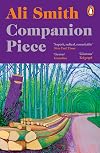
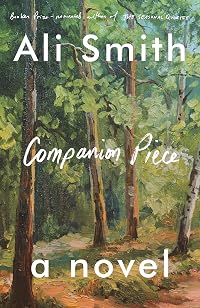
"From the Man Booker Prize shortlisted-author of the brilliant Seasonal Quartet series-a major new novel that promises to capture the present moment with Ali Smith's genius and bold spirit. "A story is never an answer. A story is always a question." Here we are in extraordinary times. Is this history? What happens when we cease to trust governments, the media, each other? What have we lost? What stays with us? What does it take to unlock our future? Following her astonishing Seasonal show more Quartet, Ali Smith again lights a way for us through the nightmarish now, in a vital celebration of companionship in all its timeless and contemporary, legendary and unpindownable, spellbinding and shapeshifting forms. Companion Piece stands apart from the Quartet, which remains discrete unto itself. But like Smith's groundbreaking series, this new novel boldly captures the spirit of the times. "Every hello, like every voice, holds its story ready, waiting.""-- show lessTags
Recommendations






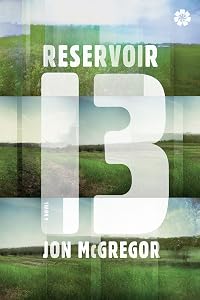


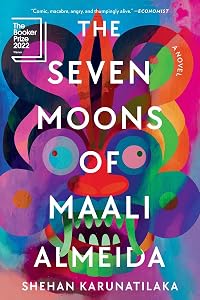
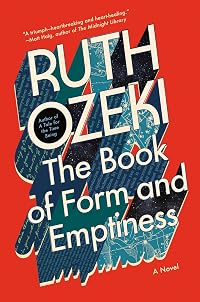
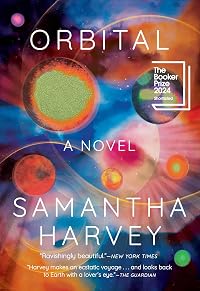



Member Reviews
Wisdom, what is it, where do we get some
Perhaps what Ali Smith has done for all of us to ponder and appreciate, is define little elements of the world we inhabit and focus so clearly on them that characters end up speaking the very words that terrorise us (or tyrannise us) on a daily basis. Here she tackles certain observable social norms for example through the tweedle-dee, tweedle-dum characters of the Pelf twins. At first when they come to her door, I mistook them for toddlers. Their rants were so extreme that I had to go back to the beginning to read again that they were in fact young adults. They were looking for their mother who they believed was possessed somehow by our lesbian narrator Sandy. They sound like a combination of show more keyboard warrior assassins mixed with the tantrums of two year olds. They are in their introduction, everything we might fear young people and people in general have turned into – scary, virtual, dehumanised, half crazed bots. These Pelf twins are entitled little rich shits.
Thankfully, the twins have a human side. Wise old Sandy, a former classmate of the Pelf Twin’s mother, Martina, is adept at getting them to return to human adult form. Martina recently made contact with Sandy to tell a strange story about border security in the UK that had me horrified at the inhumane way we treat people. And the power given to petty minded and low-level officials. The reason she got in touch? Martina recalled thirty years ago that Sandy had that wisdom to unpack language and dig into its meaning when she assisted her to decipher an ee cummings poem for an assignment. And thankfully, Ali Smith too has the wisdom to explore the needier side of all of us, to get closer to our more human and emotional concerns – we have love, we need it, we need connections, we seem capable of destroying all of those with layers of obtuse, contrived language. There is a beautifully explored discussion about gender fluidity - as though bots have hijacked the sexual individualism our older Sandy has experienced her whole life only to pervert it with ideological disdain. One of those moments we all seem to be experiencing explained in a manner we can all appreciate. I take my hat off to the author on this one.
We are in Covid-lockdown England. Sandy’s father is in hospital with a medical condition. They have found a room for him – a supply room converted into a hospital ward. The nurses go around with ‘plastic bags’ over their heads to keep Covid at bay. Whether this image is meant to describe the look of medical staff when they wear full PPE or a critique of the undersupply of PPE to hospitals is moot. Both can be true as the image, like poetry works in a nuanced way.
Poetry, the whole piece is like poetry. Words have healing properties when used well. Unlike poetry, I often skip through Smith’s work. I don’t pause. The problem is perhaps my impatience. As the themes, settings, characters evolve, the imagery gets cleverer and cleverer and I am left engaging unexpectedly in a “truth about our world” experience. The work is political – no one would want to identify so meticulously what defines our age without wanting some political outcome – and we definitely need a political shift to clear the damaging tyrannies we live under. To read Smith is to read someone who projects what is worse about our world as though it’s a kind of fictional future, only to realise we see the very elements daily and come to the conclusion that we are already living the extreme version of the world we fear we are in.
I might leave it there. I find it complicated to write about very contemporary books. I think all books need the passage of time to appreciate. But Smith writes with the urgency of a surgeon who has to get to the core of the disease and cut it out. So the experience of reading Companion Piece is like real time, a companion to our daily experiences. Only the disease isn’t medical, it’s social, political, historical, even literary (in the sense that the language we use in daily affairs is so polluted we hardly know how to use it.) show less
Perhaps what Ali Smith has done for all of us to ponder and appreciate, is define little elements of the world we inhabit and focus so clearly on them that characters end up speaking the very words that terrorise us (or tyrannise us) on a daily basis. Here she tackles certain observable social norms for example through the tweedle-dee, tweedle-dum characters of the Pelf twins. At first when they come to her door, I mistook them for toddlers. Their rants were so extreme that I had to go back to the beginning to read again that they were in fact young adults. They were looking for their mother who they believed was possessed somehow by our lesbian narrator Sandy. They sound like a combination of show more keyboard warrior assassins mixed with the tantrums of two year olds. They are in their introduction, everything we might fear young people and people in general have turned into – scary, virtual, dehumanised, half crazed bots. These Pelf twins are entitled little rich shits.
Thankfully, the twins have a human side. Wise old Sandy, a former classmate of the Pelf Twin’s mother, Martina, is adept at getting them to return to human adult form. Martina recently made contact with Sandy to tell a strange story about border security in the UK that had me horrified at the inhumane way we treat people. And the power given to petty minded and low-level officials. The reason she got in touch? Martina recalled thirty years ago that Sandy had that wisdom to unpack language and dig into its meaning when she assisted her to decipher an ee cummings poem for an assignment. And thankfully, Ali Smith too has the wisdom to explore the needier side of all of us, to get closer to our more human and emotional concerns – we have love, we need it, we need connections, we seem capable of destroying all of those with layers of obtuse, contrived language. There is a beautifully explored discussion about gender fluidity - as though bots have hijacked the sexual individualism our older Sandy has experienced her whole life only to pervert it with ideological disdain. One of those moments we all seem to be experiencing explained in a manner we can all appreciate. I take my hat off to the author on this one.
We are in Covid-lockdown England. Sandy’s father is in hospital with a medical condition. They have found a room for him – a supply room converted into a hospital ward. The nurses go around with ‘plastic bags’ over their heads to keep Covid at bay. Whether this image is meant to describe the look of medical staff when they wear full PPE or a critique of the undersupply of PPE to hospitals is moot. Both can be true as the image, like poetry works in a nuanced way.
Poetry, the whole piece is like poetry. Words have healing properties when used well. Unlike poetry, I often skip through Smith’s work. I don’t pause. The problem is perhaps my impatience. As the themes, settings, characters evolve, the imagery gets cleverer and cleverer and I am left engaging unexpectedly in a “truth about our world” experience. The work is political – no one would want to identify so meticulously what defines our age without wanting some political outcome – and we definitely need a political shift to clear the damaging tyrannies we live under. To read Smith is to read someone who projects what is worse about our world as though it’s a kind of fictional future, only to realise we see the very elements daily and come to the conclusion that we are already living the extreme version of the world we fear we are in.
I might leave it there. I find it complicated to write about very contemporary books. I think all books need the passage of time to appreciate. But Smith writes with the urgency of a surgeon who has to get to the core of the disease and cut it out. So the experience of reading Companion Piece is like real time, a companion to our daily experiences. Only the disease isn’t medical, it’s social, political, historical, even literary (in the sense that the language we use in daily affairs is so polluted we hardly know how to use it.) show less
The trouble with using a title like "Seasonal Quartet" is that you pretty much have to stop after the fourth book, even if it's working astonishingly well (unless you're Douglas Adams). But of course there's nothing to stop you writing a kind of appendix that isn't actually named after a season of the year...
This isn't part of the Seasonal Quartet, then, and the characters and action don't overlap, but it's unmistakably using the same techniques and exploring the same kind of ideas about all those hideous things in present day life we spend most of our time pretending not to see. And about the power of stories and the arts to fight back, even if only quixotically.
Taking her cue from an e.e. cummings poem, Smith uses a kind of show more two-steps-backward-one-step-forward narrative sequence, which is disorienting at first but very effective, and she also sets up an unexpected crossover between Tudor and Lockdown England, bringing out parallels in the authoritarianism, intolerance and oppression of the poor going on in both periods — something like what she did in How to be both. The artist and poet Sand is isolating herself at home whilst her elderly father is in hospital not-with-the-virus, but she reckons without the prime pest of her student days, Martina Pelf née Inglis, who rings her up out of the blue with an odd question about curlews and curfews. And then she finds a female blacksmith with a curlew on her shoulder trying on her shoes, and things start getting quite confusing.
As usual, wonderful, clever, witty writing, making us question things that always seemed quite normal and reasonable, and suggesting wonderful subversive possibilities in the world around us, awful though it is at the moment. show less
This isn't part of the Seasonal Quartet, then, and the characters and action don't overlap, but it's unmistakably using the same techniques and exploring the same kind of ideas about all those hideous things in present day life we spend most of our time pretending not to see. And about the power of stories and the arts to fight back, even if only quixotically.
Taking her cue from an e.e. cummings poem, Smith uses a kind of show more two-steps-backward-one-step-forward narrative sequence, which is disorienting at first but very effective, and she also sets up an unexpected crossover between Tudor and Lockdown England, bringing out parallels in the authoritarianism, intolerance and oppression of the poor going on in both periods — something like what she did in How to be both. The artist and poet Sand is isolating herself at home whilst her elderly father is in hospital not-with-the-virus, but she reckons without the prime pest of her student days, Martina Pelf née Inglis, who rings her up out of the blue with an odd question about curlews and curfews. And then she finds a female blacksmith with a curlew on her shoulder trying on her shoes, and things start getting quite confusing.
As usual, wonderful, clever, witty writing, making us question things that always seemed quite normal and reasonable, and suggesting wonderful subversive possibilities in the world around us, awful though it is at the moment. show less
I loved this new novel by Ali Smith. Sometimes her writing is a bit too experimental for me to connect with, but this one hit just the right balance. Set in 2021 in England, the pandemic is still a concern for our narrator, but a lot of the world has moved on. Sandy's father is in the hospital recovering, hopefully, from a heart attack, and Sandy gets a strange call from a woman she briefly knew in college. The woman, Martina, relates an odd experience she had recently which sets the novel off in two different directions: one the current day family drama of this friend and her young adult daughters, and two the story of a young girl blacksmith during the Plague years in the Middle Ages. All this is based around a sentence Martina heard show more - "curlew or curfew - you choose" - and couldn't understand. Sandy was always known for being quirky and understanding words and poetry in college, so Martina seeks her out for an explanation.
Somehow, this totally works. Running through the whole book is a love of words and poetry that matters more than the actual plot. It's a book I devoured and now really want to reread sometime soon to savor.
It's odd, I can't say I really understood the point of all of it, and it won't be for everyone, but it really worked for me. show less
Somehow, this totally works. Running through the whole book is a love of words and poetry that matters more than the actual plot. It's a book I devoured and now really want to reread sometime soon to savor.
It's odd, I can't say I really understood the point of all of it, and it won't be for everyone, but it really worked for me. show less
I just gobbled this one up. It’s super cerebral and full of puzzles and threads to tease out—the kind of book you can think about for a while after finishing. The plot is minimal: a 50-60ish painter who lives alone is contacted by an old grad school acquaintance, Martina, about an experience she had while in a stressful situation, hearing voices that said “Curfew or Curlew. You choose.” Martina remembers the narrator, aptly named Sandy Gray, as being a clever interpreter—in grad school, of an e.e. cummings poem—and thinks she can help. The narrative then spirals out of linear form—there’s an intersecting story line of a 16th-century Black Death–era young woman metalworker; Sandy’s father, whose hospital stay for a show more heart attack is complicated by Covid restrictions; and Martina’s two very weird 20-something daughters, who muscle their way into Sandy’s house and life.
It’s surreal and yet makes sense if you read carefully. As the middle of the three chapters makes clear, everything in the book is some kind of binary (there is a nonbinary character, one of twins—a bit of wordplay in itself): there are the plague/Covid eras, the aforementioned twins, and the contrast of artistry/craftsmanship vs. the superficiality of Gen-Z mores and speech. If this is Smith’s Covid-era “kids-these-days” indulgence it’s a fun one, though I found the craziness of the two daughters a bit more heavy-handed than the rest of her storyline. To balance that out is a surprisingly sweet and very apropos through line of kindness, how being decent to people and forging connection is problematic, yes, but also necessary, and that being kind to animals is an unambiguous good and will always serve you well in life. show less
It’s surreal and yet makes sense if you read carefully. As the middle of the three chapters makes clear, everything in the book is some kind of binary (there is a nonbinary character, one of twins—a bit of wordplay in itself): there are the plague/Covid eras, the aforementioned twins, and the contrast of artistry/craftsmanship vs. the superficiality of Gen-Z mores and speech. If this is Smith’s Covid-era “kids-these-days” indulgence it’s a fun one, though I found the craziness of the two daughters a bit more heavy-handed than the rest of her storyline. To balance that out is a surprisingly sweet and very apropos through line of kindness, how being decent to people and forging connection is problematic, yes, but also necessary, and that being kind to animals is an unambiguous good and will always serve you well in life. show less
Sandy is an artist whose paintings are based on poetry. Her father has had a heart attack and is hospitalized during the Covid pandemic. She gets a call from Martina, an acquaintance from college, who tells her of a strange experience involving an overheard phrase. She asks for Sandy’s help in deciphering the words.
There are three primary storylines – one set in present-day England concerning Sandy’s family, another about Martina and her young adult daughters, and a third of a female blacksmith during the plague years. These three stories come together through common themes: art, socio-political commentary, and isolation.
Do not read this book for the plot. Read it for Smith’s playful writing style, and for the mental puzzle at show more the heart of the story. It can get a little convoluted at times, but I enjoyed looking for linkages among stories. It is atmospheric and communicates its messages with subtlety. Very few authors could pull off this bizarre mix of topics and create any sort of cohesive work. Smith’s writing continues to impress me. show less
There are three primary storylines – one set in present-day England concerning Sandy’s family, another about Martina and her young adult daughters, and a third of a female blacksmith during the plague years. These three stories come together through common themes: art, socio-political commentary, and isolation.
Do not read this book for the plot. Read it for Smith’s playful writing style, and for the mental puzzle at show more the heart of the story. It can get a little convoluted at times, but I enjoyed looking for linkages among stories. It is atmospheric and communicates its messages with subtlety. Very few authors could pull off this bizarre mix of topics and create any sort of cohesive work. Smith’s writing continues to impress me. show less
Ali Smith writes so fluidly and with such verve that perhaps it’s natural for her to take on the immediacy of her situation in her writing. Not that she doesn’t tie the present to the past or even the distant past. Here, Covid restrictions link to abstruse border controls and other, more ancient, forms of control. And while there are markers of belonging in the present, there are also even more insidious markings of dis-belonging in the past. And also, not surprisingly, there are stories within stories.
Smith’s writing can feel utterly up to the minute as well being a bit timeless. It is always a pleasure to read her and an equal pleasure to recommend her to others.
Recommended.
Smith’s writing can feel utterly up to the minute as well being a bit timeless. It is always a pleasure to read her and an equal pleasure to recommend her to others.
Recommended.
Different stories are companions in this amazing novel. Ali Smith gives us plenty of word play, starting with curfew / curlew, as we meet her narrator. She is an artist whose dad is in hospital (not with Covid-19 but it is a lockdown and she can't visit). A university friend rings with a strange story about an ornate and beautiful lock and a disembodied voice saying curfew / curlew. The story feels amusing and slightly slapstick when the friend's twins turn up on her doorstep, cross that their mother has changed and the word play continues. Her dad's dog Shep is with her and missing her father. The story takes us to a young female blacksmith who adopts a curlew after being beaten up after curfew. Ali Smith manages to allow her reader to show more hold onto different emotions and shift from small stuff to big stuff (the NHS, Climate Change) seamlessly and seemingly effortlessly. Ultimately, this is a masterpiece and an upbeat novel with companionship threaded through the companionable tales. show less
Members
- Recently Added By
Lists

Top Five Books of 2022
736 works; 272 members

Books published and read in 2022
82 works; 5 members

Books Read in 2022
5,226 works; 115 members
Author Information

54+ Works 17,461 Members
Some Editions
Awards and Honors
Awards
Distinctions
Series

Common Knowledge
- Canonical title
- Companion Piece
- Original publication date
- 2022
- Important events
- COVID-19 pandemic
- Dedication
- for Nicola Barker
and for Sarah Wood
with love - First words
- 'Ello, 'ello, 'ello. Wot's all this then?
- Last words
- (Click to show. Warning: May contain spoilers.)Hello.
- Canonical DDC/MDS
- 823.914
- Canonical LCC
- PR6069.M4213
Classifications
Statistics
- Members
- 463
- Popularity
- 65,996
- Reviews
- 25
- Rating
- (3.93)
- Languages
- 5 — Dutch, English, Italian, Korean, Swedish
- Media
- Paper, Audiobook, Ebook
- ISBNs
- 21
- ASINs
- 5