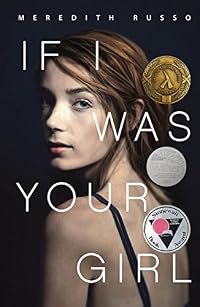
If I Was Your Girl
by Meredith Russo
On This Page
Description
Amanda Hardy only wants to fit in at her new school, but she is keeping a big secret, so when she falls for Grant, guarded Amanda finds herself yearning to share with him everything about herself, including her previous life as Andrew.Tags
Recommendations
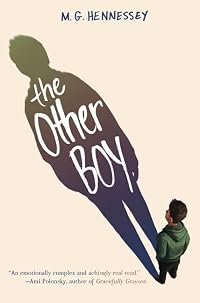
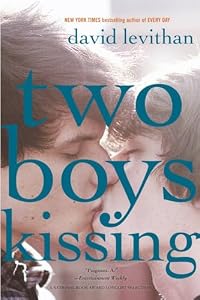
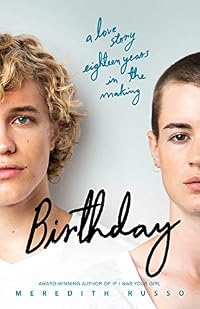
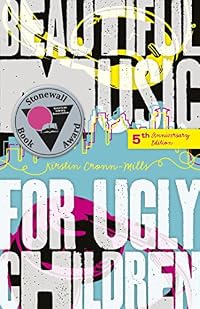



Member Recommendations
Member Reviews
Review also posted on my blog: https://bennilovesbooks.wordpress.com/2017/01/06/review-if-i-was-your-girl-by-me...
After getting beat up at her old school for being transgender, Amanda Hardy makes the decision to move in with her father and start over again at a new school. Just wanting to make it through high school without any further incidents, Amanda decides she wants to pass as cisgender rather than tell people that she is trans (because who else really needs to know, anyway?). When the charming Grant falls into her life, she feels like she wants to tell him everything about herself — but what would be the repercussions of doing so?
This book is important because it serves as a wonderful window into the life of a trans person. It show more can be very difficult for cisgender people to conceptualize what it means to be trans and how microaggressions in everyday speech and behavior can be hurtful, in addition to how being bullied for being trans can affect a person. Amanda’s bullying was brutal, and yet her story was easily digestible for someone who would struggle to actually relate to her situation. In the author’s note, Russo (who is trans herself) stated that she wrote Amanda like this intentionally; she wanted her to clearly be trans, but she also wanted to make her someone who cis readers could relate to, and as a nonbinary trans person I sincerely appreciate that because I know far too many cis people who would struggle to understand a character who was written to be a more “realistic” trans teen, and they really need to read a book like this so they can better understand why their behavior is hurtful, even if they don’t even mean to be hurtful.
Unfortunately, this strength is also one of the book’s biggest weak spots. While being relatable to cis readers, Amanda is a very idealized trans teen. She is incredibly lucky because she has no issues passing as cis whatsoever, and she even managed to have bottom surgery before she was even out of high school. The latter point, especially, is a rarity for trans teens because surgery is expensive, many places have an infinite number of hoops that need to be jumped through before it can take place, and age restrictions generally prevent teens from getting it (though Amanda avoided that last point by taking a gap year in the middle of high school, so she was legally old enough to have surgery before she graduated). These points help her become more relatable to cis readers, but at the same time these things distance her from trans readers who want a trans character to identify with. Transgender characters are still pretty underrepresented (though this has been improving), leaving a pretty limited number of trans characters for trans readers to identify with. Many trans readers, teenagers especially, would consider Amanda to be incredibly lucky and might even wish to be in her position, and that can cause distance to form between the character and the reader. Though trans readers can very well still enjoy this book (as I did), it was still written with cis readers as more of its intended audience. There’s nothing wrong with having a book like this, of course, but it did leave me wishing for a book about a trans character geared toward a trans audience to read next.
A minor nitpick (with very minor spoilers): In the scene where the girls take Amanda to go get her ears pierced, the second the piercer opened her mouth I wanted to tell Amanda to leave the shop and never look back. No piercer who knows what they’re doing would ever ask someone if they want “gauges” put in their ears (for those who don’t know, “gauges” are a unit of measurement and not a type of jewelry; most standard earrings are 18g or 20g, for instance, so if you have any piercings you’re technically wearing these “gauges” the piercer is referring to yourself, regardless of whether you’ve stretched any piercings), and a good piercer would pierce with sterilized jewelry (NOT jewelry brought from outside the shop), and you generally wouldn’t be able to change the jewelry in your lobes for about two months while waiting for the piercings to heal. The only thing in this scene that the piercer actually did right is use a needle and not a gun to pierce Amanda’s ears. If you’re planning to get piercings at any point in the future and the person whom you are considering to have poke holes in you and then fill those holes with metal acts anything like this piercer does, please turn around and walk back out the door and go find another piercer. You’ll thank yourself later.
On a much better note, this book did an excellent job of normalizing things such as taking medication regularly and getting help for mental health-related issues. Oftentimes these things aren’t handled very well in books, and I think it’s fantastic when a book shows its readers that things like this are healthy and normal, and we need more representation of mental and physical health issues like this in books. Additionally, including information about the necessity of dilation after bottom surgery was appreciated because many people don’t realize that this is a necessary aftercare step. Though it didn’t centrally focus on it, this book didn’t ignore the medical side of this character, and that’s something that I would really like to see more of in fiction in general.
I also really appreciated the role that religion played in the book. Though Amanda wasn’t herself, many characters in the book identified as moderately to very religious, and in general I thought that the conflict between religion and transgender people was handled pretty well. It may have been handled a bit too positively for my taste, but I think that might just go back to the cis vs. trans intended audience thing mentioned earlier.
One thing that I liked that brought a bit more realism back to the story was Amanda’s trans role model, as well as the other people from her support group. These characters weren’t present for most of the book (and while this was a bummer, it does make sense because these characters live closer to Amanda’s mom than to Amanda’s dad and so Amanda is geographically distant from them for most of the book), but these characters (some of whom are just mentioned in passing) are the types of trans characters whom trans readers would find most relatable because they don’t all pass flawlessly and they haven’t all had bottom and/or top surgery and they don’t all have their mental health situation under control. Though I understand why they weren’t, I wish we could have seen more of these characters and heard more of their stories.
Overall, If I Was Your Girl was a solid debut from Russo. If she has plans for a second novel, I hope that she’ll write a book with a trans character that’s more geared toward trans readers. After reading this, I think she would be rather good at it. Though it wasn’t perfect, I wouldn’t hesitate to recommend this book to others. I think this is a book that everyone (especially cis people) should read.
Final Rating: 4 out of 5 stars show less
After getting beat up at her old school for being transgender, Amanda Hardy makes the decision to move in with her father and start over again at a new school. Just wanting to make it through high school without any further incidents, Amanda decides she wants to pass as cisgender rather than tell people that she is trans (because who else really needs to know, anyway?). When the charming Grant falls into her life, she feels like she wants to tell him everything about herself — but what would be the repercussions of doing so?
This book is important because it serves as a wonderful window into the life of a trans person. It show more can be very difficult for cisgender people to conceptualize what it means to be trans and how microaggressions in everyday speech and behavior can be hurtful, in addition to how being bullied for being trans can affect a person. Amanda’s bullying was brutal, and yet her story was easily digestible for someone who would struggle to actually relate to her situation. In the author’s note, Russo (who is trans herself) stated that she wrote Amanda like this intentionally; she wanted her to clearly be trans, but she also wanted to make her someone who cis readers could relate to, and as a nonbinary trans person I sincerely appreciate that because I know far too many cis people who would struggle to understand a character who was written to be a more “realistic” trans teen, and they really need to read a book like this so they can better understand why their behavior is hurtful, even if they don’t even mean to be hurtful.
Unfortunately, this strength is also one of the book’s biggest weak spots. While being relatable to cis readers, Amanda is a very idealized trans teen. She is incredibly lucky because she has no issues passing as cis whatsoever, and she even managed to have bottom surgery before she was even out of high school. The latter point, especially, is a rarity for trans teens because surgery is expensive, many places have an infinite number of hoops that need to be jumped through before it can take place, and age restrictions generally prevent teens from getting it (though Amanda avoided that last point by taking a gap year in the middle of high school, so she was legally old enough to have surgery before she graduated). These points help her become more relatable to cis readers, but at the same time these things distance her from trans readers who want a trans character to identify with. Transgender characters are still pretty underrepresented (though this has been improving), leaving a pretty limited number of trans characters for trans readers to identify with. Many trans readers, teenagers especially, would consider Amanda to be incredibly lucky and might even wish to be in her position, and that can cause distance to form between the character and the reader. Though trans readers can very well still enjoy this book (as I did), it was still written with cis readers as more of its intended audience. There’s nothing wrong with having a book like this, of course, but it did leave me wishing for a book about a trans character geared toward a trans audience to read next.
A minor nitpick (with very minor spoilers): In the scene where the girls take Amanda to go get her ears pierced, the second the piercer opened her mouth I wanted to tell Amanda to leave the shop and never look back. No piercer who knows what they’re doing would ever ask someone if they want “gauges” put in their ears (for those who don’t know, “gauges” are a unit of measurement and not a type of jewelry; most standard earrings are 18g or 20g, for instance, so if you have any piercings you’re technically wearing these “gauges” the piercer is referring to yourself, regardless of whether you’ve stretched any piercings), and a good piercer would pierce with sterilized jewelry (NOT jewelry brought from outside the shop), and you generally wouldn’t be able to change the jewelry in your lobes for about two months while waiting for the piercings to heal. The only thing in this scene that the piercer actually did right is use a needle and not a gun to pierce Amanda’s ears. If you’re planning to get piercings at any point in the future and the person whom you are considering to have poke holes in you and then fill those holes with metal acts anything like this piercer does, please turn around and walk back out the door and go find another piercer. You’ll thank yourself later.
On a much better note, this book did an excellent job of normalizing things such as taking medication regularly and getting help for mental health-related issues. Oftentimes these things aren’t handled very well in books, and I think it’s fantastic when a book shows its readers that things like this are healthy and normal, and we need more representation of mental and physical health issues like this in books. Additionally, including information about the necessity of dilation after bottom surgery was appreciated because many people don’t realize that this is a necessary aftercare step. Though it didn’t centrally focus on it, this book didn’t ignore the medical side of this character, and that’s something that I would really like to see more of in fiction in general.
I also really appreciated the role that religion played in the book. Though Amanda wasn’t herself, many characters in the book identified as moderately to very religious, and in general I thought that the conflict between religion and transgender people was handled pretty well. It may have been handled a bit too positively for my taste, but I think that might just go back to the cis vs. trans intended audience thing mentioned earlier.
One thing that I liked that brought a bit more realism back to the story was Amanda’s trans role model, as well as the other people from her support group. These characters weren’t present for most of the book (and while this was a bummer, it does make sense because these characters live closer to Amanda’s mom than to Amanda’s dad and so Amanda is geographically distant from them for most of the book), but these characters (some of whom are just mentioned in passing) are the types of trans characters whom trans readers would find most relatable because they don’t all pass flawlessly and they haven’t all had bottom and/or top surgery and they don’t all have their mental health situation under control. Though I understand why they weren’t, I wish we could have seen more of these characters and heard more of their stories.
Overall, If I Was Your Girl was a solid debut from Russo. If she has plans for a second novel, I hope that she’ll write a book with a trans character that’s more geared toward trans readers. After reading this, I think she would be rather good at it. Though it wasn’t perfect, I wouldn’t hesitate to recommend this book to others. I think this is a book that everyone (especially cis people) should read.
Final Rating: 4 out of 5 stars show less
We all know that high school sucks. I recently read in one book that the only people who remember high school fondly are the rarefied ones at the top of the high school food chain – your football captains, your mean girl cheerleaders, etc. That leaves the rest of us who try not to think of high school at all because it dredges up bad memories. Still, after reading If I Was Your Girl, I know that most of us, for all our complaints, had it easy compared to LGBTQIA teens. Theirs is a journey we, as a society, almost never discuss, even though we absolutely should. Thankfully, there are people like Meredith Russo willing to start the discussion and bring attention to these ignored teens and the potential trauma they face just by attending show more school each and every day.
If I Was Your Girl is a beautiful and yet heartbreaking story of Amanda as she attempts to adjust to life not only at a new high school in a new town but also as a female. Her flashbacks to past tortures show how traumatized she remains after a childhood filled with the struggle to reconcile the differences between her body and her mind’s gender identification. It also shows how a statement considered innocuous by cisgender people can cut to the quick anyone who does not fit that norm. As such, Amanda’s trauma is deep and lasting. It is a wonder anyone is able to adjust and overcome such hate. Her entire story is a great example of how society gets caught up in body image and gender norms to the detriment of everyone.
As much as If I Was Your Girl makes you hate the ignoramuses who spew ignorant gender biases, it also gives you tremendous admiration for Amanda and for the entire transgender community. That they face such hate and confusion on a daily basis and are able to rise above it to become the beautiful butterflies they are is remarkable. It would be so easy for Amanda to hide herself away for the remainder of her high school years, but she does not. She finds friends, she remains social. More importantly, she puts herself out there in a way that is scary for any person. She is truly a remarkable young woman.
What makes If I Was Your Girl even more poignant is the fact that Ms. Russo herself is a transwoman. Her fiction is very much based in fact, and in many ways Amanda’s experiences are her own. Her story, both her private and her fictionalized versions, provide much-needed hope to an entire community left to flounder in a world where all sides struggle to accept them. She provides a vision in which life gets better and offers her own life experiences as proof. Moreover, she offers support where support is difficult to find and resources for those who need it.
If I Was Your Girl is one of those novels that should be required reading for everyone of any age and gender. It is timely and does more to raise empathy for the transgender community than anything to date because it puts you directly into Amanda’s shoes. If you are a parent, Amanda becomes your daughter. If you are a teen, you resonate with the cruelty of your fellow classmates. If you are a transgender teen, hopefully you recognize yourself in Amanda and realize that you can find happiness. We all can and more importantly, we all deserve it. show less
If I Was Your Girl is a beautiful and yet heartbreaking story of Amanda as she attempts to adjust to life not only at a new high school in a new town but also as a female. Her flashbacks to past tortures show how traumatized she remains after a childhood filled with the struggle to reconcile the differences between her body and her mind’s gender identification. It also shows how a statement considered innocuous by cisgender people can cut to the quick anyone who does not fit that norm. As such, Amanda’s trauma is deep and lasting. It is a wonder anyone is able to adjust and overcome such hate. Her entire story is a great example of how society gets caught up in body image and gender norms to the detriment of everyone.
As much as If I Was Your Girl makes you hate the ignoramuses who spew ignorant gender biases, it also gives you tremendous admiration for Amanda and for the entire transgender community. That they face such hate and confusion on a daily basis and are able to rise above it to become the beautiful butterflies they are is remarkable. It would be so easy for Amanda to hide herself away for the remainder of her high school years, but she does not. She finds friends, she remains social. More importantly, she puts herself out there in a way that is scary for any person. She is truly a remarkable young woman.
What makes If I Was Your Girl even more poignant is the fact that Ms. Russo herself is a transwoman. Her fiction is very much based in fact, and in many ways Amanda’s experiences are her own. Her story, both her private and her fictionalized versions, provide much-needed hope to an entire community left to flounder in a world where all sides struggle to accept them. She provides a vision in which life gets better and offers her own life experiences as proof. Moreover, she offers support where support is difficult to find and resources for those who need it.
If I Was Your Girl is one of those novels that should be required reading for everyone of any age and gender. It is timely and does more to raise empathy for the transgender community than anything to date because it puts you directly into Amanda’s shoes. If you are a parent, Amanda becomes your daughter. If you are a teen, you resonate with the cruelty of your fellow classmates. If you are a transgender teen, hopefully you recognize yourself in Amanda and realize that you can find happiness. We all can and more importantly, we all deserve it. show less
SPOILERS
God I struggled so hard with this book. I kept having to remind myself while reading it that a book cannot be perfect, that it won't speak to everyone, that expecting a book (especially about trans people, when you are a trans person) to do that is falling into that trope where we get so little representation that we put so much pressure on the people who do produce that representation and are never pleased.
All of that being said, even though I knew why this book had been so hyped the the 'lgbt ya lit' world (if there really is such a thing,) I googled somewhere in the first third to confirm that the author was indeed trans because fuck me this book felt like it was written by a cis person. In my edition, at the end, Russo show more writes a note first to her cis readers and basically says "I literally made this character a big stereotype with all these things to show you she is a girl and to make you understand that trans girls are girls the easiest transition possible for you to make" and then everything clicked into place. I highlighted that part and said in my notes "this makes everything make sense- but what about the trans readers? What are we supposed to do with this?"
And that's being a little unfair--there were parts of this book that I was like "oh thank fuck for articulating this," but most of it was like..... fit into so many tropes. I read somewhere that Russo was like "I wrote this so that we'd have a story where trans girls get a happy ending" and like yeah eventually but also like the outing sequence was so terrifying and awful because I'd read that, because I spent the whole book going "it'll be okay, she's not going to pull this bullshit on you" and then she did? And some of that might be the genre Russo is working in--like if you know anything about high schooler romcoms, you'll see the arc of this book pretty much perfectly, but also the stakes are so much higher here because she's writing about a trans girl and. I'm not sure how I feel about that part of it yet. Very little of it felt like an experience I related to (which, fair, I'm not a straight trans girl living in Georgia, just because we're both trans doesn't mean we have similarities in how we experience our trans-ness) and it really felt like I was reading a typical high schooler romcom with someone who just happened to be a trans girl. Which is probably Russo's point! But that switch is so not simple and so complicated and I'm still not sure how I feel about it.
(I did have to keep reading it because it also kind of felt like a thriller, with her whole 'going stealth' thing, which..... is also super fucking complicated and stereotype-y while still being part of people's lived experiences and it's just this book is so complicated and messy and I don't know how to feel about it.) show less
God I struggled so hard with this book. I kept having to remind myself while reading it that a book cannot be perfect, that it won't speak to everyone, that expecting a book (especially about trans people, when you are a trans person) to do that is falling into that trope where we get so little representation that we put so much pressure on the people who do produce that representation and are never pleased.
All of that being said, even though I knew why this book had been so hyped the the 'lgbt ya lit' world (if there really is such a thing,) I googled somewhere in the first third to confirm that the author was indeed trans because fuck me this book felt like it was written by a cis person. In my edition, at the end, Russo show more writes a note first to her cis readers and basically says "I literally made this character a big stereotype with all these things to show you she is a girl and to make you understand that trans girls are girls the easiest transition possible for you to make" and then everything clicked into place. I highlighted that part and said in my notes "this makes everything make sense- but what about the trans readers? What are we supposed to do with this?"
And that's being a little unfair--there were parts of this book that I was like "oh thank fuck for articulating this," but most of it was like..... fit into so many tropes. I read somewhere that Russo was like "I wrote this so that we'd have a story where trans girls get a happy ending" and like yeah eventually but also like the outing sequence was so terrifying and awful because I'd read that, because I spent the whole book going "it'll be okay, she's not going to pull this bullshit on you" and then she did? And some of that might be the genre Russo is working in--like if you know anything about high schooler romcoms, you'll see the arc of this book pretty much perfectly, but also the stakes are so much higher here because she's writing about a trans girl and. I'm not sure how I feel about that part of it yet. Very little of it felt like an experience I related to (which, fair, I'm not a straight trans girl living in Georgia, just because we're both trans doesn't mean we have similarities in how we experience our trans-ness) and it really felt like I was reading a typical high schooler romcom with someone who just happened to be a trans girl. Which is probably Russo's point! But that switch is so not simple and so complicated and I'm still not sure how I feel about it.
(I did have to keep reading it because it also kind of felt like a thriller, with her whole 'going stealth' thing, which..... is also super fucking complicated and stereotype-y while still being part of people's lived experiences and it's just this book is so complicated and messy and I don't know how to feel about it.) show less
It should be obvious to those who know me that the only reason this curmudgeonly demisexual read a traditionally published romance* of any kind was for the representation of a trans character. I’m happy to say that it was definitely worth it, because Amanda is an amazing, realistic, believable character--and that’s a darn good thing, because the romance elements hit a lot of my sour spots.
New girl in town. A lead who “won the genetic lottery”. Insta-friends. Super-hot sports dude. Mutual crush at first sight. A ton of firsts for her, plenty of experience for him. More beaux than a girl knows what to do with.
But here’s the thing: all those bits I just complained about in romance stories? As much as they did make me sigh a bit show more (exasperation and, honestly, resentment that the real world isn’t this neat and tidy), they take on a very keen poignancy because of what Amanda--and this book--might mean to others who are struggling with their identities.
New girl in town? At least Southern hospitality provides an explanation that Bella Swan from Twilight never had. And man, we do come to understand how it rattles Amanda to have people who actually want to associate with her. Insta-friends and too many beaux? What a contrast to her life stuck as Andrew, when people actively didn’t like her instead of just failing to appreciate her, as in conventional romance novels.
Winning the genetic lottery? Always one of the most alienating parts of a story for me, but this time it’s not just about the lead being stupidly oblivious to their beauty, but about Amanda being so new to having her outside match her inside. Super-hot sports dude? Emphasizes the difference between the sexes that’s Amanda’s finally on the right side of. A ton of firsts for her? There’s an actual reason in this story why a gorgeous, social girl hasn’t had much experience in her body.
So yeah, the grumpy English major didn’t just roll over and forgive those tropes, but I did appreciate the way Russo’s story managed to turn many of them on their head. And I loved Amanda and rooted for her the whole way through. I read Julie Ann Peters’ Luna and never really connected with either the main character or the title character--they felt too heavy-handed, too rash, to obviously “character-y”. Amanda feels real.
So before I get into the technical nitty gritty, I want to say unequivocally that this is an important book and you should read it if you can. Whatever I may say about the plot or the structure, whatever I may whine about the romance tropes, this is book is worth reading. Whether you know someone trans or not, this is a book that actually gets the internal fears and stresses that any teenager with a history of abuse might go through. Unlike so many YA books, the challenges explored are real, consuming, and life-changing. And if you’re experiencing your first trans person through Russo and Amanda, well, it’s 2017--it’s about time.
With that said...ugh, it’s a romance! Amanda and Grant crush hard in an instant for no discernable reason. There’s spontaneous moonlight swimming the first time they hang out together. The romantic “rival” becomes insanely jealous of Amanda and Grant’s relationship before he’s even exchanged a word with her. Amanda talks about wanting to take her romance with Grant slowly but the whole story only takes place over about three or four months--though I guess the fact that they’re teenagers does explain some of that “too like the lightning” nonsense. And maybe that only seems fast to me, I don't know.
The plot felt rushed, too--the romance wasn’t the only thing that happened so quickly. Entire dinners of awkward or important conversations are over in a page. A long-time loner invites Amanda to her private hideout to exchange big secrets the first day they meet. We don’t quite get to know Amanda’s closest friends enough to let us appreciate her friendship with them as much as we can appreciate their friendships with Amanda just because she’s not used to having friends. And Grant’s association with another high schooler with a secret, now mysteriously absent, goes unexplained, leaving us unsure of what was going on. Friendship? Mentorship? Dare I say, cautious attraction? Whichever it was, it might have had a big impact on how Grant approaches Amanda’s deeply hidden secret, and on a reader’s understanding of his character...but we’ll never know.
Finally, three specific and very spoiler-y complaints.
First, Grant’s jobs. A kid in the south having an after school job is not hard to believe--it’s downright common--so I don’t get why he treats this like some shameful secret. When Amanda sees him, he then says he’s doing something like forty hours of work a week...and I’m sorry, but even with exaggeration, that’s just ridiculous. This is a kid who’s staying in school, even though he’s old enough to drop out and work full-time, and maintaining good enough grades to stay on the football team. There are obvious benefits to staying in school if he can just hang on long enough, but why on earth would someone who needs the money join the football team and hang out at a bunch of parties? And on top of all this he’s finding time to read the same books as Amanda? This point just strained credulity even more than the insta-friends. (By the way, I was super disappointed that we didn’t get to see Amanda read about Wanda in The Sandman. Seems a bit odd to have Amanda connect so strongly to that book in this book and then have her not get to volume 5 (A Game of You)).
Second, Grant’s dramatic burning of Amanda’s letter. I could tell that this was supposed to be a moment of profound acceptance, but honestly, it made me angry. Amanda had worked up the courage to tell Grant about her past, poured her heart into writing the whole thing out, probably agonized over it, and then he just put it up in flames. To me it felt more like a rejection--any person’s past is deeply important to who they are in the present, more so than usual in Amanda’s case, but Grant’s gesture denied her the chance to share a huge part of herself with him. A secret can be a lighter burden shared between two people. With no idea what her secret was, he refused to accept it, to help carry some of the weight. I’m sure he thought it was romantic, but it seemed selfish, and I was surprised that Amanda didn’t describe having mixed feelings.
Finally, where were the adults in this town? And where was the kind of ignorance and intolerance that allowed someone as despicable as Trump to stay in the White House? With the way the US is going, especially in light of today’s events in Charlottesville, I find the minimal reactions of other students and complete absence of vitriol-spewing adults harder to believe than anything else in this book. Yes, we want a happy ending, at least as much as possible. It’s a romance, and the best part of a romance is the happy ending*. But when do we let go of realism?
Part of me is bothered, somewhere around the third rib down, by how quietly and softly everything resolves. Is it fair to readers make the conclusion so easy when there’s little chance it would be in real life? Would it frustrate someone who’s trans to see everything so neatly tied up in a bow compared to the hell they might be going/have gone through, or would it be a happy relief to have someone like you end on a relatively positive note? As a cis person, I am definitely not qualified to make a call on that. I was certainly happy to see Amanda going forward at the end instead of spinning her wheels. I just couldn’t share her happiness because I couldn’t stop thinking of how awfully everything might have turned out for her if she was a real person in real life.
Whatever my feelings about the romance plot or the wrap-up as a whole, that last paragraph was darn near perfect. Read it. After the rest of the book, of course.
Quote Roundup
12) Not going to list it here, but the last line of the very first chapter darn near broke my heart.
35) Too many dads seemed interested in us [Amanda and two girl friends] as we passed, and for just a moment I missed the near-invisibility of life as a boy.
Disgusting. I mean, props to Russo for including this revolting tidbit, but it’s just so pervy. I hate that this is just considered “normal” instead of, you know, basically pedophilia. Also, on the same page, I don’t get why Parker makes Amanda thinks of the jocks who abused Andrew, but Grant doesn’t.
123) Russo’s censorship of Amelie made me chuckle. Also:
I loved my legs--they were the only part of my body that had felt feminine all along.
And I loved having a girl in the media talk about an aspect of her body in a positive way.
226) “Being a girl in this world means being afraid. That fear’ll keep you safe. It’ll keep you alive.”
“Is it really that bad?”
... “When you told me about . . . your condition, I was more sad for you having to deal with being a girl than anything else.”
Russo drops truth bombs like a ton of bricks. I was trying to explain this feeling the other day. I’ve lived such a privileged life with so many unfair advantages, but I still had this message imprinted on me.
*I specify “traditionally published” because I do, honestly read a lot of stories about love and romance, but they’re fanfiction--from what I’ve gathered while working on traditional romance books at work, the corner of fandom I’m in produces very different kinds of romances from those produced by major publishers. But I’m still a sucker for the happy ending. show less
New girl in town. A lead who “won the genetic lottery”. Insta-friends. Super-hot sports dude. Mutual crush at first sight. A ton of firsts for her, plenty of experience for him. More beaux than a girl knows what to do with.
But here’s the thing: all those bits I just complained about in romance stories? As much as they did make me sigh a bit show more (exasperation and, honestly, resentment that the real world isn’t this neat and tidy), they take on a very keen poignancy because of what Amanda--and this book--might mean to others who are struggling with their identities.
New girl in town? At least Southern hospitality provides an explanation that Bella Swan from Twilight never had. And man, we do come to understand how it rattles Amanda to have people who actually want to associate with her. Insta-friends and too many beaux? What a contrast to her life stuck as Andrew, when people actively didn’t like her instead of just failing to appreciate her, as in conventional romance novels.
Winning the genetic lottery? Always one of the most alienating parts of a story for me, but this time it’s not just about the lead being stupidly oblivious to their beauty, but about Amanda being so new to having her outside match her inside. Super-hot sports dude? Emphasizes the difference between the sexes that’s Amanda’s finally on the right side of. A ton of firsts for her? There’s an actual reason in this story why a gorgeous, social girl hasn’t had much experience in her body.
So yeah, the grumpy English major didn’t just roll over and forgive those tropes, but I did appreciate the way Russo’s story managed to turn many of them on their head. And I loved Amanda and rooted for her the whole way through. I read Julie Ann Peters’ Luna and never really connected with either the main character or the title character--they felt too heavy-handed, too rash, to obviously “character-y”. Amanda feels real.
So before I get into the technical nitty gritty, I want to say unequivocally that this is an important book and you should read it if you can. Whatever I may say about the plot or the structure, whatever I may whine about the romance tropes, this is book is worth reading. Whether you know someone trans or not, this is a book that actually gets the internal fears and stresses that any teenager with a history of abuse might go through. Unlike so many YA books, the challenges explored are real, consuming, and life-changing. And if you’re experiencing your first trans person through Russo and Amanda, well, it’s 2017--it’s about time.
With that said...ugh, it’s a romance! Amanda and Grant crush hard in an instant for no discernable reason. There’s spontaneous moonlight swimming the first time they hang out together. The romantic “rival” becomes insanely jealous of Amanda and Grant’s relationship before he’s even exchanged a word with her. Amanda talks about wanting to take her romance with Grant slowly but the whole story only takes place over about three or four months--though I guess the fact that they’re teenagers does explain some of that “too like the lightning” nonsense. And maybe that only seems fast to me, I don't know.
The plot felt rushed, too--the romance wasn’t the only thing that happened so quickly. Entire dinners of awkward or important conversations are over in a page. A long-time loner invites Amanda to her private hideout to exchange big secrets the first day they meet. We don’t quite get to know Amanda’s closest friends enough to let us appreciate her friendship with them as much as we can appreciate their friendships with Amanda just because she’s not used to having friends. And Grant’s association with another high schooler with a secret, now mysteriously absent, goes unexplained, leaving us unsure of what was going on. Friendship? Mentorship? Dare I say, cautious attraction? Whichever it was, it might have had a big impact on how Grant approaches Amanda’s deeply hidden secret, and on a reader’s understanding of his character...but we’ll never know.
Finally, three specific and very spoiler-y complaints.
First, Grant’s jobs. A kid in the south having an after school job is not hard to believe--it’s downright common--so I don’t get why he treats this like some shameful secret. When Amanda sees him, he then says he’s doing something like forty hours of work a week...and I’m sorry, but even with exaggeration, that’s just ridiculous. This is a kid who’s staying in school, even though he’s old enough to drop out and work full-time, and maintaining good enough grades to stay on the football team. There are obvious benefits to staying in school if he can just hang on long enough, but why on earth would someone who needs the money join the football team and hang out at a bunch of parties? And on top of all this he’s finding time to read the same books as Amanda? This point just strained credulity even more than the insta-friends. (By the way, I was super disappointed that we didn’t get to see Amanda read about Wanda in The Sandman. Seems a bit odd to have Amanda connect so strongly to that book in this book and then have her not get to volume 5 (A Game of You)).
Second, Grant’s dramatic burning of Amanda’s letter. I could tell that this was supposed to be a moment of profound acceptance, but honestly, it made me angry. Amanda had worked up the courage to tell Grant about her past, poured her heart into writing the whole thing out, probably agonized over it, and then he just put it up in flames. To me it felt more like a rejection--any person’s past is deeply important to who they are in the present, more so than usual in Amanda’s case, but Grant’s gesture denied her the chance to share a huge part of herself with him. A secret can be a lighter burden shared between two people. With no idea what her secret was, he refused to accept it, to help carry some of the weight. I’m sure he thought it was romantic, but it seemed selfish, and I was surprised that Amanda didn’t describe having mixed feelings.
Finally, where were the adults in this town? And where was the kind of ignorance and intolerance that allowed someone as despicable as Trump to stay in the White House? With the way the US is going, especially in light of today’s events in Charlottesville, I find the minimal reactions of other students and complete absence of vitriol-spewing adults harder to believe than anything else in this book. Yes, we want a happy ending, at least as much as possible. It’s a romance, and the best part of a romance is the happy ending*. But when do we let go of realism?
Part of me is bothered, somewhere around the third rib down, by how quietly and softly everything resolves. Is it fair to readers make the conclusion so easy when there’s little chance it would be in real life? Would it frustrate someone who’s trans to see everything so neatly tied up in a bow compared to the hell they might be going/have gone through, or would it be a happy relief to have someone like you end on a relatively positive note? As a cis person, I am definitely not qualified to make a call on that. I was certainly happy to see Amanda going forward at the end instead of spinning her wheels. I just couldn’t share her happiness because I couldn’t stop thinking of how awfully everything might have turned out for her if she was a real person in real life.
Whatever my feelings about the romance plot or the wrap-up as a whole, that last paragraph was darn near perfect. Read it. After the rest of the book, of course.
Quote Roundup
12) Not going to list it here, but the last line of the very first chapter darn near broke my heart.
35) Too many dads seemed interested in us [Amanda and two girl friends] as we passed, and for just a moment I missed the near-invisibility of life as a boy.
Disgusting. I mean, props to Russo for including this revolting tidbit, but it’s just so pervy. I hate that this is just considered “normal” instead of, you know, basically pedophilia. Also, on the same page, I don’t get why Parker makes Amanda thinks of the jocks who abused Andrew, but Grant doesn’t.
123) Russo’s censorship of Amelie made me chuckle. Also:
I loved my legs--they were the only part of my body that had felt feminine all along.
And I loved having a girl in the media talk about an aspect of her body in a positive way.
226) “Being a girl in this world means being afraid. That fear’ll keep you safe. It’ll keep you alive.”
“Is it really that bad?”
... “When you told me about . . . your condition, I was more sad for you having to deal with being a girl than anything else.”
Russo drops truth bombs like a ton of bricks. I was trying to explain this feeling the other day. I’ve lived such a privileged life with so many unfair advantages, but I still had this message imprinted on me.
*I specify “traditionally published” because I do, honestly read a lot of stories about love and romance, but they’re fanfiction--from what I’ve gathered while working on traditional romance books at work, the corner of fandom I’m in produces very different kinds of romances from those produced by major publishers. But I’m still a sucker for the happy ending. show less
TW: depression, suicide, bullying, sexual assault and rape.
After years of bullying and abuse, Amanda Hardy has move in with her father to start a new life at a new school. But, now that she can be herself, how much of her past should she tell her new friends? She wasn't always known as Amanda or even recognised as the beautiful girl everyone seems to love. Though secrets don't stay secret for long, it's hard to tell when a miscalculation can have consequences beyond some harmless gossip.
For the most part, Russo tells us Amanda's story after her transition is complete. But, as a cisgender person, I was especially moved by the several scenes from back when Amanda was still perceived as a biological boy. I cried a lot with the abuse she show more had to suffer and her certainty that no one, including her parents, would understand and love her if she told the truth. In the author's note to cisgender readers, Russo states that, in real life, Amanda probably wouldn't have had completed her transition by 18. Despite that, and although Amanda's story isn't reflective of every trans person's story, I think it's prime for trans teens to see what life could be.
I have never read a book with a trans person before, so I though it was not only informative but such a great story too. My review is, very likely, limited by my own experiences, which unfortunately not include actual face-to-face contact with a trans person. But I'm pretty sure Amanda is an incredible character; I love everything about her: she's brave, kind and funny.
There are plenty of other likeable characters, including her father, who is trying very hard to be accepting. Plus the girl gang, who was super supportive from the beginning to the end. But, if I'm being honest, although I enjoyed the group dinamic, now I can't even remember anything specific about them. There's one girl who's super religious, another one who's a lesbian but it's still inside the closet, and the third one is, well, someone.
I feel like the book is too short, with short chapters, which inevitably made the progression feel very fast without deepening certain scenes. I wanted something more from the plot, including a more developed romance. Personality-wise, the love interest felt flat. And then, there's the ending. It's not a traditional happily ever after but rather the promise of one, and I didn't like it. I wanted more closure, I guess. show less
After years of bullying and abuse, Amanda Hardy has move in with her father to start a new life at a new school. But, now that she can be herself, how much of her past should she tell her new friends? She wasn't always known as Amanda or even recognised as the beautiful girl everyone seems to love. Though secrets don't stay secret for long, it's hard to tell when a miscalculation can have consequences beyond some harmless gossip.
For the most part, Russo tells us Amanda's story after her transition is complete. But, as a cisgender person, I was especially moved by the several scenes from back when Amanda was still perceived as a biological boy. I cried a lot with the abuse she show more had to suffer and her certainty that no one, including her parents, would understand and love her if she told the truth. In the author's note to cisgender readers, Russo states that, in real life, Amanda probably wouldn't have had completed her transition by 18. Despite that, and although Amanda's story isn't reflective of every trans person's story, I think it's prime for trans teens to see what life could be.
I have never read a book with a trans person before, so I though it was not only informative but such a great story too. My review is, very likely, limited by my own experiences, which unfortunately not include actual face-to-face contact with a trans person. But I'm pretty sure Amanda is an incredible character; I love everything about her: she's brave, kind and funny.
There are plenty of other likeable characters, including her father, who is trying very hard to be accepting. Plus the girl gang, who was super supportive from the beginning to the end. But, if I'm being honest, although I enjoyed the group dinamic, now I can't even remember anything specific about them. There's one girl who's super religious, another one who's a lesbian but it's still inside the closet, and the third one is, well, someone.
I feel like the book is too short, with short chapters, which inevitably made the progression feel very fast without deepening certain scenes. I wanted something more from the plot, including a more developed romance. Personality-wise, the love interest felt flat. And then, there's the ending. It's not a traditional happily ever after but rather the promise of one, and I didn't like it. I wanted more closure, I guess. show less
What a wonderfully powerful novel! While my heart broke for what she went through as Andrew, I so admired Amanda and the strong woman she had become.
When Amanda moved in with her father after not seeing him for 6 years, she finally had the chance to be who she was. To maybe have a normal teenage life, with friends and parties and maybe a boyfriend; all of which she had been denied. Bullied for her whole life because of who she was, maybe now things could be different.
And it was. While her father initially struggled with her no longer being Andrew, she made friends, became popular and well liked, even got a boyfriend. But she still had a secret. And while she loved her new life, she still sometimes felt like she was living a lie having show more told only one person she trusted about her past but no one else.
To some extent I can understand her father’s feelings. Her mother was around during her whole transition. While she grieved the “death” of Andrew, I think she accepted Amanda much sooner being around her all the time when she realized how desperate and unhappy she was as Andrew. As a mother, you never want your child to be sad or bullied and I was so moved reading about how cruel Amanda’s past had been. I tried to imagine myself in the same situation as a mother; if one of my children wanted to transition and I hope that I would be supportive and accepting. As a parent it’s only natural to grieve what will never be and be afraid of the challenges they will face. For Amanda’s father, he appeared to be so gruff and cold but he went from knowing Andrew 6 years ago to having this stranger, Amanda, come back into his life. Some parents can realize this is still their same child, some never will but I think a lot of what Amanda’s father felt was fear for his child.
I read this whole novel in a day, I was so engrossed in it. When it got to be homecoming tho, I braced myself, fearing a “Carrie” moment and almost didn’t want to read anymore in fear of Amanda’s life again being in shambles. There will always be mean and cruel people and people fear what they don’t understand. Some people can realize that they are friends with the person they are or love the person they are without whatever sex they are being an issue; it’s still the same person. I hope that is more the reality and as time goes on I think people are more accepting. Is it a “sin”? Many will think so but many take the bible as literal. I believe In an accepting God who created people as they are and loves who they are.
I think this was a very brave relevant story. The world has changed and peoples’ thinking needs to change too. This book is raw and emotional and really makes you think. I hope that many people read this with an open mind and that it educates people a little to understand the need for people transition to be who they were meant to be and to be more accepting of people who are gay, straight, transgender, whatever.
This is a solid five star for me! show less
When Amanda moved in with her father after not seeing him for 6 years, she finally had the chance to be who she was. To maybe have a normal teenage life, with friends and parties and maybe a boyfriend; all of which she had been denied. Bullied for her whole life because of who she was, maybe now things could be different.
And it was. While her father initially struggled with her no longer being Andrew, she made friends, became popular and well liked, even got a boyfriend. But she still had a secret. And while she loved her new life, she still sometimes felt like she was living a lie having show more told only one person she trusted about her past but no one else.
To some extent I can understand her father’s feelings. Her mother was around during her whole transition. While she grieved the “death” of Andrew, I think she accepted Amanda much sooner being around her all the time when she realized how desperate and unhappy she was as Andrew. As a mother, you never want your child to be sad or bullied and I was so moved reading about how cruel Amanda’s past had been. I tried to imagine myself in the same situation as a mother; if one of my children wanted to transition and I hope that I would be supportive and accepting. As a parent it’s only natural to grieve what will never be and be afraid of the challenges they will face. For Amanda’s father, he appeared to be so gruff and cold but he went from knowing Andrew 6 years ago to having this stranger, Amanda, come back into his life. Some parents can realize this is still their same child, some never will but I think a lot of what Amanda’s father felt was fear for his child.
I read this whole novel in a day, I was so engrossed in it. When it got to be homecoming tho, I braced myself, fearing a “Carrie” moment and almost didn’t want to read anymore in fear of Amanda’s life again being in shambles. There will always be mean and cruel people and people fear what they don’t understand. Some people can realize that they are friends with the person they are or love the person they are without whatever sex they are being an issue; it’s still the same person. I hope that is more the reality and as time goes on I think people are more accepting. Is it a “sin”? Many will think so but many take the bible as literal. I believe In an accepting God who created people as they are and loves who they are.
I think this was a very brave relevant story. The world has changed and peoples’ thinking needs to change too. This book is raw and emotional and really makes you think. I hope that many people read this with an open mind and that it educates people a little to understand the need for people transition to be who they were meant to be and to be more accepting of people who are gay, straight, transgender, whatever.
This is a solid five star for me! show less
Amanda Hardy is a transgender high school girl who has moved to a new town to live with her father after a tragic assault in her hometown after she began presenting herself as a female.
In the new town, everyone simply sees her as a girl, and her life seems to be going great. She even finds herself in the previously unimaginable situation of falling for a handsome boy and him falling for her too. But this brings her to a difficult dilema:
If she doesn't tell him about being transgender, is she being dishonest or unfair to him? And if she does tell him, won't he immediately leave her? The novel deals with many aspects of the difficulties of being transgender, but this one is central.
Apart from the transgender examinations, the book is show more pretty standard teen fare - dealing with friends, parents, dating, sex, and drinking/drugs. But the sexual identity element makes all of these aspect a little more interesting than those books which are otherwise similar.
The title, "If I Was Your Girl" is brilliant. (Although the persnickety side of me says it should be "If I Were Your Girl.") At first, we simply see it as words spoken in her head by Amanda to her boyfriend Grant. But later we realize these are also words she has spoken in her head to her parents as well, who until recently had a son. And by the end, we can even imagine a hypothetical Amanda saying these words to we, the readers (at least to the cisgender readers). How would WE react if our child came out to us as transgender? Or if a boyfriend or girlfriend made such a revelation? Good food for thought. show less
In the new town, everyone simply sees her as a girl, and her life seems to be going great. She even finds herself in the previously unimaginable situation of falling for a handsome boy and him falling for her too. But this brings her to a difficult dilema:
If she doesn't tell him about being transgender, is she being dishonest or unfair to him? And if she does tell him, won't he immediately leave her? The novel deals with many aspects of the difficulties of being transgender, but this one is central.
Apart from the transgender examinations, the book is show more pretty standard teen fare - dealing with friends, parents, dating, sex, and drinking/drugs. But the sexual identity element makes all of these aspect a little more interesting than those books which are otherwise similar.
The title, "If I Was Your Girl" is brilliant. (Although the persnickety side of me says it should be "If I Were Your Girl.") At first, we simply see it as words spoken in her head by Amanda to her boyfriend Grant. But later we realize these are also words she has spoken in her head to her parents as well, who until recently had a son. And by the end, we can even imagine a hypothetical Amanda saying these words to we, the readers (at least to the cisgender readers). How would WE react if our child came out to us as transgender? Or if a boyfriend or girlfriend made such a revelation? Good food for thought. show less
Members
- Recently Added By
Lists

Best Young Adult
399 works; 101 members

Trans Books by Trans Authors
134 works; 10 members

Good LGBT fiction for LGBT folk and friends
537 works; 50 members

Books set in high school
89 works; 7 members

Macmillan Publishers
129 works; 3 members

Books Read in 2018
4,360 works; 110 members

School library books removed after TX state legislator inquiry
429 works; 6 members

Banned or Challenged Books
400 works; 41 members

Books recommended by Calgary Public Library staff
1,588 works; 4 members
Author Information

2+ Works 1,769 Members
Awards and Honors
Awards
Distinctions
Common Knowledge
- Original publication date
- 2016
- People/Characters
- Amanda Hardy; Grant Everett; Layla; Chloe; Anna; Parker
- Important places
- Smyrna, Georgia, USA; Lambertville, Tennessee, USA
- First words
- The bus smelled of mildew, machine oil, and sweat.
- Last words
- (Click to show. Warning: May contain spoilers.)I knew now- I believed, now- that I deserved to be loved.
- Canonical DDC/MDS
- 813.6
- Canonical LCC
- PZ7.1.R874
Classifications
Statistics
- Members
- 1,384
- Popularity
- 17,025
- Reviews
- 65
- Rating
- (3.98)
- Languages
- 9 — Danish, English, French, German, Italian, Portuguese, Spanish, Swedish, Turkish
- Media
- Paper, Audiobook, Ebook
- ISBNs
- 34
- ASINs
- 7