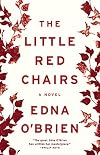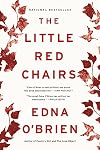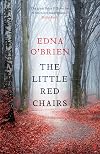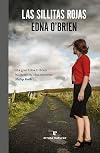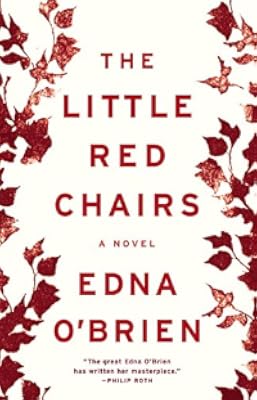
The Little Red Chairs
by Edna O'Brien
On This Page
Description
A fiercely beautiful novel about one woman's struggle to reclaim a life shattered by betrayal from the 2018 winner of the PEN/ Nabokov Award for Achievement in International Literature.One night, in the dead of winter, a mysterious stranger arrives in the small Irish town of Cloonoila. Broodingly handsome, worldly, and charismatic, Dr. Vladimir Dragan is a poet, a self-proclaimed holistic healer, and a welcome disruption to the monotony of village life. Before long, the beautiful show more black-haired Fidelma McBride falls under his spell and, defying the shackles of wedlock and convention, turns to him to cure her of her deepest pains.
Then, one morning, the illusion is abruptly shattered. While en route to pay tribute at Yeats's grave, Dr. Vlad is arrested and revealed to be a notorious war criminal and mass murderer. The Cloonoila community is devastated by this revelation, and no one more than Fidelma, who is made to pay for her deviance and desire. In disgrace and utterly alone, she embarks on a journey that will bring both profound hardship and, ultimately, the prospect of redemption.
Moving from Ireland to London and then to The Hague, THE LITTLE RED CHAIRS is Edna O'Brien's first novel in ten years — a vivid and unflinching exploration of humanity's capacity for evil and artifice as well as the bravest kind of love.
. show less
Tags
Recommendations






Member Recommendations
Member Reviews
This is a terrible book with ludicrous characters BUT it's terrible in a really good way, and the ludicrous characters are never boring. It's as if master storyteller O'Brien were a master jazz pianist sitting down blindfolded in front of a deeply out of tune piano--it still sounds terrific. She riffs on anything she pleases, writing on and on about inconsequential trivia about characters who have no point being in this story. It feels like O'Brien just let any skinny bit of thought that came into her head make its way to the page and then she worked it and made it beautiful. She is so talented--she is even channeling Virginia Woolf here and there, I would say--just compare the chapter "On the Veranda" to early chapters in The Voyage show more Out. The lovely stark beginning which gives this book its title is the best part, though--the novel never reaches the solemn promise of those little red chairs. show less
A wonderfully complex novel that begins in almost fairytale fashion when a mysterious stranger appears in a seemingly idyllic Irish village. Dr. Vladimir Dragan from Montenegro claims he was lured to Ireland by a pale-faced woman with tears streaming down her cheeks -- familiar in Ireland as Aisling, meaning dream. The stranger is a philosopher-poet-healer who captivates the villagers, especially the women, and most particularly Fidelma, with his charismatic charm. But O'Brien casts an evil spell over the encounter of the stranger and the village.
Vladimir Dragan is modelled upon Radovan Karadzic, the Serbian president of Republika Srpska from 1992 to 1996, who masterminded the siege of Sarajevo and the ethnic genocide of Muslim and show more Croat civilians. This is not a historical novel in which real people appear as themselves in actual events, rather O'Brien is confronting the realities when the victims of violence flee to other countries as immigrants. And it is a novel about trying to find home in a world that violently thrusts people from the places they once considered home.
It isn't for readers who like neatly wrapped plots or straightforward narration. There are multiple narrators and viewpoints, and the horrific complexities of the conflicts of the contemporary world are center-stage. show less
Vladimir Dragan is modelled upon Radovan Karadzic, the Serbian president of Republika Srpska from 1992 to 1996, who masterminded the siege of Sarajevo and the ethnic genocide of Muslim and show more Croat civilians. This is not a historical novel in which real people appear as themselves in actual events, rather O'Brien is confronting the realities when the victims of violence flee to other countries as immigrants. And it is a novel about trying to find home in a world that violently thrusts people from the places they once considered home.
It isn't for readers who like neatly wrapped plots or straightforward narration. There are multiple narrators and viewpoints, and the horrific complexities of the conflicts of the contemporary world are center-stage. show less
The Little Red Chairs by Edna O'Brien
Quite the harrowing book this is. Fidelma McBride, who lives with her husband Jack in a quiet town, Cloonoila, in western Ireland, meets a newcomer who has moved there from an Eastern European country. He's a healer, a shaman, an herbalist, a naturalist. He seems to be able to talk his way into and through this unfamiliar culture and community. And to thrive in it. He's charismatic, charming, attractive. Ultimately, Fidelma, wanting a child, feeling her biological clock winding down, attracting no succor from Jack (who is 20 years older than Fidelma), approaches the healer for surrogacy. No, no, no, he tells her, but eventually, he consents. In a bizarre tryst, Fidelma becomes pregnant. But Vlad then show more pushes her away.
One day, she discovers coarse graffiti painted on the sidewalk fronting her former boutique, which now is Dr. Vlad's clinic. She races off to find him, and when she does, he's angry, hostile to her but also cautionary. His car's been vandalized: tires cut, windows smashed. They run to the clinic.
And Vlad disappears. Gone from his clinic, gone from town. Vanished. About ten weeks later, he returns to take part in a poetry reading at the foot of Ben Bulben, an iconic mountain, something he promised to do. Everyone attending boards a bus, with Vlad settling into the seat behind the driver and losing himself in paperwork, editing. Further back sits Fidelma.
She doesn't get the chance. The bus is flagged down by police, his passport is inspected. He's told, " 'I'm afraid we have to ask you to come to the station with us.' "
Those remaining on the bus, which is everyone but Vlad, are dumbfounded.
When they return home, they all watch televised news.
He's the "Beast of Bosnia," the leader of Serb forces that slaughtered thousands of Bosnians—men, women, and children— and that laid seige to Sarajevo. (Has no one heard of Vlad the Impaler? Read the WikiPedia entry here.) Jack knows now. So when three uncouth "bruisers" knock at the McBrides' door, Jack has no objection to their taking her away.
Oh, there's more. For Fidelma the ordeal is just beginning. Battered by the bruisers and left for dead, she's rescued and hospitalized. Rejected by her husband, she finds sanctuary with nuns. She goes to England, London, and struggles to find a place to stay, a job, and restoration of her psychological and spiritual well-being. And she seeks one final confrontation with Vlad.
A harrowing book yes, but well worth reading. I give it both thumbs up. show less
Quite the harrowing book this is. Fidelma McBride, who lives with her husband Jack in a quiet town, Cloonoila, in western Ireland, meets a newcomer who has moved there from an Eastern European country. He's a healer, a shaman, an herbalist, a naturalist. He seems to be able to talk his way into and through this unfamiliar culture and community. And to thrive in it. He's charismatic, charming, attractive. Ultimately, Fidelma, wanting a child, feeling her biological clock winding down, attracting no succor from Jack (who is 20 years older than Fidelma), approaches the healer for surrogacy. No, no, no, he tells her, but eventually, he consents. In a bizarre tryst, Fidelma becomes pregnant. But Vlad then show more pushes her away.
One day, she discovers coarse graffiti painted on the sidewalk fronting her former boutique, which now is Dr. Vlad's clinic. She races off to find him, and when she does, he's angry, hostile to her but also cautionary. His car's been vandalized: tires cut, windows smashed. They run to the clinic.
Where Wolves Fuck. He loomed over it, stared at it, then knelt and smelt it, as if he might guess the perpetrators.
'It's someone who knows us,' she said.
'You must deny everything, Fidelma.'
'I can't...I live here.'
'I thought I could trust you to be discreet,' he said with a cold contemptuousness.
'I am discreet,' she said far too loudly, hating the hysteria in her voice, in her being, in her headscarf, in all of her.
...'Nothing happened ... no broken window ... no graffiti ... no rendezvous . . . nothing .. . ne ... ne . . . ništa'
'But we're ...'
'Start forgetting ... Fidelma.'
'Forgetting what?'
'Everything . . .' He was wiping his hands in a gesture of wiping her out. No more letters. No communication. No tears. She is a grown-up lady, she can look after herself.
Then he was gone. Gone to where she would not find him. So this child, this wolf-child, was hers and hers alone to give birth to. Oh Jesus and Mary, she said... Start forgetting Fidelma. No rendezvous. No letters. No communication. Ništa.
And Vlad disappears. Gone from his clinic, gone from town. Vanished. About ten weeks later, he returns to take part in a poetry reading at the foot of Ben Bulben, an iconic mountain, something he promised to do. Everyone attending boards a bus, with Vlad settling into the seat behind the driver and losing himself in paperwork, editing. Further back sits Fidelma.
…[She] wondered if, after his poetry reading, she would manage a word with him alone. She craved it. She knew that there was to be no further communication and she accepted it, but she hoped, if only for the child's sake, he would be there, at the rim of her existence. She had not yet told Jack. How to tell him. What to tell him. When to tell him. These were the questions that assailed her hour after hour, as she faked good cheer at home…
She doesn't get the chance. The bus is flagged down by police, his passport is inspected. He's told, " 'I'm afraid we have to ask you to come to the station with us.' "
'I'm afraid it's impossible because we are heading for a poetry recital,' he answered, quite nonchalant.
'That will not be possible sir ... we are arresting you,' the second, more senior guard said.
'My dear fellow, you must be mad ... arresting me ... you are chasing shadows,' Vlad said, still in total command of himself.
'You have been living under a false name,' one said, and his colleague, who was not quite so bristling, said that they were just doing what they had been instructed to do, as he held up the arrest warrant for him to see.
Those remaining on the bus, which is everyone but Vlad, are dumbfounded.
The last image they had was of his tall figure, unbowed but humiliated, starting down the steps of the bus and just as the sun had soaked into the young ash leaves, it now rasped on the bracelets of metal that bound his wrists.
It happened so quickly, so 'low key' as they said, that they were well nigh lost for words. The fact that he had co-operated and hadn't tried to escape was surely a sign that it couldn't be too serious. Yet the mood had changed, everyone felt uneasy and the driver was sweating and cursing his bad luck. A day wasted. Fidelma regretted that she had jumped up and was touched for the first time with a fatalistic terror.
When they return home, they all watch televised news.
On the television [some] spoke of him as the warrior poet, who had always had a mystical conviction of his role in history. He had risen from being an obscure doctor to the global notoriety that he had always craved and was now on his way to the Tribunal in The Hague, to be indicted for crimes that included genocide, ethnic cleansing, massacres, tortures, detaining people in camps and displacing hundreds of thousands.
He's the "Beast of Bosnia," the leader of Serb forces that slaughtered thousands of Bosnians—men, women, and children— and that laid seige to Sarajevo. (Has no one heard of Vlad the Impaler? Read the WikiPedia entry here.) Jack knows now. So when three uncouth "bruisers" knock at the McBrides' door, Jack has no objection to their taking her away.
Oh, there's more. For Fidelma the ordeal is just beginning. Battered by the bruisers and left for dead, she's rescued and hospitalized. Rejected by her husband, she finds sanctuary with nuns. She goes to England, London, and struggles to find a place to stay, a job, and restoration of her psychological and spiritual well-being. And she seeks one final confrontation with Vlad.
A harrowing book yes, but well worth reading. I give it both thumbs up. show less
It has taken a week for me to process my thoughts about the late Edna O'Brien's penultimate novel The Little Red Chairs, and I still can't rid myself of an image of a woman under torture. If you too have an imagination that responds to vivid prose like mine does, then you might want to hesitate, even if you think you know where the author is going to go. The little red chairs of the title refers to an art installation called the Sarajevo Red Line commemorating the Siege of Sarajevo's 20th anniversary which took place during the vicious Bosnian War (1992-1995).
The Little Red Chairs is a story of war crimes and the long road to 'justice' but it is also an empathetic portrait of female folly, guilt and saudade. The infatuation with a sexy show more stranger is narrated in Part I by Fidelma McBride. Her childless marriage in a dead-end Irish village makes her vulnerable to the mystique of Dr Vlad from the Balkans. He claims to be a healer and a sex therapist, just what Fidelma thinks she needs. This reader knew from the get-go that he is hiding from the War Crimes Tribunal, a character intended to remind us of the Bosnian Serb leader Radovan Karadžić who evaded capture and his trial for so long*. Of course Vlad is going to be discovered. O'Brien's genius lies in the way this plays out. It's not just the authorities who are looking for him. And retribution doesn't always fall on evil as we might like it to.
To read the rest of my review please visit https://anzlitlovers.com/2025/09/12/the-little-red-chairs-2015-by-edna-obrien/ show less
The Little Red Chairs is a story of war crimes and the long road to 'justice' but it is also an empathetic portrait of female folly, guilt and saudade. The infatuation with a sexy show more stranger is narrated in Part I by Fidelma McBride. Her childless marriage in a dead-end Irish village makes her vulnerable to the mystique of Dr Vlad from the Balkans. He claims to be a healer and a sex therapist, just what Fidelma thinks she needs. This reader knew from the get-go that he is hiding from the War Crimes Tribunal, a character intended to remind us of the Bosnian Serb leader Radovan Karadžić who evaded capture and his trial for so long*. Of course Vlad is going to be discovered. O'Brien's genius lies in the way this plays out. It's not just the authorities who are looking for him. And retribution doesn't always fall on evil as we might like it to.
To read the rest of my review please visit https://anzlitlovers.com/2025/09/12/the-little-red-chairs-2015-by-edna-obrien/ show less
This roman a clef is the story of Fidelma, an Irish woman who falls under the spell of Dr. Vladimir Dragan, who comes to their small town as a healer and "sex therapist". His character is based on Radovan Karadžić, the "Butcher of Bosnia". Told from various POVs, including that of Vlad as he tries to escape the consequences of his brutal murderous orders as a political leader in Bosnia, the narrative is at times poetic, at times simple, but always beautiful and moving. At least twice, I thought "well, she (O'Brien) has just gone too far afield now," but each time she exquisitely pulled me back to the main narrative thread and the characters, scenes, and story reconfigured as a cohesive whole. Never an easy read, I absolutely recommend show more it for its insight into the character, Fidelma, both victim and phoenix; she is captured through an impressionistic style blended expertly with pragmatic and vivid scenes of torture and murder. O'Brien's narrative never slides into gratuitous violence but neither does it flinch in the face of humanity's brutality and rage. show less
50. The Little Red Chairs by Edna O'Brien
reader: Juliet Stevenson
OPD: 2015
format: 9:40 audible audiobook (299 pages)
acquired: July 31 listened: Jul 31 – Aug 12
rating: 4
genre/style: novel theme: random audio
locations: Ireland, London and Sarajevo
about the author: 1930 –2024. She was an Irish novelist, memoirist, playwright, poet and short story writer. She was born in Tuamgraney in County Clare, Ireland, a place she would later describe as "fervid" and "enclosed". She was the youngest child of "a strict, religious family". She lived most of her adult life in London.
-----
***Spoiler warning*** => some mid-book plot points revealed.
------
My first book by Edna O'Brien is an odd mixture beautiful writing, and beautiful setting, and show more humor, leading to and about very traumatic events. Critics love this book, and its deception, and the way handles its topic. This story centers on a Radovan Karadžić-like character, but a fictional one who goes to small town in Ireland under a false identity, as a general healer and "sex therapist", in order to hide and start a new life. The little red chairs represent the 11,541 citizens killed in Sarajevo during the 1990's Balkan wars. This book left me uncomfortable.
The town beauty, married childless Fidelma, decides, in something like innocence, that she wants this healer's help to have a baby. She doesn't know anything about him.This sin, to put a Catholic spin, doesn't do anyone any good, Fidelma ending up married but pregnant by a war criminal, and that's hardly the bad part. She must pay a penance that far exceeds her crime.
There is a long lead up to Fidelma's innocent-ish crime. Our monster, known as Vlad, is charming and mysterious, and lover of poetry, becoming popular in a town. Through him we meet several colorful characters, including many of the town's immigrants. Later, Fidelma will spend a great deal of time with displaced woman in London.
Reading this book, I was left very uncomfortable with all these immigrants, evener as I know the book's intention was to humanize and develop sympathy with the immigrant experience, and even as I personally am warmly open to immigrants to the US. So, I had to wonder what was wrong with myself, what was the book doing to me, and was this the book, or just my own strangeness. The thing is our Vlad is a terrible immigrant, a monster from eastern Europe invading a pristine isolated Irish town - in a way. And O'Brien's focused on the bad immigrant experience, those suffering and struggling and being tough to get by, learn the language, find employment. This is certainly part of the tragedy of the refugee experience. But does wallowing in it generate sympathy, as in these poor people need help, or fear, as in I really don't want to find myself in that position. There was just something that bothered me a lot about the structure of the book.
I would very much like to blame the book for my discomfort. I have read a decent amount about refugees without having these kinds of uncomfortable feelings, so have a weak argument to say this book is different than those. And then I can wash my hands of all this and blame the author for undermining her own message. I would feel much better about myself. But I'm not sure how much sense I'm making, or where that all leaves me...well, it left me not wanting to confront these feelings and write this review.
Bringing myself back to the book, its elegant writing and rough impact, I can appreciate what the critics like. But I'm still left uncomfortable.
2024
https://www.librarything.com/topic/362165#8605153 show less
reader: Juliet Stevenson
OPD: 2015
format: 9:40 audible audiobook (299 pages)
acquired: July 31 listened: Jul 31 – Aug 12
rating: 4
genre/style: novel theme: random audio
locations: Ireland, London and Sarajevo
about the author: 1930 –2024. She was an Irish novelist, memoirist, playwright, poet and short story writer. She was born in Tuamgraney in County Clare, Ireland, a place she would later describe as "fervid" and "enclosed". She was the youngest child of "a strict, religious family". She lived most of her adult life in London.
-----
***Spoiler warning*** => some mid-book plot points revealed.
------
My first book by Edna O'Brien is an odd mixture beautiful writing, and beautiful setting, and show more humor, leading to and about very traumatic events. Critics love this book, and its deception, and the way handles its topic. This story centers on a Radovan Karadžić-like character, but a fictional one who goes to small town in Ireland under a false identity, as a general healer and "sex therapist", in order to hide and start a new life. The little red chairs represent the 11,541 citizens killed in Sarajevo during the 1990's Balkan wars. This book left me uncomfortable.
The town beauty, married childless Fidelma, decides, in something like innocence, that she wants this healer's help to have a baby. She doesn't know anything about him.
There is a long lead up to Fidelma's innocent-ish crime.
Reading this book, I was left very uncomfortable with all these immigrants, evener as I know the book's intention was to humanize and develop sympathy with the immigrant experience, and even as I personally am warmly open to immigrants to the US. So, I had to wonder what was wrong with myself, what was the book doing to me, and was this the book, or just my own strangeness. The thing is our Vlad is a terrible immigrant, a monster from eastern Europe invading a pristine isolated Irish town - in a way. And O'Brien's focused on the bad immigrant experience, those suffering and struggling and being tough to get by, learn the language, find employment. This is certainly part of the tragedy of the refugee experience. But does wallowing in it generate sympathy, as in these poor people need help, or fear, as in I really don't want to find myself in that position. There was just something that bothered me a lot about the structure of the book.
I would very much like to blame the book for my discomfort. I have read a decent amount about refugees without having these kinds of uncomfortable feelings, so have a weak argument to say this book is different than those. And then I can wash my hands of all this and blame the author for undermining her own message. I would feel much better about myself. But I'm not sure how much sense I'm making, or where that all leaves me...well, it left me not wanting to confront these feelings and write this review.
Bringing myself back to the book, its elegant writing and rough impact, I can appreciate what the critics like. But I'm still left uncomfortable.
2024
https://www.librarything.com/topic/362165#8605153 show less
For the title of her 18th novel, The Little Red Chairs, Edna O’Brien makes use of an emotionally devastating image: at a memorial event held in 2012 and known as the Sarajevo Red Line, 11,541 empty red chairs were arranged on the main street in Sarajevo to commemorate the 11,541 people killed during the 1,425 days of the Siege of Sarajevo (1992-1996), 643 of which were small chairs to honour the victims who were children. In the novel, a man of Eastern European origin calling himself Vladimir Dragan turns up in a small village in the west of Ireland. Dragan represents something of a conundrum for the inhabitants of Cloonoila, who never totally warm up to him but nonetheless find him fascinating and alluring. Undaunted by the show more villagers’ suspicions, he fashions himself as Dr. Vlad the naturopath, and begins to practice his cryptic healing arts on some of the less timid of the locals. Vlad, with his veneer of esoteric wisdom, charismatic presence, commanding bearing and resonant voice, is of particular interest to the women. To vulnerable, emotionally starved, 40-year-old Fidelma, who has suffered two miscarriages and is married to a man many years her senior, Vlad comes to represent something of a last hope. Fidelma is desperate for a child, and with pleas and promises persuades him to plant the seed. Then the truth comes out. Vlad’s actual identity is exposed, and he is apprehended and packed off to the War Crimes Tribunal in The Hague to answer for atrocities perpetrated during the Bosnian War. In the second half of the novel, Fidelma, disgraced and alone, leaves Ireland to pick up the pieces of her life in London, where she works a series of menial jobs and encounters other refugees and exiles fleeing persecution, war and famine, people trying to recover from losses and suffering hardships every bit as distressing as her own. Coming from an author who has nothing left to prove, The Little Red Chairs offers a bleak perspective on the modern world. It is an honest and uncompromising work of political fiction that stares murderous prejudice and human brutality squarely in the face. Paradoxically, it is also a work of great beauty. Throughout, O’Brien’s prose, as we would expect, is supple, memorable, richly observant, and crammed with apt metaphors and striking images. And though one cannot argue with the assertion that this is a relentlessly grim and at times gut-wrenching novel—to the point that some readers may have difficulty with the violence depicted in its pages—there is also no question that The Little Red Chairs is the work of an author whose storytelling powers, fifty years into her career, show no sign of diminishing. show less
Members
- Recently Added By
Published Reviews
ThingScore 100
"It's simply a remarkable novel....Yet if “The Little Red Chairs” is obviously about displacement and immigration, obviously about the toll of war and its murderers and victims, it is also about how the tentacles of globalization reach everywhere, even into the corners of provincial Ireland."
added by theaelizabet
The real genius of this novel – and I don’t use the word lightly – is to take us right up close to worlds that we normally only read about in newspapers, to make us sweat and care about them, and at the same time create something that feels utterly original, urgent, beautiful. It’s hard to believe that any novel could do more. And it’s hard – no, almost impossible – to believe show more that O’Brien is in her ninth decade, for this is absolutely the work of a writer in her prime and at the very height of her phenomenal powers. show less
added by VivienneR
"This is a spectacular piece of work, massive and ferocious and far-reaching, yet also at times excruciatingly, almost unbearably, intimate. Holding you in its clutches from first page to last, it dares to address some of the darkest moral questions of our times while never once losing sight of the sliver of humanity at their core."
added by theaelizabet
Lists

Recommend the 20 best books you've read in the last five years
2,168 works; 606 members

Top Five Books of 2016
795 works; 228 members

Books Read in 2016
4,666 works; 199 members
International Dublin Literary Award Longlist 2017
147 works; 3 members

Dublin Literary Award Longlist 2017
147 works; 2 members

Books Read in 2018
4,360 works; 110 members

Mustich's 1000 Books to Read Before You Die: A Life Changing List
1,001 works; 20 members

Books Read in 2024
4,727 works; 128 members

Fiction (Non-Fantasy) by Irish Authors Set in Ireland
87 works; 3 members
Author Information

85+ Works 10,491 Members
Writer Edna O'Brien was born in Clare County, Ireland, in 1930 and attended Pharmaceutical College in Dublin. O'Brien, winner of the Kingsley Amis Award, the Los Angeles Times Book Price and the European Literature Prize, has written short stories, novels, plays, television plays and screenplays. She has also written for such magazines as show more Cosmopolitan, Ladies Home Journal and The New Yorker. (Bowker Author Biography) Edna O'Brien's previous works of fiction include "Down by the River", "House of Splendid Isolation", "Time & Tide", & "Lantern Slides", which won the Los Angeles Times Book Prize for fiction. Her book about James Joyce was published in 1999 & excerpted in "The New Yorker". An honorary member of the American Academy of Arts & Letters, O'Brien grew up in Ireland & now lives in London. (Publisher Provided) show less
Some Editions
Awards and Honors
Awards
Distinctions
Common Knowledge
- Canonical title*
- Les petites chaises rouges
- Original title
- The Little Red Chairs
- Original publication date
- 2015
- People/Characters
- Vlad; Fidelma McBride
- Important places
- Cloonoila, Ireland (fictional); London, England, UK; The Hague, South Holland, Netherlands; Bosnia and Herzegovina; Sarajevo, Bosnia and Herzegovina
- Dedication
- With thanks; Zrinka Bralo, Ed Vulliamy, Mary Martin (aged six)
- First words
- The town takes its name from the river.
- Last words
- (Click to show. Warning: May contain spoilers.)You would not believe how many words there are for 'home' and what savage music there can be wrung fom it.
- Blurbers
- Corrigan, Maureen; Wood, James; Charles, Ron; Oates, Joyce Carol
- Original language
- English
*Some information comes from Common Knowledge in other languages. Click "Edit" for more information.
Classifications
Statistics
- Members
- 979
- Popularity
- 26,925
- Reviews
- 53
- Rating
- (3.52)
- Languages
- 8 — Dutch, English, Estonian, French, German, Italian, Portuguese, Spanish
- Media
- Paper, Audiobook, Ebook
- ISBNs
- 36
- ASINs
- 10