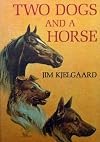
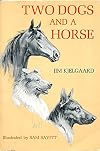
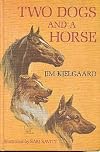
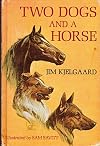
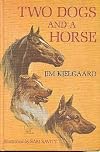
Two Dogs and a Horse
by Jim Kjelgaard
On This Page
Tags
Recommendations



















Member Recommendations


Member Reviews
Two dogs and a Horse is comprised of 3 stories:
A Dog Remembers
The Black Horse
The Lake and the Lonely Exiles
The title page proudly says ‘Weekly Reader Children’ Book Club presents…’ so it is quick read. Overall, I enjoyed the book. There is not much room in short stories to fully develop the story but I think enough.
The first story, A Dog Remembers, had an ending that seemed a bit rushed.
The second one, The Black Horse, someone said is similar to Black Beauty, but I haven’t read that book so can only say it is the story of a wild black horse that someone through days of patience and a situation where the guy has to help the horse out, leads to taming the horse. I much prefer dog stories to horse stories but it was enjoyable show more enough.
The last story, The Lake with the Lonely Exiles, is about an abandoned dog that befriends a stranded goose and is my favorite in the book.
The big reason I liked the book and Jim Kjelgaard’s books in general is how lovingly he describes the wilds and the creatures in it. One way you can see that is in what he seems to put in every of his story and books, a paragraph bursting with observations of animals as if they are everywhere around you if you just take the time to look around. Here is one example:
‘Occasionally, the ripples on the surface was shattered or crossed by a curling V-wake that marked the watery trail of a swimming muskrat. At the far north end of the lake, a lithe doe, who had left her dappled fawn hidden in a thicket, sipped, raised a nervous head to look, and lower in to sip again. As though his last dark deed, the murder of a nesting mallard, could not abide the light, a snake-thin mink looked for a den in which he might lie up and found one in a hollow stump. Two crows, busily trying to pick up a dead fish that floated with white belly upward, cawed their disappointment or rising excitement as their fortunes waned or rose. Saucy, red-winged blackbirds tilted on bending rushes and whistled defiance to the rest of the world.’
Here is another example from the first story about the man who is the dog’s master who lives a simple life out in the woods:
‘He understood the hills, and all about them. He read furtive rustlings in the brush as understandingly as residents of Stauffer read their newspapers. He knew the winter’s den from which the she-bear, walking lean from her winter’s hibernation, took her cubs to meet the world. He could interpret the cries of the hawk, the screams of the jay. The pitch and tone of the wind, the sound of the rain, the formation of the clouds, the actions of birds, all told him secrets hidden from most men.’
Another thing I like about his books and stories is often his characters don’t complain much of hardships and just seek happiness in a simple life. For almost all of us we have to devote a lot of time to a career, have plenty of bills to pay, and a fair amount of responsibilities. The thought of a simple life structured around something you love is very appealing. In this next passage the main character in the Black Horse talks about how describes what he wants out of life after making his way through difficulties:
‘It was the biggest and most magnificent horse Jed had ever seen. He knew horses. Son of an indifferent mother and a father who vanished shortly after he was born, victim of paralysis in his childhood, he had spent all his life doing cores for Raglan and other stockmen in the hills. He had never earned more than ten dollars a month, but he had dreams and ambitions. If he could get only ten acres of land for himself, he would somehow or other procure a mare and make a living raising horses. That, for Jed, would be all he wanted of happiness.’
Jim Kjelgaard’s stories of the characters can be a bit predictable but it his predictable loving care of the wilds, of animals, and of the simple life, that make me enjoy this book as well as seek to read all of his books relating to dogs.
One last thing, I liked all the pencil drawing illustrations in the book, but found the noses of the horse and dogs on the cover seemed a little too elongated. show less
A Dog Remembers
The Black Horse
The Lake and the Lonely Exiles
The title page proudly says ‘Weekly Reader Children’ Book Club presents…’ so it is quick read. Overall, I enjoyed the book. There is not much room in short stories to fully develop the story but I think enough.
The first story, A Dog Remembers, had an ending that seemed a bit rushed.
The second one, The Black Horse, someone said is similar to Black Beauty, but I haven’t read that book so can only say it is the story of a wild black horse that someone through days of patience and a situation where the guy has to help the horse out, leads to taming the horse. I much prefer dog stories to horse stories but it was enjoyable show more enough.
The last story, The Lake with the Lonely Exiles, is about an abandoned dog that befriends a stranded goose and is my favorite in the book.
The big reason I liked the book and Jim Kjelgaard’s books in general is how lovingly he describes the wilds and the creatures in it. One way you can see that is in what he seems to put in every of his story and books, a paragraph bursting with observations of animals as if they are everywhere around you if you just take the time to look around. Here is one example:
‘Occasionally, the ripples on the surface was shattered or crossed by a curling V-wake that marked the watery trail of a swimming muskrat. At the far north end of the lake, a lithe doe, who had left her dappled fawn hidden in a thicket, sipped, raised a nervous head to look, and lower in to sip again. As though his last dark deed, the murder of a nesting mallard, could not abide the light, a snake-thin mink looked for a den in which he might lie up and found one in a hollow stump. Two crows, busily trying to pick up a dead fish that floated with white belly upward, cawed their disappointment or rising excitement as their fortunes waned or rose. Saucy, red-winged blackbirds tilted on bending rushes and whistled defiance to the rest of the world.’
Here is another example from the first story about the man who is the dog’s master who lives a simple life out in the woods:
‘He understood the hills, and all about them. He read furtive rustlings in the brush as understandingly as residents of Stauffer read their newspapers. He knew the winter’s den from which the she-bear, walking lean from her winter’s hibernation, took her cubs to meet the world. He could interpret the cries of the hawk, the screams of the jay. The pitch and tone of the wind, the sound of the rain, the formation of the clouds, the actions of birds, all told him secrets hidden from most men.’
Another thing I like about his books and stories is often his characters don’t complain much of hardships and just seek happiness in a simple life. For almost all of us we have to devote a lot of time to a career, have plenty of bills to pay, and a fair amount of responsibilities. The thought of a simple life structured around something you love is very appealing. In this next passage the main character in the Black Horse talks about how describes what he wants out of life after making his way through difficulties:
‘It was the biggest and most magnificent horse Jed had ever seen. He knew horses. Son of an indifferent mother and a father who vanished shortly after he was born, victim of paralysis in his childhood, he had spent all his life doing cores for Raglan and other stockmen in the hills. He had never earned more than ten dollars a month, but he had dreams and ambitions. If he could get only ten acres of land for himself, he would somehow or other procure a mare and make a living raising horses. That, for Jed, would be all he wanted of happiness.’
Jim Kjelgaard’s stories of the characters can be a bit predictable but it his predictable loving care of the wilds, of animals, and of the simple life, that make me enjoy this book as well as seek to read all of his books relating to dogs.
One last thing, I liked all the pencil drawing illustrations in the book, but found the noses of the horse and dogs on the cover seemed a little too elongated. show less
Two dogs and a Horse is comprised of 3 stories:
A Dog Remembers
The Black Horse
The Lake and the Lonely Exiles
The title page proudly says ‘Weekly Reader Children’ Book Club presents…’ so it is quick read. Overall, I enjoyed the book. There is not much room in short stories to fully develop the story but I think enough.
The first story, A Dog Remembers, had an ending that seemed a bit rushed.
The second one, The Black Horse, someone said is similar to Black Beauty, but I haven’t read that book so can only say it is the story of a wild black horse that someone through days of patience and a situation where the guy has to help the horse out, leads to taming the horse. I much prefer dog stories to horse stories but it was enjoyable show more enough.
The last story, The Lake with the Lonely Exiles, is about an abandoned dog that befriends a stranded goose and is my favorite in the book.
The big reason I liked the book and Jim Kjelgaard’s books in general is how lovingly he describes the wilds and the creatures in it. One way you can see that is in what he seems to put in every of his story and books, a paragraph bursting with observations of animals as if they are everywhere around you if you just take the time to look around. Here is one example:
‘Occasionally, the ripples on the surface was shattered or crossed by a curling V-wake that marked the watery trail of a swimming muskrat. At the far north end of the lake, a lithe doe, who had left her dappled fawn hidden in a thicket, sipped, raised a nervous head to look, and lower in to sip again. As though his last dark deed, the murder of a nesting mallard, could not abide the light, a snake-thin mink looked for a den in which he might lie up and found one in a hollow stump. Two crows, busily trying to pick up a dead fish that floated with white belly upward, cawed their disappointment or rising excitement as their fortunes waned or rose. Saucy, red-winged blackbirds tilted on bending rushes and whistled defiance to the rest of the world.’
Here is another example from the first story about the man who is the dog’s master who lives a simple life out in the woods:
‘He understood the hills, and all about them. He read furtive rustlings in the brush as understandingly as residents of Stauffer read their newspapers. He knew the winter’s den from which the she-bear, walking lean from her winter’s hibernation, took her cubs to meet the world. He could interpret the cries of the hawk, the screams of the jay. The pitch and tone of the wind, the sound of the rain, the formation of the clouds, the actions of birds, all told him secrets hidden from most men.’
Another thing I like about his books and stories is often his characters don’t complain much of hardships and just seek happiness in a simple life. For almost all of us we have to devote a lot of time to a career, have plenty of bills to pay, and a fair amount of responsibilities. The thought of a simple life structured around something you love is very appealing. In this next passage the main character in the Black Horse talks about how describes what he wants out of life after making his way through difficulties:
‘It was the biggest and most magnificent horse Jed had ever seen. He knew horses. Son of an indifferent mother and a father who vanished shortly after he was born, victim of paralysis in his childhood, he had spent all his life doing cores for Raglan and other stockmen in the hills. He had never earned more than ten dollars a month, but he had dreams and ambitions. If he could get only ten acres of land for himself, he would somehow or other procure a mare and make a living raising horses. That, for Jed, would be all he wanted of happiness.’
Jim Kjelgaard’s stories of the characters can be a bit predictable but it his predictable loving care of the wilds, of animals, and of the simple life, that make me enjoy this book as well as seek to read all of his books relating to dogs.
One last thing, I liked all the pencil drawing illustrations in the book, but found the noses of the horse and dogs on the cover seemed a little too elongated. show less
A Dog Remembers
The Black Horse
The Lake and the Lonely Exiles
The title page proudly says ‘Weekly Reader Children’ Book Club presents…’ so it is quick read. Overall, I enjoyed the book. There is not much room in short stories to fully develop the story but I think enough.
The first story, A Dog Remembers, had an ending that seemed a bit rushed.
The second one, The Black Horse, someone said is similar to Black Beauty, but I haven’t read that book so can only say it is the story of a wild black horse that someone through days of patience and a situation where the guy has to help the horse out, leads to taming the horse. I much prefer dog stories to horse stories but it was enjoyable show more enough.
The last story, The Lake with the Lonely Exiles, is about an abandoned dog that befriends a stranded goose and is my favorite in the book.
The big reason I liked the book and Jim Kjelgaard’s books in general is how lovingly he describes the wilds and the creatures in it. One way you can see that is in what he seems to put in every of his story and books, a paragraph bursting with observations of animals as if they are everywhere around you if you just take the time to look around. Here is one example:
‘Occasionally, the ripples on the surface was shattered or crossed by a curling V-wake that marked the watery trail of a swimming muskrat. At the far north end of the lake, a lithe doe, who had left her dappled fawn hidden in a thicket, sipped, raised a nervous head to look, and lower in to sip again. As though his last dark deed, the murder of a nesting mallard, could not abide the light, a snake-thin mink looked for a den in which he might lie up and found one in a hollow stump. Two crows, busily trying to pick up a dead fish that floated with white belly upward, cawed their disappointment or rising excitement as their fortunes waned or rose. Saucy, red-winged blackbirds tilted on bending rushes and whistled defiance to the rest of the world.’
Here is another example from the first story about the man who is the dog’s master who lives a simple life out in the woods:
‘He understood the hills, and all about them. He read furtive rustlings in the brush as understandingly as residents of Stauffer read their newspapers. He knew the winter’s den from which the she-bear, walking lean from her winter’s hibernation, took her cubs to meet the world. He could interpret the cries of the hawk, the screams of the jay. The pitch and tone of the wind, the sound of the rain, the formation of the clouds, the actions of birds, all told him secrets hidden from most men.’
Another thing I like about his books and stories is often his characters don’t complain much of hardships and just seek happiness in a simple life. For almost all of us we have to devote a lot of time to a career, have plenty of bills to pay, and a fair amount of responsibilities. The thought of a simple life structured around something you love is very appealing. In this next passage the main character in the Black Horse talks about how describes what he wants out of life after making his way through difficulties:
‘It was the biggest and most magnificent horse Jed had ever seen. He knew horses. Son of an indifferent mother and a father who vanished shortly after he was born, victim of paralysis in his childhood, he had spent all his life doing cores for Raglan and other stockmen in the hills. He had never earned more than ten dollars a month, but he had dreams and ambitions. If he could get only ten acres of land for himself, he would somehow or other procure a mare and make a living raising horses. That, for Jed, would be all he wanted of happiness.’
Jim Kjelgaard’s stories of the characters can be a bit predictable but it his predictable loving care of the wilds, of animals, and of the simple life, that make me enjoy this book as well as seek to read all of his books relating to dogs.
One last thing, I liked all the pencil drawing illustrations in the book, but found the noses of the horse and dogs on the cover seemed a little too elongated. show less
This book is somewhat aimed at youth, but is not aimed low, making it a good book for any animal lover. It consists of three stories, each complete without the others. The poignant tales are nicely complemented by Sam Savitt's charcoal sketches.
While I enjoyed all three stories, the third one touched me the most, regarding unlikely companions.
While I enjoyed all three stories, the third one touched me the most, regarding unlikely companions.
Ratings
Members
- Recently Added By
Lists

Rough collies -- children's/young adult fiction
155 works; 1 member

Dogs -- children's/young adult fiction
1,317 works; 9 members

German shepherd dogs -- children's/young adult fiction
102 works; 1 member
Author Information

67+ Works 8,338 Members
Series
Belongs to Publisher Series
Common Knowledge
- Canonical title
- Two Dogs and a Horse
- Original publication date
- 1964
Classifications
Statistics
- Members
- 197
- Popularity
- 166,886
- Reviews
- 3
- Rating
- (3.95)
- Languages
- English, Italian
- Media
- Paper, Ebook
- ISBNs
- 2
- ASINs
- 10