On This Page
Description
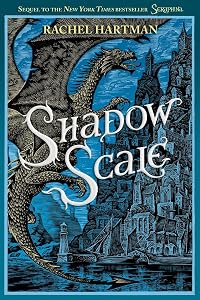
"Seraphina, half-dragon and half-human, searches for others like her who can make the difference in the war between dragons and humans in the kingdom of Goredd."--Tags
Recommendations






Member Reviews
I'm not sure why I find the Seraphina books so intoxicating to read -- as dragon books go, they aren't very dragon-y. As fantasy books go, they are a little more grounded in both history and religion than I would think I'd enjoy, and yet they are so compulsively readable that I can't put them down. I suspect that it's Seraphina's magnificent charm as a character -- her extraordinarily compelling humanity as a not-quite-human player.
Shadow Scale is the sequel to the wonderful debut YA fantasy, Seraphina, which must absolutely be read first. This review may contain spoilers for Seraphina.
I loved, loved Shadow Scale. This is an almost six hundred page book that I ended up reading in less than twenty-four hours. It does pretty much everything very well and doesn’t go overboard on the romance front, which is notable especially for a YA book.
Shadow Scale opens with a piece of historical writing that recounts the events of Seraphina. While it was useful in reminding me what happened, it did go into potentially spoilery territory, which I found highly annoying.
In Shadow Scale, Seraphina is tracking down the rest of the half dragons to help in the ongoing war. But show more there’s one half dragon that she really wishes she won’t find.This plot was a bit slow at first and didn’t really take off until the villain arrived on stage. However, once she showed up, I was utterly sucked in.
I really love the characters! Seraphina’s a wonderful heroine – creative, determined, and compassionate. The secondary characters shine as well, and I have a particular fondness for Abdo, the twelve year old dancer. The villain was also fascinating. She’s never treated as simple, and it’s thrilling to find out her back story and her goals.
In addition, it’s notable how diverse these characters are. Why can’t the rest of fantasy be like this? There’s hoards of great female characters, a pretty high number of POC characters (Abdo!), a transwoman character, a fictional language where the introduction is “How may I pronoun you?”, and a number of LGB characters.
I liked the world created in Seraphina, and Shadow Scale farther explores it and adds to it. While I would definitely classify the book as fantasy and most technology is at the medieval level, it’s interesting how technologically advanced the dragons are. What I initially assumed were “vaguely magical devices” were actually more like cell phones or mini computers. It was fun to see Seraphina come more into contact with dragon technology. The religion set up in the first book was also farther explored and worked really well. Finally, Shadow Scales went beyond the kingdom of Goredd and showed the different cultures of the surrounding lands, particularly Porphyry.
The romance subplot was great and not the least bit annoying. For one thing, it’s actually a subplot. Seriously, the love interest was gone for two hundred pages, and Seraphina’s got much more important things going on than aghasting over relationship drama. The conclusion to the subplot was wonderful and brilliantly original. Think of all those times were you say “wouldn’t it be cool if… but that’s not going to happen.” Only this time, it actually does happen! I liked the impression I got of how it ended, but it was sort of ambiguous. I did find an interview where Hartman talks about it under a spoiler cut. I would recommend reading the entire interview as it is pretty interesting.
My major issue was that this was the last book in a duology, and I felt like it didn’t wrap everything up. There’s still a number of loose threads, and I’m dying to see more of the romantic subplot (probably the first time I’ve ever said that). There’s probably enough material left for a third book. Still, Hartman’s said that she’s planning to write more books set in the same world, so maybe some of my questions will be answered in them.
I would definitely recommend this book to anyone who liked Seraphina.
Originally posted on The Illustrated Page. show less
I loved, loved Shadow Scale. This is an almost six hundred page book that I ended up reading in less than twenty-four hours. It does pretty much everything very well and doesn’t go overboard on the romance front, which is notable especially for a YA book.
Shadow Scale opens with a piece of historical writing that recounts the events of Seraphina. While it was useful in reminding me what happened, it did go into potentially spoilery territory, which I found highly annoying.
In Shadow Scale, Seraphina is tracking down the rest of the half dragons to help in the ongoing war. But show more there’s one half dragon that she really wishes she won’t find.This plot was a bit slow at first and didn’t really take off until the villain arrived on stage. However, once she showed up, I was utterly sucked in.
I really love the characters! Seraphina’s a wonderful heroine – creative, determined, and compassionate. The secondary characters shine as well, and I have a particular fondness for Abdo, the twelve year old dancer. The villain was also fascinating. She’s never treated as simple, and it’s thrilling to find out her back story and her goals.
In addition, it’s notable how diverse these characters are. Why can’t the rest of fantasy be like this? There’s hoards of great female characters, a pretty high number of POC characters (Abdo!), a transwoman character, a fictional language where the introduction is “How may I pronoun you?”, and a number of LGB characters.
I liked the world created in Seraphina, and Shadow Scale farther explores it and adds to it. While I would definitely classify the book as fantasy and most technology is at the medieval level, it’s interesting how technologically advanced the dragons are. What I initially assumed were “vaguely magical devices” were actually more like cell phones or mini computers. It was fun to see Seraphina come more into contact with dragon technology. The religion set up in the first book was also farther explored and worked really well. Finally, Shadow Scales went beyond the kingdom of Goredd and showed the different cultures of the surrounding lands, particularly Porphyry.
The romance subplot was great and not the least bit annoying. For one thing, it’s actually a subplot. Seriously, the love interest was gone for two hundred pages, and Seraphina’s got much more important things going on than aghasting over relationship drama. The conclusion to the subplot was wonderful and brilliantly original. Think of all those times were you say “wouldn’t it be cool if… but that’s not going to happen.” Only this time, it actually does happen! I liked the impression I got of how it ended, but it was sort of ambiguous. I did find an interview where Hartman talks about it under a spoiler cut. I would recommend reading the entire interview as it is pretty interesting.
My major issue was that this was the last book in a duology, and I felt like it didn’t wrap everything up. There’s still a number of loose threads, and I’m dying to see more of the romantic subplot (probably the first time I’ve ever said that). There’s probably enough material left for a third book. Still, Hartman’s said that she’s planning to write more books set in the same world, so maybe some of my questions will be answered in them.
I would definitely recommend this book to anyone who liked Seraphina.
Originally posted on The Illustrated Page. show less
It has taken me absolutely forever to write a review on this because it is so difficult to express my love for the world that Rachel Hartman has created and my love for the characters in this world. But I'm going to try.
Seraphina was everything I wanted in a fantasy about dragons that can become human and it was everything I hadn't known I wanted in a fantasy about dragons that can become human. I'm only going to touch lightly on this because this isn't a review about Seraphina, but the fascinating, and frankly, unique take on the dynamic between the humans and the dragons is just brilliant. It manages to weave beautifully into this rich world that Hartman has written and also brings up some fantastic debate and discussion that is show more terribly relevant to the real world. And all without being heavy handed. Oh, and don't get me started on the characters and character growth and the fantasy, period mystery story in this stunningly real world! I adored Seraphina with all my heart and have reread it multiple times since discovering it so one can imagine how thrilled I was to read the sequel.
Shadow Scale continued to be just as masterful as Seraphina with Hartman's beautiful writing, rich setting, and phenomenal world-building. Yet, the sequel is also very different. The first book was a more traditional romance mystery set within a complex fantasy world while the sequel is a quest across the world of this complex fantasy. It is incredibly important to remember that Shadow Scale is not Seraphina.
I found Shadow Scale to be slower in pacing than Seraphina since there was much framework that needed to be addressed before our grand finale and while it could lag at times, the setting continued to be so vibrant and the characters so fascinating, that I never truly grew bored. The relationships that Seraphina gains in the first book are not a focus of the sequel and this is disappointing because, while they are returned to and addressed in the ending, they are not wrapped up in a tidy bow but are messy and a work in progress just like any real relationships. In fact, the whole ending is realistically messy and, though the primary conflict is resolved, there is much that is not because the open possibilities much more closely reflects reality.
The further character growth that Seraphina undergoes in Shadow Scale is both brilliant and mind blowing. Seraphina's travels lead to further self-exploration expanded on from the first book. Her discoveries about herself, the other characters, and aspects of this rich world are the primary story and her search for the other half-dragons, Jannuola, and those relationships left behind are truly a secondary story. I felt these complimentary lines were masterfully woven together and built excellently to the finale - even if the main climatic epiphany was heavily fantasy trope-y.
Really, my only complaint can be summed up in one word and I am just going to sit in a corner and cry over it: Orma. show less
Seraphina was everything I wanted in a fantasy about dragons that can become human and it was everything I hadn't known I wanted in a fantasy about dragons that can become human. I'm only going to touch lightly on this because this isn't a review about Seraphina, but the fascinating, and frankly, unique take on the dynamic between the humans and the dragons is just brilliant. It manages to weave beautifully into this rich world that Hartman has written and also brings up some fantastic debate and discussion that is show more terribly relevant to the real world. And all without being heavy handed. Oh, and don't get me started on the characters and character growth and the fantasy, period mystery story in this stunningly real world! I adored Seraphina with all my heart and have reread it multiple times since discovering it so one can imagine how thrilled I was to read the sequel.
Shadow Scale continued to be just as masterful as Seraphina with Hartman's beautiful writing, rich setting, and phenomenal world-building. Yet, the sequel is also very different. The first book was a more traditional romance mystery set within a complex fantasy world while the sequel is a quest across the world of this complex fantasy. It is incredibly important to remember that Shadow Scale is not Seraphina.
I found Shadow Scale to be slower in pacing than Seraphina since there was much framework that needed to be addressed before our grand finale and while it could lag at times, the setting continued to be so vibrant and the characters so fascinating, that I never truly grew bored. The relationships that Seraphina gains in the first book are not a focus of the sequel and this is disappointing because, while they are returned to and addressed in the ending, they are not wrapped up in a tidy bow but are messy and a work in progress just like any real relationships. In fact, the whole ending is realistically messy and, though the primary conflict is resolved, there is much that is not because the open possibilities much more closely reflects reality.
The further character growth that Seraphina undergoes in Shadow Scale is both brilliant and mind blowing. Seraphina's travels lead to further self-exploration expanded on from the first book. Her discoveries about herself, the other characters, and aspects of this rich world are the primary story and her search for the other half-dragons, Jannuola, and those relationships left behind are truly a secondary story. I felt these complimentary lines were masterfully woven together and built excellently to the finale - even if the main climatic epiphany was heavily fantasy trope-y.
Really, my only complaint can be summed up in one word and I am just going to sit in a corner and cry over it: Orma. show less
I loved Seraphina and found the sequel gripping -- I finished the audiobook within a few days, even though it’s much longer than the first book. The worldbuilding is richly detailed and many of the characters are very memorable. I was impressed with how the story weaves together all the different threads. Since finishing it, I’ve been trying to work out I feel about it. Was it satisfying? Was it too long? (Was it too long because there were too many characters?) Do I like the way it adds to Seraphina’s story? I’ve concluded that, while it wasn’t perfect, the way it has stuck with me indicates that it was successful.
I had been a bit worried that Shadow Scale would lose something by sending Seraphina off on a journey and thereby show more taking her away from her family, friends, home, job and country. With Goredd at risk of being caught in the middle of a dragon civil war, Seraphina sets out to find other half-dragons, hoping that their unique abilities will help to protect Goredd and that she can offer them a safe home.
But things become tense and personal when Seraphina’s mission is hijacked by someone from Seraphina’s past.
This is a story about agency. I really like the way so many things in the story relate to that theme. For instance, Seraphina desperately wants to bring half-dragons together, but she cannot make that choice for them. Her plans don’t go to plan, because sometimes she’s unable to persuade or convince others. Perhaps part of what makes this book satisfying-yet-unsatisfying is that there are limitations to Seraphina’s power, and this is clearly a good thing -- contrasted as it is with the horror caused by those who can and do manipulate and control others.
In the midst of this, and in the midst of learning about the abilities of half-dragons (including her own!), Seraphina has to accept that she isn’t responsible for what others choose to do. Even if she sometimes feels like she is.
I was a little bit worried about how the romantic subplot would resolve, having seen a review which, admittedly vaguely, described that resolution as too unexpected. But what happened made sense. I’d have liked to have seen another scene with certain characters talking things through but maybe it’s enough to leave things with Seraphina’s assertion that those conversations will keep happening. It’s realistic, and open-ended in a way I appreciate. show less
I had been a bit worried that Shadow Scale would lose something by sending Seraphina off on a journey and thereby show more taking her away from her family, friends, home, job and country. With Goredd at risk of being caught in the middle of a dragon civil war, Seraphina sets out to find other half-dragons, hoping that their unique abilities will help to protect Goredd and that she can offer them a safe home.
But things become tense and personal when Seraphina’s mission is hijacked by someone from Seraphina’s past.
This is a story about agency. I really like the way so many things in the story relate to that theme. For instance, Seraphina desperately wants to bring half-dragons together, but she cannot make that choice for them. Her plans don’t go to plan, because sometimes she’s unable to persuade or convince others. Perhaps part of what makes this book satisfying-yet-unsatisfying is that there are limitations to Seraphina’s power, and this is clearly a good thing -- contrasted as it is with the horror caused by those who can and do manipulate and control others.
In the midst of this, and in the midst of learning about the abilities of half-dragons (including her own!), Seraphina has to accept that she isn’t responsible for what others choose to do. Even if she sometimes feels like she is.
I was a little bit worried about how the romantic subplot would resolve, having seen a review which, admittedly vaguely, described that resolution as too unexpected. But what happened made sense. I’d have liked to have seen another scene with certain characters talking things through but maybe it’s enough to leave things with Seraphina’s assertion that those conversations will keep happening. It’s realistic, and open-ended in a way I appreciate. show less
War is coming, and Seraphina and her fellow half-dragons may be the key to Goredd's survival. Seraphina, with her mental connection to the others, is the obvious person to draw them all together, but to do so she will have to travel through Nimys, Samsam, and Porphyry -- and she will face unique dangers in each location. Even more dangerous, however, is the one half-dragon Seraphina is not willing to face: devious Jannoula, who once betrayed Seraphina within the bounds of her own mind. If Jannoula finds out what Seraphina is doing, there's no doubt that she will try to cause trouble, but Jannoula is safely imprisoned . . . or is she?
I love this series so very much. Seraphina is a strong heroine, but her strength is primarily mental, and show more it's extraordinarily valuable as such. In this book, we see a great deal of character development for Seraphina as she faces her own biases and motivations for gathering her fellow half-dragons, and as she faces her history with and fears of Jannoula. And let me just say, Jannoula is one of the most chilling villains I've ever run across! The slow-burning romance that began in the last book continues to build, coming to a satisfying and surprising conclusion by the end of the book. That conclusion does tie up most of the loose ends, leaving just a few tantalizing details that may be explored in future books (the author has stated that she will write more books in that world, but they will focus on different main characters). So, if you were waiting to start this series, now is a good time to do so, as these two books make for a rich and satisfying read. show less
I love this series so very much. Seraphina is a strong heroine, but her strength is primarily mental, and show more it's extraordinarily valuable as such. In this book, we see a great deal of character development for Seraphina as she faces her own biases and motivations for gathering her fellow half-dragons, and as she faces her history with and fears of Jannoula. And let me just say, Jannoula is one of the most chilling villains I've ever run across! The slow-burning romance that began in the last book continues to build, coming to a satisfying and surprising conclusion by the end of the book. That conclusion does tie up most of the loose ends, leaving just a few tantalizing details that may be explored in future books (the author has stated that she will write more books in that world, but they will focus on different main characters). So, if you were waiting to start this series, now is a good time to do so, as these two books make for a rich and satisfying read. show less
This sequel is just as rich, just as beautifully developed, in short just as good as its predecessor -- another classic fantasy of dragons, saints, and queens. Instead of castle intrigue, the scale of the story is broadened to national politics as our favorite heroine and all our favorite characters from the previous volume attempt to save both dragonkind and human kind from a plot that has been unfolding whilst they were busy elsewhere.
This book deals more directly with the religious culture that Hartman created for her world, as well as the intersections between species. Much of it takes place in Seraphina's own mind and, while it took time for me to adjust to her narration in the first volume, here that voice seems comfortable and show more familiar. The only real crack in the impressive story is that the ending feels a little rushed and convenient... but by that time, you'll be rooting so hard for these characters that you probably won't mind. show less
This book deals more directly with the religious culture that Hartman created for her world, as well as the intersections between species. Much of it takes place in Seraphina's own mind and, while it took time for me to adjust to her narration in the first volume, here that voice seems comfortable and show more familiar. The only real crack in the impressive story is that the ending feels a little rushed and convenient... but by that time, you'll be rooting so hard for these characters that you probably won't mind. show less
This book was long, but I was into it. Where Seraphina is a coming-of-age novel, Shadow Scale is a satisfying adventure story told on a grand scale. I really enjoyed the worldbuilding, particularly our visit to Porphyry, a city-state that vaguely evokes Roman North Africa and is home to a diaspora community of dragons. Seraphina, too, has a nuanced emotional journey that is more outward-looking than in the first novel.
The one element I found disappointing was the character of Jannoula, who is so very effective in the early chapters of the novel but less compelling later on. Nevertheless, the events she sets in motion make for some fun intrigue and a denouement that's pleasingly mythological in scope.
I love the energy of the show more romance—slow-burn, courtly, and restrained, it pushes the same buttons as my adolescent love for Edith Wharton and George Eliot. Hartman mentions Eliot in the acknowledgements of Seraphina, and I'm convinced Seraphina's happily-ever-after is a stealth retelling of the love triangle in The Mill on the Floss. I was exposed to mild spoilers, yet I still didn't see this particular resolution coming. I may need to go read some fan fiction.
I can see why some readers were disappointed by this book. Its priorities are very different from the coming-of-age story of Seraphina, and it's such a big novel that the storytelling is at times a bit creaky. Also, there is not nearly enough Orma. Nevertheless I found it an enchanting read and thought it greatly exceeded the expectations set by negative reviews. (Someone please write a browser extension that hides Goodreads ratings until I finish reading a book; my dumb brain can't resist a meaningless statistic.) show less
The one element I found disappointing was the character of Jannoula, who is so very effective in the early chapters of the novel but less compelling later on. Nevertheless, the events she sets in motion make for some fun intrigue and a denouement that's pleasingly mythological in scope.
I love the energy of the show more romance—slow-burn, courtly, and restrained, it pushes the same buttons as my adolescent love for Edith Wharton and George Eliot. Hartman mentions Eliot in the acknowledgements of Seraphina, and I'm convinced Seraphina's happily-ever-after is a stealth retelling of the love triangle in The Mill on the Floss. I was exposed to mild spoilers, yet I still didn't see this particular resolution coming. I may need to go read some fan fiction.
I can see why some readers were disappointed by this book. Its priorities are very different from the coming-of-age story of Seraphina, and it's such a big novel that the storytelling is at times a bit creaky. Also, there is not nearly enough Orma. Nevertheless I found it an enchanting read and thought it greatly exceeded the expectations set by negative reviews. (Someone please write a browser extension that hides Goodreads ratings until I finish reading a book; my dumb brain can't resist a meaningless statistic.) show less
Members
- Recently Added By
Published Reviews
ThingScore 100
[Seraphina, Hartman's first book] was pitch-perfect, so far as I was concerned — which made me rather nervous about approaching Shadow Scale. Suppose it didn't live up to its predecessor?
It turns out that "living up to it" is the utterly wrong frame for the question. Shadow Scale is less a sequel than it is another stage of development: it outgrows Seraphina and sheds it like a skin.
It turns out that "living up to it" is the utterly wrong frame for the question. Shadow Scale is less a sequel than it is another stage of development: it outgrows Seraphina and sheds it like a skin.
added by lquilter
Lists

2016 Hugo Eligible Novels
90 works; 32 members

Female Protagonist
1,056 works; 57 members

Here There Be Dragons
143 works; 23 members

Nov. 2015 new books
38 works; 1 member

Best LGBT Fiction
144 works; 25 members

Fantasy with Rulers (and some Sci-fi rulers, too)
56 works; 1 member

Fantasy Fiction
69 works; 3 members

Series
86 works; 2 members

Absolute Power
107 works; 1 member

Books Read in 2015
3,299 works; 126 members

Biggest Disappointments
606 works; 168 members
Author Information

10+ Works 7,302 Members
Rachel Hartman was born in Kentucky but has lived in several places including Chicago, Philadelphia, England and Japan. She has a BA in Comparative Literature. After graduating she began drawing comic books. Her title Shadow Scale made The New York Times Best Seller List in 2015. (Bowker Author Biography)
Some Editions
Series


Common Knowledge
- Canonical title
- Shadow Scale
- Original publication date
- 2015-03
- People/Characters
- Seraphina Dombegh; Queen Glisselda; Prince Lucian Kiggs; Aldo; Jannoula; Orma (show all 8); Eskar; Comonot
- Dedication
- For Byron
- First words
- I returned to myself.
- Last words
- (Click to show. Warning: May contain spoilers.)He made room for me, and we sat together the rest of that afternoon, not talking, but letting our hands walk over the keys and remember.
Classifications
- Genres
- Fiction and Literature, Fantasy, Teen, Young Adult
- DDC/MDS
- 813.6 — Literature & rhetoric American literature in English American fiction in English 2000-
- LCC
- PZ7 .H26736 .S — Language and Literature Fiction and juvenile belles lettres Fiction and juvenile belles lettres Juvenile belles lettres
- BISAC
Statistics
- Members
- 1,458
- Popularity
- 16,114
- Reviews
- 90
- Rating
- (3.75)
- Languages
- 6 — English, German, Hungarian, Polish, Spanish, Portuguese (Portugal)
- Media
- Paper, Audiobook, Ebook
- ISBNs
- 31
- ASINs
- 8
