On This Page
Description
"These guys are intense. And they bring that same fire to their narration in the audiobook. Listen to these insanely competent SEAL officers tell you exactly how to make a team successful through their firsthand experiences in business and combat." - The HustleAn updated edition of the blockbuster bestselling leadership audiobook that took America and the world by storm, two U.S. Navy SEAL officers who led the most highly decorated special operations unit of the Iraq War demonstrate how to show more apply powerful leadership principles from the battlefield to business and life.
Combat, the most intense and dynamic environment imaginable, teaches the toughest leadership lessons, with absolutely everything at stake. Jocko Willink and Leif Babin learned this reality first-hand on the most violent and dangerous battlefield in Iraq. As leaders of SEAL Team Three's Task Unit Bruiser, their mission was one many thought impossible: help U.S. forces secure Ramadi, a violent, insurgent-held city deemed "all but lost." In gripping, firsthand accounts of heroism, tragic loss, and hard-won victories, they learned that leadership—at every level—is the most important factor in whether a team succeeds or fails.
Willink and Babin returned home from deployment and instituted SEAL leadership training to pass on their harsh lessons learned in combat to help forge the next generation of SEAL leaders. After leaving the SEAL Teams, they launched a company, Echelon Front, to teach those same leadership principles to leaders in businesses, companies, and organizations across the civilian sector. Since that time, they have trained countless leaders and worked with hundreds of companies in virtually every industry across the U.S. and internationally, teaching them how to develop their own high-performance teams and most effectively lead those teams to dominate their battlefields.
Since it's release in October 2015, Extreme Ownership has revolutionized leadership development and set a new standard for literature on the subject. Required listening for many of the most successful organizations, it has become an integral part of the official leadership training programs for scores of business teams, military units, and first responders. Detailing the mindset and principles that enable SEAL units to accomplish the most difficult combat missions, Extreme Ownership demonstrates how to apply them to any team or organization, in any leadership environment. A compelling narrative with powerful instruction and direct application, Extreme Ownership challenges leaders everywhere to fulfill their ultimate purpose: lead and win.
. show less
Tags
Recommendations
































Member Reviews
I generally hate "military and combat metaphors applied to business/startups/entrepreneurship", but in this case, it was leadership lessons extracted from one context and made general enough to apply to other contexts. They are well motivated through both military and civilian examples for each, and while there is some aspect of filler, it's compelling and the lessons are valuable enough to be worth reading the whole thing. The audiobook is particularly excellent, and preferable to the text.
The only thing lacking is more concrete techniques based on these principles, but that could be another book.
The only thing lacking is more concrete techniques based on these principles, but that could be another book.
When this book was selected for the reading club at my new job, I almost rolled my eyes. Some hoo-rah Navy SEAL marketing wasn't going to fool me. I was raised by a combat veteran (Green Beret) and my disdain for media capitalizing on the machismo of elite military units is pretty well ingrained.
I was pleasantly surprised when I started to read this book. The authors also share a disdain for such activities and wanted to write a real down-to-earth book about how to lead under stress. The advice is practical and examples from on the battlefield and the world of business are used to give great context to how universal the principles are. While the format of war story, to the lessons learned, to applying the lesson in business becomes show more dull; I also understand that they probably wrote this book with that process in mind and wisely repeated a working formula.
Maybe it's because I was raised by a combat veteran, or maybe it's because of the auto-deism of Satanism, but I didn't find anything "extreme" about the concept of ownership presented in this book. This was how I, perhaps solipsistically, assumed grown-ass adults acted. Your life is your business, and you own all of your actions. As a Satanist this is present as being your own God. If life is awesome, congratulate yourself; if it sucks, take responsibility and change things. No devil or god to take the blame for you. Victim mentality has no place here.
While the plethora of military acronyms was no problem for me, I can see how it could impede a general readership. Although, one trick to mastering any field is to learn the jargon that gatekeeps otherwise easy to understand concepts. Once you know the specialized language it become easy to translate out of military-speak, into cringey business word-salad, and finally into practical advice that you could probably tell anyone. This doesn't make the advice any less powerful and I found myself relating the lessons to the running autobiography in my memory.
Don't get me wrong, this is a surprisingly good book. It's centered around building responsibility into yourself and your team. It's taking a good hard look at yourself and your company. Don't let the machismo presentation and the cover fool you, there is good advice in here. The repeating format is dull and the jargon may requiring some searching, but overall a good book on getting yourself or business together. show less
I was pleasantly surprised when I started to read this book. The authors also share a disdain for such activities and wanted to write a real down-to-earth book about how to lead under stress. The advice is practical and examples from on the battlefield and the world of business are used to give great context to how universal the principles are. While the format of war story, to the lessons learned, to applying the lesson in business becomes show more dull; I also understand that they probably wrote this book with that process in mind and wisely repeated a working formula.
Maybe it's because I was raised by a combat veteran, or maybe it's because of the auto-deism of Satanism, but I didn't find anything "extreme" about the concept of ownership presented in this book. This was how I, perhaps solipsistically, assumed grown-ass adults acted. Your life is your business, and you own all of your actions. As a Satanist this is present as being your own God. If life is awesome, congratulate yourself; if it sucks, take responsibility and change things. No devil or god to take the blame for you. Victim mentality has no place here.
While the plethora of military acronyms was no problem for me, I can see how it could impede a general readership. Although, one trick to mastering any field is to learn the jargon that gatekeeps otherwise easy to understand concepts. Once you know the specialized language it become easy to translate out of military-speak, into cringey business word-salad, and finally into practical advice that you could probably tell anyone. This doesn't make the advice any less powerful and I found myself relating the lessons to the running autobiography in my memory.
Don't get me wrong, this is a surprisingly good book. It's centered around building responsibility into yourself and your team. It's taking a good hard look at yourself and your company. Don't let the machismo presentation and the cover fool you, there is good advice in here. The repeating format is dull and the jargon may requiring some searching, but overall a good book on getting yourself or business together. show less
I think Aesop's Fables have equally applicable and simplistic lessons for the management. Hard to read without cringing at the parables, especially after the lengthy bombastic disclaimer at the beginning.
It baffles me why people approach those military teams with such reverence that avoids any critical thoughts. They are the modern day equivalent of mercenaries. Imagine a mercenary group of Swiss crossbowmen trying to teach you how to pitch your electric scooter sharing as service on the blockchain startup to your angel investors. Probably more fun than reading this book and finding out what it actually looks like.
Let me save you the bother: "*you* are the boss and *you* and not your team are responsible for all the successes and show more failures. Fire anyone who disagrees." show less
It baffles me why people approach those military teams with such reverence that avoids any critical thoughts. They are the modern day equivalent of mercenaries. Imagine a mercenary group of Swiss crossbowmen trying to teach you how to pitch your electric scooter sharing as service on the blockchain startup to your angel investors. Probably more fun than reading this book and finding out what it actually looks like.
Let me save you the bother: "*you* are the boss and *you* and not your team are responsible for all the successes and show more failures. Fire anyone who disagrees." show less
I don't normally read books like this, but work gave us each a copy for our book club and I was pleasantly surprised. I appreciated the easy reading style, the identical formatting of each chapter, the harrowing war tales and the clear passion that Willink and Babin have for their comrades, their job and their country. I learned a lot of lessons through this book and couldn't help but go back and look upon my own failures in my professional career. Instead of blaming others, I will choose to look inward, take responsibility and practice a little Extreme Ownership. Great read, if a bit repetitive.
Before reading "Extreme Ownership: How U.S. Navy SEALs Lead and Win" by Jocko Willink and Leif Babin, I knew of Jocko from his podcast and other works. This book presents the leadership principles based on the authors's military experience in Iraq and consulting. Each chapter follows the same overall structure: military story from Iraq, presenting a principle, and an application of the principle from consulting with a business.
What I liked most about the book was the vivid descriptions of urban warfare in Iraq in the 2000s. The book does well in portraying the dangers and realities of military life. Some of it was quite surprising like how much paperwork is involved in military actions such as creating endless PowerPoint presentations! show more On the other hand, urban warfare is also portrayed as frustratingly difficult with the constant danger of friendly fire accidents, surprise attacks and, worse.
I also liked how the authors translate their leadership lessons to consult with businesses. Unfortunately, I wanted more from the examples. It would have been great to have two examples to illustrate each principle rather than one. I would have also liked to see an exploration of how the authors created their consulting company and how it got started. How did they apply "extreme ownership" and "cover and move" to the hard work of getting their first clients? That would be a fascinating story to hear.
I wanted to like this book because I find military history interesting. It didn't quite land with me somehow. Unlike the more recent book by the author "Discipline Equals Freedom: Field Manual," I didn't find this book as relevant. The final chapter was excellent and raised it up to 4 stars. show less
What I liked most about the book was the vivid descriptions of urban warfare in Iraq in the 2000s. The book does well in portraying the dangers and realities of military life. Some of it was quite surprising like how much paperwork is involved in military actions such as creating endless PowerPoint presentations! show more On the other hand, urban warfare is also portrayed as frustratingly difficult with the constant danger of friendly fire accidents, surprise attacks and, worse.
I also liked how the authors translate their leadership lessons to consult with businesses. Unfortunately, I wanted more from the examples. It would have been great to have two examples to illustrate each principle rather than one. I would have also liked to see an exploration of how the authors created their consulting company and how it got started. How did they apply "extreme ownership" and "cover and move" to the hard work of getting their first clients? That would be a fascinating story to hear.
I wanted to like this book because I find military history interesting. It didn't quite land with me somehow. Unlike the more recent book by the author "Discipline Equals Freedom: Field Manual," I didn't find this book as relevant. The final chapter was excellent and raised it up to 4 stars. show less
I went through a gamut of emotions on this book. It was given to me as part of work; normally I don't like reading "how to do better at business" or similar "self-help" books. It's not that I believe I know it all or that I can't do better or that I don't need help; I'd just rather spend my reading time on something that I'm more confident I'll like. Anyway, after enough pressure from work, I figured I probably should at least try. However, I had the hardest time with it. Too much repetition and actually reading it was painful. Then I figured I had enough Audible credits, I would try listening to it instead. Much better! I was not only able to get through it but I went back and highlighted key portions in the book. Then when it ended, I show more was disappointed. I was all set for another few hours of interesting and helpful content. Needless to say since I went and highlighted portions, I did find the content helpful. There are things that I will be working on to improve my leadership skills. I would recommend it but I would also recommend to listen to it instead of reading it. Doing so worked wonders for me. show less
I read this because I was making fun of a friend for reading it. Really fascinating to read a book by someone who thinks so differently from me in so many ways. Provokes some thoughts about how the mentality of warfare and the metaphor of the warrior really shape how these people approach life. Some scattered thoughts:
- dominating and winning is a constant theme; do these things, be an extreme owner, and you will dominate. I would say that dominance is not one of my goals.
- through seizing responsibility for failure you also seize the power for changing that failure, is kind of the message.
- something something serenity to accept what I cannot change, courage to change what I can. This book tries to tell you that the second part is a show more lot bigger than what you think it is.
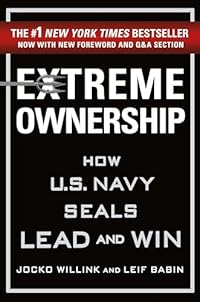
Finally, just seeing the cover of this book made me feel more empowered at work so if you're reading this just scroll back up and look at the cover a bit more. show less
- dominating and winning is a constant theme; do these things, be an extreme owner, and you will dominate. I would say that dominance is not one of my goals.
- through seizing responsibility for failure you also seize the power for changing that failure, is kind of the message.
- something something serenity to accept what I cannot change, courage to change what I can. This book tries to tell you that the second part is a show more lot bigger than what you think it is.
Finally, just seeing the cover of this book made me feel more empowered at work so if you're reading this just scroll back up and look at the cover a bit more. show less
Members
- Recently Added By
Lists

Guttabois
27 works; 1 member

Books Read in 2021
5,361 works; 114 members

Men's healing resources
727 works; 1 member
Author Information

21+ Works 4,950 Members
Jocko Willink served as a Navy SEAL for twenty years. He fought in the Iraq War. For his efforts during the Battle of Ramadi and throughout his career, he was awarded numerous medals including the Silver Star and the Bronze Star. When Willink returned home, he served as a Navy SEAL instructor. Jocko retired from the Navy in 2010 and launched show more Echelon Front with Leif Babin. He uses his expertise to teach leadership beyond the military and serves as an executive coach. He is the author, along with Leif Babin, of Extreme Ownership: How U.S. Navy SEALS Lead and Win, and The Dichotomy of leadership: Balancing the challenges of extreme ownership to lead and win . (Bowker Author Biography) show less
2 Works 2,708 Members
Series

Common Knowledge
- Canonical title
- Extreme Ownership
- Original title
- Extreme Ownership: How U.S. Navy SEALs Lead and Win
Classifications
Statistics
- Members
- 2,247
- Popularity
- 8,873
- Reviews
- 32
- Rating
- (4.03)
- Languages
- 9 — Dutch, English, Estonian, French, German, Hungarian, Italian, Spanish, Portuguese (Portugal)
- Media
- Paper, Audiobook, Ebook
- ISBNs
- 28
- ASINs
- 10
