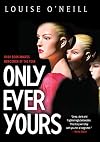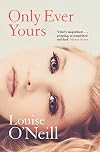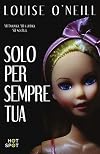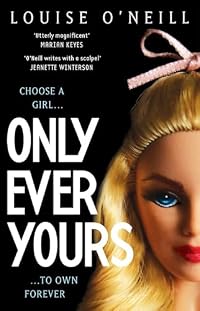
Only Ever Yours
by Louise O'Neill
On This Page
Description
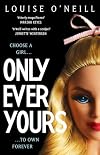
"Where women are created for the pleasure of men, beauty is the first duty of every girl. In Louise O'Neill's world of Only Every Yours women are no longer born naturally, girls (called "eves") are raised in Schools and trained in the arts of pleasing men until they come of age. Freida and Isabel are best friends. Now, aged sixteen and in their final year, they expect to be selected as companions--wives to powerful men. All they have to do is ensure they stay in the top ten beautiful girls show more in their year. The alternatives--life as a concubine, or a chastity (teaching endless generations of girls)--are too horrible to contemplate. But as the intensity of final year takes hold, the pressure to be perfect mounts. Isabel starts to self-destruct, putting her beauty--her only asset--in peril. And then into this sealed female environment, the boys arrive, eager to choose a bride. Freida must fight for her future--even if it means betraying the only friend, the only love, she has ever known"--Amazon.com. show lessTags
Recommendations
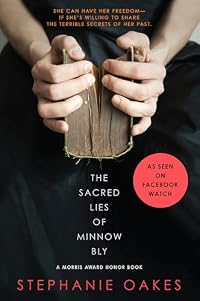
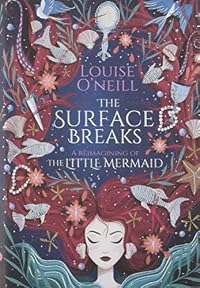
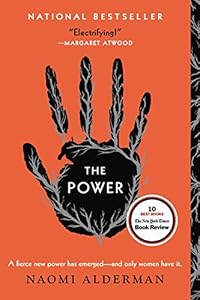
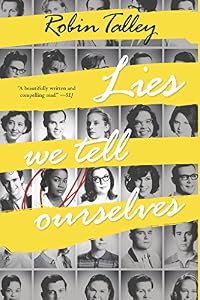

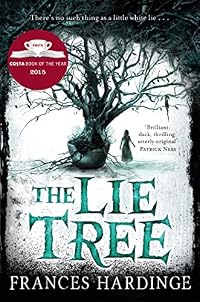
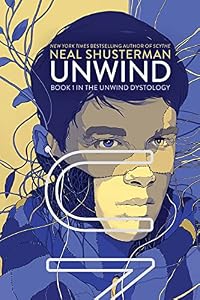
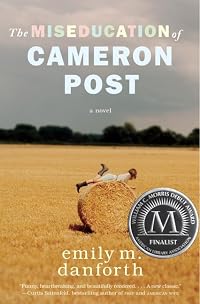
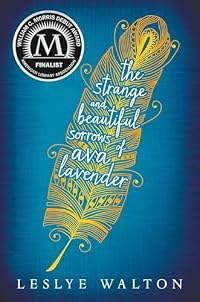
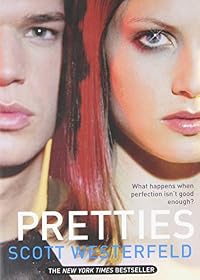
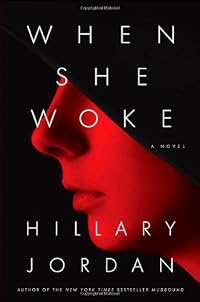
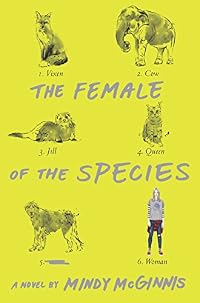

Member Recommendations
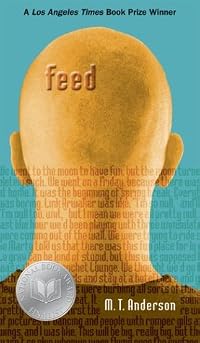
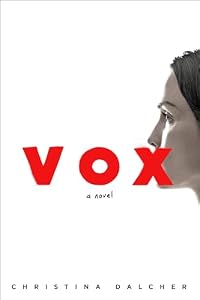
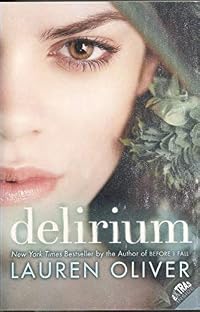
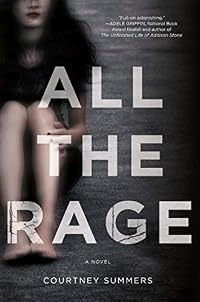
grrrlbrarian Feminist dystopias, both looking at body image and diet culture
Member Reviews
If this book was in the Horror section I wouldn't be surprised. Such a terrifying story and so similar to our society that I can't help but think that the dystopian future in the book could happen in real life (and in some ways it already is).
Only Ever Yours is a cautionary tale about how beauty is perceived. If a girl isn't beautiful she isn't worth anything and consequently, the lengths these girls go to preserve their looks are horrific. If you're sensitive to subjects like eating disorders, bullying or sexual assault or have low self-esteem, you might want to steer clear of this book.
isabel's big secret at the end was shocking and I would never have guessed such a terrible thing.
A hard but important book.
Only Ever Yours is a cautionary tale about how beauty is perceived. If a girl isn't beautiful she isn't worth anything and consequently, the lengths these girls go to preserve their looks are horrific. If you're sensitive to subjects like eating disorders, bullying or sexual assault or have low self-esteem, you might want to steer clear of this book.
isabel's big secret at the end was shocking and I would never have guessed such a terrible thing.
A hard but important book.
I have been thinking about this review for a while now. The book was intense, brutal, a future I hope will come true.
I read it in one sitting. I am not sure I even blinked while reading. I just could not stop, the horror, the normality of it all.
All their futures suck. But if they are engineered right, maybe they will not feel those kind of feelings.
This is the future. Not a lot of people left in the world. Women bear sons. Girls are made, and then put to live in a "school" until they are chosen or not.
You can be chosen as a companion, this is the best, you bear sons, you are killed at 40. You do everything your husband tells you, you are his slave. If you do not give him a son he will send you to the Pyre.
You can be chosen as a show more courtesan, which technically is a prostitute. You must do everything a man tells you, and you must look like you are loving it. You will never have children.
Or you can become a Chastity, take care of newer generations of girls. In silence, alone. It's not like this is a good choice either. They are all miserable choices, ones you do not make, they are made for you.
Or you can be sent underground and never seen again.
At school you are taught to do all the things a woman must do. And you must obey, be proper, never cry, always be calm. You must look good, be thin. Be perfect, and there is always improvement. You are never perfect.
In this world we follow Freida. Who can't sleep. Who is afraid of not looking her best for picture day. Who has gained a tiny bit of weight. Who must lose it or she wont be chosen. Who wants to be like the nr #1 girl. Who is a follower. Who breaks herself in trying to follow. Who gets broken by others trying to be perfect, thin and pretty.
The atmosphere is horrible at that place. Nr 1, nr 1! You have to be chosen by the right man. If he wants to beat you you will smile and thank him.
I could talk for ages on the misery of it all. And it was so good. A world were women are cattle. A fascinating world in it's horror. All choices will be bad, and what will happen to this class?
My version was the adult version, I have no idea what that means. But a YA version came first, and then they wanted to market it to adults too. Maybe they made it darker. All hope is lost to those who enter here.
Totally recommends it. show less
I read it in one sitting. I am not sure I even blinked while reading. I just could not stop, the horror, the normality of it all.
All their futures suck. But if they are engineered right, maybe they will not feel those kind of feelings.
This is the future. Not a lot of people left in the world. Women bear sons. Girls are made, and then put to live in a "school" until they are chosen or not.
You can be chosen as a companion, this is the best, you bear sons, you are killed at 40. You do everything your husband tells you, you are his slave. If you do not give him a son he will send you to the Pyre.
You can be chosen as a show more courtesan, which technically is a prostitute. You must do everything a man tells you, and you must look like you are loving it. You will never have children.
Or you can become a Chastity, take care of newer generations of girls. In silence, alone. It's not like this is a good choice either. They are all miserable choices, ones you do not make, they are made for you.
Or you can be sent underground and never seen again.
At school you are taught to do all the things a woman must do. And you must obey, be proper, never cry, always be calm. You must look good, be thin. Be perfect, and there is always improvement. You are never perfect.
In this world we follow Freida. Who can't sleep. Who is afraid of not looking her best for picture day. Who has gained a tiny bit of weight. Who must lose it or she wont be chosen. Who wants to be like the nr #1 girl. Who is a follower. Who breaks herself in trying to follow. Who gets broken by others trying to be perfect, thin and pretty.
The atmosphere is horrible at that place. Nr 1, nr 1! You have to be chosen by the right man. If he wants to beat you you will smile and thank him.
I could talk for ages on the misery of it all. And it was so good. A world were women are cattle. A fascinating world in it's horror. All choices will be bad, and what will happen to this class?
My version was the adult version, I have no idea what that means. But a YA version came first, and then they wanted to market it to adults too. Maybe they made it darker. All hope is lost to those who enter here.
Totally recommends it. show less
Oh no. This book was awful. It's terrible. 400 pages of the protagonist never making a decision or displaying any agency, pages and pages of clothing descriptions, and an entirely unchanged status quo at the end.
It feels like a student's reaction to the prompt "The Handmaid's Tale for Teens, but Fashion" or "What if Patriarchy, but Too Much."
It could be interpreted as a commentary on the ultimate distillation of cis hetero patriarchy, but it never says much about it other than "hey, wouldn't it suck if they said the quiet part loud?"
SPOILERS FROM HERE ON
Nothing is revealed until the very end, but there are enough hints that the twists do not feel unexpected. The protagonist had no agency at any point in the plot. I kept reading, show more expecting her to make a decision, to take a stand on something, to discover something deep within herself that she cared about, but she didn't. It was a long book with excruciating detail, pages after pages of outfits and body angst, and a main character whose only motivation is to be liked, and who never expresses her opinion on the rare occasions when she can be bothered to think of one. Beyond that, we get the flimsiest bits of world building, ostensibly because the section of this dystopian society we're following is closed off, with no one on the inside knowing or caring about the world beyond. However, it comes across as careless, like a shaky explanation for how this world could ever exist. The author's justification is that climate change, combined with a sudden plague that killed all female embryos in the womb, drove the human race nearly to extinction, with populations in the low thousands. Humans constructed domes to live in, with fake wall screens for sky, and managed to live in a world devoid of plants and animals. Men create women in laboratories based on their ideals of womanhood, which are exaggerated 20th century stereotypes of vapid, vain people obsessed with clothes and social status. The girls are constantly subjected to propaganda about how unattractive and fat they are, and they are pitted against one another.
As previously stated, the main character does not make any independent decisions throughout the novel. She never had power and never sought it. She has a tragic ending that reveals she is just one of many troublemakers ultimately crushed by the society (although she never actually causes significant trouble). I suppose the author chose to show us a failed version of the YA dystopia girlboss, claiming that many will try and fail before one is cunning enough to succeed. That was the most charitable interpretation I could come up with for the ending's messaging, but there didn't really seem to be one.
Overall, it was a slog that triggered my eating disorder and left the status quo completely unchanged at the end of the book, which I would consider....a bad thing. A novel with no discernible plot. It says nothing insightful about the issues it raises. show less
It feels like a student's reaction to the prompt "The Handmaid's Tale for Teens, but Fashion" or "What if Patriarchy, but Too Much."
It could be interpreted as a commentary on the ultimate distillation of cis hetero patriarchy, but it never says much about it other than "hey, wouldn't it suck if they said the quiet part loud?"
SPOILERS FROM HERE ON
Nothing is revealed until the very end, but there are enough hints that the twists do not feel unexpected. The protagonist had no agency at any point in the plot. I kept reading, show more expecting her to make a decision, to take a stand on something, to discover something deep within herself that she cared about, but she didn't. It was a long book with excruciating detail, pages after pages of outfits and body angst, and a main character whose only motivation is to be liked, and who never expresses her opinion on the rare occasions when she can be bothered to think of one. Beyond that, we get the flimsiest bits of world building, ostensibly because the section of this dystopian society we're following is closed off, with no one on the inside knowing or caring about the world beyond. However, it comes across as careless, like a shaky explanation for how this world could ever exist. The author's justification is that climate change, combined with a sudden plague that killed all female embryos in the womb, drove the human race nearly to extinction, with populations in the low thousands. Humans constructed domes to live in, with fake wall screens for sky, and managed to live in a world devoid of plants and animals. Men create women in laboratories based on their ideals of womanhood, which are exaggerated 20th century stereotypes of vapid, vain people obsessed with clothes and social status. The girls are constantly subjected to propaganda about how unattractive and fat they are, and they are pitted against one another.
As previously stated, the main character does not make any independent decisions throughout the novel. She never had power and never sought it. She has a tragic ending that reveals she is just one of many troublemakers ultimately crushed by the society (although she never actually causes significant trouble). I suppose the author chose to show us a failed version of the YA dystopia girlboss, claiming that many will try and fail before one is cunning enough to succeed. That was the most charitable interpretation I could come up with for the ending's messaging, but there didn't really seem to be one.
Overall, it was a slog that triggered my eating disorder and left the status quo completely unchanged at the end of the book, which I would consider....a bad thing. A novel with no discernible plot. It says nothing insightful about the issues it raises. show less
Ok, this had me hooked. It was so gripping. I woke up early to read it. I went to the loo and came back 30 minutes later because I’d been reading it. I couldn’t put it down. Which is funny, because not a lot happens in it in many ways – the ‘eves’ (the pre-17 year old manufactured girls, being trained at their school until they are chosen by men into their roles for life) basically just bitch about weight and looks and are cruel to each other and stupid and look at their ePads and agonise over their food choices for about 300 pages. But oh, I cared about freida, trying so hard but so weak, and oh, I wanted to know what isabel’s secret was, and oh, Darwin and frieda were so sweet, and I wanted them to make it up and get their show more happy ever after so much…
At which point you get to the last ten pages of the book, and wait for the character growth / the warm fuzzies / the reunions / the escape / the happy ever afters. And it pulls out your heart and shreds it into teeny tiny little bits, because basically nothing changes about the whole fucked up mess, and everyone you care about has an unhappy ending. The dream boy marries the bitch queen (who we know will make him unhappy) and never sees frieda again (so the last time they saw each other was the crying row after she had sex with him to try and make him chose her), the best friend never gets a chance to be reunited with frieda and they never make up after their distance (which happened basically because Isabel had a nervous breakdown after being raped by the man she would be forced to marry and couldn’t tell anyone), then she kills herself! and then frieda is taken to a grim science lab in the basement, and drugged into unconsciousness to be tested on for the rest of her life. And that really is the end. She doesn’t get any last thoughts like ‘but one day I will escape’ just relief it is all over.
Err, I like my fiction dark. But I like my fiction dark with some glimmer of the redemptive power of humanity in the dark. This just left me feeling punched in the gut and desperate to talk to people about that awful awful book, to take some of the pain away.
So, err, this might be a hugely powerful book that makes a bold decision not to pull punches in order to underline the horror of the story it’s telling. But I would be very hesitant to recommend it to anyone. It’s hugely good at showing the dystopia of living in a world obsessed with image and looks and other people’s judgement. But it does that by building a hugely powerful world where people are obsessed with image and looks and judgement. I’m not hugely easily triggered about food and weight loss, and I came out of reading this thinking that a pound over 120 pounds is dangerous, and people would judge me if I ate cake. And it offers no escape or happy ending or way out of this world – the ones who play the game and win win, and the ones who lose have nothing else to do but die.
Addictive. Page turning. Chilling. So much of everything that is good about dystopias, but, (unlike the hunger games, which leaves you thinking everything is broken, but we can still be and love and fight back), it drags you down to a conclusion where they have won, and all we can do is hope for the mercy of ceasing to be. show less
At which point you get to the last ten pages of the book, and wait for the character growth / the warm fuzzies / the reunions / the escape / the happy ever afters. And it pulls out your heart and shreds it into teeny tiny little bits, because basically nothing changes about the whole fucked up mess, and everyone you care about has an unhappy ending. The dream boy marries the bitch queen (who we know will make him unhappy) and never sees frieda again (so the last time they saw each other was the crying row after she had sex with him to try and make him chose her), the best friend never gets a chance to be reunited with frieda and they never make up after their distance (which happened basically because Isabel had a nervous breakdown after being raped by the man she would be forced to marry and couldn’t tell anyone), then she kills herself! and then frieda is taken to a grim science lab in the basement, and drugged into unconsciousness to be tested on for the rest of her life. And that really is the end. She doesn’t get any last thoughts like ‘but one day I will escape’ just relief it is all over.
Err, I like my fiction dark. But I like my fiction dark with some glimmer of the redemptive power of humanity in the dark. This just left me feeling punched in the gut and desperate to talk to people about that awful awful book, to take some of the pain away.
So, err, this might be a hugely powerful book that makes a bold decision not to pull punches in order to underline the horror of the story it’s telling. But I would be very hesitant to recommend it to anyone. It’s hugely good at showing the dystopia of living in a world obsessed with image and looks and other people’s judgement. But it does that by building a hugely powerful world where people are obsessed with image and looks and judgement. I’m not hugely easily triggered about food and weight loss, and I came out of reading this thinking that a pound over 120 pounds is dangerous, and people would judge me if I ate cake. And it offers no escape or happy ending or way out of this world – the ones who play the game and win win, and the ones who lose have nothing else to do but die.
Addictive. Page turning. Chilling. So much of everything that is good about dystopias, but, (unlike the hunger games, which leaves you thinking everything is broken, but we can still be and love and fight back), it drags you down to a conclusion where they have won, and all we can do is hope for the mercy of ceasing to be. show less
Now I get why folks connect it with Margaret Attwood's Handmaid's tale and why they deride the connection. Yes it's about girls trained to be subservient and brood mares but the story is different and while both are scary and logical extensions of some of the mores and commentary of today, I think Only Ever Yours hit me as more scary. The night-time programming they got reminded me of the continuous background noise of advertising and other messages that everyone sees and hears continuously in modern living.
freida and isabel have been best friends the whole of their lives but now there are problems with that relationship. They both are part of a class of girls who are competing for 10 places as companions to 10 boys. They are literally show more bred to be perfect, made to stay at perfect weights, forced to criticise each other, made to regard themselves as so lesser that even their names don't deserve capitals. As wives they will only survive as long as they are attractive, and can bear boys, if they're not productive, they're waste and will be treated as such. Girls who aren't wives are concubines and will die earlier. The only other option is to be a Chastity, keeping the brutal training going. At some time in the past selective breeding meant that no more girls were born and in order to continue the species they had to start creating girls and now that they're creating them they treat them as lesser. It reminded me a little of Brave New World in ways too.
It was a brutal read, I was very shocked by the ending, it really hit me hard. And as I look at sites that talk about how men don't want "girls" who are fat a shudder ran through my body. This book is going to linger. show less
freida and isabel have been best friends the whole of their lives but now there are problems with that relationship. They both are part of a class of girls who are competing for 10 places as companions to 10 boys. They are literally show more bred to be perfect, made to stay at perfect weights, forced to criticise each other, made to regard themselves as so lesser that even their names don't deserve capitals. As wives they will only survive as long as they are attractive, and can bear boys, if they're not productive, they're waste and will be treated as such. Girls who aren't wives are concubines and will die earlier. The only other option is to be a Chastity, keeping the brutal training going. At some time in the past selective breeding meant that no more girls were born and in order to continue the species they had to start creating girls and now that they're creating them they treat them as lesser. It reminded me a little of Brave New World in ways too.
It was a brutal read, I was very shocked by the ending, it really hit me hard. And as I look at sites that talk about how men don't want "girls" who are fat a shudder ran through my body. This book is going to linger. show less
Good gravy, that was bleak. In a good way, because it was thought provoking, but sheesh. I wanted a little sunshine. The ending felt authentic to the story, so I was glad for that, but ugghhh, my anxiety was tough to deal with.
It probably won't escape comparisons to The Handmaid's Tale, but it went in the other direction. Where The Handmaid's Tale took morality to extremes, Only Ever Yours took consumerism and the patriarchy (the commodification of women, especially) to extremes.
Worth reading? 100% yes.
It probably won't escape comparisons to The Handmaid's Tale, but it went in the other direction. Where The Handmaid's Tale took morality to extremes, Only Ever Yours took consumerism and the patriarchy (the commodification of women, especially) to extremes.
Worth reading? 100% yes.
In the afterword to this book, O’Neill states that ‘in some ways it is my story’, which did not surprise me in the least. ‘Only Ever Yours’ does not read to me like a dystopia that is seeking to make a point about gender roles, it reads as something the author was trying to exorcise. I can respect that, although it undoubtedly colours the reading experience. The narrative is in the first person, trapping the reader in the head of freida. (I did like the detail that no woman’s name is capitalised, although the wearisome trend of Arbitrarily Capitalising Nouns is also present.) freida is a depressed teenage girl who is addicted to sleeping pills. She and the rest of her class are being trained to be wives or concubines to the show more sons of men who run the world. Their constrained world is dominated by dieting to attain their target weight and competition between themselves to be prettiest. It’s a thoroughly unpleasant, narrow world with uncomfortable details (of course the canteen has a vomitorium). World-building aside, I found the plot sparse and freida a somewhat puzzling choice for narrator.
To generalise, dystopian novels tend to say something about flaws in the contemporary world and/or the responses of individuals to extreme circumstances. If the former is to be emphasised, then the world-building and plot need to shrewdly analyse whatever problems are the focus, allegorically or otherwise. If the latter, then the main character(s) need to be carefully developed and given agency. ‘Only Ever Yours’ doesn’t really do either. freida has no agency, never gets to make choices, and barely has any idea what is going on. While this makes a point of its own, it also constrains the reader somewhat. The enigmatic isabel intrigued me throughout, and I was irritated by how much she seemed to have going on that the reader wasn’t permitted to know about. I would have preferred a split point of view between isabel and freida, or ideally wider. In fact, I find the popularity of a first person single point of view in YA fiction rather baffling. It places so much responsibility on one character! Unless they are a really excellent character supported by a strong plot arc, deft world-building, and an interesting supporting cast, I will probably get tired of them through sheer proximity. Conversely, there is also a danger of said proximity becoming uncomfortably voyeuristic. This was definitely case at certain points here, as freida nears breakdown. On another front, I felt cheated of lesbianism, which was hinted at but never actually materialised. Perhaps because any positive relationship would have undermined the general grimness of the thing? It would have given the book more emotional power, though, and more of a plot.
'Only Ever Yours' is the second novel from my recent little project: keyword searching ‘dystopia’ in the library catalogue then sifting out 15 novels I hadn’t previously heard of. Frankly, I don’t think ‘Only Ever Yours’ succeeds as a dystopia. Despite the ostensible theme, it surprised me by having more to say about mental illness than gender roles. The quotes on the back cover really don’t concur with my experience of the book at all. Jeanette Winterson apparently said, ‘The world O’Neill imagines is frightening because it could come true’. To me, the fact that it didn’t really exaggerate teenage girls experience now made it ineffective. It’s already true - just a simplified, miniature hothouse version of reality. Likewise, the puff quote that it will 'really make you think' doesn't really apply unless you’ve never either been or known a teenage girl. Although it kept my interest and was moving and unsettling in places, I wonder if this book might have worked better as a memoir with a contemporary setting. As a novel, it felt in need of more plot and/or multiple points of view. show less
To generalise, dystopian novels tend to say something about flaws in the contemporary world and/or the responses of individuals to extreme circumstances. If the former is to be emphasised, then the world-building and plot need to shrewdly analyse whatever problems are the focus, allegorically or otherwise. If the latter, then the main character(s) need to be carefully developed and given agency. ‘Only Ever Yours’ doesn’t really do either. freida has no agency, never gets to make choices, and barely has any idea what is going on. While this makes a point of its own, it also constrains the reader somewhat. The enigmatic isabel intrigued me throughout, and I was irritated by how much she seemed to have going on that the reader wasn’t permitted to know about. I would have preferred a split point of view between isabel and freida, or ideally wider. In fact, I find the popularity of a first person single point of view in YA fiction rather baffling. It places so much responsibility on one character! Unless they are a really excellent character supported by a strong plot arc, deft world-building, and an interesting supporting cast, I will probably get tired of them through sheer proximity. Conversely, there is also a danger of said proximity becoming uncomfortably voyeuristic. This was definitely case at certain points here, as freida nears breakdown. On another front, I felt cheated of lesbianism, which was hinted at but never actually materialised. Perhaps because any positive relationship would have undermined the general grimness of the thing? It would have given the book more emotional power, though, and more of a plot.
'Only Ever Yours' is the second novel from my recent little project: keyword searching ‘dystopia’ in the library catalogue then sifting out 15 novels I hadn’t previously heard of. Frankly, I don’t think ‘Only Ever Yours’ succeeds as a dystopia. Despite the ostensible theme, it surprised me by having more to say about mental illness than gender roles. The quotes on the back cover really don’t concur with my experience of the book at all. Jeanette Winterson apparently said, ‘The world O’Neill imagines is frightening because it could come true’. To me, the fact that it didn’t really exaggerate teenage girls experience now made it ineffective. It’s already true - just a simplified, miniature hothouse version of reality. Likewise, the puff quote that it will 'really make you think' doesn't really apply unless you’ve never either been or known a teenage girl. Although it kept my interest and was moving and unsettling in places, I wonder if this book might have worked better as a memoir with a contemporary setting. As a novel, it felt in need of more plot and/or multiple points of view. show less
Members
- Recently Added By
Lists

KayStJ's to-read list
1,616 works; 11 members

Books Read in 2017
4,248 works; 130 members
Talk Discussions
Past Discussions
Found: Basically just YA Handmaid's Tale in Name that Book (October 2024)
Author Information

12 Works 1,566 Members
Louise O' Neill was born in West Cork in 1985. She studied English at Trinity College Dublin and has worked for the senior style director of American Elle magazine. She is currently working as a freelance journalist for a variety of Irish national newspapers and magazines. Her debut novel Only Ever Yours won the inaugural YA Book Prize. He second show more novel is entitled Asking for It. (Bowker Author Biography) show less
Awards and Honors
Awards
Notable Lists
Common Knowledge
- Canonical title
- Only Ever Yours
- Original title
- Only Ever Yours
- People/Characters
- freida; isabel; megan; Darwin Goldsmith; The Father
- Epigraph
- "In the beginning, Man created the new women, the eves." Audio Guide to the Rules for Proper Female Behavior, the Original Father
- Dedication
- For Michael and Marie O'Neill, with all my love
- First words
- The chastities keep asking me why I can't sleep.
- Last words
- (Click to show. Warning: May contain spoilers.)I am ready to feel nothing, forever.
- Publisher's editor
- Mulvey, Niamh
- Blurbers
- Winterson, Jeanette; Dunbar, Robert; Byrne, Gabriel
- Canonical DDC/MDS
- 823.92
- Canonical LCC
- PZ7.O54
Classifications
Statistics
- Members
- 505
- Popularity
- 59,192
- Reviews
- 36
- Rating
- (3.51)
- Languages
- English, Hungarian, Italian, Portuguese
- Media
- Paper, Audiobook, Ebook
- ISBNs
- 15
- ASINs
- 5