Concussion
by Jeanne Marie Laskas
On This Page
Description
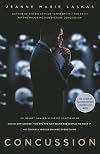
NEW YORK TIMES BESTSELLER • NOW A MAJOR MOTION PICTURE • Dr. Bennet Omalu discovered something he could not ignore. The NFL tried to silence him. His courage would change everything.“A gripping medical mystery and a dazzling portrait of the young scientist no one wanted to listen to . . . a fabulous, essential read.”—Rebecca Skloot, author of The Immortal Life of Henrietta Lacks
Jeanne Marie Laskas first met the young forensic pathologist Dr. Bennet Omalu in 2009, while show more reporting a story for GQ that would go on to inspire the movie Concussion. Omalu told her about a day in September 2002, when, in a dingy morgue in downtown Pittsburgh, he picked up a scalpel and made a discovery that would rattle America in ways he’d never intended.
Omalu was new to America, chasing the dream, a deeply spiritual man escaping the wounds of civil war in Nigeria. The body on the slab in front of him belonged to a fifty-year-old named Mike Webster, aka “Iron Mike,” a Hall of Fame center for the Pittsburgh Steelers, one of the greatest ever to play the game. After retiring in 1990, Webster had suffered a dizzyingly steep decline. Toward the end of his life, he was living out of his van, tasering himself to relieve his chronic pain, and fixing his rotting teeth with Super Glue. How did this happen?, Omalu asked himself. How did a young man like Mike Webster end up like this?
The search for answers would change Omalu’s life forever and put him in the crosshairs of one of the most powerful corporations in America: the National Football League. What Omalu discovered in Webster’s brain—proof that Iron Mike’s mental deterioration was no accident but a disease caused by blows to the head that could affect everyone playing the game—was the one truth the NFL wanted to ignore.
Taut, gripping, and gorgeously told, Concussion is the stirring story of one unlikely man’s decision to stand up to a multibillion-dollar colossus, and to tell the world the truth. show less
Tags
Recommendations







Member Reviews
I am a football lover. A football watching fool. Specifically I am an Oregon Ducks football fanatic. After reading this excellent but heart-wrenching story about the damage done by the violence of this sport I so love, I am going to have to rethink my devotion. This book is a stellar, stop you in your tracks telling about the fraud perpetuated (and paid for) by the NFL and the courageous and heroic Dr. Bennet Omalu. The movie based upon this book is coming out at Christmas- can't wait to see it. This book is not to be missed.
After reading Concussion - well, for one thing, I think the NFL is pretty damn criminal. And I like football. And I live in Pittsburgh, where people REALLY like football.
Jeanne Marie Laskas made me feel extremely attached to Mike Webster, and to all the other players who have suffered like he suffered. Not to mention the families of those players, the friends, the people who tried to help them and couldn't. This was an amazing book, non-fiction that read like fiction, and I couldn't put it down.
And now I don't know if I can watch football without worrying about who will be next. The 'concussion protocol' is nice, but it doesn't come close to addressing the repeated non-concussive hits those players take, game after game, practice after show more practice. There aren't many football fans who are in favor of making the game safer. They all need to read this book.
Oh, and my kids? NEVER EVER. show less
Jeanne Marie Laskas made me feel extremely attached to Mike Webster, and to all the other players who have suffered like he suffered. Not to mention the families of those players, the friends, the people who tried to help them and couldn't. This was an amazing book, non-fiction that read like fiction, and I couldn't put it down.
And now I don't know if I can watch football without worrying about who will be next. The 'concussion protocol' is nice, but it doesn't come close to addressing the repeated non-concussive hits those players take, game after game, practice after show more practice. There aren't many football fans who are in favor of making the game safer. They all need to read this book.
Oh, and my kids? NEVER EVER. show less
Over the past few years, the long-term dangers associated with playing professional football (and we're talking American football and the NFL here, not soccer) have received a lot of attention. Former players are being diagnosed with dementia and other traumatic brain injuries at an alarming rate, and at far younger ages than the general population. This is considered common knowledge today, but it wasn't that long ago that nobody knew any of it was happening. It took a medical examiner in Pittsburgh, a Nigerian immigrant doctor who knew nothing about football, to first sound the alarm. Who Bennett Omalu is, how he came to be the first to discover and name CTE (chronic traumatic encephalopathy) and what has happened to him since is the show more subject of Laskas' absorbing book.
Laskas first wrote about Omalu and the concussion issue in a 2009 article in GQ magazine, and the book is an expansion of that original article. I found Omalu's life story extremely compelling, from his childhood in Nigeria to his emigration to the U.S. to attend medical school. His life was far from a walk in the park, but throughout the book Laskas shows what most would consider his naïvete in dealing with the powerful forces of the NFL, who stonewalled every attempt to highlight football's dangers, to the way racism allowed other — white — doctors to steal the credit and the notoriety for his discoveries. He is an immensely appealing protagonist, and Laskas is skilled at letting his humanity shine through.
At the other end of the spectrum is the NFL, whose underhanded actions in denying health benefits and support to former players who were clearly injured by the game are simply disgusting and immoral. As another football season gets underway, it's hard for me to imagine watching any of these games any longer, even my beloved Iowa Hawkeyes. I'm not about to judge anyone who comes to a different conclusion, but that's just where I seem to have landed now.
I should add that the book was made into a movie starring Will Smith, which got good reviews. I haven't seen it yet but I'd like to now that I've read the book. show less
Laskas first wrote about Omalu and the concussion issue in a 2009 article in GQ magazine, and the book is an expansion of that original article. I found Omalu's life story extremely compelling, from his childhood in Nigeria to his emigration to the U.S. to attend medical school. His life was far from a walk in the park, but throughout the book Laskas shows what most would consider his naïvete in dealing with the powerful forces of the NFL, who stonewalled every attempt to highlight football's dangers, to the way racism allowed other — white — doctors to steal the credit and the notoriety for his discoveries. He is an immensely appealing protagonist, and Laskas is skilled at letting his humanity shine through.
At the other end of the spectrum is the NFL, whose underhanded actions in denying health benefits and support to former players who were clearly injured by the game are simply disgusting and immoral. As another football season gets underway, it's hard for me to imagine watching any of these games any longer, even my beloved Iowa Hawkeyes. I'm not about to judge anyone who comes to a different conclusion, but that's just where I seem to have landed now.
I should add that the book was made into a movie starring Will Smith, which got good reviews. I haven't seen it yet but I'd like to now that I've read the book. show less
I have a confession: I don’t like football. Never have and never will. But I am interested in medical issues, so this book and the upcoming movie starring Will Smith intrigued me. Luckily there is very little football talk and the science is easy for laymen to understand so this book will appeal to anyone who likes an immigrant story along with a medical mystery.
When Nigerian born Dr Bennet Omalu discovered a connection between dementia and NFL players, little did he know he’d set off a campaign by the NFL to suppress the information and discredit his character and findings. Dr Omalu didn’t understand American football, nor did he understand why his discovery wasn’t met with accolades and gratitude. As the story unfolds, his show more personality and Nigerian background are important for the reader to know.
It was Omalu's autopsy of former Pittsburgh Steelers center Mike Webster in 2002 that led to his research and eventual discovery of chronic traumatic encephalopathy, or CTE. His brilliant mind and scientific curiosity led him to research and study the brains of other NFL players who suffered from depression and/or increasingly bizarre and sometimes violent behavior before their untimely deaths, usually at an early age. These chapters are a highlight of the book. That the NFL reacted much the same way as Big Tobacco did when the connection between smoking and lung cancer was made shouldn’t come as a surprise but I was still shocked at the lengths they went to. Now that the discovery is getting national attention the NFL is busy with a damage control PR campaign: they are making the game safer, they donate money to research, and they set up a fund to assist players who suffer from CTE. But the real story is here in this book.
I think this book should be read by everyone and there needs to be a national discussion on how our country’s obsession with football is sacrificing the lives of too many men who play the sport. Even worse, new research is being reported that the damage starts in boys who play at young ages, as it’s the repeated “minor” traumas (is any brain trauma minor?) that causes the worst damage, and not just the “major” collisions that results in concussions. Linemen are at a higher risk. Helmets don’t offer protection as it’s the acceleration/deceleration phenomenon that’s the problem.
I wasn’t always a fan of the author's writing style but the story itself is an important one that needs to be told. A FYI: the italics are Dr. Omalu’s own words or writings.
**I received a copy of the e-book from the publisher and Netgalley in exchange for an honest review. show less
When Nigerian born Dr Bennet Omalu discovered a connection between dementia and NFL players, little did he know he’d set off a campaign by the NFL to suppress the information and discredit his character and findings. Dr Omalu didn’t understand American football, nor did he understand why his discovery wasn’t met with accolades and gratitude. As the story unfolds, his show more personality and Nigerian background are important for the reader to know.
It was Omalu's autopsy of former Pittsburgh Steelers center Mike Webster in 2002 that led to his research and eventual discovery of chronic traumatic encephalopathy, or CTE. His brilliant mind and scientific curiosity led him to research and study the brains of other NFL players who suffered from depression and/or increasingly bizarre and sometimes violent behavior before their untimely deaths, usually at an early age. These chapters are a highlight of the book. That the NFL reacted much the same way as Big Tobacco did when the connection between smoking and lung cancer was made shouldn’t come as a surprise but I was still shocked at the lengths they went to. Now that the discovery is getting national attention the NFL is busy with a damage control PR campaign: they are making the game safer, they donate money to research, and they set up a fund to assist players who suffer from CTE. But the real story is here in this book.
I think this book should be read by everyone and there needs to be a national discussion on how our country’s obsession with football is sacrificing the lives of too many men who play the sport. Even worse, new research is being reported that the damage starts in boys who play at young ages, as it’s the repeated “minor” traumas (is any brain trauma minor?) that causes the worst damage, and not just the “major” collisions that results in concussions. Linemen are at a higher risk. Helmets don’t offer protection as it’s the acceleration/deceleration phenomenon that’s the problem.
I wasn’t always a fan of the author's writing style but the story itself is an important one that needs to be told. A FYI: the italics are Dr. Omalu’s own words or writings.
**I received a copy of the e-book from the publisher and Netgalley in exchange for an honest review. show less
I would like to thank Random House Publishing & NetGalley for giving me a copy of this e-ARC to read in exchange for an honest review. Though I received this e-book for free that in no way impacts my review.
Goodreads Teaser: "Soon to be a major motion picture starring Will Smith, Concussion is the riveting, unlikely story of Dr. Bennet Omalu, the pathologist who made one of the most significant medical discoveries of the twenty-first century, a discovery that challenges the existence of America’s favorite sport and puts Omalu in the crosshairs of football’s most powerful corporation: the NFL.
Jeanne Marie Laskas first met the young forensic pathologist Dr. Bennet Omalu in 2009, while reporting a story for GQ that would go on to show more inspire the movie Concussion. Omalu told her about a day in September 2002, when, in a dingy morgue in downtown Pittsburgh, he picked up a scalpel and made a discovery that would rattle America in ways he’d never intended. Omalu was new to America, chasing the dream, a deeply spiritual man escaping the wounds of civil war in Nigeria. The body on the slab in front of him belonged to a fifty-year-old named Mike Webster, aka “Iron Mike,” a Hall of Fame center for the Pittsburgh Steelers, one of the greatest ever to play the game. After retiring in 1990, Webster had suffered a dizzyingly steep decline. Toward the end of his life, he was living out of his van, tasering himself to relieve his chronic pain, and fixing his rotting teeth with Super Glue. How did this happen?, Omalu asked himself. How did a young man like Mike Webster end up like this? The search for answers would change Omalu’s life forever and put him in the crosshairs of one of the most powerful corporations in America: the National Football League. What Omalu discovered in Webster’s brain—proof that Iron Mike’s mental deterioration was no accident but a disease caused by blows to the head that could affect everyone playing the game—was the one truth the NFL wanted to ignore.
Taut, gripping, and gorgeously told, Concussion is the stirring story of one unlikely man’s decision to stand up to a multibillion-dollar colossus, and to tell the world the truth."
I wasn't sure what I'd make of this story since I'm not really a big football fan (gasp!), but to my pleasant surprise I quite enjoyed it. Not only did Laskas infuse the story with a sense of urgency, she managed to show the big picture of the NFL's continued cover-up while still keeping the story grounded through Dr. Omalu's life.
Initially I was a bit confused by the many details of Dr. Omalu's life, how it seemed to be a biography of his life rather than of his work, but luckily his life was more than interesting enough to keep my attention. And having that background was extremely useful when the story did begin moving into the territory of concussions and the NFL's disavowal of the damage they were causing the players.
Laskas could have gone for traditional gambits to hook the reader into some major courtroom battle, or or glorified methods of getting this story across. Instead, much like her subject Dr. Bennet Omalu, she keeps to the daily, personal aspects of this compelling story. There is more than enough real drama happening that there is never a need to create something that isn't there.
By sticking to the personal stories and accounts of those involved Laskas has done an excellent job of bringing this unlikely whistle-blower, and in my eyes a hero, to the forefront, giving him the recognition he deserves. Staying so deep within individuals' stories made this book fly by, and gave me a real sense of the horrors that players and their families, as well as others who cared about them, endured with no understanding of what was happening to their husbands, fathers, sons, brothers. Having to watch your 40 year old husband, the father of your kids, go down a road you can't walk with them, or bring them back from, is a hell that no one deserves. A hell that is finally being explained in mass media, though Dr. Omalu identified the truth of this danger years ago. This book is one I'd recommend every parent read before allowing their child to play football at any age. show less
Goodreads Teaser: "Soon to be a major motion picture starring Will Smith, Concussion is the riveting, unlikely story of Dr. Bennet Omalu, the pathologist who made one of the most significant medical discoveries of the twenty-first century, a discovery that challenges the existence of America’s favorite sport and puts Omalu in the crosshairs of football’s most powerful corporation: the NFL.
Jeanne Marie Laskas first met the young forensic pathologist Dr. Bennet Omalu in 2009, while reporting a story for GQ that would go on to show more inspire the movie Concussion. Omalu told her about a day in September 2002, when, in a dingy morgue in downtown Pittsburgh, he picked up a scalpel and made a discovery that would rattle America in ways he’d never intended. Omalu was new to America, chasing the dream, a deeply spiritual man escaping the wounds of civil war in Nigeria. The body on the slab in front of him belonged to a fifty-year-old named Mike Webster, aka “Iron Mike,” a Hall of Fame center for the Pittsburgh Steelers, one of the greatest ever to play the game. After retiring in 1990, Webster had suffered a dizzyingly steep decline. Toward the end of his life, he was living out of his van, tasering himself to relieve his chronic pain, and fixing his rotting teeth with Super Glue. How did this happen?, Omalu asked himself. How did a young man like Mike Webster end up like this? The search for answers would change Omalu’s life forever and put him in the crosshairs of one of the most powerful corporations in America: the National Football League. What Omalu discovered in Webster’s brain—proof that Iron Mike’s mental deterioration was no accident but a disease caused by blows to the head that could affect everyone playing the game—was the one truth the NFL wanted to ignore.
Taut, gripping, and gorgeously told, Concussion is the stirring story of one unlikely man’s decision to stand up to a multibillion-dollar colossus, and to tell the world the truth."
I wasn't sure what I'd make of this story since I'm not really a big football fan (gasp!), but to my pleasant surprise I quite enjoyed it. Not only did Laskas infuse the story with a sense of urgency, she managed to show the big picture of the NFL's continued cover-up while still keeping the story grounded through Dr. Omalu's life.
Initially I was a bit confused by the many details of Dr. Omalu's life, how it seemed to be a biography of his life rather than of his work, but luckily his life was more than interesting enough to keep my attention. And having that background was extremely useful when the story did begin moving into the territory of concussions and the NFL's disavowal of the damage they were causing the players.
Laskas could have gone for traditional gambits to hook the reader into some major courtroom battle, or or glorified methods of getting this story across. Instead, much like her subject Dr. Bennet Omalu, she keeps to the daily, personal aspects of this compelling story. There is more than enough real drama happening that there is never a need to create something that isn't there.
By sticking to the personal stories and accounts of those involved Laskas has done an excellent job of bringing this unlikely whistle-blower, and in my eyes a hero, to the forefront, giving him the recognition he deserves. Staying so deep within individuals' stories made this book fly by, and gave me a real sense of the horrors that players and their families, as well as others who cared about them, endured with no understanding of what was happening to their husbands, fathers, sons, brothers. Having to watch your 40 year old husband, the father of your kids, go down a road you can't walk with them, or bring them back from, is a hell that no one deserves. A hell that is finally being explained in mass media, though Dr. Omalu identified the truth of this danger years ago. This book is one I'd recommend every parent read before allowing their child to play football at any age. show less
Bennet Omalu grew up in Nigeria, cherished as one of the family's two "geniuses," and as the family's "angel," born when his father was nearly killed but somehow survived. Bennet thought, though, that his reputation for genius came from the fact that he used books and study to escape a world that was too loud and boisterous for him. When at sixteen he finally has to attend school away from home, without any of his siblings, he develops a crushing depression that he struggles with for many years. Despite this, he keeps going, gets his medical degree, and goes to America, in large part to escape the chaos and corruption of Nigeria.
In America, after some unlikely twists and turns, he winds up in Pittsburgh, working in the coroner's office, show more and doing the autopsy on former Pittsburgh Steeler Mike Webster.
Omalu doesn't even know what a "Steeler" is. He has no interest in American football. He has seen a few games on TV, though, and he has serious questions about what the violent game does to players' brains. He strongly suspects that the stories he's hearing about Webster "going crazy" after his career ended are unfair, and reflect brain damage due to the the game.
So he looks for damage, and finds something earthshaking.
The book intertwines Omalu's struggles with depression, his struggles to adapt to live in America, so different from his tiny home village in Nigeria, and his struggles to get his explosive discovery first in Webster's brain and then in the brains of one NFL player after another, recognized, acknowledged, and acted on by an NFL heavily invested in denying his results and not paying the costs of the permanent, life-changing damage done to its players.
Bennet Omalu had no idea what fight he was taking on when he started, but once he does, he won't back down. This is a compelling story, of Omalu's personal growth and of a medical discovery that is just beginning even now to make changes in the NFL, and in America's relationship with football Laskas dos a marvelous job conveying the intricacies and complications in a clear and concise way.
Recommended.
I received a free electronic galley of this book from the publisher via NetGalley. show less
In America, after some unlikely twists and turns, he winds up in Pittsburgh, working in the coroner's office, show more and doing the autopsy on former Pittsburgh Steeler Mike Webster.
Omalu doesn't even know what a "Steeler" is. He has no interest in American football. He has seen a few games on TV, though, and he has serious questions about what the violent game does to players' brains. He strongly suspects that the stories he's hearing about Webster "going crazy" after his career ended are unfair, and reflect brain damage due to the the game.
So he looks for damage, and finds something earthshaking.
The book intertwines Omalu's struggles with depression, his struggles to adapt to live in America, so different from his tiny home village in Nigeria, and his struggles to get his explosive discovery first in Webster's brain and then in the brains of one NFL player after another, recognized, acknowledged, and acted on by an NFL heavily invested in denying his results and not paying the costs of the permanent, life-changing damage done to its players.
Bennet Omalu had no idea what fight he was taking on when he started, but once he does, he won't back down. This is a compelling story, of Omalu's personal growth and of a medical discovery that is just beginning even now to make changes in the NFL, and in America's relationship with football Laskas dos a marvelous job conveying the intricacies and complications in a clear and concise way.
Recommended.
I received a free electronic galley of this book from the publisher via NetGalley. show less
A special thank you to NetGallery for an ARC in exchange for an honest review.
I wanted to read Laskas' book because I have children in competitive contact sports. My boys wear helmets. As parents, we spend a lot of money and research on said helmets to ensure we are protecting our kids. This is not the case.
"Then again, unlike boxers, football players wear helmets, good protection for the skull. So it would be reasonable to think that the brain would be spared damaging impact. But plenty of people know better. Anybody who knew anything about the anatomy of the head knew better. It was a simple matter of physics. The brain floats, is suspended in a kind of thick jelly inside the skull. If you hit the head hard enough, that brain is show more going to move, no matter what kind of protection you put around the skull. A helmet protects the skull. A helmet can't keep the brain from sloshing around in that skull. If you hit your head hard enough, the brain goes bashing against the walls of the skull. Bennet had seen plenty of cases of brains destroyed despite helmets. People in motorcycle crashes wore helmets. On the surface is nothing, but you open the skull and the brain is mush."
I don't know much about American football, and neither did Dr. Omalu, but football wasn't the catalyst for wanting to study the brain of Iron Mike Webster who died from a heart attack at the age of 50. Webster, one of the greats of the game, went from living the dream as a professional athlete, to forgetting how to live. He tried to glue his teeth back into his mouth, and had to taser himself into unconsciousness to get some sleep. Omalu suspected that Webster's crazy behaviour was as a result of an underlying brain disease and set out to prove just this.
This story is absolutely riveting and amazing. I enjoyed reading about Omalu's background and growing up in Nigeria, as well as the relationship between Omalu and Wecht (a forensic pathologist who has been involved with any and all high-profile cases, including being on the panel that supported the two bullet theory). Laskas is a wonderful and detailed writer and I would highly recommend this book. show less
I wanted to read Laskas' book because I have children in competitive contact sports. My boys wear helmets. As parents, we spend a lot of money and research on said helmets to ensure we are protecting our kids. This is not the case.
"Then again, unlike boxers, football players wear helmets, good protection for the skull. So it would be reasonable to think that the brain would be spared damaging impact. But plenty of people know better. Anybody who knew anything about the anatomy of the head knew better. It was a simple matter of physics. The brain floats, is suspended in a kind of thick jelly inside the skull. If you hit the head hard enough, that brain is show more going to move, no matter what kind of protection you put around the skull. A helmet protects the skull. A helmet can't keep the brain from sloshing around in that skull. If you hit your head hard enough, the brain goes bashing against the walls of the skull. Bennet had seen plenty of cases of brains destroyed despite helmets. People in motorcycle crashes wore helmets. On the surface is nothing, but you open the skull and the brain is mush."
I don't know much about American football, and neither did Dr. Omalu, but football wasn't the catalyst for wanting to study the brain of Iron Mike Webster who died from a heart attack at the age of 50. Webster, one of the greats of the game, went from living the dream as a professional athlete, to forgetting how to live. He tried to glue his teeth back into his mouth, and had to taser himself into unconsciousness to get some sleep. Omalu suspected that Webster's crazy behaviour was as a result of an underlying brain disease and set out to prove just this.
This story is absolutely riveting and amazing. I enjoyed reading about Omalu's background and growing up in Nigeria, as well as the relationship between Omalu and Wecht (a forensic pathologist who has been involved with any and all high-profile cases, including being on the panel that supported the two bullet theory). Laskas is a wonderful and detailed writer and I would highly recommend this book. show less
Members
- Recently Added By
Lists

Read the book and saw the movie
1,170 works; 195 members
Author Information

9+ Works 1,287 Members
Jeanne Marie Laskas writes the "Significant Others" column for the "Washington Post Magazine," which reaches 1.5 million people weekly. A contributing editor to "Esquire," she also writes for "GQ," "Life," "Allure," "Redbook," "Good Housekeeping," "Health," "Reader's Digest," & "This Old House." She is the author of "The Balloon Lady & Other show more People I Know" & "We Remember: Women Born at the Turn of the Century Tell the Stories of Their Lives in Words & Pictures." She lives & farms with her husband, along with their poodle, mutts, mules, sheep, & other animals, at Sweetwater Farm in western Pennsylvania. (Bowker Author Biography) show less
Awards and Honors
Distinctions
Notable Lists
Common Knowledge
- Original publication date
- 2015
- People/Characters
- Dr. Ben Omalu; Mike Webster
- Important places
- Pittsburgh, Pennsylvania, USA
- Related movies
- Concussion (2015 | IMDb)
- Epigraph
- Onye ji onye n'ani ji onwe ya
He who will hold another down in mud must stay in the mud to keep him down.
--Igo proverb(translation by Chinua Achebe,in the Education of a British-Protected Child) - Dedication
- For Alex
- First words
- The prosecutor approaches the witness box.
- Last words
- (Click to show. Warning: May contain spoilers.)When he gets home to America, he begins composing his letter to the pope.
Classifications
- Genres
- Sports and Leisure, Nonfiction, General Nonfiction, Biography & Memoir, Science & Nature
- DDC/MDS
- 617.5 — Applied science & technology Medicine & health Medical Treatment, Surgery, Teeth, Eyes Regional medicine
- LCC
- RC394 .C7 .L37 — Medicine Internal medicine Internal medicine Neurosciences. Biological psychiatry. Neuropsychiatry Neurology. Diseases of the nervous system
- BISAC
Statistics
- Members
- 361
- Popularity
- 86,985
- Reviews
- 19
- Rating
- (4.16)
- Languages
- English
- Media
- Paper, Audiobook, Ebook
- ISBNs
- 10
- ASINs
- 4