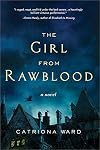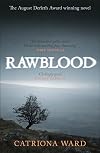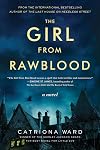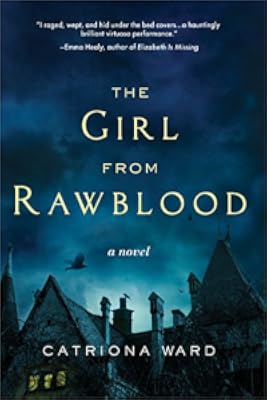
Rawblood
by Catriona Ward
On This Page
Description
"An impressively hectic spin on the Gothic tradition"--Telegraph The winner of BEST HORROR NOVEL at the British Fantasy Awards by the author of The House on Needless Street! What if it's not your mansion that's haunted--it's you? Young Iris Villarca is the last of her family's line. They are haunted by "her," a curse passed down through the generations that marks each Villarca for certain heartbreak and death. For generations, the Villarcas have died young, under mysterious circumstances. show more But Iris dares to fall in love, and the consequences of her choice are immediate and terrifying. As the world falls apart around her, she must take a final journey back to Rawblood where it all began, and where it must all end... Perfect for fans of Shirley Jackson, Susan Hill, and Silvia Moreno-Garcia, The Girl from Rawblood will pull readers through time into the early 1800s and 1900s, mesmerizing them with this lyrical story of cunning folk horror right until the breathtaking finish. Praise for The Girl from Rawblood: "Superb debut....Ward perfectly balances sensory richness with the chills of the uncanny." --Publishers Weekly, STARRED review "The Girl from Rawblood makes a powerful contribution to the British literature of the fantastic...There's a touch of Ted Hughes here, Emily Bronte and M.R James in this eerie and by turns moving story that spans generations...A definite book of the year for me." --Adam Nevill, award-winning author of The Ritual and No One Gets Out Alive "The Girl from Rawblood weaves a spell that both terrifies and mesmerizes. As each layer of mystery is peeled away, more haunting truth is revealed. The book leaves the reader breathless in its gothic tale of fear, family, blood, and love." --Simone St. James, New York Times and USA Today bestselling author of The Sun Down Motel show lessTags
Recommendations
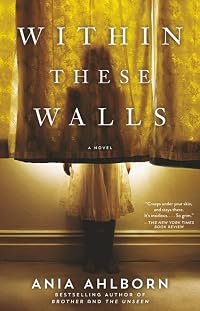
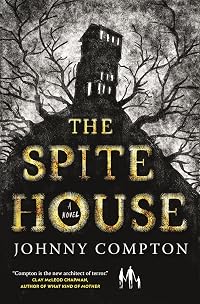
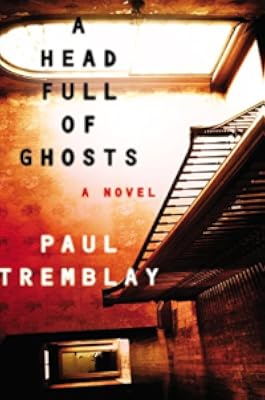
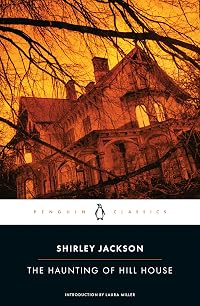
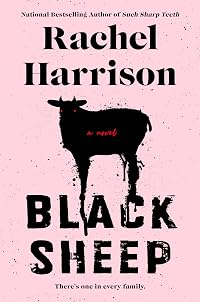
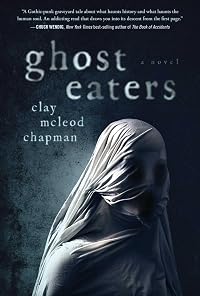
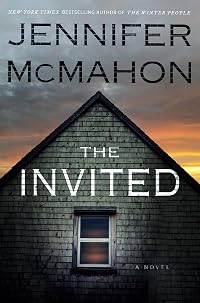
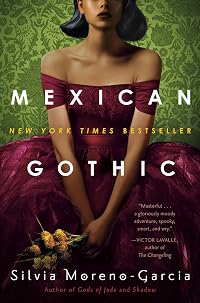

Member Reviews
Deeply atmospheric, creepy and slightly disjointed in presentation, this is a novel where everything connects. If you love rabbit holes that delve into darkness, madness, haunting and the unexplained; this is the book for you. It is not for the squeamish however. Without going into really squidgy detail, Ward adds to your feeling of unease with scenes featuring madhouse conditions circa 1917, vivisection from the 1880s, multiple miscarriages and pasts peppered with all manner of abuse. It culminates in one woman; Iris. A girl raised in isolation and fear.
The story is presented in multiple timelines all centering around the Rawblood estate - once owned by an English family and lost, rescued by Italian, Don Villarca. Is it cursed, haunted show more or is there just madness in the family? Is it from the Italian influence or has it been there all along? Thanks to the family tree, you can see how people are connected, but the anticipation of how exactly they will connect is a nice touch. There are many instances of foreboding and free-falling into the unknown. Usually I need more concrete plot and explanations, but with this book I just went with it.
We start with Iris and her childhood friendship with farmer’s son, Tom. It is a clandestine friendship because her father, Alonso, has given her rules she must live by in order to stay safe from a hereditary family curse/disease. One that caused the deaths of his parents and ancestors going back generations. An infamous “She” who kills when a person in the family loves or feels strong emotion. The rules keep her isolated almost entirely - she has no friends and doesn’t attend school. The big estate has no servants except for one man called Shakes, but he is hardly adequate and brings nothing to the raising of a girl in the early 20th century.
The story is mostly Iris’s, but we get storylines from her mother, Meg; father Alonso; Meg’s brother and Alonso’s friend Charles, and finally Alonso’s mother, Mary. Pay attention, take notes and don’t discount anything as incidental.
The affliction Iris’s family endures is mysterious. At first I thought it was something blood-borne that Alonso was trying to cure. But clearly it’s supernatural, too. Werewolves? His and Charles’s experiments with heredity and vaccination put all sorts of ideas in your head. Through a pivotal scene we are told that Charles has died and also his sister (Iris’s mother), but we don’t know who dies first. If Charles did, is this how Meg comes to be at Rawblood?
Then there’s the tit-for-tat drugging - first as students Charles drugs Alonso in his part of their 50-day-free-for-all-use-me-as-a-guinea-pig experiment; then 20 years later at Rawblood with A drugging C with morphine. Now they’re both addicts. Of course it’s to “protect” him against “Her”, but still - ick. C confronts A and calls him a psychopath. Later in another strange tete-a-tete C says that he caused A’s morphine habit when they were students on purpose, to bind him to him so he wouldn’t leave him (C fears that A isn’t a homosexual and would leave him eventually). He fears that Alonso is not as much of a deviant as he is. Twisted for sure. It reminded me of women who get pregnant in order to hang on to their men. So desperate. Before, during and after these escalations and confrontations between Charles and Alonso, “She” scares the hell out of C over a series of disturbing nights, he hangs himself and so we know that he dies before Meg.
Next is how she came to be at Rawblood and after first meeting her I’m not surprised Iris goes nuts. She was in the “care” of some couple after her and Charles’s parents died. He basically had nothing to do with her and the abuse she suffered affected her badly. She has really strange ideas and fancies herself a witch. Does she really have psychic powers? Just before her escape from the awful couple, she join minds with C at the moment of his death. He senses her there as well. Oy.
Next up is Mary Hopewell, the woman who loses her hold on Rawblood due to penury. She is packed off to Italy with a hired companion by poorer relatives. This is where the Villarca connection comes in and it is sinister, albeit colored by her companion, Miss Brigstocke’s narrow, warped viewpoint. Don Villarca is more than strange; he’s a little vicious, aggressive and has odd manners and mannerisms that verge on the violent. He brings out the worst in Mary and she relishes in this forbidden freedom. In the end, when it becomes clear that Mary and Don Villarca will get together Brigstocke tells her this - “As I held your ring, moments ago, between my fingers, the sight came upon me. I have never felt such living evil. This marriage will bring sickness and death. It will lay waste to generations. It will grow black flowers in the black land...You will not live. I implore you, do not do what you intend.” p 267
Well that pretty much sums it up. The ring belonged to Mary’s ancestor and so it seems that hereditary evil or hauntings or madness of two family lines will come together with this marriage. It’s in this Italian vignette that we meet the mysterious and ultra-loyal Shakes who is the only servant remaining at Rawblood by the time Iris is a young girl. The tale carries on through Mary’s marriage to V and their move to the newly-rescued Rawblood. Alonso is born and things go off the rails. Bit by bit, Mary goes blind and loses her mind to the horrors of “Her”. The end is gut-wrenching and awful. Again, it’s unclear whether she is mad or if “She” has killed again.
By this time, Iris is well and truly out of her mind. We are always brought back to her thread. She connects with Mary at the point of Mary’s death in a similar way that Meg connected with Charles. She is observer, participant and victim. It’s crazy and convoluted and a lot of fun. Things fold over, weave and connect in every way imaginable. In this scene Iris not only observes “Her” tormenting Mary, but becomes “Her” and threatens Mary’s child who is Alonso and also Iris’s father. See what I mean?
Now we jump back to Meg (Iris’s mother) and a scene with Robert the butler at Rawblood. They are in the kitchen and he is sharpening knives. It is rigid with tension and a very eerie scene. Robert is the brother of a nearby farmer. When he was a child, he mistakenly ate some nightshade berries. This was during the time that Alonso and Charles were at Rawblood committing their horrific vivisection experiments. Alonso refused to treat him or let Robert into the house and this is what basically makes Charles realize how sick A really is. Anyway, I have no idea why Alonso later hires Robert as butler, but he does and R has an affair with Meg. She basically forces his hand so to speak because she needs to sweeten him so she can sacrifice him to make her baby (Iris) live. We know from earlier Iris scenes that Robert is dead, his brother is pissed off and Tom thinks he’s his uncle.
It’s insane, of course, but Meg still pursues her witchcraft and knows “She” must be appeased. When her labor starts, she makes for the little cave on the property, the one that for time out of mind has been used by the locals for offerings and sacrifices to some god or other. She gets into difficulty and it is the ever-present Shakes who comes to her rescue. He brings A and she actually delivers Iris in the cave. The same cave where, years later, Iris and Tom go and Iris has her first experience with “Her”. We know from a previous timeline that Tom is Robert’s nephew, but now we actually find out he’s Robert’s son by a maid at Rawblood. She is paid off and gives the child to Robert’s brother to raise. Which makes me wonder if Alonso forbade Iris to see Tom because they were ½ siblings.
So as if this wasn’t lunatic enough, it goes to eleven. There’s a section called the Unknown Soldier set in 1919. Even though Tom has gone off to war - it’s not him. All of his letters are being kept from Iris because she’s in the insane asylum (for killing her father with an overdose of morphine, or a jab to the heart with the needle, it’s unclear). Ok, so after a bit of reading this Unknown Soldier’s narrative, it’s clear it’s Iris. Seems she has escaped the asylum, stolen a soldier’s uniform and is going home. When she gets there, she and “She” merge into one and she passes through every encounter we’ve seen so far in every timeframe...right back to her own birth in the cave.
Picture a snake swallowing itself and you pretty much have it.
I can’t untangle it. It’s crazy and ingenious and unfathomable. I enjoyed it immensely. show less
The story is presented in multiple timelines all centering around the Rawblood estate - once owned by an English family and lost, rescued by Italian, Don Villarca. Is it cursed, haunted show more or is there just madness in the family? Is it from the Italian influence or has it been there all along? Thanks to the family tree, you can see how people are connected, but the anticipation of how exactly they will connect is a nice touch. There are many instances of foreboding and free-falling into the unknown. Usually I need more concrete plot and explanations, but with this book I just went with it.
We start with Iris and her childhood friendship with farmer’s son, Tom. It is a clandestine friendship because her father, Alonso, has given her rules she must live by in order to stay safe from a hereditary family curse/disease. One that caused the deaths of his parents and ancestors going back generations. An infamous “She” who kills when a person in the family loves or feels strong emotion. The rules keep her isolated almost entirely - she has no friends and doesn’t attend school. The big estate has no servants except for one man called Shakes, but he is hardly adequate and brings nothing to the raising of a girl in the early 20th century.
The story is mostly Iris’s, but we get storylines from her mother, Meg; father Alonso; Meg’s brother and Alonso’s friend Charles, and finally Alonso’s mother, Mary. Pay attention, take notes and don’t discount anything as incidental.
Then there’s the tit-for-tat drugging - first as students Charles drugs Alonso in his part of their 50-day-free-for-all-use-me-as-a-guinea-pig experiment; then 20 years later at Rawblood with A drugging C with morphine. Now they’re both addicts. Of course it’s to “protect” him against “Her”, but still - ick. C confronts A and calls him a psychopath. Later in another strange tete-a-tete C says that he caused A’s morphine habit when they were students on purpose, to bind him to him so he wouldn’t leave him (C fears that A isn’t a homosexual and would leave him eventually). He fears that Alonso is not as much of a deviant as he is. Twisted for sure. It reminded me of women who get pregnant in order to hang on to their men. So desperate. Before, during and after these escalations and confrontations between Charles and Alonso, “She” scares the hell out of C over a series of disturbing nights, he hangs himself and so we know that he dies before Meg.
Next is how she came to be at Rawblood and after first meeting her I’m not surprised Iris goes nuts. She was in the “care” of some couple after her and Charles’s parents died. He basically had nothing to do with her and the abuse she suffered affected her badly. She has really strange ideas and fancies herself a witch. Does she really have psychic powers? Just before her escape from the awful couple, she join minds with C at the moment of his death. He senses her there as well. Oy.
Next up is Mary Hopewell, the woman who loses her hold on Rawblood due to penury. She is packed off to Italy with a hired companion by poorer relatives. This is where the Villarca connection comes in and it is sinister, albeit colored by her companion, Miss Brigstocke’s narrow, warped viewpoint. Don Villarca is more than strange; he’s a little vicious, aggressive and has odd manners and mannerisms that verge on the violent. He brings out the worst in Mary and she relishes in this forbidden freedom. In the end, when it becomes clear that Mary and Don Villarca will get together Brigstocke tells her this - “As I held your ring, moments ago, between my fingers, the sight came upon me. I have never felt such living evil. This marriage will bring sickness and death. It will lay waste to generations. It will grow black flowers in the black land...You will not live. I implore you, do not do what you intend.” p 267
Well that pretty much sums it up. The ring belonged to Mary’s ancestor and so it seems that hereditary evil or hauntings or madness of two family lines will come together with this marriage. It’s in this Italian vignette that we meet the mysterious and ultra-loyal Shakes who is the only servant remaining at Rawblood by the time Iris is a young girl. The tale carries on through Mary’s marriage to V and their move to the newly-rescued Rawblood. Alonso is born and things go off the rails. Bit by bit, Mary goes blind and loses her mind to the horrors of “Her”. The end is gut-wrenching and awful. Again, it’s unclear whether she is mad or if “She” has killed again.
By this time, Iris is well and truly out of her mind. We are always brought back to her thread. She connects with Mary at the point of Mary’s death in a similar way that Meg connected with Charles. She is observer, participant and victim. It’s crazy and convoluted and a lot of fun. Things fold over, weave and connect in every way imaginable. In this scene Iris not only observes “Her” tormenting Mary, but becomes “Her” and threatens Mary’s child who is Alonso and also Iris’s father. See what I mean?
Now we jump back to Meg (Iris’s mother) and a scene with Robert the butler at Rawblood. They are in the kitchen and he is sharpening knives. It is rigid with tension and a very eerie scene. Robert is the brother of a nearby farmer. When he was a child, he mistakenly ate some nightshade berries. This was during the time that Alonso and Charles were at Rawblood committing their horrific vivisection experiments. Alonso refused to treat him or let Robert into the house and this is what basically makes Charles realize how sick A really is. Anyway, I have no idea why Alonso later hires Robert as butler, but he does and R has an affair with Meg. She basically forces his hand so to speak because she needs to sweeten him so she can sacrifice him to make her baby (Iris) live. We know from earlier Iris scenes that Robert is dead, his brother is pissed off and Tom thinks he’s his uncle.
It’s insane, of course, but Meg still pursues her witchcraft and knows “She” must be appeased. When her labor starts, she makes for the little cave on the property, the one that for time out of mind has been used by the locals for offerings and sacrifices to some god or other. She gets into difficulty and it is the ever-present Shakes who comes to her rescue. He brings A and she actually delivers Iris in the cave. The same cave where, years later, Iris and Tom go and Iris has her first experience with “Her”. We know from a previous timeline that Tom is Robert’s nephew, but now we actually find out he’s Robert’s son by a maid at Rawblood. She is paid off and gives the child to Robert’s brother to raise. Which makes me wonder if Alonso forbade Iris to see Tom because they were ½ siblings.
So as if this wasn’t lunatic enough, it goes to eleven. There’s a section called the Unknown Soldier set in 1919. Even though Tom has gone off to war - it’s not him. All of his letters are being kept from Iris because she’s in the insane asylum (for killing her father with an overdose of morphine, or a jab to the heart with the needle, it’s unclear). Ok, so after a bit of reading this Unknown Soldier’s narrative, it’s clear it’s Iris. Seems she has escaped the asylum, stolen a soldier’s uniform and is going home. When she gets there, she and “She” merge into one and she passes through every encounter we’ve seen so far in every timeframe...right back to her own birth in the cave.
Picture a snake swallowing itself and you pretty much have it.
I can’t untangle it. It’s crazy and ingenious and unfathomable. I enjoyed it immensely. show less
Catriona Ward’s The Girl from Rawblood almost defies description as it crosses generations, characters, and locations. It is part haunted house/ghost story, part social commentary, part family tragedy. It is all of those things and somehow none of those things. There is plenty to disturb and plenty to sadden. There is even more to make you question your sanity and wonder what is happening. The general sense of unease crystallizes into a sense of horror as the pieces fall into place, leaving you to marvel at what Ms. Ward accomplishes.
Iris Villarca is only one of the characters at the heart of this tragic and compelling story. The story starts and ends with her, but along the way we touch on the lives of her ancestors and how they are show more each affected by the family curse. Just what the curse is remains nebulous, as are the reasons why the family is cursed, but that does not stop the terror from filling you when “she” makes an appearance. Much as one builds a lasagna, each member of the Villarca family adds another layer of understanding to the mystery of the curse and to Iris’ predicament. Theirs is not a happy story by any means, but there are snippets of brightness and love that ease some of the tension and reminds you that to give up on love means to give up on life.
The Girl from Rawblood is not a horror story in the Stephen King sense of the word. There exists violence and danger throughout the story; there is gore as well. Yet, it is not as assertive as King’s novels. With few exceptions, the violence is subtle, mostly off-screen and referenced in passing. The gore is less subtle, and there are some scenes involving medical testing that will turn your stomach. However, the sense of overriding fear that some of King’s novels cause remains lacking in Ms. Ward’s. One can still consider the novel horrifying but not for the reasons one expects when considering a horror novel.
Given all of that, and for many more reasons, it is no wonder that The Girl from Rawblood won the 2016 prize for Best Horror Novel at the British Fantasy Awards last year. Ms. Ward takes the traditional ghost story and turns it on its head with her cross-generational family curse. She also infuses the story with more concrete examples of horror – the kind humans can instill on each other. Combined together it is a novel that entices and horrifies readers, all the while allowing them to marvel at the genius twist on the genre Ms. Ward uses to create a novel that is similar to so many other novels but in the end so completely different from them all. show less
Iris Villarca is only one of the characters at the heart of this tragic and compelling story. The story starts and ends with her, but along the way we touch on the lives of her ancestors and how they are show more each affected by the family curse. Just what the curse is remains nebulous, as are the reasons why the family is cursed, but that does not stop the terror from filling you when “she” makes an appearance. Much as one builds a lasagna, each member of the Villarca family adds another layer of understanding to the mystery of the curse and to Iris’ predicament. Theirs is not a happy story by any means, but there are snippets of brightness and love that ease some of the tension and reminds you that to give up on love means to give up on life.
The Girl from Rawblood is not a horror story in the Stephen King sense of the word. There exists violence and danger throughout the story; there is gore as well. Yet, it is not as assertive as King’s novels. With few exceptions, the violence is subtle, mostly off-screen and referenced in passing. The gore is less subtle, and there are some scenes involving medical testing that will turn your stomach. However, the sense of overriding fear that some of King’s novels cause remains lacking in Ms. Ward’s. One can still consider the novel horrifying but not for the reasons one expects when considering a horror novel.
Given all of that, and for many more reasons, it is no wonder that The Girl from Rawblood won the 2016 prize for Best Horror Novel at the British Fantasy Awards last year. Ms. Ward takes the traditional ghost story and turns it on its head with her cross-generational family curse. She also infuses the story with more concrete examples of horror – the kind humans can instill on each other. Combined together it is a novel that entices and horrifies readers, all the while allowing them to marvel at the genius twist on the genre Ms. Ward uses to create a novel that is similar to so many other novels but in the end so completely different from them all. show less
For a debut novel this is remarkably accomplished and the descriptions of Rawblood, the wild landscape of Dartmoor, and Earlswood Asylum were deeply atmospheric, but unfortunately there were also a few detractors. For one, I'm not a fan of disjointed narrative, as for me it veils more than it reveals. That may of course be quite effective, but not when it comes at the expense of clarity; there were several instances in the book where I wasn't entirely sure what had happened.
I also wonder whether the plot threads involving Charles, Mary and Hephzibah, and Frank were deserving of the lengthy exposition they got in the book. As it turned out,they had little bearing on the overarching mystery, well written as they were, though I could show more easily have done without reading about the vivisection experiments . Regardless, they contribute much to the gothic atmosphere.
Sadly on the whole I was never fully engaged and saw the supposed twist at the end coming from a mile away, since the author sprinkled enough clues to point the way. In addition, it's not enough to read about characters being so terrified they're in danger of losing their minds when the menacing presence remains too vague and can't impart the tension and dread to the reader.
It will be interesting to read the book she's best known for, The Last House on Needless Street, which is already on my shelf waiting to be read, because there's no doubt she can write and create an atmosphere. show less
I also wonder whether the plot threads involving Charles, Mary and Hephzibah, and Frank were deserving of the lengthy exposition they got in the book. As it turned out,
Sadly on the whole I was never fully engaged and saw the supposed twist at the end coming from a mile away, since the author sprinkled enough clues to point the way. In addition, it's not enough to read about characters being so terrified they're in danger of losing their minds when the menacing presence remains too vague and can't impart the tension and dread to the reader.
It will be interesting to read the book she's best known for, The Last House on Needless Street, which is already on my shelf waiting to be read, because there's no doubt she can write and create an atmosphere. show less
A gothic horror about a family curse that is drenched in atmosphere. There’s a whiff of Wuthering Heights about it. It is less evenly written than the other horror novel of Ward’s that I’ve read, The Last House on Needless Street, but still an exemplary debut. It was both frightening and sad, a horror story and a love story, which was a successful combination, even if the tragedy was more successful than the horror.
A sweeping family saga dripping with gothic atmosphere, The Girl From Rawblood is both a love story and a tragedy, filled with dread and shocking revelations.
This story has multiple timelines from the mid-1800s to 1919. Iris Villarca comes into the story in 1910 when she is eleven years old. Iris and her father live in seclusion at Rawblood, which is an old, run-down mansion that has been in their family for years.
Iris has a friend, Tom Gilmore, but her father Alonso insists that Iris follow a strict set of rules and any interaction with other people is strictly discouraged. He truly believes that the family is cursed with a disease..."horror autotoxicus", a wasting illness that always ends in death that is brought on by overactive show more emotions. He has gone so far as to forbid Iris spending time with Tom, who is her only friend. She manages to sneak off to see Tom in spite of her father’s strict warnings. She and Tom become even closer over the years, but Tom eventually has to go off to war, leaving Iris alone to a terrible fate.
Then the story goes back to 1881. Alonso invites Charles Danforth to Rawblood, and the two men begin a series of secret medical experiments with blood antibodies. Alonso has an ulterior motive for their experiments, although he doesn’t say what it is until much later. The story shifts back and forth between timelines, which is more than confusing sometimes, but we hear from other members of the family, both the Villaricas and Gilmores. Many of the women in the two families have "the sight" and are able to predict future events.
What I found tied the story together nicely and gave it a satisfying ending, was the Rawblood ghost, a woman in white who is closely connected to the family curse and the real source of Alonso’s fictitious "horror autotoxicus". Despite all the drama and sorrow, though, this is a love story. Readers that don't mind a slower pace will probably like it.
Add show less
This story has multiple timelines from the mid-1800s to 1919. Iris Villarca comes into the story in 1910 when she is eleven years old. Iris and her father live in seclusion at Rawblood, which is an old, run-down mansion that has been in their family for years.
Iris has a friend, Tom Gilmore, but her father Alonso insists that Iris follow a strict set of rules and any interaction with other people is strictly discouraged. He truly believes that the family is cursed with a disease..."horror autotoxicus", a wasting illness that always ends in death that is brought on by overactive show more emotions. He has gone so far as to forbid Iris spending time with Tom, who is her only friend. She manages to sneak off to see Tom in spite of her father’s strict warnings. She and Tom become even closer over the years, but Tom eventually has to go off to war, leaving Iris alone to a terrible fate.
Then the story goes back to 1881. Alonso invites Charles Danforth to Rawblood, and the two men begin a series of secret medical experiments with blood antibodies. Alonso has an ulterior motive for their experiments, although he doesn’t say what it is until much later. The story shifts back and forth between timelines, which is more than confusing sometimes, but we hear from other members of the family, both the Villaricas and Gilmores. Many of the women in the two families have "the sight" and are able to predict future events.
What I found tied the story together nicely and gave it a satisfying ending, was the Rawblood ghost, a woman in white who is closely connected to the family curse and the real source of Alonso’s fictitious "horror autotoxicus". Despite all the drama and sorrow, though, this is a love story. Readers that don't mind a slower pace will probably like it.
Add show less
This started very well and then....went off the rails for me.
I'm not leaving a rating because my feelings on this book may be entirely personal and specific to me and I don't want to grade the book harshly. I went into it with incredibly high hopes for an interesting, creepy, and atmospheric gothic story and I did get that! Lots of atmosphere and twists and creepiness. But the plot just. Made this a very difficult book for me to love.
The problem, I think, is that the author doesn't spend enough time with Iris, who is meant to be the focus of the story and because she is so rarely given space, her plotline becomes less engaging than other plotlines in the book. I found the story of Charles and Alonso (told through Charles' diary entries) show more to be the most cohesive, most affecting, and honestly the most successful part of the book. I would've appreciated just that story on its own. There was an emotional connection that existed within these sections that I found lacking in the other narratives.
And the ending. Ugh. I just. Did not like it at all. It took a story that was fractured but still fascinating and just.....threw it into a plot blender and spattered it everywhere. I appreciate the reveal and how the author tied up all the various narrative threads but. Ugh. I was not a fan.
Ok I have to include some MASSIVE content warnings for this book and another thing I disliked was that these content warnings weren't even hinted at in the book's description. I will put them under a spoiler warning:warnings for discussion of rape, child sexual assault, child abuse, pregnancy loss, and a very horribly detailed description of life in an early 1900s insane asylum. I literally can't stress enough how violent and awful the asylum scenes were and to the author's credit, they are entirely accurate. But if I had known so much of the book took place in an asylum and involved things like abusive staff, operations given without consent, and constant drugging of the patients I wouldn't have read this book. show less
I'm not leaving a rating because my feelings on this book may be entirely personal and specific to me and I don't want to grade the book harshly. I went into it with incredibly high hopes for an interesting, creepy, and atmospheric gothic story and I did get that! Lots of atmosphere and twists and creepiness. But the plot just. Made this a very difficult book for me to love.
The problem, I think, is that the author doesn't spend enough time with Iris, who is meant to be the focus of the story and because she is so rarely given space, her plotline becomes less engaging than other plotlines in the book. I found the story of Charles and Alonso (told through Charles' diary entries) show more to be the most cohesive, most affecting, and honestly the most successful part of the book. I would've appreciated just that story on its own. There was an emotional connection that existed within these sections that I found lacking in the other narratives.
And the ending. Ugh. I just. Did not like it at all. It took a story that was fractured but still fascinating and just.....threw it into a plot blender and spattered it everywhere. I appreciate the reveal and how the author tied up all the various narrative threads but. Ugh. I was not a fan.
Ok I have to include some MASSIVE content warnings for this book and another thing I disliked was that these content warnings weren't even hinted at in the book's description. I will put them under a spoiler warning:
This novel can be a bit confusing because it is not a linear story. Each chapter is written by a different person who has been affected by "her". In order to read this novel, you need to pay careful attention or else you will find yourself utterly lost. That being said, I found the story to be highly engrossing. I enjoyed putting the pieces together and seeing how the Villarca curse has affected those in the Villarca family line, as well as those who aren't directly a part of this family. I liked the fact that the story didn't flow smoothly; I enjoyed the jarring effect of being caught up in one story just to be yanked out and put into another. It made the reading of this novel so much fun! I also quite liked the way the author resolved show more the issue of the curse and how she ended everything. This novel definitely gave me chills here and there but it made me think more than anything. Overall, a really interesting ghost story that I enjoyed very much!
I received this novel as an advanced copy from NetGalley in exchange for an honest review.
For more reviews, visit: www.veereading.wordpress.com show less
I received this novel as an advanced copy from NetGalley in exchange for an honest review.
For more reviews, visit: www.veereading.wordpress.com show less
Members
- Recently Added By
Lists

Scary Stories for the Season
160 works; 94 members

Top Five Books of 2018
802 works; 265 members

Books Read in 2018
4,360 works; 110 members

Books Read in 2025
4,091 works; 97 members

Books We Want To Read Again For The First Time
384 works; 160 members

Ghost Stories That Thrill Us
256 works; 115 members
Author Information

12+ Works 5,120 Members
Some Editions
Awards and Honors
Common Knowledge
- Original title
- Rawblood
- Alternate titles
- The Girl From Rawblood
- Original publication date
- 2015
- Dedication
- For my parents, Isabelle and Christopher
- First words
- This is how I come to kill my father. It begins like this.
- Last words
- (Click to show. Warning: May contain spoilers.)Light, somewhere. It could be fire in a great hall. Sunshine in a blue nursery. Morning light, beneath a tree. Or something I have never known.
- Original language
- English
- Canonical DDC/MDS
- 813.6
- Canonical LCC
- PS3623.A7315
Classifications
Statistics
- Members
- 341
- Popularity
- 92,888
- Reviews
- 16
- Rating
- (3.52)
- Languages
- English, German, Spanish
- Media
- Paper, Audiobook, Ebook
- ISBNs
- 15
- UPCs
- 1
- ASINs
- 5