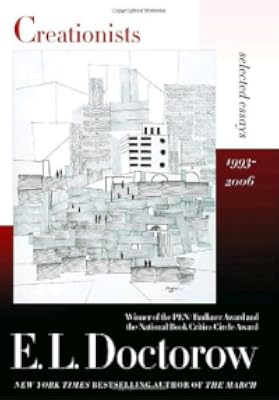
Creationists: Selected Essays: 1993-2006
by E. L. Doctorow
On This Page
Description
E. L. Doctorow is acclaimed internationally for such novels as Ragtime, Billy Bathgate, and The March. Here now are his rich, revelatory essays on the nature of imaginative thought. In Creationists, Doctorow considers creativity in its many forms, from the literary to the comic to the cosmic. As he wrestles with the subjects that have teased and fired his own imagination, Doctorow affirms that “we know by what we create.” Just what is Melville doing in Moby-Dick? How did The Adventures show more of Tom Sawyer impel Mark Twain to the radical rewrite that we know as Huckleberry Finn? Can we ever trust what novelists say about their own work? How could Franz Kafka have written a book called Amerika without ever leaving Europe? In posing such questions, Doctorow grapples with literary creation not as a critic or as a scholar–but as one working writer frankly contemplating the work of another. It’s a perspective that affords him both protean grace and profound insight. Among the essays collected here are Doctorow’s musings on the very different Spanish Civil War novels of Ernest Hemingway and André Malraux; a candid assessment of Edgar Allan Poe as our “greatest bad writer”; and a bracing analysis of the story of Genesis, in which God figures as the most complex and riveting character. In examining the creative works of different times and disciplines, Doctorow also reveals the source and nature of his own artistry. Rich in aphorism and anecdote, steeped in history and psychology, informed by a lifetime of reading and writing, Creationists opens a magnificent window into one of the great creative minds of our time. show lessTags
Recommendations










Member Reviews
Doctorow's collection of essays--mostly on authors and their works, with a couple of notable exceptions--is a fine idea, but not very compellingly executed. In any individual essay, his tone might be described as lofty, or academic. But consistent as it is throughout the collection, it takes on a rather imperious, even arrogant cast. These are a series of judgemental (rather than critical) essays, most of them composed in the thoroughly presumptuous first-person plural. Do "we" really see these things this way? Yes, we do; E.L. Doctorow said so.
It's probably no coincidence, also, that Doctorow concerns himself almost exclusively with men in this collection (again, with a notable exception), and that when he does speak of women (even in show more the aforementioned exception) he does so dismissively. He tosses away Dickinson in half a sentence. I'm nor a particularly ardent fan of hers, but I have to admit that he never won me back over after that.
I can't recommend the book, but since I keep mentioning exceptions, let me carve one out. The penultimate essay on Einstein is very good. It's insightful and illuminating, and ironically tells more about the act of writing than any of the previous essays--all of which are devoted to literature. This essay also eschews the plural form of the first person which I mentioned above, and that helps immensely. show less
It's probably no coincidence, also, that Doctorow concerns himself almost exclusively with men in this collection (again, with a notable exception), and that when he does speak of women (even in show more the aforementioned exception) he does so dismissively. He tosses away Dickinson in half a sentence. I'm nor a particularly ardent fan of hers, but I have to admit that he never won me back over after that.
I can't recommend the book, but since I keep mentioning exceptions, let me carve one out. The penultimate essay on Einstein is very good. It's insightful and illuminating, and ironically tells more about the act of writing than any of the previous essays--all of which are devoted to literature. This essay also eschews the plural form of the first person which I mentioned above, and that helps immensely. show less
57. Creationists : selected essays, 1993-2006 (Audio) by E. L. Doctorow read by the author (2006, 4:32, 192 pages in paper format, listened Aug 1-4, 20-24)
Rating: 4 stars
The title is maybe just there to get your attention. It's not a religious diatribe. However, he does open with an essay on Genesis, namely the story problem in Genesis: What story could these authors come up that would explain their world? And he closes with an essay on the possibility of a nuclear holocaust - which fits with our modern version of Judgment Day. But despite these touches of religion in the book ends, all Doctorow claims he means by "creationists" are those who create.
The book doesn't get much love and the audio version gets comments about how he can put show more you to sleep, since he reads himself. Knowing that may have made me more patient with it. What I got out of it was several terrific essays on mostly 19th century and early 20th century American writers. His essays on Genesis, Moby Dick, F Scott Fitzgerald, Ernest Hemmingway and John Dos Passos stood out.
2015
https://www.librarything.com/topic/191940#5254865 show less
Rating: 4 stars
The title is maybe just there to get your attention. It's not a religious diatribe. However, he does open with an essay on Genesis, namely the story problem in Genesis: What story could these authors come up that would explain their world? And he closes with an essay on the possibility of a nuclear holocaust - which fits with our modern version of Judgment Day. But despite these touches of religion in the book ends, all Doctorow claims he means by "creationists" are those who create.
The book doesn't get much love and the audio version gets comments about how he can put show more you to sleep, since he reads himself. Knowing that may have made me more patient with it. What I got out of it was several terrific essays on mostly 19th century and early 20th century American writers. His essays on Genesis, Moby Dick, F Scott Fitzgerald, Ernest Hemmingway and John Dos Passos stood out.
2015
https://www.librarything.com/topic/191940#5254865 show less
I get the feeling that Doctorow found an old box in his attic containing his notebooks from high school English class and decided to publish the contents. Apparently, that semester they were reading only American or German authors. So we learn, among other things, that Poe was a very unusual man who wrote not well but memorably, Hemingway believed that life was a test of manhood and individualism, Fitzgerald had a brilliant youth but flamed out too early, and Kafka took familiar situations and made them seem fantastic in some odd way. What did they all have in common? Well, they created things. So why not start the collection with an essay on Genesis, in which we learn that God created the world, and end with a couple of essays in which show more we learn that Einstein created concepts that led to the Bomb, which will in turn dis-create the world. show less
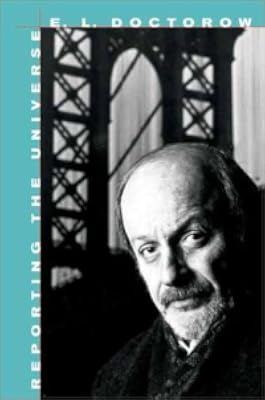
Some of these essays read easily and some of them read in a very difficult way. It seems that critics often get into the heads of those they are critiquing and they end up writing in a similar style and use similar convolutions. The piece about Herman Melville didn't flow easily but the one about Mark Twain did. I liked the piece about Harpo Marx and the one about nuclear weaponry was thoughtful and I understood it. All-in-all I liked his other book of essays, "Reporting the Universe", better.
Collection of short essays on an interesting range of subjects (Harpo Marx, Kleist, Einstein, Sebald ...), nealy entirely devoid of interesting, original, or well-phrased insights.
Ratings
Members
- Recently Added By
Author Information

57+ Works 25,136 Members
E. L. (Edgar Lawrence) Doctorow was born on January 6, 1931, in the Bronx, New York. He received an A.B. in philosophy in 1952 from Kenyon College and did graduate work at Columbia University. He served in the U.S. Army Signal Corps from 1953-1955. He began his career as a script reader for CBS Television and Columbia Pictures and as a senior show more editor for the New American Library. He was editor-in-chief for Dial Press from 1964 to 1969, where he also served as vice president and publisher in his last year on staff. It was at this time that he decided to write full time. He wrote novels, short stories, essays, and a play. His debut novel, Welcome to Hard Times, was published in 1960 and was adapted into a film in 1967. His other works include, Loon Lake, The Waterworks, The March, Homer and Langley, and Andrew's Brain. He won the National Book Award for Fiction in 1986 for World's Fair and the National Book Critics Circle Award for fiction in 1976 for Ragtime, which was adapted into a film in 1981 and a Broadway musical in 1998. Billy Bathgate received the PEN/Faulkner Award, the National Book Critics Circle Award, and the William Dean Howells Medal in 1990. The Book of Daniel and Billy Bathgate were also adapted into films. He received the 2013 Medal for Distinguished Contribution to American Letters for his outstanding achievement in fiction writing. He died of complications from lung cancer on July 21, 2015 at the age of 84. (Bowker Author Biography) show less
Awards and Honors
Distinctions
Classifications
- Genres
- Literature Studies and Criticism, Nonfiction, Fiction and Literature
- DDC/MDS
- 809 — Literature & rhetoric Literature, rhetoric & criticism History, description, critical appraisal of more than two literatures
- LCC
- PN511 .D52 — Language and Literature Literature (General) Literature (General) Literary history Collections
- BISAC
Statistics
- Members
- 131
- Popularity
- 249,214
- Reviews
- 5
- Rating
- (2.88)
- Languages
- English, Spanish
- Media
- Paper, Audiobook, Ebook
- ISBNs
- 7
- ASINs
- 2