A nice collection of reminiscences of a book and magic collector; book occasionally meanders and writing quality varies (Meyer is no Jim Steinmeyer), but a nice enough read if you are interested in the topic (he won't try to motivate you).
The storyline gets interrupted by the author's musings on the reader, men and women. While Sim isn't a bad writer, this stylistic break harms the book.
Well-written, and, at least first part, well constructed; ending less than satisfying or convincing.

First appearance of Luther Arkwright; shows hints of what's to come later, but mostly painful to read.
Disappointing; writing is overblown, the storyline has its moments, but not enough.
An unusual collection of mathematical observations, bound together by an obsession with poetry and puns. And the number 4711.
The rooms aren't that locked and the crimes not that impossible. The solutions (with the exception of one story) aren't that convincing. Chesterton did this much better.
Philosophy of Mathematics: An Introduction to a World of Proofs and Pictures (Philosophical Issues in Science) by James Robert Brown
A rather unusual account of the foundations of mathematics; Brown covers all of the traditional schools (platonism, logicism, formalism, constructivism, intuitionism), but stands out by taking a stand for a modified form of platonism that's quite attractive. One of his concerns is the status of diagrams in proofs, and he makes interesting observations. It seems he does not know Peirce very well (he's consistently misspelt Pierce); Brown could have found some helpful tools and concepts in Peirce's writing.
A fine sequel to the original adventures of Luther Arkwright; less complex, but nicely realized in color.

Episodic novel, great writing, but some storylines are on the slight side. Wilder has little on New England that Marquand didn't say better.
Mechanization of Reasoning in a Historical Perspective (Poznan Studies in the Philosophy of the Sciences and the Humanit by Witold Marciszewski

Sadly quite disappointing. Touches on all the right subject, but quality is extremely mixed. Comes up with at least three different spellings of Russell.
Oliver Cromwell was successful and his descendant has turned Britain into a fascist state. Luther Arkwright is an agent for King Charles II. Alternative history with a touch of sci-fi.
After seeing Adam Curtis' Century of the Self, in which Edward Bernays plays a central role, my expectation was higher. In essence it's a propaganda book on propaganda, sometimes too obvious, and not divulging too many interesting techniques.
Depression, US, hobos, growing up, labor strikes, communism, Detroit

Enjoyable romb, compellingly written, fluff to be sure, but intelligent fluff.

Despite the title more of an attempt to give a systematic overview of puzzles with some history thrown in. The puzzles and their presentation are rarely original or insightful, worse, there are many serious mistakes and misleading statements in this book (e.g. "G a" reply by Voltaire to Frederick the Great is given as "G rand a petit" missing the point). Often feels like the author is out of his depth, in particular in the more technical/mathematical sections. He also does not get any closer to explaining the "puzzle instinct", the last chapter remains mostly superficial (and unconnected to the previous chapters). Any book by Gardner, Smullyan, etc. would be better.

Bit cheesy at times, though some of the writing is energetic. Solution to the locked room is a definite let-down.

Reasonably interesting solution to the locked room mystery problem, but the writing is terribly bland and boring.
The decline of the dungeon world. Darker, less farcical, but atmospheric.
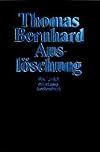
An extinction. A relentless dissection of the (fictional) writer's life, his parents, his brother and his sister. Very little happens in this 600 page novel. In the first part the narrator stands at his window in Rome reading the telegram announcing his parents' and his brother's death in a car accident (a marvelous opening sentence). In the second part he has traveled to Wolfsegg, his parents' estage, to witness the funeral. Written with intense hatred. Incomparable beautiful prose.
The Mathematician's Brain: A Personal Tour Through the Essentials of Mathematics and Some of the Great Minds Behind Them by David Ruelle
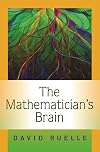
The book keeps the promise of its title: it's a personal, sometimes idiosyncratic tour of many aspects of mathematical thinking and mathematical work, containing original thoughts and ideas and many anecdotes that keep the book flowing. In the end it doesn't offer any revolutionary new ideas, but it reaches a goal similar to Gower's Very Short Introduction to Mathematics using very different means: it introduces the reader to what mathematics is.
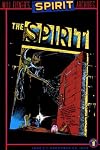
The first six months of Eisner's The Spirit. An unlikely superhero who only rarely displays any superpowers and has a surprisingly strong moral streak. Maybe not all of the stories are top classics, but most of them are, and the rest are by association.
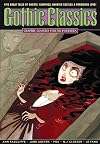
Very mixed bag; most of these adaptations do not successfully manage to adapt their originals. Northanger Abbey is a particularly tedious sequence of illustrated text rather than a graphic novel. Udolpho is so/so. Oval Portrait and The Gate are a cut above average.
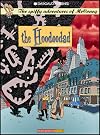
The unlikely adventures of a rabbit, a cat, and a dog in the web of international intrigue in the search for a monster formula, or a time machine, or something else. Light, but enjoyable.
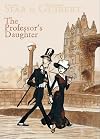
The archaelogist's daughter falls in love with a mummy. Nicely told and realized.
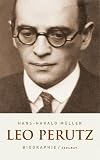
A new biography of "forgotten writer" Leo Perutz. Concentrates on his work and factual information, a bit pedestrian at times.