On This Page
Description
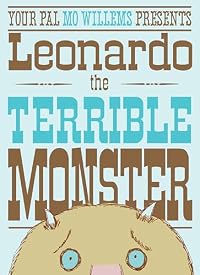
Leonardo is a terrible monster -- he can't seem to frighten anyone. When he discovers the perfect nervous little boy, will he scare the lunch out of him? Or will he think of something better?Tags
Recommendations
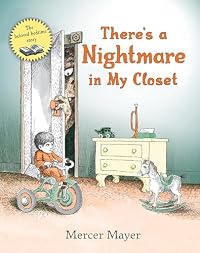
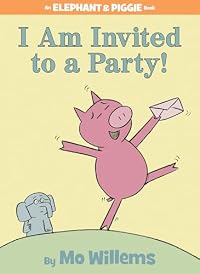
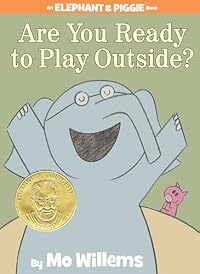
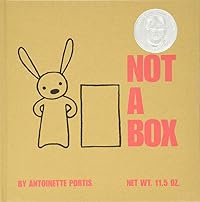


Member Recommendations
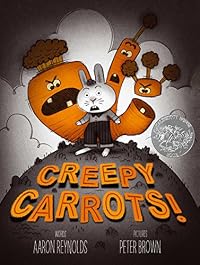
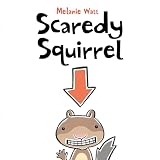
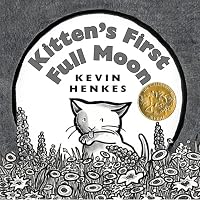
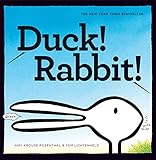
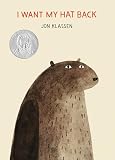
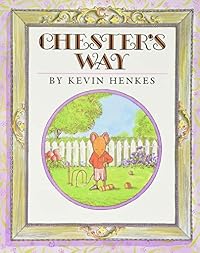
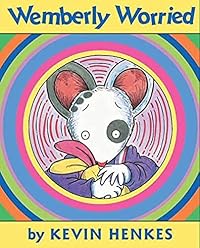
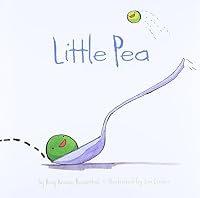
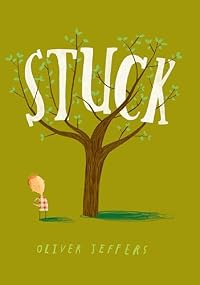
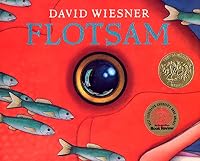
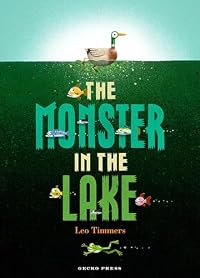
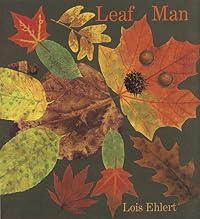
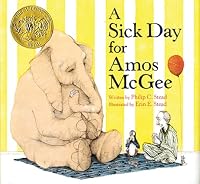
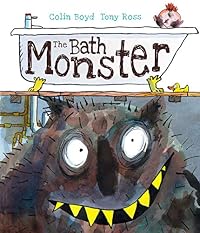
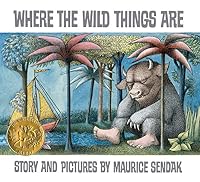
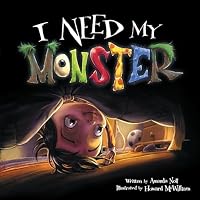
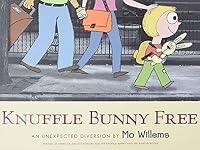
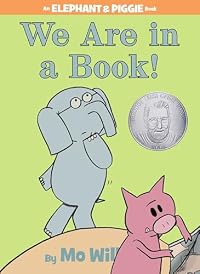
beelrami Both stories about monsters that might not be very good monsters.
Member Reviews
I loved this book for a couple of reasons. I liked how the author added certain aspects to the story that aren't typically used. For example, the author used an asterisk when the narrator said, "He didn't have 1,642* teeth like Tony". At the bottom of the page the author added, "*Note: Not all teeth shown", to assure the reader that the illustrations given do now show all 1,642 teeth. Since this wasn't an informational text, I wouldn't imagine an author using this symbol. It added humor to the story, in an extremely creative way. I also liked the author/illustrator's use of empty space in the book. For example, when Leonardo was researching to find the most frightful kid to scare, he discovered Sam. Turning on to the next page, you can show more see two large blank pages with a small illustration of sad Sam sitting on the bottom, left corner of the page. This emphasized Sam's sense of loneliness through the empty pages rather than words. Along with this attribute, the author fills in the empty space, on another page, to emphasize Sam's emotions yet again. For example, once Leonardo scares him, Sam begins to cry which makes Leonardo happy because he believes he is the reason Sam is crying. Sam explains, using two entire pages with bold and colored print to express his anger. This shows the authors ability to fill up the entire page with words, rather than illustrations, which is rare for a picture book. The main idea of this book is to accept who you are and not to judge others before getting to know them. show less
In my opinion, this is a fantastic book to have as a part of your library. The young boy in this story is relatable to many young children when he tells Leonardo, the terrible monster about the struggles and events going on in his life. For example, not having friends or being picked on by his older sibling, many children can relate to his struggles and empathize with the character. The author did a great job with constructing short, but to the point sentences to narrate the story. I also like how the author would put emphasis on a particular word in the story by making the word a different color, size or font; these are great text cues for young children beginning to read. Finally, this story communicates a great message to readers, show more that when someone is having a tough time, you many not be able to help them but you can always be there for them, by being their friend. show less
Omigoodness this was so adorable - funny, touching, not sappy. I loved the expressions and the body language of Leonardo. I loved the spread of him doing research. I love the font and the page design. I love the colors. And, of course, I loved the ending. You know what? It might not be the most momentous book ever, but I loved everything about it and disliked nothing, so I think I just have to give it the full five stars!
I liked “Leonardo the Terrible Monster”, the central message of which was that it is better to be a friend than to be terribly scary. I liked the book for its humorous language, e.g., “He would find the most scaredy-cat kid in the whole world, and scare the tuna salad out of him!” Additionally, the writing of the book was well-paced; the sequence of events by which Leonardo went from being a terrible monster to a good friend to Sam, “the most scaredy-cat kid in the whole world”, flowed well. The writing in the book would be successful in engaging any reader, as it is fun, entertaining, and delivers a message to which any child can relate, which is being a friend. Lastly, I loved the illustrations that accompanied the text. I show more felt they greatly enhanced the story by accurately depicting a terrible monster who was not scary, as well as a “scaredy-cat kid” who cried over a multitude of things. In addition, I felt that the illustrations aided in building up the suspense of Leonardo researching whom to scare, and the actual scare taking place. I would love to have this book in my future classroom library. I feel that it succeeds in being both fun and entertaining, as well as delivering a great message, which is choosing to be a friend. show less
Leonardo was a terrible monster, not because he was terrifying, but because he wasn't, and although he searched high and low for someone to frighten, his efforts were often met with laughter, rather than fear. Then one day, after doing much investigation (market researching comes to the picture-book!), he discovers the perfect target: Sam. But when Leonardo's attack produces the effect he'd been hoping for - a tearful victim - he has a change of heart...
Chosen as one of our October selections, over in the Picture-Book Club to which I belong, where our theme this month is 'witches and monsters,' Mo Willems' Leonardo, the Terrible Monster definitely falls into the kinder, gentler monster-tale variety. The oversized pages, in various muted show more colors, boast plenty of blank space, with out-sized text and illustrations all the more prominent, as a result. This is a cute tale, with cute illustrations. I think the tall format lends itself to storytelling, particularly with younger, pre-school children. Recommended to little monsters everywhere, and to fans of Mo Willems' distinctive style. show less
Chosen as one of our October selections, over in the Picture-Book Club to which I belong, where our theme this month is 'witches and monsters,' Mo Willems' Leonardo, the Terrible Monster definitely falls into the kinder, gentler monster-tale variety. The oversized pages, in various muted show more colors, boast plenty of blank space, with out-sized text and illustrations all the more prominent, as a result. This is a cute tale, with cute illustrations. I think the tall format lends itself to storytelling, particularly with younger, pre-school children. Recommended to little monsters everywhere, and to fans of Mo Willems' distinctive style. show less
I love Mo Willems books not only because of the simple illustratory style, but mostly because of children's reaction to his stories and the ease in which they lend themselves to public storytelling, particularly if you have a bit of dramatic flair. When I read Mo Willem's books to children, it is easy to create different voices for the characters, and the children just eat it up. In this story, I employed fake crying while reading the page with Sam's rant(which they thought was very funny) and at the end I paused before yelling out, "Boo!" and half the children jumped in their seats then burst out in delighted laughter. It is also easy to employ a craft project if need be to Willem's books in the form of elephant or pig "masks" (play show more outside) . In this book's case the children were able to pick out their choice of a reproduced silly monster, color it, and glue it onto a paper plate with a popsicle stick attached. Puppet shows and monster parades ensued. Willems is able to bring alive a child's imagination and playfulness with his simple drawings and character's dialog and in my opinion that is exactly what a children's author would strive to do. show less
Leonardo is a terrible monster! But mostly just because he so terrible at being scary. He is not huge, hairy, or even just plain weird! One day Leonardo finds the biggest scardy-cat kid on the block and decides to scare the tuna salad of him. But when the time came for Leonardo to scare his very own scardy-cat kid, Leonardo realizes that making friends is much better than being scary. This book is full of excitement and laughter. When reading it out loud to kids, be prepared to shout at the top of your lungs at certain points for maximum effect. The illustrations in this book are simple, but very effective and engaging. The book has been included in the ALA Notable Childrens Books Awards for Younger Readers. I would recommend that you show more read this book even if you don’t have kids to read it to. show less
Members
- Recently Added By
Lists

1001 Children's Books You Must Read Before You Grow Up
774 works; 100 members

Favorite Picture Books
479 works; 160 members
Author Information

154+ Works 139,422 Members
Mo Willems was born on February 11, 1968. After graduating from New York University's Tisch School for the Arts, he spent a year traveling around the world drawing a cartoon every day, which were published in the book You Can Never Find a Rickshaw When it Monsoons. For nine seasons, he worked as a writer and animator for PBS' Sesame Street, where show more he received 6 Emmy Awards for his writing. During this time, he also served as a weekly commentator for BBC Radio and created two animated series, Nickelodeon's The Off-Beats and Cartoon Network's Sheep in the Big City. While working as head writer for Cartoon Network's Codename: Kids Next Door, he began writing and drawing books for children. He received three Caldecott Honor Awards for Don't Let the Pigeon Drive the Bus! in 2004; Knuffle Bunny: A Cautionary Tale in 2005; and Knuffle Bunny Too: A Case of Mistaken Identity in 2008. He also created the Elephant and Piggie series for Easy Readers, which were awarded the Theodor Seuss Geisel Medal in 2008 and 2009. His drawings, wire sculptures, and ceramics have been exhibited in numerous galleries and museums across the nation. Occasionally he serves as the Radio Cartoonist for NPR's All Things Considered. He voices and produces animated cartoons based on his books with Weston Woods studios. The animated Knuffle Bunny was awarded Best Film during the New York International Children's Film Festival in 2008 and received the Andrew Carnegie Medal in 2007. His title Happy Pig Day made Publisher's Weekly Best Seller List for 2011. In 2012 his title Goldilocks and The Three Dinosaurs made The New York Times Best Seller List. In 2013 his titles: That is Not a Good Idea!, Let's Go for a Drive! and I'm a Frog! made the New York Times Best Seller List. In 2014 The Pigeons Need a Bath! and Waiting Is Not Easy! made the New York Times Best Seller List. (Bowker Author Biography) show less
Awards and Honors
Awards
Distinctions
Series

Work Relationships
Is contained in
Has the (non-series) sequel
Has the adaptation
Common Knowledge
- Canonical title
- Leonardo, the Terrible Monster
- Original publication date
- 2005
- People/Characters
- Leonardo (monster); Sam (little boy)
- Dedication
- FOR THE TRIXTER, MY OWN LITTLE MONSTER
Classifications
Statistics
- Members
- 1,805
- Popularity
- 12,024
- Reviews
- 108
- Rating
- (4.31)
- Languages
- 5 — Chinese, English, French, German, Portuguese
- Media
- Paper, Audiobook, Ebook
- ISBNs
- 27
- UPCs
- 1
- ASINs
- 5