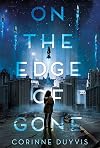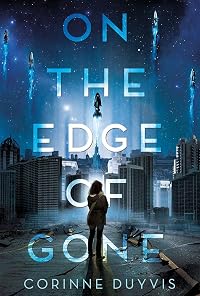
On the Edge of Gone
by Corinne Duyvis
On This Page
Description
A thrilling, thought-provoking novel from one of young-adult literature’s boldest new talents. January 29, 2035. That’s the day the comet is scheduled to hit—the big one. Denise and her mother and sister, Iris, have been assigned to a temporary shelter outside their hometown of Amsterdam to wait out the blast, but Iris is nowhere to be found, and at the rate Denise’s drug-addicted mother is going, they’ll never reach the shelter in time. A last-minute meeting leads them to show more something better than a temporary shelter—a generation ship, scheduled to leave Earth behind to colonize new worlds after the comet hits. But everyone on the ship has been chosen because of their usefulness. Denise is autistic and fears that she’ll never be allowed to stay. Can she obtain a spot before the ship takes flight? What about her mother and sister? When the future of the human race is at stake, whose lives matter most?. show less
Tags
Recommendations































Member Reviews
I received an advance copy of the book through the publisher via NetGalley.
THIS BOOK. Gah. I'm morbid and enjoy a good apocalyptic story. This blew me away. Denise is an autistic teenager who loves working with cats at a shelter in Amsterdam. Her mom is a drug addict. A comet is about to strike Earth. Everything changes, but some things do not--her mom makes them late to reach their assigned shelter during the blast, and they end up taking refuge on a generation ship stuck on earth. The ship doesn't want them aboard--how can Denise fit in, much less her mom? As Earth rattles with repercussions from the impact, all Denise wants is to find her beloved trans sister and somehow stay alive amid increasingly horrible circumstances.
The drama show more feels real. The science comes across as sound. The interpersonal drama is likewise intense: a teenager who struggles to interact with the world on a normal day, suddenly coping with a cataclysm, even as her mother is zoned out on drugs. The whole cast is fantastic. It's January and I already know this book will top my Norton Award shortlist for next year. show less
THIS BOOK. Gah. I'm morbid and enjoy a good apocalyptic story. This blew me away. Denise is an autistic teenager who loves working with cats at a shelter in Amsterdam. Her mom is a drug addict. A comet is about to strike Earth. Everything changes, but some things do not--her mom makes them late to reach their assigned shelter during the blast, and they end up taking refuge on a generation ship stuck on earth. The ship doesn't want them aboard--how can Denise fit in, much less her mom? As Earth rattles with repercussions from the impact, all Denise wants is to find her beloved trans sister and somehow stay alive amid increasingly horrible circumstances.
The drama show more feels real. The science comes across as sound. The interpersonal drama is likewise intense: a teenager who struggles to interact with the world on a normal day, suddenly coping with a cataclysm, even as her mother is zoned out on drugs. The whole cast is fantastic. It's January and I already know this book will top my Norton Award shortlist for next year. show less
PopSugar '16 #29--A dystopian novel
4.5? I usually reserve 5 stars for books I will read again. While this book was very good, I doubt I'll read it again.
On the surface, this book is one of many popular apocalyptic novels. I like those books. I've read tons of them. End of the world? Survival Stories? There are a bit like catnip to me.
This one stands out from the pack in many ways. While there are several friendships and at least one sort of flirty/friendly/maybe something more-ship, this doesn't contain a romance (WHAT? It totally works. Trust me.) The book is set in The Netherlands, the author's home country. At first I thought maybe the book was translated from the dutch because something seemed stilted or a little off about the way show more it read. Not enough to detract from the book, it just seemed slightly different. The main character and narrarator has autism (Oh. Ohhhhhhh.), her sister is transgender (in the near future, when this is somewhat more normalized than it is now), her mother is addicted to ketamine. When she meets new people after The Event, they are from all sorts of religions, nationalities, colors, etc. This was never pointed out in any obvious way and it wasn't like the author was going down a checklist--she was simply writing a world that reflects our own. Sad that this is so unusual.
Another reviewer said this is more of a case study and that nothing really HAPPENS in the book. I'd like to poke back at that a little bit. Duyvis does a great job of building tension. I kept expecting something REALLY TERRIBLE to happen. But when bad things did happen, the book just kept going, just like people surviving have to keep going.
I have a lot I could say about how brilliant's Duyvis writes her narrator. She's amazing. Her voice rings true, her actions, too. She's learned to navigate the world, but it's so difficult for her; in some ways the end of the world is easier for her because she has things to DO and her voice is heard, but it's also so very hard--many of the things she uses to calm herself (carefully chosen food, clothes, bedding) are not longer an option.
I immensely enjoyed this book. I might need to come back and change the review to 5 stars. show less
4.5? I usually reserve 5 stars for books I will read again. While this book was very good, I doubt I'll read it again.
On the surface, this book is one of many popular apocalyptic novels. I like those books. I've read tons of them. End of the world? Survival Stories? There are a bit like catnip to me.
This one stands out from the pack in many ways. While there are several friendships and at least one sort of flirty/friendly/maybe something more-ship, this doesn't contain a romance (WHAT? It totally works. Trust me.) The book is set in The Netherlands, the author's home country. At first I thought maybe the book was translated from the dutch because something seemed stilted or a little off about the way show more it read. Not enough to detract from the book, it just seemed slightly different. The main character and narrarator has autism (Oh. Ohhhhhhh.), her sister is transgender (in the near future, when this is somewhat more normalized than it is now), her mother is addicted to ketamine. When she meets new people after The Event, they are from all sorts of religions, nationalities, colors, etc. This was never pointed out in any obvious way and it wasn't like the author was going down a checklist--she was simply writing a world that reflects our own. Sad that this is so unusual.
Another reviewer said this is more of a case study and that nothing really HAPPENS in the book. I'd like to poke back at that a little bit. Duyvis does a great job of building tension. I kept expecting something REALLY TERRIBLE to happen. But when bad things did happen, the book just kept going, just like people surviving have to keep going.
I have a lot I could say about how brilliant's Duyvis writes her narrator. She's amazing. Her voice rings true, her actions, too. She's learned to navigate the world, but it's so difficult for her; in some ways the end of the world is easier for her because she has things to DO and her voice is heard, but it's also so very hard--many of the things she uses to calm herself (carefully chosen food, clothes, bedding) are not longer an option.
I immensely enjoyed this book. I might need to come back and change the review to 5 stars. show less
On the Edge of Gone by Corinne Duyvis is an apocalyptic YA novel. It's about an autistic girl, set about twenty years in the future when a comet hits the Earth. Location-wise, the book is set in the general vicinity of Amsterdam. Also, don't you think the cover is gorgeous? I think I would buy this book just for the cover, even if I was unfamiliar with the author's other work.
This book starts in a stressful place. Denise, the main character, and her mother are running late for their assigned temporary shelter. At the opening, the shelter will take longer for them to get to than they have time left before the predicted comet strike. This sets the stage for Denise's interactions with her mother for the rest of the book. Her mother is show more unreliable, in large part due to her drug addiction, and this reader got the impression that Denise would be much better off without her mother around. For a while there I was crossing my fingers for the mother's death.
Just about everyone else in Denise's life (that showed up in the present of this book) was a more positive force. The narrative is tightly in the first person, which means that often the reader is left to draw conclusions, mostly about people, that Denise does not reach. On the other hand, the tight narrative really gets us into Denise's head and I found myself sympathising with her quite strongly. I also really enjoyed watching Denise make friends when given the opportunity outside of school; that was a real highlight.
Duyvis does a particularly good job of maintaining tension in the narrative of On the Edge of Gone. Although Denise survives the apocalypse and, since it's written in first person, her survival until the end of the book is a safe bet, there is a lot of other uncertainty. Will Denise be safe? What trouble is her mum going to get (her) into next? What will be the consequence of the risky choices Denise makes throughout the book? It was very well written. Ordinarily I would have expected this to be the sort of book that I could read in one sitting, but I found myself having to pause a few times and get some distance because it was so intense. The apocalypse is obviously always going to be somewhat depressing, but the extra layer of tension that Duyvis writes over the top of it, really brings it home.
I strongly recommend On the Edge of Gone to anyone who is interested in apocalyptic fiction, YA or otherwise. Apart from anything else, this is a solid science fiction book centred around a scientifically plausible response to a disastrous event. People interested in reading about autistic main characters should also be aware that the author herself is autistic and, as noted in the afterword, is partly writing from experience.
5 / 5 stars
You can read more of my reviews on my blog. show less
This book starts in a stressful place. Denise, the main character, and her mother are running late for their assigned temporary shelter. At the opening, the shelter will take longer for them to get to than they have time left before the predicted comet strike. This sets the stage for Denise's interactions with her mother for the rest of the book. Her mother is show more unreliable, in large part due to her drug addiction, and this reader got the impression that Denise would be much better off without her mother around. For a while there I was crossing my fingers for the mother's death.
Just about everyone else in Denise's life (that showed up in the present of this book) was a more positive force. The narrative is tightly in the first person, which means that often the reader is left to draw conclusions, mostly about people, that Denise does not reach. On the other hand, the tight narrative really gets us into Denise's head and I found myself sympathising with her quite strongly. I also really enjoyed watching Denise make friends when given the opportunity outside of school; that was a real highlight.
Duyvis does a particularly good job of maintaining tension in the narrative of On the Edge of Gone. Although Denise survives the apocalypse and, since it's written in first person, her survival until the end of the book is a safe bet, there is a lot of other uncertainty. Will Denise be safe? What trouble is her mum going to get (her) into next? What will be the consequence of the risky choices Denise makes throughout the book? It was very well written. Ordinarily I would have expected this to be the sort of book that I could read in one sitting, but I found myself having to pause a few times and get some distance because it was so intense. The apocalypse is obviously always going to be somewhat depressing, but the extra layer of tension that Duyvis writes over the top of it, really brings it home.
I strongly recommend On the Edge of Gone to anyone who is interested in apocalyptic fiction, YA or otherwise. Apart from anything else, this is a solid science fiction book centred around a scientifically plausible response to a disastrous event. People interested in reading about autistic main characters should also be aware that the author herself is autistic and, as noted in the afterword, is partly writing from experience.
5 / 5 stars
You can read more of my reviews on my blog. show less
On the Edge of Gone is a stand alone YA science fiction novel about the end of the world. A comet is about to hit Earth, and Denise’s family does not have a place in either the permanent shelters beneath the ground or the generation ships heading off planet. Denise and her drug addicted mother are heading to a temporary shelter (her sister Iris is nowhere to be found). By chance as the comet hits, they find a generation ship that has not yet left Earth. However, all the spots on the ship have already been filled, and Denise fears that she cannot justify her own usefulness since she’s autistic. And even if she does gain a place, what about her mother and sister? What about everyone else who will be left behind?
On the Edge of Gone‘s show more strongest attribute is the compelling voice of its lead. I felt utterly immersed in Denise’s head. She’s worried about what will become of herself and her family, but she also interacts with others who don’t have the faintest chance of leaving the planet. Her worry, fear, and guilt make On the Edge of Gone a very emotional read.
A lot of apocalyptic fiction is inherently ableist. You have a grizzled male hero who survives while those “weaker” than him die. Maybe he’ll have a sexy female love interest who’ll also survive to guarantee the continuation of the species. I’ve seen this pattern so many times that it’s a relief to have an apocalyptic book that directly questions the unspoken assertion that in a survival situation the only reason people matter is how useful they are. This thread ties together all of Denise’s family. Besides her own autism, Denise’s mother has been addicted to drugs for years and isn’t able to function well. Denise’s sister is transgender and wouldn’t be able to have children (a possible issue for a generation ship). All of the characters are wonderfully diverse. In addition to being autistic, Denise is half-Dutch and half-Surinamese.
While Denise came through very clearly to me, none of the secondary characters seemed to have as much characterization. However, this could be a side effect of the first person narration style.
On the Edge of Gone does not have the action level of much other YA science fiction. I would say that it is more focused on how Denise reacts to the particular situation she’s in and her relationships with the people around her. Even while there’s not a whole lot of action, I found the pace brisk.
While I enjoyed reading On the Edge of Gone, it didn’t wow me enough that I would reread it again in the future. However, I am glad I read it in the first place and would definitely recommend it.
Originally posted on The Illustrated Page.
I received a free ARC copy of this book from Netgalley in exchange for an honest review. The book is released on March 8th 2016. show less
On the Edge of Gone‘s show more strongest attribute is the compelling voice of its lead. I felt utterly immersed in Denise’s head. She’s worried about what will become of herself and her family, but she also interacts with others who don’t have the faintest chance of leaving the planet. Her worry, fear, and guilt make On the Edge of Gone a very emotional read.
“Whether someone is useful only matters if you value people by their use.”
A lot of apocalyptic fiction is inherently ableist. You have a grizzled male hero who survives while those “weaker” than him die. Maybe he’ll have a sexy female love interest who’ll also survive to guarantee the continuation of the species. I’ve seen this pattern so many times that it’s a relief to have an apocalyptic book that directly questions the unspoken assertion that in a survival situation the only reason people matter is how useful they are. This thread ties together all of Denise’s family. Besides her own autism, Denise’s mother has been addicted to drugs for years and isn’t able to function well. Denise’s sister is transgender and wouldn’t be able to have children (a possible issue for a generation ship). All of the characters are wonderfully diverse. In addition to being autistic, Denise is half-Dutch and half-Surinamese.
While Denise came through very clearly to me, none of the secondary characters seemed to have as much characterization. However, this could be a side effect of the first person narration style.
On the Edge of Gone does not have the action level of much other YA science fiction. I would say that it is more focused on how Denise reacts to the particular situation she’s in and her relationships with the people around her. Even while there’s not a whole lot of action, I found the pace brisk.
While I enjoyed reading On the Edge of Gone, it didn’t wow me enough that I would reread it again in the future. However, I am glad I read it in the first place and would definitely recommend it.
Originally posted on The Illustrated Page.
I received a free ARC copy of this book from Netgalley in exchange for an honest review. The book is released on March 8th 2016. show less
Read this in a day! Duyvis combines a compelling post-apocalyptic vision with an exploration of what it's like to be on the autism spectrum. A comet hits the Earth, ending normal life. A tsunami follows, putting coastal Netherlands underwater. Denise, a teenager with autism, is holed up in a space ship with her drug-addicted mother. Spaceship is set to leave Earth in days. Denise wants to find her transgender sister Iris and try to bring her aboard. She makes a heroic effort to leave the ship on a 3-D printed raft. In a few spots I questioned the believability of the plot, but basically, it was a great read that moved forward at a fast pace. Duyvis did a good job of explaining her main character as a person with both abilities and show more disabilities. Denise fears she cannot function normally but time after time she manages, or comes back from being overwhelmed to participate in life. I hope this books gains a lot of readers. It's worth the while. show less
I heard this on audio, read by Mare Trevathan who did an excellent job getting accents and emotion appropriately, especially when Denise is getting anxious and keeps repeating.
The plot about how people cope in the immediate days surrounding comet impact is interesting and the theme of how an autistic teen copes is well interwoven. As I approached the end of the book I became aware of another subtle theme: acceptance (or lack thereof by the greater population) of transgender & differently abled. The question is also raised about whether drug addictions are a choice or an illness, tho mostly we just see how their mother's addiction has affected Denise & Iris who have to take care of her.
One memorable quote is Else telling Denise why she show more is a good worker (& not just being patronizing): great at organizing, attention to detail, ability to carry thru to finish a task...
An excellent book & one I plan to purchase to share with some queer nieces. show less
The plot about how people cope in the immediate days surrounding comet impact is interesting and the theme of how an autistic teen copes is well interwoven. As I approached the end of the book I became aware of another subtle theme: acceptance (or lack thereof by the greater population) of transgender & differently abled. The question is also raised about whether drug addictions are a choice or an illness, tho mostly we just see how their mother's addiction has affected Denise & Iris who have to take care of her.
One memorable quote is Else telling Denise why she show more is a good worker (& not just being patronizing): great at organizing, attention to detail, ability to carry thru to finish a task...
An excellent book & one I plan to purchase to share with some queer nieces. show less
Overdrive ebook from the Sora Reads collection. Kind of weird reading about the end of the world while we are stuck in lockdown due to COVID-19. This is the story of Denise, a teenage girl with Autism who is coping with a drug addicted mother and a transgender brother while preparing for an asteroid to strike the Earth and possibly end life as we know it. The book is set in Amsterdam which means that after the Asteroid does strike there is a tsunami and, of course, all the dykes break which flood the towns and the underground shelters. But I digress..
On their way to the shelter prior to the asteroid's impact, Denise and her mother stumble upon one of the last space ships that are due to take off in case Earth becomes inhabitable. Here, show more Denise's unique view of life and situations proves valuable and they are offered a berth on the ship. Then her mother blows it all away with her drug taking. Will Denise find her lost sister, make friends, rectify her mother's mistakes and finally decide whether she wants to stay on the damaged Earth or leave on the space ship.
Fascinating complex book with many levels . Denise's view of the world through autistic eyes is, I believe , very authentic. The complexities of leaving people behind on a doomed planet are also raised very well - who goes and who is left behind - the old, the disabled , the fertile?
Lots of twists and turns and a very thought provoking read. show less
On their way to the shelter prior to the asteroid's impact, Denise and her mother stumble upon one of the last space ships that are due to take off in case Earth becomes inhabitable. Here, show more Denise's unique view of life and situations proves valuable and they are offered a berth on the ship. Then her mother blows it all away with her drug taking. Will Denise find her lost sister, make friends, rectify her mother's mistakes and finally decide whether she wants to stay on the damaged Earth or leave on the space ship.
Fascinating complex book with many levels . Denise's view of the world through autistic eyes is, I believe , very authentic. The complexities of leaving people behind on a doomed planet are also raised very well - who goes and who is left behind - the old, the disabled , the fertile?
Lots of twists and turns and a very thought provoking read. show less
Members
- Recently Added By
Lists

Favorite Science Fiction by Women Authors
737 works; 202 members

Generation Ship
28 works; 7 members

It's the end of the world as we know it!
90 works; 23 members

EU Fiction: 1950-2022
223 works; 70 members
LGBTQ+ Speculative Fiction
820 works; 51 members

Differently Abled Horror
64 works; 4 members

LGBTQIA Horror
172 works; 7 members

Neuro Pride Ireland Recommendations
101 works; 1 member

Books recommended by Calgary Public Library staff
1,588 works; 4 members
Author Information

7+ Works 880 Members
Some Editions
Awards and Honors
Awards
Distinctions
Common Knowledge
- Canonical title
- On the Edge of Gone
- Original publication date
- 2016-03-08
- Dedication
- TO MOM:
I COULD FILL A BOOK WITH ALL MY REASONS FOR THANKING YOU.
IN A WAY, I SUPPOSE I JUST DID.
LOVE YOU. - First words
- The first time my future vanished was July 19, 2034.
- Last words
- (Click to show. Warning: May contain spoilers.)We welcome our future, whatever it may be.
- Original language
- English
Classifications
- Genres
- Fiction and Literature, Teen, Young Adult, Science Fiction
- DDC/MDS
- 839.3137 — Literature & rhetoric German & related literatures Other Germanic literatures Netherlandish literatures Dutch Dutch fiction 21st Century
- LCC
- PZ7 .D9585 .O — Language and Literature Fiction and juvenile belles lettres Fiction and juvenile belles lettres Juvenile belles lettres
- BISAC
Statistics
- Members
- 403
- Popularity
- 76,977
- Reviews
- 28
- Rating
- (3.93)
- Languages
- English, Spanish
- Media
- Paper, Ebook
- ISBNs
- 9
- ASINs
- 2