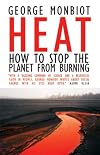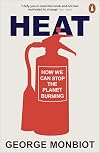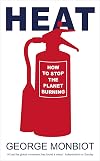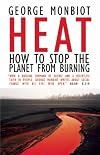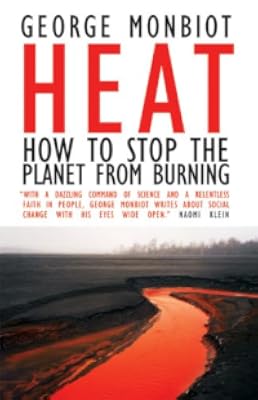
Heat: How to Stop the Planet From Burning
by George Monbiot
On This Page
Description
"Discusses the causes and effects of global climate change, as well as possible solutions to the problem"--Provided by publisher.Tags
Recommendations

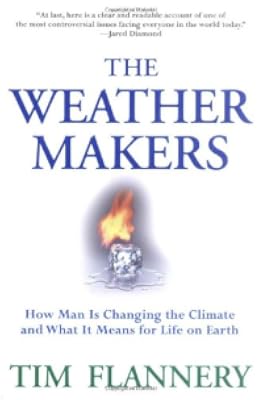
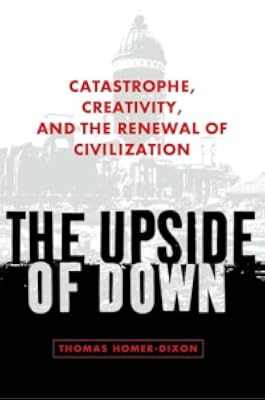
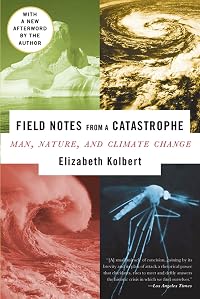


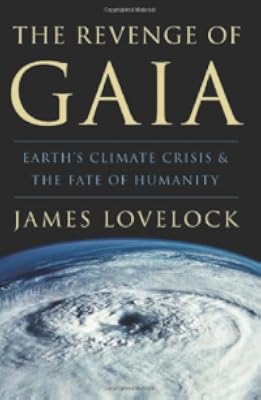



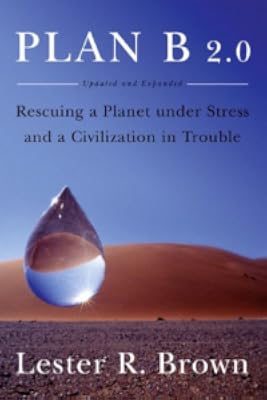
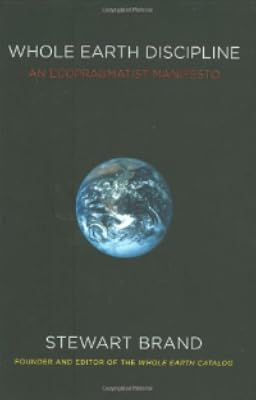
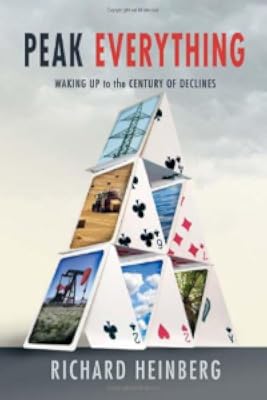
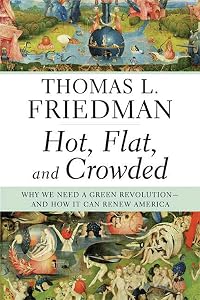









Member Recommendations
Member Reviews
This is a thorough and careful book, but also amusing in places. Monbiot manages this well. He is unafraid to call a spade a spade, and correctly diagnoses the wishful thinking that sometimes afflicts environmental activists. Rooftop wind turbines are no solution to anything. He makes a compelling case that that we should all demand that our economic system be issued new rules. Like NHL hockey players, no one (country/individual/business) wants to be the *first* to put on the helmet, yet we all wish we could wear them. The solution in the NHL was a rule change, and our global economy needs new, bold measures to protect us from us. I read the Canadian edition and it points out just how stuck in the 1950s our current government is.
I am a big fan of George Monbiot - yes I tend to share his opinions, but regardless of your views, you have to accept he is a thoughtful writer, and scrupulous in his sourcing. I strongly recommend his blog if you wish to get a flavour of his views / style: http://www.monbiot.com/
This book first gives a very grim (but fair) view of the urgency of global warming, and the few pages devoted to rebutting the sceptics are the most succinct I have come across.
However the main aim of this book is to show that a modern industrial economy (the UK) can be transformed into a sustainable one in terms of climate within a very short timeframe (by 2030). As a practical guide to the policy measures available it is brilliant. As a guide to what is show more desirable it also excellent.
It won't find favour everywhere - he is sceptical about the advantages of micro energy generation, and scathing of the weak policies currently in place to tackle climate change. He sees no way round massively reducing our flying. He made me reconsider my attitude to carbon capture as part of the solution, and I am now much more in favour.
It is hard to think of any major weaknesses, although some will be unhappy with his (relatively) easy dismissal of nuclear power (while I agree it is not part of the solution, I think he concludes this too readily).
All this is an accessible style. A must read book. I toyed recently with the idea that all MPs should be given set reading lists (like students). Why should they be one of the only professions where training is not required or provided? This would certainly make my set text list for policy makers. show less
This book first gives a very grim (but fair) view of the urgency of global warming, and the few pages devoted to rebutting the sceptics are the most succinct I have come across.
However the main aim of this book is to show that a modern industrial economy (the UK) can be transformed into a sustainable one in terms of climate within a very short timeframe (by 2030). As a practical guide to the policy measures available it is brilliant. As a guide to what is show more desirable it also excellent.
It won't find favour everywhere - he is sceptical about the advantages of micro energy generation, and scathing of the weak policies currently in place to tackle climate change. He sees no way round massively reducing our flying. He made me reconsider my attitude to carbon capture as part of the solution, and I am now much more in favour.
It is hard to think of any major weaknesses, although some will be unhappy with his (relatively) easy dismissal of nuclear power (while I agree it is not part of the solution, I think he concludes this too readily).
All this is an accessible style. A must read book. I toyed recently with the idea that all MPs should be given set reading lists (like students). Why should they be one of the only professions where training is not required or provided? This would certainly make my set text list for policy makers. show less
'Heat' is an optimistic response to more pessimistic works such as Lovelock's 'The Revenge of Gaia' which suggest we should prepare for the consequences because it is too late. Monbiot asks the hard question: what specific solutions could reduce carbon emissions by 90% by 2050 and thus save the world from the worst impacts of global warming?
He examines electricity production, transportation, housing and some case examples, such as retail stores and concrete production. Relying on government reports, think tanks and other sources he discovers that it may "just" be possible, so long as a society we approach it like we did WWII, with a massive and focused effort and some sacrifices. Except for long distance travel (by air, train or ship), show more everything else it should be possible, says Monbiot, to reduce by 90%.
Monbiot mainly addresses England. However, England is one of the worlds best organized countries politically and economically, so anything difficult for England is going to nearly impossible for other nations - can Georgia or Belarus or Chile or China reduce carbon emissions by 90%? It is a global problem and Monbiot doesn't look beyond England and the US, thus it is difficult to see how the entire world can turn around in such a short period of time. There are big areas that Monbiot does not address, such as agriculture. He also does not look at "climate surprises" or tipping points, where a little CO2 increase by humans triggers a massive CO2 release in nature (see Fred Pearce 'With Speed and Violence: Why Scientists Fear Tipping Points in Climate Change').
Monbiot is optimistic solutions are available, but I found his solutions so politically difficult to implement, and nearly impossible globally, I came away even more depressed about our prospects. However, one thing is clear, we have no choice but to try. show less
He examines electricity production, transportation, housing and some case examples, such as retail stores and concrete production. Relying on government reports, think tanks and other sources he discovers that it may "just" be possible, so long as a society we approach it like we did WWII, with a massive and focused effort and some sacrifices. Except for long distance travel (by air, train or ship), show more everything else it should be possible, says Monbiot, to reduce by 90%.
Monbiot mainly addresses England. However, England is one of the worlds best organized countries politically and economically, so anything difficult for England is going to nearly impossible for other nations - can Georgia or Belarus or Chile or China reduce carbon emissions by 90%? It is a global problem and Monbiot doesn't look beyond England and the US, thus it is difficult to see how the entire world can turn around in such a short period of time. There are big areas that Monbiot does not address, such as agriculture. He also does not look at "climate surprises" or tipping points, where a little CO2 increase by humans triggers a massive CO2 release in nature (see Fred Pearce 'With Speed and Violence: Why Scientists Fear Tipping Points in Climate Change').
Monbiot is optimistic solutions are available, but I found his solutions so politically difficult to implement, and nearly impossible globally, I came away even more depressed about our prospects. However, one thing is clear, we have no choice but to try. show less
A factual review of the approaches we could take to reduce carbon emissions in 2030 by 90% whilst still maintaining a *normal* quality of life. To illustrate what that normal is I liked the quote from Ian McEwans book Saturday describing the luxury of stepping out of the hot power shower into the heated towels. The book starts by describing the politics of hidden agendas and conflicting data but throughout demonstrated the systemic approached he took to analysing possible solutions that go beyond the tokenistic. I enjoyed the fact that most the areas reviewed had realistic alternatives to what we currently do. All except the section on aviation where he could not report a way forward other than to reduce flights by 90% (a sad chapter to show more read whilst sitting on a 747 from London to San Fransisco).
Things that stuck in my mind:
a rise of over 2 degress in temperature will cause systemic failure - imagine the mood of the scientists watching the Larsen B collapse (footage online?)
The idea of "love miles" - is it socially possible to reduce the amount of air travel
The stories about the spin surrounding the climate debate was quite amazing but sadly all to believable. It facinates me how people can be manipulated to regurgitate words that they do not understand. When do we learn to stop thinking for ourselves? This is a serious downside to the ubiquity of the network and trust around data and sources of information.
I liked the idea of the icecaps to distribute responsibility based on looking at the system as a whole (ie at a planetary system) I have often wondered what the implications would be if the economy worked in a similar way. (But i have never really understood how we can keep on increasing the amount of money that we have globally to satisfy increasing levels of debt and consumption). I like the fact that in his closing remarks he called this an unusual campaign since it is not a campaign for freedom but for less.
I was reminded that electricity can only be delivered on demand and could imagine the guy at Dinorwig racing to the big red lever just before the commercial break during Coronation Street to release that minimal amount of hydro energy we do have stored.
Kyoto - a scheme to permit *official* levels of pollution?
Carbon trading - are we moving food around the plate in the pretense of eating.
Finally was the call to action - the internet whilst broadening the voice in general does also have the side effect of making things less visible. It will require change, some at a personal level in our daily activities but there is also an opportunity to deliver the large scale change. The Jack Doyle reference to the repurposing of automotive factories to making planes in post Pearl Harbour WWII was excellent and showed that if a sense of urgency is present then large scale activity can be delivered beyond the *normal* constraints of project management.
more at www.monbiot.com show less
Things that stuck in my mind:
a rise of over 2 degress in temperature will cause systemic failure - imagine the mood of the scientists watching the Larsen B collapse (footage online?)
The idea of "love miles" - is it socially possible to reduce the amount of air travel
The stories about the spin surrounding the climate debate was quite amazing but sadly all to believable. It facinates me how people can be manipulated to regurgitate words that they do not understand. When do we learn to stop thinking for ourselves? This is a serious downside to the ubiquity of the network and trust around data and sources of information.
I liked the idea of the icecaps to distribute responsibility based on looking at the system as a whole (ie at a planetary system) I have often wondered what the implications would be if the economy worked in a similar way. (But i have never really understood how we can keep on increasing the amount of money that we have globally to satisfy increasing levels of debt and consumption). I like the fact that in his closing remarks he called this an unusual campaign since it is not a campaign for freedom but for less.
I was reminded that electricity can only be delivered on demand and could imagine the guy at Dinorwig racing to the big red lever just before the commercial break during Coronation Street to release that minimal amount of hydro energy we do have stored.
Kyoto - a scheme to permit *official* levels of pollution?
Carbon trading - are we moving food around the plate in the pretense of eating.
Finally was the call to action - the internet whilst broadening the voice in general does also have the side effect of making things less visible. It will require change, some at a personal level in our daily activities but there is also an opportunity to deliver the large scale change. The Jack Doyle reference to the repurposing of automotive factories to making planes in post Pearl Harbour WWII was excellent and showed that if a sense of urgency is present then large scale activity can be delivered beyond the *normal* constraints of project management.
more at www.monbiot.com show less
I have to recommend this book fully. It is a thoroughly researched, brilliant book on global warming and the actions we must take to mitigate its consequences. Monbiot starts by voicing the same frustration I’ve often experienced:
"What is the point of cycling into town when the rest of the world is thundering past in monster trucks? By refusing to own a car, I have simply given up my road space to someone who drives a hungrier model than I would have bought. Why pay for double-glazing windows when the supermarkets are heating the pavement with the hot air blowers above their doors? Why bother installing an energy-efficient lightbulb when a man in Lankashire boasts of attaching 1.2 million Christmas lights to his house?"
He does show more something far more beneficial than just installing an energy-efficient lightbulb: he presents the global warming problem in plain terms, proceeds to calculate what needs to be done to tackle the problem (a seemingly impossible 90% carbon emissions cut), and finalizes making the argument that such a solution is not only necessary, but feasible.
You can find my full review of this book at:
http://catenary.wordpress.com/2007/05/22/monbiot-on-global-warming/ show less
"What is the point of cycling into town when the rest of the world is thundering past in monster trucks? By refusing to own a car, I have simply given up my road space to someone who drives a hungrier model than I would have bought. Why pay for double-glazing windows when the supermarkets are heating the pavement with the hot air blowers above their doors? Why bother installing an energy-efficient lightbulb when a man in Lankashire boasts of attaching 1.2 million Christmas lights to his house?"
He does show more something far more beneficial than just installing an energy-efficient lightbulb: he presents the global warming problem in plain terms, proceeds to calculate what needs to be done to tackle the problem (a seemingly impossible 90% carbon emissions cut), and finalizes making the argument that such a solution is not only necessary, but feasible.
You can find my full review of this book at:
http://catenary.wordpress.com/2007/05/22/monbiot-on-global-warming/ show less
From gas-guzzling America, Great Britain's comparative 'green-ness' is something of a model, at times. And I'm somewhat of an anglophile, so I was prepared to love Heat, a British author's look at climate change, in any case. In this particular case, however, its British-ness may be one of the failings of the book. I didn't realize it when I first picked the book up, but the American edition has hardly been adapted for audiences this side of the pond – the only concession I noticed was a thoughtful introduction explaining the peculiar failures our government has to answer for on the score of global climate change. Faced with figures in pence per kilo and constant references to 10 Downing Street, the average American reader might feel show more a bit overwhelmed.
Ultimately, though, despite the hundreds of meticulous foot- and end-notes, it's not the details that matter in this book. George Monbiot, the author, describes the book as a "thought experiment." After a lecture on global warming that he gave a few years back, he says, he was startle by an audience member's question: what will our lives look like once we've achieved the carbon cuts scientists are calling for? This book is his answer, an attempt to show what will have to change, in order to achieve a 90% reduction in carbon emissions by 2030.Monbiot devotes less than a quarter of the book to the importance of curbing climate change, the science behind his proposed carbon cuts, and the political means by which to achieve them. All that, he says, has been covered elsewhere. Instead, Heat examines the feasibility of different proposals to cut carbon in four areas: heating and cooling our homes, providing the nation's electricity, traveling, and – in a token nod to retail and industry – grocery stores and concrete production. For the most part, his ideas end up somewhat middle-of-the-road: he embraces carbon capture and storage, the technique of hiding our carbon waste deep underground that many environmentalists love to hate, while still arguing for such enormous government-funded changes in our energy infrastructure that all but the most die-hard liberals might argue that it's just too costly.
These kinds of inconsistencies make it hard for me to believe that his plan will ever be implemented. In addition, the British Isles are in a fairly unique political and geographical situation, and what works there cannot simply be held up as a model for the world to follow. These would be large failures if Heat were meant as a policy document. As it is, however, I think that Monbiot's accessible writing style and focus on everyday life target this book as a wake-up call for lay-people. Yes, he argues that fighting global warming takes government legislation and incentives, not just the more motivated among us changing a few lightbulbs. But he points out that we don't really want the government to impose heavy cuts on our carbon-dependent lifestyles. We're happy when politicians wave green banners and make promises, but it's the facade we want to see, not the true changes.
What we need, says Monbiot, is a movement for austerity. Like few movements before it, this one will be fighting not for liberty, but against it – at least, against the sort of false liberty that is really borrowing against our childrens' futures. But, he points out, we've shown we can do it. Like the country-wide change of pace that occurred when the US entered World War II, a worthy cause, successful propaganda, tough government regulation, and financial incentives for industry, can turn transform our society almost overnight. Now let's get out and make it happen before it's too late. show less
Ultimately, though, despite the hundreds of meticulous foot- and end-notes, it's not the details that matter in this book. George Monbiot, the author, describes the book as a "thought experiment." After a lecture on global warming that he gave a few years back, he says, he was startle by an audience member's question: what will our lives look like once we've achieved the carbon cuts scientists are calling for? This book is his answer, an attempt to show what will have to change, in order to achieve a 90% reduction in carbon emissions by 2030.Monbiot devotes less than a quarter of the book to the importance of curbing climate change, the science behind his proposed carbon cuts, and the political means by which to achieve them. All that, he says, has been covered elsewhere. Instead, Heat examines the feasibility of different proposals to cut carbon in four areas: heating and cooling our homes, providing the nation's electricity, traveling, and – in a token nod to retail and industry – grocery stores and concrete production. For the most part, his ideas end up somewhat middle-of-the-road: he embraces carbon capture and storage, the technique of hiding our carbon waste deep underground that many environmentalists love to hate, while still arguing for such enormous government-funded changes in our energy infrastructure that all but the most die-hard liberals might argue that it's just too costly.
These kinds of inconsistencies make it hard for me to believe that his plan will ever be implemented. In addition, the British Isles are in a fairly unique political and geographical situation, and what works there cannot simply be held up as a model for the world to follow. These would be large failures if Heat were meant as a policy document. As it is, however, I think that Monbiot's accessible writing style and focus on everyday life target this book as a wake-up call for lay-people. Yes, he argues that fighting global warming takes government legislation and incentives, not just the more motivated among us changing a few lightbulbs. But he points out that we don't really want the government to impose heavy cuts on our carbon-dependent lifestyles. We're happy when politicians wave green banners and make promises, but it's the facade we want to see, not the true changes.
What we need, says Monbiot, is a movement for austerity. Like few movements before it, this one will be fighting not for liberty, but against it – at least, against the sort of false liberty that is really borrowing against our childrens' futures. But, he points out, we've shown we can do it. Like the country-wide change of pace that occurred when the US entered World War II, a worthy cause, successful propaganda, tough government regulation, and financial incentives for industry, can turn transform our society almost overnight. Now let's get out and make it happen before it's too late. show less
A factual review of the approaches we could take to reduce carbon emissions in 2030 by 90% whilst still maintaining a *normal* quality of life. To illustrate what that normal is I liked the quote from Ian McEwans book Saturday describing the luxury of stepping out of the hot power shower into the heated towels. The book starts by describing the politics of hidden agendas and conflicting data but throughout demonstrated the systemic approached he took to analysing possible solutions that go beyond the tokenistic. I enjoyed the fact that most the areas reviewed had realistic alternatives to what we currently do. All except the section on aviation where he could not report a way forward other than to reduce flights by 90% (a sad chapter to show more read whilst sitting on a 747 from London to San Fransisco).
Things that stuck in my mind:
a rise of over 2 degress in temperature will cause systemic failure - imagine the mood of the scientists watching the Larsen B collapse (footage online?)
The idea of "love miles" - is it socially possible to reduce the amount of air travel
The stories about the spin surrounding the climate debate was quite amazing but sadly all to believable. It facinates me how people can be manipulated to regurgitate words that they do not understand. When do we learn to stop thinking for ourselves? This is a serious downside to the ubiquity of the network and trust around data and sources of information.
I liked the idea of the icecaps to distribute responsibility based on looking at the system as a whole (ie at a planetary system) I have often wondered what the implications would be if the economy worked in a similar way. (But i have never really understood how we can keep on increasing the amount of money that we have globally to satisfy increasing levels of debt and consumption). I like the fact that in his closing remarks he called this an unusual campaign since it is not a campaign for freedom but for less.
I was reminded that electricity can only be delivered on demand and could imagine the guy at Dinorwig racing to the big red lever just before the commercial break during Coronation Street to release that minimal amount of hydro energy we do have stored.
Kyoto - a scheme to permit *official* levels of pollution?
Carbon trading - are we moving food around the plate in the pretense of eating.
Finally was the call to action - the internet whilst broadening the voice in general does also have the side effect of making things less visible. It will require change, some at a personal level in our daily activities but there is also an opportunity to deliver the large scale change. The Jack Doyle reference to the repurposing of automotive factories to making planes in post Pearl Harbour WWII was excellent and showed that if a sense of urgency is present then large scale activity can be delivered beyond the *normal* constraints of project management.
more at www.monbiot.com show less
Things that stuck in my mind:
a rise of over 2 degress in temperature will cause systemic failure - imagine the mood of the scientists watching the Larsen B collapse (footage online?)
The idea of "love miles" - is it socially possible to reduce the amount of air travel
The stories about the spin surrounding the climate debate was quite amazing but sadly all to believable. It facinates me how people can be manipulated to regurgitate words that they do not understand. When do we learn to stop thinking for ourselves? This is a serious downside to the ubiquity of the network and trust around data and sources of information.
I liked the idea of the icecaps to distribute responsibility based on looking at the system as a whole (ie at a planetary system) I have often wondered what the implications would be if the economy worked in a similar way. (But i have never really understood how we can keep on increasing the amount of money that we have globally to satisfy increasing levels of debt and consumption). I like the fact that in his closing remarks he called this an unusual campaign since it is not a campaign for freedom but for less.
I was reminded that electricity can only be delivered on demand and could imagine the guy at Dinorwig racing to the big red lever just before the commercial break during Coronation Street to release that minimal amount of hydro energy we do have stored.
Kyoto - a scheme to permit *official* levels of pollution?
Carbon trading - are we moving food around the plate in the pretense of eating.
Finally was the call to action - the internet whilst broadening the voice in general does also have the side effect of making things less visible. It will require change, some at a personal level in our daily activities but there is also an opportunity to deliver the large scale change. The Jack Doyle reference to the repurposing of automotive factories to making planes in post Pearl Harbour WWII was excellent and showed that if a sense of urgency is present then large scale activity can be delivered beyond the *normal* constraints of project management.
more at www.monbiot.com show less
Members
- Recently Added By
Lists

Climate Change
87 works; 7 members

South End Press
35 works; 1 member
Author Information

25+ Works 3,214 Members
George Monbiot is one of the world's most influential radical thinkers. A weekly columnist for the Guardina, he is also the best-selling author of The Age of Consent and Captive State. In 1995, Nelson Mandela presented him with a United Nations Global 500 Award for outstanding environmental achievement.
Common Knowledge
- Original publication date
- 2006
- Important events
- climate crisis
- Dedication
- To Hanna
May this be a fit world for you to inhabit - First words
- Two things prompted me to write this book.
- Last words
- (Click to show. Warning: May contain spoilers.)Strangest of all, it is a campaign not just against other people, but also against ourselves.
- Blurbers
- Klein, Naomi; Houghton, Sir John; Gray, John; Morris, David; Kolbert, Elizabeth; Siegel, Kassie R. (show all 12); Suzuki, David; Gelbspan, Ross; Homer-Dixon, Thomas; Wright, Ronald; McKibben, Bill; McQuaig, Linda
Classifications
- Genres
- Science & Nature, Nonfiction, General Nonfiction, Politics and Government
- DDC/MDS
- 363.73874 — Society, government, & culture Social problems and social services Public Safety - Police, Crime Investigation Environmental Issues - Pollution, Recycling, Global Warming Pollution Pollutants by source Fumes, gases, smoke Greenhouse gases
- LCC
- QC981.8 .G56 .M62 — Science Physics Physics Meteorology. Climatology Climatology and weather
- BISAC
Statistics
- Members
- 600
- Popularity
- 48,885
- Reviews
- 17
- Rating
- (3.91)
- Languages
- 6 — Danish, Dutch, English, German, Italian, Portuguese
- Media
- Paper, Ebook
- ISBNs
- 14
- ASINs
- 3