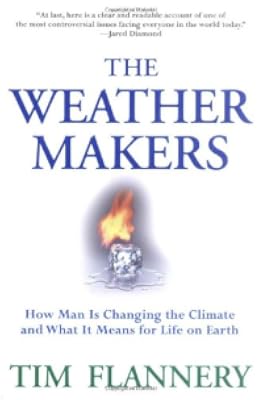
The Weather Makers: How Man Is Changing the Climate and What It Means for Life on Earth
by Tim Flannery
On This Page
Description
Sometime this century the day will arrive when the human influence on the climate will overwhelm all other natural factors. Over the past decade, the world has seen the most powerful El Nino ever recorded, the most devastating hurricane in two hundred years, the hottest European summer on record, and one of the worst storm seasons ever experienced in Florida. With one out of every five living things on this planet committed to extinction by the levels of greenhouse gases that will accumulate show more in the next few decades, we are reaching a global climatic tipping point. [This book] is both an urgent warning and a call to arms, outlining the history of climate change, how it will unfold over the next century, and what we can do to prevent a cataclysmic future. Along with a riveting history of climate change, [the author] offers specific suggestions for action for both lawmakers and individuals, from investing in renewable power sources like wind, solar, and geothermal energy, to offering an action plan with steps each and every one of us can take right now to reduce deadly CO2 emissions by as much as 70 percent.-Dust jacket. Includes information on acidity in ocean, air pollution, carbon dioxide, climate change, coal, coral reefs, extinctions, global warming, greenhouse effect, greenhouse gases, hurricanes, Kyoto Protocol, Montreal Protocol, oil, ozone, plankton, rainfall, solar power, sunlight, nuclear power, wind power, geothermal energy, show lessTags
Recommendations











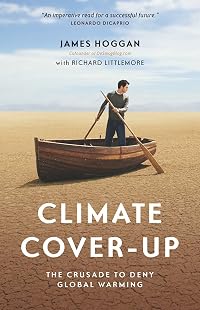
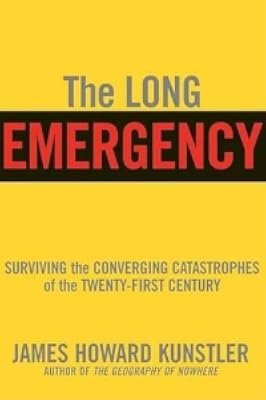
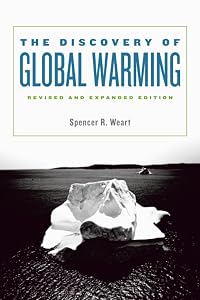
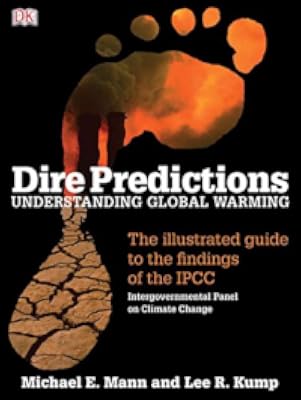


Member Recommendations
Member Reviews
Fossil fuels - oil, coal, and gas - are all that remains of organisms that, many millions of years ago, drew carbon from the atmosphere. When we burn wood, we release carbon that has been out of atmospheric circulation for a few decades, but when we burn fossil fuels, we release carbon that has been out of circulation for eons. Digging up the dead in this way is a particularly bad thing for the living to do.
A comprehensive and easily accessible book covering climate change and all it's complexities. I had no idea how complex climate change is -- water temperatures, plankton blooms, changes in migratory patterns, the Gulf Stream and el Niño. I'm shocked by the number of peoples in the Arctic and on Pacific Island atolls that are about show more to lose their nations as conditions worsen and the land (actually ice or coral reefs) and food sources disappear. Sadly I am not surprised to learn of the bullying by Australia and the US of their neighbors and other nations. I was shocked though, that an Australian politician publicly stated that it would be easier to evacuate all the Pacific Island atolls than it would be to require that Australia decrease carbon emissions. Flannery also covers potential solutions that might lower the carbon in the atmosphere -- wind power, solar power, current and tidal power, utilization of different fuels for cars and cargo ships, legal action against corporations and governments that don't comply with set carbon emission levels and, unfortunately, increased use of nuclear power.
This is the third book I've read by Flannery. Like the others this book is easy to read, yet without the feeling that it was dumbed down for a general audience. It's one of those books that I want to push on everyone and tell them to read it, right now. Highly recommended. show less
A comprehensive and easily accessible book covering climate change and all it's complexities. I had no idea how complex climate change is -- water temperatures, plankton blooms, changes in migratory patterns, the Gulf Stream and el Niño. I'm shocked by the number of peoples in the Arctic and on Pacific Island atolls that are about show more to lose their nations as conditions worsen and the land (actually ice or coral reefs) and food sources disappear. Sadly I am not surprised to learn of the bullying by Australia and the US of their neighbors and other nations. I was shocked though, that an Australian politician publicly stated that it would be easier to evacuate all the Pacific Island atolls than it would be to require that Australia decrease carbon emissions. Flannery also covers potential solutions that might lower the carbon in the atmosphere -- wind power, solar power, current and tidal power, utilization of different fuels for cars and cargo ships, legal action against corporations and governments that don't comply with set carbon emission levels and, unfortunately, increased use of nuclear power.
This is the third book I've read by Flannery. Like the others this book is easy to read, yet without the feeling that it was dumbed down for a general audience. It's one of those books that I want to push on everyone and tell them to read it, right now. Highly recommended. show less
Mammologist and paleontologist Flannery (The Eternal Frontier), who in recent years has become well known for his controversial ideas on conservation, the environment and population control, presents a straightforward and powerfully written look at the connection between climate change and global warming. It's destined to become required reading following Hurricane Katrina as the focus shifts to the natural forces that may have produced such a devastating event. Much of the book's success is rooted in Flannery's succinct and fascinating insights into related topics, such as the differences between the terms greenhouse effect, global warming and climate change, and how the El Ni?o cycle of extreme climatic events "had a profound show more re-organising effect on nature." But the heart of the book is Flannery's impassioned look at the earth's "colossal" carbon dioxide pollution problem and his argument for how we can shift from our current global reliance on fossil fuels [...]. Flannery consistently produces the hard goods related to his main message that our environmental behavior makes us all "weather makers" who "already possess all the tools required to avoid catastrophic climate change." show less
Tim Flannery has a knack for picking subjects which make best sellers. It is partly the subject and partly the fact that he is a captivating writer. The weather makers was first published in 2005 ....somewhat in the early stages of the great climate debates which have raged for the last 30 years or so. Though it is my impression that the debate about the impact of fossil fuel burning on the climate is no longer being denied by the majority of the world....though a rearguard action is being fought about delaying the response. Tim's book is jam packed with facts and figures and interesting information. For example, he draws attention to the idea that it is the rate of change in world temperatures that is most important. and climate show more scientists are arguing that warming rates above 0.1 degrees C per decade are likely to rapidly increase the risk of significant ecosystem damage. Similarly rates of sea level rise above two cm per decade would be dangerous. The idea is that all life is flexible given sufficient time to adapt. Tim just doesn't focus on the problem but looks at potential solutions including engineering solutions. He concludes that engineering solutions to the carbon problem have proved neither as straightforward or as cost effective as industry would like. He also mentions artificial photosynthesis and I'm interested to see how this will play out. Nuclear energy has been touted as a solution....Tim doesn't rule it out but points out that nuclear waste disposal and safely issues are a concern> His solution to the problem is the widespread adoption of solar energy, wind energy, geothermal energy but also the adoption by individuals of energy saving measures...such as domestic solar power. (which he's done himself).
He doesn't really seem to touch on one of the biggest drivers of climate change which is population growth. I guess this looks like it is going to hit a plateau in the medium term but stronger action to curb population growth would have a major impact on carbon dioxide emissions.
Overall.an important and well written book. Easily worth five stars. show less
He doesn't really seem to touch on one of the biggest drivers of climate change which is population growth. I guess this looks like it is going to hit a plateau in the medium term but stronger action to curb population growth would have a major impact on carbon dioxide emissions.
Overall.an important and well written book. Easily worth five stars. show less
A discussion on global warming that covers an assortment of aspects, and presents an absolutely convincing argument that global warming is both real and far along. Topics covered included the earth’s climate history, the mechanisms of global warming, the effects present and future, Kyoto and other efforts to halt human harm of the atmosphere, and what Flannery sees as the solution.
As a summary, the human-friendly earth is desperate for us to act now on global warning, not next year. And there are answers.
One observation he makes really struck me: historically all cost estimates to reduce industrial pollution are largely overstated, often by more then twice the real cost. Whereas all cost estimates to clean up after pollution are show more enormously understated, often by an order of magnitude.
Flannery is not an alarmist. He writes in an accessible manner, does a good job of putting various facts together to make his point. There is a lot to be learned here, and you don’t need to be a scientist to follow along and understand.
Climate History
The most interesting sections for me were on the mechanism causing global warming and the earth’s climate history. The later underlining the former. How interesting that Homo sapiens have existed for 150,000 years, and yet almost all technological advancement occurred within the last 10,000 years? What happened during those 1st 140,000 years? Flannery argues that climate happened. The ice ages and other naturally phenomena hindered humanity, driving it to the brink of extinction at least once. Then, over the last 10,000 years we’ve had one long summer of stable climate.
Global Warming Mechanisms
As for the mechanism, Flannery begins by giving a nice clear explanation. He tries to cover the latest research through 2005, and includes many critical findings that only date to within a couple years before the book was published. Global warming has been discussed for a long time, but we are still trying to understand the mechanisms. And some of the most critical and convincing research is very recent. The problem is that the climate is very complex, with many features offsetting others. Sometimes a feature that would seem the drive the climate one way actually is critical to driving it the other. The key features are the positive feedbacks. This is where warming triggers an event which then causes more warming. For example warming melts ice caps. The ice, which reflects large amounts of the suns energy, is them replaced by sea water or something else that reflects a great deal less of it.
Unfortunately it seemed to me that this explanation stopped a little too early, leaving some unanswered questions. At least I was still confused and ready for more clarification. Alas it didn’t come.
The Effects Present and Future
I want to say that these sections were horrifying. But there are so many examples that my eyes glaze over after awhile. I get the point, global warming is doing bad things, species are going extinct as a tremendous rate, places like Australia are losing critical rainfall. Yes, OK…no no no, please not another example.
But, what is fascinating here are the two climate windows we’ve passed through recently that are well documented: 1976 & 1998. Global climates shifted dramatically these two years, and did not return. Some threshold was passed beginning positive feedback loops towards a warmer climate. This should be enough to get our attention that climate is changing for the warmer and will continue to do so if we don’t reduce emissions.
Kyoto and Other Efforts to Halt Human Harm of the Atmosphere
It’s a sad reality that industry is successfully confusing the picture, and undermining popular understanding of globally warming. I don’t recall any stunning details here, Flannery just points out the obvious as he tries to explain why the United States and Australia haven’t ratified Kyoto – an underwhelming and partial answer to global warming.
To quote:
“It is of paramount importance to understand that the Kyoto Protocol is the only international treaty in existence created to combat climate change. For those who urge abandonment or who criticize Kyoto, there are two questions: What do you propose to replace Kyoto with, and how do you propose to secure international agreement for your alternatives? ”
The Solution
Sign Kyoto. Begin taxing carbon emission and investing in all alternatives to coal and oil. As we invest, the costs of alternatives will come down. There are several, including wind, solar and nuclear energy, and all need to be used at some level. And once emissions are taxed, better ways will be found to replace coal and oil. Flannery seems most interested in the solution and the actions we can take. His makes a good point that there is a lot we can do now - and the costs of doing them probably aren't all that high. Acting now would make a huge difference. show less
As a summary, the human-friendly earth is desperate for us to act now on global warning, not next year. And there are answers.
One observation he makes really struck me: historically all cost estimates to reduce industrial pollution are largely overstated, often by more then twice the real cost. Whereas all cost estimates to clean up after pollution are show more enormously understated, often by an order of magnitude.
Flannery is not an alarmist. He writes in an accessible manner, does a good job of putting various facts together to make his point. There is a lot to be learned here, and you don’t need to be a scientist to follow along and understand.
Climate History
The most interesting sections for me were on the mechanism causing global warming and the earth’s climate history. The later underlining the former. How interesting that Homo sapiens have existed for 150,000 years, and yet almost all technological advancement occurred within the last 10,000 years? What happened during those 1st 140,000 years? Flannery argues that climate happened. The ice ages and other naturally phenomena hindered humanity, driving it to the brink of extinction at least once. Then, over the last 10,000 years we’ve had one long summer of stable climate.
Global Warming Mechanisms
As for the mechanism, Flannery begins by giving a nice clear explanation. He tries to cover the latest research through 2005, and includes many critical findings that only date to within a couple years before the book was published. Global warming has been discussed for a long time, but we are still trying to understand the mechanisms. And some of the most critical and convincing research is very recent. The problem is that the climate is very complex, with many features offsetting others. Sometimes a feature that would seem the drive the climate one way actually is critical to driving it the other. The key features are the positive feedbacks. This is where warming triggers an event which then causes more warming. For example warming melts ice caps. The ice, which reflects large amounts of the suns energy, is them replaced by sea water or something else that reflects a great deal less of it.
Unfortunately it seemed to me that this explanation stopped a little too early, leaving some unanswered questions. At least I was still confused and ready for more clarification. Alas it didn’t come.
The Effects Present and Future
I want to say that these sections were horrifying. But there are so many examples that my eyes glaze over after awhile. I get the point, global warming is doing bad things, species are going extinct as a tremendous rate, places like Australia are losing critical rainfall. Yes, OK…no no no, please not another example.
But, what is fascinating here are the two climate windows we’ve passed through recently that are well documented: 1976 & 1998. Global climates shifted dramatically these two years, and did not return. Some threshold was passed beginning positive feedback loops towards a warmer climate. This should be enough to get our attention that climate is changing for the warmer and will continue to do so if we don’t reduce emissions.
Kyoto and Other Efforts to Halt Human Harm of the Atmosphere
It’s a sad reality that industry is successfully confusing the picture, and undermining popular understanding of globally warming. I don’t recall any stunning details here, Flannery just points out the obvious as he tries to explain why the United States and Australia haven’t ratified Kyoto – an underwhelming and partial answer to global warming.
To quote:
“It is of paramount importance to understand that the Kyoto Protocol is the only international treaty in existence created to combat climate change. For those who urge abandonment or who criticize Kyoto, there are two questions: What do you propose to replace Kyoto with, and how do you propose to secure international agreement for your alternatives? ”
The Solution
Sign Kyoto. Begin taxing carbon emission and investing in all alternatives to coal and oil. As we invest, the costs of alternatives will come down. There are several, including wind, solar and nuclear energy, and all need to be used at some level. And once emissions are taxed, better ways will be found to replace coal and oil. Flannery seems most interested in the solution and the actions we can take. His makes a good point that there is a lot we can do now - and the costs of doing them probably aren't all that high. Acting now would make a huge difference. show less
Flannery succeeds in explaining the science behind climate change and humanity's recent effect in an understandable manner. He traces the history of climate change on civilisations and ecologies, how scientists model the future and what it could mean, delves into the reasons why we, our governments and corporations have not responded yet and suggests future solutions. Flannery is in no doubt that we are tweaking the earth's climatic systems to such a degree that we are close to a tipping point, and that an inevitable momentum is already built into the them. The call to action is unmistakable and urgent. I live in one - and close to another - biodiversity hotspot that are both queued for extinction, namely the fynbos and succulent Karoo show more biomes - unless the vegetation can migrate..... The implication is clear - I may yet witness their passing. show less
Summary: A call to arms to combat the drivers of man made climate change. The author contextualises the issue quite well and urges everyone to take action before the impacts outstrip our ability to cope.
Things I liked:
Structure: The first section contextualises the issue; second section makes the argument that things are pretty bad and getting worse; the third section provides some angles on actions that can be taken and provides additional detail and supporting arguments. The structure works well and provides a good pace with information provided in the same order that I required it.
Impartial ?!?: Caveat; I was expecting a rabid, zealous call to arms for action and general trashing of all sceptics. The arguments, by contrast I I show more found remarkably restrained and even handed. This stopped my arguments from closing over, which, ironically, probably made the authors arguments more effective for me.
Things I thought could be improved:
The authors bias as a biologist comes through. I thought there were a few too many specific stories of particular fauna that is being impacted by global warming. Arguments would have been more effective if they kept the focus on the impact climate change was going to have on humans.
Bias: The author can't avoid an occasional intolerant dig at the 'sceptics' I noticed a couple of times when this happened and found it off putting each time that I did. Basically I don't think you need to go there if your arguments are strong enough.
Highlight: The story about the dude in like 1850 who worked out that ice ages on the earth were being driven by the earth having a non-circular orbit around the sun. Loved it, made me want to read more about geology. show less
Things I liked:
Structure: The first section contextualises the issue; second section makes the argument that things are pretty bad and getting worse; the third section provides some angles on actions that can be taken and provides additional detail and supporting arguments. The structure works well and provides a good pace with information provided in the same order that I required it.
Impartial ?!?: Caveat; I was expecting a rabid, zealous call to arms for action and general trashing of all sceptics. The arguments, by contrast I I show more found remarkably restrained and even handed. This stopped my arguments from closing over, which, ironically, probably made the authors arguments more effective for me.
Things I thought could be improved:
The authors bias as a biologist comes through. I thought there were a few too many specific stories of particular fauna that is being impacted by global warming. Arguments would have been more effective if they kept the focus on the impact climate change was going to have on humans.
Bias: The author can't avoid an occasional intolerant dig at the 'sceptics' I noticed a couple of times when this happened and found it off putting each time that I did. Basically I don't think you need to go there if your arguments are strong enough.
Highlight: The story about the dude in like 1850 who worked out that ice ages on the earth were being driven by the earth having a non-circular orbit around the sun. Loved it, made me want to read more about geology. show less
A lucid overview, though it definitely zooms around a lot, in time, space and in its considerations of the different facets of the climate change problem. Two specific comments: Was interesting to see how much Flannery quotes [a:Alfred Russel Wallace|32343|Alfred Russel Wallace|http://photo.goodreads.com/authors/1244739380p2/32343.jpg], of [b:The Malay Archipelago The land of the orang-utan and the bird of paradise a narrative of travel with studies of man and nature|710535|The Malay Archipelago The land of the orang-utan and the bird of paradise a narrative of travel with studies of man and nature|Alfred Russel Wallace|http://photo.goodreads.com/books/1177526212s/710535.jpg|96053]. I've never read later Wallace, understanding that his show more later works devolve into weird late-Victorian spiritualism. But Flannery rescues his writing on the atmosphere, on "the Great Aerial Ocean", and recommends his last great work [b:Man's Place In The Universe|796671|Man's Place In The Universe A Study Of The Results Of Scientific Research In Relation To The Unity Or Plurality Of Worlds|Alfred Russel Wallace|http://photo.goodreads.com/books/1178460466s/796671.jpg|2275706], "full of insights that resonate with an environmentally aware twenty-first century". So it's on my too-read list.Flannery concludes his book with a call to action. And it's a reasonably effective call-to-action too. Inspired by that, let me ask this question to all my Singapore friends. Given how much sunshine we get, why is that solar water heaters are so little used in Singapore? I've asked architects and contractors this question, and they say, oh, no, too expensive, no good, etc. And I haven't pushed. But really, what's the deal? In so many other places around the world they are very common. Athens, Chengdu, etc. show less
Members
- Recently Added By
Published Reviews
ThingScore 100
A racy read is not what you expect from a scientist, especially when it's a book about climate change. But Tim Flannery is a straight-talking Australian and perhaps that is what gives his book its refreshingly different perspective.
added by mikeg2
Lists

LT picks: Blue Books
197 works; 40 members

Climate Change
39 works; 2 members

Climate Change
87 works; 7 members

Wanna Help the Environment?
12 works; 1 member
Author Information

45+ Works 5,116 Members
Awards and Honors
Awards
Distinctions
Common Knowledge
- Original publication date
- 2005
- Dedication
- To David and Emma, Tim and Nick, Noriko and Naomi,
Puffin and Galen, Will, Alice, Julia and Anna, and of course Kris,
with love and hope; and to all of their generation who will
have to live with the consequences ... (show all)of our decisions. - First words
- In 1981, when I was in my mid-twenties, I climbed Mt Albert Edward, ... New Guinea. ... the last significant biological work conducted there was ... in the early 1930's.
... Tree-ferns grew only in the grassland, so here ... (show all)was clear evidence that the forest was colonising the slope from below. ...
Why was the forest expanding? - Last words
- (Click to show. Warning: May contain spoilers.)As these challenges suggest, we are the generation fated to live in the most interesting of times, for we are now the weather makers, and the future of biodiversity and civilisation hangs on our actions.
I have done my best to fashion a manual on the use of Earth's thermostat. Now it's over to you. - Original language
- English
Classifications
- Genres
- Science & Nature, Nonfiction, General Nonfiction
- DDC/MDS
- 363.73874 — Society, government, & culture Social problems and social services Public Safety - Police, Crime Investigation Environmental Issues - Pollution, Recycling, Global Warming Pollution Pollutants by source Fumes, gases, smoke Greenhouse gases
- LCC
- QC981.8 .C5 .F438 — Science Physics Physics Meteorology. Climatology Climatology and weather
- BISAC
Statistics
- Members
- 1,617
- Popularity
- 14,051
- Reviews
- 22
- Rating
- (4.04)
- Languages
- 11 — Dutch, English, Finnish, French, German, Italian, Norwegian (Nynorsk), Norwegian (Bokmål), Portuguese, Spanish, Swedish
- Media
- Paper, Audiobook, Ebook
- ISBNs
- 38
- ASINs
- 10