On This Page
Description
A baffling murder on a remote country lane puts Alan Banks and his team to the test in the detective's most intense and gripping case yet. With Detective Inspector Annie Cabbot investigating the young woman's death, newly promoted Detective Superintendent Banks finds himself taking on the coldest of cases: a fifty-year-old assault allegedly perpetrated by beloved celebrity Danny Caxton. Now Caxton stands accused at the center of a media storm, and it's Banks' job to discover the shocking show more truth. As more women step forward with accounts of Caxton's manipulation, Banks must piece together decades-old evidence - as the investigation leads him down the darkest of powerful, and surprising, When the Music's Over is the finest novel to date from one of the foremost suspense writers at work today. show lessTags
Recommendations























Member Reviews
When the Music’s Over by Peter Robinson is the 23rd book in the Inspector Alan Banks series, and for me, these books continue to deliver in both story and writing.
In this outing Robinson turns to the headlines and creates a case that has Banks investigating the 50 year old sex crimes of a celebrity. Ex-pop singer and well known television host, Danny Caxton is in his eighties now, but when young and famous apparently thought he had the right to assault and rape young girls. Meanwhile DI Annie Cabot, Bank’s right hand when it comes to Homicide and Serious Crimes, is working a murder case where a 14 year old girl was tossed out of a van after being raped by multiple men. She was then apparently picked up by another driver who show more proceeded to beat and kick her to death. Each case comes with it’s own conundrums and has Banks and Annie working long hours developing their cases and interrogating witnesses and suspects.
I have been a fan of this series since the first book was published in 2000. Although the author recently passed away, I am thankful that I still have a few more books from the series to read as I find they just keep getting better. In When the Music’s Over, the author deals with sensitive issues that include racism and the treatment of minors. The story is dark and gritty and the two cases which at first seem very different are actually similar in that both are about exploiting people and preying on their weaknesses. show less
In this outing Robinson turns to the headlines and creates a case that has Banks investigating the 50 year old sex crimes of a celebrity. Ex-pop singer and well known television host, Danny Caxton is in his eighties now, but when young and famous apparently thought he had the right to assault and rape young girls. Meanwhile DI Annie Cabot, Bank’s right hand when it comes to Homicide and Serious Crimes, is working a murder case where a 14 year old girl was tossed out of a van after being raped by multiple men. She was then apparently picked up by another driver who show more proceeded to beat and kick her to death. Each case comes with it’s own conundrums and has Banks and Annie working long hours developing their cases and interrogating witnesses and suspects.
I have been a fan of this series since the first book was published in 2000. Although the author recently passed away, I am thankful that I still have a few more books from the series to read as I find they just keep getting better. In When the Music’s Over, the author deals with sensitive issues that include racism and the treatment of minors. The story is dark and gritty and the two cases which at first seem very different are actually similar in that both are about exploiting people and preying on their weaknesses. show less
Two cases over a 50-year period, both involving the rape of teenage girls, occupy Inspector Alan Banks’s team in “When the Music’s Over,” the 2016 entry in Peter Robinson’s outstanding series of mysteries. Interestingly, both cases justify the book’s title.
In the older case, Banks, newly promoted, investigates an accusation by a prominent British poet that Danny Caxton, a popular entertainer back in the Sixties, raped her when she was 14. A complaint had been filed at the time, but nothing came of it. Caxton had been a friend to top police officials in those days, as well as a generous contributor to police charities. Could that be why most of the records from the case have disappeared? Now Caxton is an obnoxious 85-year-old show more more confident than ever that the law cannot touch him.
The newer, more interesting case involves another 14-year-old girl found dead on a country road. Evidence suggests she has been raped by multiple men, dumped naked along the road, then beaten to death by someone else. Although Banks is technically in charge of this case, the actual investigation is headed by Annie Cabbot, a member of his team and a woman who herself was a rare victim.
Robinson doesn’t rely on chases, shootouts or even obscure clues and brilliant deductions. Rather this novel, like others in the series, focuses on solid, usually routine police work. Yet it is riveting from first page to last. show less
In the older case, Banks, newly promoted, investigates an accusation by a prominent British poet that Danny Caxton, a popular entertainer back in the Sixties, raped her when she was 14. A complaint had been filed at the time, but nothing came of it. Caxton had been a friend to top police officials in those days, as well as a generous contributor to police charities. Could that be why most of the records from the case have disappeared? Now Caxton is an obnoxious 85-year-old show more more confident than ever that the law cannot touch him.
The newer, more interesting case involves another 14-year-old girl found dead on a country road. Evidence suggests she has been raped by multiple men, dumped naked along the road, then beaten to death by someone else. Although Banks is technically in charge of this case, the actual investigation is headed by Annie Cabbot, a member of his team and a woman who herself was a rare victim.
Robinson doesn’t rely on chases, shootouts or even obscure clues and brilliant deductions. Rather this novel, like others in the series, focuses on solid, usually routine police work. Yet it is riveting from first page to last. show less
This novel by Peter Robinson surprised me, as the story captured my interest immediately. The story deals with teen-age girls and the problems these girls encounter. These young girls are solicited by older men and groomed for the illegal sex market. The girls are controlled by drugs and presents until they are doomed to a cloudy existence. Peter Robinson casually shows the mentality of these girls in a world devoid of love and caring as they plummet into a hellhole. I find myself amazed at the lack of parental supervision, where have Ozzie and Harriet gone? Are parents too wrapped in their own private misery to observe their children and guide these children to a deserving life? The novel also explores the cold case of a sexual show more assault. I remember someone telling me that everyone woman has been a victim of assault during her life. What a sad commentary on human nature. show less
On the front of the hard cover edition to Peter Robinson's excellent novel "When the Music's over" there is a comment by the author Jeffrey Deaver...."Top-notch police procedure" This is an unassuming but very apt comment about a novel and a story that I found totally engrossing from the first to last page. Deaver's comment almost has the effect of implying that this is a work of some drudgery and reading it is somewhat akin to a work of labour and toil. The truth could not be more different for this is a story that takes you right into the heart of a police investigation (in fact two investigations) an almost fly on the wall drama, you watch and read with fascination and excitement as the facts reveal themselves and our two heroes DS show more Banks and DI Annie Cabbot unravel a story of mistrust, evil and deceit in an attempt to bring the perpetrators to justice.
Detective Superintendant Alan Banks is investigating an historical case of sexual abuse against one time television and stage performer Danny Caxton. Linda Palmer was barely a teenager at the time when it is alleged Caxton charmed and allured her to a hotel room in Blackpool where the rape and assault took place. In the meantime Detective Inspector Annie Cabbot is hot on the trail of the brutal rape and murder of a vulnerable 14 year old Mimsy Moffat. Banks as part of his new promotion is actively involved in one case and overseeing the other and as always it is wonderful to see the interplay between Banks and Cabbot given their past "romantic" history.
The magic with Peter Robinson's writing is that you the reader almost feel a part of the investigation. His research as always is impeccable and the storyline very of the moment if we consider the recent events that occurred in Rotherham and Rochdale and the celebrity trials of such notables as Rolf Harris, Stuart Hall, and Max Clifford. Adding to this the deplorable actions and breach of trust by Jimmy Savile and Cyril Smith MP then we have the basis for an informative and well researched story. I love the author's descriptive style of writing very easy to read yet visual and exciting in its delivery...."His hairy belly dropped over his belt, little squares of fat pushing through the net of his string vest, and his man-breasts wobbled when he moved. He could also do with a shave and a haircut, and probably a wash , too. A tin of Carlsberg Special Brew rested on one arm of his armchair and an ashtray on the other."........"For the rest, there are drugs, drink, violence, crime or just simply apathy broken up by the distraction of video games, sex, and mobile phones. Life is something to be got through. Days are hurdles, weeks are rivers to cross, months lakes and years oceans."
This is wonderful writing of the highest order; a brilliantly researched and presented story with a very suitable and proper conclusion. The 23rd Alan Banks novel and although it might be preferable to read the series in order! When the Music's Over can be read as a standalone. Highly Recommended. show less
Detective Superintendant Alan Banks is investigating an historical case of sexual abuse against one time television and stage performer Danny Caxton. Linda Palmer was barely a teenager at the time when it is alleged Caxton charmed and allured her to a hotel room in Blackpool where the rape and assault took place. In the meantime Detective Inspector Annie Cabbot is hot on the trail of the brutal rape and murder of a vulnerable 14 year old Mimsy Moffat. Banks as part of his new promotion is actively involved in one case and overseeing the other and as always it is wonderful to see the interplay between Banks and Cabbot given their past "romantic" history.
The magic with Peter Robinson's writing is that you the reader almost feel a part of the investigation. His research as always is impeccable and the storyline very of the moment if we consider the recent events that occurred in Rotherham and Rochdale and the celebrity trials of such notables as Rolf Harris, Stuart Hall, and Max Clifford. Adding to this the deplorable actions and breach of trust by Jimmy Savile and Cyril Smith MP then we have the basis for an informative and well researched story. I love the author's descriptive style of writing very easy to read yet visual and exciting in its delivery...."His hairy belly dropped over his belt, little squares of fat pushing through the net of his string vest, and his man-breasts wobbled when he moved. He could also do with a shave and a haircut, and probably a wash , too. A tin of Carlsberg Special Brew rested on one arm of his armchair and an ashtray on the other."........"For the rest, there are drugs, drink, violence, crime or just simply apathy broken up by the distraction of video games, sex, and mobile phones. Life is something to be got through. Days are hurdles, weeks are rivers to cross, months lakes and years oceans."
This is wonderful writing of the highest order; a brilliantly researched and presented story with a very suitable and proper conclusion. The 23rd Alan Banks novel and although it might be preferable to read the series in order! When the Music's Over can be read as a standalone. Highly Recommended. show less
One of my absolute, all time favourite series, that never, ever disappoints, is Peter Robinson's Inspector Banks novels. The 23rd book in the series, When The Music's Over, releases early next month.
Robinson opens When the Music's Over with a gut wrenching prologue. The reader knows that there is someone and something very, very dark out there......
Banks has just been promoted to Detective Superintendent. And along with his promotion, comes a high profile case. A beloved public performer, now in his eighties, may not be the man the British public has believed him to be. More than one woman has come forward with accounts of 'historical sexual abuse'. It's up to Alan and his team to see if they can prove a case that's over fifty years show more old.
I wondered how Banks would go about investigating the historical case. After so many years, what clues would be left to follow? As Banks says...."I mean...nearly fifty years ago...It's about as cold as case as you can get."
Running parallel and just as challenging is Detective Inspector Annie Cabot's case. The body of a young girl has been found by the side of the road, horribly beaten. Racial tension, political correctness and public relations tip-toeing are muddying the waters in Annie's investigation.
"And what are the odds of some stranger just happening along this road, seeing a naked woman walking and turning out to be a passing psychopath, deciding to beat her to death."
This latest mystery from Robinson is both topical and current. Both cases draw upon actual cases for inspiration - that of Rotherham and Jimmy Savile. Although there are two separate cases, they have common (and disturbing) starting point. The plotting is excellent, well thought out, well paced and absolutely believable.
Well loved supporting characters return, including one of my perennial faves, Winsome Jackman. We get to know young newcomer Detective Constable Gerry Masterson a bit better. She provides a different outlook from the seasoned detectives and I look forward to seeing more of her. And I never grow tired of Annie and her strong opinions.
I have always enjoyed Banks' musical tastes, often seeking out some of what he's listening to. In this latest book, poetry is a new passion of Banks. Robinson has grown his characters as the series has progressed. Alan's personal life is always of interest. His last relationship has ended and as the book progressed I wondered if he might follow through with his attraction to one of the witnesses in his historical case.
I always like finding the reference to the title when reading. In this case, it's from a conversation...
"You know what they say. When the music's over, it's time to have fun."
"Never heard that one, said Banks. I thought it was turn out the lights."
"Don't you turn out the lights when you want to have fun, Superintendent?"
Well, leave the lights on and immerse yourself in this latest wonderful read from Robinson. While I don't know about fun, I do know it's another fantastic read from Robinson. Five stars for this reader. show less
Robinson opens When the Music's Over with a gut wrenching prologue. The reader knows that there is someone and something very, very dark out there......
Banks has just been promoted to Detective Superintendent. And along with his promotion, comes a high profile case. A beloved public performer, now in his eighties, may not be the man the British public has believed him to be. More than one woman has come forward with accounts of 'historical sexual abuse'. It's up to Alan and his team to see if they can prove a case that's over fifty years show more old.
I wondered how Banks would go about investigating the historical case. After so many years, what clues would be left to follow? As Banks says...."I mean...nearly fifty years ago...It's about as cold as case as you can get."
Running parallel and just as challenging is Detective Inspector Annie Cabot's case. The body of a young girl has been found by the side of the road, horribly beaten. Racial tension, political correctness and public relations tip-toeing are muddying the waters in Annie's investigation.
"And what are the odds of some stranger just happening along this road, seeing a naked woman walking and turning out to be a passing psychopath, deciding to beat her to death."
This latest mystery from Robinson is both topical and current. Both cases draw upon actual cases for inspiration - that of Rotherham and Jimmy Savile. Although there are two separate cases, they have common (and disturbing) starting point. The plotting is excellent, well thought out, well paced and absolutely believable.
Well loved supporting characters return, including one of my perennial faves, Winsome Jackman. We get to know young newcomer Detective Constable Gerry Masterson a bit better. She provides a different outlook from the seasoned detectives and I look forward to seeing more of her. And I never grow tired of Annie and her strong opinions.
I have always enjoyed Banks' musical tastes, often seeking out some of what he's listening to. In this latest book, poetry is a new passion of Banks. Robinson has grown his characters as the series has progressed. Alan's personal life is always of interest. His last relationship has ended and as the book progressed I wondered if he might follow through with his attraction to one of the witnesses in his historical case.
I always like finding the reference to the title when reading. In this case, it's from a conversation...
"You know what they say. When the music's over, it's time to have fun."
"Never heard that one, said Banks. I thought it was turn out the lights."
"Don't you turn out the lights when you want to have fun, Superintendent?"
Well, leave the lights on and immerse yourself in this latest wonderful read from Robinson. While I don't know about fun, I do know it's another fantastic read from Robinson. Five stars for this reader. show less
A very contemporary plot building on operation Yewtree, the revelations about Jimmy Savile, Rolf Harris and others, as well as the disturbing stories of the grooming of young girls in places like Rochdale. Banks, recently promoted to Superintendent, is given a political hot potato as his first case and at the same time is overseeing Annie Cabbot who has the brutal murder of a young girl to investigate. As always strong plotting and characterisation elevate this novel.
In this 23rd installment of the Inspector Banks series, Alan Banks has recently been promoted to Detective Superintendent, and has been handed a sticky case involving accusations of historical sexual abuse against a famous celebrity. The accused, Danny Caxton, is now 85, with most of the complaints stemming from the 1960’s. Banks is tasked with investigating one of the complainants, Linda Palmer, who was 14 at the time of the alleged assault.
Meanwhile, in alternate chapters, Detective Inspector Annie Cabot and Detective Constable Gerry Masterson are engaged in an investigation into a murder of a young girl found naked and beaten on a country road. Eventually they identify her, and suspect she may have been subject to “grooming” by show more Pakistanis in her underprivileged neighborhood.
["Grooming" is the practice of luring in minors for sexual abuse and prostitution. The problem was deemed sufficiently menacing in the U.K. that The Child Exploitation and Online Protection Centre was formed in 2006. In this story, the characters make frequent reference to the Rotherham case, in which widespread child sexual abuse took place in Rotherham, South Yorkshire, England beginning in 1997. In 2010, five men of Pakistani heritage were found guilty of a series of sexual offenses against girls as young as twelve. An independent inquiry in 2013 estimated that some 1400 children had been sexually abused, predominantly by gangs of British-Pakistani men. The Home Affairs Select Committee criticized the South Yorkshire Police force for their inept handling of the abuse. Long-term ill effects, such as the increase in prejudice and blanket xenophobia, ensued.
The story discusses in great detail the importance of public relations to the police in dealing with sensitive issues. In the case Banks is looking into, there was evidence of bribery at high levels of enforcement to shut down investigations. There was also the whole he-said-she-said dilemma, as is especially salient in cases without witnesses. Inevitably some of the police and press were suspicious that any accusers of celebrities were just after money.
In the case taken on by Cabot and Masterson, there are also a number of issues with contemporary relevance that come into play. One is the lack of options for children growing up in areas where parents are unemployed and/or absentee and/or abusive, and the failure of social services to help this at-risk population. Another is the tension between the white and non-white British population. The police don’t want to be identified as “racist,” especially since perpetrators of color are quick to invoke “the race card.” As Annie observes: “Coppers and social workers [are] so frightened of offending any ethnic or cultural group that they can’t do their jobs properly. Victims [especially girls from bad areas, are] so convinced they won’t be believed that they don’t even bother to report crimes.”
Discussion: There are things I really liked about this book. Robinson certainly can’t be accused of not presenting all sides of controversial issues, and he doesn’t do it with a lot of judgment. Thus it seems "balanced," even though I didn’t agree with the stances taken by many of the characters. I also liked that he presented even the *non-bent* higher-ups in law enforcement in a rather negative light, having them defend each other’s authority rather than taking up what was for me a justified defense of the behavior and dialogue of the lower echelons in the force (such as Annie and Gerry). It seemed more realistic that way.
The reviews I have seen for this book have been very positive, but I wasn't so enamored of the book. I got kind of tired of all the music references, and not just because I didn’t know who most of the groups were. I concede that a bit of that contributes toward establishing who Alan Banks is, but after a while, it just bored me, as did his forays into poetry. Clearly he is a man who prides himself on having educated himself, and continuing to educate himself, in ways other than what his background might have suggested. But for me there was too much of that, and it got tedious. I also was bored by the memoir written by the accuser of sexual harassment that she wrote at Banks’s request and which was interspersed throughout the text. I understand it was in part to evoke a time period, and to set the mood of permissiveness of the Sixties helping to explain the attitudes of police and the public, but again, to me there was a bit too much of it, and the character's recollections were only tangentially central to the story.
In sum, for me there was a lot appealing in this book, but much I found myself skimming over. Nevertheless, Robinson is quite skilled at taking us through the permutations of police procedure and thinking, and the issues he explores are certainly timely. show less
Meanwhile, in alternate chapters, Detective Inspector Annie Cabot and Detective Constable Gerry Masterson are engaged in an investigation into a murder of a young girl found naked and beaten on a country road. Eventually they identify her, and suspect she may have been subject to “grooming” by show more Pakistanis in her underprivileged neighborhood.
["Grooming" is the practice of luring in minors for sexual abuse and prostitution. The problem was deemed sufficiently menacing in the U.K. that The Child Exploitation and Online Protection Centre was formed in 2006. In this story, the characters make frequent reference to the Rotherham case, in which widespread child sexual abuse took place in Rotherham, South Yorkshire, England beginning in 1997. In 2010, five men of Pakistani heritage were found guilty of a series of sexual offenses against girls as young as twelve. An independent inquiry in 2013 estimated that some 1400 children had been sexually abused, predominantly by gangs of British-Pakistani men. The Home Affairs Select Committee criticized the South Yorkshire Police force for their inept handling of the abuse. Long-term ill effects, such as the increase in prejudice and blanket xenophobia, ensued.
The story discusses in great detail the importance of public relations to the police in dealing with sensitive issues. In the case Banks is looking into, there was evidence of bribery at high levels of enforcement to shut down investigations. There was also the whole he-said-she-said dilemma, as is especially salient in cases without witnesses. Inevitably some of the police and press were suspicious that any accusers of celebrities were just after money.
In the case taken on by Cabot and Masterson, there are also a number of issues with contemporary relevance that come into play. One is the lack of options for children growing up in areas where parents are unemployed and/or absentee and/or abusive, and the failure of social services to help this at-risk population. Another is the tension between the white and non-white British population. The police don’t want to be identified as “racist,” especially since perpetrators of color are quick to invoke “the race card.” As Annie observes: “Coppers and social workers [are] so frightened of offending any ethnic or cultural group that they can’t do their jobs properly. Victims [especially girls from bad areas, are] so convinced they won’t be believed that they don’t even bother to report crimes.”
Discussion: There are things I really liked about this book. Robinson certainly can’t be accused of not presenting all sides of controversial issues, and he doesn’t do it with a lot of judgment. Thus it seems "balanced," even though I didn’t agree with the stances taken by many of the characters. I also liked that he presented even the *non-bent* higher-ups in law enforcement in a rather negative light, having them defend each other’s authority rather than taking up what was for me a justified defense of the behavior and dialogue of the lower echelons in the force (such as Annie and Gerry). It seemed more realistic that way.
The reviews I have seen for this book have been very positive, but I wasn't so enamored of the book. I got kind of tired of all the music references, and not just because I didn’t know who most of the groups were. I concede that a bit of that contributes toward establishing who Alan Banks is, but after a while, it just bored me, as did his forays into poetry. Clearly he is a man who prides himself on having educated himself, and continuing to educate himself, in ways other than what his background might have suggested. But for me there was too much of that, and it got tedious. I also was bored by the memoir written by the accuser of sexual harassment that she wrote at Banks’s request and which was interspersed throughout the text. I understand it was in part to evoke a time period, and to set the mood of permissiveness of the Sixties helping to explain the attitudes of police and the public, but again, to me there was a bit too much of it, and the character's recollections were only tangentially central to the story.
In sum, for me there was a lot appealing in this book, but much I found myself skimming over. Nevertheless, Robinson is quite skilled at taking us through the permutations of police procedure and thinking, and the issues he explores are certainly timely. show less
Members
- Recently Added By
Lists

Books Read in 2016
4,666 works; 199 members

Books Read in 2021
5,361 works; 114 members
Author Information

82+ Works 30,052 Members
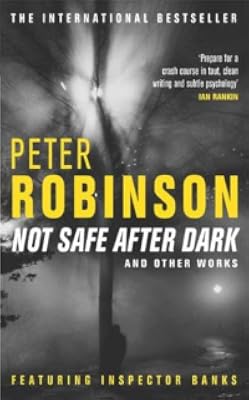
Peter Robinson was born in Castleford, Yorkshire, in 1950. He received a B.A. Honours Degree in English literature from the University of Leeds, moved to Canada, and went on to earn a M.A. in English and creative writing from the University of Windsor and a Ph.D. in English from York University. His first novel, Gallows View, was published in 1987 show more and became the first book in the Inspector Banks Mystery series. His other works include Caedmon's Song, No Cure for Love, Not Safe after Dark and Other Stories, Before the Poison, and When the Music's Over. He has received several awards including the Crime Writers of Canada's Arthur Ellis Award for Best Novel in 1992 for Past Reason Hated and the Author's Award from the Foundation for the Advancement of Canadian Letters in 1994 for Final Account. He has also published many short stories in anthologies and in Ellery Queen's Mystery Magazine, including Innocence, which won the CWC Best Short Story Award, and The Two Ladies of Rose Cottage, which won a Macavity Award. He has taught at a number of Toronto colleges and served as Writer-in-Residence at the University of Windsor, Ontario, 1992-93. (Bowker Author Biography) show less
Awards and Honors
Distinctions
Series

Common Knowledge
- Canonical title
- When the Music's Over
- Original publication date
- 2016
- First words
- They threw the naked girl out of the van on the darkest stretch of the road.
- Last words
- (Click to show. Warning: May contain spoilers.)Then she pulled herself together, thrust her chest out and remembered to swing her hips as she walked towards it.
Classifications
Statistics
- Members
- 554
- Popularity
- 53,102
- Reviews
- 31
- Rating
- (3.80)
- Languages
- English, Finnish, Polish, Swedish
- Media
- Paper, Audiobook, Ebook
- ISBNs
- 33
- ASINs
- 4