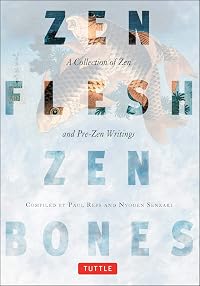
Zen Flesh, Zen Bones: A Collection of Zen and Pre-Zen Writings
by Paul Reps (Editor)
On This Page
Description
In this collection of inspirational writings, novice and experienced practitioners are treated to four key works that rank high in the Zen canon: 101 Zen Stories recounts actual experiences with Zen that span five centuries. The Gateless Gate is a 13th-century collection of mind problems used in the practice of Zen. Ten Bulls is a 12th-century commentary on the stages of awareness that lead to enlightenment. Centering is a 4,000-year-old teaching from India that may have been the source of show more Zen. Compiled by Paul Reps, these accessible works will help listeners contemplate the meaning of Zen for themselves. show lessTags
Recommendations










Member Reviews
I always feel elated, wiser - "enlightened" when I read Buddhist texts. This is actually a few texts in one slim volume. Two have commentaries: "The Gateless Gate", my favorite for hints of a vast and colorful Buddhist history and the zings on the old masters, and 10 Bulls. Thanks to the latter, I finally understand the Cat Stevens album name "Catch Bull At Four".
The first book is 101 Zan Stories and introduces the "dance like no one is watching" attitude and simple wisdom, such as in "My Heart Burns Like Fire"
Soyen Shaku, the first Zen teacher to come to America, said: "My heart burns like fire but my eyes are as cold as dead ashes." He made the following rules which he practiced every day of his life.
...Retire at a regular hour. show more Partake of food at regular intervals. Eat with moderation and never to the point of satisfaction.
Receive a guest with the same attitude you have when alone. When alone, maintain the same attitude you have in receiving guests.
Watch what you say, and whatever you say, practice it.
When an opportunity comes do not let it pass you by, yet always think twice before acting.
Do not regret the past. Look to the future.
Have the fearless attitude of a hero and the loving heart of a child..."
There's a lot of sublimation of emotional extremes and tales of magical self-control, even unto self-initiated death. These are a lot of the themes I like about the commity-preserving Confucianism and the cool headed Stoicism. Two good examples are from 101 is "The Stone Mind" and "No Attachment to Dust".
The former is a fun take on materialism vs. Idealism
The Stone Mind
Hogen, a Chinese Zen teacher, lived alone in a small temple in the country. One day four traveling monks appeared and asked if they might make a fire in his yard to warm themselves.
While they were building the fire, Hogen heard them arguing about subjectivity and objectivity. He joined them and said: "There is a big stone. Do you consider it to be inside or outside your mind?"
One of the monks replied: "From the Buddhist viewpoint everything is an objectification of mind, so I would say that the stone is inside my mind."
"Your head must feel very heavy," observed Hogen, "if you are carrying around a stone like that in your mind."
The latter feature Confucist-like aphorism which are all about getting along/getting bye with peace of mind:
"No Attachment to Dust
Zengetsu, a Chinese master of the T'ang dynasty, wrote the following advice for his pupils:
Living in the world yet not forming attachments to the dust of the world is the way of a true Zen student.
When witnessing the good action of another encourage yourself to follow his example. Hearing of the mistaken action of another, advise yourself not to emulate it.
Even though alone in a dark room, be as if you were facing a noble guest. Express your feelings, but become no more expressive than your true nature.
Poverty is your treasure. Never exchange it for an easy life.
A person may appear a fool and yet not be one. He may only be guarding his wisdom carefully.
Virtues are the fruit of self-discipline and do not drop from heaven of themselves as does rain or snow.
Modesty is the foundation of all virtues. Let your neighbors discover you before you make yourself known to them.
A noble heart never forces itself forward. Its words are as rare gems, seldom displayed and of great value.
To a sincere student, every day is a fortunate day. Time passes but he never lags behind. Neither glory nor shame can move him.
Censure yourself, never another. Do not discuss right and wrong.
Some things, though right, were considered wrong for generations. Since the value of righteousness may be recognized after centuries, there is no need to crave immediate appreciation.
Live with cause and leave results to the great law of the universe. Pass each day in peaceful contemplation."
The concluding work in this collection is Centering transcribed by Paul Reps. I found this uneven, but with such gems as:
"49. Wherever satisfaction is found, in whatever act, actualize this.
50.At the point of sleep when sleep has not yet come and external wakefulness vanishes, at this point being is revealed. [Lakshmanjoo says this is another of his favorites.]" show less
The first book is 101 Zan Stories and introduces the "dance like no one is watching" attitude and simple wisdom, such as in "My Heart Burns Like Fire"
Soyen Shaku, the first Zen teacher to come to America, said: "My heart burns like fire but my eyes are as cold as dead ashes." He made the following rules which he practiced every day of his life.
...Retire at a regular hour. show more Partake of food at regular intervals. Eat with moderation and never to the point of satisfaction.
Receive a guest with the same attitude you have when alone. When alone, maintain the same attitude you have in receiving guests.
Watch what you say, and whatever you say, practice it.
When an opportunity comes do not let it pass you by, yet always think twice before acting.
Do not regret the past. Look to the future.
Have the fearless attitude of a hero and the loving heart of a child..."
There's a lot of sublimation of emotional extremes and tales of magical self-control, even unto self-initiated death. These are a lot of the themes I like about the commity-preserving Confucianism and the cool headed Stoicism. Two good examples are from 101 is "The Stone Mind" and "No Attachment to Dust".
The former is a fun take on materialism vs. Idealism
The Stone Mind
Hogen, a Chinese Zen teacher, lived alone in a small temple in the country. One day four traveling monks appeared and asked if they might make a fire in his yard to warm themselves.
While they were building the fire, Hogen heard them arguing about subjectivity and objectivity. He joined them and said: "There is a big stone. Do you consider it to be inside or outside your mind?"
One of the monks replied: "From the Buddhist viewpoint everything is an objectification of mind, so I would say that the stone is inside my mind."
"Your head must feel very heavy," observed Hogen, "if you are carrying around a stone like that in your mind."
The latter feature Confucist-like aphorism which are all about getting along/getting bye with peace of mind:
"No Attachment to Dust
Zengetsu, a Chinese master of the T'ang dynasty, wrote the following advice for his pupils:
Living in the world yet not forming attachments to the dust of the world is the way of a true Zen student.
When witnessing the good action of another encourage yourself to follow his example. Hearing of the mistaken action of another, advise yourself not to emulate it.
Even though alone in a dark room, be as if you were facing a noble guest. Express your feelings, but become no more expressive than your true nature.
Poverty is your treasure. Never exchange it for an easy life.
A person may appear a fool and yet not be one. He may only be guarding his wisdom carefully.
Virtues are the fruit of self-discipline and do not drop from heaven of themselves as does rain or snow.
Modesty is the foundation of all virtues. Let your neighbors discover you before you make yourself known to them.
A noble heart never forces itself forward. Its words are as rare gems, seldom displayed and of great value.
To a sincere student, every day is a fortunate day. Time passes but he never lags behind. Neither glory nor shame can move him.
Censure yourself, never another. Do not discuss right and wrong.
Some things, though right, were considered wrong for generations. Since the value of righteousness may be recognized after centuries, there is no need to crave immediate appreciation.
Live with cause and leave results to the great law of the universe. Pass each day in peaceful contemplation."
The concluding work in this collection is Centering transcribed by Paul Reps. I found this uneven, but with such gems as:
"49. Wherever satisfaction is found, in whatever act, actualize this.
50.At the point of sleep when sleep has not yet come and external wakefulness vanishes, at this point being is revealed. [Lakshmanjoo says this is another of his favorites.]" show less
A hodge-podge of gems, each one worth reading slowly, mulling over.
Three Zen Buddhists call into a bar....no, not those kinds of stories, but these are tales of wisdom and sometimes stupidity, but only the wisest of stupidities.
Perhaps if you wanted to "Learn" zen this is the best way...you can only do it by these stories, not by theory.
Perhaps if you wanted to "Learn" zen this is the best way...you can only do it by these stories, not by theory.
When Zen Flesh, Zen Bones was published in 1957 it became an instant sensation with an entire generation of readers who were just beginning to experiment with Zen. Over the years it has inspired leading American Zen teachers, students, and practitioners. Its popularity is as high today as ever.
Zen Flesh, Zen Bones is a book that offers a collection of accessible, primary Zen sources so that readers can struggle over the meaning of Zen for themselves. It includes 101 Zen Stories, a collection of tales that recount actual experiences of Chinese and Japanese Zen teachers over a period of more than five centuries; The Gateless Gate, the famous thirteenth-century collection of Zen koans; Ten Bulls, a twelfth century commentary on the stages show more of awareness leading to enlightenment; and Centering, a 4,000 year-old teaching from India that some consider to be the roots of Zen. show less
Zen Flesh, Zen Bones is a book that offers a collection of accessible, primary Zen sources so that readers can struggle over the meaning of Zen for themselves. It includes 101 Zen Stories, a collection of tales that recount actual experiences of Chinese and Japanese Zen teachers over a period of more than five centuries; The Gateless Gate, the famous thirteenth-century collection of Zen koans; Ten Bulls, a twelfth century commentary on the stages show more of awareness leading to enlightenment; and Centering, a 4,000 year-old teaching from India that some consider to be the roots of Zen. show less
Influential mid-20th century Western presentation of Zen anecdotes and koans, compiled by Paul Reps with contributions from Nyogen Senzaki. Many pieces are free renderings rather than strict translations; useful for inspiration, less so for textual study. Patrons seeking classical sources may consult Mumonkan (Gateless Gate) and Hekiganroku (Blue Cliff Record)
Influential mid-20th century Western presentation of Zen anecdotes and koans, compiled by Paul Reps with contributions from Nyogen Senzaki. Many pieces are free renderings rather than strict translations; useful for inspiration, less so for textual study. Patrons seeking classical sources may consult Mumonkan (Gateless Gate) and Hekiganroku (Blue Cliff Record)
Very stimulating collection of Zen stories which may mock
anything including other Zen traditions Some tales are interesting as stories as well as for their religious content.
anything including other Zen traditions Some tales are interesting as stories as well as for their religious content.
Members
- Recently Added By
Lists

Books in the bibliography of Godel, Escher, Bach by Douglas Hofstadter
97 works; 3 members
Author Information

All Editions
Some Editions
Awards and Honors
Series
Belongs to Publisher Series
Work Relationships
Common Knowledge
- Original publication date
- 1957
- First words
- Nan-in, a Japanese master during the Meiji era (1868-1912), received a university professor who came to enquire about Zen.
- Quotations
- When a mood against someone or for someone arises, do not place it on the person in question, but remain centred.
- Last words
- (Click to show. Warning: May contain spoilers.)The sea surrounds you as your own being.
Classifications
- Genres
- Religion & Spirituality, Nonfiction, Philosophy
- DDC/MDS
- 294.3927 — Religion Other religions Buddhism/Hinduism Buddhism Buddhism - Branches and schools Mahayana Buddhism Zen Buddhism
- LCC
- BQ9264 .R47 — Philosophy, Psychology and Religion Buddhism Buddhism Modifications, schools, etc. Special modifications, sects, etc. Zen Buddhism
- BISAC
Statistics
- Members
- 2,183
- Popularity
- 9,298
- Reviews
- 17
- Rating
- (4.06)
- Languages
- 7 — Danish, Dutch, English, French, German, Polish, Turkish
- Media
- Paper, Audiobook, Ebook
- ISBNs
- 27
- UPCs
- 1
- ASINs
- 32