
CollectionModern, tradition theravada, region sri lanka, region malaysia-singapore, period modern
A series of 14 lectures on the basic doctrines of Buddhism.

Collected teachings of Venerable Yin-Shun

Translated by Thich Nhat Hanh from Number 16 of the Arthapada, Taishō 198
(corresponding to Attadaṇḍa Sutta, Sutta Nipāta 4.15, Verse #935-954)
(corresponding to Attadaṇḍa Sutta, Sutta Nipāta 4.15, Verse #935-954)

Great Dharma Master Ou I (most commonly romanized in Pinyin as Ouyi Zhixu; 蕅益智旭) lived from 1599 to 1655 during the late Ming and early Qing dynasties. He is revered as the 9th Patriarch of the Chinese Pure Land tradition. He is formally counted as the 31st Patriarch of the Tiantai lineage. He was also deeply trained as a Chan meditation master and wrote extensively on the Vinaya (monastic discipline).
Tao Teh King is also known as Laozi. It is suggested that the book origins from the late 4th century BCE. The name, Tao Teh King, can be translated in a number of ways from the Chinese original text. It might mean “the way”, “personal vurtue”, “ethics” or “personal power”. In popular western culture Tao Teh King has been widely used as a self analysis and decision making tool.

presents the history of Japanese Buddhism and the Buddhism in Japan today. It explains the origins and differences of the numerous schools and sects. We get the details of how Shinto, Zen and Rinzai Zen, Shinran, Shinshu, Honen, Soto Zen, Taoism and Pure Land Buddhism has evolved and shaped the Japanese society.
one of the most perceptive early Western accounts of Japan’s religious life. Written by a long-term resident of Japan and professor of philosophy at Tokyo Imperial University.
A few good men : the Bodhisattva path according to the Inquiry of Ugra (Ugraparipṛcchā) by Jan Nattier
a study and translation of The Inquiry of Ugra (Ugraparipṛcchâ), one of the most influential Mahâyâna sutras on the bodhisattva path, but also one of the most neglected texts in Western treatments of Buddhism.
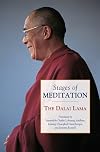
Based upon the middle section of the Bhavanakrama by Kamalashila, a translation of which is included, this is the most extensive commentary given by the Dalai Lama on this concise but important meditation handbook.
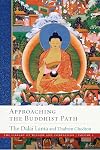
first volume of a series intended to translate the pedagogical schema of the Lam-rim to modern Western audiences. Online teaching based on this volume by Thubten Chodren at https://www.youtube.com/watch?v=8DNQHTMMDNE&list=PL8DRNsjySiiaJrZpDIGiCLIQBT...
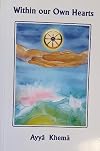
"Ayya Khemā insists that the Buddha's teachings, though profound, are simple and can be realized within our own hearts."
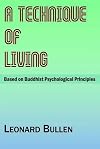
A modern twelve-month curriculum for practice.

Gifford lectures., 1901-1902. One of the foundational works in the modern study of religion.
a helpful standard reference
Essays by Richard Gombrich, Romila Thapar, Anananda W.P. Guruge, N.A. Jayawickrama, Anurudha Seneviratna, John S. Strong.
This is one of the more important modern studies connected with Buddhaghosa, especially his interpretive method and style. It is not merely devotional, but it is often quite illuminating.

An ancient Theravāda meditation manual preserved in Chinese translation and one of the sources for Buddhaghosa's Visuddhimagga. Bhante Sujato: This is a landmark edition, and one of the great accomplishments of modern scholarship. It’s a must-have for any serious scholar of Theravada.

An ancient Theravāda meditation manual preserved in Chinese translation and one of the sources for Buddhaghosa's Visuddhimagga. Bhante Sujato: This is a landmark edition, and one of the great accomplishments of modern scholarship. It’s a must-have for any serious scholar of Theravada.
Publisher: ....explores the teaching "when seeing, just see; when hearing, just hear," as it appears in the practice of insight meditation as taught by mahāsi Sayādaw...
Publisher: Professor Jayatilleke always writes with both the scholar and the lay reader in mind ... explores the roots and nature of the Buddha's teachings and examines them in the light of contrmporary knowledge.
Women in Love with the Divine: A Seeker's Exploration of Faith, Practice, and Feminine Power by Erica Bassani
Conversatioins with twelve women teachers from Buddhist, Taoist, Hindu, Christian, Muslim, Jewish, and Nondual traditions
Contents:
A Mahayana Demonstration on the Theme of Action, by Vasubandhu, John P Keenan tr;
Essays, by Sangzhao, Rafal Felbur tr.
Treatise on the Origin of Humanity, by Zongmi, an Yün-hua tr.
A Mahayana Demonstration on the Theme of Action, by Vasubandhu, John P Keenan tr;
Essays, by Sangzhao, Rafal Felbur tr.
Treatise on the Origin of Humanity, by Zongmi, an Yün-hua tr.


A new translation and edition of "Gratitude to Parents" with additional sections on gratitude to Luang Por Chah and the Buddha.
Donald S. Lopez: It would become the most influential work in the history of the European study of Buddhism, setting the stage for more than a century of subsequent scholarship. For example, it provides the portrait of the Buddha as we know him today.

Publisher: Ven. Sāriputta once proposed introducing the Buddha’s teachings to intelligent foreigners by saying, “Our teacher teaches the subduing of desire and passion.” This book explores the implications of taking this sentence as a starting point for understanding the Dhamma.

Publisher: Answers to sixteen basic questions on the topic of not-self, plus readings from the Pali Canon on which the answers are based.

A transcript of a ten-day retreat in Provence held in April, 2025 on the topic of the skillful use of desire on the path of Buddhist practice.