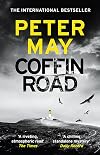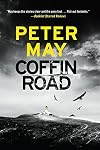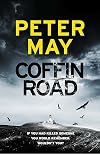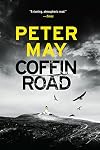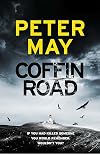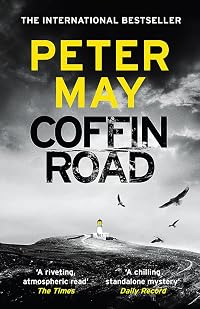
Coffin Road
by Peter May
On This Page
Description
In the Outer Hebrides of Scotland, a man washes up on a deserted beach with no knowledge of who he is or how he got there, while homicide detective George Gunn makes the ocean crossing to a remote lighthouse on a rock in the North Atlantic to investigate a brutal murder.Tags
Recommendations

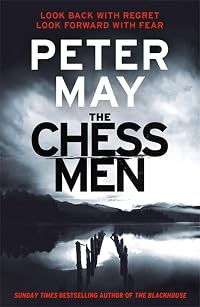

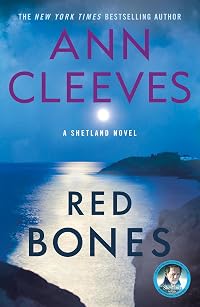
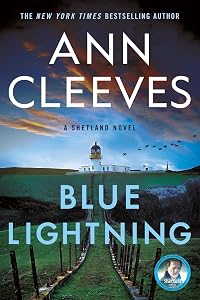
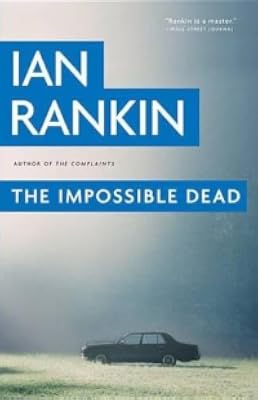


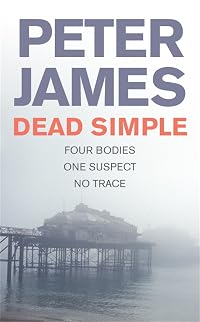

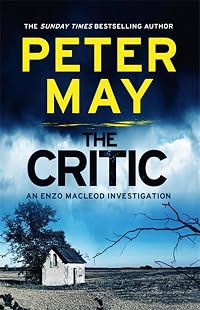

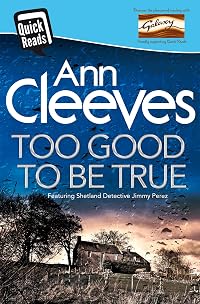
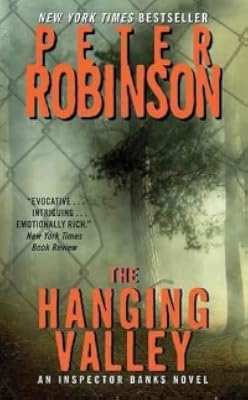


Member Recommendations
Member Reviews
This is my first Peter May book and I'm delighted to have found an "I want to read everything they've written" author.
His language has the satisfying complexity or a good wine. His plot is tightly coiled and intriguing. His characters have depth and authenticity. And it's all narrated by Peter Forbes in a Scottish accent that would delight the ear if it was reading a shopping list aloud.
Memory is a strong theme in the novel, which opens with a first person account of our main character returning to consciousness on a beach, soaked to the skin, wearing a life-jacket and without any memory of who he is or how he came to be on the beach. Peter May does a wonderful job of exploring how closely interwoven memory and identity are.He shows how show more our actions are driven by our sense of the kind of person we are. Not knowing the kind of person we are makes it hard to trust our own judgement.
The first part of the book centres around the main character's attempt to discover the kind of man he is, or at least, the kind of man he used to be. It quickly becomes clear that our main character is not a straightforward man. He is living off the grid in a house that provides almost no evidence of who he is and why he is there. As he investigates himself, his unease about what he is going to find and his lack of knowledge about who he can trust, create a growing tension, verging on paranoia. Setting all this in the desolate beauty of the wind-blown, sparsely populated Isle of Harris, adds to the sense of dislocation and isolation that the main character experiences.
If the whole novel had been like this, I would have been well pleased but Peter May is much more ambitious than that and cranks the book up a notch. He spins off a second strand to the story, centred around a teenage girl, who, after the apparent suicide of her father two years earlier, has become rebellious, restless and addicted to transforming herself, through tattoos and piercings, into someone far different from the cherished little girl her father left behind.
Clearly the two story lines are related but Peter May keeps us guessing about the details as the young woman and the man without a memory work independently on sorting through the deceptions and the secret truths that connect them.
The pacing is perfect, the plot is credible and the ending did not disappoint. This is a fine, well written, mystery that captured my imagination with great language and a perfect pace but held it with realistic characters and a strong plot.
I enjoyed "Coffin Road" so much that my TBR shelf has grown by three as I've added Peter May's "Lewis Trilogy" to it.
Click on the SoundCloud link below to hear Peter Forbes narrating "Coffin Road"
https://soundcloud.com/quercusbooks/coffin-road show less
His language has the satisfying complexity or a good wine. His plot is tightly coiled and intriguing. His characters have depth and authenticity. And it's all narrated by Peter Forbes in a Scottish accent that would delight the ear if it was reading a shopping list aloud.
Memory is a strong theme in the novel, which opens with a first person account of our main character returning to consciousness on a beach, soaked to the skin, wearing a life-jacket and without any memory of who he is or how he came to be on the beach. Peter May does a wonderful job of exploring how closely interwoven memory and identity are.He shows how show more our actions are driven by our sense of the kind of person we are. Not knowing the kind of person we are makes it hard to trust our own judgement.
The first part of the book centres around the main character's attempt to discover the kind of man he is, or at least, the kind of man he used to be. It quickly becomes clear that our main character is not a straightforward man. He is living off the grid in a house that provides almost no evidence of who he is and why he is there. As he investigates himself, his unease about what he is going to find and his lack of knowledge about who he can trust, create a growing tension, verging on paranoia. Setting all this in the desolate beauty of the wind-blown, sparsely populated Isle of Harris, adds to the sense of dislocation and isolation that the main character experiences.
If the whole novel had been like this, I would have been well pleased but Peter May is much more ambitious than that and cranks the book up a notch. He spins off a second strand to the story, centred around a teenage girl, who, after the apparent suicide of her father two years earlier, has become rebellious, restless and addicted to transforming herself, through tattoos and piercings, into someone far different from the cherished little girl her father left behind.
Clearly the two story lines are related but Peter May keeps us guessing about the details as the young woman and the man without a memory work independently on sorting through the deceptions and the secret truths that connect them.
The pacing is perfect, the plot is credible and the ending did not disappoint. This is a fine, well written, mystery that captured my imagination with great language and a perfect pace but held it with realistic characters and a strong plot.
I enjoyed "Coffin Road" so much that my TBR shelf has grown by three as I've added Peter May's "Lewis Trilogy" to it.
Click on the SoundCloud link below to hear Peter Forbes narrating "Coffin Road"
https://soundcloud.com/quercusbooks/coffin-road show less
Peter May is a genius at thrusting his readers right into the action. When a battered and bruised man washes up on a beach, wearing a life jacket, you know you can't stop reading. What makes it even more compelling is that the man doesn't know who he is or where he's been. Spotted almost immediately by a neighbor, he quickly establishes that his name is Neal McLean and he lives on the Isle of Harris in the Outer Hebrides.
He discovers he owns a dog named Bran, and has apparently been masquerading as a novelist. When he finds his laptop and opens it up to his novel, he finds each and every page blank. When he discovers a dead body in the lighthouse, he starts to believe he may be the murderer. In a parallel story line we meet Edinburgh show more teenager, Karen, who is angry about her father's recent suicide and alienated from her mother. We know that somehow Neal's situation will intersect with Karen's story.
The Coffin Road, refers to a route used in the past to carry the dead from the rocky east coast of the Isle of Harris over to the west side for burial in the deeper soil there. May has such a skill for incorporating the history of the Hebrides along with the people of the island to bring the reader a very original story, incorporating a relevant theme. The story itself is very complex but satisfying in that each answer is not obvious from the beginning. My favorite books from Peter May are his Blackhouse Trilogy, but Coffin Road is a very close second and his best standalone by far. show less
He discovers he owns a dog named Bran, and has apparently been masquerading as a novelist. When he finds his laptop and opens it up to his novel, he finds each and every page blank. When he discovers a dead body in the lighthouse, he starts to believe he may be the murderer. In a parallel story line we meet Edinburgh show more teenager, Karen, who is angry about her father's recent suicide and alienated from her mother. We know that somehow Neal's situation will intersect with Karen's story.
The Coffin Road, refers to a route used in the past to carry the dead from the rocky east coast of the Isle of Harris over to the west side for burial in the deeper soil there. May has such a skill for incorporating the history of the Hebrides along with the people of the island to bring the reader a very original story, incorporating a relevant theme. The story itself is very complex but satisfying in that each answer is not obvious from the beginning. My favorite books from Peter May are his Blackhouse Trilogy, but Coffin Road is a very close second and his best standalone by far. show less
Coffin Road by Peter May
A cliché it may be, but I genuinely begrudged putting this down when I had to go and do other things.
As is often the case with Peter May’s novels, there are two strands to this story and the narrative switches back and forth between them. Firstly, there is Neal McLean who washes up on a beach on the Isle of Harris in the Outer Hebrides, unable to remember who he is or how he got there but with a nagging sense that something terrible has happened. He quickly learns that he is a novelist who has been living on the island for 18 months while writing a book about an old mystery connected to one of the nearby islands, and that he is having an affair with a married woman, Sally Harrison, who lives in one of the show more cottages near his own. As he tries to piece together his past and re-learn who he is, it becomes clear to him that, whoever he is and whatever his reason for being on Harris, he has been lying about it to those around him. This does nothing to alleviate his sense of unease.
Seventeen year old Karen is haunted by the suicide of her scientist father and wracked with guilt for her own behaviour before it. When she learns that her father might not be dead after all, she sets out to find him, unaware of the danger she is putting herself and others in.
Slowly the two stories come together, with a very ‘edge of the seat’ climax. Along the way there are many twists and turns and there were quite a few times when I thought I had it all worked out only to be proved wrong. This is something that May is very good at.
The descriptions too are something that those familiar with Peter May’s work will have come to expect, with much of the believability of the narrative being due to the attention to detail. May obviously knows the landscape well and he skilfully relays that knowledge to the reader in, at times, quite a poetic way.
The narrative switches between first person, present tense for those chapters involving the main character, Neal McLean to third person, past tense for the other chapters. This is not to everybody’s taste but I didn’t find it particularly noticeable after a while.
Finally, it is worth mentioning that the plot also deals with the subject of declining bee population, bee colony collapse and the use of neonicotinoids. This aspect of the story is well researched and quite interesting in its own right.
I really can’t recommend this one enough. show less
A cliché it may be, but I genuinely begrudged putting this down when I had to go and do other things.
As is often the case with Peter May’s novels, there are two strands to this story and the narrative switches back and forth between them. Firstly, there is Neal McLean who washes up on a beach on the Isle of Harris in the Outer Hebrides, unable to remember who he is or how he got there but with a nagging sense that something terrible has happened. He quickly learns that he is a novelist who has been living on the island for 18 months while writing a book about an old mystery connected to one of the nearby islands, and that he is having an affair with a married woman, Sally Harrison, who lives in one of the show more cottages near his own. As he tries to piece together his past and re-learn who he is, it becomes clear to him that, whoever he is and whatever his reason for being on Harris, he has been lying about it to those around him. This does nothing to alleviate his sense of unease.
Seventeen year old Karen is haunted by the suicide of her scientist father and wracked with guilt for her own behaviour before it. When she learns that her father might not be dead after all, she sets out to find him, unaware of the danger she is putting herself and others in.
Slowly the two stories come together, with a very ‘edge of the seat’ climax. Along the way there are many twists and turns and there were quite a few times when I thought I had it all worked out only to be proved wrong. This is something that May is very good at.
The descriptions too are something that those familiar with Peter May’s work will have come to expect, with much of the believability of the narrative being due to the attention to detail. May obviously knows the landscape well and he skilfully relays that knowledge to the reader in, at times, quite a poetic way.
The narrative switches between first person, present tense for those chapters involving the main character, Neal McLean to third person, past tense for the other chapters. This is not to everybody’s taste but I didn’t find it particularly noticeable after a while.
Finally, it is worth mentioning that the plot also deals with the subject of declining bee population, bee colony collapse and the use of neonicotinoids. This aspect of the story is well researched and quite interesting in its own right.
I really can’t recommend this one enough. show less
This is the first Peter May book that I have read, although his books have always appealed to me, especially those, like this one, set on a Scottish Island. As soon as the book starts we meet a man who has lost his memory and all he can remember is being on the beach, wet, injured and confused. We follow him as he starts to try and find out who he is. A dead man on a nearby island brings policeman, George Gunn, into the mix along with a teenage girl who is looking for the truth about her father's suicide.
I really enjoyed this book, as the story unfolded and I found out what was happening at the same time as the main characters. The backdrop of the Isle of Harris is beautifully described and made me want to visit. It's a really show more well-plotted storyline and the second that I have read recently where the decline of bees forms a large part of it. A very current and worrying issue! I found this to be a fast-paced and interesting thriller and I will certainly be reading more by this author. show less
I really enjoyed this book, as the story unfolded and I found out what was happening at the same time as the main characters. The backdrop of the Isle of Harris is beautifully described and made me want to visit. It's a really show more well-plotted storyline and the second that I have read recently where the decline of bees forms a large part of it. A very current and worrying issue! I found this to be a fast-paced and interesting thriller and I will certainly be reading more by this author. show less
[Coffin Road] by Peter May (Standalone)
4.5 Stars
From The Book:
Peter May spins a tale about three disparate cases that may or may not be linked...
On the remote Isle of Harris in Scotland's Outer Hebrides, a man washes up on a deserted beach, hypothermic and completely disoriented. He has no idea who he is or how he got there. The only clue to his condition is a map of the island showing a desolate, ancient path called the Coffin Road. With a sense of dread and no clear idea what lies at the other end, he knows he must follow the trail if he has any hope of discovering his identity.
Meanwhile, homicide detective George Gunn makes the rough ocean crossing to a remote, sea-battered lighthouse on a rock in the northern Atlantic, twenty miles show more west of the Outer Hebrides, to investigate a brutal murder. Despite its isolation, the tiny island has seen its share of tragedy: more than a century earlier, three lighthouse keepers disappeared, never to be seen or heard from again. And now there is a new tragedy, and Gunn must figure out what happened.
At the same time, a teenage girl lies in her Edinburgh bedroom, desperate to discover the truth about her father's death. Two years after the discovery of the pioneering scientist's suicide note, Karen Fleming still cannot accept that her father would willingly abandon her. And the more she discovers about the nature of his research, the more she suspects that suicide had nothing to do with it.
My Views:
Peter May shows an amazing ability to create images of physical surroundings, and dramatic weather conditions verbally, making the reader feel that they are actually a part of the story. While I am a real fan of graphic murder mysteries Peter May's books manage to portray a detailed murder mystery without the graphic violence. That is indeed a rarity and an ability that attracts his books to both groups of mystery readers. I really enjoyed this novel and there is something very satisfying about reading one of one's favorite authors and knowing that you are not going to be let down. show less
4.5 Stars
From The Book:
Peter May spins a tale about three disparate cases that may or may not be linked...
On the remote Isle of Harris in Scotland's Outer Hebrides, a man washes up on a deserted beach, hypothermic and completely disoriented. He has no idea who he is or how he got there. The only clue to his condition is a map of the island showing a desolate, ancient path called the Coffin Road. With a sense of dread and no clear idea what lies at the other end, he knows he must follow the trail if he has any hope of discovering his identity.
Meanwhile, homicide detective George Gunn makes the rough ocean crossing to a remote, sea-battered lighthouse on a rock in the northern Atlantic, twenty miles show more west of the Outer Hebrides, to investigate a brutal murder. Despite its isolation, the tiny island has seen its share of tragedy: more than a century earlier, three lighthouse keepers disappeared, never to be seen or heard from again. And now there is a new tragedy, and Gunn must figure out what happened.
At the same time, a teenage girl lies in her Edinburgh bedroom, desperate to discover the truth about her father's death. Two years after the discovery of the pioneering scientist's suicide note, Karen Fleming still cannot accept that her father would willingly abandon her. And the more she discovers about the nature of his research, the more she suspects that suicide had nothing to do with it.
My Views:
Peter May shows an amazing ability to create images of physical surroundings, and dramatic weather conditions verbally, making the reader feel that they are actually a part of the story. While I am a real fan of graphic murder mysteries Peter May's books manage to portray a detailed murder mystery without the graphic violence. That is indeed a rarity and an ability that attracts his books to both groups of mystery readers. I really enjoyed this novel and there is something very satisfying about reading one of one's favorite authors and knowing that you are not going to be let down. show less
Interesting thriller but one of those books that you can read only once because twist is rather specific that to enjoy the book for the second time you truly need to forget all about it.
Story is about the man who finds himself in the Hebrides on the sea shore wearing all the equipment for sailing but without boat, soaking wet and without any memories. We follow him for a majority of the book as he tries to find out who he is and as he tries to find the proof that he is not some sort of the bad guy - although his gut tells him he just might be a bad guy.
I wont go into details because it would spoil the read for others. I have to admit author truly loves Scotland and Hebrides, untouched nature and paints very vivid pictures of the rugged show more terrain, mighty mountains, sea-side and tricky mountain tracks. Local people - almost all by definition bind to the sea - are not forgotten and play a central role in the book (although Gaelic names took some time for me to be able to read them).
Author also manages to lead the reader down the cul-de-sac's and leave them wondering what exactly is going on. I truly enjoyed this and had a few aha! moments as story progressed. I am definitely looking for more books by this author.
What I did not quite like was ending that seemed a little bit too rushed to me - after all the buildup, all the tension suddenly it was over and you might wonder what was all the fuss about. I understand that some people are very smart but this sets the bar way higher over any characters in any book I read so far.
All in all good thriller. Recommended. show less
Story is about the man who finds himself in the Hebrides on the sea shore wearing all the equipment for sailing but without boat, soaking wet and without any memories. We follow him for a majority of the book as he tries to find out who he is and as he tries to find the proof that he is not some sort of the bad guy - although his gut tells him he just might be a bad guy.
I wont go into details because it would spoil the read for others. I have to admit author truly loves Scotland and Hebrides, untouched nature and paints very vivid pictures of the rugged show more terrain, mighty mountains, sea-side and tricky mountain tracks. Local people - almost all by definition bind to the sea - are not forgotten and play a central role in the book (although Gaelic names took some time for me to be able to read them).
Author also manages to lead the reader down the cul-de-sac's and leave them wondering what exactly is going on. I truly enjoyed this and had a few aha! moments as story progressed. I am definitely looking for more books by this author.
What I did not quite like was ending that seemed a little bit too rushed to me - after all the buildup, all the tension suddenly it was over and you might wonder what was all the fuss about. I understand that some people are very smart but this sets the bar way higher over any characters in any book I read so far.
All in all good thriller. Recommended. show less
This mystery was fairly predictable albeit readable, mostly because of the descriptions of the sea and islands in the Outer Hebrides. Three stories are intertwined--amnesia in one, a girl whose father committed suicide leaving her desperate in another, and a police officer trying to make sense of a murder out on a lighthouse island. Bees and a pesticide play a major role and once introduced, it was clear what was going on and who the major villain was.
Members
- Recently Added By
Published Reviews
ThingScore 75
May conjures a clever, twisty eco-thriller in the mode of Le Carré’s The Constant Gardener. Selective amnesia is hard to render convincingly – your sense as a reader is usually that it has more to do with plotting convenience than neurology – but May just about pulls it off, while making the atmospheric most of his isolated locations.
added by vancouverdeb
Lists

Books Read in 2017
4,249 works; 130 members

Books Read in 2019
4,052 works; 110 members

Books Read in 2018
4,360 works; 110 members
Talk Discussions
Past Discussions
Chat in Book Discussion - Coffin Road by Peter May (May 2017)
Author Information

37+ Works 12,218 Members
Some Editions
Awards and Honors
Notable Lists
Common Knowledge
- Canonical title
- Coffin Road
- Original title
- Coffin Road
- Original publication date
- 2016-01-14
- Important places
- Hebrides, Scotland, UK; Na h-Eileanan Siar, Scotland, UK
- Original language*
- Anglais (Royaume-Uni) (Royaume-Uni)
*Some information comes from Common Knowledge in other languages. Click "Edit" for more information.
Classifications
Statistics
- Members
- 655
- Popularity
- 44,182
- Reviews
- 36
- Rating
- (3.81)
- Languages
- 11 — Czech, English, French, German, Italian, Norwegian, Polish, Portuguese (Brazil), Portuguese (Portugal), Croatian, Swedish
- Media
- Paper, Audiobook, Ebook
- ISBNs
- 34
- ASINs
- 12