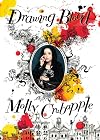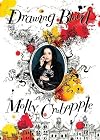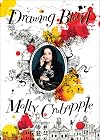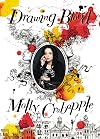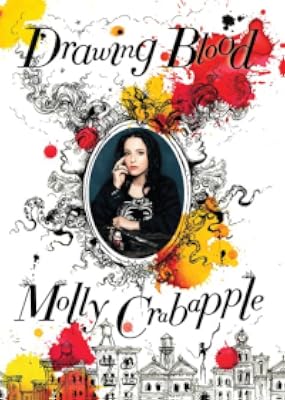
Drawing Blood
by Molly Crabapple
On This Page
Description
The underground artist and journalist presents a memoir of her years between September 11 and the Occupy movement in New York City to discuss the impact of historical events on her work and her decision to become a witness journalist. "In language that is fresh, visceral, and deeply moving--and illustrations that are irreverent and gorgeous--here is a memoir that will change the way you think about art, sex, politics, and survival in our times. From a young age, Molly Crabapple had the eye show more of an artist and the spirit of a radical. After a restless childhood on New York's Long Island, she left America to see Europe and the Near East, a young artist plunging into unfamiliar cultures, notebook always in hand, drawing what she observed. Returning to New York City just before 9/11 to study art, she posed nude for sketch artists and sketchy photographers, danced burlesque, and modeled for the world-famous Suicide Girls. Frustrated with the academy and the conventional art world, she eventually landed a post as house artist at Simon Hammerstein's legendary nightclub The Box, the epicenter of decadent Manhattan nightlife before the financial crisis of 2008. There she had a ringside seat for the pitched battle between the bankers of Wall Street and the entertainers who walked among them--a scandalous, drug-fueled circus of mutual exploitation that she captured in her tart and knowing illustrations. Then, after the crash, a wave of protest movements--from student demonstrations in London to Occupy Wall Street in her own backyard--led Molly to turn her talents to a new form of witness journalism, reporting from places such as Guantánamo, Syria, Rikers Island, and the labor camps of Abu Dhabi. Using both words and artwork to shed light on the darker corners of the American empire, she has swiftly become one of the most original and galvanizing voices on the cultural stage. Now, with the same blend of honesty, fierce insight, and indelible imagery that is her signature, Molly offers her own story: an unforgettable memoir of artistic exploration, political awakening, and personal transformation."--Book jacket. show lessTags
Recommendations




Member Reviews
I was reading this in ARC form and then put on hold until I could have the finished copy with the color illustrations—that really made so much of a difference, and I'm glad I did. It was a lot of fun, and it puts to rest the idea that someone so young couldn't possibly have a memoir in them—Crabapple's artistic journey, and her process of radicalization, are really interesting and she writes them out well. It's good to follow someone else's journey when they actually go places, either physically or interiorly—it becomes a travelogue in the best sense of the word. Plus the art is great to see, and has been used really nicely within the text. Good job, and I'm looking forward to the next installment in another 20 years or so.
Whilst browsing in a charity shop, my eye was caught by the cover of ‘Drawing Blood’ (presumably a reference to the Poppy Z. Brite vampire novel of the same name?). It is a very striking cover and I’d heard of Molly Crabapple on the internet, so I decided to give it a try. The book is a memoir, with sketches and paintings sprinkled throughout. I like Crabapple’s art style, which has an agreeable neo-Victorian way about it. Her confessional prose style, however, I was less comfortable with. Reading the book felt voyeuristic at times, although I guess that is always a risk of reading memoirs. (Now that I think about it, that’s probably why I don’t read a great many of them.) I suppose the point is that Crabapple has made her show more living baring her body and soul; my discomfort is a judgement on me, not her. She is an interesting writer and her story illuminates the economics of art in the 21st century. The most memorable parts concern the 2011 Occupy protests, which erupted while she was employed painting murals in a nightclub frequented by the 1%. Her life in the arty demimonde of New York and elsewhere is also a rather fascinating case study of internet fame.
EDIT: To be fair, I might have been less guarded about this book if I hadn't read it when I should really have been doing a job application. Thus guilt lurked at the back of my mind throughout and Molly Crabapple's colourful arty world seemed profoundly alien. Procrastination by reading only works if the book manages to blot out everything else in your head. show less
EDIT: To be fair, I might have been less guarded about this book if I hadn't read it when I should really have been doing a job application. Thus guilt lurked at the back of my mind throughout and Molly Crabapple's colourful arty world seemed profoundly alien. Procrastination by reading only works if the book manages to blot out everything else in your head. show less
This book is more than just a memoir of a brilliant artist. With Molly's words and paintings, you travel with her everywhere she goes and see how she became a great artist and writer she is right now. Her honestly and telling everything as brutal and beautiful as it was, makes this book really special.
If you ever saw one of Molly's paintings, illustrations, articles or tweets; this is a must read for you.
If you ever saw one of Molly's paintings, illustrations, articles or tweets; this is a must read for you.
I gave up on page 170. There's something about her tone that just rubbed me the wrong way. Possibly internalized misogyny? While she talked about not judging sex workers or women, there was a lot of objectification in the way she described things. She also described several relationships with women where she describes their flaws in vicious detail. Her descriptions of men, even when they're objectively awful, seem to have a lot more compassion. Separately, there were a lot of laundry lists of people who were at places that I found very boring. I've only heard of a handful of them, but even if I knew them all I think I wouldn't have been engaged.
Review with pictures from the book at https://clsiewert.wordpress.com/2016/03/27/drawing-blood-by-molly-crabapple-mayb...
I never know how to rate autobiographies because I feel as if I’m passing judgement on the person. Is that why people read them? I don’t know. For myself, I was attracted to this book by the interesting connection between drawing and journalism, as well as the idea of an illustrated autobiography. I was strongly reminded me of a dear friend who is an artist and writer, and the letters and chapbooks we created filled with beauty in images and words.
“Unlike photography, though, visual art has no pretense of objectivity. It is joyfully, defiantly subjective. It’s truth is individual.”
The summary: The book show more description talks about “the time period between 9/11 and Occupy Wall Street” which is grossly, but not specifically accurate, in that it makes as it sound as though the time period was framed by activism and not just numbers. And that isn’t quite true either: beginning with late childhood, it mentions her parents and divorce, her challenges in high school, her first love. Frustrations with being young and rebellious. After graduation, looking for adventure, she heads to France and the Middle East. She returns at eighteen to begin art classes at the Fashion Institute of Technology. Having a hard time making ends meet, she takes Craiglist jobs for nude modeling for Men With Cameras. From there, it is her exploration into the world of burlesque as she tries to manage classes and find housing. This lasts some time, punctuated by a trip or two to Europe and the Middle East where she begins to understand her vulnerability as a single female traveler and meets men who help her. Eventually she meets a man, grows increasingly frustrated with school, and expands her work with burlesque into running shows. She has an abortion. 9/11 is just a couple of pages; likewise Hurricane Sandy. She networks her way into an exclusive nightclub and into galleries. We meet her friends. She travels to London. In her late twenties, she starts to become politicized and stops by Occupy Wall Street. She joins a journalist and becomes more political in her art.
“So much of my life was spent chasing money. It shaped my friendships, distorted my thinking.”
The analysis: I loved the illustrations that accompanied the text. Although there was limited color–red, orange, yellow; quite appropriate for a firecracker personality–I loved the detail and the skill. I enjoyed reading her stories and then seeing a drawing that illustrated the image, whether thought, building or portrait.
“In their complexity, I wanted the paintings to resemble the bits of dreams that cling to your eyelids when you wake.”
Alas, Crabapple has a way to perfect writing skill. Much like my summary, much of the book reads like “I did this and then I did that with so-and-so.” Her personality is kept locked away, with very little information about her thinking process or the intimacies of her experience. And I don’t mean sex; Crabapple has mastered the art of displaying what seems private without sharing intimacy. Her passion comes through when talking about drawing, which sadly, is not often enough. As she becomes more politicized, she talks more about composition and what it represents to her. But I wish she had shared more of her artistic explorations. At one point early on, she refers to her style in a derogatory way, which kind of surprised me–I didn’t really feel I had been given a foundation for it, and there is evident skill in her style. In another, she mentions in an offhand manner how she can’t draw a straight line. She doesn’t need to, but again, I wanted to know where those thoughts came from. I would have liked to hear more about her process, about how her style worked–or not–with F.I.T.’s program, and what she actually learned from Fred, the lover who taught her so much. Still, mention of art and imagery twines through the book, and those were always the parts that shone:
“We live in the most image saturated age in history, and a thousand cell phone pics mark the occasion whenever a cop cracks a protester ‘s skull, but I wanted to prove that artists had a reason to leave the studio–to show that illustration had something to say.”
Despite the hype, her politicizing happens quite late in the book. Although she falls into nude modeling for quick cash and mentions safety issues, it doesn’t seem to impact behavior or consciousness. Eventually, there’s a sort of burgeoning feminism out of a website Suicide Girls (an “adult lifestyle brand”), but it is more about money-making and again, less about connections. She mentions other girls’ names but admit she didn’t know any of them well. In fact, throughout her recollections, it’s evident that there’s a lot of jealously and emulation of more ‘successful’ women, which is kind of the antithesis of feminist consciousness. Work at The Box, an exclusive nightclub, begins a time period of more class consciousness, but not enough to eschew $900 shoes when she gets first commission, so take it for what its worth. Occupy first becomes something to participate in and somewhat support. A change in economic status becomes casually dropped into conversation, as in “That night I was in London, watching Twitter for the inevitable police attack,” so it’s hard to view her as a hardcore member of the movement. And in fairness, she never claims she was–although again the book blurb certainly seems to paint her as such (from the Rolling Stone, no less).
Honestly, I wouldn’t call it a waste of time, but I’d hesitate to recommend it to most people. Her writing lacks more than surface insight. For instance: “by 22, I was disillusioned with modeling and exhausted from the late nights at burlesque clubs.” Fair enough, but she’s quite recast her MWC work from what she termed it earlier–easy money–into something to be ‘disillusioned’ with, and the burlesque work was done for love of the act. It’s most pronounced during Occupy, such as when she criticizes “Even the liberal media figures many protesters had loved during the 2008 election turned against us.” Occupy was extremely problematic by the end, so it's hard to cast anyone who criticized it as "turning against us." It’s a theme that echoes, and maybe it’s one we all engage in: events are re-cast in a thoughtful, purposeful glow, instead of a self-promotional one. When she discusses lay-offs at The Box during the Wall Street Crash: “And it was embodied in this empty night club. After the crash, what would happen to the human luxury goods who worked here, we sparklers illuminating the face of the destroyer?” This is from a place where performers shot fireworks out of their asses and farted Beethoven, so I’ll just assume she meant ‘sparkler’ literally. I’m not saying such work isn’t counter-cultural, but just how much activism in your art are you claiming here? There is often a narrow line between being shocking to be noticed or create a persona, and being shocking to make a statement that causes a jolt in thinking, but that’s a discussion that is sadly missing.
She has a talent for self-promotion, and there’s a ton of name-dropping, although I’m not sure who it is for as much is NYC based. Interestingly, there’s a scarcity of information about those that she remains close to–her family and her lovers. If you want to know more about -isms and art, almost any issue/article of Bitch will give more insight with stronger analysis. However, her art is remarkable, so if it captivates, it might be worth checking out her other work. The first two chapters are available on-line and provide a taste of how it reads.
Another book that fusses the rating system: 3 1/2 stars for the art, 3 stars for the writing, 2 1/2 stars for the insight. show less
I never know how to rate autobiographies because I feel as if I’m passing judgement on the person. Is that why people read them? I don’t know. For myself, I was attracted to this book by the interesting connection between drawing and journalism, as well as the idea of an illustrated autobiography. I was strongly reminded me of a dear friend who is an artist and writer, and the letters and chapbooks we created filled with beauty in images and words.
“Unlike photography, though, visual art has no pretense of objectivity. It is joyfully, defiantly subjective. It’s truth is individual.”
The summary: The book show more description talks about “the time period between 9/11 and Occupy Wall Street” which is grossly, but not specifically accurate, in that it makes as it sound as though the time period was framed by activism and not just numbers. And that isn’t quite true either: beginning with late childhood, it mentions her parents and divorce, her challenges in high school, her first love. Frustrations with being young and rebellious. After graduation, looking for adventure, she heads to France and the Middle East. She returns at eighteen to begin art classes at the Fashion Institute of Technology. Having a hard time making ends meet, she takes Craiglist jobs for nude modeling for Men With Cameras. From there, it is her exploration into the world of burlesque as she tries to manage classes and find housing. This lasts some time, punctuated by a trip or two to Europe and the Middle East where she begins to understand her vulnerability as a single female traveler and meets men who help her. Eventually she meets a man, grows increasingly frustrated with school, and expands her work with burlesque into running shows. She has an abortion. 9/11 is just a couple of pages; likewise Hurricane Sandy. She networks her way into an exclusive nightclub and into galleries. We meet her friends. She travels to London. In her late twenties, she starts to become politicized and stops by Occupy Wall Street. She joins a journalist and becomes more political in her art.
“So much of my life was spent chasing money. It shaped my friendships, distorted my thinking.”
The analysis: I loved the illustrations that accompanied the text. Although there was limited color–red, orange, yellow; quite appropriate for a firecracker personality–I loved the detail and the skill. I enjoyed reading her stories and then seeing a drawing that illustrated the image, whether thought, building or portrait.
“In their complexity, I wanted the paintings to resemble the bits of dreams that cling to your eyelids when you wake.”
Alas, Crabapple has a way to perfect writing skill. Much like my summary, much of the book reads like “I did this and then I did that with so-and-so.” Her personality is kept locked away, with very little information about her thinking process or the intimacies of her experience. And I don’t mean sex; Crabapple has mastered the art of displaying what seems private without sharing intimacy. Her passion comes through when talking about drawing, which sadly, is not often enough. As she becomes more politicized, she talks more about composition and what it represents to her. But I wish she had shared more of her artistic explorations. At one point early on, she refers to her style in a derogatory way, which kind of surprised me–I didn’t really feel I had been given a foundation for it, and there is evident skill in her style. In another, she mentions in an offhand manner how she can’t draw a straight line. She doesn’t need to, but again, I wanted to know where those thoughts came from. I would have liked to hear more about her process, about how her style worked–or not–with F.I.T.’s program, and what she actually learned from Fred, the lover who taught her so much. Still, mention of art and imagery twines through the book, and those were always the parts that shone:
“We live in the most image saturated age in history, and a thousand cell phone pics mark the occasion whenever a cop cracks a protester ‘s skull, but I wanted to prove that artists had a reason to leave the studio–to show that illustration had something to say.”
Despite the hype, her politicizing happens quite late in the book. Although she falls into nude modeling for quick cash and mentions safety issues, it doesn’t seem to impact behavior or consciousness. Eventually, there’s a sort of burgeoning feminism out of a website Suicide Girls (an “adult lifestyle brand”), but it is more about money-making and again, less about connections. She mentions other girls’ names but admit she didn’t know any of them well. In fact, throughout her recollections, it’s evident that there’s a lot of jealously and emulation of more ‘successful’ women, which is kind of the antithesis of feminist consciousness. Work at The Box, an exclusive nightclub, begins a time period of more class consciousness, but not enough to eschew $900 shoes when she gets first commission, so take it for what its worth. Occupy first becomes something to participate in and somewhat support. A change in economic status becomes casually dropped into conversation, as in “That night I was in London, watching Twitter for the inevitable police attack,” so it’s hard to view her as a hardcore member of the movement. And in fairness, she never claims she was–although again the book blurb certainly seems to paint her as such (from the Rolling Stone, no less).
Honestly, I wouldn’t call it a waste of time, but I’d hesitate to recommend it to most people. Her writing lacks more than surface insight. For instance: “by 22, I was disillusioned with modeling and exhausted from the late nights at burlesque clubs.” Fair enough, but she’s quite recast her MWC work from what she termed it earlier–easy money–into something to be ‘disillusioned’ with, and the burlesque work was done for love of the act. It’s most pronounced during Occupy, such as when she criticizes “Even the liberal media figures many protesters had loved during the 2008 election turned against us.” Occupy was extremely problematic by the end, so it's hard to cast anyone who criticized it as "turning against us." It’s a theme that echoes, and maybe it’s one we all engage in: events are re-cast in a thoughtful, purposeful glow, instead of a self-promotional one. When she discusses lay-offs at The Box during the Wall Street Crash: “And it was embodied in this empty night club. After the crash, what would happen to the human luxury goods who worked here, we sparklers illuminating the face of the destroyer?” This is from a place where performers shot fireworks out of their asses and farted Beethoven, so I’ll just assume she meant ‘sparkler’ literally. I’m not saying such work isn’t counter-cultural, but just how much activism in your art are you claiming here? There is often a narrow line between being shocking to be noticed or create a persona, and being shocking to make a statement that causes a jolt in thinking, but that’s a discussion that is sadly missing.
She has a talent for self-promotion, and there’s a ton of name-dropping, although I’m not sure who it is for as much is NYC based. Interestingly, there’s a scarcity of information about those that she remains close to–her family and her lovers. If you want to know more about -isms and art, almost any issue/article of Bitch will give more insight with stronger analysis. However, her art is remarkable, so if it captivates, it might be worth checking out her other work. The first two chapters are available on-line and provide a taste of how it reads.
Another book that fusses the rating system: 3 1/2 stars for the art, 3 stars for the writing, 2 1/2 stars for the insight. show less
I had only heard of Crabapple's book through "The Great Discontent." I had never heard of her previously, but when I saw her memoir at the library, I immediately checked it out. She really lets herself have it. She is brutally honest about herself and it made me really want to get to know more about her. She also includes a lot of her art work in the book (with full color). (I hadn't been reading for pleasure very long, her artwork made the chapters seem shorter - which helped my mind out.) After reading this, I became a huge fan. If I'd already known about her, this book would have just made me have more respect for her and her work in general. I would definitely recommend this to anyone.
Ratings
Members
- Recently Added By
Lists

Best Biographies, Autobiographies and Memoirs
465 works; 160 members

Just Make Art
17 works; 1 member

Women's History Month: Suggested Reads
63 works; 6 members

Best Biographies of Notable Women
279 works; 101 members

Reading Glasses Podcast
410 works; 3 members
Author Information

9+ Works 479 Members
Awards and Honors
Awards
Common Knowledge
- People/Characters
- Molly Crabapple
- Dedication
- To Fred
- Last words
- (Click to show. Warning: May contain spoilers.)I'd make it mine.
- Publisher's editor
- Morgan, Cal
Classifications
- Genres
- Nonfiction, Biography & Memoir, Art & Design, General Nonfiction
- DDC/MDS
- 741.6092 — Arts & recreation Drawing & decorative arts Drawing Graphic design, illustration, commercial art History, geographic treatment, biography Biography
- LCC
- NC975.5 .C66 .A2 — Fine Arts Drawing. Design. Illustration Drawing. Design. Illustration Illustration
- BISAC
Statistics
- Members
- 167
- Popularity
- 195,340
- Reviews
- 6
- Rating
- (4.17)
- Languages
- English
- Media
- Paper, Audiobook, Ebook
- ISBNs
- 7
- ASINs
- 2