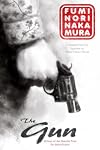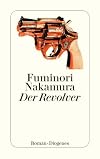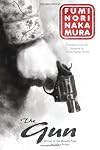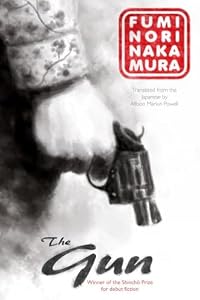
The Gun
by Fuminori Nakamura
On This Page
Description
"On a nighttime walk along a Tokyo riverbank, a young man named Nishikawa stumbles on a dead body, besides which is lying a gun. From the moment Nishikawa makes the decision to take the gun, the world around him blurs. Knowing he possesses the gun brings an intoxicating sense of purpose to his dull university life. But Nishikawa's personal entanglements are becoming unexpectedly complicated: he finds himself romantically involved with two women, while his biological father, whom he's never show more met, lies dying in a hospital. Through it all, he can't stop thinking about the gun--and the four bullets preloaded in its chamber. As he spirals into obsession, his focus is consumed by one idea: that possessing the gun is no longer enough--he must fire it"-- show lessTags
Recommendations

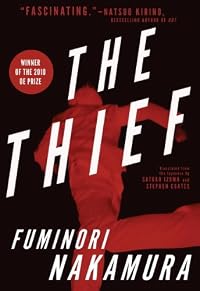


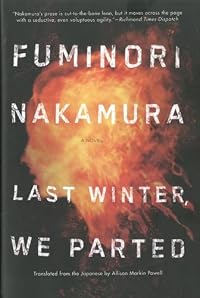












Member Reviews
Though it is a short book it took me several weeks gradually to read it.
An intensely visceral, psychological work it takes you inside places one doesn't usually go. Places that relate to all levels of obsession with mechanized violence. Places one doesn't want to go because though inexorable and detached from reality as they are, they are places we can find within or not far from all of us. The writer wields incredible technique with minimal resources. Whether he takes us to these places through control of sensation or we already occupy them makes little difference. The atmosphere is not one filled with tons of charachters or descriptive detail, but there is more than enough to achieve the effect the author wants us to experience. At show more first it all has the feel of morbid preoccupation and so one tends to want to write the main character/narrator off as being a marginal entity and the authors intentions likewise, but as we follow the progression we see more, whether we want to admit it, or not, people we know,and precoccupations which the larger populations, almost unanimously, claim indifference to. This novel is the description of a terrain which is not penetrated by crime entertainment or news. What we are usually given are tales that mirror the myths, legends and stories of old. We do not plumb the absence of feeling that pervades and the agony that results, the emotional mechanics that happen with component parts we all possess. We prefer absolute evil to be alien to our lives. show less
An intensely visceral, psychological work it takes you inside places one doesn't usually go. Places that relate to all levels of obsession with mechanized violence. Places one doesn't want to go because though inexorable and detached from reality as they are, they are places we can find within or not far from all of us. The writer wields incredible technique with minimal resources. Whether he takes us to these places through control of sensation or we already occupy them makes little difference. The atmosphere is not one filled with tons of charachters or descriptive detail, but there is more than enough to achieve the effect the author wants us to experience. At show more first it all has the feel of morbid preoccupation and so one tends to want to write the main character/narrator off as being a marginal entity and the authors intentions likewise, but as we follow the progression we see more, whether we want to admit it, or not, people we know,and precoccupations which the larger populations, almost unanimously, claim indifference to. This novel is the description of a terrain which is not penetrated by crime entertainment or news. What we are usually given are tales that mirror the myths, legends and stories of old. We do not plumb the absence of feeling that pervades and the agony that results, the emotional mechanics that happen with component parts we all possess. We prefer absolute evil to be alien to our lives. show less
It almost reads like an after-the-fact confession, the killer telling you everything that lead up to the killing, from finding the gun to executing his victim- an act he doesn't really plan so much as allows to happen. Read this way it's more interesting than simply the psychological portrait of a man obsessed, although it is that as well. Definitely not your usual crime novel though- just know that much before you start. For me it was a quick and ultimately satisfying read.
In a way, this was an interesting counterpoint or complement of the other book I read this week The Assassination Bureau, Ltd., which argued whether it is or is not ethical to kill "bad" people. This particular book asks if an object (in this case, the gun, an object whose objective is to kill) can cause someone to help it fulfill its purpose. Does having a gun drive you to kill? Guns are not prevalent in Japan like they are in the US, so the musing & weight of the story is based on a gun being a rare thing for an individual to possess. The story itself feels very remote & distant, reflecting the narrator, a sociopath who increasingly dissociates from his life, the people around him, society at large. The strong nihilism theme reflects show more books like Fight Club and Popular Hits of the Showa Era, imo.
While I can appreciate the gloomy topic, I didn't actually like the story very much. (Probably a good thing?) Worth reading for exploring the topic, but it's grim task to read it. show less
While I can appreciate the gloomy topic, I didn't actually like the story very much. (Probably a good thing?) Worth reading for exploring the topic, but it's grim task to read it. show less
The storytelling follows a satisfying if predictable noir arc; the real dazzle for me isn't in the storytelling, though, but in the grotesque details, meticulously observed and reported by the narrator, about both humans and animals that he observes in pain throughout the novel. This is Nakamura's first novel and it demonstrates a lot of self-control and natural talent for pacing.
I was intrigued by the beginning but didn't get further. Especially as Brian Nishii has a great audiobook voice. Apparently I've heard him before in The Heart Principle by Helen Hoang.
A Tokyo college student's discovery and eventual obsession with a stolen handgun awakens something dark inside him.
On a nighttime walk along a Tokyo riverbank, a young man named Nishikawa stumbles on a dead body, beside which lies a gun. From the moment Nishikawa decides to take the gun, the world around him blurs. Knowing he possesses the weapon brings an intoxicating sense of purpose to his dull university life. But soon Nishikawa's personal entanglements become unexpectedly complicated: he finds himself romantically involved with two women while his show more biological father, whom he's never met, lies dying in a hospital. Through it all, he can't stop thinking about the gun--and the four bullets loaded in its chamber. As he spirals into obsession, his focus is consumed by one idea: that possessing the gun is no longer enough--he must fire it.
Just the sort of blurb I used to be drawn to. Before covid and I became hooked on the HEA! show less
A Tokyo college student's discovery and eventual obsession with a stolen handgun awakens something dark inside him.
On a nighttime walk along a Tokyo riverbank, a young man named Nishikawa stumbles on a dead body, beside which lies a gun. From the moment Nishikawa decides to take the gun, the world around him blurs. Knowing he possesses the weapon brings an intoxicating sense of purpose to his dull university life. But soon Nishikawa's personal entanglements become unexpectedly complicated: he finds himself romantically involved with two women while his show more biological father, whom he's never met, lies dying in a hospital. Through it all, he can't stop thinking about the gun--and the four bullets loaded in its chamber. As he spirals into obsession, his focus is consumed by one idea: that possessing the gun is no longer enough--he must fire it.
Just the sort of blurb I used to be drawn to. Before covid and I became hooked on the HEA! show less
This evenly paced existential debut novel is in the genre ‘Japanese Noir,’ focusing on the psychological impact on the young protagonist after he finds and starts carrying a gun.
Aiming to up my # of reviews, I'll quick comment on kindle samples I've read lately -- this was one I don't think I need to continue with, though it was capitvating enough.
Members
- Recently Added By
Author Information

19+ Works 1,671 Members
Fuminori Nakamura was born in 1977 and graduated from Fukushima University in 2000. His first novel, A Gun, won the 2002 Shinch? Literary Prize for New Writers. His other books include Shade, which won the Noma Literary Prize in 2004, The Boy in the Earth, which won the 2005 Akutagawa Prize, The Thief, which won the 2010 Oe Prize, and Last Winter show more We Parted. (Bowker Author Biography) show less
Some Editions
Awards and Honors
Notable Lists
Common Knowledge
- Original title
- 銃
- Original publication date
- 2002
- Original language
- Japanese
Classifications
- Genres
- Fiction and Literature, Mystery
- DDC/MDS
- 895.63 — Literature & rhetoric Asian Literature Literatures of East and Southeast Asia Japanese Japanese fiction
- LCC
- PL873.5 .A339 .J8313 — Language and Literature Languages and literatures of Eastern Asia, Africa, Oceania Languages of Eastern Asia, Africa, Oceania Japanese language and literature Japanese literature
- BISAC
Statistics
- Members
- 163
- Popularity
- 197,790
- Reviews
- 7
- Rating
- (3.45)
- Languages
- English, French, German
- Media
- Paper, Audiobook, Ebook
- ISBNs
- 16
- ASINs
- 4