On This Page
Description
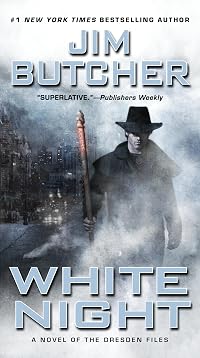
Wizard Harry Dresden must investigate his own flesh and blood when a series of killings strike Chicago’s magic practitioners in this novel in the #1 New York Times bestselling series.Someone is targeting the members of the city’s supernatural underclass—those who don’t possess enough power to become full-fledged wizards. Some have vanished. Others appear to be victims of suicide. But now the culprit has left a calling card at one of the crime scenes—a message for Harry Dresden.
show more
Harry sets out to find the apparent serial killer, but his investigation turns up evidence pointing to the one suspect he cannot possibly believe guilty: his half-brother, Thomas. To clear his brother’s name, Harry rushes into a supernatural power struggle that renders him outnumbered, outclassed, and dangerously susceptible to temptation.
And Harry knows that if he screws this one up, people will die—and one of them will be his brother... show less
Tags
Recommendations





Member Reviews
I think this is one of the first of the Dresden Files books that really feels like a more traditional mystery. (Or at least my idea thereof; I don't read much traditional mystery). Mysterious shadowy figures and murders abound and throughout it's unclear exactly who/what is responsible. There are a few clues for the reader that Dresden otherwise misses, but for the most part, we learn about happenings as they happen.
One really cool scene: Dresden takes advantage of the fact that you can draw energy from the surrounding environment in order to power a spell. He proceed to shoot off a pillar of fire 2-3 feet wide and 20 stories high into the night sky. Can you imagine being a mortal living in Chicago and seeing that? The best part: He show more didn't even need the fire. He just needed to freeze a chunk of Lake Michigan. Love it.
Another great part about this book in the continued characterization. We learn more about Mouse's magical nature (A real temple dog! ). We get another cool scene of Marcone saving the day (he's really starting to make a habit about that). And we get a much better look at House Raith in general and Thomas in specific. For the most 'human' of the vampires, they're still kind of terrifying when they want to be.
So far as larger world building, the stage doesn't change overly much. There are more details about what exactly happened in Dresden's past with He Who Walks Behind.
Oh and that scene at the end with Lash. I really liked her. I liked seeing how Dresden dealt with the power he had and the power he could stand to gain. It was neat to see how just as she changed him, he changed her in turn. It will be interesting to see what fall out there will be from that (if any) in future books. show less
One really cool scene: Dresden takes advantage of the fact that you can draw energy from the surrounding environment in order to power a spell. He proceed to shoot off a pillar of fire 2-3 feet wide and 20 stories high into the night sky. Can you imagine being a mortal living in Chicago and seeing that? The best part: He show more didn't even need the fire. He just needed to freeze a chunk of Lake Michigan. Love it.
Another great part about this book in the continued characterization. We learn more about Mouse's magical nature (
So far as larger world building, the stage doesn't change overly much. There are more details about what exactly happened in Dresden's past with He Who Walks Behind.
White Night is the ninth book in The Dresden Files by Jim Butcher. In this week's episode... There's a supernatural serial killer loose in Chicago that is targeting weaker members of the city, ones who don't have enough power to become full-fledged wizards. Harry's investigation turns up evidence pointing to the one suspect he cannot believe is guilty: his half-brother Thomas. Harry teams up with his old flame Elaine to solve the crimes and clear his brother's name.
I'm going to sum this up with a quote:
White Night is another solid entry into the series. I really should not take so long between reading books. I forgot how these show more books hit that one spot and then it's off to the races. Around chapter 10 the pace on this one picks up and doesn't let go. It's obvious that Thomas is being set up but it's quite a mystery for Harry and team to solve that takes some interesting turns. The plot on this moves several story threads that have been building throughout the series along nicely.
I'm highly impressed with how complex and nuanced the characters are becoming.Dear lord Molly needs to grow up. I definitely agree with Harry in needing to scare her straight before she gets them both killed. Murphy noticing Harry's "unexplained" anger issues that are the result of the gordian knot that is Lasciel is quite insightful.
And that ending!I am very curious to see how what Lash did plays out. I'm not entirely sure she's gone and it's great Harry is no longer tied to Lasciel. I'm also hoping that these events have bought Lara and the White Court's alliance for a little while and gives the White Council some breathing room in the war. The solution for Thomas's unique problem is absolutely perfect! show less
I'm going to sum this up with a quote:
"Get your head in the game Harry...Defeat the whole damn White Court now. Worry about taking on Hell later."
White Night is another solid entry into the series. I really should not take so long between reading books. I forgot how these show more books hit that one spot and then it's off to the races. Around chapter 10 the pace on this one picks up and doesn't let go. It's obvious that Thomas is being set up but it's quite a mystery for Harry and team to solve that takes some interesting turns. The plot on this moves several story threads that have been building throughout the series along nicely.
I'm highly impressed with how complex and nuanced the characters are becoming.
And that ending!
I don't know why I bother reviewing these anymore. They are almost always 5 stars for me. When I read one, I can't put it down. The plots are great, I love the characters, the action is exciting. The books always culminate in an amazing showdown that is seat-of-your-pants gripping. (I don't even know if that last clause works but I like it so I'm keeping it.)
I love Harry. I know a lot of you don't (though really, don't listen to the audiobooks, I hear the narrator is annoying) but I do. I actually like that he's kind of chivalrous (NOT a chauvinistic) which is usually sexist but it's cute in him. His chivalry isn't about opening doors or covering mud puddles with his coat; it's that he is always trying to protect women even though he show more absolutely acknowledges and is impressed by the power of women. It tears him up when he thinks of women getting hurt and it moves him to violence against the perpetrators, which is funny because most of the women are perfectly capable of taking care of themselves. He even acknowledges this about himself in a self-deprecating way. Murphy is always calling him on his crap and is always in the thick of things with him, equally powerful in her own human way. The supernatural people, both good and bad, are both male and female and are equally powerful. Leadership positions are help by both men and women, including the current leader of the wizard guard who is female.
I get the impression that Butcher isn't sexist but he likes this gallant side of Harry. There isn't any "she was in power even though she was a woman" or even acknowledging that someone might find it odd to find a woman doing that particular job. (Well, I can't remember the beginning books that well and he might have mentioned that it was hard for Murphy as a female cop. But when he met her she was already head of her division.) The de facto leader of the White House, who is the best White House vampire leader he's seen, is a woman who is very attractive and very dangerous to him.
I'm always annoyed that Butcher says people speak "quietly" way too often. I always love Bob the skull and wish he were in it more. I always wish he and Murphy would just do the nasty and get it over with. I'm really glad he's gotten rid of weak love interests. Thomas is so sexy and I love that he doesn't care about a person's gender in his sexual conquests. Ramirez is very hot, too. But Mouse is my favorite character.
Okay, specifics about this book. I liked how adamant/rigid/angry Harry was with his apprentice when she broke the rules and I like how the situation was resolved. I love the boat action sequence. Finally, a little more about Mouse is revealed. I even like the cat and was only mildly annoyed when someone referred to him as the master of the house.
Very mild spoiler (one tiny part of the book) that won't ruin the book at all:
In one scene, Harry has to pretend to be gay and I laughed so hard I snorted.
The mini-city is ridiculous as it would be impossible to have created let alone maintain. The scale alone meant that it wouldn't have fit in his subbasement. It's an easy gimmick that I don't like. I'm mad at Murphy for being a commitment-phobe and love that Harry doesn't want short-term relationships (revealed in last book). They are meant to be together God damn it! One of the mini-plots was awkward and there were so many characters in the book, some with similar names (Anne and Anye in similar roles) that it was hard to keep them straight.
I love the ex love interest who comes back from his past and if Harry can't have Murphy, a woman like that is perfect for him: she's smart, sexy, sarcastic, imperfect and extremely powerful, much like he is. My favorite part of the book was the last three pages and I'll leave it at that.
What I love best of all though is that morality isn't always black and white and choosing the right path isn't always easy for Harry. He's still struggling with the demon in his head. (He mentions that it's been three years! I don't feel like it's been that long. Does anyone know what book she first appeared in?)
As I've come to expect from Butcher, this was another tight, focused novel with tons of action and drama and the usual snarky humor that I love, even when Harry is being an idiot. (The scenes between him and Ramirez are classic Butcher.) If you like this series, don't miss this one. show less
I love Harry. I know a lot of you don't (though really, don't listen to the audiobooks, I hear the narrator is annoying) but I do. I actually like that he's kind of chivalrous (NOT a chauvinistic) which is usually sexist but it's cute in him. His chivalry isn't about opening doors or covering mud puddles with his coat; it's that he is always trying to protect women even though he show more absolutely acknowledges and is impressed by the power of women. It tears him up when he thinks of women getting hurt and it moves him to violence against the perpetrators, which is funny because most of the women are perfectly capable of taking care of themselves. He even acknowledges this about himself in a self-deprecating way. Murphy is always calling him on his crap and is always in the thick of things with him, equally powerful in her own human way. The supernatural people, both good and bad, are both male and female and are equally powerful. Leadership positions are help by both men and women, including the current leader of the wizard guard who is female.
I get the impression that Butcher isn't sexist but he likes this gallant side of Harry. There isn't any "she was in power even though she was a woman" or even acknowledging that someone might find it odd to find a woman doing that particular job. (Well, I can't remember the beginning books that well and he might have mentioned that it was hard for Murphy as a female cop. But when he met her she was already head of her division.) The de facto leader of the White House, who is the best White House vampire leader he's seen, is a woman who is very attractive and very dangerous to him.
I'm always annoyed that Butcher says people speak "quietly" way too often. I always love Bob the skull and wish he were in it more. I always wish he and Murphy would just do the nasty and get it over with. I'm really glad he's gotten rid of weak love interests. Thomas is so sexy and I love that he doesn't care about a person's gender in his sexual conquests. Ramirez is very hot, too. But Mouse is my favorite character.
Okay, specifics about this book. I liked how adamant/rigid/angry Harry was with his apprentice when she broke the rules and I like how the situation was resolved. I love the boat action sequence. Finally, a little more about Mouse is revealed. I even like the cat and was only mildly annoyed when someone referred to him as the master of the house.
Very mild spoiler (one tiny part of the book) that won't ruin the book at all:
The mini-city is ridiculous as it would be impossible to have created let alone maintain. The scale alone meant that it wouldn't have fit in his subbasement. It's an easy gimmick that I don't like. I'm mad at Murphy for being a commitment-phobe and love that Harry doesn't want short-term relationships (revealed in last book). They are meant to be together God damn it! One of the mini-plots was awkward and there were so many characters in the book, some with similar names (Anne and Anye in similar roles) that it was hard to keep them straight.
I love the ex love interest who comes back from his past and if Harry can't have Murphy, a woman like that is perfect for him: she's smart, sexy, sarcastic, imperfect and extremely powerful, much like he is. My favorite part of the book was the last three pages and I'll leave it at that.
What I love best of all though is that morality isn't always black and white and choosing the right path isn't always easy for Harry. He's still struggling with the demon in his head. (He mentions that it's been three years! I don't feel like it's been that long. Does anyone know what book she first appeared in?)
As I've come to expect from Butcher, this was another tight, focused novel with tons of action and drama and the usual snarky humor that I love, even when Harry is being an idiot. (The scenes between him and Ramirez are classic Butcher.) If you like this series, don't miss this one. show less
Oh. My. God. You know a book is damn good when you've picked it apart, word by word, you know it inside and out, and it still takes your breath away when you re-read it.
This is the ninth Dresden Files book, and yes, it's White Night, not White Knight or White Nights. Easy way to remember: every single one of the Dresden Files titles is two words, with the same number of letters in each word--which is why Death Masks isn't Holy Sheet.
Anyway. The have-nots of Chicago's magical community--those people with just a bit of power--have been going missing. Several have turned up dead, mostly in apparent suicides. And somebody's left a message with the bodies: Exodus 22:18. Harry Dresden isn't religious, but that's a verse he knows by heart: show more "suffer not a witch to live."
And what makes things worse, for Harry at least, is that a lot of the missing women were last seen with either a very handsome man with dark hair or a very tall man in a gray cloak. Wardens of the White Council wear gray cloaks, which makes Harry himself a suspect, and the other man sounds very much like his brother Thomas, who's been secretive about the his new job.
The plot is convoluted, but it makes sense once you get all the pieces, and what's really cool is that it's convoluted because that's the way the people involved do things. It's that level of detail that prompts the + on the five stars. Everything in the book has a reason for being there, usually several reasons.
Harry's still training his new apprentice Molly, and that's got a bunch of layers as well--her strengths fit everything we know about her from previous books, and the effects on Harry show, too. Another reason for the +. It's not just "let's give Harry a teenage girl for a sidekick." It has so much consistency you'd believe they were real people.
Several characters from earlier books show up, ones we haven't seen for a while, and that's fun, and completely plot-driven. No Mouseketeer role calls here.
As you can probably guess from the fact that his brother is a suspect, the emotional intensity is up there. There's also a lot of emotion involved with Harry dealing with anger issues and with Lash, the shadow of a fallen angel who's living in his head. I needed tissues.
There were also plenty of laugh-out-loud moments, and dozens of quotable lines, like "...age is always advancing and I'm fairly sure it's up to no good."
And some very cool special effects, which the TV show will never get a chance to use because it's been canceled, dammit. Ah, well, they probably work better in my head anyway. Stupid SciFi Channel.
One caveat: this is a planned series: 20 books and then a big old apocalyptic trilogy, because who doesn't love apocalyptic trilogies? Which means that even though the books are complete in themselves, there is something going on that's leading to that apocalyptic trilogy. In other words: read the series in order. You'll get more out of it that way. show less
This is the ninth Dresden Files book, and yes, it's White Night, not White Knight or White Nights. Easy way to remember: every single one of the Dresden Files titles is two words, with the same number of letters in each word--which is why Death Masks isn't Holy Sheet.
Anyway. The have-nots of Chicago's magical community--those people with just a bit of power--have been going missing. Several have turned up dead, mostly in apparent suicides. And somebody's left a message with the bodies: Exodus 22:18. Harry Dresden isn't religious, but that's a verse he knows by heart: show more "suffer not a witch to live."
And what makes things worse, for Harry at least, is that a lot of the missing women were last seen with either a very handsome man with dark hair or a very tall man in a gray cloak. Wardens of the White Council wear gray cloaks, which makes Harry himself a suspect, and the other man sounds very much like his brother Thomas, who's been secretive about the his new job.
The plot is convoluted, but it makes sense once you get all the pieces, and what's really cool is that it's convoluted because that's the way the people involved do things. It's that level of detail that prompts the + on the five stars. Everything in the book has a reason for being there, usually several reasons.
Harry's still training his new apprentice Molly, and that's got a bunch of layers as well--her strengths fit everything we know about her from previous books, and the effects on Harry show, too. Another reason for the +. It's not just "let's give Harry a teenage girl for a sidekick." It has so much consistency you'd believe they were real people.
Several characters from earlier books show up, ones we haven't seen for a while, and that's fun, and completely plot-driven. No Mouseketeer role calls here.
As you can probably guess from the fact that his brother is a suspect, the emotional intensity is up there. There's also a lot of emotion involved with Harry dealing with anger issues and with Lash, the shadow of a fallen angel who's living in his head. I needed tissues.
There were also plenty of laugh-out-loud moments, and dozens of quotable lines, like "...age is always advancing and I'm fairly sure it's up to no good."
And some very cool special effects, which the TV show will never get a chance to use because it's been canceled, dammit. Ah, well, they probably work better in my head anyway. Stupid SciFi Channel.
One caveat: this is a planned series: 20 books and then a big old apocalyptic trilogy, because who doesn't love apocalyptic trilogies? Which means that even though the books are complete in themselves, there is something going on that's leading to that apocalyptic trilogy. In other words: read the series in order. You'll get more out of it that way. show less
My husband has been bugging me to hurry and catch up with the Dresden Series. Our reading styles are different. I take an established urban fantasy series and enjoy it slowly, reading one book at a time and not hurrying through to the end. I read one Dresden novel and then take a break for awhile, moving on to Kevin Hearne, Simon Green & other fantasy writers before meandering back for another dose of Dresden.
This drives my husband insane. He is vikingesque in his reading.....he finds a series he loves and battles through to conquer it like a warrior to the very final word, then waits with bated breath for a new book. Sometimes this bites him in the butt. George R. R. Martin and the long winter between Game of Thrones novels is an show more example of butt-biting incidents for my husband. Whereas, until there is an established publication date for the next GRRM book, I'm going to happily remain a book behind in the GOT series. When I can pre-order the new book, I will read A Dance With Dragons. The Song of Ice and Fire is paused for me. I refuse to be left hanging.
So...I digress. Back to Dresden.
I just finished Book 9 of the 15 Dresden books. White Night was an enjoyable read. Dresden was his usual wizardly self. Bob is still a perv. Cop sidekick Murphy continues to kick ass. Mouse is beyond awesome in his huge doggie way. And Thomas is still a mysterious character that seems untrustworthy and loveable at the same time. White Night was a lovely, humor filled, enjoyable romp through Dresden's world.
I wasn't quite sure what to write in my review, until I read a few reviews left by other readers. Many voiced complaints that Dresden plots are similar and the character doesn't change much, etc.
If I read the books one after another with no break, I might feel the same way. The characters are pretty set in their particular idioms, but as I take a pretty lengthy break between each book (Again, I refuse to be left hanging, and there is no pub date for Book 16 Peace Talks....and Butcher took a break to write book one of a new steampunk series a couple years ago. I'm not catching up to the end anytime soon only to be left waiting for months and months for the next book. I'm impatient. So spreading it out to last until I see a pre-order button for Peace Talks.) I don't notice as much that the plots don't vary a lot. I read one book....then move on to other series for awhile before I return to the Chicago Wizard-For-Hire. There are changes ahead for Dresden - I know this because my husband sometimes slips with spoilers. So, I'm not too worried about the characters being in a rut or the repetitive plots with wizard council disagreements, vampires, ghouls and the like. My best advice for those who find the series getting stale.....either read to the end and enjoy the break before the next book. Or, do what I do and read slowly.....then the plots seem fresher and less recycled.
White Night opens with Harry and Murphy investigating the deaths of several practitioners of magic. All are lesser magic users. Some have disappeared and others appear to have committed suicide. But Harry notices messages left for him at some of the death scenes and knows these were not suicides. The evidence points to Harry's half brother, Thomas, being a murderer. Harry wants to clear his brother's name and jumps headlong into an investigation that will reveal corruption, danger and a power struggle within the White Council.
For new readers, it is pretty important to read the series in order. Go back to the beginning and start with Storm Front. For established Dresden fans, White Night is another visit to the shitty wizards in the Council and their penchant for wickedly plotting all sorts of nasty things. But even with that being a recurring theme, this installment in the series was filled with action and magic, even if isn't anything really new.
I highly recommend the Dresden series for anyone who likes urban fantasy or steampunk. The mix of humor, magic and the supernatural makes for an enjoyable read!
I'm moving on to book 10, Small Favor, to placate my husband. He's happy the closer I get to catching up with this series so he can talk about it with me. :) I will be more apt to inch closer to book 15 when I see that Peace Talks has a set publication date. I'm not going to complain about the wait -- Jim had a bit of an upheaval in his personal life that put his writing on hold for a bit. Divorce, meeting someone new, getting remarried......it's understandable that Peace Talks went on hold for awhile to give him time to regroup and enjoy his new marriage.
As an aside, Jim's new steampunk series, The Cinder Spires, is outstanding. Book one, The Aeronaut's Windlass, came out in 2015 and is well worth a read for those waiting for the next Dresden book.
To learn more about Jim Butcher and his books, check out his website here. show less
This drives my husband insane. He is vikingesque in his reading.....he finds a series he loves and battles through to conquer it like a warrior to the very final word, then waits with bated breath for a new book. Sometimes this bites him in the butt. George R. R. Martin and the long winter between Game of Thrones novels is an show more example of butt-biting incidents for my husband. Whereas, until there is an established publication date for the next GRRM book, I'm going to happily remain a book behind in the GOT series. When I can pre-order the new book, I will read A Dance With Dragons. The Song of Ice and Fire is paused for me. I refuse to be left hanging.
So...I digress. Back to Dresden.
I just finished Book 9 of the 15 Dresden books. White Night was an enjoyable read. Dresden was his usual wizardly self. Bob is still a perv. Cop sidekick Murphy continues to kick ass. Mouse is beyond awesome in his huge doggie way. And Thomas is still a mysterious character that seems untrustworthy and loveable at the same time. White Night was a lovely, humor filled, enjoyable romp through Dresden's world.
I wasn't quite sure what to write in my review, until I read a few reviews left by other readers. Many voiced complaints that Dresden plots are similar and the character doesn't change much, etc.
If I read the books one after another with no break, I might feel the same way. The characters are pretty set in their particular idioms, but as I take a pretty lengthy break between each book (Again, I refuse to be left hanging, and there is no pub date for Book 16 Peace Talks....and Butcher took a break to write book one of a new steampunk series a couple years ago. I'm not catching up to the end anytime soon only to be left waiting for months and months for the next book. I'm impatient. So spreading it out to last until I see a pre-order button for Peace Talks.) I don't notice as much that the plots don't vary a lot. I read one book....then move on to other series for awhile before I return to the Chicago Wizard-For-Hire. There are changes ahead for Dresden - I know this because my husband sometimes slips with spoilers. So, I'm not too worried about the characters being in a rut or the repetitive plots with wizard council disagreements, vampires, ghouls and the like. My best advice for those who find the series getting stale.....either read to the end and enjoy the break before the next book. Or, do what I do and read slowly.....then the plots seem fresher and less recycled.
White Night opens with Harry and Murphy investigating the deaths of several practitioners of magic. All are lesser magic users. Some have disappeared and others appear to have committed suicide. But Harry notices messages left for him at some of the death scenes and knows these were not suicides. The evidence points to Harry's half brother, Thomas, being a murderer. Harry wants to clear his brother's name and jumps headlong into an investigation that will reveal corruption, danger and a power struggle within the White Council.
For new readers, it is pretty important to read the series in order. Go back to the beginning and start with Storm Front. For established Dresden fans, White Night is another visit to the shitty wizards in the Council and their penchant for wickedly plotting all sorts of nasty things. But even with that being a recurring theme, this installment in the series was filled with action and magic, even if isn't anything really new.
I highly recommend the Dresden series for anyone who likes urban fantasy or steampunk. The mix of humor, magic and the supernatural makes for an enjoyable read!
I'm moving on to book 10, Small Favor, to placate my husband. He's happy the closer I get to catching up with this series so he can talk about it with me. :) I will be more apt to inch closer to book 15 when I see that Peace Talks has a set publication date. I'm not going to complain about the wait -- Jim had a bit of an upheaval in his personal life that put his writing on hold for a bit. Divorce, meeting someone new, getting remarried......it's understandable that Peace Talks went on hold for awhile to give him time to regroup and enjoy his new marriage.
As an aside, Jim's new steampunk series, The Cinder Spires, is outstanding. Book one, The Aeronaut's Windlass, came out in 2015 and is well worth a read for those waiting for the next Dresden book.
To learn more about Jim Butcher and his books, check out his website here. show less
Yup, second five-star in a row. I'm enjoying the hell of this series, when honestly, I shouldn't be.
Teen apprentice? Shouldn't like it.
Half-brother? Shouldn't like it.
All the ex-lovers and potential lovers? Shouldn't like it.
And yet, not only does Butcher make it work, he makes it fun. And the plot in this one was just as twisty as a long-time reader of Dresden would expect.
Great series.
Teen apprentice? Shouldn't like it.
Half-brother? Shouldn't like it.
All the ex-lovers and potential lovers? Shouldn't like it.
And yet, not only does Butcher make it work, he makes it fun. And the plot in this one was just as twisty as a long-time reader of Dresden would expect.
Great series.
Among a series that is always enjoyable, White Night feels like a filler episode. These are those episodes before sweeps weeks in which minor storylines end in an effort to clean up the plot before the main storyline can kick back into action full throttle. With Harry’s search for the mysterious serial killer, many subplots connect. Readers finally get resolution on certain plot points that could have been problematic if they had progressed any further. This is not a bad thing, as certain questions are finally answered. There is also more humor and more humanity in this ninth novel. While the action is as dramatic as can be, Harry’s labors to reconcile the horrors with which he battles on a daily basis with his need to protect the show more innocent are what drive White Night. In fact, his emotional struggles provide the reader with some of the most memorable scenes in the entire series - although the dinosaur scene from the seventh book will always be the best action scene in a novel ever.
This is not to say that the increasingly apparent Big Bad is not still lurking on Harry’s periphery. The main threat is still there and garners several mentions throughout the novel as Harry jockeys to position himself in a favorable manner that will allow him to defeat whatever the Big Bad is. The more hints and mentions of the Big Bad there are, the more anticipation builds, as well as overall concern that Harry may have finally met his match should he ever uncover the full truth.
What makes the Harry Dresden series so successful is Mr. Butcher’s ability to balance the lighthearted, tongue-in-cheek moments with the more emotional drama. Even while he is acknowledging the silliness of the storyline, he throws in elements of true suffering that adds gravity to the more sardonic elements. In other words, Mr. Butcher is able to explore humanity in a series that focuses on the supernatural. It is a balance that is difficult to accomplish successfully for one book, let alone nine or more.
After nine books, I really have nothing more to say on my feelings of James Marsters as narrator of this series. James Marsters is Harry Dresden. Enough said.
White Night is a perfect breather among all the action from the previous novels. It allows readers to discover just how much Harry has changed since his first introduction. While he still faces mortal peril, it takes a backseat to his more mental and emotional battles. The end result is a story that is just as intense as the more action-heavy novels in the series and more satisfying for the greater number of answers given. At the same time, it continues to build anticipation and tension at the possibility of a coming battle with the unknown Black Court. In fact, it is getting quite difficult to avoid immediately reading, or listening, to the next story in the series. Mr. Butcher better start writing faster before I catch up on all of the novels; I don’t think I am going to be able to wait!
Acknowledgments: Mine. All mine. show less
This is not to say that the increasingly apparent Big Bad is not still lurking on Harry’s periphery. The main threat is still there and garners several mentions throughout the novel as Harry jockeys to position himself in a favorable manner that will allow him to defeat whatever the Big Bad is. The more hints and mentions of the Big Bad there are, the more anticipation builds, as well as overall concern that Harry may have finally met his match should he ever uncover the full truth.
What makes the Harry Dresden series so successful is Mr. Butcher’s ability to balance the lighthearted, tongue-in-cheek moments with the more emotional drama. Even while he is acknowledging the silliness of the storyline, he throws in elements of true suffering that adds gravity to the more sardonic elements. In other words, Mr. Butcher is able to explore humanity in a series that focuses on the supernatural. It is a balance that is difficult to accomplish successfully for one book, let alone nine or more.
After nine books, I really have nothing more to say on my feelings of James Marsters as narrator of this series. James Marsters is Harry Dresden. Enough said.
White Night is a perfect breather among all the action from the previous novels. It allows readers to discover just how much Harry has changed since his first introduction. While he still faces mortal peril, it takes a backseat to his more mental and emotional battles. The end result is a story that is just as intense as the more action-heavy novels in the series and more satisfying for the greater number of answers given. At the same time, it continues to build anticipation and tension at the possibility of a coming battle with the unknown Black Court. In fact, it is getting quite difficult to avoid immediately reading, or listening, to the next story in the series. Mr. Butcher better start writing faster before I catch up on all of the novels; I don’t think I am going to be able to wait!
Acknowledgments: Mine. All mine. show less
Members
- Recently Added By
Lists

Best Urban Fantasy
634 works; 79 members

Bloody Good Vampire Books
394 works; 28 members

The Best Vampires, Werebeasts, Witches Books
192 works; 12 members

Books Read in 2023
5,638 works; 147 members

Plan to Listen Audiobooks
63 works; 1 member

Saiyuki Reload Best Summer Reads
159 works; 2 members

Books Read in 2015
3,299 works; 129 members

Books Read in 2018
4,360 works; 110 members

A Rainbow of Books: Colors in the Title
570 works; 24 members

Paranormal investigators and space detectives
274 works; 9 members

Books Read in 2024
4,727 works; 128 members

Eldritch Exarch Press - Appendix N
244 works; 1 member
Author Information

166+ Works 160,427 Members
Jim Butcher was born in Independence, Missouri on October 26, 1971. He is the author of The Dresden Files series, the Codex Alera series, Side Jobs, Ghost Story, and the Cinder Spires series. He has also written a Spider-Man novel entitled The Darkest Hours and a novelette entitled Backup. He has contributed to numerous anthologies including My show more Big Fat Supernatural Wedding, Blood Lite, and Many Bloody Returns. (Bowker Author Biography) show less
Some Editions
Awards and Honors
Distinctions
Series

Work Relationships
Common Knowledge
- Canonical title
- White Night
- Original publication date
- 2007-04-03
- People/Characters
- Harry Blackstone Copperfield Dresden; Karrin Murphy; Thomas Raith; Molly Carpenter; Elaine Mallory; Carlos Ramirez (show all 39); Lara Raith; Madrigal Raith; Lasciel; Bob the skull; Gentleman Johnnie Marcone; Helen Beckitt (Demeter); Justine; Cowl; Waldo Butters; Mouse, Harry Dresden's dog; Mister, Harry Dresden's cat; Pauline Markovitch; Brioche; Anna Ash; Mac Macnally; Anastasia Luccio; Marie; Abby; Priscilla; Sally; Jessica Blanche; Alessandra; Grey Cloak; Olivia; Bill Meyers; Murzhek; Terry Trailman; Tila Trailman; Bonnie; George; Cesarina Melvora; Vittorio Malvora; Donar Vadderung
- Important places
- Chicago, Illinois, USA; Cook County, Illinois, USA; Illinois, USA
- Dedication
- For the newest members of the family, Jesse and Dara
For the newest members of the family,
Jesse and Dara - First words
- Many things are not as they seem: The worst things in life never are.
- Quotations
- . . . age is always advancing and I'm fairly sure it's up to no good.
Bigots see something they expect and then they stop thinking about what is in front of them . . . It's probably how they got to be bigots in the first place.
Everyone is down on pain, because they forget something important about it: Pain is for the living. Only the dead don't feel it.
Life's easier when you can write off others as monsters, as demons, as horrible threats that must be hated and feared. The thing is, you can't do that without becoming them, just a little. - Last words
- (Click to show. Warning: May contain spoilers.)I burst out laughing, and it felt good.
(Click to show. Warning: May contain spoilers.)I couldn't help it. I burst out laughing, and it felt good. - Original language
- English
Classifications
Statistics
- Members
- 7,132
- Popularity
- 1,653
- Reviews
- 135
- Rating
- (4.22)
- Languages
- 6 — Czech, English, German, Hungarian, Polish, Spanish
- Media
- Paper, Audiobook, Ebook
- ISBNs
- 24
- UPCs
- 1
- ASINs
- 20