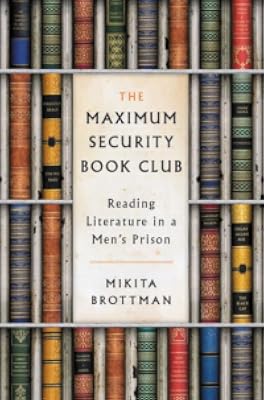
The Maximum Security Book Club: Reading Literature in a Men's Prison
by Mikita Brottman
On This Page
Description
"A riveting account of the two years literary scholar Mikita Brottman spent reading literature with criminals in a maximum-security men's prison outside Baltimore, and what she learned from them--Orange Is the New Black meets Reading Lolita in Tehran. On sabbatical from teaching literature to undergraduates, and wanting to educate a different kind of student, Mikita Brottman starts a book club with a group of convicts from the Jessup Correctional Institution in Maryland. She assigns them ten show more dark, challenging classics--including Conrad's Heart of Darkness, Shakespeare's Macbeth, Stevenson's Dr. Jekyll and Mr. Hyde, Poe's story "The Black Cat," and Nabokov's Lolita--books that don't flinch from evoking the isolation of the human struggle, the pain of conflict, and the cost of transgression. Although Brottman is already familiar with these works, the convicts open them up in completely new ways. Their discussions may "only" be about literature, but for the prisoners, everything is at stake. Gradually, the inmates open up about their lives and families, their disastrous choices, their guilt and loss. Brottman also discovers that life in prison, while monotonous, is never without incident. The book club members struggle with their assigned reading through solitary confinement; on lockdown; in between factory shifts; in the hospital; and in the middle of the chaos of blasting televisions, incessant chatter, and the constant banging of metal doors. Though The Maximum Security Book Club never loses sight of the moral issues raised in the selected reading, it refuses to back away from the unexpected insights offered by the company of these complex, difficult men. It is a compelling, thoughtful analysis of literature--and prison life--like nothing you've ever read before"-- show lessTags
Recommendations












Member Reviews
Professor and psychoanalyst Mikita Brottman recounts her experiences leading nine inmates in a book club/reading group at Jessup Correctional Institution. Her reading assignments: Conrad's 'Heart of Darkness', Melville's 'Bartleby the Scrivener', Bukowski's 'Ham on Rye', Burrough's 'Junkie', Braly's 'On the Yard', Shakespeare's 'MacBeth', Stevenson's 'The Strange Case of Dr. Jekyll and Mr. Hyde', Poe's 'The Black Cat', Kafka's 'The Metamorphosis ', and Nabokov's 'Lolita'. Each book receives a chapter, including Brottman's own experience with the book, her reasons for choosing it, and the discussion that ensued. Many of her choices seem very dark and challenging, until you learn of her own hardscrabble upbringing.
It was a delight to go show more back and revisit some old favorites, as well as discover some new 'must-reads.' A favorite question of authors is "What book would you most like to experience as if for the very first time?" In "Maximum Security Book Club" it was a treat to see these classics through fresh and unique perspectives. It surprised me that Brottman herself was so surprised whe her group was able to read carefully and critically. Her selections for the group seem to have been a mix of her own particular tastes as well as a certain pre-conceived notion as to what would be thought provoking. She did elicit strong opinions, but often not in the ways she had anticipated, most especially with 'Lolita'. This was an instance in which the pupils had much to teach their instructor -- and quite rightly.
Along the way, we meet and engage with the men who make up this group. They all are serving hard time for horrible crimes. That they are both capable of great violence and yet, at times, great insight is one of the more powerful aspects of the book. Some might feel 'Prisoners Are People Too' a mere platitude. Others will clutch to a need to dehumanize and vilify. As a former prosecutor, I have seen true evil and understand society's need for justice, retribution and protection. Yet the fact remains: American jails have swollen beyond the level of any other civilized nation. Many of those who populate our prisons will be released and returned to society. Their successful assimilation is the best for us all. Recognizing our common humanity goes a long way along that score. show less
It was a delight to go show more back and revisit some old favorites, as well as discover some new 'must-reads.' A favorite question of authors is "What book would you most like to experience as if for the very first time?" In "Maximum Security Book Club" it was a treat to see these classics through fresh and unique perspectives. It surprised me that Brottman herself was so surprised whe her group was able to read carefully and critically. Her selections for the group seem to have been a mix of her own particular tastes as well as a certain pre-conceived notion as to what would be thought provoking. She did elicit strong opinions, but often not in the ways she had anticipated, most especially with 'Lolita'. This was an instance in which the pupils had much to teach their instructor -- and quite rightly.
Along the way, we meet and engage with the men who make up this group. They all are serving hard time for horrible crimes. That they are both capable of great violence and yet, at times, great insight is one of the more powerful aspects of the book. Some might feel 'Prisoners Are People Too' a mere platitude. Others will clutch to a need to dehumanize and vilify. As a former prosecutor, I have seen true evil and understand society's need for justice, retribution and protection. Yet the fact remains: American jails have swollen beyond the level of any other civilized nation. Many of those who populate our prisons will be released and returned to society. Their successful assimilation is the best for us all. Recognizing our common humanity goes a long way along that score. show less
Outside of America’s political system, the misnamed “Criminal Justice System” is the nation’s most broken institution. In aggregate, states and the federal government spend upwards of $100 billion each year to punish people who have broken laws and call the punishment “rehabilitation” or “correction.” Any institution with an 82% failure rate such as the incarceration system does simply is not working.
Brottman’s book traces her experience inside on of these institutions. She meets with nine convicts regularly to read and discuss great books. Along the way, she tells about their lives, their backgrounds,their crimes and the hopelessness that she sees inside the walls of this system of cages. Yet she also chronicles the show more resilience and hope some men are capable of.
The book is an insightful look into the system and its impact on its victims, for to call these convicts anything else dismisses their realities. The author gains insights into the books she shares with these men that often amaze her and sometimes even raise her to higher levels of her own understanding of the books.
It is a worthwhile read both for its actual content and for its implications. Since every single other nation of the world has both lower incarceration rates and lower recidivity rates, it is also an indictment of a society that fails to correct a system that wastes billions of dollars and hundreds of thousands of lives rich in human capital. show less
Brottman’s book traces her experience inside on of these institutions. She meets with nine convicts regularly to read and discuss great books. Along the way, she tells about their lives, their backgrounds,their crimes and the hopelessness that she sees inside the walls of this system of cages. Yet she also chronicles the show more resilience and hope some men are capable of.
The book is an insightful look into the system and its impact on its victims, for to call these convicts anything else dismisses their realities. The author gains insights into the books she shares with these men that often amaze her and sometimes even raise her to higher levels of her own understanding of the books.
It is a worthwhile read both for its actual content and for its implications. Since every single other nation of the world has both lower incarceration rates and lower recidivity rates, it is also an indictment of a society that fails to correct a system that wastes billions of dollars and hundreds of thousands of lives rich in human capital. show less
Outside of America’s political system, the misnamed “Criminal Justice System” is the nation’s most broken institution. In aggregate, states and the federal government spend upwards of $100 billion each year to punish people who have broken laws and call the punishment “rehabilitation” or “correction.” Any institution with an 82% failure rate such as the incarceration system does simply is not working.
Brottman’s book traces her experience inside on of these institutions. She meets with nine convicts regularly to read and discuss great books. Along the way, she tells about their lives, their backgrounds,their crimes and the hopelessness that she sees inside the walls of this system of cages. Yet she also chronicles the show more resilience and hope some men are capable of.
The book is an insightful look into the system and its impact on its victims, for to call these convicts anything else dismisses their realities. The author gains insights into the books she shares with these men that often amaze her and sometimes even raise her to higher levels of her own understanding of the books.
It is a worthwhile read both for its actual content and for its implications. Since every single other nation of the world has both lower incarceration rates and lower recidivity rates, it is also an indictment of a society that fails to correct a system that wastes billions of dollars and hundreds of thousands of lives rich in human capital. show less
Brottman’s book traces her experience inside on of these institutions. She meets with nine convicts regularly to read and discuss great books. Along the way, she tells about their lives, their backgrounds,their crimes and the hopelessness that she sees inside the walls of this system of cages. Yet she also chronicles the show more resilience and hope some men are capable of.
The book is an insightful look into the system and its impact on its victims, for to call these convicts anything else dismisses their realities. The author gains insights into the books she shares with these men that often amaze her and sometimes even raise her to higher levels of her own understanding of the books.
It is a worthwhile read both for its actual content and for its implications. Since every single other nation of the world has both lower incarceration rates and lower recidivity rates, it is also an indictment of a society that fails to correct a system that wastes billions of dollars and hundreds of thousands of lives rich in human capital. show less
Outside of America’s political system, the misnamed “Criminal Justice System” is the nation’s most broken institution. In aggregate, states and the federal government spend upwards of $100 billion each year to punish people who have broken laws and call the punishment “rehabilitation” or “correction.” Any institution with an 82% failure rate such as the incarceration system does simply is not working.
Brottman’s book traces her experience inside on of these institutions. She meets with nine convicts regularly to read and discuss great books. Along the way, she tells about their lives, their backgrounds,their crimes and the hopelessness that she sees inside the walls of this system of cages. Yet she also chronicles the show more resilience and hope some men are capable of.
The book is an insightful look into the system and its impact on its victims, for to call these convicts anything else dismisses their realities. The author gains insights into the books she shares with these men that often amaze her and sometimes even raise her to higher levels of her own understanding of the books.
It is a worthwhile read both for its actual content and for its implications. Since every single other nation of the world has both lower incarceration rates and lower recidivity rates, it is also an indictment of a society that fails to correct a system that wastes billions of dollars and hundreds of thousands of lives rich in human capital. show less
Brottman’s book traces her experience inside on of these institutions. She meets with nine convicts regularly to read and discuss great books. Along the way, she tells about their lives, their backgrounds,their crimes and the hopelessness that she sees inside the walls of this system of cages. Yet she also chronicles the show more resilience and hope some men are capable of.
The book is an insightful look into the system and its impact on its victims, for to call these convicts anything else dismisses their realities. The author gains insights into the books she shares with these men that often amaze her and sometimes even raise her to higher levels of her own understanding of the books.
It is a worthwhile read both for its actual content and for its implications. Since every single other nation of the world has both lower incarceration rates and lower recidivity rates, it is also an indictment of a society that fails to correct a system that wastes billions of dollars and hundreds of thousands of lives rich in human capital. show less
The author is a lit professor who brings her favorite books to share with a group of men in longterm lockup in Jessup, MD. The story is as much about her own misconceptions about the men and how their prison lives work as it as about the books. Mikita herself is hardly your average do-gooder; she's prickly and impatient and jealous when another prison classroom seems to be having more fun than hers. I really question her choices in authors; Edgar Allen Poe, Joseph Conrad, William S. Burroughs, and not only because there are no women authors. She seems to have picked the thickest, most difficult texts, and then is surprised when the group hates the books and the characters. I must admit, though, that the narrative IS like a lit class, show more and I enjoyed her analysis of the texts. However, couldn't she have added Toni Morrison? Or PG Wodehouse? Alice Walker? Or anything that would give these lifer a bit of lightness? Or anything written in the last 50 years? show less
The title of this book definitely peaked my interests; prisons and books. Also, the cover is fabulous! The book is a memoir of the author’s experience facilitating a book club inside a male prison and the lives of the inmates participating. It’s just an okay book and only slightly interesting. I’m not familiar with the books they read and it didn’t seem to be a hindrance. I think the author learned very quickly that facilitating a college-level book club with people who have spent most of their lives incarcerated is vastly different from teaching college students. There is a whole culture inside a prison that the author definitely got schooled on during book club. It also seemed the author had unrealistic expectations of the show more inmates; therefore, she had difficulty meeting them where they were at regarding their book interests. She saw the inmates the way she wanted to see them and tried to make them fit into the characters of the story she made up. She also frequently contradicted herself by being annoyed when the inmates related the books to their own experiences by being tangential and discussing current prison life, while a few pages later probing them to talk about how they related to the story. On a different note, the author’s boundaries with the inmates is concerning. Especially some of the reading material she selected and the movies she brought in for them to view. She also repeatedly makes disrespectful comments about the correctional staff and engages in those splitting conversations with the inmates. She appears quite naïve to the potential dangers she exposes herself. I appreciate the service she provides and know that it can be done in a professional manner in which she can gain respect from both correctional staff and inmates. I also do not underestimate she has had some unpleasant experiences with correctional staff; however, I don’t think it serves her overall purpose to have those experiences published in this book. show less
The author, a professor, decided to start a book club in a men’s prison. There were only nine members, so she got to know them while they discussed “literature”. Yes, many classics that I’m not even a fan of (some were ok; I haven’t read all they discussed, but I don’t even want to read some of them!).
I really liked this. Each chapter was a different book and she described a bit about one of the men, alternating for a different person in each following chapter. There were some illustrated portraits of all the men who participated and photographs of some of them. Since the books were not ones I’ve read or (if I have) ones I don’t remember well, though they might have been “ok”, there might have been a few references I show more missed. To be honest, I was more interested in the men’s lives in the prison… and out of the prison for the two that Mikita met up with after they were released. It was nice to get that bit of an update on them. show less
I really liked this. Each chapter was a different book and she described a bit about one of the men, alternating for a different person in each following chapter. There were some illustrated portraits of all the men who participated and photographs of some of them. Since the books were not ones I’ve read or (if I have) ones I don’t remember well, though they might have been “ok”, there might have been a few references I show more missed. To be honest, I was more interested in the men’s lives in the prison… and out of the prison for the two that Mikita met up with after they were released. It was nice to get that bit of an update on them. show less
Members
- Recently Added By
Lists

Bibliomemoirs
46 works; 8 members
Author Information

20+ Works 897 Members
Mikita Brottman, PhD, is an Oxford-educated scholar, author, and psychoanalyst. She has written seven previous books, including The Great Grisby: Two Thousand Years of Literary, Royal Philosophical, and Artistic Dog Lovers and Their Exceptional Animals, and is a professor of humanities at the Maryland institute College of Art in Baltimore, where show more she lives. show less
Common Knowledge
- Original publication date
- 2016
Classifications
- Genres
- Nonfiction, General Nonfiction, Biography & Memoir, Literature Studies and Criticism
- DDC/MDS
- 365.66 — Society, government, & culture Social problems and social services Punishment Inmates Services to prisoners
- LCC
- HV8482 .M3 .B76 — Social sciences Social pathology. Social and public welfare. Criminology Social pathology. Social and public welfare. Criminal justice administration Penology. Prisons. Corrections
- BISAC
Statistics
- Members
- 158
- Popularity
- 205,184
- Reviews
- 9
- Rating
- (3.28)
- Languages
- English
- Media
- Paper, Audiobook, Ebook
- ISBNs
- 6
- ASINs
- 3