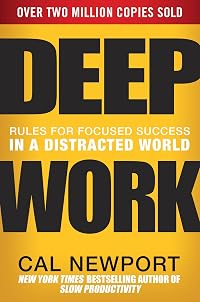
Deep Work: Rules for Focused Success in a Distracted World
by Cal Newport
On This Page
Description
"One of the most valuable skills in our economy is becoming increasingly rare. If you master this skill, you'll achieve extraordinary results. Deep work is the ability to focus without distraction on a cognitively demanding task. It's a skill that allows you to quickly master complicated information and produce better results in less time. Deep work will make you better at what you do and provide the sense of true fulfillment that comes from craftsmanship. In short, deep work is like a super show more power in our increasingly competitive twenty-first century economy. And yet, most people have lost the ability to go deep-spending their days instead in a frantic blur of e-mail and social media, not even realizing there's a better way. In DEEP WORK, author and professor Cal Newport flips the narrative on impact in a connected age. Instead of arguing distraction is bad, he instead celebrates the power of its opposite. Dividing this book into two parts, he first makes the case that in almost any profession, cultivating a deep work ethic will produce massive benefits. He then presents a rigorous training regimen, presented as a series of four "rules," for transforming your mind and habits to support this skill. A mix of cultural criticism and actionable advice, DEEP WORK takes the reader on a journey through memorable stories-from Carl Jung building a stone tower in the woods to focus his mind, to a social media pioneer buying a round-trip business class ticket to Tokyo to write a book free from distraction in the air-and no-nonsense advice, such as the claim that most serious professionals should quit social media and that you should practice being bored. DEEP WORK is an indispensable guide to anyone seeking focused success in a distracted world"-- show lessTags
Recommendations




Member Recommendations
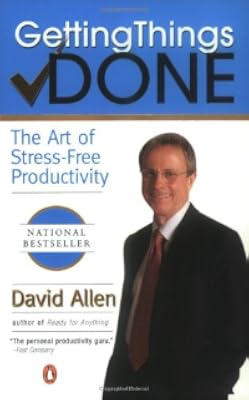
corporate_clone Deep Work relies in fact quite heavily on GTD. I believe GTD must be a quite important component of the Deep Work practice if it has to be successfully implemented.
Member Reviews
A student said to Master Ichu, “Please write for me something of great wisdom.” Master Ichu picked up his brush and wrote one word: “Attention.” The student said, “Is that all?” The master wrote, “Attention. Attention.” The student became irritable. “That doesn’t seem profound or subtle to me.” In response, Master Ichu wrote simply, “Attention. Attention. Attention.” Frustrated, the student demanded, “What does the word ‘attention’ mean?” Master Ichu replied, “Attention means attention.”
But no one will publish your book with only the word "Attention" in it, hence we have this one instead. To be fair, this book has to prove its thesis. We don't just accept what the master says without studies using show more fMRI and references to the brain these days. Am I suggesting we should? Our culture is a skeptical one in which ideas need to be marketed and someone claiming authority is assumed to be operating out of self interest. This book is steeped in the values of western capitalism, its masters having credentials from elite institutions or being CEOs of corporations. Though, in theory, we could attempt to replicate the results of experiments, in practice, we follow today's masters. We envy them and wish to join their ranks or even to replace them. This book is telling us (and selling us) the magic trick that it claims can enable us to do so.
Its thesis is you, the reader, have a chance. Great things are produced by the right kind of work, not by the specially endowed. That kind of work is called "deep" and research shows that those we thought specially endowed actually do a lot of deep work. What's more, most people (i.e. readers of this book, and especially those people who aren't readers like us) do practically none. Instead our attention is scattered for various reasons, some cultural (e.g. Facebook) and some due to lack of discipline. Though deep work is ultimately deeply satisfying, few of us ever get to taste that satisfaction.
The rest of the book suggests those "weird tricks" that can help us engage in deep work. Examples are getting off social media, engaging in habit-forming rituals supporting deep work, investing lavishly in tools for the work as an expression of commitment, emulating others who choose the life of depth. Some of these tricks are phrased as rules, one of which (rule#1 in chapter 4)is to "focus on the wildly important."
I would like to suggest a reversal of cause and effect here. To me, those whom the author calls deep focus on "wildly important goals" do so because they find them wildly important. They pay attention to what they find interesting out of interest, not out of following a rule. Even singling out goals doesn't really happen for these people. The goals call out to them and they respond. Mr. Newport's example of Bill Gates's "preternatural deep work ability" is a case in point. It wasn't an ability but an inability to do otherwise. If you've never experienced that kind of obsession, you don't realize that this isn't the kind of mind state that you cultivate just for the results. It's more like the kind of mind state that were it not having positive effects, would get you diagnosed with a mental illness.
Often, while reading this book, I felt like I was experiencing an infomercial. What makes this especially ironic is that advertising is a major source of distraction in our culture and our willingness to subject ourselves to it is symptomatic of our undervaluing our attention. I don't want to say that cultivating more focus and less distraction can't improve one's life, but that there's something shallow about turning depth into a growth tool. show less
But no one will publish your book with only the word "Attention" in it, hence we have this one instead. To be fair, this book has to prove its thesis. We don't just accept what the master says without studies using show more fMRI and references to the brain these days. Am I suggesting we should? Our culture is a skeptical one in which ideas need to be marketed and someone claiming authority is assumed to be operating out of self interest. This book is steeped in the values of western capitalism, its masters having credentials from elite institutions or being CEOs of corporations. Though, in theory, we could attempt to replicate the results of experiments, in practice, we follow today's masters. We envy them and wish to join their ranks or even to replace them. This book is telling us (and selling us) the magic trick that it claims can enable us to do so.
Its thesis is you, the reader, have a chance. Great things are produced by the right kind of work, not by the specially endowed. That kind of work is called "deep" and research shows that those we thought specially endowed actually do a lot of deep work. What's more, most people (i.e. readers of this book, and especially those people who aren't readers like us) do practically none. Instead our attention is scattered for various reasons, some cultural (e.g. Facebook) and some due to lack of discipline. Though deep work is ultimately deeply satisfying, few of us ever get to taste that satisfaction.
The rest of the book suggests those "weird tricks" that can help us engage in deep work. Examples are getting off social media, engaging in habit-forming rituals supporting deep work, investing lavishly in tools for the work as an expression of commitment, emulating others who choose the life of depth. Some of these tricks are phrased as rules, one of which (rule#1 in chapter 4)is to "focus on the wildly important."
I would like to suggest a reversal of cause and effect here. To me, those whom the author calls deep focus on "wildly important goals" do so because they find them wildly important. They pay attention to what they find interesting out of interest, not out of following a rule. Even singling out goals doesn't really happen for these people. The goals call out to them and they respond. Mr. Newport's example of Bill Gates's "preternatural deep work ability" is a case in point. It wasn't an ability but an inability to do otherwise. If you've never experienced that kind of obsession, you don't realize that this isn't the kind of mind state that you cultivate just for the results. It's more like the kind of mind state that were it not having positive effects, would get you diagnosed with a mental illness.
Often, while reading this book, I felt like I was experiencing an infomercial. What makes this especially ironic is that advertising is a major source of distraction in our culture and our willingness to subject ourselves to it is symptomatic of our undervaluing our attention. I don't want to say that cultivating more focus and less distraction can't improve one's life, but that there's something shallow about turning depth into a growth tool. show less
I both appreciate and loathe this book.
The parts I loathe are the introductory and aspirational parts, where the author seems to glorify being the kind of early 20th century intelligentsia who can up and retreat to a custom-built self-designed cabin in the words that serves as a temple to the fetish of solitary productivity. Even though I agreed with the basic value proposition of the book before I picked it up -- I came to this book because I work in a distraction-heavy role and I was seeing my open office and service-oriented role sap my ability to focus even at home -- I almost put the book down many times during the first part, with his reductionist anecdote-driven polemic and is barely-hidden class superiority where the vaulted show more wielder of informational capitalism reaps the reaches left after every other class and worker is crushed by neoliberalism (not to mention the offhanded anti-collectivism that has nothing to do with anything that occasionally creeps up like the ectoplasm of Ayn Rand's ghost)
But now to the good, good which maybe is easily found in thousands of blog posts that this book must surely have inspired: Once you get to the practical advice of the book -- especially the parts a quarter of a way through the first section of the second "part" of this book, the working models after Don Knuth and Neal Stephenson -- that is when the advice starts become practical for people, regular information workers with 9-5(ish) jobs who aren't entrepreneurial ubermensches who wake up and meditate in a mountain peak in the middle of their routine jog.
The advice may have been radical at one point, but it's well understood and well-merited stuff now ... have a cadence of work rhythm that you don't have to work yourself into adhering to (i.e. form habits and shift your life to be life conducive to those habits), shift your working structure so that pre-planned high-intensity work of clear value is minimally impacted by distraction work and low-intensity low-value work (like a lot of people's email and online chat correspondence). There is additional writing around the ways in which social media and impulsive addiction to phones and "clickhole culture" (I don't know what else to call things like buzzfeed, and that term isn't in the book) wind up impacting your mental stamina, and some solid advice on how to schedule your day in a way to best keep your day on rails (and how to adjust when something inevitably messes with your plans.)
This second half of the book is valuable and I would even say incredibly balanced. While the author does not offer anything to those people who do work in roles where high-context-switching is part of their mandate, like managers or facilitators, the book is pretty good about acknowledging limitations and even about driving home the point that it does not want to be a polemic against entertainment, social media, or low-intensity work (but that we tend to overvalue it where as structuring it in a gated way will benefit our productivity and quality of life as a whole.) The book even values unstructured time (unlike a lot of productivity bibles) but articulates the benefits of unstructured time and relaxation and how to best integrate them into one's life for full effect.
And in a feature which separates good productivity books from bad, the book does not paint its strategies as something to be inflexibly adhered to, but as guiding strategies in a chaotic world that will be disrupted but that can be re-balanced as life allows. It expects people with overextended schedules, like students or parents of young children, to be living most of their lives fighting time but who can use these tips to make the most of the time they have.
I have not tried out the practices in this book long enough to be a valuable data point, but for the few days I have been thinking about the book's lessons, they have rewarded me with insight and structure and the promise of a better operational style.
If the aspirational section of this book didn't infuriate me so, I would have rated it higher. I suspect this book is a little less essential as googling for productivity tips have likely pulled all of the useful content from this book into bite-sized commodities (possibly against the very spirit of this book, in a way.) Nonetheless, it is a good single starting point for this subject.
--
Some specific complaints about the audiobook ... it is divided into three giant hour-long chunks, which isn't that great for digestibility. Each "part" could have been divided even further into a more reasonable triplet of chapters, since there usually were clear subsection divides in the book that could have been used to make the book more digestible.
The narrator's eagerness matched the author a bit too well, which probably further aggravated the irritating polemic nature of the book. A more sombre reading would probably have added some well-needed ballast. show less
The parts I loathe are the introductory and aspirational parts, where the author seems to glorify being the kind of early 20th century intelligentsia who can up and retreat to a custom-built self-designed cabin in the words that serves as a temple to the fetish of solitary productivity. Even though I agreed with the basic value proposition of the book before I picked it up -- I came to this book because I work in a distraction-heavy role and I was seeing my open office and service-oriented role sap my ability to focus even at home -- I almost put the book down many times during the first part, with his reductionist anecdote-driven polemic and is barely-hidden class superiority where the vaulted show more wielder of informational capitalism reaps the reaches left after every other class and worker is crushed by neoliberalism (not to mention the offhanded anti-collectivism that has nothing to do with anything that occasionally creeps up like the ectoplasm of Ayn Rand's ghost)
But now to the good, good which maybe is easily found in thousands of blog posts that this book must surely have inspired: Once you get to the practical advice of the book -- especially the parts a quarter of a way through the first section of the second "part" of this book, the working models after Don Knuth and Neal Stephenson -- that is when the advice starts become practical for people, regular information workers with 9-5(ish) jobs who aren't entrepreneurial ubermensches who wake up and meditate in a mountain peak in the middle of their routine jog.
The advice may have been radical at one point, but it's well understood and well-merited stuff now ... have a cadence of work rhythm that you don't have to work yourself into adhering to (i.e. form habits and shift your life to be life conducive to those habits), shift your working structure so that pre-planned high-intensity work of clear value is minimally impacted by distraction work and low-intensity low-value work (like a lot of people's email and online chat correspondence). There is additional writing around the ways in which social media and impulsive addiction to phones and "clickhole culture" (I don't know what else to call things like buzzfeed, and that term isn't in the book) wind up impacting your mental stamina, and some solid advice on how to schedule your day in a way to best keep your day on rails (and how to adjust when something inevitably messes with your plans.)
This second half of the book is valuable and I would even say incredibly balanced. While the author does not offer anything to those people who do work in roles where high-context-switching is part of their mandate, like managers or facilitators, the book is pretty good about acknowledging limitations and even about driving home the point that it does not want to be a polemic against entertainment, social media, or low-intensity work (but that we tend to overvalue it where as structuring it in a gated way will benefit our productivity and quality of life as a whole.) The book even values unstructured time (unlike a lot of productivity bibles) but articulates the benefits of unstructured time and relaxation and how to best integrate them into one's life for full effect.
And in a feature which separates good productivity books from bad, the book does not paint its strategies as something to be inflexibly adhered to, but as guiding strategies in a chaotic world that will be disrupted but that can be re-balanced as life allows. It expects people with overextended schedules, like students or parents of young children, to be living most of their lives fighting time but who can use these tips to make the most of the time they have.
I have not tried out the practices in this book long enough to be a valuable data point, but for the few days I have been thinking about the book's lessons, they have rewarded me with insight and structure and the promise of a better operational style.
If the aspirational section of this book didn't infuriate me so, I would have rated it higher. I suspect this book is a little less essential as googling for productivity tips have likely pulled all of the useful content from this book into bite-sized commodities (possibly against the very spirit of this book, in a way.) Nonetheless, it is a good single starting point for this subject.
--
Some specific complaints about the audiobook ... it is divided into three giant hour-long chunks, which isn't that great for digestibility. Each "part" could have been divided even further into a more reasonable triplet of chapters, since there usually were clear subsection divides in the book that could have been used to make the book more digestible.
The narrator's eagerness matched the author a bit too well, which probably further aggravated the irritating polemic nature of the book. A more sombre reading would probably have added some well-needed ballast. show less
I don’t waste time writing long reviews for books I hate, so let me say that. But I need to be critical of Deep Work because there are really solid and good ideas, but there does seem to be a whole lot of privilege and confirmation bias at work as well. In an interview with Newport for the Hidden Brain podcast (https://www.npr.org/transcripts/75433...), the host, Shankar Vedantam remarked, “I'm wondering if some people might say your advice is really advice for people who, in some ways, are at the top of their food chains.” Vedantam also addressed the impact of one’s “deep work” on other people, something that Newport does not discuss with any…depth. I remember cheering when Vedantam took him to task (gently) because I had show more spent much of the interview thinking about how little resemblance Newport’s “case studies” had to my own life and experience. Yet, there was enough that I decided to read the book.
There are some serious gaps in Newport’s logic toward application of the “deep work” model. First, he seems reticent to accept neurodiversity, or at least address it. He merely notes: “If you instead remain one of the many for whom depth is uncomfortable and distraction ubiquitous, you shouldn’t expect these systems and skills to come easily to you.” (37). Fair enough, but what’s missing is any kind of guidance or attempt to explain how to meet these additional challenges. I’ve become quite engaged in mindfulness (something Newport addresses), and I admire how Jeff Warren (at Ten Percent Happier) talks about his own ADHD and how that works with mindfulness, rather than just saying “it’s a challenge”. I also bristled a bit at Newport’s underlying assumption of elite and economic goals. Take for example, this footnote: “Giving students iPads or allowing them to film homework assignments on YouTube prepares them for a high-tech economy about as much as playing with Hot Wheels would prepare them to thrive as auto mechanics.” (31) Deep Work, it would seem, does not allow for modern creativity, unless that creativity translates into computer programming (Bill Gates), or the countless other high-economy examples Newport uplifts. He seems to know the “less-skilled” (his words) exist, but fails to acknowledge that much of the status of high-skilled workers and the “superstars” can at some point be attributed to resting on the shoulders of those less-skilled folks. And it might surprise him to know that there are those academics (like this one) who don’t lie awake at night worrying about our h-index on Google Scholar.
Newport does seem to tone down the privilege in the “Deep Work is Meaningful” section, which resonated more than the initial “Deep Work is Rare” section. He surprisingly connects it to ideas of craftsmanship and even a “glimpse of the sacred.” (89). He references the medieval quarry worker’s creed, quoted in The Pragmatic Programmer: “We who cut mere stones must always be envisioning cathedrals.” (89) That’s one framing of the sacred, I suppose. But there is value in the doing, sometimes, and that more…Zen…concept seems to elude Newport.
In Part 2, Newport presents four rules designed to “reduce the conflict” of being a “disciple of depth in a shallow world.” (97) It is statements like the latter that made me roll my eyes on more than one occasion. He does, however, allow for different philosophies of deep work or deep work scheduling, at any rate: the monastic, bimodal, rhythmic, and journalistic. Here Newport seems to do the most to engage with a multitude of circumstances and approaches. The section on ritualizing behavior rests on a plethora of pre-existent productivity literature, but even here, Newport sometimes favors the privileged. His advice to “make grand gestures” as a way to motivate oneself to deeply work is supported only by the single example of J.K. Rowling checking into a ritzy Edinburgh hotel to finish the last of the Harry Potter series. In addition to Newport’s point that the “grand gesture” (in this case paying more than $1000 per day for a hotel room) can be motivating, I assume being able to pay that (or take a “Think Week” like Bill Gates, or summer on a tiny island in Maine like Alan Lightman), might also be a rather motivating factor. Perhaps some examples of more economically realistic grand gestures (for those who might not make six figures or beyond) would solidify the wisdom behind this directive.
I found Newport’s small section on architecture and layout most capitvating, particularly because he called upon his own lived experience at MIT, instead of making grand pronouncements about things he does not engage with (e.g. social media). He is critical of the open-floor plan “serendipitous creativity” model, and his argument for “hub-and-spoke” architecture, wherein “both serendipitous encounter and isolated deep thinking are supported” (131) is very convincing. And perhaps the greatest take away moves the architecture into the land of metaphor: “Expose yourself to ideas in hubs on a regular basis, but maintain a spoke in which to work deeply on what you encounter.” (132)
Another truly valuable discussion is that of the “lead vs. lag” measures of 4DX (The Four Disciplines of Execution). Newport suggests that to measure one’s success, there need to be “lead” measures that will drive the success of the “lag” measures—in other words, short term goals that are fundamentally important to larger objectives. This echoes the wisdom of many productivity systems and philosophies, including David Allen’s exhortation to remember the “steps” to get to the destination.
It is Rule #3 that I found the most…vexing: Quit Social Media. Despite not using it himself, Newport can’t help but be rather judgmental about Facebook and Twitter, but his caution against the “any-benefit” mindset is useful. He asks us to do a true “cost”-benefit analysis of using a network tool, remembering our ultimate baseline. He reveals his own bias when he notes: “We don’t have to argue about whether these authors are right in their personal decisions to avoid Twitter (and similar tools) because their sales numbers and awards speak for themselves.” (194) The baseline metric for Newport is clear, and it arises every time he attempts to work with his own biases. All that said, the diagnostic Newport offers to apply to our own social media behavior is valuable, but flawed in one key aspect: it does not take into account how others wish to engage. Networking does imply communication with people other than ourselves. The deep work model is rather uncompromising, and this extends to Newport’s critique of social media. While a phone call to a dear friend to catch up might be more meaningful for me, perhaps it is important to them that I’ve seen the latest photos of their children on Facebook. Missing from the discussion (although Newport briefly notes it) is the nuance of WHO is in our Facebook networks, HOW we engage with it, and the question remains that using Facebook and having a “thriving and rewarding social life” aren’t necessarily mutually exclusive or one-size-fits-all. Still, asking ourselves how much FOMO informs the time we spend online is useful.
Newport’s practical advice may not be so practical for a lot of people, but that doesn’t remove its value. Like any productivity model, Deep Work has a lot to offer—both philosophically and strategically. I plan to implement many of his suggestions during my sabbatical, and I’ll be running a few “experiments” of my own. While Newport’s perspective that the road to hell is paved with tweets seems a bit biased and hyperbolic, we could all likely benefit from an audit of what “depth” means for our own lives and workflow. show less
There are some serious gaps in Newport’s logic toward application of the “deep work” model. First, he seems reticent to accept neurodiversity, or at least address it. He merely notes: “If you instead remain one of the many for whom depth is uncomfortable and distraction ubiquitous, you shouldn’t expect these systems and skills to come easily to you.” (37). Fair enough, but what’s missing is any kind of guidance or attempt to explain how to meet these additional challenges. I’ve become quite engaged in mindfulness (something Newport addresses), and I admire how Jeff Warren (at Ten Percent Happier) talks about his own ADHD and how that works with mindfulness, rather than just saying “it’s a challenge”. I also bristled a bit at Newport’s underlying assumption of elite and economic goals. Take for example, this footnote: “Giving students iPads or allowing them to film homework assignments on YouTube prepares them for a high-tech economy about as much as playing with Hot Wheels would prepare them to thrive as auto mechanics.” (31) Deep Work, it would seem, does not allow for modern creativity, unless that creativity translates into computer programming (Bill Gates), or the countless other high-economy examples Newport uplifts. He seems to know the “less-skilled” (his words) exist, but fails to acknowledge that much of the status of high-skilled workers and the “superstars” can at some point be attributed to resting on the shoulders of those less-skilled folks. And it might surprise him to know that there are those academics (like this one) who don’t lie awake at night worrying about our h-index on Google Scholar.
Newport does seem to tone down the privilege in the “Deep Work is Meaningful” section, which resonated more than the initial “Deep Work is Rare” section. He surprisingly connects it to ideas of craftsmanship and even a “glimpse of the sacred.” (89). He references the medieval quarry worker’s creed, quoted in The Pragmatic Programmer: “We who cut mere stones must always be envisioning cathedrals.” (89) That’s one framing of the sacred, I suppose. But there is value in the doing, sometimes, and that more…Zen…concept seems to elude Newport.
In Part 2, Newport presents four rules designed to “reduce the conflict” of being a “disciple of depth in a shallow world.” (97) It is statements like the latter that made me roll my eyes on more than one occasion. He does, however, allow for different philosophies of deep work or deep work scheduling, at any rate: the monastic, bimodal, rhythmic, and journalistic. Here Newport seems to do the most to engage with a multitude of circumstances and approaches. The section on ritualizing behavior rests on a plethora of pre-existent productivity literature, but even here, Newport sometimes favors the privileged. His advice to “make grand gestures” as a way to motivate oneself to deeply work is supported only by the single example of J.K. Rowling checking into a ritzy Edinburgh hotel to finish the last of the Harry Potter series. In addition to Newport’s point that the “grand gesture” (in this case paying more than $1000 per day for a hotel room) can be motivating, I assume being able to pay that (or take a “Think Week” like Bill Gates, or summer on a tiny island in Maine like Alan Lightman), might also be a rather motivating factor. Perhaps some examples of more economically realistic grand gestures (for those who might not make six figures or beyond) would solidify the wisdom behind this directive.
I found Newport’s small section on architecture and layout most capitvating, particularly because he called upon his own lived experience at MIT, instead of making grand pronouncements about things he does not engage with (e.g. social media). He is critical of the open-floor plan “serendipitous creativity” model, and his argument for “hub-and-spoke” architecture, wherein “both serendipitous encounter and isolated deep thinking are supported” (131) is very convincing. And perhaps the greatest take away moves the architecture into the land of metaphor: “Expose yourself to ideas in hubs on a regular basis, but maintain a spoke in which to work deeply on what you encounter.” (132)
Another truly valuable discussion is that of the “lead vs. lag” measures of 4DX (The Four Disciplines of Execution). Newport suggests that to measure one’s success, there need to be “lead” measures that will drive the success of the “lag” measures—in other words, short term goals that are fundamentally important to larger objectives. This echoes the wisdom of many productivity systems and philosophies, including David Allen’s exhortation to remember the “steps” to get to the destination.
It is Rule #3 that I found the most…vexing: Quit Social Media. Despite not using it himself, Newport can’t help but be rather judgmental about Facebook and Twitter, but his caution against the “any-benefit” mindset is useful. He asks us to do a true “cost”-benefit analysis of using a network tool, remembering our ultimate baseline. He reveals his own bias when he notes: “We don’t have to argue about whether these authors are right in their personal decisions to avoid Twitter (and similar tools) because their sales numbers and awards speak for themselves.” (194) The baseline metric for Newport is clear, and it arises every time he attempts to work with his own biases. All that said, the diagnostic Newport offers to apply to our own social media behavior is valuable, but flawed in one key aspect: it does not take into account how others wish to engage. Networking does imply communication with people other than ourselves. The deep work model is rather uncompromising, and this extends to Newport’s critique of social media. While a phone call to a dear friend to catch up might be more meaningful for me, perhaps it is important to them that I’ve seen the latest photos of their children on Facebook. Missing from the discussion (although Newport briefly notes it) is the nuance of WHO is in our Facebook networks, HOW we engage with it, and the question remains that using Facebook and having a “thriving and rewarding social life” aren’t necessarily mutually exclusive or one-size-fits-all. Still, asking ourselves how much FOMO informs the time we spend online is useful.
Newport’s practical advice may not be so practical for a lot of people, but that doesn’t remove its value. Like any productivity model, Deep Work has a lot to offer—both philosophically and strategically. I plan to implement many of his suggestions during my sabbatical, and I’ll be running a few “experiments” of my own. While Newport’s perspective that the road to hell is paved with tweets seems a bit biased and hyperbolic, we could all likely benefit from an audit of what “depth” means for our own lives and workflow. show less
Deep work, as a concept, is the act of sustained concentration and focus. Easy to understand, but extremely difficult to build as a regular practice. While our world is exponentially propelling itself towards a 24/7 existence of distracted hyper-connectivity, the idea of committing to deep work on any level is both seemingly impossible and vastly needed.
I had read Cal Newport's other book, So Good They Can't Ignore You, and I thought it excellent so I was eager to start this one. I took a bit longer with Deep Work before I saw the appeal. The author is an associate professor of computer science so there's this constant sense that the kind of work habits he proposes wouldn't apply to 90% of the workforce. While true to a degree, I show more chided myself for my knee-jerk cynical reaction. I want more deep work in my life, and I refuse to let my circumstances dictate whether it's possible or not. Of course it's possible. It's just a matter of getting there. Deep work is a worthy change to strive for no matter what your background.
It was near the end of the book where the author mentions, almost offhandedly, what I took as the main hurdle people experience while trying to include more deep work in their lives: They are forced to confront the possibility that their current best isn't all that good. It goes without saying that an improvement on the level that deep work requires would also necessitate improvement in one's ability to self-assess. show less
I had read Cal Newport's other book, So Good They Can't Ignore You, and I thought it excellent so I was eager to start this one. I took a bit longer with Deep Work before I saw the appeal. The author is an associate professor of computer science so there's this constant sense that the kind of work habits he proposes wouldn't apply to 90% of the workforce. While true to a degree, I show more chided myself for my knee-jerk cynical reaction. I want more deep work in my life, and I refuse to let my circumstances dictate whether it's possible or not. Of course it's possible. It's just a matter of getting there. Deep work is a worthy change to strive for no matter what your background.
It was near the end of the book where the author mentions, almost offhandedly, what I took as the main hurdle people experience while trying to include more deep work in their lives: They are forced to confront the possibility that their current best isn't all that good. It goes without saying that an improvement on the level that deep work requires would also necessitate improvement in one's ability to self-assess. show less
After reading Newport's HOW TO BECOME A STRAIGHT-A STUDENT (and loving it), I picked this one up immediately. I wasn't quite as enthralled by DEEP WORK as I was the previous book, but I still found it incredibly valuable and so timely.
Like many people, I've been finding myself wasting so much time in aimless distraction. I've been pulling out my phone to fill minutes of boredom (waiting in line, while the bread is toasting... I've even been reaching for it while stopped at red lights!) I knew something had to give. What I didn't realize is just how much damage I was doing by rewiring my brain to be craving that constant distraction.
Like some of the people mentioned in this book, I, too, thought I could just switch from distraction to show more focused work in a second. But the truth is, I can't. And without a steady practice of "deep work", that's just not going to happen.
I've been focusing on deep work on my own (without calling it that) for the past couple of months, but it was so nice to get some concrete tips and direction in this book that I can now apply to my day. I particularly appreciated the tips about scheduling and seeking out structure, even for leisure time. I've been reading more since I instituted a "no work after 5:30" rule (as per Newport), and not reaching for my cell phone every time I craved entertainment.
Another winner from Cal Newport. I look forward to many more! show less
Like many people, I've been finding myself wasting so much time in aimless distraction. I've been pulling out my phone to fill minutes of boredom (waiting in line, while the bread is toasting... I've even been reaching for it while stopped at red lights!) I knew something had to give. What I didn't realize is just how much damage I was doing by rewiring my brain to be craving that constant distraction.
Like some of the people mentioned in this book, I, too, thought I could just switch from distraction to show more focused work in a second. But the truth is, I can't. And without a steady practice of "deep work", that's just not going to happen.
I've been focusing on deep work on my own (without calling it that) for the past couple of months, but it was so nice to get some concrete tips and direction in this book that I can now apply to my day. I particularly appreciated the tips about scheduling and seeking out structure, even for leisure time. I've been reading more since I instituted a "no work after 5:30" rule (as per Newport), and not reaching for my cell phone every time I craved entertainment.
Another winner from Cal Newport. I look forward to many more! show less
TLDR: Worth buying the book if you are into productivity and self-help (Skip first 90 pages, read Part II only). If you like it, come back to Part I later.
This book is awesome, but it doesn't come without its flaws. Let me explain, the Part II of the book really shines, it gives you lots of great insight.
Now, if you read the book from the beginning, you may not finish it, I found the book boring on the first part (up to page 90), and then I put it aside, then I came back and gave it another chance, it's great that I did it, because the book deserves it!!!
I gave it 4/5 stars because of this one fault, it's boring slow on the beginning, I can see why, the author is trying to sell you the idea of the book, but for me, it could a 206 page show more but (Part II only), or even 171 pages (if you don't read the notes on the end). show less
This book is awesome, but it doesn't come without its flaws. Let me explain, the Part II of the book really shines, it gives you lots of great insight.
Now, if you read the book from the beginning, you may not finish it, I found the book boring on the first part (up to page 90), and then I put it aside, then I came back and gave it another chance, it's great that I did it, because the book deserves it!!!
I gave it 4/5 stars because of this one fault, it's boring slow on the beginning, I can see why, the author is trying to sell you the idea of the book, but for me, it could a 206 page show more but (Part II only), or even 171 pages (if you don't read the notes on the end). show less
I finished this book and immediately reopened it to begin taking notes. Newport's idea of "deep work"—intensive work or study done at the limits of ones cognitive abilities—hit home with me both as a deeply meaningful way to live and as something I struggle to spend enough time doing. As with most books on work habits, much of the content here is applied common sense, but there a lot of good tactical ideas on carving out space for depth in a distracted culture. After reading this, I've got a list of next actions and ideas that I'm excited to try out.
My only beef with the book lies in Newport's attitudes towards social media as a whole: he's curmudgeonly and at times strays into shades of old-man-yelling-at-cloud. He largely ignores show more the real positive efforts coming from people using networked tools and apps to share the results of their deep work. That said, his stance in the end comes out to "make sure you're getting enough value of the tools you choose to offset their costs", which I can be onboard with. show less
My only beef with the book lies in Newport's attitudes towards social media as a whole: he's curmudgeonly and at times strays into shades of old-man-yelling-at-cloud. He largely ignores show more the real positive efforts coming from people using networked tools and apps to share the results of their deep work. That said, his stance in the end comes out to "make sure you're getting enough value of the tools you choose to offset their costs", which I can be onboard with. show less
Members
- Recently Added By
Lists

21 Books for a Better You
21 works; 4 members

Mind Expanding Books by hackerkid
581 works; 8 members

Books Read in 2016
4,666 works; 197 members

Books Read in 2017
4,249 works; 130 members

Recommended Non-Fiction Books
26 works; 2 members

Telegram STK-Books
18 works; 1 member

2024-2025 Ezra Klein Guest Recommendations
213 works; 6 members

Favorite 10 Books of the Upper Class For Developing Self-Discipline
10 works; 1 member

Men's healing resources
747 works; 1 member

Education
16 works; 1 member
Author Information

29+ Works 10,292 Members
Cal Newport is the author of How to Win at College and How to Become a Straight-A Student. He graduated from Dartmouth College and earned a Ph.D. from MIT. His writing has appeared in national publications, and he is the founder of Study Hacks, the Web's most popular student advice blog.
Work Relationships
Is contained in
Has as a reference guide/companion
Has as a student's study guide
Summary: Deep Work: Rules For Focused Success In A Distracted World by Cal Newport: Understand Main Takeaways and Analysis (Summary Takeaways Analysis ... Time Management, Mindfulness, Hypnosis) by Brisk Reads
SUMMARY OF DEEP WORK: Rules For Focused Success In A Distracted World By Cal Newport - A Revolutionary Way To Read Books Quickly - Key Ideas Unleashed by Briefer Summaries
Summary of Deep Work: Rules for Focused Success in a Distracted World by Cal Newport | Key Ideas in 1 Hour or Less by Millionaire Mind Publishing
Summary of Deep Work, by Cal Newport. 2 Summaries in 1: In-depth, chapter-by-chapter summary and 2-page summary. by Edify.me Edify.me
Summary and Analysis of Deep Work: Rules for Focused Success in a Distracted World By Cal Newport by Acesprint
Summary - Deep Work: By Cal Newport - Rules for Focused Success in a Distracted World (Deep Work: A Complete Summary - Book, Paperback, Hardcover, Audiobook, Audible, Summary Book 1) by QuickSummary
Summary Of "Deep Work: Rules for Focused Success in a Distracted World - Cal Newport" by Sapiens Editorial
Summary of: DEEP WORK By Cal Newport: Business Book Summaries -- Get all the best ideas from this book in 30 minutes or less. by Business News Publishing
Summary, Analysis, and Review of Cal Newport’s Deep Work : Rules for Success in a Distracted World by Start Publishing Notes
Common Knowledge
- Canonical title
- Deep Work: Rules for Focused Success in a Distracted World
- Original title
- Deep Work
- Original publication date
- 2016
- First words
- In the Swiss canton of St. Gallen, near the northern banks of Lake Zurich, is a village named Bollingen.
- Last words
- (Click to show. Warning: May contain spoilers.)And hopefully now that you've finished this book, you agree too.
- Blurbers
- Pink, Daniel H.; Grant, Adam M.; Godin, Seth; Crawford, Matthew B.; Sivers, Derek; Casnocha, Ben
- Original language
- English
Classifications
Statistics
- Members
- 4,079
- Popularity
- 3,803
- Reviews
- 95
- Rating
- (4.00)
- Languages
- 17 — Czech, Danish, Dutch, English, Estonian, French, German, Italian, Polish, Portuguese, Romanian, Spanish, Swedish, Tamil, Telugu, Turkish, Chinese, traditional
- Media
- Paper, Audiobook, Ebook
- ISBNs
- 46
- ASINs
- 21