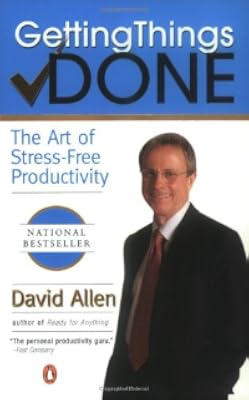
Getting Things Done: The Art of Stress-Free Productivity
by David Allen
On This Page
Description
The book Lifehack calls "The Bible of business and personal productivity.""A completely revised and updated edition of the blockbuster bestseller from 'the personal productivity guru'"—Fast Company
Since it was first published almost fifteen years ago, David Allen’s Getting Things Done has become one of the most influential business books of its era, and the ultimate book on personal organization. “GTD” is now shorthand for an entire way of approaching professional and personal show more tasks, and has spawned an entire culture of websites, organizational tools, seminars, and offshoots.
Allen has rewritten the book from start to finish, tweaking his classic text with important perspectives on the new workplace, and adding material that will make the book fresh and relevant for years to come. This new edition of Getting Things Done will be welcomed not only by its hundreds of thousands of existing fans but also by a whole new generation eager to adopt its proven principles. show less
Tags
Recommendations
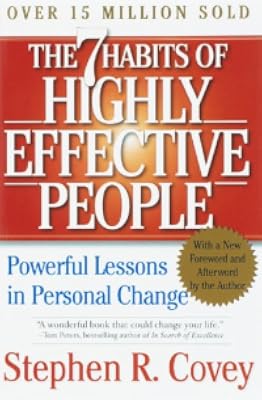
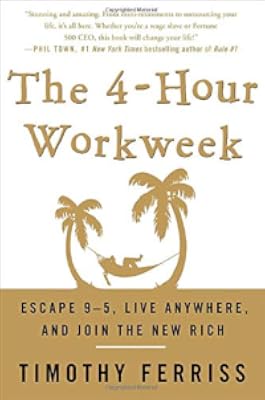
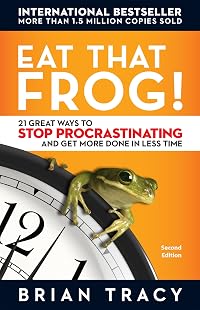
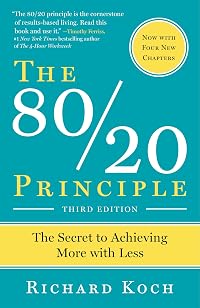
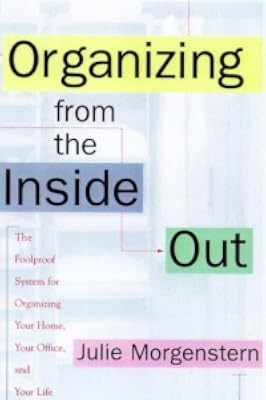
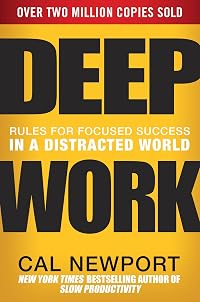
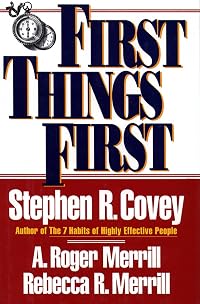
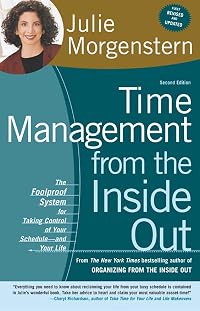
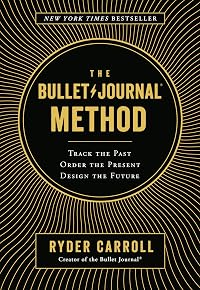
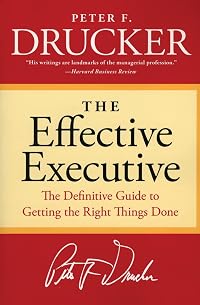
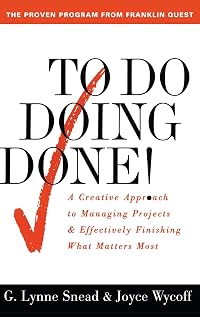
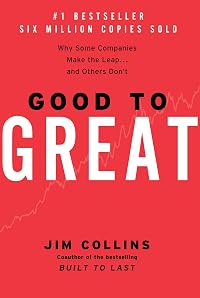
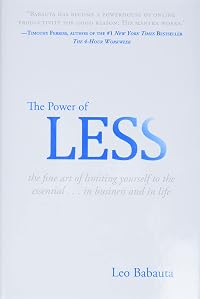
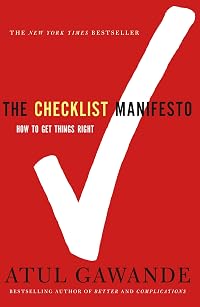
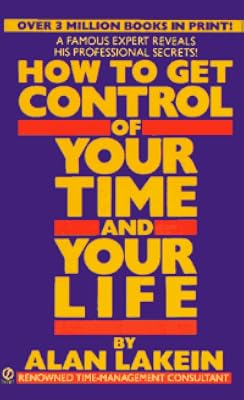
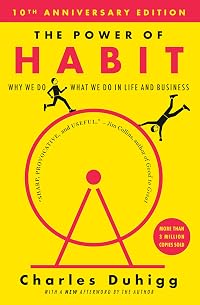
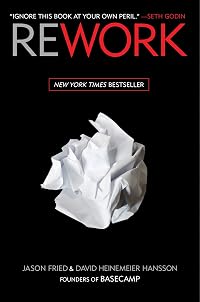
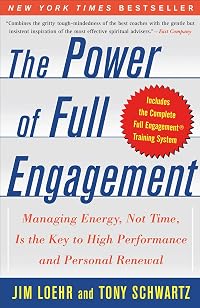
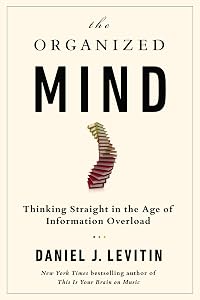
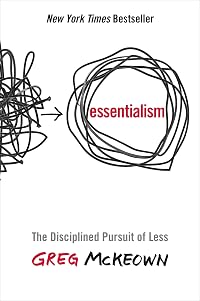


Member Recommendations
BogAl You know what to do. Now, figure out how to to it.
31
Member Reviews
I read this book on a recommendation because I was momentarily overwhelmed with a project list and life events. I was remarkably un-impressed.
A caveat: There are two types of books for which I have no use. Those are business books, and self-help books. This is a business self-help book, so...there was little chance that I would receive it well.
That said, there are objective reasons for my dislike. First of all, this is a sluggish read. Allen's style is difficult to follow, and extremely repetitive. I found my own organizational system to already include several of his more practical components (not difficult considering how simple those components are), only in different forms or combinations. That, I think, is one of the primary show more detractors for me: Adopting someone else's organizational system has never been met with success in my own experience. I've spent a good amount of time honing my own system through college, grad school, and professional life, and I've found two things: 1. It's dependent on my personality and understanding how my own brain works, and 2. It fluctuates depending on life circumstances (i.e.: everything that worked in undergrad doesn't work the same now, and the system needs to be changed periodically).
Allen's system is incredibly prescriptive and, despite his claims as to its flexibility, remarkably inflexible.
My second profound disagreement with Allen is a philosophical one. He writes with the assumption that no time should ever be spent with nothing to do. He contends that one's system should include something that can be done whenever there is a free moment waiting in line, waiting for someone else to show up...whenever. Granted, his target audience is the stereotypical executive who is driven by numbers and for whom being constantly busy is seen as some sort of achievement. Creatives, though, understand that time spent doing nothing and not focusing on any task is often when the best inspiration for something new arrives, or when the problem that's been nagging on a project is suddenly solved because your brain has had time to process things. This says nothing of research showing how un-healthy and detrimental to one's attention span it is to never permit one's mind to wander aimlessly.
I also find it a bit counter-productive to invest the time in struggling to finish this book when I, in fact, have many other projects that require my attention.
I'm very much in favor of having a good system of organization. I understand competing priorities, and how easy it is for anything not recorded in the proper place to get lost. I also recognize that not everyone can necessarily formulate their own system, and may need some coaching. Allen's system, though, isn't it. This book promises much and delivers little. It's a waste of time that you likely can't afford if you're considering reading. show less
A caveat: There are two types of books for which I have no use. Those are business books, and self-help books. This is a business self-help book, so...there was little chance that I would receive it well.
That said, there are objective reasons for my dislike. First of all, this is a sluggish read. Allen's style is difficult to follow, and extremely repetitive. I found my own organizational system to already include several of his more practical components (not difficult considering how simple those components are), only in different forms or combinations. That, I think, is one of the primary show more detractors for me: Adopting someone else's organizational system has never been met with success in my own experience. I've spent a good amount of time honing my own system through college, grad school, and professional life, and I've found two things: 1. It's dependent on my personality and understanding how my own brain works, and 2. It fluctuates depending on life circumstances (i.e.: everything that worked in undergrad doesn't work the same now, and the system needs to be changed periodically).
Allen's system is incredibly prescriptive and, despite his claims as to its flexibility, remarkably inflexible.
My second profound disagreement with Allen is a philosophical one. He writes with the assumption that no time should ever be spent with nothing to do. He contends that one's system should include something that can be done whenever there is a free moment waiting in line, waiting for someone else to show up...whenever. Granted, his target audience is the stereotypical executive who is driven by numbers and for whom being constantly busy is seen as some sort of achievement. Creatives, though, understand that time spent doing nothing and not focusing on any task is often when the best inspiration for something new arrives, or when the problem that's been nagging on a project is suddenly solved because your brain has had time to process things. This says nothing of research showing how un-healthy and detrimental to one's attention span it is to never permit one's mind to wander aimlessly.
I also find it a bit counter-productive to invest the time in struggling to finish this book when I, in fact, have many other projects that require my attention.
I'm very much in favor of having a good system of organization. I understand competing priorities, and how easy it is for anything not recorded in the proper place to get lost. I also recognize that not everyone can necessarily formulate their own system, and may need some coaching. Allen's system, though, isn't it. This book promises much and delivers little. It's a waste of time that you likely can't afford if you're considering reading. show less
Getting things done had a lot of common sense organizational tips, and even a few "ah-ha!" moments for me. This book is supposed to be helpful to everyone (stay at home moms to CEO's), but I think it would be a lot more helpful to people who have trouble organizing stuff (hint: do you have piles of stuff to do or put away sitting all over the place, or do you have trouble remembering to do important stuff because you're busy doing less important stuff that also needs to get done?). I felt the book was a little too pre-digital age, though. Too much "put each item of your to-do list on a separate piece of paper and put it in your inbox." How many trees has this guy killed?!
My friend who is a productivity nerd recommended this book. He has never steered me wrong yet with a book recommendation. That recommendation coupled with the fact that he is the most productive person I know in every area of his life showed me that the information contained in this book could change my life. I have read through it once and now I am going through it while implementing the changes. It's not easy to change the ways that I have been doing things but I need this change. I have noticed some lapses in memory since taking a new position at work and I know that if I had a system where everything was written down somewhere externally then I would not have forgotten what I was relying on my mind to remember. Not everyone will use show more everything from this book but like the author says, even if you only use the two minute rule then it will be worth it. The two minute rule is that if there is a task that comes to you that you know will take two minutes or less just go ahead and do it. I would highly recommend this book and am committing myself to putting as much of it into practice as I can. show less
Fairly long, but likely packed full of stuff that can be helpful at various stages in the process of executing everything the book advocates. On the surface level, start by doing things that can be done in 2 minutes or less right away. It gets them done while you are thinking about them, which takes them off your mind and prevents you from interrupting yourself later to do the task.
Second basic idea is to write down your tasks as they pop into your head and add them to your organized lists. The idea behind this strategy is that keeping the to-do in your head takes up brain power which could be better used.
Third idea is to keep clear and concise organization for everything that comes across your desk. File it for reference, make it into show more an action item, or trash it.
I don't feel busy enough or ready to fully execute all the methods in the boom, but I will do what I can to follow these three tips, and already I notice an improvement. It does inspire me to stay organized to be most productive, so that was the point of me reading the book.
In terms of style, the book is sometimes long-winded and excessive with the examples, but most of the questions about the methods that I had while reading are eventually answered ( just stick with the book to the end). I like that the final section is at the end, not the beginning where some authors may have put it, because when you start reading you just want the strategy, not the theory. Wise.
I still have questions about how to really create the action lists and keep them fully current, but he does say the process can take two years or more to fully become habitual and complete. I believe it.
Overall, it is a practical and realistic system that is well-explained. show less
Second basic idea is to write down your tasks as they pop into your head and add them to your organized lists. The idea behind this strategy is that keeping the to-do in your head takes up brain power which could be better used.
Third idea is to keep clear and concise organization for everything that comes across your desk. File it for reference, make it into show more an action item, or trash it.
I don't feel busy enough or ready to fully execute all the methods in the boom, but I will do what I can to follow these three tips, and already I notice an improvement. It does inspire me to stay organized to be most productive, so that was the point of me reading the book.
In terms of style, the book is sometimes long-winded and excessive with the examples, but most of the questions about the methods that I had while reading are eventually answered ( just stick with the book to the end). I like that the final section is at the end, not the beginning where some authors may have put it, because when you start reading you just want the strategy, not the theory. Wise.
I still have questions about how to really create the action lists and keep them fully current, but he does say the process can take two years or more to fully become habitual and complete. I believe it.
Overall, it is a practical and realistic system that is well-explained. show less
I believe there can be value in the principles outlined here - it reminds me of the Agile methodology. But just like Agile, the principles were transformed into a bloated thing trying to serve too many purposes.
You have to admire the irony of a book on productivity that has four introductions.
There's the foreword by someone who's read the book and briefly met the author. Then there's the author's introduction to the revised edition. It's followed by the author's regular introduction followed by a chapter where he almost starts outlining the methodology. They're trying so hard to sell you something without actually saying what it is.
David Allen sounds like a snake oil salesman, but he might have stumbled upon something decent.
Read the show more Wikipedia page. It's more engaging and efficient. show less
You have to admire the irony of a book on productivity that has four introductions.
There's the foreword by someone who's read the book and briefly met the author. Then there's the author's introduction to the revised edition. It's followed by the author's regular introduction followed by a chapter where he almost starts outlining the methodology. They're trying so hard to sell you something without actually saying what it is.
David Allen sounds like a snake oil salesman, but he might have stumbled upon something decent.
Read the show more Wikipedia page. It's more engaging and efficient. show less
I read this book about 14 years ago, not long after it was first published. Just re-read it, in a newer 2015 edition. I love a lot of his techniques, they’ve been super-valuable to me. And I like bits and pieces of his writing. But some parts are really cliche-ridden and the book as a whole seemed poorly organized.
The self-help book industry runs rampant with cliches, euphemisms and gimmicks. Allen's book is a breath of fresh air in that it consolidates the most sound approaches in a way that speaks volumes to both the high-powered CEO and the graduate student just trying to get her dissertation organized!
Allen's approach is centered around the idea that "things that have your attention should have your INTENTION." Although we know that is common sense, Allen offers a method of storing and processing the multitude of attention items, so that one can focus on one item at a time without worry about what's on the back-burner.
In addition to offering concrete ideas for organization, Allen also addresses the emotional and psychological impediments to show more getting things done. Unlike other authors, he does not patronize his readers or make them believe that they should aspire to be paragons of organizational virtue. He's a realist and offers many instances of "if you can't do this, try this."
Even if one does not adapt Allen's entire system for a lifetime, components like the "2-minute rule" and the "Next Action Decision Making Standard" will positively impact personal productivity and mindset. This book will NOT help those who aren't yet at the place where they want to make a positive change.
Allen has defined the "core methods that don't change with the times, and which, when applied, always work." Having read many books on organization and procrastination, I do believe this is the last book I will need to read. show less
Allen's approach is centered around the idea that "things that have your attention should have your INTENTION." Although we know that is common sense, Allen offers a method of storing and processing the multitude of attention items, so that one can focus on one item at a time without worry about what's on the back-burner.
In addition to offering concrete ideas for organization, Allen also addresses the emotional and psychological impediments to show more getting things done. Unlike other authors, he does not patronize his readers or make them believe that they should aspire to be paragons of organizational virtue. He's a realist and offers many instances of "if you can't do this, try this."
Even if one does not adapt Allen's entire system for a lifetime, components like the "2-minute rule" and the "Next Action Decision Making Standard" will positively impact personal productivity and mindset. This book will NOT help those who aren't yet at the place where they want to make a positive change.
Allen has defined the "core methods that don't change with the times, and which, when applied, always work." Having read many books on organization and procrastination, I do believe this is the last book I will need to read. show less
Members
- Recently Added By
Published Reviews
ThingScore 100
It is simply the best personal productivity book I’ve ever read, and there’s material in this book that can apply to anyone’s life, whether you’re a manager or a writer or a professional or a stay-at-home parent.
added by mikeg2
Lists

Top Five Books of 2013
1,562 works; 721 members

Best Self Help Books
87 works; 18 members

Boardtc's reading list
24 works; 1 member

ORCID Book list
27 works; 1 member

Unshelved Book Clubs
579 works; 5 members

List of Ten Influential/Important Books
10 works; 1 member

Books Read in 2019
4,052 works; 110 members

Tom's Bookstore
346 works; 2 members

Mind Expanding Books by hackerkid
581 works; 8 members

Books Read in 2016
4,666 works; 199 members

Books Read in 2020
4,379 works; 123 members

Books & Films Referenced by Cal Newport's Deep Work
43 works; 1 member

Books Read in 2022
5,226 works; 115 members

My List
302 works; 1 member
Reading List
3 works; 1 member

Unread books
1,063 works; 83 members
Talk Discussions
Past Discussions
Connecting GTD and the Art of procrastination! in The Syntopical readers (December 2015)
Author Information

24+ Works 16,126 Members
Author and productivity consultant David Allen was born on December 28, 1945. He attended New College in Sarasota, Florida. He is the founder and chairman of the David Allen Company, which is a management consulting, coaching, and training company. He wrote three books: Getting Things Done: The Art of Stress-Free Productivity; Ready for Anything: show more 52 Productivity Principles for Work and Life; and Making It All Work: Winning at the Game of Work and the Business of Life. (Bowker Author Biography) show less
Some Editions
Series
Belongs to Publisher Series
Work Relationships
Contains
Is a supplement to
Has as a student's study guide
Getting Things Done: The Art of Stress-Free Productivity by David Allen (The 5 Minute Book Summary) by ReadSmartly ReadSmartly
A Joosr Guide to... Getting Things Done by David Allen The Art of Stress-Free Productivity by David Allen
Summary | Getting Things Done: By David Allen - The Art of Stress Free Productivity (New Version Book - 2015) (Getting Things Done: The Art of Stress ... Book, Audible, Hardcover, Audiobook 1) by FastDigest-Summary
Summary - Getting Things Done:: David Allen's Book-- A Full Summary!(Version 2015) -- The Art of Stress Free Productivity! (Getting Things Done: A ... ... Book, Planner, Paperback, Audio, Summary) by Summary -Pro
Common Knowledge
- Canonical title
- Getting Things Done: The Art of Stress-Free Productivity
- Original title
- Getting Things Done
- Original publication date
- 2001
- Dedication
- For Kathryn, my extraordinary partner in life and work
- Publisher's editor
- Goldstein, Janet
- Blurbers
- Blanchard, Ken; Mroz, John Edwin; Seybold, Patricia; Shellenburger, Sue; Alsop, Stewart; Henricks, Mark (show all 12); Hammonds, Keith H.; Hesselbein, Frances; Magee, Stephen P.; Godfrey, Joline; Goldsmith, Marshall; Endicott, Carola
Classifications
Statistics
- Members
- 13,230
- Popularity
- 596
- Reviews
- 201
- Rating
- (4.01)
- Languages
- 18 — Czech, Danish, Dutch, English, Estonian, Finnish, French, German, Hungarian, Italian, Japanese, Lithuanian, Norwegian (Bokmål), Polish, Russian, Spanish, Swedish, Portuguese (Portugal)
- Media
- Paper, Audiobook, Ebook
- ISBNs
- 106
- UPCs
- 3
- ASINs
- 47