On This Page
Description
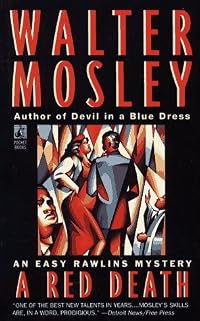
It's 1953 in Red-baiting, blacklisting Los Angeles, a moral tar pit ready to swallow Easy Rawlins. Easy is out of "the hurting business" and into the housing (and favor) business when a racist IRS agent nails him for tax evasion. Special Agent Darryl T. Craxton, FBI, offers to bail him out if he agrees to infiltrate the First American Baptist Church and spy on alleged communist organizer Chaim Wenzler. That's when the murders begin....Tags
Recommendations









Member Reviews
Excellent mystery and great historical fiction. Even though the book is grittier than I usually care for, it didn't bother me in this one the way it so often does. Maybe it is because though Easy isn't exactly a law-abiding citizen all the time, he does have a conscience and doesn't go out of his way to look for trouble, the way so many of the criminal 'protagonists' in noir novels seem to do.
I found the parts about Craxton looking for dirt on Jewish labor organizer (and concentration camp survivor) Chaim Wenzler particularly fascinating. Though Hoover's name is never mentioned, I could sense his shadow behind Craxton.
I found the parts about Craxton looking for dirt on Jewish labor organizer (and concentration camp survivor) Chaim Wenzler particularly fascinating. Though Hoover's name is never mentioned, I could sense his shadow behind Craxton.
Fair warning is due - it takes you a third of the way before this book takes fire and the ending (which shall not be revealed here) is the usual sub-Chandleresque rush of confused data that plays the same role, in this genre, as the 'deus ex machina' once did in courtly drama - BUT the core of the book is brilliant.
Why is Mosley so good when he is good (and when he is not stuck in the usual problem of series writers that he has to recapitulate so much for late entrants)? Because he writes with precision about a world that, although alien to non-Americans of any hue and only known by way of older men's reminiscences by younger American blacks, comes alive in his hands.
Hue is an interesting aspect of the case here. I know of no white show more author who describes so frequently the precise tone of a man's skin. Mosley repeatedly and precisely gives you the skin tone of almost every non-white character in a way that defines his perceived character. He also describes the second skin - the clothes - in a way that makes you understand better how variation of costume was one means of differentiating a man from the crowd.
Two FBI agents are indistinguishable ('twins') in dark uniforms and white skins but the ethnic communities are multi-coloured not only in skin tone but in dress. Then it hits you (as a non-black) - the agents of white society in their drab suits and white skin look alike in the way that we see aliens in movies look alike.
Society, to the oppressed ethnic subject, is rule by conquering aliens and, of course, this trope has been used since in popular culture to show humans (invariably white) ruled by aliens in order to spread a message of violent gung-ho resistance to oppression.
You can see Mosley moving his story line towards the world of Black Power in stages here but he matches this with his first 'Philadelphia' black cop. This black is certainly not fazed by his racist colleagues and, though a bit player, he hints at the other option for the black community - integration on equal terms and civil rights. This is done subtly so that you would scarcely notice.
I always thought I understood the role of charismatic religion in black society but now I feel that I understand it - an education given so lightly as to be imperceptible. Nor does he compromise with a character whose morality is Chandler's but placed under conditions of oppression where the costs of goodness and integrity mean that you are likely not to survive for long if you are too precious.
There are many subtleties in this book - not least the understated play on the experience of the holocaust for one of the protagonists (black-Jewish relations often being particularly fraught in more recent times) with a metaphor of the poisoning of red ants' nests coming across as surprisingly unheavy-handed.
And, finally, beyond politics and religion, you have sex. Mosley at one point seems to be constantly rutting and this is subversive, given the 'moral' standards of contemporary white society. There is no guilt or shame in either him or the women - or in the society they live in. Mosley courageously does not worry about stereotyping but just lays out the lifestyle of this relatively young black male and lets the reader choose his stance.
You realise that Philip Marlowe had it easy as a white man in a white society. While you may despair at our hero's tormented self-centredness at times, it is not for us to judge - even though not a few black 'resistance' heroes might want to string him up as the worst sort of exploitative petty capitalist on the make.
The story is set in the period when America was witch-hunting Communists and the 'take' on the politics of the black community under these conditions is subtle. This is all you need to know about the story. show less
Why is Mosley so good when he is good (and when he is not stuck in the usual problem of series writers that he has to recapitulate so much for late entrants)? Because he writes with precision about a world that, although alien to non-Americans of any hue and only known by way of older men's reminiscences by younger American blacks, comes alive in his hands.
Hue is an interesting aspect of the case here. I know of no white show more author who describes so frequently the precise tone of a man's skin. Mosley repeatedly and precisely gives you the skin tone of almost every non-white character in a way that defines his perceived character. He also describes the second skin - the clothes - in a way that makes you understand better how variation of costume was one means of differentiating a man from the crowd.
Two FBI agents are indistinguishable ('twins') in dark uniforms and white skins but the ethnic communities are multi-coloured not only in skin tone but in dress. Then it hits you (as a non-black) - the agents of white society in their drab suits and white skin look alike in the way that we see aliens in movies look alike.
Society, to the oppressed ethnic subject, is rule by conquering aliens and, of course, this trope has been used since in popular culture to show humans (invariably white) ruled by aliens in order to spread a message of violent gung-ho resistance to oppression.
You can see Mosley moving his story line towards the world of Black Power in stages here but he matches this with his first 'Philadelphia' black cop. This black is certainly not fazed by his racist colleagues and, though a bit player, he hints at the other option for the black community - integration on equal terms and civil rights. This is done subtly so that you would scarcely notice.
I always thought I understood the role of charismatic religion in black society but now I feel that I understand it - an education given so lightly as to be imperceptible. Nor does he compromise with a character whose morality is Chandler's but placed under conditions of oppression where the costs of goodness and integrity mean that you are likely not to survive for long if you are too precious.
There are many subtleties in this book - not least the understated play on the experience of the holocaust for one of the protagonists (black-Jewish relations often being particularly fraught in more recent times) with a metaphor of the poisoning of red ants' nests coming across as surprisingly unheavy-handed.
And, finally, beyond politics and religion, you have sex. Mosley at one point seems to be constantly rutting and this is subversive, given the 'moral' standards of contemporary white society. There is no guilt or shame in either him or the women - or in the society they live in. Mosley courageously does not worry about stereotyping but just lays out the lifestyle of this relatively young black male and lets the reader choose his stance.
You realise that Philip Marlowe had it easy as a white man in a white society. While you may despair at our hero's tormented self-centredness at times, it is not for us to judge - even though not a few black 'resistance' heroes might want to string him up as the worst sort of exploitative petty capitalist on the make.
The story is set in the period when America was witch-hunting Communists and the 'take' on the politics of the black community under these conditions is subtle. This is all you need to know about the story. show less
Mosley takes the traditional hard-boiled detective mystery and gives it a refreshing spin by spotlighting African-American communities. His lead, Easy Rawlins, is a Louisiana/Texas transplant now working in L.A. as a janitor, maintaining the building he surreptitiously owns. As any decent detective fiction, the city plays a prominent role in the life of the detective and Mosley nicely captures a range of African-American experiences in period L.A.
Easy is in a tough spot and is hoping Mofass, the man who manages his property, can give him some tips on dealing with the I.R.S. Mofass' not-so-helpful advice is to lie to the Revenue Man.
"Go on in there and lie, Mr. Rawlins. Tell 'em you don't own nuthin.' Tell 'em that you a workin' man show more and that somebody must have it out for you to lie and say you got that property. Tell 'em that and then see what they gotta say."
When he arrives at home, the wife of his volatile best friend, Mouse, is in his house with their son. She's split with Mouse and thought Easy would provide a refuge.
"She could knock a man into next Tuesday, or she could hold you so tight that you felt like a child again, in your mother's loving embrace."
Easy follows Mofass' advice, but gets a bad feeling when the agent subsequently asks him to get (non-existent) paperwork together and to be ready for his call. When he returns downtown, he comes to the attention of a different kind of fed. It's 1953, Communist hunting is a national pastime, and when Easy is offered an out with the IRS if he 'reports for his country,' he finds himself reluctantly agreeing.
I like the language, although thankfully Easy's internal dialogue avoids dialect, as I find it makes for a long read. I like the awareness Easy has of modifying his speech patterns depending on which sub-culture he's in. It is a survival strategy, and I enjoy seeing how Easy uses it to his advantage.
Mosley is masterful at weaving different race issues in the story, from Easy getting an education on the marginalization Jews experience, to Easy's own interaction with mostly white lawmen. There's an enlightening scene where he meets a black L.A. detective at a death scene and watches him interact as equals with his partner. I also love the way Easy describes the people he meets:
"His color was dark brown but bright, as if a powerful lamp shone just below his skin."
"A sepia-colored woman"
"John's face looked like it was chiseled in ebony"
"Jackson's skin was so black that it glinted blue when in the full sun"
It's a small thing that doesn't appear in most white detective fiction novels, but it says so much about the author and his regard for his characters.
Problems for me center around narrative arc; I feel like Mosley slips a lot of characters in, some important and many incidental. It becomes hard to distinguish between important and inconsequential. More significantly, I found the character of Easy a bit less likeable in this book; as Kemper said, Easy has "man ho tendencies," making him harder to like. I give Mosley credit for putting Easy in a hard ethical place in relation to the I.R.S.; however, he also does it to him in his emotional life. Between the sexism, Easy's own anti-Semitism, his willingness to use the church, and his affair, there isn't much to redeem him.
Note: this edition also contains a short story, 'Silver Lining,' inserted before the main story. It proves to be a sort of spoiler for a plot point in A Red Death. If you care about such things, skip it.
Overall, two and a half stars. I think I'll head back to [b:Devil in a Blue Dress|37100|Devil in a Blue Dress (Easy Rawlins, #1)|Walter Mosley|https://i.gr-assets.com/images/S/compressed.photo.goodreads.com/books/1336545202l/37100._SY75_.jpg|1344080] and capture more of the magic I remember from Easy.
Cross posted at http://clsiewert.wordpress.com/2013/04/04/a-red-death-featuring-an-original-easy... show less
Easy is in a tough spot and is hoping Mofass, the man who manages his property, can give him some tips on dealing with the I.R.S. Mofass' not-so-helpful advice is to lie to the Revenue Man.
"Go on in there and lie, Mr. Rawlins. Tell 'em you don't own nuthin.' Tell 'em that you a workin' man show more and that somebody must have it out for you to lie and say you got that property. Tell 'em that and then see what they gotta say."
When he arrives at home, the wife of his volatile best friend, Mouse, is in his house with their son. She's split with Mouse and thought Easy would provide a refuge.
"She could knock a man into next Tuesday, or she could hold you so tight that you felt like a child again, in your mother's loving embrace."
Easy follows Mofass' advice, but gets a bad feeling when the agent subsequently asks him to get (non-existent) paperwork together and to be ready for his call. When he returns downtown, he comes to the attention of a different kind of fed. It's 1953, Communist hunting is a national pastime, and when Easy is offered an out with the IRS if he 'reports for his country,' he finds himself reluctantly agreeing.
I like the language, although thankfully Easy's internal dialogue avoids dialect, as I find it makes for a long read. I like the awareness Easy has of modifying his speech patterns depending on which sub-culture he's in. It is a survival strategy, and I enjoy seeing how Easy uses it to his advantage.
Mosley is masterful at weaving different race issues in the story, from Easy getting an education on the marginalization Jews experience, to Easy's own interaction with mostly white lawmen. There's an enlightening scene where he meets a black L.A. detective at a death scene and watches him interact as equals with his partner. I also love the way Easy describes the people he meets:
"His color was dark brown but bright, as if a powerful lamp shone just below his skin."
"A sepia-colored woman"
"John's face looked like it was chiseled in ebony"
"Jackson's skin was so black that it glinted blue when in the full sun"
It's a small thing that doesn't appear in most white detective fiction novels, but it says so much about the author and his regard for his characters.
Problems for me center around narrative arc; I feel like Mosley slips a lot of characters in, some important and many incidental. It becomes hard to distinguish between important and inconsequential. More significantly, I found the character of Easy a bit less likeable in this book; as Kemper said, Easy has "man ho tendencies," making him harder to like. I give Mosley credit for putting Easy in a hard ethical place in relation to the I.R.S.; however, he also does it to him in his emotional life. Between the sexism, Easy's own anti-Semitism, his willingness to use the church, and his affair, there isn't much to redeem him.
Note: this edition also contains a short story, 'Silver Lining,' inserted before the main story. It proves to be a sort of spoiler for a plot point in A Red Death. If you care about such things, skip it.
Overall, two and a half stars. I think I'll head back to [b:Devil in a Blue Dress|37100|Devil in a Blue Dress (Easy Rawlins, #1)|Walter Mosley|https://i.gr-assets.com/images/S/compressed.photo.goodreads.com/books/1336545202l/37100._SY75_.jpg|1344080] and capture more of the magic I remember from Easy.
Cross posted at http://clsiewert.wordpress.com/2013/04/04/a-red-death-featuring-an-original-easy... show less
Excellent mystery and great historical fiction. Even though the book is grittier than I usually care for, it didn't bother me in this one the way it so often does. Maybe it is because though Easy isn't exactly a law-abiding citizen all the time, he does have a conscience and doesn't go out of his way to look for trouble, the way so many of the criminal 'protagonists' in noir novels seem to do.
I found the parts about Craxton looking for dirt on Jewish labor organizer (and concentration camp survivor) Chaim Wenzler particularly fascinating. Though Hoover's name is never mentioned, I could sense his shadow behind Craxton.
I found the parts about Craxton looking for dirt on Jewish labor organizer (and concentration camp survivor) Chaim Wenzler particularly fascinating. Though Hoover's name is never mentioned, I could sense his shadow behind Craxton.
I always started sweeping on the top floor of the Magnolia Street apartments. It was a three-story pink stucco building between Ninety-first Street and Ninety-first Place, just about a mile outside of Watts proper. Twelve units. All occupied for that month. I had just gathered the dirt into a neat pile when I heard Mofass drive up in his new '53 Pontiac. I knew it was him because there was something wrong with the transmission, you could hear it singing from a block away. I heard his door slam and his loud hello to Mrs. Trajillo, who always sat at her window on the first floor - best burglar alarm you could have.
Easy has made a life for himself, one of reasonable prosperity but very much in the margins, so a letter from the IRS that could end up landing him in jail is acause of some concern. But what if he does a job for this shifty FBI guy looking for Commies and possibly something else? Then his very dangerous friend's wife and son turn up on his doorstep, with an agitated Mouse not far behind. Things get complicated.
another book I read for my contemporary lit class, and I am glad I read it. I am finding that this genre, the hard boiled PI novels, have depth! the main character, Easy, is SK tragic hero. He knows that no matter what happens in this case, there will be other battles. I liked this a lot
Members
- Recently Added By
Lists

501 Must-Read Books
508 works; 72 members
Author Information

105+ Works 26,585 Members
Walter Mosley was born in Los Angeles, California on January 12, 1952. He graduated from Johnson State College in Vermont. His first book, Devil in a Blue Dress, was published in 1990, won a John Creasy Award for best first novel, and was made into a motion picture starring Denzel Washington in 1995. He is the author of the Easy Rawlins Mystery show more series, the Leonid McGill Mystery series, and the Fearless Jones series. His other works include Always Outnumbered, Always Outgunned, 47, Last Days of Ptolemy Grey, and Twelve Steps toward Political Revelation. He has received numerous awards, including an O. Henry Award, the Carl Brandon Society Parallax Award, and PEN America's Lifetime Achievement Award. (Bowker Author Biography) Walter Mosley is the author of the acclaimed Easy Rawlins series of mysteries, the novels "Blue Light" and "RL's Dream", and two collections of stories featuring Socrates Fortlow, "Always Outnumbered", "Always Outgunned", for which he received the Anisfield-Wolf Award, and "Walkin' the Dog". He is a member of the board of directors of the National Book Awards and the founder of the PEN American Center's Open Book Committee. At various times in his life he has been a potter, a computer programmer, & a poet. He was born in Los Angeles & now lives in New York. (Publisher Provided) show less
Awards and Honors
Notable Lists
Series

Belongs to Publisher Series
Mirabilia (119)
Work Relationships
Common Knowledge
- Canonical title
- A Red Death
- Original title
- A Red Death
- Original publication date
- 1991
- People/Characters
- Ezekiel "Easy" Rawlins; Jackson Blue; Chaim Wenzler; Mofass; Reginald Arnold Lawrence; Etta Mae Harris (show all 32); LaMarque Harris; Alfred Bontemps; John McKenzie; Odell Jones; Rita Cook; Andre Lavender; Darryl T. Craxton; Raymond "Mouse" Alexander; Dupreee Bouchard; Andrew Reedy; Poinsettia Jackson; Quinten Naylor; Jackie Orr; Melvin Pride; Willie Sacks; Parker Lamont; Winona Fitzpatrick; Juanita Barnes; Shaker Jones; Shirley Wenzler; Mercedes Bark; William Wharton; Chester Fisk; Tania Lee; Sonja Achebe; Roberta Jefferson
- Important places
- Los Angeles, California, USA
- Epigraph
- "If it wasn't for bad luck I wouldn't have no luck at all.."
old blues refrain - Dedication
- Dedicated to the memory of Alberta Jackson and Lillian Keller with special thanks to Daniel and Elizabeth Russell
- Original language*
- Anglais (Etats-Unis) (Etats-Unis)
*Some information comes from Common Knowledge in other languages. Click "Edit" for more information.
Classifications
Statistics
- Members
- 1,034
- Popularity
- 24,891
- Reviews
- 27
- Rating
- (3.68)
- Languages
- 13 — Chinese, Danish, Dutch, English, Estonian, Finnish, French, German, Italian, Norwegian (Bokmål), Portuguese, Spanish, Swedish
- Media
- Paper, Audiobook, Ebook
- ISBNs
- 41
- ASINs
- 14