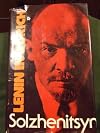
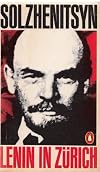
Lenin in Zurich
by Aleksandr Solzhenitsyn
On This Page
Description
In his new book, Lenin in Zurich, Alexander Solzhenitsyn introduces the central character of his projected multi-volume account of Russian revolutionary history - Vladimir Ilyich Lenin. With incomparable knowledge of the events and people, Solzhenitsyn explores and clarifies the crucial years 1914-17 and draws a compelling psychological portrait of the man who was the architect of the Revolution. Lenin in Zurich chronicles Lenin's frustrating exile in Switzerland, from his arrest in Cracow show more and subsequent flight to Zurich at the outbreak of World War I to his departure for Russia in 1917 in a sealed train protected by the German government, years in which Lenin stood alone, without support from the deeply divided European socialist movement and isolated from his fellow revolutionaries. Solzhenitsyn examines the private man as well as the familiar public figure, concentrating on facets of Lenin's personality and behavior that have been glossed over in most books about him: his disillusionment and dejection over the future of the Bolshevik cause, his love for lnessa Armand, his preoccupation with the difficulties of subsidizing the activities of his party, and, most important, his secret safe-passage and financial arrangements with the Germans. The Lenin that emerges is not the distant, omniscient leader and theoretician but a man of human proportions with human needs, weaknesses, and concerns. Solzhenitsyn has set himself the task of establishing the truth of Russia's early revolutionary years and of probing the character of the man who had such an indelible impact on his country's fate. Lenin in Zurich fulfills the challenge of this task, reaffirming once again Solzhenitsyn's remarkable vision and his vital place in world literature. show lessTags
Recommendations




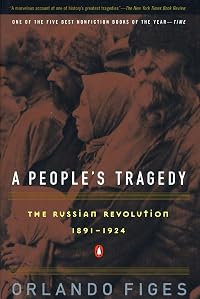

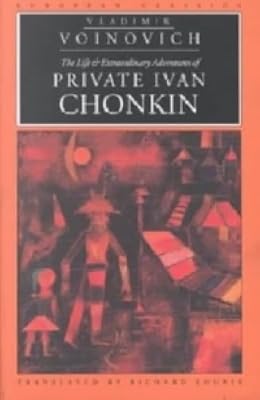
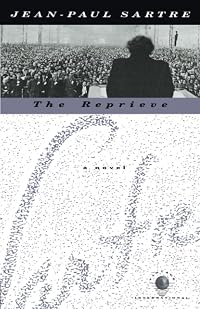

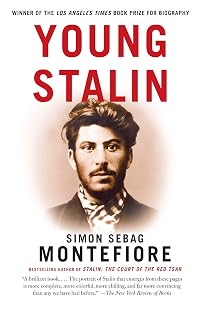




















Member Recommendations
by anonymous user
Member Reviews
You wouldn't want this to be the first Solzhenitsyn novel you ever read; else likely it would be the last as well. The mental intensity is there - and few do it better than Solzhenitsyn. But rather than being that which drives normal men in extraordinary situations (such an in his 'Cancer Ward' or 'One Day..'), it is the mental intensity of an extraordinary man in very (very) ordinary circumstances.
In this historical novel, Lenin sits in exile in Zurich waiting for fate's random/inevitable progress to develop to the point where he can step up onto the world revolutionary stage. Solzhenitsyn portrays Lenin's success as largely accidental, his only talent being to destroy every one of his potential rival's reputation while waiting in the show more wings. This is character assassination par excellence, and who could begrudge Solzhenitsyn the indulgence of taking a small time-out to drag the reputation of the Saint of communism down into the mud for a while - particularly as Lenin was perhaps a greater hater than Solzhenitsyn himself.
Is there any place for the reader in all of this? At the end of the day I felt more 'used' than entertained, that in some great calculus of truth or justice I'd given Solzhenitsyn a 'tick' by making the effort to read this. I wondered why I had bothered. I could at least appreciate Sozhenitsyn as a great miner of facts and gossip and braced myself to tackle a real biography of Lenin that I've had on hold for about twenty years unread. But this was a case of being driven to take this step, rather than being inspired to do so, and I can't find any reason to rate this book higher than a curiosity for folk who already appreciate Solzhenitsyn. But if you are coming to Solzhenitsyn for the first time I'd skip Zurich and try his 'One Day in the life of Ivan Denisovich'. And if you get a taste for his searing honesty and ability to penetrate everything, I'd recommend 'Cancer Ward', my own pick for the most powerful novel of all time. show less
In this historical novel, Lenin sits in exile in Zurich waiting for fate's random/inevitable progress to develop to the point where he can step up onto the world revolutionary stage. Solzhenitsyn portrays Lenin's success as largely accidental, his only talent being to destroy every one of his potential rival's reputation while waiting in the show more wings. This is character assassination par excellence, and who could begrudge Solzhenitsyn the indulgence of taking a small time-out to drag the reputation of the Saint of communism down into the mud for a while - particularly as Lenin was perhaps a greater hater than Solzhenitsyn himself.
Is there any place for the reader in all of this? At the end of the day I felt more 'used' than entertained, that in some great calculus of truth or justice I'd given Solzhenitsyn a 'tick' by making the effort to read this. I wondered why I had bothered. I could at least appreciate Sozhenitsyn as a great miner of facts and gossip and braced myself to tackle a real biography of Lenin that I've had on hold for about twenty years unread. But this was a case of being driven to take this step, rather than being inspired to do so, and I can't find any reason to rate this book higher than a curiosity for folk who already appreciate Solzhenitsyn. But if you are coming to Solzhenitsyn for the first time I'd skip Zurich and try his 'One Day in the life of Ivan Denisovich'. And if you get a taste for his searing honesty and ability to penetrate everything, I'd recommend 'Cancer Ward', my own pick for the most powerful novel of all time. show less
The amount of mind-reading and fictionalizing events moves this book to or out of the boundaries of history. It is often difficult to tell how much of Solzhenitsyn's account is fact. I will probably have to read Willi Gautschi's "Lenin als Emigrant in der Schweiz" too, which was published around the same time. The first notable element of Lenin's stay in Switzerland was the complicity of the Austrian and German governments that enabled his entry and exit as an enemy citizen during wartime. The folly of the German government to fuel Lenin's movement after the abdication of the tsar is probably the worst decision of the 20th century (apart from starting WWI).
If Solzhenitsyn is right, Lenin did not enjoy his stay in Switzerland. While he show more made good use of the infrastructure, he disdained the relative prosperity and lack of revolutionary fervor. The Swiss Social Democrats of the (war)time were a timid lot. Only after the war did they strike (which was brutally broken up). While some of their political claims were adopted in the Swiss parliament, it took the Social Democrats another world war to achieve a seat at the table of government. As one poster of the recent Occupy Paradeplatz said in a typical Swiss diminutive "We think capitalism is not so good.", Switzerland is not the place to execute political revolutions but a good one to hatch them. show less
If Solzhenitsyn is right, Lenin did not enjoy his stay in Switzerland. While he show more made good use of the infrastructure, he disdained the relative prosperity and lack of revolutionary fervor. The Swiss Social Democrats of the (war)time were a timid lot. Only after the war did they strike (which was brutally broken up). While some of their political claims were adopted in the Swiss parliament, it took the Social Democrats another world war to achieve a seat at the table of government. As one poster of the recent Occupy Paradeplatz said in a typical Swiss diminutive "We think capitalism is not so good.", Switzerland is not the place to execute political revolutions but a good one to hatch them. show less
If we accept Solshenitsin's portrait of Lenin while in exile in Switzerland, certainly, Lenin would have been judged by most observers as a failure of little consequence. Lenin, totally dependent financially on hand outs, had lost contact with Russia; was constantly fighting with fellow socialists; and had the most modest of followers. What saved him was comrade Parvus's contact with the German government and that government's urgent desire to end the second front with Russia. Not to be underplayed is a very steadfast wife. Solzhenitsin does allow Lenin a stubborn persistence and alertness. This novel ends with the seeming miracle of Lenin in a sealed railway car about to arrive in Finland Station, St. Petersburg. It should be noted show more that this phase of revolution in Russia caught Lenin and his friends completely by surprise by starting without him and them.
Quotes: (pages 152-153) “When Parvus first openly called on them to help Germany he had filled them with virginal horror. How nice it would be for them to sit the war out as innocent neutrals, salving their consciences with moral indignation, both against war and against those who dared to interfere with it.
But the decisive roll belonged to the Russian socialists and they were subject of careful analysis in the Plan submitted to the German government. They were broken up into scattered groups, and therefore impotent---but not one of these groups must be neglected, each must be used. It was necessary to lead them along the road to unity---arrange a unification congress, for which Geneva would be most suitable. Some groups, such as the Bund, the Spilka, the Poles, the Finns, would certainly support the Plan. But unity could not be achieved without reconciling the Bolsheviks and Mensheviks. And that would depend entirely on the Bolshevik leader, who was presently in Switzerland.”
(page 164) “That was his strategy---to start an avalanche with a few light snowfalls. Without Lenin's help, in the remaining months he could do no more. But the date itself was fraught with menace for Tsarism: even if there were no agents at work, if Yevgenia Sumenson spent not single ruble January 9 still would not pass quietly. All the same, it would be good to give a helping hand.
So Parvus, who had Count von Brockdorff-Rantzau completely under his spell, and practically dictated his dispatches from Copenhagen to the Foreign Ministry, confidently promised revolution in Russia on January 9, 1916.”
(page 252) “' To tell him that we accept immediately Grimm's proposal for us to travel via Germany. That way we can make a fool of Grimm by making it look likr hid proposal!!! Tell the whole world it comes from him. That the Swiss socialists are shoving us out. A member of the Swiss Parliament!'
Now, this really was a stroke of genius! Bravo, Radek! Grimm would set up a howl! Make frantic excuses! But it's always easier to spit than to wipe it off---you have to learn to spit first and at the right moment.
'The scoundrel will wish he'd printed my pamphlets after all.'” show less
Quotes: (pages 152-153) “When Parvus first openly called on them to help Germany he had filled them with virginal horror. How nice it would be for them to sit the war out as innocent neutrals, salving their consciences with moral indignation, both against war and against those who dared to interfere with it.
But the decisive roll belonged to the Russian socialists and they were subject of careful analysis in the Plan submitted to the German government. They were broken up into scattered groups, and therefore impotent---but not one of these groups must be neglected, each must be used. It was necessary to lead them along the road to unity---arrange a unification congress, for which Geneva would be most suitable. Some groups, such as the Bund, the Spilka, the Poles, the Finns, would certainly support the Plan. But unity could not be achieved without reconciling the Bolsheviks and Mensheviks. And that would depend entirely on the Bolshevik leader, who was presently in Switzerland.”
(page 164) “That was his strategy---to start an avalanche with a few light snowfalls. Without Lenin's help, in the remaining months he could do no more. But the date itself was fraught with menace for Tsarism: even if there were no agents at work, if Yevgenia Sumenson spent not single ruble January 9 still would not pass quietly. All the same, it would be good to give a helping hand.
So Parvus, who had Count von Brockdorff-Rantzau completely under his spell, and practically dictated his dispatches from Copenhagen to the Foreign Ministry, confidently promised revolution in Russia on January 9, 1916.”
(page 252) “' To tell him that we accept immediately Grimm's proposal for us to travel via Germany. That way we can make a fool of Grimm by making it look likr hid proposal!!! Tell the whole world it comes from him. That the Swiss socialists are shoving us out. A member of the Swiss Parliament!'
Now, this really was a stroke of genius! Bravo, Radek! Grimm would set up a howl! Make frantic excuses! But it's always easier to spit than to wipe it off---you have to learn to spit first and at the right moment.
'The scoundrel will wish he'd printed my pamphlets after all.'” show less
We read histories and biographies to know what happened. It’s natural to wonder what could have made a man like Lenin tick, to move him to do the terrible things he did. For possible answers to that one, we have to turn to literature. “Lenin in ZurichâÂ? is Aleksandr SolzhenitsynâÂÂs attempt at a portrait. Lenin is shown to be hot-tempered, dogmatic, driven, and poisoned with contempt of the masses, of the aristocrats, and especially of the bourgeois (âÂÂTurn your guns not against your fellow workers, but against your bourgeois enemies.âÂ?). He was such a fierce hater that Solzhenitsyn, in a great chapter in which Lenin drifts in and out of a stupor due to a crippling headache, posits a neurological show more etiology: LeninâÂÂs brain was diseased. LeninâÂÂs family had a history of brain maladies. Lenin knew he had something wrong with his brain and he had been told by Swiss specialists and an old Russian peasant that he might not live for very long. I recommend Lenin in Zurich because I think Solzhenitsyn is a good writer. show less
I encountered the work as if written on Zettel. The book had fallen into my hands by chance; I had had no intension of reading it. But after weeks of opening it at random, reading a few sentences here and there, the narrative gained coherence. An image emerged from the pieces of the puzzle, blank spots filled in, some areas gained in strength, then stood out when re-read once, twice or more.
Living with a work in this way is that how one should encounter all books? really all works of art? The in-fighting. The suspicion. Parvus looms large. He will build himself a villa on Schwanenwerder. But most of the comrades will end up tortured and shot by Stalin.
The authenticity of the account I cannot judge, neither the degree of fictional show more inventiveness in characterising the protagonists. A.S. lists his sources. (V-11 / VI-11) show less
Living with a work in this way is that how one should encounter all books? really all works of art? The in-fighting. The suspicion. Parvus looms large. He will build himself a villa on Schwanenwerder. But most of the comrades will end up tortured and shot by Stalin.
The authenticity of the account I cannot judge, neither the degree of fictional show more inventiveness in characterising the protagonists. A.S. lists his sources. (V-11 / VI-11) show less
Alexander Solzhenitsyn introduces Vladimir Ilyich Lenin, the key character of his planned multi-volume chronicle of Russian revolutionary history, in his new novel, Lenin in Zurich. Solzhenitsyn explores and illuminates the important years 1914-17, drawing a gripping psychological portrait of the man who was the architect of the Revolution, with unrivaled knowledge of the events and individuals. From his arrest in Cracow and subsequent flight to Zurich at the outbreak of World War I to his departure for Russia in 1917 in a sealed train protected by the German government, Lenin in Zurich chronicles Lenin's frustrating exile in Switzerland, years in which he stood alone, without support from the deeply divided European socialist movement show more and isolated from his fellow revolutionaries. Solzhenitsyn investigates the private individual as well as the public figure. show less
Ratings
Members
- Recently Added By
Author Information

218+ Works 44,477 Members
Aleksandr Solzhenitsyn was born on December 11, 1918 in Kislovodsk in the northern Caucusus Mountains. He received a degree in physics and math from Rostov University in 1941. He served in the Russian army during World War II but was arrested in 1945 for writing a letter criticizing Stalin. He spent the next decade in prisons and labor camps and, show more later, exile, before being allowed to return to central Russia, where he worked as a high school science teacher. His first novel, One Day in the Life of Ivan Denisovich, was published in 1962. In 1970, he was awarded the Nobel Prize for Literature. In 1974, he was arrested for treason and exiled following the publication of The Gulag Archipelago. He moved to Switzerland and later the U. S. where he continued to write fiction and history. When the Soviet Union collapsed, he returned to his homeland. His other works include The First Circle and The Cancer Ward. He died due to a heart ailment on August 3, 2008 at the age of 89. (Bowker Author Biography) show less
Some Editions
Series
Belongs to Publisher Series
Work Relationships
Is contained in
Common Knowledge
- Canonical title*
- Lenin Zürichissä
- Original title
- Ленин ь Цюрнхе
- Original publication date
- 1975
- People/Characters
- Vladimir Lenin; Nadezhda Krupskaya; Parvus (Aleksandr Lazarevič Helphand); Karl Radek; Jakov Hanecki; Wilhelm Münzenberg (show all 9); Inessa Armand; Robert Grimm; Fritz Platten
- Important places
- Kraków, Lesser Poland, Poland; Nowy Targ, Lesser Poland, Poland; Zürich, Zürich, Switzerland
- Important events
- Rivoluzione del 1905; Grande Guerra; Rivoluzione di febbraio
- First words
- Sì, sì, sì, sì! Sempre questo vizio, questo impulso del rischio, questa smania di seguire a tutti i costi la tua linea che ti fa subito cieco e sordo e ti impedisce di accorgerti di ciò che vedrebbe un bambino, della rid... (show all)icola evidenza del pericolo che ti minaccia dappresso!
- Quotations
- Nell’autunno del quattordici, quando i quattro quinti dei socialisti di tutta Europa si erano pronunciati per la difesa della patria e il restante quinto mugghiava pavidamente "pace", Lenin, solo fra tutti i socialisti del ... (show all)mondo aveva trovato e rivelato a tutti cosa si dovesse fare: la guerra -ma un’altra- e subito!!
- Last words
- (Click to show. Warning: May contain spoilers.)[Karl Radek] Insomma, Vladimir Il'ič, tempo sei mesi: o ministri o impiccati!
- Original language
- Russo
*Some information comes from Common Knowledge in other languages. Click "Edit" for more information.
Classifications
- Genres
- Fiction and Literature, General Fiction, Historical Fiction
- DDC/MDS
- 891.7 — Literature & rhetoric Literatures of other languages East Indo-European and Celtic literatures Russian and East Slavic languages
- LCC
- PZ4 .S69 — Language and Literature Fiction and juvenile belles lettres Fiction and juvenile belles lettres Fiction in English
Statistics
- Members
- 477
- Popularity
- 63,881
- Reviews
- 6
- Rating
- (3.59)
- Languages
- 11 — Dutch, English, Estonian, Finnish, French, German, Italian, Polish, Russian, Spanish, Swedish
- Media
- Paper
- ISBNs
- 21
- ASINs
- 17