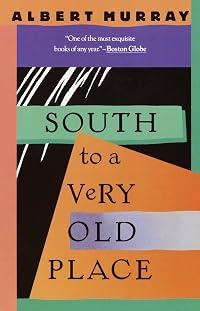
South to a Very Old Place
by Albert Murray
On This Page
Description
The highly acclaimed novelist and biographer Albert Murray tells his classic memoir of growing up in Alabama during the 1920s and 1930s in South to a Very Old Place. Intermingling remembrances of youth with engaging conversation, African-American folklore, and astute cultural criticism, it is at once an intimate personal journey and an incisive social history, informed by "the poet's language, the novelist's sensibility, the essayist's clarity, the jazzman's imagination, the gospel singer's show more depth of feeling" (The New Yorker). "His perceptions are firmly based in the blues idiom, and it is black music no less than literary criticism and historical analysis that gives his work its authenticity, its emotional vigor and its tenacious hold on the intellect. . . . [It] destroys some fashionable sociopolitical interpretations of growing up black."--Toni Morrison, The New York Times Book Review show lessTags
Recommendations









Member Reviews
Albert Murray grew up in Mobile, Alabama, went to Tuskegee, and lived and worked in New York. In South to a Very Old Place, which started as an assignment for Harper's, Murray recounts conversations, reminisces about his college years, travels throughout the regions he's known, and reflects on race relations of the time and what's changed - and hasn't - since he left.
From New York, he starts in New Haven, then south to Greensboro, Atlanta, Tuskegee, Mobile and finally gives us New Orleans, Greenville and Memphis all in one chapter. He draws the reader in referring to himself in second person, so "you" are the one traveling and having these conversations. He'll often riff on a thought in long, winding sentences that read like a written show more form of musical improvisation. In some chapters, his main focus is on conversations with white Southern writers, where he might discuss Faulkner or other literary works he and his conversational partner admire. In "Tuskegee", he mostly talks about his own experiences there in the 1930s. And in "Mobile," much of the conversation is older folks that remembered him as a boy talking to him about various topics, such as one old-timer about Lyndon Johnson. He unabashedly does not explain himself or his point of view for a white audience, and in some ways I'm sure I missed some things that he was saying, but in another it was good for me not to be the center of attention. I enjoyed it, was challenged by it, and ultimately would read another of Murray's works. show less
From New York, he starts in New Haven, then south to Greensboro, Atlanta, Tuskegee, Mobile and finally gives us New Orleans, Greenville and Memphis all in one chapter. He draws the reader in referring to himself in second person, so "you" are the one traveling and having these conversations. He'll often riff on a thought in long, winding sentences that read like a written show more form of musical improvisation. In some chapters, his main focus is on conversations with white Southern writers, where he might discuss Faulkner or other literary works he and his conversational partner admire. In "Tuskegee", he mostly talks about his own experiences there in the 1930s. And in "Mobile," much of the conversation is older folks that remembered him as a boy talking to him about various topics, such as one old-timer about Lyndon Johnson. He unabashedly does not explain himself or his point of view for a white audience, and in some ways I'm sure I missed some things that he was saying, but in another it was good for me not to be the center of attention. I enjoyed it, was challenged by it, and ultimately would read another of Murray's works. show less
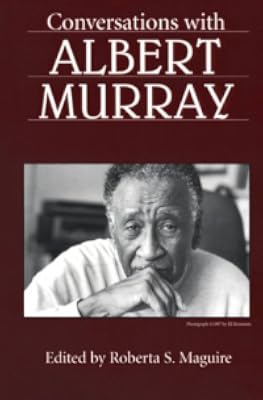
Although not as well known as his contemporaries James Baldwin and Ralph Ellison, Albert Murray (1916-2013) was also a leading 20th century African American critic, essayist and novelist, who wrote six widely acclaimed works of nonfiction, in addition to co-authoring Morning Blues: The Autobiography of Count Basie, and four novels, along with numerous articles in magazines and literary journals. He was born just outside of Mobile, Alabama and after graduating from Tuskegee Institute (now University) in Alabama he embarked on a long teaching career in numerous colleges while honing his literary craft, serving with distinction in the U.S. Army and Air Force, and traveling widely within the United States, Western Europe and North show more Africa.
Murray read widely from the Western canon of 20th century American literature, and his non-fiction books and essays blended his reading with his lifelong love of the blues and jazz idioms.
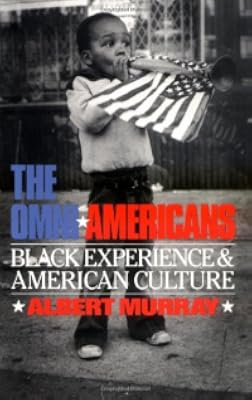
His first published book, The Omni-Americans (1970), was a collection of polemicized essays that did not spare mostly White social scientists who often inaccurately miscategorized and exaggerated problems in the Black community and the Black family in the 1960s and attempted to portray Blacks as a distinctive and flawed race rather than examining the root causes of Black poverty such as lack of well paying jobs, substandard housing, inferior education and the residual effects of segregation despite federal legislation that supposedly put Blacks on equal footing as Whites. However, Blacks who played the race card and sought to prey on White guilt, or call for Black separatism or even armed violence were not spared from Murray's sharp pen, as he argued that Blacks and Whites shared many of the same values and would be best served by working towards a common good.
South to a Very Old Place, published in 1971, was Murray's second book, and it was the result of Harper's editor (and fellow Southerner) Willie Morris’s proposal that Murray return to the post Civil Rights era South, mainly to speak with established and highly regarded Southern writers and newspaper editors such as Robert Penn Warren, Walker Percy and Edwin Yoder of the Greensboro Daily News. His paid Southern jaunts also allow him to revisit his old homes, Mobile and Tuskegee.
Oddly enough, Murray starts his Southern journey by going north (or, rather, to the north and east) to New Haven, Connecticut, in order to speak with Yale professor Robert Penn Warren, the Kentuckian best known for his novel All the King's Men and his essays in favor of racial integration in the South, including Who Speaks for the Negro?, a collection of interviews with civil rights leaders that was published in 1965. En route by train from New York to New Haven we are introduced to Murray's unique writing style, an extended version of Duke Ellington's “Take the A Train,” combined with a blues riff that would have made Ma Rainey proud:
"Anyway all of that is also part and parcel of something else to which you are always returning without even going as far south from Lenox Terrace as 110th Street: that interior benchmark site where things are still very much the same as they once were when you used to squint one of your whicker-bill-mocking eyes and stiffen the weather-beaten whicker-billness of your neck not only as if it were red-devil tootletoddle red but also as if it were wrinkled and stringy from too much tobacco chewing and so much white shirt-and-collar-and-tie wearing, standing with one foot forward and your whicker-bill elbows stuck out skinny, holding your back and shoulders as if you were just about to break into whicker-bill Charley Comesaw's bony butt, high instep strut as soon as the billygoat fiddles started sawing…"
Murray humorously compares Robert Penn Warren to a hillbilly insurance man from Kentucky, the type of Southern man who would ignore you as a Black man while you mock him for his country mannerisms. The two have a congenial conversation about the relations between Blacks and Whites in the Deep South, which demonstrates the sizable gulf that still separates the races, a theme that is repeated in conversations with other well meaning Southern White men of letters throughout the book.
Another theme is the repeated appearances of Uncle Remus and Aunt Hagar, two well known characters of African American folklore who were wise elderly former slaves that overcame hardship and imparted downhome wisdom to all who would listen to them.
For this reader the most interesting chapters were “Tuskegee,” where he received his bachelor's degree and taught for several years, and especially his home town of “Mobile.” He is soon recognized by former neighbors and friends, who playfully tease him about the places he has lived and his many accomplishments, but after he shows them that he is the same downhome boy of his youth, who hasn't forgotten where he came from and the people who nurtured him, he is quickly embraced and praised as one of their own who made them proud.
Although it is dated by over half a century, South to a Very Old Place provides a valuable examination of the American South shortly after the legal dismantling of segregation, as its residents adjust to this new reality, and, in returning to Mobile, Murray demonstrates that you can go home again after all. show less
Murray read widely from the Western canon of 20th century American literature, and his non-fiction books and essays blended his reading with his lifelong love of the blues and jazz idioms.
His first published book, The Omni-Americans (1970), was a collection of polemicized essays that did not spare mostly White social scientists who often inaccurately miscategorized and exaggerated problems in the Black community and the Black family in the 1960s and attempted to portray Blacks as a distinctive and flawed race rather than examining the root causes of Black poverty such as lack of well paying jobs, substandard housing, inferior education and the residual effects of segregation despite federal legislation that supposedly put Blacks on equal footing as Whites. However, Blacks who played the race card and sought to prey on White guilt, or call for Black separatism or even armed violence were not spared from Murray's sharp pen, as he argued that Blacks and Whites shared many of the same values and would be best served by working towards a common good.
South to a Very Old Place, published in 1971, was Murray's second book, and it was the result of Harper's editor (and fellow Southerner) Willie Morris’s proposal that Murray return to the post Civil Rights era South, mainly to speak with established and highly regarded Southern writers and newspaper editors such as Robert Penn Warren, Walker Percy and Edwin Yoder of the Greensboro Daily News. His paid Southern jaunts also allow him to revisit his old homes, Mobile and Tuskegee.
Oddly enough, Murray starts his Southern journey by going north (or, rather, to the north and east) to New Haven, Connecticut, in order to speak with Yale professor Robert Penn Warren, the Kentuckian best known for his novel All the King's Men and his essays in favor of racial integration in the South, including Who Speaks for the Negro?, a collection of interviews with civil rights leaders that was published in 1965. En route by train from New York to New Haven we are introduced to Murray's unique writing style, an extended version of Duke Ellington's “Take the A Train,” combined with a blues riff that would have made Ma Rainey proud:
"Anyway all of that is also part and parcel of something else to which you are always returning without even going as far south from Lenox Terrace as 110th Street: that interior benchmark site where things are still very much the same as they once were when you used to squint one of your whicker-bill-mocking eyes and stiffen the weather-beaten whicker-billness of your neck not only as if it were red-devil tootletoddle red but also as if it were wrinkled and stringy from too much tobacco chewing and so much white shirt-and-collar-and-tie wearing, standing with one foot forward and your whicker-bill elbows stuck out skinny, holding your back and shoulders as if you were just about to break into whicker-bill Charley Comesaw's bony butt, high instep strut as soon as the billygoat fiddles started sawing…"
Murray humorously compares Robert Penn Warren to a hillbilly insurance man from Kentucky, the type of Southern man who would ignore you as a Black man while you mock him for his country mannerisms. The two have a congenial conversation about the relations between Blacks and Whites in the Deep South, which demonstrates the sizable gulf that still separates the races, a theme that is repeated in conversations with other well meaning Southern White men of letters throughout the book.
Another theme is the repeated appearances of Uncle Remus and Aunt Hagar, two well known characters of African American folklore who were wise elderly former slaves that overcame hardship and imparted downhome wisdom to all who would listen to them.
For this reader the most interesting chapters were “Tuskegee,” where he received his bachelor's degree and taught for several years, and especially his home town of “Mobile.” He is soon recognized by former neighbors and friends, who playfully tease him about the places he has lived and his many accomplishments, but after he shows them that he is the same downhome boy of his youth, who hasn't forgotten where he came from and the people who nurtured him, he is quickly embraced and praised as one of their own who made them proud.
Although it is dated by over half a century, South to a Very Old Place provides a valuable examination of the American South shortly after the legal dismantling of segregation, as its residents adjust to this new reality, and, in returning to Mobile, Murray demonstrates that you can go home again after all. show less
The Jazz at Lincoln Center co-founder, still a critic at 97, shows a love of improvisational speech in these early essays, which I found via James Marcus of Harper's magazine. Murray was the Cornel West of his day, a public intellectual who deals street-corner jive to hilarious effect. Here he's nominally on a Southern road trip to interview other writers for Harper's, but mostly he's doing the dozens on his establishment subjects, or offering mock-grudging praise: Robert Penn Warren he compares to a Telegraph Road mechanic for his "pretty-goodness." The actual interviews are genteel and barely alluded to amid a series of Murray rants: He sells woof tickets but isn't taking buyers, or will not admit his subjects might be droll in their show more own ofay way. Finally at his high-school and college haunts Murray yields the floor to his peers, who seem to have been given much wit because much is expected of them. Murray's editor didn't know what to make of this brand of "outrageous nonsense" in 1971 but now it's a hipper trip than "Soul Train" ever charted. Even now Murray's nonstop patter comes off as what comedians call "too smart for the room." That phrase also came to mind once when I heard Dan Quayle tell political jokes to an outside-the-Beltway crowd. Murray seems to think of his "Old South" subjects as we do George H.W. Bush's maladroit vice president: A cutting contest would be unfair. And Murray would kill. show less
Ratings
Members
- Recently Added By
Lists

Imani Perry: Eight Books That Explain the South
8 works; 1 member
Author Information

20+ Works 1,125 Members
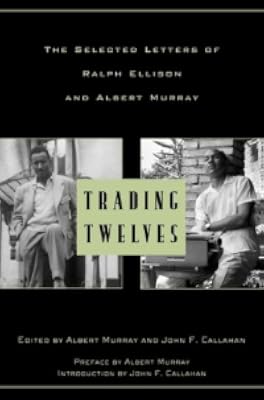
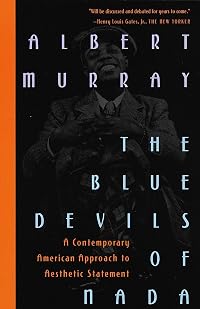
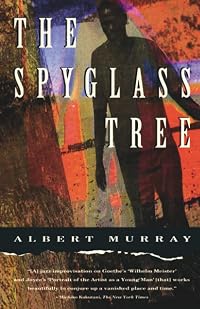
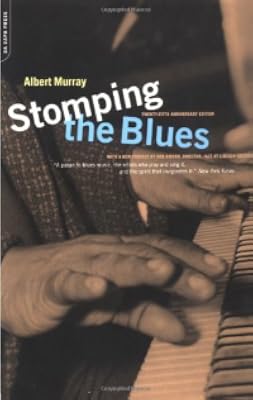
Albert Murray was born in Nokomis, Alabama, in 1916. He was educated at Tuskegee Institute, where he later taught literature & directed the college theater. He is the author of many works of fiction & nonfiction, including "The Seven League Boots", "The Blue Devils of Nada" & "The Spyglass Tree". He lives in New York City. (Publisher Provided) show more Albert Murray was born in 1916 and grew up in Magazine Point, Alabama. He received a bachelor's degree from the Tuskegee Institute in Alabama in 1939. During World War II, he served in the Air Force and received a master's degree from New York University after returning to the U.S. He was a novelist and critic who believed that blues and jazz were not primitive sounds, but sophisticated art. He wrote a series of autobiographical novels, a nonfiction narrative entitled South to a Very Old Place, an acclaimed history of music entitled Stomping the Blues, and several books of criticism including The Blue Devils of Nada: A Contemporary American Approach to Aesthetic Statement. In 2000, the Modern Library released Trading Twelves, a collection of letters between Murray and fellow author Ralph Ellison. He died on August 18, 2013 at the age of 97. (Bowker Author Biography) show less
Series
Belongs to Publisher Series
Work Relationships
Classifications
- Genres
- Biography & Memoir, Nonfiction, Travel, Literature Studies and Criticism, History
- DDC/MDS
- 917.5 — History & geography Geography & travel Geography of and travel in North America Southeastern U.S.
- LCC
- F216.2 .M87 — Local History of the United States, Canada and Latin America United States local history The South. South Atlantic States
- BISAC
Statistics
- Members
- 96
- Popularity
- 335,262
- Reviews
- 3
- Rating
- (4.13)
- Languages
- English
- Media
- Paper, Ebook
- ISBNs
- 4
- ASINs
- 3