On This Page
Description
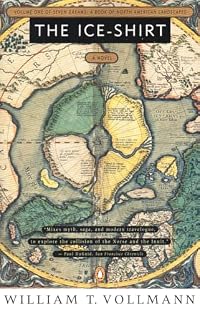
The time is the tenth century A.D. The newcomers are a proud and bloody-minded people whose kings once changed themselves into wolves. The Norse have advanced as implacably as a glacier from Iceland to the wastes of Greenland 'and from there to the place they call 'Vinland the Good.? The natives are a bronze-skinned race who have not yet discovered iron and still see themselves as part of nature. As William T. Vollmann tells the converging stories of these two peoples-and of the Norsewomen show more Freydis and Gudrid, whose venomous rivalry brings frost into paradise-he creates a tour-de-force of 'speculative history, ' a vivid amalgam of Icelandic saga, Inuit creation myth, and contemporary travel writing that yields a new and utterly original vision of our continent and its past. show lessTags
Recommendations













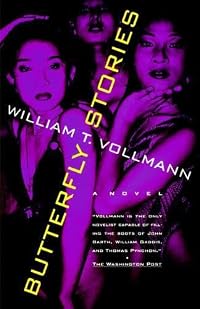















Member Reviews
It was all unspeakably grand and beautiful. The world was still being created here.Let's consider story for a moment. Let's consider the beginning, where belief has not yet turned to mythos and faith is sequestered by time, place, and persona. There is heat, and cold, a micro view of the inevitability of history birthing conflict through contact. Right now, there is the diaspora of culture, centuries of mixing and melding that the modern world can now afford to hazily view as all having occurred under a single people, a single label, a single story. Right now, for now, common knowledge has not yet self inoculated with fear of the Other.
Right now is not our now; to know, we must dream.
There's a great deal of fact here, amongst all the show more 'artistic license' and 'personal experience' and all those other words the realm of objectivity and of effective argument would be caught dead wearing. Effective argument, you say? This is a story, not a debate. Here, we can relax, take off the lens of fact checking and put up our feet on the highly decorated pedestal of Fiction. But sit up for a moment. Take up that mobile unit of comfortable padding, and take off the gilt. There's carving there, for '... carving itself had still some sacredness, as on Thorvald's bench-boards, where the wood-rings and ring-spirals met each other in splendid confusion upon the plain of wooden darkness, so that each bench-board seemed to depict a night-lit boneyard: - the unsprung wood bones of Eirik's grandfathers, frozen in their clatter even though snakes and hoops and vertebrae pierced each other through; and these bones were loam for the new, as figures of birds and warriors sprouted from the wood.'
All of that? A smidgen of fact, and a whole lot of lies. Think back to your nonfiction, with its bibliographical lists (by what means), its accredited writers (how much is that piece of paper really worth), its systematic inclusion and far weightier exclusion throughout the millenia of just what we are willing to do to make ourselves believe. The authors are objective? Better to disprove the concept of entropy. We are calibrated and in turn calibrate, but not that much.
The world-circle was embroidered on it, from Jötunheim to Wineland the Good, so that upon going into his bed King Harald felt as if he were clothing himself in the whole world (for he did not think that that was also what dead men did, when they were covered in earth).What do the walking dead and Vikings have in common? Along with a burgeoning slice of the entertainment market, a predilection for death, the death, the flesh of humanity cowering in one festering corner and Ragnarök mounting the other. No undead here (or maybe a few, you never can tell), but what with the Inuit and Skraeling, Jenuaq and Norse, Amortortak turned Blue Shirt turned Hel turned, turning, turn. Today's audiences crave a defined mortality, while I desire a thought of women as people, men as people, the Other as people, all crafting a mortality out of their own concourse. Not always nice, these people, but always a history, always a culture, always the ties that bind of their own formation. Never a label.
You have your age old manuscripts, you have your personal interactions, you have the land. Somewhere in there is the winner, the loser, and the blood. The Dream Shirt you'll have to weave on your own.
But where corpses were buried secretly, there the grass grows thick; such signs (and there are ever so many others!) may be read by those to whom truth is more important than beauty.show less
Among the saga-inspired novels I have been reading for my project, William T. Vollmann’s The Ice-Shirt manages to be simultaneously the one closest to the original sagas and the most contemporary one; it also is by far the most original and innovative and promises to be the beginning of an outright masterwork.
The masterwork in question is Seven Dreams, a series of seven novels (four of which having been published as I am writing this) dealing with the encounters between native American Indians and Europeans. The Ice-Shirt is the first volume in that series, and it’s about Norse and Inuit, about how Europeans first came to Vinland and how they immediately began to change it to fit their own preconceptions. It is a retelling of show more several sagas and few Inuit myths, a historical novel and a travelogue about modern-day Greenland, it is fantastic and journalistic, fiction and non-fiction, entirely subject and very matter-of-fact. It’s not like anything else I have read and for me marks the discovery of what might very well be one of the greatest living novelists.
Yes, I’m gushing a bit, but The Ice-Shirt is astonishing on so many levels that I do not even know where to start. Maybe with the sheer ambition of Vollmann’s project which seems to aim for nothing less than re-inventing the historical novel. Traditionally, historical novels have aimed to make history come alive for the reader and claimed a more vivid and immediate access to lived history than was possible to historical science, relying not on dry numbers and reports but on memorable characters and a rousing tale. This is both the appeal and the problem at the heart of the historical, as writers ineluctably had to invent things, create fictional characters, imagine events, make up thoughts and dialogue for historical characters - all of which became somewhat problematic with modernism and the crisis of representation that brought with it an increasing awareness that the fictional nature of those tales undermines their claims to present history, that they give the reader not the historical truth but just made-up tales. Vollmann is very aware of this problem, he calls his novel “a pack of lies” in the first few pages, and he is not being coy but means it seriously.
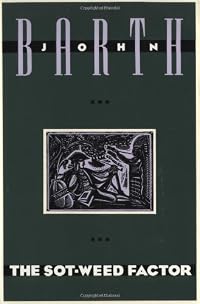
The Ice-Shirt is not a postmodern novel either, however – there is a tradition of the postmodern historical novel, starting (as far as I can see) with John Barth’s The Sot-Weed Factor, that gleefully embraces its fictional nature, abandons all pretense of presenting a plausible historical plot and focuses on language and structure instead – John Barth writing a whole novel in 17th century English in The Sot-Weed Factor, or Umberto Eco approaching the Middle Ages by way of a Sherlock Holmes narrative in The Name of the Rose. Which does avoid the problems inherent in representation, but has a distinct (and possibly unavoidable) tendency to fall into the other extreme of over-emphasizing fiction with the inherent danger of subsuming historical language into a general language-game and thus ending up with a historical novel that has nothing historical about it.
The Ice-Shirt (and, I assume, William Vollmann’s entire Seven Dreams sequence) does neither of those things (or maybe both, depending on your own perspective), but marks an entirely new approach to the historical novel. That approach distinguishes itself from the traditional historical narrative by not aiming to be a representation of historical events but instead mainly basing itself on a text, and sets itself apart from the postmodern approach by treating that text consistently as truth, no matter how outlandish its claims might appear to a modern-day reader.
In The Ice-Shirt, that text are the Icelandic sagas, and the first of many astounding things Vollmann does in this novel is that he takes them utterly at face value, treats them like they were a factual historical document, supernatural elements and all. This means that for a large part The Ice-Shirt is a retelling of Icelandic sagas (mainly the two Vinland sagas, but with elements of some others thrown in, like the Ynglinga saga); Vollmann even goes so far as to assume the persona of an Nordic bard, William the Blind (which is an interesting choice of name and alludes, I assume, not just to his bad eyesight). As he also adopts the style and tone of the sagas (showing, here as in other places, an almost uncanny stylistic versatility), the novel might easily have drifted towards becoming a mere pastiche of the sagas – but even a cursory look at a random page will show that it is very far from being derivative.
Vollmann never lets his readers forget that they are reading work written from a contemporary perspective by a contemporary author. One – and the most obvious – way in which he achieves this is by interspersing passages describing his own travels in Iceland – those serving the double function by marking the distance to the past, but also to underline that Vollmann is essentially writing non-fiction here. Or maybe it would be more correct to say that The Ice-Shirt is a novel written with a non-fictional attitude. It does not at all read like a novel, even a multiple-character, protagonist-less novel like Dos Passos’ Manhattan Transfer or his USA trilogy. The narrative reaches from mythical pre-history to the end of the 20th century, encompassing a multitude of characters and voices; and while it eventually comes to focus on the Norse colonization of Greenland and the tale of Freydis Eiriksdottir in particular, it still swerves in several different directions and different times. It is like Vollmann was willfully ignoring or intentionally breaking every single rule ever made in regard to novel plotting (and I would not be surprised if that was exactly what he did) – and yet, The Ice-Shirt nowhere comes even close to being the amorphous mess it by all rights should be, because Vollmann keeps it all together on the level of theme and motif, weaving a very tight web of images from whose interrelations rises a complex edifice of metaphors and symbols.
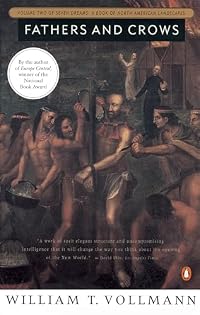
Vollmann bases his novel on a documented historical discourse rather than a more or less imaginary version of events, the sagas themselves rather than what they might be referring to, but at the same time does not dismiss the claim of that discourse to veracity from an advanced 21st-century point of view. Instead, he takes the sagas by their word and in this way shows us the sagas and the world they originate from in an entirely new way and also gives us an entirely new form of historical novel, one that is aware of all the problems and complexities of writing about history as any postmodern historical novel but at the same time manages to give us a sense of that history as vivid and intense as any tradionalist historical novel. The Ice-Shirt is by no means an easy to read novel – it demands a considerable amount of concentration and attention by its readers and does not reward them with the pleasures a well-rounded story arc conveys, or even just of things falling into place. With all its formal and linguistic brilliance, the novel remains a very messy affair, but I think it is precisely by virtue of this tension that it achieves a degree of immersion which to the best of my knowledge is unprecedented in the historical novel genre. I am very keen on reading more of Vollmann’s Seven Dreams sequence (and in fact am, as I’m writing this, almost halfway through Fathers and Crows) and starting to suspect that the series might well turn out to be one of the major literary achievements of your time. show less
The masterwork in question is Seven Dreams, a series of seven novels (four of which having been published as I am writing this) dealing with the encounters between native American Indians and Europeans. The Ice-Shirt is the first volume in that series, and it’s about Norse and Inuit, about how Europeans first came to Vinland and how they immediately began to change it to fit their own preconceptions. It is a retelling of show more several sagas and few Inuit myths, a historical novel and a travelogue about modern-day Greenland, it is fantastic and journalistic, fiction and non-fiction, entirely subject and very matter-of-fact. It’s not like anything else I have read and for me marks the discovery of what might very well be one of the greatest living novelists.
Yes, I’m gushing a bit, but The Ice-Shirt is astonishing on so many levels that I do not even know where to start. Maybe with the sheer ambition of Vollmann’s project which seems to aim for nothing less than re-inventing the historical novel. Traditionally, historical novels have aimed to make history come alive for the reader and claimed a more vivid and immediate access to lived history than was possible to historical science, relying not on dry numbers and reports but on memorable characters and a rousing tale. This is both the appeal and the problem at the heart of the historical, as writers ineluctably had to invent things, create fictional characters, imagine events, make up thoughts and dialogue for historical characters - all of which became somewhat problematic with modernism and the crisis of representation that brought with it an increasing awareness that the fictional nature of those tales undermines their claims to present history, that they give the reader not the historical truth but just made-up tales. Vollmann is very aware of this problem, he calls his novel “a pack of lies” in the first few pages, and he is not being coy but means it seriously.
The Ice-Shirt is not a postmodern novel either, however – there is a tradition of the postmodern historical novel, starting (as far as I can see) with John Barth’s The Sot-Weed Factor, that gleefully embraces its fictional nature, abandons all pretense of presenting a plausible historical plot and focuses on language and structure instead – John Barth writing a whole novel in 17th century English in The Sot-Weed Factor, or Umberto Eco approaching the Middle Ages by way of a Sherlock Holmes narrative in The Name of the Rose. Which does avoid the problems inherent in representation, but has a distinct (and possibly unavoidable) tendency to fall into the other extreme of over-emphasizing fiction with the inherent danger of subsuming historical language into a general language-game and thus ending up with a historical novel that has nothing historical about it.
The Ice-Shirt (and, I assume, William Vollmann’s entire Seven Dreams sequence) does neither of those things (or maybe both, depending on your own perspective), but marks an entirely new approach to the historical novel. That approach distinguishes itself from the traditional historical narrative by not aiming to be a representation of historical events but instead mainly basing itself on a text, and sets itself apart from the postmodern approach by treating that text consistently as truth, no matter how outlandish its claims might appear to a modern-day reader.
In The Ice-Shirt, that text are the Icelandic sagas, and the first of many astounding things Vollmann does in this novel is that he takes them utterly at face value, treats them like they were a factual historical document, supernatural elements and all. This means that for a large part The Ice-Shirt is a retelling of Icelandic sagas (mainly the two Vinland sagas, but with elements of some others thrown in, like the Ynglinga saga); Vollmann even goes so far as to assume the persona of an Nordic bard, William the Blind (which is an interesting choice of name and alludes, I assume, not just to his bad eyesight). As he also adopts the style and tone of the sagas (showing, here as in other places, an almost uncanny stylistic versatility), the novel might easily have drifted towards becoming a mere pastiche of the sagas – but even a cursory look at a random page will show that it is very far from being derivative.
Vollmann never lets his readers forget that they are reading work written from a contemporary perspective by a contemporary author. One – and the most obvious – way in which he achieves this is by interspersing passages describing his own travels in Iceland – those serving the double function by marking the distance to the past, but also to underline that Vollmann is essentially writing non-fiction here. Or maybe it would be more correct to say that The Ice-Shirt is a novel written with a non-fictional attitude. It does not at all read like a novel, even a multiple-character, protagonist-less novel like Dos Passos’ Manhattan Transfer or his USA trilogy. The narrative reaches from mythical pre-history to the end of the 20th century, encompassing a multitude of characters and voices; and while it eventually comes to focus on the Norse colonization of Greenland and the tale of Freydis Eiriksdottir in particular, it still swerves in several different directions and different times. It is like Vollmann was willfully ignoring or intentionally breaking every single rule ever made in regard to novel plotting (and I would not be surprised if that was exactly what he did) – and yet, The Ice-Shirt nowhere comes even close to being the amorphous mess it by all rights should be, because Vollmann keeps it all together on the level of theme and motif, weaving a very tight web of images from whose interrelations rises a complex edifice of metaphors and symbols.
Vollmann bases his novel on a documented historical discourse rather than a more or less imaginary version of events, the sagas themselves rather than what they might be referring to, but at the same time does not dismiss the claim of that discourse to veracity from an advanced 21st-century point of view. Instead, he takes the sagas by their word and in this way shows us the sagas and the world they originate from in an entirely new way and also gives us an entirely new form of historical novel, one that is aware of all the problems and complexities of writing about history as any postmodern historical novel but at the same time manages to give us a sense of that history as vivid and intense as any tradionalist historical novel. The Ice-Shirt is by no means an easy to read novel – it demands a considerable amount of concentration and attention by its readers and does not reward them with the pleasures a well-rounded story arc conveys, or even just of things falling into place. With all its formal and linguistic brilliance, the novel remains a very messy affair, but I think it is precisely by virtue of this tension that it achieves a degree of immersion which to the best of my knowledge is unprecedented in the historical novel genre. I am very keen on reading more of Vollmann’s Seven Dreams sequence (and in fact am, as I’m writing this, almost halfway through Fathers and Crows) and starting to suspect that the series might well turn out to be one of the major literary achievements of your time. show less
Do we carry our landscapes with us locked in our ice-hearts, and can we fit them over what was there just as we can clothe ourselves forever in the stiff and crackling cloaks that lie in the churchyard permafrost at Herjolfsness?
Only an American could have written this history of the first, failed (in as much as any such venture can succeed) colonization of America by Europeans (if the Old Norse can be considered such). The dream of striking out west, of already knowing what you will find there, and shaping whatever you do find to match your dream, changing the world to fit your own creator myth. Put on whatever shirt you need to get the job done and find how hard it is to get off afterwards.
Only an American could have written this history of the first, failed (in as much as any such venture can succeed) colonization of America by Europeans (if the Old Norse can be considered such). The dream of striking out west, of already knowing what you will find there, and shaping whatever you do find to match your dream, changing the world to fit your own creator myth. Put on whatever shirt you need to get the job done and find how hard it is to get off afterwards.
This is a strange and difficult book. A liberal retelling of the Vinland Sagas, you won't find a happy ending here. Primarily concerned with Gudrid and Freydis, the daughters of Eirik the Red who colonized North American circa 1000 CE. Gudrid is spiritually symbolic of the change from Norse paganism to Christianity. Though she believes in her Christ, she can't fully shed the supernatural powers imparted to her as a child by her pagan godmother. Freydis, ostracized for being a bastard, fully embraces the old gods, some even older than the Norse ones. She gives her soul to the ice demon that rules the glacier on Gunnbjorn Fjeld, the highest peak in Greenland. She gains powers only associated with semi-mythical kings. The demon gives show more Freydis the responsibility of bringing the frost to Vinland. It's a tale of ice, lichen, murder and demonology. And we shouldn't forget the wolf hearts.Despite all this fanciful imagining, Vollmann attempts to remain as historically accurate as possible given the contradictions of both the literary sources and the archaeological evidence. The historical narrative is inter-cut with accounts of Vollmann's bohemian travels across Greenland in the late 1980s. This technique doesn't always work. He's trying to tell how we got from there (200 CE) to here (1990 CE). His contemporary accounts are superfluous because his literary metaphors work just fine in getting his point across. Or maybe not his metaphors, maybe just the historical record gets his point across: the arrival the Europeans ushered in an ice age that would change North American culture forever. The text itself is work of art being interspersed with the author's ink drawings. Significant front and end matter render the text near ergodic. Vollmann is clearly enjoying himself creating a kind of adolescent Viking notebook inflated to personal reference text extraordinaire. I think The Ice-Shirt must have inspired The Voyage of the Short Serpent by Bernard du Boucheron, a far more controlled tale of the final Norse colony in Greenland. Short Serpent is another frost-axe-nightmare kind of book. Though not for everyone, I recommend both to anyone unafraid to get mangled into the bowels of history by the churning wheel of time. show less
This is a book that is most enjoyable in relation to the Icelandic Sagas and other ancient writing. The sagas are often long, wandering, and difficult to fathom, and this book, too, is all of those things. Out of context, it might remain something inexplicable, as if Kurt Vonnegut had edited a compilation of northern myths. But seen as a modern update on the saga tradition, it's a dreamy and beautiful and sad tale that weaves together history, fiction, and a bunch of contemplation of what it means to be human.
Ice-Shirt is a highly original blend of historical fiction and myth with snippets of the author's travel experiences. I primarily enjoyed learning about the Viking way of life and the places they explored (Norway, Iceland, Greenland, and Newfoundland). The mythological components, while interesting, were hard to follow and became tedious after a while. The glossaries at the back and the maps are not as complete and helpful as they could have been. I think the book left a long-lasting impression on me but I can't say it was an entirely enjoyable read b/c it was just so dark and bloody. The writing style was clever and original though so I give it 3.5 instead of just 3 stars.
Another dense book by Vollmann (which is his tendency), and one of many of his which interweaves myth and story and ancedote with history. Writes in the style of sagas and ancient myths very convincincly. Characterizes the biting and forbidding nature of the north. On to #2, as soon as I can find it.
Members
- Recently Added By
Lists

Recommended Viking historical fiction
135 works; 8 members
Author Information

Journalist and novelist William T. Vollmann was born in 1959 and educated at Cornell University. He worked as a comptuer programmer before becoming a journalist and covering Bosnia, Sarajevo and Afghanistan. He has written extensively since 1987, when his first book, You Bright and Risen Angels, was published. The Atlas (1996) won the PEN Center show more USA West Award for the best novel by a writer living west of the Mississippi. His newest work of Non-Fiction is entitled, Imperial. (Bowker Author Biography) show less
Some Editions
Series

Common Knowledge
- Canonical title
- The Ice-Shirt
- Original title
- The Ice-Shirt
- Original publication date
- 1990
- Important places
- Greenland; Scandinavia
Classifications
Statistics
- Members
- 633
- Popularity
- 45,735
- Reviews
- 8
- Rating
- (3.86)
- Languages
- English, French, Italian
- Media
- Paper, Ebook
- ISBNs
- 8
- ASINs
- 5