On This Page
Description
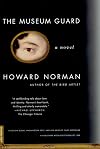
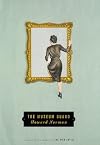
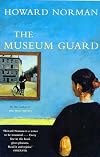
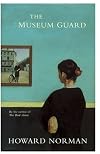
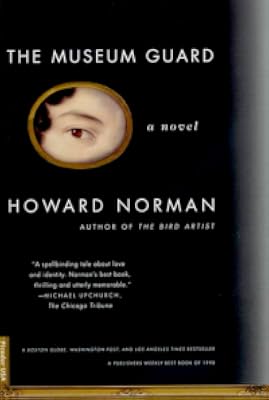
A Jewish woman in 1938 Nova Scotia becomes obsessed with a painting in a museum. It is called Jewess on a Street in Amsterdam and is on loan from Holland. The woman decides to live the subject's life, a momentous decision as the Nazis are on the march. By the author of The Bird Artist.Tags
Recommendations












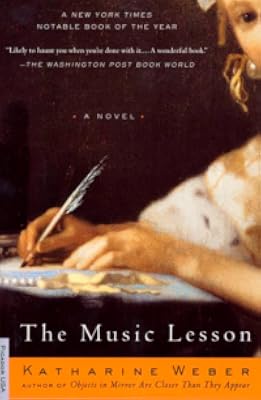
Member Reviews
Like a painting itself, The Museum Guard is a curiosity full of little details, confined in a simple frame wihc contains it all, and exploring some enormous themes. It's witty right up to the last line (which is almost neatly predictable and comfortingly so), and full of engaging characterisation both of the main protagonist and of occasional visitors to the museum and elsewhere.
Imogen is a really difficult character, and fascinating, and the effect she has on everyone around her and on herself runs concurrently with Hitler's increasing threat in Europe and beyond. I've never read a book that manages a balance between personal and socail naivete and informed dread so masterfully, and the fact that it's a quick read suits the conceit of show more the picture in the gallery perfectly. Definitely a book to be reread, but not in a weak moment - the horrors in it will stay with me I expect, and a reread will bring back all the beauty, humour and human kindness in the novel. show less
Imogen is a really difficult character, and fascinating, and the effect she has on everyone around her and on herself runs concurrently with Hitler's increasing threat in Europe and beyond. I've never read a book that manages a balance between personal and socail naivete and informed dread so masterfully, and the fact that it's a quick read suits the conceit of show more the picture in the gallery perfectly. Definitely a book to be reread, but not in a weak moment - the horrors in it will stay with me I expect, and a reread will bring back all the beauty, humour and human kindness in the novel. show less
Whoa! This was such an excellent story! I had no idea that I'd like it so much while I was reading it because nothing much seemed to happen for fully the first half of the book. I was also unhappy that the younger guard's love interest, Imogen Linny, seemed delusional, thinking that she was actually a person in a Dutch painting ("Jewess on a Street in Amsterdam'"). I never knew, at that point of the novel, how important that fact was to the very detailed plot to follow. The only thing I can say about the tempo of this book is to go along with it and wait to see what happens. You will not be disappointed.
Basically the story moves from the narrator, Defoe Russett, to Imogen as she goes deeper and deeper into her delusion while show more well-meaning folks try to help her. Those folks, though, are not sure, if by feeding her fantasy, they are helping her or harming her. It will be for you, the reader to decide at the end of the book. I actually liked the last part of the book the best, although it was a series of letters. They were so descriptive and astonishing! They described what happened to Imogen after she was escorted to Amsterdam to meet the artist who painted the woman she imagined herself to be.
I read this book because I liked The Bird Artist, another novel by the same author. Bring on more of his books! What a treat they've been so far! show less
Basically the story moves from the narrator, Defoe Russett, to Imogen as she goes deeper and deeper into her delusion while show more well-meaning folks try to help her. Those folks, though, are not sure, if by feeding her fantasy, they are helping her or harming her. It will be for you, the reader to decide at the end of the book. I actually liked the last part of the book the best, although it was a series of letters. They were so descriptive and astonishing! They described what happened to Imogen after she was escorted to Amsterdam to meet the artist who painted the woman she imagined herself to be.
I read this book because I liked The Bird Artist, another novel by the same author. Bring on more of his books! What a treat they've been so far! show less
Set in late 1930s Halifax, Nova Scotia, this story of love, obsession, identity, and art takes place as Canadians are just beginning to hear of the horrors Hitler is bringing to Europe and to Europe's Jews. The writer holds the reader at arm's length, leisurely edging towards the heart of the tale, a spell-binding gem which takes up the last 100 pages. Unfortunately, the story should have been a novella, not the 300-page novel it is. I say unfortunately because I think many readers will give up in disinterest before they get to the wonderful conclusion.
It's conception seems unpromising: A young man of little promise obtains through his uncle a position as guard in a small (three rooms) in a museum in Halifax. And it takes time for the novel to possess you, but once it does, and it doesn't take long, it is unrelenting; and in the end extraordinarily powerful and deeply affecting for me. It is also funny, replete with wonderful dialogue. and great characters. That said, the novel can be interpreted in many ways, but one I suppose is that of identity: Do we wish to be who we are, and can we be content with who are. And if we are content, and seek to invent a new self, then the novel offers an unyielding vision of the hell and destruction that can cause.
8/17/2007: This book has one of the most boring and anticlimactic plot lines that I''ve ever read. It was only the plight of poor Defoe that kept me interested enough to finish reading it. An explanation of Imogen''s "issue" would have helped...as would some sort of intense moment, somewhere.
Odd but evocative novel set in 1930s Halifax, Nova Scotia. Love, obsession, art. Strangely compelling and beautifully written.
The Museum Guard tells the story of an uncle and nephew who work as security guards at a small museum in Halifax, Nova Scotia. The nephew, DeFoe, lost his parents in a zeppelin accident when he was eight and has since been raised by his uncle. DeFoe grew up living in a hotel with his uncle and when he finally moved out of his uncle's room, it was only to relocate down the hall in the same hotel. DeFoe's uncle, Russett, is a crotchety man in his forties who lives a fast life filled with women, alcohol and gambling. Trouble arises when DeFoe falls in love with an eccentric woman who is the caretaker at the local Jewish cemetery. When a new piece of artwork comes into the museum, DeFoe’s girlfriend becomes infatuated with it to the point show more of endangering her own life and sanity as well as that of the other characters in the novel.
This novel was a good read but it was very odd. The book seemed to start off with a very different story than the one that it ended up with. About halfway through the novel, the plot too an extremely unexpected turn that really changed the entire direction and theme of the novel. I greatly enjoyed the relationship between the nephew and his uncle but was not enthralled with the other characters. Furthermore, the events in the final 100 pages of the book seemed extremely far-fetched and completely out of context. Additionally, the last fifty pages are written as a series of letters which come off as being stilted. It feels as if the author wanted to the reader to have information that was outside of the narrator's purview and therefore decided to tell the final chapter through correspondence. Despite my knowledge that the book had peaked halfway through, I was still drawn to finish it.
www.iamliteraryaddicted.blogspot.com show less
This novel was a good read but it was very odd. The book seemed to start off with a very different story than the one that it ended up with. About halfway through the novel, the plot too an extremely unexpected turn that really changed the entire direction and theme of the novel. I greatly enjoyed the relationship between the nephew and his uncle but was not enthralled with the other characters. Furthermore, the events in the final 100 pages of the book seemed extremely far-fetched and completely out of context. Additionally, the last fifty pages are written as a series of letters which come off as being stilted. It feels as if the author wanted to the reader to have information that was outside of the narrator's purview and therefore decided to tell the final chapter through correspondence. Despite my knowledge that the book had peaked halfway through, I was still drawn to finish it.
www.iamliteraryaddicted.blogspot.com show less
Members
- Recently Added By
Author Information

31+ Works 3,856 Members
Howard Norman was born in Toledo, Ohio, in 1949 and grew up in Grand Rapids, Michigan. He attended Western Michigan University, the Folklore Institute of Indiana University, and the University of Michigan. His work with the Cree Indians created an interest and he then got a job as a translator of Native American poems and folktales. He put show more together a collection of his translations in the book, The Wishing Bone Cycle: Narrative Poems of the Swampy Cree Indians, which was named the co-winner of the Harold Morton Landon Translation Award by the Academy of American Poets. With the Help of a Whiting Award, he has also written The Northern Lights as well as Kiss in the Hotel, Joseph Conrad and Other Stories, and The Bird Artist, which was named one of Time Magazine's Best Five Books of 1994 and won the New England Booksellers Association Prize in Fiction. (Bowker Author Biography) show less
Some Editions
Awards and Honors
Distinctions
Series

Belongs to Publisher Series
btb (72755)
Common Knowledge
- Canonical title
- The Museum Guard
- Original title
- The Museum Guard
- Original publication date
- 1998
- Important places
- Halifax, Nova Scotia, Canada; Nova Scotia, Canada
- Important events
- Holocaust
- Epigraph
- "Let us shut off the wireless and listen to the past."--Virginia Woolf
- Dedication
- For Jane and Emma
For Melanie Jackson - First words
- The painting I stole for Imogen Linny, Jewess on a Street in Amsterdam, arrived to the Glace Museum, here in Halifax, on September 5, 1938.
- Last words
- (Click to show. Warning: May contain spoilers.)"Don't get too close, please."
- Blurbers
- Bernstein, Richard; Banville, John ; Mallon, Thomas; Eder, Richard; Pollack, Eileen; Upchurch, Michael (show all 8); Morris, Steven Leigh; Ament, Deloris Tarzan
- Original language*
- Englisch
*Some information comes from Common Knowledge in other languages. Click "Edit" for more information.
Classifications
- Genres
- Fiction and Literature, General Fiction, Historical Fiction
- DDC/MDS
- 813.54 — Literature & rhetoric American literature in English American fiction in English 1900-1999 1945-1999
- LCC
- PR9199.3 .N564 .M87 — Language and Literature English English Literature English literature: Provincial, local, etc.
- BISAC
Statistics
- Members
- 448
- Popularity
- 68,431
- Reviews
- 11
- Rating
- (3.29)
- Languages
- 5 — Danish, Dutch, English, French, German
- Media
- Paper, Ebook
- ISBNs
- 14
- ASINs
- 3