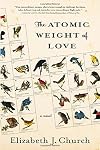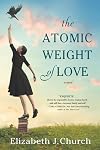
The Atomic Weight of Love
by Elizabeth J. Church
On This Page
Description
In the spirit of The Aviator's Wife and Loving Frank, this resonant debut spans the years from World War II through the Vietnam War to tell the story of a woman whose scientific ambition is caught up in her relationships with two very different men.For Meridian Wallace—and many other smart, driven women of the 1940s—being ambitious meant being an outlier. Ever since she was a young girl, Meridian had been obsessed with birds, and she was determined to get her PhD, become an show more ornithologist, and make her mother's sacrifices to send her to college pay off. But she didn't expect to fall in love with her brilliant physics professor, Alden Whetstone. When he's recruited to Los Alamos, New Mexico, to take part in a mysterious wartime project, she reluctantly defers her own plans and joins him.
What began as an exciting intellectual partnership devolves into a "traditional" marriage. And while the life of a housewife quickly proves stifling, it's not until years later, when Meridian meets a Vietnam veteran who opens her eyes to how the world is changing, that she realizes just how much she has given up. The repercussions of choosing a different path, though, may be too heavy a burden to bear.
Elizabeth Church's stirring debut novel about ambition, identity, and sacrifice will ring true to every woman who has had to make the impossible choice between who she is and who circumstances demand her to be.
"Oh, what an incandescent debut! . . . Church follows one extraordinary woman who is brave enough to challenge the times, take defiant wing, and chart her own extraordinary flight path . . . I never wanted the story to end." —Caroline Leavitt, New York Times bestselling author of Is This Tomorrow and Pictures of You
. show less
Tags
Recommendations
















Member Recommendations

Member Reviews
This book was frustrating for a number of reasons but it's also uplifting and inspirational. It's about a promising young ornithologist who gives up her own academic pursuits for her husband’s career at Los Alamos in the early years of the atomic age. If you think that sounds like an unhappy wife/unhappy life situation, you would be right and you would also be very wrong. That’s how things were for most women back then, yet it didn’t necessarily dampen their intellectual curiosity or make their lives any less worthy of reflection and dignity. In spite of the stifling limitations of the time it's set in, this was an emotionally rich story filled with sorrow and joy, close friendships, and love. As a bonus the book's depiction of show more its New Mexico setting had the ring of authenticity and the audiobook narrator's pronunciation of southwestern terms was spot-on. show less
For me, a sure sign of a good book is that I can't stop reading it at bedtime even though I know it will keep me up late. That's what happened with The Atomic Weight of Love. I had at least 100 pages to go when I settled down in bed last night but I kept reading. I just couldn't stop; I had to know how this story ended.
Meridian is an only child whose father died when she was ten. The Christmas before his death he gave her The Burgess Bird Book for Children and started Meri on her lifelong passion for ornithology. Meri's mother worked hard to be able to send her to university and so, in September of 1941, she started working on a biology degree at the University of Chicago with a view to doing graduate work in ornithology. When she sat show more in on a physics lecture given by Dr. Alden Whetstone to hear about the physics of flight she was captivated. Soon Meri and Alden were an item and then Alden got called away for a secret war project. Of course, we can guess now that the project was the Manhattan Project, the building of the atomic bomb. Alden asked Meri to marry him just before he left and she said yes. Their letters to each other were heavily censored but they did manage to make wedding plans and Alden got a few days to come back east for the wedding. Then he was off again working on something he could not discuss but Meridian understands that. When the first bomb is dropped on Hiroshima Meri knows that is what Alden was working on. She has continued to work on her degree and as she nears completion she sends out applications to graduate school. Cornell University (probably the preeminent place to study ornighology) accepts her but Alden asks her to move back to New Mexico with him as he has accepted a job with the Atomic Energy Commission in Los Alamos. When she first agrees she thinks it will be just temporary but as the years go by she has to give up her dream of graduate school. She continues to observe birds, particularly a flock of crows in a canyon near Los Alamos, but otherwise Meri's days are spent on housework, cooking and appeasing her husband. She doesn't have children and eventually she and Alden grow apart. Alden no longer discusses science or anything else with her and he makes no effort to participate in her interests. While observing her crows one day Meri sees a young man climbing the canyon wall opposite her. The next day he turns up at her observation post and soon, despite their age difference, they are lovers. Meri is torn between her love for these two very different men and also conflicted about following her own passions. It was at this point that I just had to keep reading. Although I came to maturity after some of the women's rights fights had been won there were enough things I recognized about Meri's life to make me want her to succeed. There are still equality battles to be fought but we have come a long way. This book reminded me of that fact. show less
Meridian is an only child whose father died when she was ten. The Christmas before his death he gave her The Burgess Bird Book for Children and started Meri on her lifelong passion for ornithology. Meri's mother worked hard to be able to send her to university and so, in September of 1941, she started working on a biology degree at the University of Chicago with a view to doing graduate work in ornithology. When she sat show more in on a physics lecture given by Dr. Alden Whetstone to hear about the physics of flight she was captivated. Soon Meri and Alden were an item and then Alden got called away for a secret war project. Of course, we can guess now that the project was the Manhattan Project, the building of the atomic bomb. Alden asked Meri to marry him just before he left and she said yes. Their letters to each other were heavily censored but they did manage to make wedding plans and Alden got a few days to come back east for the wedding. Then he was off again working on something he could not discuss but Meridian understands that. When the first bomb is dropped on Hiroshima Meri knows that is what Alden was working on. She has continued to work on her degree and as she nears completion she sends out applications to graduate school. Cornell University (probably the preeminent place to study ornighology) accepts her but Alden asks her to move back to New Mexico with him as he has accepted a job with the Atomic Energy Commission in Los Alamos. When she first agrees she thinks it will be just temporary but as the years go by she has to give up her dream of graduate school. She continues to observe birds, particularly a flock of crows in a canyon near Los Alamos, but otherwise Meri's days are spent on housework, cooking and appeasing her husband. She doesn't have children and eventually she and Alden grow apart. Alden no longer discusses science or anything else with her and he makes no effort to participate in her interests. While observing her crows one day Meri sees a young man climbing the canyon wall opposite her. The next day he turns up at her observation post and soon, despite their age difference, they are lovers. Meri is torn between her love for these two very different men and also conflicted about following her own passions. It was at this point that I just had to keep reading. Although I came to maturity after some of the women's rights fights had been won there were enough things I recognized about Meri's life to make me want her to succeed. There are still equality battles to be fought but we have come a long way. This book reminded me of that fact. show less
I received a free copy of this book from the publisher in exchange for an honest review.
What drew me to this title was the mentions of the Manhattan Project. As an atomic junkie, I love anything that brings atomic history into historical fiction. Even though Alden's atomic work is never described in detail, I found I didn't miss it.
Throughout the book, I kept finding myself growing frustrated with Meri and the choices she makes in her life. Each time I started to roll my eyes, I had to stop and remind myself that Meri is a victim of the times in which she lives. I kept wondering how many of my female relatives had sacrificed a career or talent for the sake of marriage and family. My grandmother would have been just a few years younger show more than Meri, and I couldn't help but wondering how much she had given up for her husband, then my mom and uncle.
I found Meri's study of the crows to be fascinating. I had no idea that crows were so intelligent and social. I never really liked Alden at all. Even when he did something fairly redeeming, he would follow it up with another jerk move that made me dislike him again. I didn't really like Clay either. Both of them used Meri in different ways, and I resented them for it. It wasn't til the end of the book, when Meri is finally free of the influence of men in her life, that she is able to spread her wings and finally begin to live her life.
I did enjoy the book for its perspective on women's choices in the 40's, 50's and 60's. It really made me think about my family and how much women everywhere have sacrificed in the name of marriage. show less
What drew me to this title was the mentions of the Manhattan Project. As an atomic junkie, I love anything that brings atomic history into historical fiction. Even though Alden's atomic work is never described in detail, I found I didn't miss it.
Throughout the book, I kept finding myself growing frustrated with Meri and the choices she makes in her life. Each time I started to roll my eyes, I had to stop and remind myself that Meri is a victim of the times in which she lives. I kept wondering how many of my female relatives had sacrificed a career or talent for the sake of marriage and family. My grandmother would have been just a few years younger show more than Meri, and I couldn't help but wondering how much she had given up for her husband, then my mom and uncle.
I found Meri's study of the crows to be fascinating. I had no idea that crows were so intelligent and social. I never really liked Alden at all. Even when he did something fairly redeeming, he would follow it up with another jerk move that made me dislike him again. I didn't really like Clay either. Both of them used Meri in different ways, and I resented them for it. It wasn't til the end of the book, when Meri is finally free of the influence of men in her life, that she is able to spread her wings and finally begin to live her life.
I did enjoy the book for its perspective on women's choices in the 40's, 50's and 60's. It really made me think about my family and how much women everywhere have sacrificed in the name of marriage. show less
 This review was written for LibraryThing Early Reviewers.
This engrossing book is about a would-be ornithologist in the 1940’s, Meridian (“Meri”) Wallace, who, while a student, meets physicist Alden Whetstone at the University of Chicago (twenty years Meri’s senior), and agrees to give up her dreams to follow his. By no means an uncommon decision at that time, we follow Meri through the years as she struggles with balancing the needs of her own identity with living the life Alden has chosen for them.
Each chapter begins with ornithological terms of venery that mirror the chapters’ developments, and allow us to understand the characters by the behavior of the birds Meridian studies.
Discussion: The writing is exceptional. One of my favorite examples is when Meri first sleeps with show more Alden:
“That single careful gesture - the controlled placement of his pants. It told me something I refused to acknowledge: Alden would always be too careful. There would be no transport for me, not with a man who was that precise in the face of impending passion. Passion walks the edge of control, teasing. It looks down at the rocks in a canyon and contemplates plunging, taking one fatal step to the right. It soars, having released the weight of consciousness of all but the moment.”
As we go through the years with Meri and with other women at Los Alamos, where she and Alden settle, we see the different ways in which relationships change over time. Some “die a slow, incremental death of boredom resentment, and lassitude.” Some, though “solid and unwavering” are nevertheless devoid of passion. And some continue to provide enduring and lasting happiness even in spite of relationships with others.
Evaluation: This is a story that at turns is lovely, tragic, uplifting, defeating, inspiring, and above all, perhaps, stimulating, both in terms of intellectual content and thought-provoking characterizations. This book will have you considering the weight of love and choices long after finishing the book. In short, perfect for book clubs. show less
Each chapter begins with ornithological terms of venery that mirror the chapters’ developments, and allow us to understand the characters by the behavior of the birds Meridian studies.
Discussion: The writing is exceptional. One of my favorite examples is when Meri first sleeps with show more Alden:
“That single careful gesture - the controlled placement of his pants. It told me something I refused to acknowledge: Alden would always be too careful. There would be no transport for me, not with a man who was that precise in the face of impending passion. Passion walks the edge of control, teasing. It looks down at the rocks in a canyon and contemplates plunging, taking one fatal step to the right. It soars, having released the weight of consciousness of all but the moment.”
As we go through the years with Meri and with other women at Los Alamos, where she and Alden settle, we see the different ways in which relationships change over time. Some “die a slow, incremental death of boredom resentment, and lassitude.” Some, though “solid and unwavering” are nevertheless devoid of passion. And some continue to provide enduring and lasting happiness even in spite of relationships with others.
Evaluation: This is a story that at turns is lovely, tragic, uplifting, defeating, inspiring, and above all, perhaps, stimulating, both in terms of intellectual content and thought-provoking characterizations. This book will have you considering the weight of love and choices long after finishing the book. In short, perfect for book clubs. show less
This review was written for LibraryThing Early Reviewers.The Atomic Weight of Love -
Elizabeth Church
5 stars
It begins in 1941 as 17 year-old Meridian heads off to university with ambitions for an academic career in ornithology. The war begins. Meri is attracted to Alden Whetstone, a divorced, physics professor. Alden heads to Los Alamos to lend his support to a super secret war effort. Meridian completes her degree, defers her graduate school admission and follows Alden to New Mexico and marriage. (I wanted to reach into the book. Oh, Meri, can’t you see what you are doing? Of course she couldn’t. It was 1944.) I said the book begins in 1941, but there is actually a prologue from the first decade of the 21st century. This is Meridian’s memoir. She ends the prologue, “This is my show more story, the story of a woman who accompanied the bomb’s birth and tried to fly in its aftermath.”
It’s a bit depressing to watch Meridian try to fly, because marriage has effectively clipped her wings. She tries to keep her intellectual life alive with the systematic observation of a flock of crows. She tries to follow conventional advice to keep her marriage afloat with attention to the customary chores of the housewife. Not much is working for her until she encounters an attractive young Viet Nam vet in the decade of change.
Earlier this year I read The Summer Before the War, which is about another intelligent young woman just before WW1. These two books have similar feminist themes, but very different styles. The Simonson book used early 20th century gender discrimination as a plot device, creating sympathy for the main protagonist. It felt contrived. There is nothing contrived in Church’s fictional memoir. Meridian Whetstone comes across as a completely believable human being, like Alma in The Signature of All Things. She is a deep thinker. Her memoir combines her observations of the natural world with her reflections about her own relationships, her own growth. She reminded me that whatever sweeping changes took place legally and culturally between the mid 20th century and the present day, every woman has to make a personal journey.
I’m not sure why this book hasn’t gotten more attention. Is it that female author bias again? I know that I put it down several times at the beginning. It made me so angry to see this girl throwing her potential away, I had to stop reading. But, I came of age in the 1970’s and some things were different for me. A bit different in some ways; in others, not so much. show less
Elizabeth Church
5 stars
It begins in 1941 as 17 year-old Meridian heads off to university with ambitions for an academic career in ornithology. The war begins. Meri is attracted to Alden Whetstone, a divorced, physics professor. Alden heads to Los Alamos to lend his support to a super secret war effort. Meridian completes her degree, defers her graduate school admission and follows Alden to New Mexico and marriage. (I wanted to reach into the book. Oh, Meri, can’t you see what you are doing? Of course she couldn’t. It was 1944.) I said the book begins in 1941, but there is actually a prologue from the first decade of the 21st century. This is Meridian’s memoir. She ends the prologue, “This is my show more story, the story of a woman who accompanied the bomb’s birth and tried to fly in its aftermath.”
It’s a bit depressing to watch Meridian try to fly, because marriage has effectively clipped her wings. She tries to keep her intellectual life alive with the systematic observation of a flock of crows. She tries to follow conventional advice to keep her marriage afloat with attention to the customary chores of the housewife. Not much is working for her until she encounters an attractive young Viet Nam vet in the decade of change.
Earlier this year I read The Summer Before the War, which is about another intelligent young woman just before WW1. These two books have similar feminist themes, but very different styles. The Simonson book used early 20th century gender discrimination as a plot device, creating sympathy for the main protagonist. It felt contrived. There is nothing contrived in Church’s fictional memoir. Meridian Whetstone comes across as a completely believable human being, like Alma in The Signature of All Things. She is a deep thinker. Her memoir combines her observations of the natural world with her reflections about her own relationships, her own growth. She reminded me that whatever sweeping changes took place legally and culturally between the mid 20th century and the present day, every woman has to make a personal journey.
I’m not sure why this book hasn’t gotten more attention. Is it that female author bias again? I know that I put it down several times at the beginning. It made me so angry to see this girl throwing her potential away, I had to stop reading. But, I came of age in the 1970’s and some things were different for me. A bit different in some ways; in others, not so much. show less
A book that explains my own life events like no other
This story, beautifully told, is the story of so many women brought up in the patriarchal social order that was taken for granted at one time, and is threatening to be imposed again in 2017 America. I want to sit quietly now with what I read, examine the ways in which I was culpable in the stifling of my intellect for so many years, my acquiescence because that was easier. A novel that makes me examine myself does not come along that often, so I say, brava!
This story, beautifully told, is the story of so many women brought up in the patriarchal social order that was taken for granted at one time, and is threatening to be imposed again in 2017 America. I want to sit quietly now with what I read, examine the ways in which I was culpable in the stifling of my intellect for so many years, my acquiescence because that was easier. A novel that makes me examine myself does not come along that often, so I say, brava!
Still in her early 20s, Meridian Wallace, a Western Pennsylvania girl about to make a name for herself at the University of Chicago, becomes enthralled with Alden, a professor of physics, and twenty years her senior. She marries him just as he is dispatched to an unheard-of hamlet in New Mexico, to lend his expertise to the development of a revolutionary and terrifying new weapon. In spite of her acceptance to Cornell grad school, he moves her summarily to Los Alamos and crushes her scientific potential and hopes.
And such is Meridian’s treatment at her husband’s hands. This treatment, and Meridian’s sporadic rebellious impulses against it, power this narrative. It’s a treatment that is alive and flourishing to this day, show more unfortunately, but I hope it isn’t still the expected thing in American marriages that it was in the middle of the last century. The assumptions made by American society in the 1940s were shared by young people getting married. In the novel, The Atomic Weight of Love, these assumptions are portrayed accurately.
In fact, accuracy is one great virtue of this book. Meridian, whom Alden calls Meri, allows her husband to make unilateral decisions for her, decisions regarding the taking of her virginity, and where she will and will not study, where they will live as he works, he even makes judgments about her friends. Throughout, he exercises his autocracy with a snob’s dismissive ease, assured in the superiority of his perspective. From time to time Meri chafes under his rule, and carves out a life for herself, following her passion for ornithology to make a talented amateur’s study of a population of crows.
Then along comes Viet Nam and upheaval in American society. Meri’s love for Clay, a beautiful young man, engenders her much-needed awakening; her rebirth reminds Meri of her own worth and capacity for love. This leads to her final triumph of self-respect, as it were, as we observe her good works over the years.
Author Elizabeth J. Church provides a vivid character and puts her to a number of good uses. First, she illustrates a culture in America which subjugated wives and women in general to the will of husbands and men. Second, she brings to life a turbulent time in the height of the Viet Nam war, refracted through the prism of her heroine’s life. She uses this highly apt backdrop to portray an intelligent, sympathetic protagonist’s growth and adaptation. All this is done so honestly and deeply: Alden’s moments of oafishness are balanced against his well-meaning moments; Clay’s impatience shows a youthfulness yet to be tempered by much experience; even the secondary characters are fully nuanced. This is a sensitive, affecting story, easy to believe and appreciate. I was very happy to make Meridian’s acquaintance.
https://bassoprofundo1.blogspot.com/2019/03/the-atomic-weight-of-love-by-elizabe... show less
And such is Meridian’s treatment at her husband’s hands. This treatment, and Meridian’s sporadic rebellious impulses against it, power this narrative. It’s a treatment that is alive and flourishing to this day, show more unfortunately, but I hope it isn’t still the expected thing in American marriages that it was in the middle of the last century. The assumptions made by American society in the 1940s were shared by young people getting married. In the novel, The Atomic Weight of Love, these assumptions are portrayed accurately.
In fact, accuracy is one great virtue of this book. Meridian, whom Alden calls Meri, allows her husband to make unilateral decisions for her, decisions regarding the taking of her virginity, and where she will and will not study, where they will live as he works, he even makes judgments about her friends. Throughout, he exercises his autocracy with a snob’s dismissive ease, assured in the superiority of his perspective. From time to time Meri chafes under his rule, and carves out a life for herself, following her passion for ornithology to make a talented amateur’s study of a population of crows.
Then along comes Viet Nam and upheaval in American society. Meri’s love for Clay, a beautiful young man, engenders her much-needed awakening; her rebirth reminds Meri of her own worth and capacity for love. This leads to her final triumph of self-respect, as it were, as we observe her good works over the years.
Author Elizabeth J. Church provides a vivid character and puts her to a number of good uses. First, she illustrates a culture in America which subjugated wives and women in general to the will of husbands and men. Second, she brings to life a turbulent time in the height of the Viet Nam war, refracted through the prism of her heroine’s life. She uses this highly apt backdrop to portray an intelligent, sympathetic protagonist’s growth and adaptation. All this is done so honestly and deeply: Alden’s moments of oafishness are balanced against his well-meaning moments; Clay’s impatience shows a youthfulness yet to be tempered by much experience; even the secondary characters are fully nuanced. This is a sensitive, affecting story, easy to believe and appreciate. I was very happy to make Meridian’s acquaintance.
https://bassoprofundo1.blogspot.com/2019/03/the-atomic-weight-of-love-by-elizabe... show less
Members
- Recently Added By
Lists

Books Read in 2023
5,547 works; 145 members

Books Read in 2017
4,249 works; 130 members

Vine Reads
60 works; 1 member

Netgalley Reads
468 works; 3 members

Indie Next Picks
196 works; 4 members
Author Information
2 Works 720 Members
Awards and Honors
Awards
Distinctions
Common Knowledge
- Canonical title
- The Atomic Weight of Love
- Original publication date
- 2016-05-03
- People/Characters
- Meridian Wallace; Alden Whetstone; Belle Jordan; Clay Griffin; Emma McAllister
- Important places
- Chicago, Illinois, USA; Los Alamos, New Mexico, USA
- Epigraph
- How have all those exquisite adaptations of one part of the organisation to another part, and to the conditions of life, and of one distinct organic being to another being, been perfected?
—Charles Darwin, On the Origin ... (show all)of Species
Los Alamos is in a restricted airspace reservation covered by an Executive order, dated May 23, 1950. This airspace cannot be penetrated except by authority of the AEC [Atomic Energy Commission]. Historically permission has been refused except for the chartered [AEC flights of official visitors and project personnel].
—from the report of the Hearing before the Subcommittee on Communities of the Joint Committee on Atomic Energy, Congress of the United States, Eighty-Sixth Congress, First Session on Community Problems of Los Alamos, December 2, 1959 - Dedication
- To Frances Salman Koenig,
this novel's strongest champion,
and
To my brother Alan A. Church,
for his steadfastness - First words
- In early January of 2011, forty-five hundred red-winged blackbirds fell dead from the Arkansas skies.
Classifications
Statistics
- Members
- 532
- Popularity
- 56,156
- Reviews
- 55
- Rating
- (3.88)
- Languages
- English
- Media
- Paper, Audiobook, Ebook
- ISBNs
- 10
- ASINs
- 6