On This Page
Description
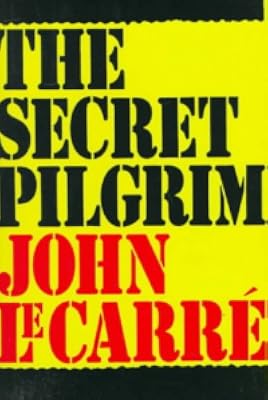
The Cold War is over and Ned has been demoted to the training academy. He asks his old mentor, George Smiley, to address his passing-out class. There are no laundered reminiscences; Smiley speaks the truth - perhaps the last the students will ever hear. As they listen, Ned recalls his own painful triumphs and inglorious failures, in a career that took him from the Western Isles of Scotland to Hamburg and from Israel to Cambodia. He asks himself: Did it do any good? What did it do to me? And show more what will happen to us now? In this final Smiley novel, the great spy gives his own humane and unexpected answers. show lessTags
Recommendations






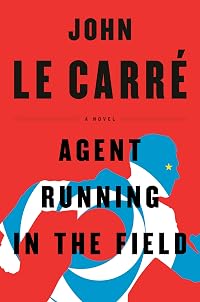









Member Recommendations

Member Reviews
The eighth book in the series, written more than a decade after the previous entry, Smiley’s People (which has since been declared the final book of the “Karla Trilogy”). But le Carré was nothing if not willing to play with the expectations of his readers, and if the nine Smiley novels (until son Nick Harkaway’s recent addition) don’t always feature George Smiley as the central character, he is at least in there somewhere influencing events…
Which is not strictly true here. Or rather, it is. Sort of.
The narrator of The Secret Pilgrim is an ex-agent of the Circus, active during the events recounted in the Karla novels, and now the director of the Service’s spy school, Sarratt. He has invited Smiley, long since retired, to show more give a talk to the graduating class. And each reminiscence and bon mot uttered by Smiley during his after-dinner speech triggers a recollection by the narrator of a past mission for the Circus…
It’s a good read, and typical le Carré, in as much as it makes an impressive number of serious points about British society and its over-reliance on the inbred scions of its over-educated and under-gifted upper echelons… but it still feels a bit like filler material from a campaign module for Smiley’s World™.
And if that sounds unfair, then it likely is, if only because The Secret Pilgrim is presented as if it were part of the Smiley story arc when it is at best a pendant to it. Again, it’s a good read, and on a par with other books in the series, but it’s only just a George Smiley novel.
Le Carré has been praised by many, but is still I think under-appreciated. He was popular, in the way popular crime novel series are popular, which leads many to underestimate just how clever, and how critical of the UK establishment, his novels were. It’s easy enough to dismiss him as a writer of spy fiction, and especially convoluted spy fiction at that (compared to, well, Fleming), if the response to The Spy Who Came in from the Cold is any indication.
Like Fleming, le Carré wore his politics on his sleeve. Unlike Fleming, they weren’t the usual Tory reactionary bollocks by those sucking up to, with a complete lack of self-awareness, the aristocracy, but an educated, thoughtful and critical view of British society and the establishment. When Fleming told some dowager duchess he was writing a novel, she told him not to because “You’re not clever enough, Ian”, which tells you how the aristocracy viewed themselves and how they viewed those who sought their company and approval. But then the British have always confused education with intelligence, much as the Americans have always confused wealth with intelligence. Le Carré was intelligent - and the proof is there in his novels. Fleming wasn’t - and, again, the proof is there in his novels.
Guess which has earned the most money…
Read le Carré. You can’t go wrong with his novels. You might even learn something about being British as well (although you may not like being British afterwards). show less
Which is not strictly true here. Or rather, it is. Sort of.
The narrator of The Secret Pilgrim is an ex-agent of the Circus, active during the events recounted in the Karla novels, and now the director of the Service’s spy school, Sarratt. He has invited Smiley, long since retired, to show more give a talk to the graduating class. And each reminiscence and bon mot uttered by Smiley during his after-dinner speech triggers a recollection by the narrator of a past mission for the Circus…
It’s a good read, and typical le Carré, in as much as it makes an impressive number of serious points about British society and its over-reliance on the inbred scions of its over-educated and under-gifted upper echelons… but it still feels a bit like filler material from a campaign module for Smiley’s World™.
And if that sounds unfair, then it likely is, if only because The Secret Pilgrim is presented as if it were part of the Smiley story arc when it is at best a pendant to it. Again, it’s a good read, and on a par with other books in the series, but it’s only just a George Smiley novel.
Le Carré has been praised by many, but is still I think under-appreciated. He was popular, in the way popular crime novel series are popular, which leads many to underestimate just how clever, and how critical of the UK establishment, his novels were. It’s easy enough to dismiss him as a writer of spy fiction, and especially convoluted spy fiction at that (compared to, well, Fleming), if the response to The Spy Who Came in from the Cold is any indication.
Like Fleming, le Carré wore his politics on his sleeve. Unlike Fleming, they weren’t the usual Tory reactionary bollocks by those sucking up to, with a complete lack of self-awareness, the aristocracy, but an educated, thoughtful and critical view of British society and the establishment. When Fleming told some dowager duchess he was writing a novel, she told him not to because “You’re not clever enough, Ian”, which tells you how the aristocracy viewed themselves and how they viewed those who sought their company and approval. But then the British have always confused education with intelligence, much as the Americans have always confused wealth with intelligence. Le Carré was intelligent - and the proof is there in his novels. Fleming wasn’t - and, again, the proof is there in his novels.
Guess which has earned the most money…
Read le Carré. You can’t go wrong with his novels. You might even learn something about being British as well (although you may not like being British afterwards). show less
Le Carre uses the framing device of a retiring spymaster, teaching novice spies, to tell short stories about the moral ambiguities of espionage during the Cold War. My favorite is the second-to-last, where the narrator recollects when he confronted a lonely clerk who gave secrets to the Soviets. In the last short story, the narrator asks a Secret Service-connected businessmen to stop selling arms to parties in ethnic conflicts, only to be rebuffed, forcing him to ask if he was really on the side of angels after all. I liked this quite a lot, since it does not get bogged down in complicated mystery stories as a lot of Le Carre's novels do, and allows the characters to breathe.
The weakest of mature Le Carré ? Basically a collection of short episodes, of varied length, rather elegantly framed. But one has the feeling of reheated funeral baked meats, employing familiar characters and background, as though after the fall of Control and the Circus the author hasn’t yet found a new milieu. And in the last few pages a personal envoi from the author through the mouths of his characters.
A very welcome, nostalgic return for Smiley. But this time he is reminiscing for the students of the service. This is essentially a framing device for a bunch of short stories. As such, it is probably one for those already into le Carré, not one to create converts. That said, there are some beautiful passages here — it kinda feels like pieces that he couldn't work into the novels (there is one which feels like it emerged from the writing of The Honourable Schoolboy for example). Written in the aftermath of the fall of the Soviet regime there is a lot which still feels very highly relevant —toward the end of the book Smiley reflects on the negative effect that untrammeled capitalism has on democracy, which feels incredibly relevant show more at the moment. Recommended, but don't start here. show less
Written in 1990, when the world found itself at the close of the Cold War and uncertain of the future, The Secret Pilgrim finds Ned, an aging spy, put out to pasture to teach the new recruits at Sarratt how to spy in a world where spying just might now be a second-rate trade. He invites our old friend Smiley to talk to his class, and as Smiley talks, Ned revisits his life as a spy.
As Debra, one of the astute members of our reading group, observed, “this is a spy coming-of-age story.” It is indeed, just that. It traces the decline in innocence of one spy, and in doing so, highlights the deterioration of a system that I believe began in decency and hope and ended in futility and sometimes corruption.
In the words of Smiley, "We show more concealed the very things that made us right. Our respect for the individual, our love of variety and argument, our belief that you can only govern fairly with the consent of the governed, our capacity to see the other fellow's view--most notably in the countries we exploited, almost to death, for our own ends. In our supposed ideological rectitude, we sacrificed our compassion to the great god of indifference. We protected the strong against the weak, and we perfected the art of the public lie. We made enemies of decent reformers and friends of the most disgusting potentates. And we scarcely paused to ask ourselves how much longer we could defend our society by these means and remain a society worth defending.”
I think these might be observations and questions just as worthwhile asking in 2019 as they were in 1990--perhaps more so.
I believe this was meant to be Smiley’s last appearance in print at the time it was written, although in 2017 John le Carre decided to visit him once again. Had this been Smiley’s last words on the subject of his life, they would have been profound ones. And yet, I wondered as I closed the book what Smiley would have done differently, given the same set of circumstances, and I decided the answer would have been, “nothing”. For Smiley did his best in a world that contained more evil and duplicity than he could ever have imagined--and what more can a person do? show less
As Debra, one of the astute members of our reading group, observed, “this is a spy coming-of-age story.” It is indeed, just that. It traces the decline in innocence of one spy, and in doing so, highlights the deterioration of a system that I believe began in decency and hope and ended in futility and sometimes corruption.
In the words of Smiley, "We show more concealed the very things that made us right. Our respect for the individual, our love of variety and argument, our belief that you can only govern fairly with the consent of the governed, our capacity to see the other fellow's view--most notably in the countries we exploited, almost to death, for our own ends. In our supposed ideological rectitude, we sacrificed our compassion to the great god of indifference. We protected the strong against the weak, and we perfected the art of the public lie. We made enemies of decent reformers and friends of the most disgusting potentates. And we scarcely paused to ask ourselves how much longer we could defend our society by these means and remain a society worth defending.”
I think these might be observations and questions just as worthwhile asking in 2019 as they were in 1990--perhaps more so.
I believe this was meant to be Smiley’s last appearance in print at the time it was written, although in 2017 John le Carre decided to visit him once again. Had this been Smiley’s last words on the subject of his life, they would have been profound ones. And yet, I wondered as I closed the book what Smiley would have done differently, given the same set of circumstances, and I decided the answer would have been, “nothing”. For Smiley did his best in a world that contained more evil and duplicity than he could ever have imagined--and what more can a person do? show less
In [b:The Secret Pilgrim|46462|The Secret Pilgrim|John le Carré|https://i.gr-assets.com/images/S/compressed.photo.goodreads.com/books/1170330461l/46462._SY75_.jpg|876061], Le Carré has given us something different in structure but similar in tone and perspective to the other books in the George Smiley series. Ned, near the end of his career with the British intelligence service, is now head of their training school, Sarrat. In this capacity he has invited Smiley to speak to his students, and to his surprise, Smiley has accepted.
A lesser novelist might allowed the book to take its form from Smiley's reminiscences in his after-dinner speech. Le Carré instead uses Smiley's commentary to trigger Ned's memories, which then form the core show more of the book. Once again Smiley controls the narrative from the sidelines.
Ned's career has been long and varied, and given the starting point of the book we know that he has survived - at least in the physical sense. The lack of a central plot allows Ned's reflections to focus primarily on the individuals he has encountered through the years. And as always, Le Carré combines an acute understanding of human nature with brilliant descriptive gifts; reading these character studies is richly rewarding.
But again as always, Le Carré shares clear-eyed observations on politics and power. The book was written immediately following the end of the Cold War, and Smiley speculates on what would be the appropriate attitude going forward of the West, the British specifically, toward the Russian Bear. Should it be feared, or embraced and nurtured back onto its feet and the world stage?
In Ned's last official act as an intelligence officer he is asked to convince a wealthy arms dealer who has purchased his extremely comfortable place in the world in part by plying his trade for the benefit of "the Service", to back off. To stop making the world a more dangerous place by making it better armed. His efforts are futile, and the venal, self-serving commentary of this ultimate capitalist presages a different danger for the future from the one Ned has struggled against.
Seen from the vantage point of 2020, Le Carré is remarkably prescient, as there has been a merging of greedy capitalism and political power in both Russia and the west. Putin is not only an autocratic ruler but wealthy beyond measure. The US is enduring an onslaught in all three branches of government against the ordinary man, promoting instead the welfare of an oligarchical class that controls as much as 98% of the wealth of the country.
There is one more Smiley novel, A Legacy of Spies, published just 3 years ago. I look forward to completing the cycle before the end of the year. show less
A lesser novelist might allowed the book to take its form from Smiley's reminiscences in his after-dinner speech. Le Carré instead uses Smiley's commentary to trigger Ned's memories, which then form the core show more of the book. Once again Smiley controls the narrative from the sidelines.
Ned's career has been long and varied, and given the starting point of the book we know that he has survived - at least in the physical sense. The lack of a central plot allows Ned's reflections to focus primarily on the individuals he has encountered through the years. And as always, Le Carré combines an acute understanding of human nature with brilliant descriptive gifts; reading these character studies is richly rewarding.
But again as always, Le Carré shares clear-eyed observations on politics and power. The book was written immediately following the end of the Cold War, and Smiley speculates on what would be the appropriate attitude going forward of the West, the British specifically, toward the Russian Bear. Should it be feared, or embraced and nurtured back onto its feet and the world stage?
In Ned's last official act as an intelligence officer he is asked to convince a wealthy arms dealer who has purchased his extremely comfortable place in the world in part by plying his trade for the benefit of "the Service", to back off. To stop making the world a more dangerous place by making it better armed. His efforts are futile, and the venal, self-serving commentary of this ultimate capitalist presages a different danger for the future from the one Ned has struggled against.
Seen from the vantage point of 2020, Le Carré is remarkably prescient, as there has been a merging of greedy capitalism and political power in both Russia and the west. Putin is not only an autocratic ruler but wealthy beyond measure. The US is enduring an onslaught in all three branches of government against the ordinary man, promoting instead the welfare of an oligarchical class that controls as much as 98% of the wealth of the country.
There is one more Smiley novel, A Legacy of Spies, published just 3 years ago. I look forward to completing the cycle before the end of the year. show less
Well written and thoughtful a always. And, as always with Le Carre, enough moral ambiguity to go around for everyone! This I think can only very loosely called a novel really, it's more like a collection of short stories held together by the narrator as central character. Not to say they weren't fantastic short stories, all! Smiley too, but his character plays more of a functional role here. Interesting idea, and you get a nice feel of Ned, the main character through the stories.
Members
- Recently Added By
Published Reviews
There is a valedictory tone in this book that is not wholly caused by Ned's approaching retirement. The cold war is over, the old enemies have been replaced by glasnost and perestroika, and for Mr. le Carré himself it must have been a bizarre experience to see the raw material of his art disintegrate over the last few years. But the spies, we can be sure, will never be made redundant. At the show more end of the novel, decent, honorable Ned encounters a particularly nasty specimen of the new antagonists -- an utterly cynical and amoral British millionaire entrepreneur and arms dealer, and a knight, to boot. He is a perfect embodiment of the so-called market forces dogma of the Thatcher years in its most brutish form. "Now we had defeated Communism, we were going to have to set about defeating capitalism," Ned reflects. One senses a new foe emerging, new battles for the Circus to fight. show less
added by John_Vaughan
Lists

Best Espionage (Fiction)
55 works; 20 members

Books - Le Carre, John: George Smiley
10 works; 1 member
Author Information

208+ Works 98,982 Members
David John Moore Cornwell was born in Poole, Dorsetshire, England in 1931. He attended Bern University in Switzerland from 1948-49 and later completed a B.A. at Lincoln College, Oxford. He taught at Eton from 1956-58 and was a member of the British Foreign Service from 1959 to 1964. He writes espionage thrillers under the pseudonym John le Carré. show more The pseudonym was necessary when he began writing, in the early 1960s because, at that time, he held a diplomatic position with the British Foreign Office and was not allowed to publish under his own name. When his third book, The Spy Who Came in from the Cold, became a worldwide bestseller in 1964, he left the foreign service to write full time. His other works include Call for the Dead; A Murder of Quality; Tinker, Tailor, Soldier, Spy; The Honourable Schoolboy; and Smiley's People. He has received numerous awards for his writing, including the Grand Master Award from the Mystery Writers of America in 1986 and the Diamond Dagger from the Crime Writers Association in 1988. In 2011 he accepted the Goethe Medal. And in 2020, he accepted the Olof Palme Prize. Ten of his books have been adapted for television and motion pictures including The Spy Who Came in from the Cold, The Russia House, The Constant Gardener, A Most Wanted Man, and Our Kind of Traitor. Le Carré's memoir, The Pigeon Tunnel: Stories from my Life, became a New York Times bestseller in 2016. In 2019, he published a spy thriller, Agent Running in the Field. John Le Carré died on December 12, 2020 from pneumonia at the age of 89. (Bowker Author Biography) John le Carre was born in 1931. After attending the univesities of Berne and Oxford, he spent five years in the British Foreign Service. He's the author of eighteen novels, translated into twenty-five languages. He lives in England. (Publisher Provided) show less
Some Editions
Awards and Honors
Awards
Distinctions
Series

Work Relationships
Is contained in
Has the adaptation
Common Knowledge
- Canonical title*
- Le voyageur secret
- Original title
- The Secret Pilgrim
- Original publication date
- 1990-01-01
- People/Characters
- Ned; George Smiley; Toby Esterhase; Bill Hayden
- Important places*
- Londres, Angleterre, Royaume-Uni
- Important events*
- Guerre froide
- Dedication
- For Alec Guinness with affection and thanks
- First words
- Let me confess to you at once that if I had not, on the spur of the moment, picked up the pen and scribbled a note to George Smiley inviting him to address my passing-out class on the closing evening of their entry course-and... (show all) had Smiley not, against all my expectations, consented-I would not be making so free to you with my heart.
- Last words
- (Click to show. Warning: May contain spoilers.)I'm a newcomer to the overt world but I'm learning.
- Disambiguation notice
- ISBN 1416594884 is actually for A Most Wanted Man.
*Some information comes from Common Knowledge in other languages. Click "Edit" for more information.
Classifications
Statistics
- Members
- 2,992
- Popularity
- 5,954
- Reviews
- 42
- Rating
- (3.65)
- Languages
- 18 — Catalan, Czech, Danish, Dutch, English, Finnish, French, German, Hebrew, Hungarian, Italian, Norwegian (Bokmål), Norwegian, Portuguese, Romanian, Russian, Spanish, Swedish
- Media
- Paper, Audiobook, Ebook
- ISBNs
- 108
- ASINs
- 44