The Woman and the Ape
by Peter Høeg, Peter Høeg
On This Page
Description
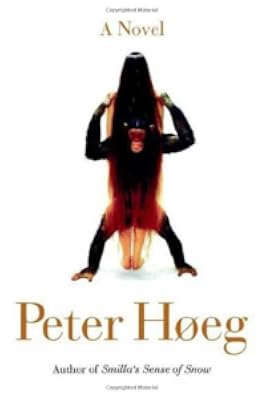
The Woman and the Ape is the story of a unique and unforgettable couple Madelene and Erasmus. Madelene a sleeping beauty drowsing gently in an alcoholic stupor is the beautiful and disillusioned wife of Adam Burden, a distinguished behavior scientist. Erasmus the unlikely prince is a 300-pound ape.Erasmus is brought to the Burdens' London home after escaping from animal smugglers. In him Adam Burden believes he has discovered a hitherto unknown mammal, a highly intelligent anthropoid ape, show more the closest thing yet to a human being. If he is right, Erasmus will become the jewel of Burden's new zoo. But Madelene decides to save Erasmus, investing in her efforts all the single-mindedness she until now has reserved for drinking. The two fall in love a love affair as emotionally and erotically charged as any female-male relationship could ever be. But Erasmus has come to England with a purpose, and eventually the couple must face the world they have sought to flee.A fable for our time, The Woman and the Ape poses searching questions about the nature of love, freedom, and humanity" show lessTags
Recommendations

















Member Reviews
A fülszöveg alapján azt hittem, filozófiai-etikai disszertáció következik arról, mi különbözteti meg az embert az állattól, valahogy úgy, ahogy anno Vercors csinálta. De igazándiból egy egzisztencialista kalandregényt kaptam, főszerepben Madelene-nel, akinek feneette jó dolga van valami Nógrád megye nagyságú angol kastélykomplexumban (annál is inkább, mert rohadt gazdag férje, aki állatkert-igazgató akar lenni – ennek később jelentősége lesz – nem igazán van otthon), és mint a kastélykomplexumokban kóválygó, rohadt gazdag és/vagy elfoglalt férjjel rendelkező feleségek általában, unatkozik. Én az ő helyében olvasgatnék, túráznék, esetleg árvízi hajóssá képezném át magam, de show more őt szintúgy rohadt gazdag szülei eleve biodíszletnek nevelték kastélykomplexumok részére, ergo erre nem képes. Viszont mivel gyártási hibás biodíszlet, szenved, egzisztenciális válságba kerül, azon gondolkodik, mi végre ez az egész, és kétségeit alkoholban próbálja meg feloldani. Aztán egyszer csak felbukkan a majom. Illetőleg a majomnak látszó nem-majom. Vagy nem-majomnak látszó majom. Egyszóval: a LÉNY, akit foglyul ejtettek ki tudja, hol, és most idekerült férjuramhoz, aki kísérletezne vele. Mindez pedig arra készteti Madelene-t, hogy passzolja alkoholizmusát, és valami érdekesebbel foglalkozzon.
Høeg alapvetően a zsánerekből jól ismert „kincskeresős” kalandregény-toposszal dolgozik, amelynek lényege, hogy legyen valami, amit főhősünk nagyon meg akar szerezni, esetleg valaki, akit nagyon ki akar szabadítani valahonnan, és miközben ezen ügyködik (botcsinálta Philip Marlowe-ként információkat keres, szövetségeket köt, ellenségeket szerez), jellemfejlődésen megy át, és esendő karakterből hősies karakterré változik. Ebben az esetben a majom(szerű lény) tulajdonképpen nem más, mint a KINCS, és a regény majd kétharmadáig nincs is más funkciója, mint hogy egyre növeli a főhős érdeklődését maga iránt (pusztán azzal, hogy titokzatos), illetve módot ad különböző szereplőknek, hogy zoológiai és ökológiai fejtegetésekbe bocsátkozzanak. A szerző ezeket az elemeket jól működteti, én legalábbis élveztem a szöveget, kellően feszültnek és izgalmasnak találtam. Aztán az utolsó harmadra a fenn említett KINCS egyre inkább arcot kap, és átveszi a regény irányítását: egyfajta szuperhőssé változik, aki (a hóna alá csapott Madelene-nel) menekül a nyomában loholó üldözők elől. És bevallom, ez már nem tetszett annyira. Egyfelől azért, mert Høeg láthatóan egyre légből kapottabb tudományos rizsákkal igyekszik megágyazni a tervezett végkifejletnek, de főleg azért, mert ez a végkifejlet kifejezetten giccsesre és felületesre sikeredett*.
Alapvetően jól olvasható, okosan felépített szöveg izgalmas karakterekkel és fontos kérdésfeltevésekkel. Kár, hogy bár a kérdést sikerült feltennie az írónak, a válasz megfogalmazásakor megbicsaklott a tolla.
* Akiknek elvettem a kedvét a könyvtől, azoknak elspoilerezem: A majom(szerű lény) a végjátékban jól kiosztja az emberiséget, tartva nekik egy Greenpeace-brosúra színvonalára lebutított szentbeszédet, majd belevitorlázik barátaival és szerelmével, Madelene-nel a lemenő napba. Persze ettől még az ember ugyanúgy tönkreteszi a bolygót, akárhová vitorláznak előle, de legalább a felelősséget ledobták magukról, gratulálok. show less
Famous behavioral scientist Adam Burden has come into possession of one of a hitherto unknown species of ape. His wife Madelene, upset by the confinement and experimentation to which this ape has been subjected, attempts to set the ape free. What follows is a totally unbelievable and appalling tale which traces the lives of Madelene and the ape. The surprising end to their adventures had me laughing hysterically in disbelief.
Although a less intriguing story and with less intriguing characters than other books of Hoeg's that I have read, I'd recommend The Woman and the Ape for the good laugh it will provide in the end. No cheating, though!
Although a less intriguing story and with less intriguing characters than other books of Hoeg's that I have read, I'd recommend The Woman and the Ape for the good laugh it will provide in the end. No cheating, though!
Wow! Think Yann Martel's Life of Pi, Shepherd Mead's The Great Ball of Wax, and Doris Lessing's The Fifth Child and its sequel, Ben, In His World, then throw in a dash of Planet of the Apes. Reminiscent of many of Doris Lessing’s stories, where she begins in this world, then moves skillfully and imperceptibly into the twilight world of speculative fiction, Høeg convincingly grounded me in a mundane present (albeit it a very privileged one) before easing me, in rapid succession, from poor-little-rich-girl-trapped-in-her-bed-of-roses to thriller to science fiction teetering on the edge of speculative fiction. With only a few pages to go, the plot satisfyingly resolves and fades into the sunset with a pleasantly tentative show more happily-ever-after. The roller coaster has slowed before coming to a complete stop, yet I shut the book still breathless and slightly titillated from the ride. Høeg has created characters that are just three dimensional enough to get by. This is not a criticism. Madelene, Erasmus, Adam and all the rest are types, maybe archetypes; the story seems to demand that to maintain a grip on the reader's emotions and to create a foil for its inherent humor. With this busy, rich plot, Høeg still manages luxurious, descriptive passages of London's cityscape and pithy comment on politics and the general silliness of human beings. The latter is somewhat the point of his tale. This would make a great romp of a film. show less
When it comes to pushing the envelope, Peter Høeg goes one step further and licks the stamp! There were parts of this book that had me feeling heartily sick – not that they were particularly graphic, it was the moral content of the scenes described (I consider myself a very open-minded person but there are certain things, for example sex with children or animals, with which I cannot agree as being “normal” or acceptable in any way).
I really wanted to like this a lot more than I actually did. It started well; beginning as a touching tale of two creatures, who seemingly couldn’t be more different, finding solace in each other’s company. But then it veered off onto some strange, sci-fi-ish direction and touched on something that show more made me feel, very briefly, physically sick, before running off at a tangent that was odd on an almost Planet of the Apes scale.
The story itself felt very slow to me – it was a long slog just to get to the end and it took a surprisingly long time for me to read, despite its diminutive length, but it was largely because the story wasn’t engaging me. In short, I found I was forcing myself to pick up the book but as it was so short, I kept thinking to myself, “I might as well finish – there aren’t that many pages left.”
The writing style was something wonderful to behold – warm, friendly and inviting, from start to finish, but I got the feeling that Høeg kind of got lost a little somewhere in the middle and wasn’t quite sure how to bring things back round, leaving me feeling somewhat adrift and unhappy with the way the plot was winding up.
Overall, this book left me with a slightly sour taste in my mouth. There are fairytale elements that are quite beautiful, but large sections of it were such a turn off that I couldn’t really enjoy it as much as I wanted. If I happen to come across another of Høeg’s novels by chance, I may well pick it up and give it a try, but I won’t purposely look for one, nor will I continue with it past a certain point if it fails to deliver in the manner of this one. show less
I really wanted to like this a lot more than I actually did. It started well; beginning as a touching tale of two creatures, who seemingly couldn’t be more different, finding solace in each other’s company. But then it veered off onto some strange, sci-fi-ish direction and touched on something that show more made me feel, very briefly, physically sick, before running off at a tangent that was odd on an almost Planet of the Apes scale.
The story itself felt very slow to me – it was a long slog just to get to the end and it took a surprisingly long time for me to read, despite its diminutive length, but it was largely because the story wasn’t engaging me. In short, I found I was forcing myself to pick up the book but as it was so short, I kept thinking to myself, “I might as well finish – there aren’t that many pages left.”
The writing style was something wonderful to behold – warm, friendly and inviting, from start to finish, but I got the feeling that Høeg kind of got lost a little somewhere in the middle and wasn’t quite sure how to bring things back round, leaving me feeling somewhat adrift and unhappy with the way the plot was winding up.
Overall, this book left me with a slightly sour taste in my mouth. There are fairytale elements that are quite beautiful, but large sections of it were such a turn off that I couldn’t really enjoy it as much as I wanted. If I happen to come across another of Høeg’s novels by chance, I may well pick it up and give it a try, but I won’t purposely look for one, nor will I continue with it past a certain point if it fails to deliver in the manner of this one. show less
I usually love Peter Hoeg's novels, and often find in them things I really want to remember. This is no exception in the "things to remember" department, but was disappointing, otherwise. The woman of the title was a particularly opaque character whose motivations were never clear to me, at all. She had a Barbie-doll-like quality of "now I'm going to move her here and she's going to do this, then I'll move her over there and have her do this other thing," but none of it expressed much real motivation. The Big Reveal ending was a let-down.
On the other hand, lines like, "Madelene had been brought up to take no for an answer," can spark a moment of self-realization like nothing else.
On the other hand, lines like, "Madelene had been brought up to take no for an answer," can spark a moment of self-realization like nothing else.
I fear I am not intelligent enough to draw the maximum from this book. I was at least halfway through before I could stop using the synopsis as a road map to remind myself what was going on. The prose is dense and highly intelligent but much of its message was lost on me. All I took from the first hundred or so pages was that a form of alcohol exists which you can drink and not end up incoherent and embarrassing and find yourself waking up with your tongue fused to the carpet. In fact it renders you sharply intuitive and resourceful regardless of your reputation as a gin-soaked lush. Madelene has located such a substance and really ought to market it instead of snogging apes. But anyway.
If you can make it to the halfway point this book show more does become un-putdownable, and there are scattered moments of high farce (such as the incident with the chocolate cake) which make the whole thing worth reading on any level. I also admired the way in which the author compared with ape with the Falkland Islands in an unlikely but startlingly astute observation which made me wonder how naked we really are as a nation.
Ultimately though, I found this a frustrating read – because it was an original and thought provoking subject and because I fear there wasn’t enough of it, and of what there was, most flew right over my head. show less
If you can make it to the halfway point this book show more does become un-putdownable, and there are scattered moments of high farce (such as the incident with the chocolate cake) which make the whole thing worth reading on any level. I also admired the way in which the author compared with ape with the Falkland Islands in an unlikely but startlingly astute observation which made me wonder how naked we really are as a nation.
Ultimately though, I found this a frustrating read – because it was an original and thought provoking subject and because I fear there wasn’t enough of it, and of what there was, most flew right over my head. show less
Another fantasy novel from Peter Hoeg; this time setting up a story of the arrival of an ape, named Erasmus, previously unknown to science and different ways of dealing with this. Madelene, an alcoholic living with a Adam, a zoologist, meets Erasmus, falls in love and gives up the bottle. The novel shows two different worlds, one of emotion and possible freedom and another of captivity and science/logic; these two worlds take opposing positions and all meet in a thrilling ending.
The novel is strange and funny, fast paced at times and at others almost languishes in stillness. Interesting, but for me, not fantastic.
The novel is strange and funny, fast paced at times and at others almost languishes in stillness. Interesting, but for me, not fantastic.
Members
- Recently Added By
Lists

Books With a Twist
69 works; 46 members

the dog was the hero
31 works; 5 members

Books Read in 2013
1,630 works; 51 members

A Novel Cure
742 works; 23 members

Books Read in 2011
684 works; 19 members

Read in 2011
81 works; 1 member
Author Information

19+ Works 13,858 Members
Peter Hoeg, is a writer. He was born in Copenhagen, Denmark in 1957. Hoeg's first book, The History of Danish Dreams, was published in 1988. Another book, Smilla's Sense of Snow, received the Glass Key Award from the Crime Writers of Scandinavia in 1992. The book was made into a film in 1997 starring Julia Ormond, Gabriel Bryne, and Vanessa show more Redgrave. (Bowker Author Biography) show less
13+ Works 11,868 Members
Some Editions
Awards and Honors
Awards
Notable Lists
Series
Belongs to Publisher Series
Keltainen pokkari (42)
Keltainen kirjasto (293)
Common Knowledge
- Canonical title
- The Woman and the Ape
- Original title
- Kvinden og aben
- Alternate titles*
- The woman and the ape
- Original publication date
- 1996
- People/Characters
- Erasmus; Madelene; Adam Burden; Bally
- Important places
- London, England, UK; Denmark
- First words
- An ape was approaching London.
- Last words
- (Click to show. Warning: May contain spoilers.)"That's something I've never been quite clear about," she said. "But for all we know it's one-third god, one-third animal, and one-third human."
- Original language
- Danish
- Disambiguation notice
- Translation of: Kvinden og aben
*Some information comes from Common Knowledge in other languages. Click "Edit" for more information.
Classifications
- Genres
- Fiction and Literature, General Fiction
- DDC/MDS
- 839.81374 — Literature & rhetoric German & related literatures Other Germanic literatures Danish and Norwegian literatures Danish Danish fiction 1900–2000 Late 20th century 1945–2000
- LCC
- PT8176.18 .O335 .K8513 — Language and Literature German, Dutch and Scandinavian literatures Danish literature Individual authors or works 1961-2000
- BISAC
Statistics
- Members
- 1,085
- Popularity
- 23,571
- Reviews
- 17
- Rating
- (3.36)
- Languages
- 18 — Danish, Dutch, English, Finnish, French, German, Hungarian, Icelandic, Italian, Latvian, Lithuanian, Norwegian (Bokmål), Norwegian, Portuguese, Romanian, Russian, Spanish, Swedish
- Media
- Paper, Audiobook, Ebook
- ISBNs
- 55
- ASINs
- 8
