
Peter Høeg
Author of Smilla's Sense of Snow
About the Author
Peter Hoeg, is a writer. He was born in Copenhagen, Denmark in 1957. Hoeg's first book, The History of Danish Dreams, was published in 1988. Another book, Smilla's Sense of Snow, received the Glass Key Award from the Crime Writers of Scandinavia in 1992. The book was made into a film in 1997 show more starring Julia Ormond, Gabriel Bryne, and Vanessa Redgrave. (Bowker Author Biography) show less
Image credit: Peter Hoeg, credit Ulla Montan
Works by Peter Høeg
Reis naar een donker hart 3 copies
Det er ikke bare Rushdie 1 copy
Associated Works
The Art of the Story: An International Anthology of Contemporary Short Stories (1999) — Contributor — 394 copies, 5 reviews
Tagged
Common Knowledge
- Canonical name
- Høeg, Peter
- Birthdate
- 1957-05-17
- Gender
- male
- Education
- University of Copenhagen (MA, Literature, 1984)
- Occupations
- crew member (pleasure boats)
dancer (ballet)
fencer
mountaineer
teacher (drama)
novelist - Awards and honors
- Bog & Idé-prisen (1996)
Bog & Idé-prisen (1993)
De gyldne Laurbær (1994) - Short biography
- Peter Høeg lives with his wife and his two daughters in Copenhagen, Denmark.
- Nationality
- Denmark
- Birthplace
- Copenhagen, Denmark
- Places of residence
- Copenhagen, Denmark
- Associated Place (for map)
- Copenhagen, Denmark
Members
Reviews
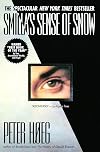
C’è un freddo straordinario, 18 gradi Celsius sotto zero, e nevica, e nella lingua che non è più mia la neve è qanik, grossi cristalli quasi senza peso che cadono in grande quantità e coprono la terra con uno strato di bianco gelo polverizzato. Questa è Smilla che parla in prima persona, all’inizio del romanzo. Lei “sente” la neve, come dice il titolo, la “capisce”. E la neve le dice che la morte di un bambino suo vicino di casa non è stata un incidente, come tutti show more sembrano pensare. Comincia così questo giallo un po’ atipico, che mi è piaciuto davvero davvero molto. Soprattutto ho adorato le ambientazioni, tra la Danimarca e la Groenlandia, freddo, neve e ghiaccio, ma ancor di più ho adorato il personaggio di Smilla. La adoro perché è sola, fredda, forte e quasi insensibile, ma anche passionale, fragile e ferita. E’ umana, e sotto alcuni aspetti (forse i peggiori!) mi somiglia moltissimo. E poi la adoro perché è proprio un bel personaggio, ben costruito, approfondito e sfaccettato, diviso tra due mondi senza appartenere veramente a nessuno dei due. Poi può anche risultare antipatica (a me no!!), però come personaggio la trovo veramente affascinante!
«Smilla. Com’è possibile che una ragazza carina e minuta come te abbia una voce così rude?»
«Mi dispiace» dico «di dare l’impressione di essere rude solo con la bocca. Mi sforzo quanto posso di esserlo in tutto.»
http://www.naufragio.it/iltempodileggere/1091 show less
«Smilla. Com’è possibile che una ragazza carina e minuta come te abbia una voce così rude?»
«Mi dispiace» dico «di dare l’impressione di essere rude solo con la bocca. Mi sforzo quanto posso di esserlo in tutto.»
http://www.naufragio.it/iltempodileggere/1091 show less

The plot of this crime novel is broad and complicated, but it starts like this: Smilla is a woman in her thirties living in an apartment complex in Copenhagen. One snowy day, the young son of one of her neighbours falls off the roof and the police quickly decides that it was an accident. Smilla, however, knows that the boy was afraid of heights and that it's not possible that he climbed up there by himself or in play. Smilla is the daughter of an Inuit hunter and grew up in Greenland, so she show more has a feeling for snow that goes far beyond what city dwellers can see, and thus, she also detects more things in the snow that suggest that the boy was killed. This discovery leads to a journey through Copenhagen and later onto a ship to Greenland, deep into the history of expeditions and scientists, and Smilla's own past.
I think that this crime plot is only half of it, though. Interwoven, the reader learns a lot about Greenland, both concerning science and history, and about the treatment of the Inuit in Denmark and the colonization of Greenland. All this was quite lost on me when I read it for the first time, but now I found it very interesting and eye-opening. Previously, I have not really been aware of this part of Danish/European history. When I realized that this topic was so important in the book I was a bit wary because it's written from the point of view of an indigenous woman by a non-indigenous man, but I think it was written very profoundly, and when I did some online research, I did not find any articles criticizing this aspect.
The story itself drags a little in some chapters and I think it could have been a bit shorter to hold up the interest of the reader a little more. Sometimes the background of the crime is too detailed and it gets a bit repetitive. Nevertheless, it is an unusual novel composed in poetic and strong language, with a powerful heroine and a fascinating topic. show less
I think that this crime plot is only half of it, though. Interwoven, the reader learns a lot about Greenland, both concerning science and history, and about the treatment of the Inuit in Denmark and the colonization of Greenland. All this was quite lost on me when I read it for the first time, but now I found it very interesting and eye-opening. Previously, I have not really been aware of this part of Danish/European history. When I realized that this topic was so important in the book I was a bit wary because it's written from the point of view of an indigenous woman by a non-indigenous man, but I think it was written very profoundly, and when I did some online research, I did not find any articles criticizing this aspect.
The story itself drags a little in some chapters and I think it could have been a bit shorter to hold up the interest of the reader a little more. Sometimes the background of the crime is too detailed and it gets a bit repetitive. Nevertheless, it is an unusual novel composed in poetic and strong language, with a powerful heroine and a fascinating topic. show less
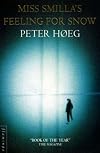
"The body's pain is so paper-thin and insignificant compared to that of the mind."
This book was initially written in Danish and then translated into English. The story follows Smilla Jaspersen, a 37-year-old Greenlander living in Copenhagen. Smilla is a loner by nature, but there is one person in her life she feels a connection to, her young neighbour, Isaiah. This is revealed through a series of flashbacks, because in the novel’s opening chapter it is revealed that Isaiah has died show more following a fall off the snowy roof of their apartment block.
Accidental death say the police but Smilla knows the boy and moreover has a feeling for snow. She reads a different story in his snowy footprints. Isaiah wasn’t playing, he was running from something. Smilla decides to investigate this untimely death and soon realises that she has stumbled onto something much bigger than a solitary death. What's more she can read the smallest changes in ice and snow.
This novel is an entertaining mystery/thriller that IMHO has enough in it for anyone who is a fan of that particular genre but for me, the best part was learning about the history and culture of Greenland. Hoeg deftly explores the many problems of the colonization of this island nation, weaving historical context into his text. I started the novel knowing absolutely nothing about the relationship between Denmark and Greenland, so it was a interesting to learn something about their uneasy history. Hoeg’s prose is densely packed, full of information, action, and on occasion, wonderfully vivid imagery.
Coincidentally I started this on a day that it had started to snow in my own neighbourhood and if nothing else, it reminded me that British winters are rather tame in comparison to those endured in the bone-chilling arctic.
"Whining is a virus, a lethal, infectious, epidemic disease." show less
This book was initially written in Danish and then translated into English. The story follows Smilla Jaspersen, a 37-year-old Greenlander living in Copenhagen. Smilla is a loner by nature, but there is one person in her life she feels a connection to, her young neighbour, Isaiah. This is revealed through a series of flashbacks, because in the novel’s opening chapter it is revealed that Isaiah has died show more following a fall off the snowy roof of their apartment block.
Accidental death say the police but Smilla knows the boy and moreover has a feeling for snow. She reads a different story in his snowy footprints. Isaiah wasn’t playing, he was running from something. Smilla decides to investigate this untimely death and soon realises that she has stumbled onto something much bigger than a solitary death. What's more she can read the smallest changes in ice and snow.
This novel is an entertaining mystery/thriller that IMHO has enough in it for anyone who is a fan of that particular genre but for me, the best part was learning about the history and culture of Greenland. Hoeg deftly explores the many problems of the colonization of this island nation, weaving historical context into his text. I started the novel knowing absolutely nothing about the relationship between Denmark and Greenland, so it was a interesting to learn something about their uneasy history. Hoeg’s prose is densely packed, full of information, action, and on occasion, wonderfully vivid imagery.
Coincidentally I started this on a day that it had started to snow in my own neighbourhood and if nothing else, it reminded me that British winters are rather tame in comparison to those endured in the bone-chilling arctic.
"Whining is a virus, a lethal, infectious, epidemic disease." show less

Mystery doesn't typically grab me as a genre and I can do without thrillers on the whole, but this one has more depth than I expected. I learned a lot about the Denmark-Greenland political relationship, and this was a great way to explore it. There's also a lot about the Arctic and its peoples. Smilla, for example, is a Greenlander living in Denmark. Just like Canada's Inuit, she is very attuned to all the subtle varieties of ice and snow. It requires precisely somebody with her background show more to observe important clues when a young boy appears to commit suicide by leaping off a roof.
The subsequent story doesn't unfold in the typical way (at least, not as I expected); it's less a 'whodunnit' than a 'whydtheydoit'. Smilla just wants to understand. All of her motives are intrinsic, but she's absolutely relentless. This is exactly the kind of character I like best, a gruff logician with a secret emotional side. Standing a whole 5 foot 4, she can milk people's assumptions for all they're worth. It's great to watch her in action, even when her stamina challenges belief. Smilla relies on boldness, spontaneity and solid instincts. This led into a few humourous bits (the dog, the maintenance lady, etc.) but just as frequently she made some brilliant moves. A light touch keeps things more intriguing than frustrating when unfolding events need time to explain themselves as she makes her next leap.
Smilla has many layers and a lot of history that she's very introspective about, mercilessly examining herself under a microscope. This degree of personal honesty grants her the power to read others so well, and humanity in general: what drives us, how we are driven by others. There's exploration here of deeper mysteries than just the one at hand, and it's a rare book in this genre that makes so much quality time to do that. Despite Smilla's direct approach it's not a light, breezy read to the end. In fact, I wouldn't have minded less resolution than I got. By then it felt like the main point was the journey, about always following your own star however inhospitable the wilderness you call home. show less
The subsequent story doesn't unfold in the typical way (at least, not as I expected); it's less a 'whodunnit' than a 'whydtheydoit'. Smilla just wants to understand. All of her motives are intrinsic, but she's absolutely relentless. This is exactly the kind of character I like best, a gruff logician with a secret emotional side. Standing a whole 5 foot 4, she can milk people's assumptions for all they're worth. It's great to watch her in action, even when her stamina challenges belief. Smilla relies on boldness, spontaneity and solid instincts. This led into a few humourous bits (the dog, the maintenance lady, etc.) but just as frequently she made some brilliant moves. A light touch keeps things more intriguing than frustrating when unfolding events need time to explain themselves as she makes her next leap.
Smilla has many layers and a lot of history that she's very introspective about, mercilessly examining herself under a microscope. This degree of personal honesty grants her the power to read others so well, and humanity in general: what drives us, how we are driven by others. There's exploration here of deeper mysteries than just the one at hand, and it's a rare book in this genre that makes so much quality time to do that. Despite Smilla's direct approach it's not a light, breezy read to the end. In fact, I wouldn't have minded less resolution than I got. By then it felt like the main point was the journey, about always following your own star however inhospitable the wilderness you call home. show less
Lists
Page Turners (1)
A Novel Cure (1)
Arctic novels (1)
1990s (1)
Favourite Books (1)
Global Mysteries (1)
Mooie titels (1)
Read in 2007 (1)
Gen X Library (1)
Europe (1)
Winter Books (1)
Nordic Crime (1)
Read in 2011 (1)
Awards


You May Also Like


Associated Authors
Statistics
- Works
- 19
- Also by
- 4
- Members
- 13,812
- Popularity
- #1,675
- Rating
- 3.6
- Reviews
- 294
- ISBNs
- 464
- Languages
- 27
- Favorited
- 34