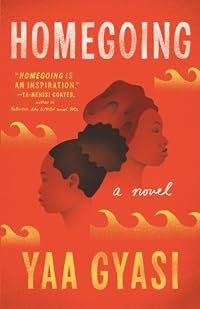
Homegoing
by Yaa Gyasi
On This Page
Description
"Two half sisters, Effia and Esi, unknown to each other, are born into two different tribal villages in 18th century Ghana. Effia will be married off to an English colonial, and will live in comfort in the sprawling, palatial rooms of Cape Coast Castle, raising half-caste children who will be sent abroad to be educated in England before returning to the Gold Coast to serve as administrators of the Empire. Her sister, Esi, will be imprisoned beneath Effia in the Castle's women's dungeon, and show more then shipped off on a boat bound for America, where she will be sold into slavery. Stretching from the tribal wars of Ghana to slavery and Civil War in America, from the coal mines in the north to the Great Migration to the streets of 20th century Harlem, Yaa Gyasi's has written a modern masterpiece, a novel that moves through histories and geographies and--with outstanding economy and force--captures the troubled spirit of our own nation"-- show lessTags
Recommendations


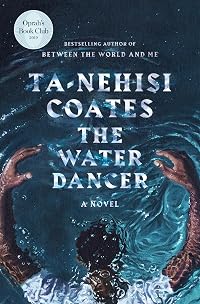
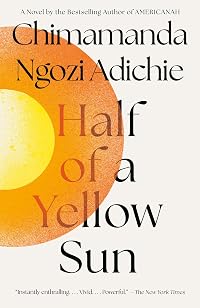
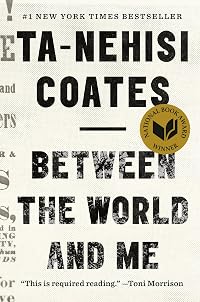
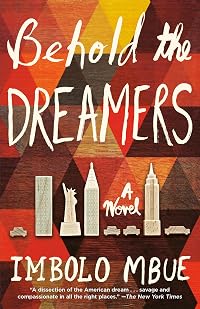





Member Recommendations

Member Reviews
Alex Haley beschrieb in seinem Welterfolg 'Roots' auf mehr als 700 Seiten das Leben von Kunta Kinte und seinen Nachkommen - Yaa Gyasi benötigt für die Geschichte der Halbschwestern Effia und Esi und ihren Nachfahren nur 400 Seiten, ohne dass ich beim Lesen das Gefühl hatte, nur unvollständige Ausschnitte mitgeteilt zu bekommen.
14 Kapitel hat das Buch, jedes ist einem Abkömmling einer Generation gewidmet, beginnend mit Effia und Esi, die sich nie kennenlernten. Während Effia, die die uneheliche Tochter des Hausmädchens Maame ist, das direkt nach ihrer Geburt floh, gegen Ende des 18. Jahrhunderts mit einem britischen Festungsgouverneur verheiratet wird, wird Esi, Maames eheliche Tochter, ca. zur gleichen Zeit vom Stamme Effias show more gefangengenommen und als Sklavin verkauft. Sie und ihre Nachkommen werden in den USA leben und aufwachsen unter den erbärmlichsten Bedingungen, die man sich vorstellen kann. Selbst das Verbot der Sklaverei ändert kaum etwas an den gnadenlosen Zuständen, in denen sie sich befinden.
Effias Nachfahren hingegen bleiben in Ghana, profitieren weiterhin vom Sklavenhandel oder entziehen sich ihm auf radikale Weise mit der Hoffnung, so ihr Glück zu finden.
Obwohl von jeder Person stets nur 20 bis 30 Seiten lang erzählt wird, reichen diese vollständig aus, um sich eine Vorstellung von ihrem Lebensweg und dem seiner bzw. ihrer Eltern zu machen. Geschickt werden Erinnerungen und Rückblicke in die laufende Geschichte eingeflochten, sodass ich kontinuierlich der Fortentwicklung dieser Familie folgen konnte, die bis in die heutige Zeit von der Sklaverei gekennzeichnet ist.
Dieses Buch ist beeindruckend und grandios, aber auch entsetzlich grausam, wobei ich keine Grausamkeit im blutrünstigen Sinne meine. Denn was Yaa Gyasi hier erzählt, mag eine fiktive Geschichte sein, aber das wovon sie berichtet, beruht auf realen Geschehnissen. show less
14 Kapitel hat das Buch, jedes ist einem Abkömmling einer Generation gewidmet, beginnend mit Effia und Esi, die sich nie kennenlernten. Während Effia, die die uneheliche Tochter des Hausmädchens Maame ist, das direkt nach ihrer Geburt floh, gegen Ende des 18. Jahrhunderts mit einem britischen Festungsgouverneur verheiratet wird, wird Esi, Maames eheliche Tochter, ca. zur gleichen Zeit vom Stamme Effias show more gefangengenommen und als Sklavin verkauft. Sie und ihre Nachkommen werden in den USA leben und aufwachsen unter den erbärmlichsten Bedingungen, die man sich vorstellen kann. Selbst das Verbot der Sklaverei ändert kaum etwas an den gnadenlosen Zuständen, in denen sie sich befinden.
Effias Nachfahren hingegen bleiben in Ghana, profitieren weiterhin vom Sklavenhandel oder entziehen sich ihm auf radikale Weise mit der Hoffnung, so ihr Glück zu finden.
Obwohl von jeder Person stets nur 20 bis 30 Seiten lang erzählt wird, reichen diese vollständig aus, um sich eine Vorstellung von ihrem Lebensweg und dem seiner bzw. ihrer Eltern zu machen. Geschickt werden Erinnerungen und Rückblicke in die laufende Geschichte eingeflochten, sodass ich kontinuierlich der Fortentwicklung dieser Familie folgen konnte, die bis in die heutige Zeit von der Sklaverei gekennzeichnet ist.
Dieses Buch ist beeindruckend und grandios, aber auch entsetzlich grausam, wobei ich keine Grausamkeit im blutrünstigen Sinne meine. Denn was Yaa Gyasi hier erzählt, mag eine fiktive Geschichte sein, aber das wovon sie berichtet, beruht auf realen Geschehnissen. show less
"Her people, the Asantes, were the broth, and his father's people, the Fantes, were the ground nuts, and the many other nations that began at the edge of the Atlantic and moved up through the bushland into the North made up the meat and pepper and vegetables. This pot was already full to the brim before the white men came and added fire. Now it was all the Gold Coast people could do to keep from boiling over again and again and again."
This is a family saga taking place over 300 or so years, beginning with two half-sisters, Effia and Essi in the Gold Coast. Effia marries a British "slaver"--and her line continues in Africa. Essi is captured and brought to America as a slave. We meet a descendant of each of the sisters in each succeeding show more generation through the years to the present. Along the way, through Effia's descendants we learn a bit of the history and cultures of the various tribes in that region of Africa, and through Essi's descendants we viscerally feel the experiences of slavery, emancipation, Jim Crow, and up to the present day.
I loved this book, and find it hard to believe that it is a first novel written by such a young woman. I put off reading it for a long time, as I often do for books that seem overhyped, and I'm sorry I did. In the case the hype is entirely deserved. There is so much here, all of it beautifully written, and easy to read.
3 1/2 stars show less
This is a family saga taking place over 300 or so years, beginning with two half-sisters, Effia and Essi in the Gold Coast. Effia marries a British "slaver"--and her line continues in Africa. Essi is captured and brought to America as a slave. We meet a descendant of each of the sisters in each succeeding show more generation through the years to the present. Along the way, through Effia's descendants we learn a bit of the history and cultures of the various tribes in that region of Africa, and through Essi's descendants we viscerally feel the experiences of slavery, emancipation, Jim Crow, and up to the present day.
I loved this book, and find it hard to believe that it is a first novel written by such a young woman. I put off reading it for a long time, as I often do for books that seem overhyped, and I'm sorry I did. In the case the hype is entirely deserved. There is so much here, all of it beautifully written, and easy to read.
3 1/2 stars show less
Hit, miss or epic fail, I love random book purchases from charity shops influenced purely by cover and blurb.
The novel opens with a family tree spanning seven generations starting with Maame, the mother of half-sisters Effia and Esi, and is perfect for keeping track of which side of the tree the descendants originate from.
Effia and Esi are born under different circumstances and destined to lead different lives, unaware of the other’s existence. Effia becomes the wife of white slave trader James Collins and lives in luxury at Cape Coast Castle. Fleeing her besieged village, Esi is captured, sold and held in the dungeons of the very same castle before being shipped to America.
Each chapter is a stand-alone novella, the whole a show more masterpiece in storytelling as the family history turns full circle through fire and water, war and division, America and Africa. From the barbarity and inhumanity of slavery in the deep south to no-holds-barred racism and discrimination in the north, from merciless missionaries in Kumasi to the poverty, rivalries and trading in the villages, Home Going doesn’t pull any punches yet still manages to provide hope.
Relevant, thought-provoking and highly recommended. A hit! show less
The novel opens with a family tree spanning seven generations starting with Maame, the mother of half-sisters Effia and Esi, and is perfect for keeping track of which side of the tree the descendants originate from.
Effia and Esi are born under different circumstances and destined to lead different lives, unaware of the other’s existence. Effia becomes the wife of white slave trader James Collins and lives in luxury at Cape Coast Castle. Fleeing her besieged village, Esi is captured, sold and held in the dungeons of the very same castle before being shipped to America.
Each chapter is a stand-alone novella, the whole a show more masterpiece in storytelling as the family history turns full circle through fire and water, war and division, America and Africa. From the barbarity and inhumanity of slavery in the deep south to no-holds-barred racism and discrimination in the north, from merciless missionaries in Kumasi to the poverty, rivalries and trading in the villages, Home Going doesn’t pull any punches yet still manages to provide hope.
Relevant, thought-provoking and highly recommended. A hit! show less
If you have even a toe in the book world, you probably heard a lot about this book last year or the year before. So yes, I might very well be the last person on the planet to read it despite having had a copy of it forever. Somehow it just never made it onto my bedside table and I missed out on the whole conversation about it amongst lit reading types. I figured when one of my book clubs chose it for this month's book that it was a good time for me to finally tackle it and see what all the hype was about. And I'm so glad I did because the descriptions I'd seen of it don't quite catch the truth and reality of it (nor will I, most likely).
Opening in Ghana and chronicling 300 years, the novel starts out conventionally with the story of show more Effia the Beauty, a young Ashanti woman whose harsh and spiteful mother marries her off to the British governor of the Cape Coast Castle rather than to the chief of their village. Effia goes to live in the upper floors of the Castle while other Ghanians destined for slavery in the Americas, including Esi, the half-sister Effia never knew, are kept in appalling conditions in the dungeons while awaiting transport. The genealogical lines flow downward from these two women as the 7 generations of their descendants make their way in Ghana and in the US, caught up in the changing history and times they live in. This is an unapologetic and gritty look at the long reaching consequences of slavery and colonialism on two very different branches of one family.
The stories of each generation, told in individual chapters, focus on one descendant of Effia and one of Esi and they run parallel to each other on down through the family tree, showing the long arc of divergence and eventual convergence in this one representative family. Each chapter captures a brief snapshot of life for the character in question leaving large swathes of time out of the narrative, focusing the reader's attention on the historical moment almost as much as on the character themselves. Each story is a distillation of that historical generation's experiences in both the US and Ghana. The family tree in the beginning of the book comes in handy in keeping everyone straight and for comparing how far from the original sisters each person is, giving the reader additional perspective since the characters themselves progressively lose pieces of their familial history as time goes on. The novel is epic in scope but the chapters and stories themselves are each self-contained and tightly focused. The narrative starts out leisurely and captivating but speeds up in later chapters and the final chapters unfold with less nuanced pictures of the later characters' lives, highlighting their generation's historical moments more than their individuality and the ending itself, while clearly symbolic, might be just a little bit too much. Gyasi has written a sweeping and expansive novel of black history, in surprisingly few pages, that encompasses the biggest movements, tragedies, and outrages against a people in two different countries. It tackles not only the horrors of slavery and colonialism but also the truth and shame of complicity. The novel is unflinching in its look at inhumanity and institutionalized hardship but it also shows instances of deep and abiding love, acceptance, and perseverance. A worthwhile and important read, no wonder it won or was nominated for so many awards. show less
Opening in Ghana and chronicling 300 years, the novel starts out conventionally with the story of show more Effia the Beauty, a young Ashanti woman whose harsh and spiteful mother marries her off to the British governor of the Cape Coast Castle rather than to the chief of their village. Effia goes to live in the upper floors of the Castle while other Ghanians destined for slavery in the Americas, including Esi, the half-sister Effia never knew, are kept in appalling conditions in the dungeons while awaiting transport. The genealogical lines flow downward from these two women as the 7 generations of their descendants make their way in Ghana and in the US, caught up in the changing history and times they live in. This is an unapologetic and gritty look at the long reaching consequences of slavery and colonialism on two very different branches of one family.
The stories of each generation, told in individual chapters, focus on one descendant of Effia and one of Esi and they run parallel to each other on down through the family tree, showing the long arc of divergence and eventual convergence in this one representative family. Each chapter captures a brief snapshot of life for the character in question leaving large swathes of time out of the narrative, focusing the reader's attention on the historical moment almost as much as on the character themselves. Each story is a distillation of that historical generation's experiences in both the US and Ghana. The family tree in the beginning of the book comes in handy in keeping everyone straight and for comparing how far from the original sisters each person is, giving the reader additional perspective since the characters themselves progressively lose pieces of their familial history as time goes on. The novel is epic in scope but the chapters and stories themselves are each self-contained and tightly focused. The narrative starts out leisurely and captivating but speeds up in later chapters and the final chapters unfold with less nuanced pictures of the later characters' lives, highlighting their generation's historical moments more than their individuality and the ending itself, while clearly symbolic, might be just a little bit too much. Gyasi has written a sweeping and expansive novel of black history, in surprisingly few pages, that encompasses the biggest movements, tragedies, and outrages against a people in two different countries. It tackles not only the horrors of slavery and colonialism but also the truth and shame of complicity. The novel is unflinching in its look at inhumanity and institutionalized hardship but it also shows instances of deep and abiding love, acceptance, and perseverance. A worthwhile and important read, no wonder it won or was nominated for so many awards. show less
Homegoing is the story of two branches of a family tree with one sister being sold into slavery and taken to America and the other sister remaining in Ghana. The narrative alternates between the two lines, with each chapter being the story of the next descendant. I found this a very effective structure for telling the multigenerational family story, although I did appreciate the family tree at the beginning of the book. I wasn't sure how the author was going to tie things up at the end and was pleasantly surprised at how well it worked. Although some sections were of necessity difficult reading, and I wish I knew more Ghanaian history, Homegoing was a wonderful story and a stunning debut novel.
I had heard so much praise for this book last year and it did not disappoint. The story of two Ghanaian step sisters, unknown to each other, whose lives took different paths, is the starting point of this saga that moves from the 18th century to present day. The unfolding of the generational experiences is a masterpiece of writing skill. Gyasi is so accomplished at creating a narrative that it is hard to believe this is her debut novel. She writes with exquisite detail while at the same time keeping the prose crisp and spare. I was spellbound by her technique of ending a chapter with one statement so dramatic and so beautiful that it lead me to catch my breath as I read. She is only 27. What wonderful things are ahead?
This book starts with the story of two half sisters, Effia and Esi, who did not know each other, from different tribes in Ghana in the 18th century. One becomes privileged and the other sold as a slave. It continues in alternating chapters, describing the life of one child of each generation of the descendants of Effia and Esi, up to year 2000. I was amazed by the author's ability to cover hundreds of years in such a succinct manner. The book contains running threads of relevant themes such as the far-reaching adverse impact of slavery, roles of women, belief systems, storytelling, family relationships, and cultural heritage. It feels like a collection of vignettes, with each character getting just enough coverage to enable a reader to show more understand how each is linked to the past. As a tip, keep referring to the genealogy chart to keep the lineage of the characters straight. I recommend this book to anyone. It is well-written, thought-provoking, and contains important topics influencing our world today. show less
Members
- Recently Added By
Lists

2017 Tournament of Books
18 works; 18 members

Best of World Literature
435 works; 52 members

ALA The Reading List
490 works; 28 members

Recommend the 20 best books you've read in the last five years
2,168 works; 606 members

Best 21st Century Books (So Far)
670 works; 86 members

Top Five Books of 2021
604 works; 180 members

Top Five Books of 2016
795 works; 229 members

Pleasant Surprises: Books That Exceeded Our Expectations
418 works; 143 members

Must-Read Books by Black Authors
114 works; 92 members

Female Author
1,234 works; 67 members

Top Five Books of 2017
757 works; 231 members

Historical Fiction
889 works; 91 members

Top Five Books of 2020
982 works; 350 members
Top Five Books of 2018
802 works; 265 members

Best Books With Sisters
130 works; 30 members
BBC's 100 Novels That Shaped Our World
100 works; 22 members
Southern Fiction
212 works; 52 members

Black Authors
384 works; 32 members

Top Five Books of 2022
736 works; 272 members

Top Five Books on LibraryThing
24 works; 7 members

Top Five Books of 2015
811 works; 241 members

Powell's Indiespensable
79 works; 6 members
2017 Notable Books for Adults
26 works; 5 members

africa diaspora novels
10 works; 1 member

40 Books to Read Before You’re 40
40 works; 4 members
LibraryThingers' 1001 Books You Must Read Before You Die
442 works; 30 members

Phi Beta Kappa reading list
260 works; 8 members

Africa
109 works; 8 members

Books Read in 2022
5,168 works; 114 members
Books Read in 2017
4,249 works; 130 members
Best African and African diaspora books
111 works; 4 members
African Settings
4 works; 1 member

2021 Christmas Gifts
66 works; 13 members
Historical Fiction Lovers
88 works; 4 members

Books Read in 2016
4,666 works; 199 members
Overdue Podcast
806 works; 9 members

A Good Read (Radio 4)
287 works; 1 member

Books Read in 2020
4,379 works; 124 members

Favorite Books from the 2010s
75 works; 3 members

Books Set In Africa
81 works; 4 members
First Novels
373 works; 17 members

BookTok Adult
115 works; 2 members

Virginia Banned Books 2023
68 works; 3 members

World Book Club (BBC World Service)
212 works; 1 member

Library List - Pulitzer Adjacent
40 works; 1 member

Schomburg Centennial Reading List
100 works; 4 members

Governerds Insider
32 works; 1 member

wish list
61 works; 3 members

BBC World Book Club
265 works; 5 members

Retrospective of 20th- and 21st-century literature
154 works; 1 member

Books Read in 2024
4,623 works; 126 members

NYT Readers best of 21st C
100 works; 8 members

LitHub's Best Novels of the Decade 2010-2019
39 works; 1 member

AP Lit
363 works; 6 members

2023 Update: The Best Twenty Books You've Read in the Past Five Years
40 works; 3 members

Books Read in 2021
5,361 works; 114 members
Global Reads: Books Set in Africa
19 works; 3 members

History in the long view
55 works; 3 members

Florida's Book Bans and Challenges
311 works; 4 members
World Books
51 works; 4 members

Family Relationships
68 works; 2 members

1600s to 1700s Historical Fiction: America
6 works; 1 member

United Kingdom and Ireland
37 works; 1 member

Historical Fiction Books
99 works; 5 members

To Read
29 works; 2 members
1800s: America
23 works; 4 members

To Read
617 works; 7 members
Author Information

4+ Works 10,253 Members
Yaa Gyasi was born in Ghana and grew up in Huntsville, Alabama. She is a graduate of Stanford University with a BA in English and an MFA from the Iowa Writers' Workshop. Her debut novel, The Homegoing, became a New York Times best seller. In 2016, she was selected as one of the U.S. National Book Foundation's 'five under 35' new writers to watch. show more (Bowker Author Biography) show less
Some Editions
Awards and Honors
Series
Belongs to Publisher Series
Work Relationships
Has the adaptation
Has as a student's study guide
Common Knowledge
- Canonical title*
- Weg naar huis
- Original title
- Homegoing
- Original publication date
- 2016-06-07
- People/Characters
- Effia Otcher; Esi Asare; Quey Collins; Ness Stockham; James Richard Collins; Kojo Freeman (show all 14); Abena Collins; H Black; Akua Collins; Willie Black; Yaw Agyekum; Carson "Sonny" Clifton; Marjorie Agyekum; Marcus Clifton
- Important places
- Ghana; Harlem, New York, New York, USA; Alabama, USA
- Epigraph
- Abusua te sε kwaε: sε wo wɔ akyire a wo hunu sε εbom; sε wo bεn ho a na wo hunu sε nnua no bia sisi ne baabi nko.
The family is like the forest: if you are outside it is dense: if you are inside you see that e... (show all)ach tree has its own position.
—AKAN PROVERB - Dedication
- For my parents and for my brothers
- First words
- The night Effia Otcher was born into the musky heat of Fanteland, a fire raged through the woods just outside her father's compound.
- Quotations
- We believe the one who has the power. He is the one who gets to write the story. So when you study history, you must always ask yourself, Whose story am I missing? Whose voice was suppressed so that this voice could come fort... (show all)h. Once you have figured that out, you must find that story too. From there, you begin to get a clearer, yet still imperfect picture.
- Last words
- (Click to show. Warning: May contain spoilers.)Marjorie splashed him suddenly, laughing loudly before swimming away, toward the shore.
- Blurbers
- Coates, Ta-nehisi; Klay, Phil; O'Grady, Megan; Gay, Roxane; Norris, Michele; Turits, Meredith (show all 7); Opitz, Steph
- Original language
- English
- Canonical DDC/MDS
- 813.6
*Some information comes from Common Knowledge in other languages. Click "Edit" for more information.
Classifications
Statistics
- Members
- 7,226
- Popularity
- 1,613
- Reviews
- 321
- Rating
- (4.28)
- Languages
- 16 — Catalan, Chinese, Czech, Danish, Dutch, English, Finnish, French, German, Hungarian, Italian, Polish, Romanian, Spanish, Swedish, Portuguese (Portugal)
- Media
- Paper, Audiobook, Ebook
- ISBNs
- 63
- ASINs
- 17