The Royal Family
by William T. Vollmann
On This Page
Description
'Nothing Vollmann has done before approaches the wild ambition of this book...this is exactly the kind of storytelling the novel was invented for.' San Francisco Chronicle Henry Tyler is a failing PI in San Francisco. When the woman he loves commits suicide, he clings despairingly to her ghost. Struggling to turn grief and guilt into something precious, he employs his professional skills to track down the 'Queen of the Prostitutes' - a figure also being sought by his brother but for very show more different reasons. Vivid and unforgettable. show lessTags
Recommendations













Member Recommendations

by gsides78
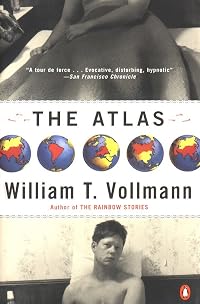
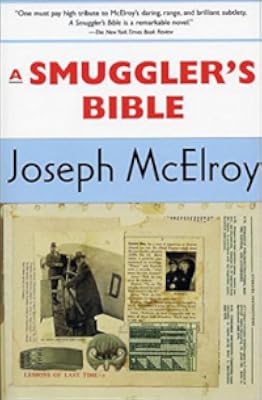
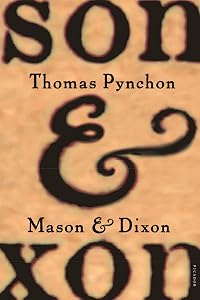
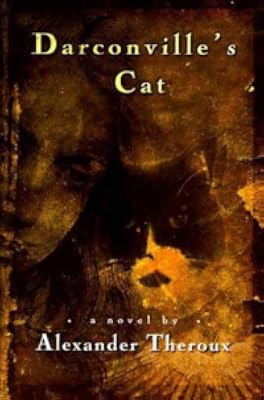
susanbooks Interesting to compare 2 surreal fantasy-like novels of prostitution in San Francisco. Amber Dawn's feminist Sub Rosa makes Vollmann's book all the more disturbing.
Member Reviews
Rarely has a book evoked in me such deep abiding disgust over what I'm witnessing described that I cringe practically every page, close my eyes every other paragraph, almost vomit in my mouth each chapter, feeling simultaneously repelled and yet compelled (how does William T. Vollmann do that?!) to continue reading.
Reading The Royal Family's akin to viewing macabre masterpieces like the The Exorcist or Alien, watching with one eye open and one eye closed as the gross images elicit visceral reactions that shock and shock and shock some more, and just when you thought you'd become desensitized or too jaded and couldn't be shocked anymore, Vollman somehow shocks you worse again -- and that's a compliment (not a complaint) to Vollmann's show more genius documenting what in lesser hands would appear as exploitation or cheap titillation, rather than a gritty, streetwise, all-too-horrifically-real authenticity that propels his unblinking nightmarish narrative with absolute authority.
Don't confuse William T. Vollmann's royal family for the refined royal family residing in Buckingham Palace. Vollmann's royal family exists in various fringe netherworlds of San Francisco's Tenderloin District: an abandoned underground parking structure (home to the prostitute Queen who reigns over her Royal Family of prostitute apprentices and host of degenerate dealers, freaks, and johns), seedy bars and sleazier brothels fronted as run down motels reeking their rank semen stench out onto the filthy streets as far removed from the red carpets and gold awnings of a Ritz Carlton as Heaven is from Hell.
Sample sentence from The Royal Family so you know I'm not just full of stinking hyberbole:....
"This is the heart of it, the scared woman who does not want to go alone to the man any longer, because when she does, when she takes off her baggy dress, displaying to him rancid breasts each almost as big as his head, or no breasts, or mammectomized scar tissue taped over with old tennis balls to give her the right curves; when, vending her flesh, she stands or squats waiting, congealing the air firstly with her greasy cheesey stench of unwashed feet confined in week-old socks, secondly with her perfume of leotards and panties also a week old, crusted with semen and urine, brown-greased with the filth of alleys; thirdly with the odor of her dress also worn for a week, emblazoned with beer-spills and cigarette-ash and salted with the smelly sweat of sex, dread, fever, addiction -- when she goes to the man, and is accepted by him, when all these stinking skins of hers have come off (either quickly, to get it over with, or slowly like a big truck pulling into a weigh station because she is tired), when she nakedly presents her soul's ageing soul, exhaling from every pore physical and ectoplasmic her fourth and supreme smell which makes eyes water more than any queen of red onions -- rotten waxy smell from between her breasts, I said, bloody pissy shitty smell from between her legs, sweat-smell and underarm-smell, all blended into her halo, generalized sweetish smell of unwashed flesh; when she hunkers painfully down with her customer on a bed or a floor or in an alley, then she expects her own death."
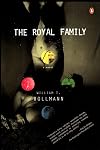
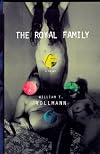
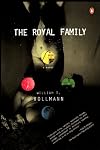
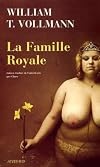
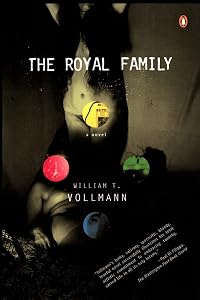
William T. Vollmann didn't simply research and imagine his Tenderloin Inferno as some novelists might do, sitting in a library or a safe home study in a comfy wing back chair; no, he lived, endured, his research literally on the Tenderloin streets. He hung with prostitutes for days on end, risking arrest (or worse) to accurately learn their slang and idiosyncratic syntax -- the street whore's lingo -- in order to see past the standard hooker stereotypes, to the hearts and humanity of these desperate, hurting, and victimized human beings - to the genuine godforsaken lives they truly lived. Once invited and allowed to remain in the inner sanctum of their harrowing existences, Vollmann made even the questionnable decision to smoke crack with them, to prove his mettle to them in their eyes, because he wanted to be deemed credible and get the whole truth and nothing but the truth out of them, and to not be perceived too as just another shallow invasive reporter with a camera and a deadline looking for higher ratings on the six 'o clock news. In so doing, Vollmann indisputedly got the ugly unsugarcoated story from his studies, and it is a vile story, it is beyond repugnant, so much so his publisher nearly wouldn't publish it. Vollmann, in fact, took less of an advance in order that not one word of the 774 page novel be excised by his editors. That's committment to an artistic cause. The seedy cover photograph of The Royal Family, featured on the 2000/2001 Penguin editions, displays an unflattering scene of three nude prostitutes, some of the very ones Vollmann lived with and interviewed. The photo, in fact, was taken by Vollmann himself. Vollmann's not your average novelist; he's much more ambitious and willing to take unheard of risks for the sake of his art, and The Royal Family's not your typical novelistic fare, not by a long shot, so enter at your own risk.
Now should you decide to enter, you'll meet one of the most self-destructive, heart-set-on-Hades protagonists this reviewer has ever met, Henry Tyler, perenially broke and on the brink of bankruptcy, private-eye who once loved his alienated brother's (John) wife (Irene) until she committed suicide. Happy, heart warming stuff. Emotionally ruined by Irene's suicide, Henry, private-eye intutition working counterintuitive, maybe, or on something of a whim of fate, as if being led by the aged hand of Virgil, descends into the fetid, inhumane bowels of the Tenderloin in search of the mysterious Queen. However, unbeknownst to him, his brother John, big-time attorney, is presently handling a case for some seemingly nefarious Vegas enterprise known as Feminine Circus, whose owner, coincidentally, just happens to be searching for the Queen as well, although perhaps "hunting for the Queen" would more aptly describe his ultimate aims in locating her.
Henry passes the first gate of Hell, descending circle by circle, deeper and deeper, degradation by degradation, always on the lookout for his Queen, his imagined goddess and savior. Happily (or unhappily) he finds her, but then, of course, inevitable harsh realities collide, moral chaos and murder ensues, and our anti-hero must be thinking, in the bloody aftermath, living beneath a highway underpass, that sometimes, maybe, it's better just being a scrawny private-eye working divorce cases; much better, in fact, when a person like himself doesn't receive the self-recriminating Hell he longed for.
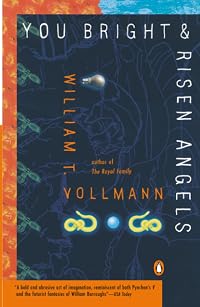
Vollmann's long slunk about the outskirts of a polite writer's society, venturing regularly into disturbing domains, shining lights with his words on society's cockroach and rat infestations, upon the disquieting, disturbing ills most of us are happy remaining clueless about, which is probably why so few read him. Reading Vollmann, while I've mentioned some horror flicks above, is really more like watching Das Boot -- a stressful, depressing experience. His fictions (excepting his debut novel, You Bright & Risen Angels) are never escapist fun, and humor in Vollmann's fiction is almost nonexistent. And stylistically, he's of the same ilk as your Franzens, Foster Wallaces, and Pynchons -- only he's more prolific than all of these writers combined -- so it's understandable he'd have significant critical acclaim (won the National Book Award for his most recent novel, Europe Central), but the understandable low sales because of his bleak writing topics and challenging erudition, despite having had forever a dedicated cult following. So why read him if he's so consistently stressful and depressing? For the same reason you'd read Night or The Decline and Fall of the Third Reich or The Gulag Archipelago. Vollmann's fictional tomes have as much to tell us about our humanity (or lack thereof) and where we're headed as a culture, as some of the finest histories and biographies ever penned. But that's just more hyperbole from this amateur William T. Vollmann advocate. So, in all honesty, you should probably go read some Judith Krantz or Danielle Steele instead. show less
Reading The Royal Family's akin to viewing macabre masterpieces like the The Exorcist or Alien, watching with one eye open and one eye closed as the gross images elicit visceral reactions that shock and shock and shock some more, and just when you thought you'd become desensitized or too jaded and couldn't be shocked anymore, Vollman somehow shocks you worse again -- and that's a compliment (not a complaint) to Vollmann's show more genius documenting what in lesser hands would appear as exploitation or cheap titillation, rather than a gritty, streetwise, all-too-horrifically-real authenticity that propels his unblinking nightmarish narrative with absolute authority.
Don't confuse William T. Vollmann's royal family for the refined royal family residing in Buckingham Palace. Vollmann's royal family exists in various fringe netherworlds of San Francisco's Tenderloin District: an abandoned underground parking structure (home to the prostitute Queen who reigns over her Royal Family of prostitute apprentices and host of degenerate dealers, freaks, and johns), seedy bars and sleazier brothels fronted as run down motels reeking their rank semen stench out onto the filthy streets as far removed from the red carpets and gold awnings of a Ritz Carlton as Heaven is from Hell.
Sample sentence from The Royal Family so you know I'm not just full of stinking hyberbole:....
"This is the heart of it, the scared woman who does not want to go alone to the man any longer, because when she does, when she takes off her baggy dress, displaying to him rancid breasts each almost as big as his head, or no breasts, or mammectomized scar tissue taped over with old tennis balls to give her the right curves; when, vending her flesh, she stands or squats waiting, congealing the air firstly with her greasy cheesey stench of unwashed feet confined in week-old socks, secondly with her perfume of leotards and panties also a week old, crusted with semen and urine, brown-greased with the filth of alleys; thirdly with the odor of her dress also worn for a week, emblazoned with beer-spills and cigarette-ash and salted with the smelly sweat of sex, dread, fever, addiction -- when she goes to the man, and is accepted by him, when all these stinking skins of hers have come off (either quickly, to get it over with, or slowly like a big truck pulling into a weigh station because she is tired), when she nakedly presents her soul's ageing soul, exhaling from every pore physical and ectoplasmic her fourth and supreme smell which makes eyes water more than any queen of red onions -- rotten waxy smell from between her breasts, I said, bloody pissy shitty smell from between her legs, sweat-smell and underarm-smell, all blended into her halo, generalized sweetish smell of unwashed flesh; when she hunkers painfully down with her customer on a bed or a floor or in an alley, then she expects her own death."
William T. Vollmann didn't simply research and imagine his Tenderloin Inferno as some novelists might do, sitting in a library or a safe home study in a comfy wing back chair; no, he lived, endured, his research literally on the Tenderloin streets. He hung with prostitutes for days on end, risking arrest (or worse) to accurately learn their slang and idiosyncratic syntax -- the street whore's lingo -- in order to see past the standard hooker stereotypes, to the hearts and humanity of these desperate, hurting, and victimized human beings - to the genuine godforsaken lives they truly lived. Once invited and allowed to remain in the inner sanctum of their harrowing existences, Vollmann made even the questionnable decision to smoke crack with them, to prove his mettle to them in their eyes, because he wanted to be deemed credible and get the whole truth and nothing but the truth out of them, and to not be perceived too as just another shallow invasive reporter with a camera and a deadline looking for higher ratings on the six 'o clock news. In so doing, Vollmann indisputedly got the ugly unsugarcoated story from his studies, and it is a vile story, it is beyond repugnant, so much so his publisher nearly wouldn't publish it. Vollmann, in fact, took less of an advance in order that not one word of the 774 page novel be excised by his editors. That's committment to an artistic cause. The seedy cover photograph of The Royal Family, featured on the 2000/2001 Penguin editions, displays an unflattering scene of three nude prostitutes, some of the very ones Vollmann lived with and interviewed. The photo, in fact, was taken by Vollmann himself. Vollmann's not your average novelist; he's much more ambitious and willing to take unheard of risks for the sake of his art, and The Royal Family's not your typical novelistic fare, not by a long shot, so enter at your own risk.
Now should you decide to enter, you'll meet one of the most self-destructive, heart-set-on-Hades protagonists this reviewer has ever met, Henry Tyler, perenially broke and on the brink of bankruptcy, private-eye who once loved his alienated brother's (John) wife (Irene) until she committed suicide. Happy, heart warming stuff. Emotionally ruined by Irene's suicide, Henry, private-eye intutition working counterintuitive, maybe, or on something of a whim of fate, as if being led by the aged hand of Virgil, descends into the fetid, inhumane bowels of the Tenderloin in search of the mysterious Queen. However, unbeknownst to him, his brother John, big-time attorney, is presently handling a case for some seemingly nefarious Vegas enterprise known as Feminine Circus, whose owner, coincidentally, just happens to be searching for the Queen as well, although perhaps "hunting for the Queen" would more aptly describe his ultimate aims in locating her.
Henry passes the first gate of Hell, descending circle by circle, deeper and deeper, degradation by degradation, always on the lookout for his Queen, his imagined goddess and savior. Happily (or unhappily) he finds her, but then, of course, inevitable harsh realities collide, moral chaos and murder ensues, and our anti-hero must be thinking, in the bloody aftermath, living beneath a highway underpass, that sometimes, maybe, it's better just being a scrawny private-eye working divorce cases; much better, in fact, when a person like himself doesn't receive the self-recriminating Hell he longed for.
Vollmann's long slunk about the outskirts of a polite writer's society, venturing regularly into disturbing domains, shining lights with his words on society's cockroach and rat infestations, upon the disquieting, disturbing ills most of us are happy remaining clueless about, which is probably why so few read him. Reading Vollmann, while I've mentioned some horror flicks above, is really more like watching Das Boot -- a stressful, depressing experience. His fictions (excepting his debut novel, You Bright & Risen Angels) are never escapist fun, and humor in Vollmann's fiction is almost nonexistent. And stylistically, he's of the same ilk as your Franzens, Foster Wallaces, and Pynchons -- only he's more prolific than all of these writers combined -- so it's understandable he'd have significant critical acclaim (won the National Book Award for his most recent novel, Europe Central), but the understandable low sales because of his bleak writing topics and challenging erudition, despite having had forever a dedicated cult following. So why read him if he's so consistently stressful and depressing? For the same reason you'd read Night or The Decline and Fall of the Third Reich or The Gulag Archipelago. Vollmann's fictional tomes have as much to tell us about our humanity (or lack thereof) and where we're headed as a culture, as some of the finest histories and biographies ever penned. But that's just more hyperbole from this amateur William T. Vollmann advocate. So, in all honesty, you should probably go read some Judith Krantz or Danielle Steele instead. show less
Swept away by the alternately sensuous and utilitarian prose, the incredible diversity of emotions I encountered while reading this book defied strict categorization and boggled my mind. It felt like my brain had tipped sideways and any trite notions of innocence I might have held in reserve in the untouched corners came tumbling out.
Through the course of these 780 closely packed pages we are made to witness strange intimacies and acts which at first seem unnatural, but upon closer inspection, reveal incredible human depth. The Royal Family is a portrayal of flawed loves, damaged souls, and transgression as a form of mourning. The medication of human contact is everywhere in evidence, as is the deep-seated need for love, which we bear show more like a curse - the “mark of Cain”. Dan Smooth’s religious dogma and hypocritical proclivities are among the most disturbing aspects of this very incendiary text. For instance, the parody of scriptural language most evident in chapter 476. One aspect of Vollmann's trickery, aplomb, dexterity and blasé scribblings are that they are preternaturally sublime.
If the many quotes from scripture do not distract, along with the inclusion of Buddhist and Gnostic texts, the Book of Mormon, Zoroastrianism and other sects, flit through the pages with varying degrees of appreciation and misappropriation. The direct blasphemies are another form of psychological distress manifested throughout. The pleasure of self-destruction infuses the book with a dark, heady intoxication. In the end it proves to be a genuinely moving, massively detailed epic of limited scope that penetrates deeply into a closely related set of realistic characters. Clearly an outrageous masterpiece orchestrated for the precious few brave enough to drown in its effluence.
The vast majority of its action is contained in the Tenderloin district like an eternally boiling pot of cast-off unsavories. Through realistic dialogue, and an unbelievable variety and richness of slang, Vollmann's journalistic investigation of broken lives and lives glued together with Elmer’s is by turns touching and memorable. Perhaps we all know at least one person who took a turn that led them down into dark days, someone cracked or cracking up, or virulent with amoral or physical diseases, or who somehow, in their wandering, began to resemble what we would normally dub "inhuman." But in their wretchedness, they are often far more human than their soft-cheeked, pale, freshly laundered counterparts in their air-conditioned ranch style homes. The concept of disease in all of its forms infiltrates each layer of the district described until our notion of disease is turned on its head. Humanness is not an easily defined term. But it is easily defied, constantly on the stand, and the jury is out for most of our existence. Desperation and dependence are the bricks and mortar of these lives, as they cascade from one high to the next, skirting the law, hiking the skirt, and drawing down one John after another into the whirlpool of vice, where they might have belonged, if circumstances had been different, or their pleasure prolonged...
It takes place in the off hours, in a cacophony of haggard voices on which the city feeds. Vollmann takes his subject very seriously, as seriously as his other historical contexts in the Seven Dreams series. This is the fruit of research, not some quirky self-indulgent fantasy ego-trip. This is a magnificent display of the condensation of life. But it could very easily be labeled by some as obscene, and relishes the contradictory definitions of obscenity. Is there any way to separate the obscene from literature, and does doing so protect or harm our sensibilities? History might have settled these questions for the time being. But in the book's defense, its intentions may not be as complex as its execution.
The tiniest details emerge as telling character facets. This is a character-driven novel, slow-moving and methodical in its unflinching examinations of the minutest qualities of human beings. Does this book’s impetus and execution stem from a fascination with transgressive individuals or an obsession with perceived injustice? Vollmann was very familiar with the real-life people on which these characters were based. He interviewed them. But how much deeper did his involvement go? How did he get some of this insight? How much is simply made-up or extrapolated scene by scene into the deep ravines of dark, unaerated rooms? As far as the interpretation of firsthand accounts go, the verisimilitude on display is astounding.
Adultery, and the art of bringing off the tacit affair is a tired trope, but Vollmann gives it life so it may function as a backdrop to his main character's motivations. But of course, the possibility of idealized love goads our anti-hero forward. His selfish desires propel him into the heart of the district and leads him to become an adopted member of this "family." But underlying his indulgence is a concern for the other players. The repetitive street life, and the bar-room anecdotes are his antidote, his coping mechanisms.
The novel functions through strong character development: Tyler, the Queen, Domino, Dan Smooth, Irene, Chocolate and others. Grief, aimlessness, self-abasement, the saturation of the body and the mind with need, want, love, psychological torment, the people sitting around in a bar talking, are all seminal (pun intended) glue reinforcing the moral ambiguities and lovely, simply lovely immersion the novel affords. It epitomizes the sought-after emptiness, the eager, underachieving human soul, grafted onto chaos, spurned by our own, fallen, and continually falling into the state of spiritual death.
The transgression becomes so familiar you will become inured. Not one single line of the book might be expected to cause arousal, rather, the language is designed to suggest poetic forms, to coalesce into abstract wonders of dream sensations, resulting in a miasmic seething, and you are forced to wallow in a dense accumulation of disgust until Stockholm syndrome sets in - we are captives of our own fascination. Shrouded in a fogged hyperawareness, innocence is lost, desensitization is incurred, and anhedonia blossoms. But with it comes a slew of other emotions, the depression, the isolation, the cool slide into ghostliness. And the fact that aging is sort of an embarrassing, humiliating descent into uselessness and dependence and death.
It juxtaposes the sacred and profane and on at least one occasion directly equates prostitutes to saints and specific religious personas to prostitutes, weighing moral standpoints and building a case. Vollmann’s sympathies are clear straight off the bat.
Perhaps every city is diseased, and feeds on its own desires. In “obsidian darkness” families are born. The Tenderloin morphs into a surreal landscape, at times nightmarish, but beautiful in its rich perversity, luscious, hollow skyscraper cliffs hem the reader in, dripping seedy joints crowd the well-trodden streets, and sagging shadow people haunt passersby at the mouths of abyssal alleyways, against the car horn white noise and screeching cats, one can almost hear the underground seething potential energy, the sizzling beneath the grungy pavements, the potential for corruption about to burst forth and flood the leaning high-rises, which will come toppling down in a rush of bank notes and bathwater, mingling into the gutter-moat leading into that vast uncharted territory called "Otherness."
The troubles of Cain, the life led by a modern Cain, an essay on authority and power, how “many follow one,” the concept of secular divinity in the titular Royal Family of the book, the meaning of non-blood relations' inherently familial bonds, and how families are forged in hardship and love all occupy the central force of the novel. Many brilliant scenes make use of the same patterns of sudden, impulsive delights wrought into sad, withering despair, with a recurrent tone of heartbreaking loss, sadness and oppression hanging over it all.
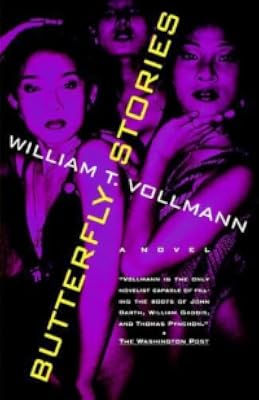
The rich imagery and the character studies in the midst of life’s tragedies feed into the plot of a tired detective, seeking after the lost loves that lives on in his fantasy-world, while he further retreats into the heart of his own troubles. The humor, pathos, atmosphere, lyricism, and historical details are all on point. Vollmann is an overachiever. The language of nostalgia pervades the whole. The skittering wreckage of damaged lives are too alluring - you can't look away. The beating pulse of city life, its ways and means and blood and marrow definitely echoes with his other illuminating novel, Butterfly Stories. I am as yet a Vollmann neophyte, but know I will traverse the rest of his oeuvre.
Abuse, deformity, pedophilia, the transgressive essence of erotic literacy, wrought out with demented surrealism, rife with innovation and condemnation, the animal in man, and the mental inertia, all point toward the sadness inherent in any examination of collective humanity. Everyone is unfaithful to something or someone. Even if only themselves.
The prolix familial squabbles add another layer of captivating cohesion, as do the casual drug deals, the professional jargon, the shifts in stresses and pleasures, the motif of royalty as a perceived allocation, the moments of twisted spirituality, the balm of charity, how kindness can relieve briefly the day-by-day despair of powerlessness. These are the domains Vollmann weaves together. Figurative language is used to communicate understated emotion. Everywhere, he is always improvising, concocting significance out of the insignificant. Life happens in the interstices, and his characters inhabit the interstices of society. Obsolescence weighs them down. Life passes by like an impressionistic blur, while the dreams the characters hold dear display photographic vividness. Shamanistic influences pervade the text, but the sources are often mysterious.
Tyler’s brooding, his surrogate love objects, his incapacitation, all lead to the conclusion that his love is his disease. Addiction is a powerful force in society, and it comes in myriad forms. But this book also touches on the justice and injustice of the System, and how people make use of harmful antisocial delusions, and get caught up in obsession, until Vollmann's consistent moral calculus slowly clarifies and justifies the excessive inclusions, the twisted worldview of the brutally honest novel.
We all belong to mythological families, whether online or in person. We join "clubs," which, broadly defined, are social groups, and cultivate an image for the benefit of ourselves and anyone in our circles. Sources of love and its purpose are sometimes unknown, but TRF posits many interesting theories about how such a culture of prostitution could survive.
Vollmann also inserts a dramatization of the pluses and minuses of the commercialization of sex - the oldest profession. How it is combined with corporate greed is not the most compelling statement of the novel, but it does lend a Hollywood-esque component, an inflation of grandiosity.
The marital strife, hypocrisy, octopus-minded overanalysis, the Narcisissm and social performance, the spirit of exploitation, all converge in Brady’s pet business, which is just the commodification of women. Loneliness, the power of money and memory, and the uncomforted dispossessed occupy most of the novel's run-time. There is not as much instant gratification as you might expect, but it is ever-present in the characters' psyches. When stated so bluntly, the almost mythic proportions of stereotypical male erotic fantasies are slightly hilarious.
In summary, Vollman doesn't coddle you. He sticks you with the hypo of his intellectual daring. If you can pry your fingers from the covers by the end and pull yourself out of the vortex of his creation you will feel a heavy nuance of appreciation for his accomplishment forevermore. show less
Through the course of these 780 closely packed pages we are made to witness strange intimacies and acts which at first seem unnatural, but upon closer inspection, reveal incredible human depth. The Royal Family is a portrayal of flawed loves, damaged souls, and transgression as a form of mourning. The medication of human contact is everywhere in evidence, as is the deep-seated need for love, which we bear show more like a curse - the “mark of Cain”. Dan Smooth’s religious dogma and hypocritical proclivities are among the most disturbing aspects of this very incendiary text. For instance, the parody of scriptural language most evident in chapter 476. One aspect of Vollmann's trickery, aplomb, dexterity and blasé scribblings are that they are preternaturally sublime.
If the many quotes from scripture do not distract, along with the inclusion of Buddhist and Gnostic texts, the Book of Mormon, Zoroastrianism and other sects, flit through the pages with varying degrees of appreciation and misappropriation. The direct blasphemies are another form of psychological distress manifested throughout. The pleasure of self-destruction infuses the book with a dark, heady intoxication. In the end it proves to be a genuinely moving, massively detailed epic of limited scope that penetrates deeply into a closely related set of realistic characters. Clearly an outrageous masterpiece orchestrated for the precious few brave enough to drown in its effluence.
The vast majority of its action is contained in the Tenderloin district like an eternally boiling pot of cast-off unsavories. Through realistic dialogue, and an unbelievable variety and richness of slang, Vollmann's journalistic investigation of broken lives and lives glued together with Elmer’s is by turns touching and memorable. Perhaps we all know at least one person who took a turn that led them down into dark days, someone cracked or cracking up, or virulent with amoral or physical diseases, or who somehow, in their wandering, began to resemble what we would normally dub "inhuman." But in their wretchedness, they are often far more human than their soft-cheeked, pale, freshly laundered counterparts in their air-conditioned ranch style homes. The concept of disease in all of its forms infiltrates each layer of the district described until our notion of disease is turned on its head. Humanness is not an easily defined term. But it is easily defied, constantly on the stand, and the jury is out for most of our existence. Desperation and dependence are the bricks and mortar of these lives, as they cascade from one high to the next, skirting the law, hiking the skirt, and drawing down one John after another into the whirlpool of vice, where they might have belonged, if circumstances had been different, or their pleasure prolonged...
It takes place in the off hours, in a cacophony of haggard voices on which the city feeds. Vollmann takes his subject very seriously, as seriously as his other historical contexts in the Seven Dreams series. This is the fruit of research, not some quirky self-indulgent fantasy ego-trip. This is a magnificent display of the condensation of life. But it could very easily be labeled by some as obscene, and relishes the contradictory definitions of obscenity. Is there any way to separate the obscene from literature, and does doing so protect or harm our sensibilities? History might have settled these questions for the time being. But in the book's defense, its intentions may not be as complex as its execution.
The tiniest details emerge as telling character facets. This is a character-driven novel, slow-moving and methodical in its unflinching examinations of the minutest qualities of human beings. Does this book’s impetus and execution stem from a fascination with transgressive individuals or an obsession with perceived injustice? Vollmann was very familiar with the real-life people on which these characters were based. He interviewed them. But how much deeper did his involvement go? How did he get some of this insight? How much is simply made-up or extrapolated scene by scene into the deep ravines of dark, unaerated rooms? As far as the interpretation of firsthand accounts go, the verisimilitude on display is astounding.
Adultery, and the art of bringing off the tacit affair is a tired trope, but Vollmann gives it life so it may function as a backdrop to his main character's motivations. But of course, the possibility of idealized love goads our anti-hero forward. His selfish desires propel him into the heart of the district and leads him to become an adopted member of this "family." But underlying his indulgence is a concern for the other players. The repetitive street life, and the bar-room anecdotes are his antidote, his coping mechanisms.
The novel functions through strong character development: Tyler, the Queen, Domino, Dan Smooth, Irene, Chocolate and others. Grief, aimlessness, self-abasement, the saturation of the body and the mind with need, want, love, psychological torment, the people sitting around in a bar talking, are all seminal (pun intended) glue reinforcing the moral ambiguities and lovely, simply lovely immersion the novel affords. It epitomizes the sought-after emptiness, the eager, underachieving human soul, grafted onto chaos, spurned by our own, fallen, and continually falling into the state of spiritual death.
The transgression becomes so familiar you will become inured. Not one single line of the book might be expected to cause arousal, rather, the language is designed to suggest poetic forms, to coalesce into abstract wonders of dream sensations, resulting in a miasmic seething, and you are forced to wallow in a dense accumulation of disgust until Stockholm syndrome sets in - we are captives of our own fascination. Shrouded in a fogged hyperawareness, innocence is lost, desensitization is incurred, and anhedonia blossoms. But with it comes a slew of other emotions, the depression, the isolation, the cool slide into ghostliness. And the fact that aging is sort of an embarrassing, humiliating descent into uselessness and dependence and death.
It juxtaposes the sacred and profane and on at least one occasion directly equates prostitutes to saints and specific religious personas to prostitutes, weighing moral standpoints and building a case. Vollmann’s sympathies are clear straight off the bat.
Perhaps every city is diseased, and feeds on its own desires. In “obsidian darkness” families are born. The Tenderloin morphs into a surreal landscape, at times nightmarish, but beautiful in its rich perversity, luscious, hollow skyscraper cliffs hem the reader in, dripping seedy joints crowd the well-trodden streets, and sagging shadow people haunt passersby at the mouths of abyssal alleyways, against the car horn white noise and screeching cats, one can almost hear the underground seething potential energy, the sizzling beneath the grungy pavements, the potential for corruption about to burst forth and flood the leaning high-rises, which will come toppling down in a rush of bank notes and bathwater, mingling into the gutter-moat leading into that vast uncharted territory called "Otherness."
The troubles of Cain, the life led by a modern Cain, an essay on authority and power, how “many follow one,” the concept of secular divinity in the titular Royal Family of the book, the meaning of non-blood relations' inherently familial bonds, and how families are forged in hardship and love all occupy the central force of the novel. Many brilliant scenes make use of the same patterns of sudden, impulsive delights wrought into sad, withering despair, with a recurrent tone of heartbreaking loss, sadness and oppression hanging over it all.
The rich imagery and the character studies in the midst of life’s tragedies feed into the plot of a tired detective, seeking after the lost loves that lives on in his fantasy-world, while he further retreats into the heart of his own troubles. The humor, pathos, atmosphere, lyricism, and historical details are all on point. Vollmann is an overachiever. The language of nostalgia pervades the whole. The skittering wreckage of damaged lives are too alluring - you can't look away. The beating pulse of city life, its ways and means and blood and marrow definitely echoes with his other illuminating novel, Butterfly Stories. I am as yet a Vollmann neophyte, but know I will traverse the rest of his oeuvre.
Abuse, deformity, pedophilia, the transgressive essence of erotic literacy, wrought out with demented surrealism, rife with innovation and condemnation, the animal in man, and the mental inertia, all point toward the sadness inherent in any examination of collective humanity. Everyone is unfaithful to something or someone. Even if only themselves.
The prolix familial squabbles add another layer of captivating cohesion, as do the casual drug deals, the professional jargon, the shifts in stresses and pleasures, the motif of royalty as a perceived allocation, the moments of twisted spirituality, the balm of charity, how kindness can relieve briefly the day-by-day despair of powerlessness. These are the domains Vollmann weaves together. Figurative language is used to communicate understated emotion. Everywhere, he is always improvising, concocting significance out of the insignificant. Life happens in the interstices, and his characters inhabit the interstices of society. Obsolescence weighs them down. Life passes by like an impressionistic blur, while the dreams the characters hold dear display photographic vividness. Shamanistic influences pervade the text, but the sources are often mysterious.
Tyler’s brooding, his surrogate love objects, his incapacitation, all lead to the conclusion that his love is his disease. Addiction is a powerful force in society, and it comes in myriad forms. But this book also touches on the justice and injustice of the System, and how people make use of harmful antisocial delusions, and get caught up in obsession, until Vollmann's consistent moral calculus slowly clarifies and justifies the excessive inclusions, the twisted worldview of the brutally honest novel.
We all belong to mythological families, whether online or in person. We join "clubs," which, broadly defined, are social groups, and cultivate an image for the benefit of ourselves and anyone in our circles. Sources of love and its purpose are sometimes unknown, but TRF posits many interesting theories about how such a culture of prostitution could survive.
Vollmann also inserts a dramatization of the pluses and minuses of the commercialization of sex - the oldest profession. How it is combined with corporate greed is not the most compelling statement of the novel, but it does lend a Hollywood-esque component, an inflation of grandiosity.
The marital strife, hypocrisy, octopus-minded overanalysis, the Narcisissm and social performance, the spirit of exploitation, all converge in Brady’s pet business, which is just the commodification of women. Loneliness, the power of money and memory, and the uncomforted dispossessed occupy most of the novel's run-time. There is not as much instant gratification as you might expect, but it is ever-present in the characters' psyches. When stated so bluntly, the almost mythic proportions of stereotypical male erotic fantasies are slightly hilarious.
In summary, Vollman doesn't coddle you. He sticks you with the hypo of his intellectual daring. If you can pry your fingers from the covers by the end and pull yourself out of the vortex of his creation you will feel a heavy nuance of appreciation for his accomplishment forevermore. show less
This book is gross, disgusting, and graphic--more so than even The Kindly Ones. It contains scenes of perverse sex, and most of its characters are the lowest of the low. With those caveats, the book is a masterpiece, and I highly recommend it. I do warn you, though, that if you read it, prepare yourself to be uncomfortable and at times sickened.
Henry is a San Francisco private detective, down on his luck. His brother John is an up and coming corporate attorney. Henry is in love with John's wife Irene. We don't know whether Irene reciprocates Henry's love, although she is aware of it. John suspects, but doesn't know for sure. John and Henry have had a prickely relationship all their lives, and John's suspicions of Henry and Irene makes show more him very nasty indeed.
Henry has been hired to find 'The Queen of the Whores' by a Las Vegas thug who apparently wants to use her in a new venture called 'The Feminine Circus.' When Henry's efforts prove unsuccessful, he is fired. However, he decides to continue searching for the Queen on his own. When he does find her, he becomes obsessed with her, and he is drawn into her following of faithful prostitutes, the 'royal family.' We come to know very well a number of these prostitutes, including the brittle, addicted, conniving, dishonest, unlikeable Domino, who was my favorite (and Vollmann has said she was his favorite too). It is Vollmann's ability to take characters such as Domino, and make us understand and like them, without downplaying their (extremely) substantial flaws, that makes him such a powerful writer.
Henry immerses himself deeper and deeper into the lives of the royal family. We come to intimately understand the life of a prostitute--most are addicts, most are aware that they are taking chances with their life with each trick (there is a serial killer on the loose), or at least risking physical violence; they are homeless, alone, sick, unloved; they are thieves and liars. Vollman makes each of the prostitutes a real, whole person who experiences attrocities, and, sometimes, commits them.
The book is huge, and there are many other characters--from Henry and John's clueless mother, to a pedophile police informant, to hobos riding the rails. Vollmann explores worlds I am sure many of us know little about, and maybe don't want to know about, but about which he is extremely knowledgeable and insightful. He is also a wonderful writer. show less
Henry is a San Francisco private detective, down on his luck. His brother John is an up and coming corporate attorney. Henry is in love with John's wife Irene. We don't know whether Irene reciprocates Henry's love, although she is aware of it. John suspects, but doesn't know for sure. John and Henry have had a prickely relationship all their lives, and John's suspicions of Henry and Irene makes show more him very nasty indeed.
Henry has been hired to find 'The Queen of the Whores' by a Las Vegas thug who apparently wants to use her in a new venture called 'The Feminine Circus.' When Henry's efforts prove unsuccessful, he is fired. However, he decides to continue searching for the Queen on his own. When he does find her, he becomes obsessed with her, and he is drawn into her following of faithful prostitutes, the 'royal family.' We come to know very well a number of these prostitutes, including the brittle, addicted, conniving, dishonest, unlikeable Domino, who was my favorite (and Vollmann has said she was his favorite too). It is Vollmann's ability to take characters such as Domino, and make us understand and like them, without downplaying their (extremely) substantial flaws, that makes him such a powerful writer.
Henry immerses himself deeper and deeper into the lives of the royal family. We come to intimately understand the life of a prostitute--most are addicts, most are aware that they are taking chances with their life with each trick (there is a serial killer on the loose), or at least risking physical violence; they are homeless, alone, sick, unloved; they are thieves and liars. Vollman makes each of the prostitutes a real, whole person who experiences attrocities, and, sometimes, commits them.
The book is huge, and there are many other characters--from Henry and John's clueless mother, to a pedophile police informant, to hobos riding the rails. Vollmann explores worlds I am sure many of us know little about, and maybe don't want to know about, but about which he is extremely knowledgeable and insightful. He is also a wonderful writer. show less
True compassion is more than flinging a coin to a beggar; it is not haphazard and superficial. It comes to see that an edifice that produces beggars needs restructuring.
-Martin Luther King, Jr., civil-rights leader (1929-1968)
Before my change in career paths became a creature of definite construction, one of my required classes for graduation was 183EW, Engineering Ethics, one of a few choices in a category that every engineer was required to take part in at some point in their college career. Mad scientists and human experimentation and the torture of innocents in the name of the cold dry idol of Science, you know. Can never be too careful these days.
Anyways, the class was taught by former History professor who decided it would be show more cost-effective to take the slides from the previous subject and, inserting a little of his own work (former military contractor), pass it off as a study of ethics through ages. Long story short, even with the TA going over the actual ethical systems and problems demanded by standards of education, it was a load of crap. However, near the end of the quarter, examples of these ethical disasters began to crop up in class as well as discussion. One of these cases was that of the 1971 Ford Pinto, which had a nasty habit of, upon being struck while going 40 mph or faster, simultaneously jamming its doors and buckling its gas tank, given passengers an excellent chance of burning to death with no hope of rescue. When Ford was taken to court, part of their argument against fixing this issue was a "cost-benefit analysis" showing that, in the long run, it would be cheaper to let the customers burn. They lost, they paid, and they moved on to the roads and commercials of today.
Now, out of this entire class, this is where real progress could have been made, had the professor cared to make it. For it is likely that all the students' got out of this uncomfortable little history lesson was: don't cut corners, but if you do, don't get caught. You don't get consideration for human beings, you don't get public outcry over putting a cost on a human life, you don't even get anyone in the corporation sent to jail. No, you get a slap on the wrist and a story only retold in Engineering Ethics classes, if the professor isn't feeling lazy.
I don't believe in instinctive goodwill in every human being anymore, or at least I don't believe it can survive in the majority of those who choose to participate in this society of ours. Not when I read a book like this and realize how much of my 'common sense' and 'modern sensibility' is instinctively disgusted by those who have fallen through the cracks and are left to suffer and survive on the fringes. What part of my ethics class taught me how to recognize the abusive stigmatization of women through rape culture and the outlawing of prostitution? What lecture did I miss that delved into race relations and the choke-hold that heterosexual white people wield over the finer things in life, from the top-tier governmental positions to the noxiously omnipresent ideologies in popular culture? Which discussion did I glaze over that expounded on the cycle that knocks a person down through violence, poverty, addiction, runs them through the jail cell and then the streets and back again, gets them so used to the futility of scrabbling towards a better life that they settle down into those hobos in the parks and those whores in the streets?
Because somehow I learned how to fear, be disgusted by, and finally ignore thise people who adapted so well to their conditions that they no longer mind the smell or the haphazard twists of their brain. Neither the pain nor the worry reaches them any longer, and to a person who has through sheer circumstance of birth has managed to keep their 'civilized' faculties in check, this is downright unacceptable. How dare they intrude upon my life and remind me of the sordid underbellies of the world, separated from the realm of acceptable people by a few feet of space and infinite fields of ideologies? How dare they be so coarse, so foul, so lazy? Surely they deserve it, in some way? Surely they had all the chances I've had, so why did they waste them all and end up like this?
Surely.
It took many books to accustom myself that this wasn't the case, and it was this one that struck the lesson home. Vollmann has given us a rare gift here: an unflinchingly thorough, and more importantly, a painfully compassionate glimpse into the lives of those who survive the splinching of their selves to the system in their own ways, whether in the dank alleyways of Tenderloin or the heartless citadels of the Financial District. He went where I, a coward both out of personal flaws and physical necessity, could never hope to go, and brought back tales where there are no heroes. Villainous martyrs and martyrish villains, where one can smile and smile and be a villain, and another can whore and whore and be a saint. He does it through prose that effortlessly swings back and forth between the sanctified and the sullied, laying the fervor of crack-addict alongside the emotion of the domestic living room, setting side by side the good of the Queen of Whores and the evil of the Prosperous Businessman, painting the world in the colors of shit and sealing wax, of cabbages, of cunts.
If it wasn't for the trigger-happy hypocrisy of book banners the world over, I would let myself wish that this book would be referenced in classrooms. For that to be, though, there would have to be a new breed of subject, one required for any human being that wishes to go out into the world with a degree in hand. Something that combines ethics with sociology and adds in dashes of empathy and literature, strips and ameliorates each component to make a new breed of goodwill, one that sees the larger scope of things and cares for each and every one of those that falls victim to the throes of an agonizingly selective system.
For whatever it is that school's are teaching us, it's not enough to overcome real world conditioning, and barely anyone is inclined to question the issues of something that grants them what they believe is a pure mix of 'freedom' and 'happiness', free of guilt and depression and hankerings for anything different. Fewer still wish to study it and commit themselves to theoretical solutions that may never find a handhold during one's lifetime. It's a hopelessly huge problem, and with politicians and businessmen on one side and ones need for financial stability on the other, why bother even considering it?
Because the people and the literature and the subjects that concern themselves often find themselves surviving for centuries, records to be found by those who will recognize the issues of long ago to be fully present today, perhaps in some other more insidiously pervasive form but there nonetheless, and be spurred on to combat them however they can, despite seemingly overwhelming odds and complete lack of success. These figures and stories of the past survive for a reason. One hopes that this book will be one of them. show less
I had done some selective rereading (OK, pretty much the whole thing) over the past few days, and I think I'm ready to offer a more substantive review, in comparison to the exuberant gushing I wrote last year (see below). Truth be told, I'm rather embarrassed about it, but I'll leave it up anyway.
So - I will ask the big question. Why would anyone really read a 774 page book about whores doing fucked-up things? Even if it is written by a Famous Cult Author or has a Good Prose Style. The subject matter seems strange, perhaps repulsive. Despite the large pairs of decorated breasts on the front dustjacket, the contents of the book could hardly be described as pornographic. To the vast majority of sensibilities, they are precisely the show more opposite. Drugs, sex, disease, perversion, warts (yup!) and all. Vollmann has a remarkable talent for describing disgusting or shocking things almost casually, with candor.
So what? It's about whores. Big deal. If I want to read something disgusting for cheap kicks, titillation, and for the pleasurable thrill of being shocked, I'd go read Bret Easton Ellis and skip the parts about designer brands. Vollmann's doing just that, right? Wrong. If I would distill this hulk of a book into three sentences, they would be: Whores exist. They are people. They have stories worth telling. Vollmann is willing to go the extremest of lengths to prove this point. Whore-fetishism aside, one is forced to consider the frightening possibility that Vollmann is genuinely interested in, and empathetic to, all corners of society. He will spend time with them, listening to their life stories, risk arrest in police raids, smoke their crack (really!) and lovingly immortalize them in his fiction with biblical stories of redemption, Marks of Cain, and all. The devotion of a prophet or a madman, a relentless died-in-the-woll Idealist. Or, at least, a Writer.
It is true, the first 'plot' has the tender trappings of a hard-boiled detective story. If some editor had seized and lobotomized the book, it might have become only this, then it might have sold well. But this is a very ambitious novel, which aims for something much higher. Even if, as some others say, WTV has failed due to his turgid repetition, he has still achieved something by the very act of writing such a behemoth.
It is difficult to divorce the author from his work, especially in this case. But I think that such a work can stand on its own. "Read in order to live.", says Flaubert. Here, Vollmann's life, and those of the lonesome whores of the Tenderloin, are shown very intimately to us. This is a true glimpse of this segment of life. Treasure it.
=============================================================
ORIGINAL EMBARRASSING REVIEW:
Vollmann, you are a magnificent bastard and I love you. This book consumed almost all of my day today, and like so many of your others, will haunt me.
This book is relentless. It is a force. You are pummeled with the lives of prostitutes and degradation and survival and you almost become numb to it and you keep going, by sheer will. The writing is gorgeous and hauntingly beautiful.
One of Vollmann's characteristics is his honesty - his obsessive desire to be artistically honest by refusing to submit his work to editors and conducting incredibly dangerous research tours in order to provide the most authentic descriptions. One can only imagine what he did in order to research this novel.
Recommended to anyone who wants to search their soul and see the agonies and trials of humanity's dregs. show less
So - I will ask the big question. Why would anyone really read a 774 page book about whores doing fucked-up things? Even if it is written by a Famous Cult Author or has a Good Prose Style. The subject matter seems strange, perhaps repulsive. Despite the large pairs of decorated breasts on the front dustjacket, the contents of the book could hardly be described as pornographic. To the vast majority of sensibilities, they are precisely the show more opposite. Drugs, sex, disease, perversion, warts (yup!) and all. Vollmann has a remarkable talent for describing disgusting or shocking things almost casually, with candor.
So what? It's about whores. Big deal. If I want to read something disgusting for cheap kicks, titillation, and for the pleasurable thrill of being shocked, I'd go read Bret Easton Ellis and skip the parts about designer brands. Vollmann's doing just that, right? Wrong. If I would distill this hulk of a book into three sentences, they would be: Whores exist. They are people. They have stories worth telling. Vollmann is willing to go the extremest of lengths to prove this point. Whore-fetishism aside, one is forced to consider the frightening possibility that Vollmann is genuinely interested in, and empathetic to, all corners of society. He will spend time with them, listening to their life stories, risk arrest in police raids, smoke their crack (really!) and lovingly immortalize them in his fiction with biblical stories of redemption, Marks of Cain, and all. The devotion of a prophet or a madman, a relentless died-in-the-woll Idealist. Or, at least, a Writer.
It is true, the first 'plot' has the tender trappings of a hard-boiled detective story. If some editor had seized and lobotomized the book, it might have become only this, then it might have sold well. But this is a very ambitious novel, which aims for something much higher. Even if, as some others say, WTV has failed due to his turgid repetition, he has still achieved something by the very act of writing such a behemoth.
It is difficult to divorce the author from his work, especially in this case. But I think that such a work can stand on its own. "Read in order to live.", says Flaubert. Here, Vollmann's life, and those of the lonesome whores of the Tenderloin, are shown very intimately to us. This is a true glimpse of this segment of life. Treasure it.
=============================================================
ORIGINAL EMBARRASSING REVIEW:
Vollmann, you are a magnificent bastard and I love you. This book consumed almost all of my day today, and like so many of your others, will haunt me.
This book is relentless. It is a force. You are pummeled with the lives of prostitutes and degradation and survival and you almost become numb to it and you keep going, by sheer will. The writing is gorgeous and hauntingly beautiful.
One of Vollmann's characteristics is his honesty - his obsessive desire to be artistically honest by refusing to submit his work to editors and conducting incredibly dangerous research tours in order to provide the most authentic descriptions. One can only imagine what he did in order to research this novel.
Recommended to anyone who wants to search their soul and see the agonies and trials of humanity's dregs. show less
Vollmann truly is a monster and his prose monstrous...[in progress]
Members
- Recently Added By
Lists

Favourite Books
1,819 works; 308 members

50 Tough Books for Extreme Readers
71 works; 39 members

Most Disturbing Books
124 works; 26 members

contemporary literary fiction list to check out
47 works; 1 member

02
28 works; 1 member
Author Information

54+ Works 9,912 Members
Journalist and novelist William T. Vollmann was born in 1959 and educated at Cornell University. He worked as a comptuer programmer before becoming a journalist and covering Bosnia, Sarajevo and Afghanistan. He has written extensively since 1987, when his first book, You Bright and Risen Angels, was published. The Atlas (1996) won the PEN Center show more USA West Award for the best novel by a writer living west of the Mississippi. His newest work of Non-Fiction is entitled, Imperial. (Bowker Author Biography) show less
Some Editions
Awards and Honors
Common Knowledge
- Original publication date
- 2001-07-31
- People/Characters
- Henry Tyler [PI]
- Important places
- California, USA; San Francisco, California, USA
- First words
- The blonde on the bed said: I charge the same for spectators as for participants, 'cause that's all it takes for them to get off.
- Canonical DDC/MDS
- 813.54
- Canonical LCC
- PS3572.O395
Classifications
Statistics
- Members
- 459
- Popularity
- 66,618
- Reviews
- 9
- Rating
- (4.01)
- Languages
- English, French, Spanish
- Media
- Paper, Ebook
- ISBNs
- 9
- ASINs
- 5