
Vox
by Nicholson Baker
On This Page
Description
Two lonely people separated by hundreds of miles meet on a 900 number party line and share their most intimate sexual fantasies, secrets, and perversities.Tags
Recommendations




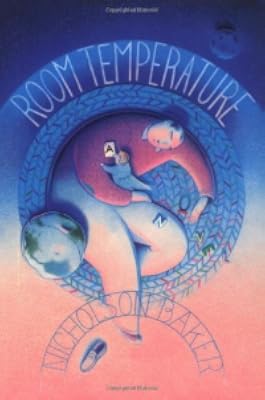
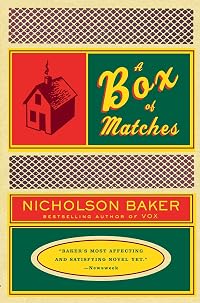
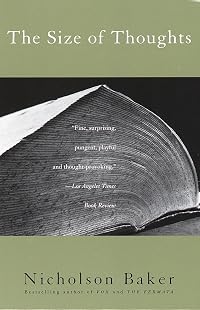
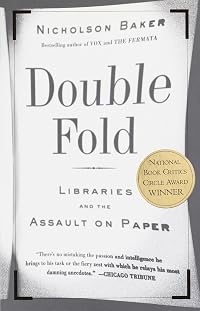


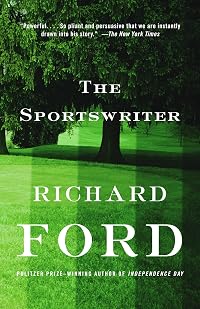
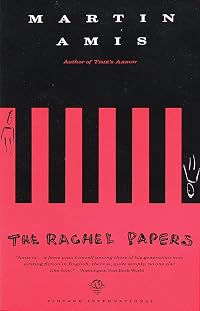
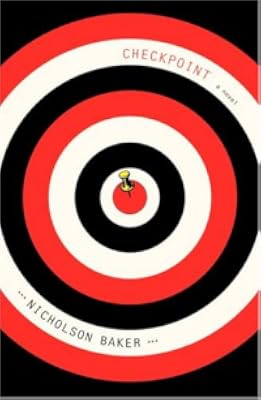
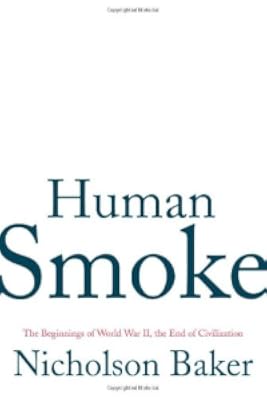

Member Recommendations
Member Reviews
Vox… Sounds almost like an expletive... It’s Latin for voice… But also a US news website… A children’s book I read to my then eight-year old… Vox pop… Ultravox… and so back to voice.
This short book reads as the transcript of the conversation between two strangers, Abby and Jim, who connect, one-to-one, via a sex line in the early 1990s.
The brain is the sexiest organ, and the voice is a conduit from one mind to another: pitch, timbre, accent, and intonation determine the hearer’s response at least as much as the words themselves. The right voice can raise one’s spirits, heart-rate, and libido more than any oiled six-pack. As Marshall McLuhan said, “The medium is the message.” But reading about voices talking show more about intimate things… what’s that like?
“It excites me quite a bit to tell you that I’m going to tell you.”
It is inherently prurient and voyeuristic (but probably tame compared with Fifty Shades), and everything is at at least one remove: you read about the fantasy of hearing, or reading about, or watching other people talk about or act out their fantasies.
This is not my usual fare, and I’m too conflicted for my star rating to have any meaning. Hence, two short reviews in contrast:
Feeble Smut - for the Body
“When I come inside it feels mystical but muffled - it’s as if I don’t feel the perimeter of my cock anymore, because that’s merged with her, it’s melted away and all I feel is the technical interior conduit structure of the thing and the bulb of come swelling and all that - I lose a sense of outer boundaries.” Ugh.
Abby mentions yeast infections four times in thirty pages. How is that sexy? And there’s a long list of things that Jim is not aroused by, including: poolside shots, wet t-shirts, women’s feet, Victorian-style lingerie, pigtails, and having men nearby. They both have a distaste for certain sexual words, including breasts, ass, masturbation, and horny, for which they use alternatives: frans/Kleins, tock, dither/fiddle/strum, and porny/gorny/yorny.
Much of what Jim and Abby do, and the fantasies and past experiences they describe, are both banal and/or slightly strange, but not necessarily in an arousing way. The comical impracticalities of making an image of one’s cock on an office photocopier were diluted by the fact it’s such a cliché. And passé too, now that almost everyone has a smartphone with camera and SnapChat.
At first, I was a little frustrated at how slow it was. Nicholson Baker’s obsession with tiny details is captivating in the largely non-sexual The Mezzanine (see my parody review HERE), but in this context, it is often more of a distraction than an enhancement.
Things did heat up, but towards the end, I was feeling impatient again - a little bored even. I wanted Abby and Jim to hurry up, so I could move onto something else. Something better.
An oxymoronic anticlimactic climax.
And if anyone can explain or give me a link to “thin Europop electronic sex-music”, which is apparently “dimensionless”, I’d be fascinated and grateful. It might even be more of a turn-on.
Slow-Build Steamy Thrill - for the Mind
Most of the conversation felt natural and plausible: by turns, cautious, playful, intimate, mundane, jocular, and erotic. Abby had almost equal time, and it crescendoed nicely, with little dips along the way. I enjoyed the shower scenes, the oil, and even the fringed blanket. I’m not so sure about the circus elephants, though.
There are interesting musings on porn. This one made me smile: dubbed videos are better, “because you’ve got more layers - you’ve got the graphic stuff going on, but you’ve got mouths saying Italian sex words… and then American actors going ooh and aah”.
But better than videos is “written porn… it gives your brain a vaginal orgasm… [it] records thoughts rather than exclusively images… Telepathy on a budget.” Well, in theory.
What I liked most was the recurring exploration of vicarious pleasure - something Abby and Jim both indulge in many permutations. And then there’s Jim relishing second-hand romance novels:
“They weren’t identical, because every one of them had been read. They looked handled. All of their pages were turned… Turned by women… I felt as if I were lifting a towel that was still damp from a woman’s shower… Hundreds of female orgasms could be inferred from the books themselves… You didn’t need to invade anybody’s privacy… It was all there in the pliability and thumbedness of the book”
My copy is second-hand, pliable, and thumbed, but with no sign of more intimate interaction - before or after I read it.
Image Sources
• Phone cable: http://media.istockphoto.com/photos/heart-shape-phone-cords-picture-id117249155
• Box of tissues: https://centari.files.wordpress.com/2011/06/tissues.jpg
• Phone with knickers: http://www.slate.com/content/dam/slate/blogs/xx_factor/2011/12/19/phone_sex_line....
• Used books: http://cdn.danspapers.com/wp-content/uploads/2013/09/Old-Used-Books.jpg show less
This short book reads as the transcript of the conversation between two strangers, Abby and Jim, who connect, one-to-one, via a sex line in the early 1990s.
The brain is the sexiest organ, and the voice is a conduit from one mind to another: pitch, timbre, accent, and intonation determine the hearer’s response at least as much as the words themselves. The right voice can raise one’s spirits, heart-rate, and libido more than any oiled six-pack. As Marshall McLuhan said, “The medium is the message.” But reading about voices talking show more about intimate things… what’s that like?
“It excites me quite a bit to tell you that I’m going to tell you.”
It is inherently prurient and voyeuristic (but probably tame compared with Fifty Shades), and everything is at at least one remove: you read about the fantasy of hearing, or reading about, or watching other people talk about or act out their fantasies.
This is not my usual fare, and I’m too conflicted for my star rating to have any meaning. Hence, two short reviews in contrast:
Feeble Smut - for the Body
“When I come inside it feels mystical but muffled - it’s as if I don’t feel the perimeter of my cock anymore, because that’s merged with her, it’s melted away and all I feel is the technical interior conduit structure of the thing and the bulb of come swelling and all that - I lose a sense of outer boundaries.” Ugh.
Abby mentions yeast infections four times in thirty pages. How is that sexy? And there’s a long list of things that Jim is not aroused by, including: poolside shots, wet t-shirts, women’s feet, Victorian-style lingerie, pigtails, and having men nearby. They both have a distaste for certain sexual words, including breasts, ass, masturbation, and horny, for which they use alternatives: frans/Kleins, tock, dither/fiddle/strum, and porny/gorny/yorny.
Much of what Jim and Abby do, and the fantasies and past experiences they describe, are both banal and/or slightly strange, but not necessarily in an arousing way. The comical impracticalities of making an image of one’s cock on an office photocopier were diluted by the fact it’s such a cliché. And passé too, now that almost everyone has a smartphone with camera and SnapChat.
At first, I was a little frustrated at how slow it was. Nicholson Baker’s obsession with tiny details is captivating in the largely non-sexual The Mezzanine (see my parody review HERE), but in this context, it is often more of a distraction than an enhancement.
Things did heat up, but towards the end, I was feeling impatient again - a little bored even. I wanted Abby and Jim to hurry up, so I could move onto something else. Something better.
An oxymoronic anticlimactic climax.
And if anyone can explain or give me a link to “thin Europop electronic sex-music”, which is apparently “dimensionless”, I’d be fascinated and grateful. It might even be more of a turn-on.
Slow-Build Steamy Thrill - for the Mind
Most of the conversation felt natural and plausible: by turns, cautious, playful, intimate, mundane, jocular, and erotic. Abby had almost equal time, and it crescendoed nicely, with little dips along the way. I enjoyed the shower scenes, the oil, and even the fringed blanket. I’m not so sure about the circus elephants, though.
There are interesting musings on porn. This one made me smile: dubbed videos are better, “because you’ve got more layers - you’ve got the graphic stuff going on, but you’ve got mouths saying Italian sex words… and then American actors going ooh and aah”.
But better than videos is “written porn… it gives your brain a vaginal orgasm… [it] records thoughts rather than exclusively images… Telepathy on a budget.” Well, in theory.
What I liked most was the recurring exploration of vicarious pleasure - something Abby and Jim both indulge in many permutations. And then there’s Jim relishing second-hand romance novels:
“They weren’t identical, because every one of them had been read. They looked handled. All of their pages were turned… Turned by women… I felt as if I were lifting a towel that was still damp from a woman’s shower… Hundreds of female orgasms could be inferred from the books themselves… You didn’t need to invade anybody’s privacy… It was all there in the pliability and thumbedness of the book”
My copy is second-hand, pliable, and thumbed, but with no sign of more intimate interaction - before or after I read it.
Image Sources
• Phone cable: http://media.istockphoto.com/photos/heart-shape-phone-cords-picture-id117249155
• Box of tissues: https://centari.files.wordpress.com/2011/06/tissues.jpg
• Phone with knickers: http://www.slate.com/content/dam/slate/blogs/xx_factor/2011/12/19/phone_sex_line....
• Used books: http://cdn.danspapers.com/wp-content/uploads/2013/09/Old-Used-Books.jpg show less
Is there a difference between writing about sex and that writing being pornographic? I think so, and this book seems to support that idea - there is a sadness behind so much of this tale of two people talking through the night that keeps the sexiness of their exchange at one reserve. I wasn't expecting to get as much out of this book as I did.
So last night. What did you do?
I finished Vox. I couldn’t resist. COULDN’T put it down.
Of course. Vox. And?
And what?
Well, did you…? While you were reading it? Tell me how you were.
I was pretty much as I am now. Dressed. Sitting up. Left leg crossed other the other. I mean, I wasn’t at my computer. I was sitting at the kitchen table.
But you didn’t find it that sexy then. If you didn’t – ….?
Oh, it was incredibly sexy. Why do you think I couldn’t put it down? Actually, I have a confession to make…
Yes?
I want to use pretentious sounding expressions to describe it, ones that certainly wouldn’t fit into the style of the book.
Like what?
Well, like – it is a tour de force. An absolutely virtuoso demonstration that it is show more possible to write something sustained about sex that doesn’t make a false note, not once. It even manages to be hilariously funny without once losing its nature – erotic? Maybe. Certainly as sexy as sexy can be.
I see what you mean. A bit pretentious.
I’m thinking of reviewing it for goodreads, you know. That site I told you about. If you want to get votes, you need to be a bit pretentious. Show you are clever. You don’t get votes for being dumb. [2018 update: how times have changed.....]
You still haven’t told me why you didn’t make yourself….while you were….
Truth? It wouldn’t have fitted into my goodreads review. Actual sex doesn’t get you votes. You have to talk about it obliquely. The point of goodreads is that people think they can talk about sex all the time as long as they sound…ummmm…arty about it. It makes them feel superior. Better than if they just bought a copy of Ralph and tossed off to it. What’s that noise?
Oh. I was just. Well. Just putting my copy of Ralph under the cushion. We did agree we would be completely honest with each other, didn’t we? So do you prefer boys on goodreads to ones who read Ralph then?
rest here:
http://alittleteaalittlechat.wordpress.com/2013/08/01/vox-by-nicholson-baker/ show less
I enjoyed this book more for what it attempted rather than for what it actually achieved. As a careful delineation (and even negotiation) of the trials and pitfalls attached to human emotional (and just as presciently, physical) connections the book falls a bit short, not due to lack of authorial skill but more due to Nicholson Baker failing to develop his ideas just a bit further than what he gave us.
However I would definitely be lacking as a reader/reviewer if I didn't make mention of the incredibly well executed period setting of the book. Obviously the book is very much of its age but with the careful seasoning of the passage of time "Vox" is also something, to me, of a cultural and temporal artifact. This aspect of the text is show more never made more telling then when the main male character details the act of listening to music on his home stereo and becoming unduly focused on the equalizer lights on his stereo system. Days I just barely remember (having been barely a kid myself) pre the ubiquitous internet (specifically in relationships, if it had been otherwise we would have had a different book on our hands) pre okcupid, jdate, match.com and the like, they're hard to conceive now, aren't they? Days when people couldn't just look each other up on facebook or twitter when, despite any inherent urge to the contrary, most people had to keep their personalities (modified as they later would be by the 'presentation aspect' of facebooking and the like) relatively close to the chest save for face to face encounters and conversations. The fact that Monica Lewinsky was rumored to have loaned the novel to Bill Clinton only makes this that much more an archetypal 90's book.
And this is where the conceit of the novel comes in. Being an extended phone sex conversation between a man and the woman he called the book is surprisingly high concept as this set up is, basically, all there is to the narrative. And this is at once the source of the books highest and lowest points. On the one hand we get one of the most intimate portrayals of lust and the inhering (as well as, hopefully, ostensibly)concomitant deeper connections ever put on the page but, conversely, the text itself suffers from this oversimplification and,, as a result, comes off as only half-cooked and even, at times, straining to the point of suffocation.
But in the final estimation I can say that I'm glad I read this book which, in essence, is my basic litmus test for reading or enjoying anything; whether or not I'm glad it exists says it all. Though not perfect and a bit lacking in its execution this is still a fascinating look into the nigh unfathomable no-man's land between any two people wishing to connect honestly, or almost honestly at least. show less
However I would definitely be lacking as a reader/reviewer if I didn't make mention of the incredibly well executed period setting of the book. Obviously the book is very much of its age but with the careful seasoning of the passage of time "Vox" is also something, to me, of a cultural and temporal artifact. This aspect of the text is show more never made more telling then when the main male character details the act of listening to music on his home stereo and becoming unduly focused on the equalizer lights on his stereo system. Days I just barely remember (having been barely a kid myself) pre the ubiquitous internet (specifically in relationships, if it had been otherwise we would have had a different book on our hands) pre okcupid, jdate, match.com and the like, they're hard to conceive now, aren't they? Days when people couldn't just look each other up on facebook or twitter when, despite any inherent urge to the contrary, most people had to keep their personalities (modified as they later would be by the 'presentation aspect' of facebooking and the like) relatively close to the chest save for face to face encounters and conversations. The fact that Monica Lewinsky was rumored to have loaned the novel to Bill Clinton only makes this that much more an archetypal 90's book.
And this is where the conceit of the novel comes in. Being an extended phone sex conversation between a man and the woman he called the book is surprisingly high concept as this set up is, basically, all there is to the narrative. And this is at once the source of the books highest and lowest points. On the one hand we get one of the most intimate portrayals of lust and the inhering (as well as, hopefully, ostensibly)concomitant deeper connections ever put on the page but, conversely, the text itself suffers from this oversimplification and,, as a result, comes off as only half-cooked and even, at times, straining to the point of suffocation.
But in the final estimation I can say that I'm glad I read this book which, in essence, is my basic litmus test for reading or enjoying anything; whether or not I'm glad it exists says it all. Though not perfect and a bit lacking in its execution this is still a fascinating look into the nigh unfathomable no-man's land between any two people wishing to connect honestly, or almost honestly at least. show less
Well this was a little different to what I usually read. A novel that relates a telephone conversation between a couple of strangers; a man and a women who are interested in mutual masturbation. It starts with that well worn question "What are you wearing? and ends with the possibility of exchanging telephone numbers. One of them has answered an add in a personal column of a sex magazine and they both enjoy the way their telephone conversation is going. They tell stories to each other, ask personal questions and when they feel comfortable with each other, get down to the business of masturbating. The novel was published in 1992 before the advent of video messaging and so Baker's intimate descriptions have to serve a purpose.
Whatever show more turns you on! and this telephone call certainly turned on Jim and Abby and it could have a similar effect on the reader who is privileged to eavesdrop on their conversation. Baker writes well and the stories that are told are quirky and titillating rather than nasty and dirty. The two characters are careful not to spoil the bond that they have created and act sensitively to each others feelings. Its the sort of book that might lead you afterwards to take a warm bath rather than a cold shower. The joys of masturbation are thoroughly explored and if you find this subject best left in the hands of the beholder then the book might not be for you. I lapped it up and blame it on the confinement. 3.5 stars. show less
Whatever show more turns you on! and this telephone call certainly turned on Jim and Abby and it could have a similar effect on the reader who is privileged to eavesdrop on their conversation. Baker writes well and the stories that are told are quirky and titillating rather than nasty and dirty. The two characters are careful not to spoil the bond that they have created and act sensitively to each others feelings. Its the sort of book that might lead you afterwards to take a warm bath rather than a cold shower. The joys of masturbation are thoroughly explored and if you find this subject best left in the hands of the beholder then the book might not be for you. I lapped it up and blame it on the confinement. 3.5 stars. show less
http://mowgliesq.com/2010/06/28/nicholson-bakers-vox/
A couple weekends ago I went to D.C. to hear a lecture on the fantastical in modern Japanese literature at the capital’s renowned independent bookstore, “Politics and Prose.” When I am visiting a famous city, I like to contrive little moments of literary serendipity. In Moscow, for example, I discovered the works of Victor Pelevin while browsing the shelves of the English language section of “Dom Knigi;” at “Shakespeare & Company,” in Paris, I came across a copy of Jean Genet’s “The Maids” in the attic library and read it cover-to-cover in one of the plush overstuffed chairs; and, in Sandy Cove, Dublin County, at the James Joyce Tower (where the first chapter of show more Ulysses takes place), I purchased a stamped copy of Joyce’s A Portrait of the Artist as a Young Man in the museum gift shop. (As I said, these “serendipitous” moments could be contrived.) I did not expect to have one such moment at “Politics and Prose.” What other than Gore Vidal’s Washington, D.C. could be taken as emblematic of the city’s literary legacy? I found the answer to my question tucked away in a corner of the reduced price bookshelves: Vox by Nicholson Baker.
If you’ve read the Starr Report, the voluminous document which recounts, along with his other alleged misdeeds, President Bill Clinton’s affair with White House intern Monica Lewinsky, then you probably have heard of Vox. Mr. Starr summarily refers to it as “a novel about phone sex by Nicholson Baker that, according to Ms. Lewinsky, she gave the President in March 1997.” (Clinton, treating Lewinsky as he would a visiting head of state, gave her a special edition of Walt Whitman’s Leaves of Grass. In a thank you note to “Mr. P.,” Lewinsky writes, “Whitman is so rich that one must read him like one tastes a fine wine or good cigar – take it in, roll it in your mouth, and savor it!”) Flouting the subpoenas of two grand juries, Clinton failed to produce his copy of Vox, although the Report cites it in a list of books in his private study. Could it be that the book was just so dear to him that he couldn’t bear to part with it? Clinton was a Rhode’s scholar, after all, and Vox is something of a classic (although, as a classic of the erotica subgenre, it has enticements and charms other than its literary merit). As for Ms. Lewinsky, she proves as lubricious yet literate in her choice of presents as she does in her assessment of Whitman. “Lubricious yet literate” might aptly apply to Vox, as well, but before conflating the giver and gift, read this novel, savor it, and enjoy its sex, guilt-free.
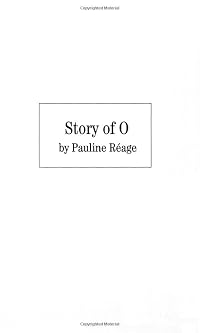
When a writer, particularly a male one, writes about sex, he runs at least two risks: 1) Should he write the scene ham-handedly he may remind his reader of a little boy grinding together the erogenous zones of his sister’s Barbie dolls, or 2) should he write the scene perhaps too vividly he may turn the reader off with an impression of shady, prurient voyeurism. Mr. Baker adroitly avoids both pitfalls by strictly limiting the narrator’s intrusion to the reportage of dialogue between two paying customers on a phone-sex hotline. (“‘What are you wearing?’ he asked. She said, ‘I’m wearing a white shirt with little stars, green and black stars, on it, and pants, and socks the color of the green stars, and a pair of black sneakers I got for nine dollars.’”) Since we are prying with our ears and not our eyes, we learn no more about them (and what they are doing) than they consent to share with each other. That is not to say that they don’t share quite a bit. They do, everything from their pet names for the opposite sex’s anatomy (Jim calls breasts “frans.”) and the random mental images that crop up when they come (such as, in Abby’s case, the great seal of the Commonwealth of Massachusetts) to their most vivid fantasies and experiences. While even a modern erotica urtext like Pauline Réage’s The Story of O can be boring, Vox never is, probably because its protagonists are subtly yet strongly drawn, and the stories that they tell are quirkily playful, dramatically taut and deliciously sexy. Above all else, Jim and Abby are so inherently likable that I exalted in their good fortune and practically rooted them on towards orgasm:
“This is a miracle,” he said.
“It’s just a telephone conversation.”
“It’s a telephone conversation I want to have. I love the telephone.”
If I were a love-doctor, I would recommend that you take a cue from Bill and Monica, read Vox, and learn to love the telephone, too. show less
A couple weekends ago I went to D.C. to hear a lecture on the fantastical in modern Japanese literature at the capital’s renowned independent bookstore, “Politics and Prose.” When I am visiting a famous city, I like to contrive little moments of literary serendipity. In Moscow, for example, I discovered the works of Victor Pelevin while browsing the shelves of the English language section of “Dom Knigi;” at “Shakespeare & Company,” in Paris, I came across a copy of Jean Genet’s “The Maids” in the attic library and read it cover-to-cover in one of the plush overstuffed chairs; and, in Sandy Cove, Dublin County, at the James Joyce Tower (where the first chapter of show more Ulysses takes place), I purchased a stamped copy of Joyce’s A Portrait of the Artist as a Young Man in the museum gift shop. (As I said, these “serendipitous” moments could be contrived.) I did not expect to have one such moment at “Politics and Prose.” What other than Gore Vidal’s Washington, D.C. could be taken as emblematic of the city’s literary legacy? I found the answer to my question tucked away in a corner of the reduced price bookshelves: Vox by Nicholson Baker.
If you’ve read the Starr Report, the voluminous document which recounts, along with his other alleged misdeeds, President Bill Clinton’s affair with White House intern Monica Lewinsky, then you probably have heard of Vox. Mr. Starr summarily refers to it as “a novel about phone sex by Nicholson Baker that, according to Ms. Lewinsky, she gave the President in March 1997.” (Clinton, treating Lewinsky as he would a visiting head of state, gave her a special edition of Walt Whitman’s Leaves of Grass. In a thank you note to “Mr. P.,” Lewinsky writes, “Whitman is so rich that one must read him like one tastes a fine wine or good cigar – take it in, roll it in your mouth, and savor it!”) Flouting the subpoenas of two grand juries, Clinton failed to produce his copy of Vox, although the Report cites it in a list of books in his private study. Could it be that the book was just so dear to him that he couldn’t bear to part with it? Clinton was a Rhode’s scholar, after all, and Vox is something of a classic (although, as a classic of the erotica subgenre, it has enticements and charms other than its literary merit). As for Ms. Lewinsky, she proves as lubricious yet literate in her choice of presents as she does in her assessment of Whitman. “Lubricious yet literate” might aptly apply to Vox, as well, but before conflating the giver and gift, read this novel, savor it, and enjoy its sex, guilt-free.
When a writer, particularly a male one, writes about sex, he runs at least two risks: 1) Should he write the scene ham-handedly he may remind his reader of a little boy grinding together the erogenous zones of his sister’s Barbie dolls, or 2) should he write the scene perhaps too vividly he may turn the reader off with an impression of shady, prurient voyeurism. Mr. Baker adroitly avoids both pitfalls by strictly limiting the narrator’s intrusion to the reportage of dialogue between two paying customers on a phone-sex hotline. (“‘What are you wearing?’ he asked. She said, ‘I’m wearing a white shirt with little stars, green and black stars, on it, and pants, and socks the color of the green stars, and a pair of black sneakers I got for nine dollars.’”) Since we are prying with our ears and not our eyes, we learn no more about them (and what they are doing) than they consent to share with each other. That is not to say that they don’t share quite a bit. They do, everything from their pet names for the opposite sex’s anatomy (Jim calls breasts “frans.”) and the random mental images that crop up when they come (such as, in Abby’s case, the great seal of the Commonwealth of Massachusetts) to their most vivid fantasies and experiences. While even a modern erotica urtext like Pauline Réage’s The Story of O can be boring, Vox never is, probably because its protagonists are subtly yet strongly drawn, and the stories that they tell are quirkily playful, dramatically taut and deliciously sexy. Above all else, Jim and Abby are so inherently likable that I exalted in their good fortune and practically rooted them on towards orgasm:
“This is a miracle,” he said.
“It’s just a telephone conversation.”
“It’s a telephone conversation I want to have. I love the telephone.”
If I were a love-doctor, I would recommend that you take a cue from Bill and Monica, read Vox, and learn to love the telephone, too. show less
Jim and Abbey each call a sex chat line and end up talking to each other for hours -- almost exclusively about sex, but you nonetheless get a picture of them as lonely intellectuals and as real people you can (at least sometimes) relate to.
Nicholson Baker is a master of taking a single situation -- a man starting each day by lighting a fire; two friends talking in a hotel room -- and turning it into a compelling story with little other than dialogue (or an interior monologue). This kind of writing isn't for everyone, but I find it compelling and fascinating how he makes so much happen with very little "action".
Vox is about phone sex. That's why Jim and Abbey called the line. That's what they talk about. Read any excerpt and that's what show more you get. But read the whole book, and you get so much more. show less
Nicholson Baker is a master of taking a single situation -- a man starting each day by lighting a fire; two friends talking in a hotel room -- and turning it into a compelling story with little other than dialogue (or an interior monologue). This kind of writing isn't for everyone, but I find it compelling and fascinating how he makes so much happen with very little "action".
Vox is about phone sex. That's why Jim and Abbey called the line. That's what they talk about. Read any excerpt and that's what show more you get. But read the whole book, and you get so much more. show less
Members
- Recently Added By
Lists

Books Read in 2017
4,249 works; 130 members
Author Information

30+ Works 14,355 Members
Nicholson Baker lives in Maine. Nicholson Baker was born in New York City on January 7, 1957. He briefly attended the Eastman School of Music before receiving a B.A. in philosophy from Haverford College. He is the author of both fiction and nonfiction works including The Mezzanine (1988); Room Temperature (1990); Vox (1992); The Fermata (1994); show more The Everlasting Story of Nory (1998); Checkpoint (2004); and The Anthologist (2009). His nonfiction work, Double Fold: Libraries and the Assault on Paper, won a National Book Critics Circle Award in 2001. (Bowker Author Biography) show less
Some Editions
Awards and Honors
Distinctions
Series
Belongs to Publisher Series
rororo (13467)
Common Knowledge
- Canonical title
- Vox
- Original title
- Vox
- Original publication date
- 1992
- First words
- "What are you wearing?" he asked.
- Last words
- (Click to show. Warning: May contain spoilers.)They hung up.
- Blurbers*
- Nicholson Bakers meisterhafte Telefonsex-Novelle. Stern
- Original language
- English
*Some information comes from Common Knowledge in other languages. Click "Edit" for more information.
Classifications
Statistics
- Members
- 2,104
- Popularity
- 9,813
- Reviews
- 30
- Rating
- (3.42)
- Languages
- 11 — Danish, Dutch, English, Finnish, French, German, Italian, Norwegian (Bokmål), Portuguese, Spanish, Swedish
- Media
- Paper, Audiobook, Ebook
- ISBNs
- 33
- ASINs
- 12