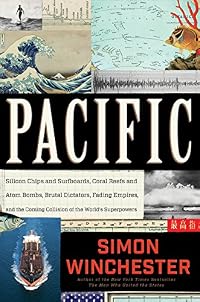
Pacific: Silicon Chips and Surfboards, Coral Reefs and Atom Bombs, Brutal Dictators, Fading Empires, and the Coming Collision of the World's Superpowers
by Simon Winchester
On This Page
Description
One of Library Journal's 10 Best Books of 2015Following his acclaimed Atlantic and The Men Who United the States, New York Times bestselling author Simon Winchester offers an enthralling biography of the Pacific Ocean and its role in the modern world, exploring our relationship with this imposing force of nature.
As the Mediterranean shaped the classical world, and the Atlantic connected Europe to the New World, the Pacific Ocean defines our tomorrow. With China on the rise, so, too, are show more the American cities of the West coast, including Seattle, San Francisco, and the long cluster of towns down the Silicon Valley.
Today, the Pacific is ascendant. Its geological history has long transformed us—tremendous earthquakes, volcanoes, and tsunamis—but its human history, from a Western perspective, is quite young, beginning with Magellan's sixteenth-century circumnavigation. It is a natural wonder whose most fascinating history is currently being made.
In telling the story of the Pacific, Simon Winchester takes us from the Bering Strait to Cape Horn, the Yangtze River to the Panama Canal, and to the many small islands and archipelagos that lie in between. He observes the fall of a dictator in Manila, visits aboriginals in northern Queensland, and is jailed in Tierra del Fuego, the land at the end of the world. His journey encompasses a trip down the Alaska Highway, a stop at the isolated Pitcairn Islands, a trek across South Korea and a glimpse of its mysterious northern neighbor.
Winchester's personal experience is vast and his storytelling second to none. And his historical understanding of the region is formidable, making Pacific a paean to this magnificent sea of beauty, myth, and imagination that is transforming our lives.
. show less
Tags
Recommendations




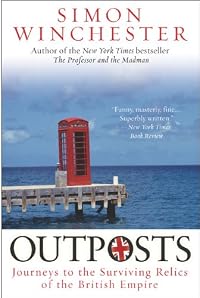
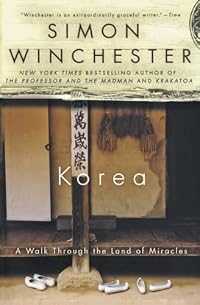


Member Reviews
This book has a tried-and-true premise and a fascinating beginning point. The premise is to encapsulate the diversity and immensity of an object – in this case, the Pacific Ocean - by using representative chosen events. The beginning point, which prior to actually opening the book I would have thought went back millions of years, is actually January 1, 1950.
January 1, 1950. An odd date, one might think. Yet Mr. Winchester clearly and winningly explains his choice based on the start of the standard reference year, or Index Year, for Carbon-14 dating. Prior to the explosion of atomic bombs, Carbon-14 dating was an absolute calculation. However, with the immense release of additional Carbon-14 into the atmosphere starting in the 1940s, show more the baseline calculation kept having to change. So January 1, 1950, became the watershed date. Before Janaury 1, 1950 the atmosphere was radiochemically pure; after that date, “sullied, fouled by bomb-created isotopes.”
I was initially disappointed and admit that I thought it a clever technique that would limit the scope of what could be a great book. By the end, I realize that by taking ten diverse events, he could bring in the historic information I craved and weave it all together into a satisfying whole.
The ten events can’t even be grouped, really. For example, one is the eruption of Mt. Pinatubo, another the surfing movie Gidget, another the dismissal of the Australian Prime Minister Gough Whitlam. And, with many diversions, digressions, historical anecdotes, and preaching, he truly does manage to explain the Pacific Ocean in a way I found helpful, thought-provoking, and just plain fun for a detail-oriented reader.
Good maps, pertinent photographs, excellent Notes, and a very thorough Index make this a great reference book, too. show less
January 1, 1950. An odd date, one might think. Yet Mr. Winchester clearly and winningly explains his choice based on the start of the standard reference year, or Index Year, for Carbon-14 dating. Prior to the explosion of atomic bombs, Carbon-14 dating was an absolute calculation. However, with the immense release of additional Carbon-14 into the atmosphere starting in the 1940s, show more the baseline calculation kept having to change. So January 1, 1950, became the watershed date. Before Janaury 1, 1950 the atmosphere was radiochemically pure; after that date, “sullied, fouled by bomb-created isotopes.”
I was initially disappointed and admit that I thought it a clever technique that would limit the scope of what could be a great book. By the end, I realize that by taking ten diverse events, he could bring in the historic information I craved and weave it all together into a satisfying whole.
The ten events can’t even be grouped, really. For example, one is the eruption of Mt. Pinatubo, another the surfing movie Gidget, another the dismissal of the Australian Prime Minister Gough Whitlam. And, with many diversions, digressions, historical anecdotes, and preaching, he truly does manage to explain the Pacific Ocean in a way I found helpful, thought-provoking, and just plain fun for a detail-oriented reader.
Good maps, pertinent photographs, excellent Notes, and a very thorough Index make this a great reference book, too. show less
In this outing, Winchester has attempted a history of the Pacific Ocean – a vast undertaking, even given that he has limited himself to events since 1950. In the book’s lengthy introduction, he explains how he eventually settled on the approach he has taken, focusing on a different aspect of Pacific-related history in each chapter. Much better, I think we can all agree, than a chronological account that would necessarily tangle hundreds of disparate story threads into an unintelligible knot.
With every chapter devoted to a different aspect of the history of the Pacific ocean, I suspect many readers will find this an uneven read: it’s hard to imagine a reader who’s equally as interested in the history of U.S. atomic testing show more (chapter 1) and the semiconductor revolution (chapter 2), the evolution of surfing (chapter 3) and little-known chapters of the Korean conflict (chapter 4), the fate of the RMS Queen Elizabeth (chapter 5) and supercyclones (chapter 6), wacky Emperial politics (Chapter 7) and undersea hot spots (chapter 8), the perils of climate change (chapter 9) and geopolitical squabbling over international waters (chapter 10). (All of the aforementioned topics, by the way, are foreshadowed in the book’s subtitle – “Silicon Chips and Surboards, Coral Reefs and Atom Bombs, Brutal Dictators, Fading Empires, and the Coming Collision of the World’s Superpowers” – so at least you can’t say you weren’t warned!)
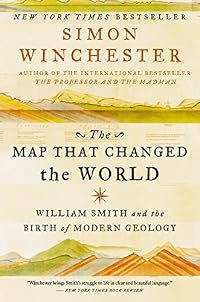
Having said that, Winchester’s done his usual adept job of stuffing every chapter to the brim with obscure but entertaining bits of history, science, and politics – not entirely unexpected, given that obscure history is Winchester’s specialty. (This is the same guy who wrote “The Professor and the Madman,” about a mental patient’s contributions to the first dictionary, and “The Map That Changed the World,” about an obscure mining engineer who created the first geological map.) I’m fairly knowledgeable when it comes to history and world events, but many of the tales recounted in these chapters were new to me – which, frankly, is why I keep reading Winchester's canon. Some of the author's anecdotes are, one could argue, deservedly obscure; many, however, provoke fascination, astonishment, enlightenment, and/or thoughtful reflection.
In summary, this book reminded me of why it’s important to read history. Whether you bother to read that whole chapter on surfing or skip straight to the atomic testing, we should all be grateful there are historians like Winchester out there, working their hardest to remind us that: (1) what we learn in school is maybe 5% of what actually happened; (2) those who don’t take the time to learn from the mistakes of history inevitably repeat the same mistakes; and (3) every organism and system on Earth is intractably interrelated – pluck on one string, and the resonance of that action has the potential to shake the whole world. show less
With every chapter devoted to a different aspect of the history of the Pacific ocean, I suspect many readers will find this an uneven read: it’s hard to imagine a reader who’s equally as interested in the history of U.S. atomic testing show more (chapter 1) and the semiconductor revolution (chapter 2), the evolution of surfing (chapter 3) and little-known chapters of the Korean conflict (chapter 4), the fate of the RMS Queen Elizabeth (chapter 5) and supercyclones (chapter 6), wacky Emperial politics (Chapter 7) and undersea hot spots (chapter 8), the perils of climate change (chapter 9) and geopolitical squabbling over international waters (chapter 10). (All of the aforementioned topics, by the way, are foreshadowed in the book’s subtitle – “Silicon Chips and Surboards, Coral Reefs and Atom Bombs, Brutal Dictators, Fading Empires, and the Coming Collision of the World’s Superpowers” – so at least you can’t say you weren’t warned!)
Having said that, Winchester’s done his usual adept job of stuffing every chapter to the brim with obscure but entertaining bits of history, science, and politics – not entirely unexpected, given that obscure history is Winchester’s specialty. (This is the same guy who wrote “The Professor and the Madman,” about a mental patient’s contributions to the first dictionary, and “The Map That Changed the World,” about an obscure mining engineer who created the first geological map.) I’m fairly knowledgeable when it comes to history and world events, but many of the tales recounted in these chapters were new to me – which, frankly, is why I keep reading Winchester's canon. Some of the author's anecdotes are, one could argue, deservedly obscure; many, however, provoke fascination, astonishment, enlightenment, and/or thoughtful reflection.
In summary, this book reminded me of why it’s important to read history. Whether you bother to read that whole chapter on surfing or skip straight to the atomic testing, we should all be grateful there are historians like Winchester out there, working their hardest to remind us that: (1) what we learn in school is maybe 5% of what actually happened; (2) those who don’t take the time to learn from the mistakes of history inevitably repeat the same mistakes; and (3) every organism and system on Earth is intractably interrelated – pluck on one string, and the resonance of that action has the potential to shake the whole world. show less
In his inimitable way, Simon Winchester sets out to prove the vast importance of the Pacific Ocean, not only in the past and present, but in our future. For the most part, he succeeds.
The size of the Pacific Ocean is immense and almost beyond our reckoning. It is the source of the world's weather and has survived atomic bombs, transistors, and the abysmal treatment of its native peoples. Winchester takes us on a mesmerizing journey from one end of the Pacific to the other, from east to west and north to south, with lots of stops on tiny islands and archipelagos along the way.
Winchester has been one of my favorite non-fiction writers since his unforgettable The Professor and the Madman: A Tale of Murder, Insanity, and the Making of the show more Oxford English Dictionary. He's opened my eyes to many things and encouraged me to read deeper into many of the subjects he brings to light. However, I have to admit that I am concerned about an error I found while reading this particular book. In it, Winchester talks about traveling up the Mississippi River past the city of Des Moines. I did some research in an attempt to discover if my memory had blown a fuse, but it hadn't. Des Moines is certainly not on the banks of the Mississippi River between Hannibal and St. Louis, Missouri, as stated in his book, and that's what has me concerned. If a simple yet glaring mistake like that can make its way to the final edition of the published book, how many other errors made it through, too? And if there are errors in this book, what about his others? One city in the wrong place can cause so much harm. show less
The size of the Pacific Ocean is immense and almost beyond our reckoning. It is the source of the world's weather and has survived atomic bombs, transistors, and the abysmal treatment of its native peoples. Winchester takes us on a mesmerizing journey from one end of the Pacific to the other, from east to west and north to south, with lots of stops on tiny islands and archipelagos along the way.
Winchester has been one of my favorite non-fiction writers since his unforgettable The Professor and the Madman: A Tale of Murder, Insanity, and the Making of the show more Oxford English Dictionary. He's opened my eyes to many things and encouraged me to read deeper into many of the subjects he brings to light. However, I have to admit that I am concerned about an error I found while reading this particular book. In it, Winchester talks about traveling up the Mississippi River past the city of Des Moines. I did some research in an attempt to discover if my memory had blown a fuse, but it hadn't. Des Moines is certainly not on the banks of the Mississippi River between Hannibal and St. Louis, Missouri, as stated in his book, and that's what has me concerned. If a simple yet glaring mistake like that can make its way to the final edition of the published book, how many other errors made it through, too? And if there are errors in this book, what about his others? One city in the wrong place can cause so much harm. show less
A competent and engaging narrative history of the Pacific, though focused on recent times as he talks of events post-1950. He does have to reach backward in time, though, to provide background. winchester is a good wordsmith, a turner of phrases, erudite (trending towards pretentious), and interesting. There is so much he leaves out, but all leavened with so many tidbits of trivia and history that you don't mind.
Winchester's prime fault is a wholly reflexive attitude that colonialism must be bad, which means, ipso facto, the West must be bad. Western atrocities are condemned, though Japan's Empire or Chinese perfidy is either left unexplored or excused. Australian worries about unchecked immigration, like all good liberals, Winchester show more poo poos with a wave of the pen. Anyone against immigration must be a knuckle-dragging Luddite, right? The chapter on China's expansion into international waters was scary.
A good read. show less
Winchester's prime fault is a wholly reflexive attitude that colonialism must be bad, which means, ipso facto, the West must be bad. Western atrocities are condemned, though Japan's Empire or Chinese perfidy is either left unexplored or excused. Australian worries about unchecked immigration, like all good liberals, Winchester show more poo poos with a wave of the pen. Anyone against immigration must be a knuckle-dragging Luddite, right? The chapter on China's expansion into international waters was scary.
A good read. show less
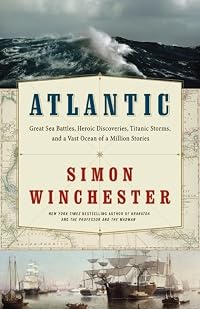
This book is as massive as its title. Winchester chooses 10 seemingly random events and uses them to talk about a wide variety of situations and issues related to life in and around the Pacific Ocean. For example, the invention of the transistor radio is a springboard to talk about how Japan became a technological powerhouse in the second half of the 20th century, and one undersea dive by a submersible craft named Alvin launches a discussion of the hydrothermal vents at the bottom of the sea, and what the creatures that live in these vents add to our knowledge of how life developed on Earth. It is a long book and does require perseverance, but I found a great deal of interest, especially in the chapter on the Korean War. If you liked show more Atlantic, you’ll probably like this one, too. show less
Dated, written during Obama’s administration, but that doesn’t necessarily affect how I feel about a book because I enjoy reading histories. Some of the chapters—corresponding to specific topics—were very interesting, like the one about North Korea. But some chapters felt so haphazard lacking a strong central theme, like the one about peoples gaining their independence, and believe it or not, the chapter about Australia. Themes weren’t always obvious so rather than focus on what was being said, I was trying to figure out what the heck the chapter was about. I liked that the author narrated the audiobook—he had a Pooh bear-like voice and he could get away with voicing him! Sadly this was a long investment of time for a so-so show more rating. show less
This book was a selection for the monthly nonfiction read at the North Bellmore Public Library on Long Island This was well received. There are lot of things covered in this book and many are quite fascinating and not often covered by substantial books. Outside the wide geographic coherence of the Pacific Ocean, there is no thread that pulls everything together and there is less on South America. Winchester, though, is an engaging writer as he darts about this vast territory and found items to arrest our attention.
Members
- Recently Added By
Author Information

53+ Works 38,445 Members
Simon Winchester was born in London, England on September 28, 1944. He read geology at St. Catherine's College, Oxford. After graduation in 1966, he joined a Canadian mining company and worked as field geologist in Uganda. The following year he decided to become a journalist. His first reporting job was for The Journal, Newcastle upon Tyne. In show more 1969, he joined The Guardian and was named Britain's Journalist of the Year in 1971. He also worked for the Daily Mail and the Sunday Times before becoming a freelancer. He is the author of numerous books including In Holy Terror, The River at the Center of the World, The Alice Behind Wonderland, The Professor and the Madman: A Tale of Murder, Insanity, the Making of the Oxford English Dictionary, and.Exactly: How Precision Engineers Created the Modern World. In 2006, he was made an Officer of the Order of the British Empire for services to journalism and literature. (Bowker Author Biography) show less
Awards and Honors
Common Knowledge
- Alternate titles
- Pacific: The Ocean of the Future; Pacific: Silicon Chips and Surfboards, Coral Reefs and Atom Bombs, Brutal Dictators, Fading Empires, and the Coming Collision of the World's Superpowers
- Original publication date
- 2015-10-27
- Important places
- Pacific Ocean
- Original language
- English
- Canonical DDC/MDS
- 909.09823
- Canonical LCC
- GC771
Classifications
- Genres
- General Nonfiction, History, Nonfiction, Science & Nature
- DDC/MDS
- 909.09823 — History & geography History World history Other Geographic Classifications Other Classifications Ocean And Sea Basins Pacific
- LCC
- GC771 — Geography, Anthropology and Recreation Oceanography Oceanography Oceanography. By region
- BISAC
Statistics
- Members
- 793
- Popularity
- 34,766
- Reviews
- 25
- Rating
- (3.84)
- Languages
- Chinese, English
- Media
- Paper, Audiobook, Ebook
- ISBNs
- 25
- ASINs
- 9