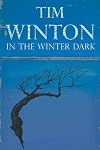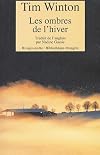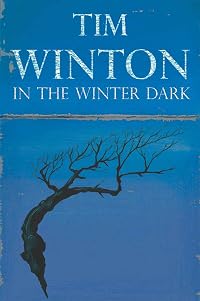
In the Winter Dark
by Tim Winton
On This Page
Description
Night falls. In a lonely valley called the Sink, four people prepare for a quiet evening. Then in his orchard, Murray Jaccob sees a moving shadow. Across the swamp, his neighbour Ronnie watches her lover leave and feels her baby roll inside her. And on the verandah of the Stubbses house, a small dog is torn screaming from its leash by something unseen. Nothing will ever be the same again. "This is Winton at his most disciplined, most distilled - and its an unforgettable story, told with the show more simplicity that only a consummate artist can achieve." Judith White, Sun Herald show lessTags
Recommendations























Member Reviews
History. Yes that was when history started on me. The day after the dog was taken, the day Jackson found Ronnie half crazed down by the river. If only we hadn’t had so many things to hide, so many opportunities for fear to get us. You can keep it all firm and tidy in you for a time, but Gawd Almighty when the continents begin to shift in you, you can’t tell tomorrow from yesterday. You run just like that herd of pigs over the cliff and into the water. - Stubbs.
Reading this short excerpt from Winton’s short novel one could reasonably expect it to be a book of suspense. It is, and it’s not. There’s a suspense hiding there, but it’s more a novel of four people, secrets, and the Australian bush
Tim Winton is known in Australia show more for his prose, and it was for his prose - about the Australians and the Australian bush that I delighted in while reading this book.
It is indeed very Aussie. Set in a valley the locals call The Sink, Winton tells us of the lives of four people. There’s Stubbs and Ida, almost stereotypical outback Australians, and two blow-ins, Jacob and Ronnie, who have come to The Sink separately. The book is told in the outward and inner voices of these four disparate Sink residents.
Here is Stubbs again, talking to himself about his wife of 30 years.
We’d spend some time together me and Ida. The children had grown and gone, and over the years Ida had fattened up. She sort of spread out like a garden gone wild. I think she was richer, better for the years. She developed a big wide laugh and her memory was gentle. She wanted the best for people, to think the best of them. She gave me the benefit of any doubt and she had a few, because looking back on it I see I’d grown grown in, gotten smaller, meaner with age. But she stayed even so, though sometimes I wonder why.
Stubs and Ida are farmers of the old-school. Ronnie (Veronica) is a 20 year old drug user who had high hopes of having a farm with her boyfriend - a pop-star wanna-be. He’s dumped Ronnie to find fame and fortune, leaving her to look after a goat, a cow, several Muscovy ducks, and a spinning wheel which stands unused in the run-down house they rented.
Jacob is a city man. He’s rented the best house in The Sink. He is recently divorced and has started to read books for the first time in his life. Books from his ex-wife’s collection, that he somehow ended up with after their less than amicable divorce. Apart from his disturbing memory of his two month old daughter asleep in a cradle with the family cat, all we really know about Jacob is that he’s monied and is a nice enough bloke.
The four are drawn together because of a strange happening - several animals are killed over two nights and it’s not obvious why. As the four lives interact from necessity - they all need to know why the animals have died The trauma of the needles deaths affect each and we learn about traumas of their past lives.
There’s a commonality in their pasts and these are gradually revealed as the four search for the animal killer. But Winton is sparse in his prose here and we are given small snippets - handed to us almost grudgingly through the individual character’s inner thoughts.
The bush is both loved and feared by Australians. It’s ugliness is its beauty and there’s no better living writer who can bring our bush to life.
Reccomended show less
Reading this short excerpt from Winton’s short novel one could reasonably expect it to be a book of suspense. It is, and it’s not. There’s a suspense hiding there, but it’s more a novel of four people, secrets, and the Australian bush
Tim Winton is known in Australia show more for his prose, and it was for his prose - about the Australians and the Australian bush that I delighted in while reading this book.
It is indeed very Aussie. Set in a valley the locals call The Sink, Winton tells us of the lives of four people. There’s Stubbs and Ida, almost stereotypical outback Australians, and two blow-ins, Jacob and Ronnie, who have come to The Sink separately. The book is told in the outward and inner voices of these four disparate Sink residents.
Here is Stubbs again, talking to himself about his wife of 30 years.
We’d spend some time together me and Ida. The children had grown and gone, and over the years Ida had fattened up. She sort of spread out like a garden gone wild. I think she was richer, better for the years. She developed a big wide laugh and her memory was gentle. She wanted the best for people, to think the best of them. She gave me the benefit of any doubt and she had a few, because looking back on it I see I’d grown grown in, gotten smaller, meaner with age. But she stayed even so, though sometimes I wonder why.
Stubs and Ida are farmers of the old-school. Ronnie (Veronica) is a 20 year old drug user who had high hopes of having a farm with her boyfriend - a pop-star wanna-be. He’s dumped Ronnie to find fame and fortune, leaving her to look after a goat, a cow, several Muscovy ducks, and a spinning wheel which stands unused in the run-down house they rented.
Jacob is a city man. He’s rented the best house in The Sink. He is recently divorced and has started to read books for the first time in his life. Books from his ex-wife’s collection, that he somehow ended up with after their less than amicable divorce. Apart from his disturbing memory of his two month old daughter asleep in a cradle with the family cat, all we really know about Jacob is that he’s monied and is a nice enough bloke.
The four are drawn together because of a strange happening - several animals are killed over two nights and it’s not obvious why. As the four lives interact from necessity - they all need to know why the animals have died The trauma of the needles deaths affect each and we learn about traumas of their past lives.
There’s a commonality in their pasts and these are gradually revealed as the four search for the animal killer. But Winton is sparse in his prose here and we are given small snippets - handed to us almost grudgingly through the individual character’s inner thoughts.
The bush is both loved and feared by Australians. It’s ugliness is its beauty and there’s no better living writer who can bring our bush to life.
Reccomended show less
I haven't read anything by Tim Winton (who comprises one third of the Holy Trinity of Australian writers, alongside Patrick White and Peter Carey) since high school, when I was obliged to force my way through Cloudstreet for English Lit. I suspect I'd like Cloudstreet a lot more now that I'm older and appreciate good literature, but I do still suspect Tim Winton of being similar to Cormac McCarthy - an excellent author, but one whose novels all tend to be pretty much the same.
In The Winter Dark caught my eye because of its horror themes:
Night falls. In a lonely valley called the Sink, four people prepare for a quiet evening. Then in his orchard, Murray Jaccob sees a moving shadow. Across the swamp, his neighbour Ronnie watches her lover show more leave and feels her baby roll inside her. And on the verandah of the Stubbses' house, a small dog is torn screaming from its leash by something unseen. Nothing will be the same again.
Winton mentions the darkness itself quite a lot throughout the book, including the quote in the epigraph, and I was half-expecting him to pull something metaphysical. He doesn't. As in all good horror literature, the monster is never quite seen or explained, but as huge amounts of livestock are found mangled and mutilated, there is no doubt as to its tangible existence.
Winton does, however, focus more on the characters than anything else; this is a literary novella with horror elements, not vice versa. The climax was somewhat contrived, and while he manages a foreboding note here and there, there aren't many parts in the book that are actually frightening. It's not a bad book at all, but it's not particularly worth seeking out either.
In any case, it did bring me up to 25 books before the mid-point of the year. With luck I may be able to beat 2008's 50-book streak. show less
In The Winter Dark caught my eye because of its horror themes:
Night falls. In a lonely valley called the Sink, four people prepare for a quiet evening. Then in his orchard, Murray Jaccob sees a moving shadow. Across the swamp, his neighbour Ronnie watches her lover show more leave and feels her baby roll inside her. And on the verandah of the Stubbses' house, a small dog is torn screaming from its leash by something unseen. Nothing will be the same again.
Winton mentions the darkness itself quite a lot throughout the book, including the quote in the epigraph, and I was half-expecting him to pull something metaphysical. He doesn't. As in all good horror literature, the monster is never quite seen or explained, but as huge amounts of livestock are found mangled and mutilated, there is no doubt as to its tangible existence.
Winton does, however, focus more on the characters than anything else; this is a literary novella with horror elements, not vice versa. The climax was somewhat contrived, and while he manages a foreboding note here and there, there aren't many parts in the book that are actually frightening. It's not a bad book at all, but it's not particularly worth seeking out either.
In any case, it did bring me up to 25 books before the mid-point of the year. With luck I may be able to beat 2008's 50-book streak. show less
A short, but rather good, novel.
The plot revolves around three households in a valley in Australia where something weird starts happening.
At first its shadows seen out of the corner of the eye and then animals start being killed. But rather than go to the police or the council they try to deal with whatever it is themselves.
The characters get sucked into mutually destructive relationships never quite liking each other and never understanding the motivations of the others, but not able to escape either.
Winton builds to quite a grisly climax but the horror and weirdness never get out of hand in what I thought was a really well written novel.
The plot revolves around three households in a valley in Australia where something weird starts happening.
At first its shadows seen out of the corner of the eye and then animals start being killed. But rather than go to the police or the council they try to deal with whatever it is themselves.
The characters get sucked into mutually destructive relationships never quite liking each other and never understanding the motivations of the others, but not able to escape either.
Winton builds to quite a grisly climax but the horror and weirdness never get out of hand in what I thought was a really well written novel.
Chilling. Every sentence is beautifully formed. The only problem was that it was too short.
> Critiques Libres : http://www.critiqueslibres.com/i.php/vcrit/4342
> Babelio : https://www.babelio.com/livres/Winton-Les-Ombres-de-lhiver/62156
> [Des pages vraiment glacées] — « Les Ombres de l'hiver », de Tim Winton. — Un hurlement dans la nuit et rien ne sera plus comme avant dans cette vallée australienne appelée le Trou. Ed. Rivages, 196 pages, 89 F.
—Philippe Duval, le 23 déc. 2000 (Le Parisien)
> Babelio : https://www.babelio.com/livres/Winton-Les-Ombres-de-lhiver/62156
> [Des pages vraiment glacées] — « Les Ombres de l'hiver », de Tim Winton. — Un hurlement dans la nuit et rien ne sera plus comme avant dans cette vallée australienne appelée le Trou. Ed. Rivages, 196 pages, 89 F.
—Philippe Duval, le 23 déc. 2000 (Le Parisien)
Mar 11, 2021 (Edited)French
Ratings
Members
- Recently Added By
Author Information

42+ Works 13,871 Members
Tim Winton was born in 1960 in Western Australia. He attended a Creative Writing Course at Curtin University in Perth, and it was there that he began his first novel, An Open Swimmer. It was entered for The Australian/Vogel Award in 1981 and won. His other works include Shallows, which won the Miles Franklin Award in 1984; The Riders Winton, which show more won the Miles Franklin Award in 1992; and Island Home: A Landscape Memoir, the winner of the 2016 Australian Book Industry Awards, General nonfiction book of the year. The Boy Behind the Curtain, published in 2016, won the 2018 Adelaide Festival Awards for Literature, Nonfiction. His books also include The Shepherd's Hut, Breath, and Dirt Music. (Bowker Author Biography) show less
Work Relationships
Common Knowledge
- Original publication date
- 1988
- Important places
- Australia
- Epigraph
- There is such a thing as the pressure of darkness. Victor Hugo
- Dedication
- for Denise and Jesse
and for the Nannup Tiger
wherever you are - First words
- It's dark already and I'm out here again, talking, telling the story to the quiet night.
Classifications
Statistics
- Members
- 228
- Popularity
- 142,537
- Reviews
- 5
- Rating
- (3.49)
- Languages
- 5 — Catalan, Dutch, English, French, Italian
- Media
- Paper, Audiobook, Ebook
- ISBNs
- 30
- ASINs
- 4